

On 1 May 2025 Japan counted 408,069 international students, the first time the figure had passed 400,000 and eight years ahead of the target the government set for 2033. Just over a third of them, 140,174, were in Japanese-language schools, and more than a third were in Tokyo. The rest were spread between Sapporo and Naha, in universities, vocational colleges and graduate schools, on a single status of residence called ryugaku (留学), study abroad.
There are four ways to join them: a Japanese-language school, a full degree, an exchange through your own university, or a short course. Choose by what you want to leave with: fluency from a standing start, a qualification, a semester or two inside a degree from home, or a first look before paying for the rest.
| Route | How long | Starts | Tuition, first year | Suits |
|---|---|---|---|---|
| Japanese-language school | 1–2 years (2 at most) | April and October; some January and July | ¥610,000–1.9 million by course; one-year courses in Tokyo commonly ¥800,000–1,000,000 | Beginners aiming at a Japanese-taught course or a job |
| Degree at a national university | 4 years (bachelor’s), 2 (master’s) | April; some September or October | ¥535,800 a year plus ¥282,000 on entry; several now charge more | Strong students with N2-level Japanese, or a place on an English-taught programme |
| Degree at a private university | 4 years (bachelor’s), 2 (master’s) | April; some September | About ¥1.3 million (undergraduate average) | The widest choice of English-taught programmes |
| Exchange | One semester or one year | April or September/October | Your home university’s fees | Students already enrolled at a partner university abroad |
| Short course | 1–12 weeks | Mostly summer and winter | About ¥30,000–300,000 | A first look; no visa for many nationalities |
On top of tuition, budget about ¥105,000 a month to live, which is the national average from the Japan Student Services Organization’s last survey of privately funded students; in Tokyo it was about ¥130,000. Then allow a year between deciding and arriving, because the school has to apply to immigration on your behalf before you can get a visa.


In this guide
Japanese-language schools
The language school, nihongo gakko (日本語学校), is the commonest way in and the one with the most exits. Classes run about three to four hours a day, five days a week, in the morning or the afternoon. Courses last one year, eighteen months or two years, and two years is the legal ceiling: the student status will not cover more time than that at language schools. The main intakes are April and October, with some schools adding January and July.
They suit people who start with little or no Japanese and want to end up in a Japanese-taught course or job. JASSO’s guidance is that following lectures in Japanese needs N1 or N2 on the proficiency test, which takes something like 600 to 900 hours of study; a two-year course gets a diligent beginner there. If your country’s schooling stops before twelve years, a university preparatory course designated by the Ministry of Education is the bridge you need before a Japanese university will consider you.
The rules on which schools count are changing. Since April 2024 the Ministry of Education (MEXT) has certified Japanese-language schools under a new law, alongside the older list kept by the Immigration Services Agency, and from April 2029 only certified schools will be able to bring in students on a student visa. If you are applying now for a course that runs beyond March 2029, ask the school whether it is certified (認定日本語教育機関, nintei nihongo kyoiku kikan) or when it expects to be.
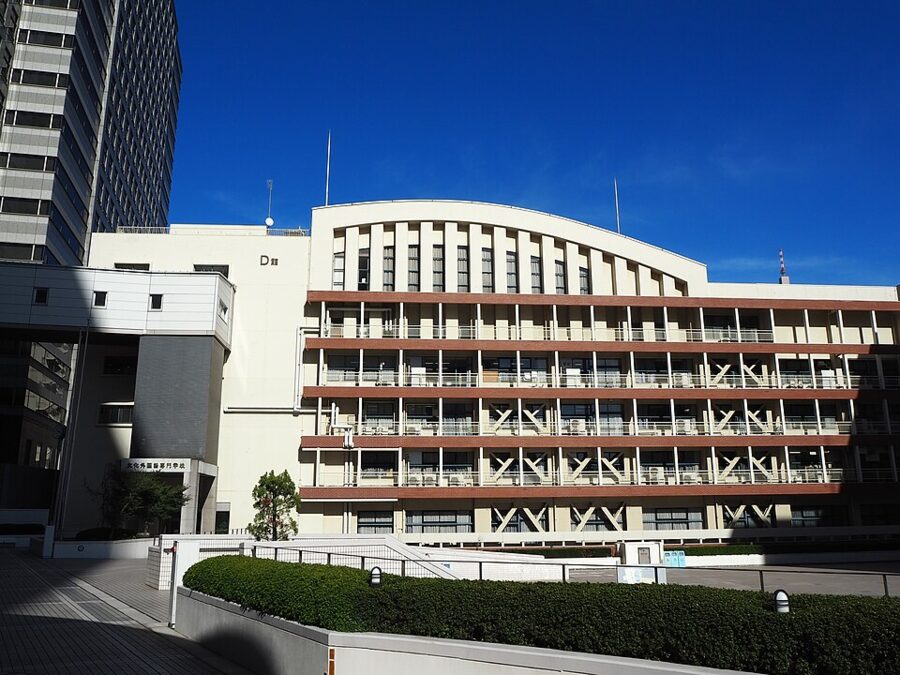

JASSO gives a range of ¥610,000 to ¥1.9 million a year depending on the course, and a general one-year course in Tokyo usually comes to between ¥800,000 and ¥1 million once the application and entrance fees are added. Check the refund policy before you pay: if the visa is refused, you want that money back in writing.
Of the 21,580 students who finished at member schools of the Association for the Promotion of Japanese Language Education in the 2024 school year, 72.3% went on to further study in Japan. Most of those, 9,857, went to vocational colleges, senmon gakko (専門学校), which teach practical two-year courses; 3,900 went to four-year universities and about 1,500 to graduate school. About one in ten went straight into a job.
Degrees, in Japanese or in English
A bachelor’s degree takes four years (six for medicine, dentistry, veterinary science and some pharmacy), and the year starts in April, with a growing number of universities also admitting in September or October. You need twelve years of schooling. For a course taught in Japanese, most universities ask for the Examination for Japanese University Admission for International Students (EJU), set twice a year and used by 479 universities, together with their own interview or test; very few ask international students to sit the national entrance exam Japanese school-leavers take.
The money is where national and private universities part. National universities charge a standard ¥535,800 a year with a ¥282,000 admission fee, and until 2024 they had to charge international students the same as everyone else. The ministry lifted that cap from April 2024, and the first increases are now landing: Tohoku University will charge international students who start bachelor’s or master’s degrees from April 2027 ¥900,000 a year, and Okayama University has decided on two and a half times the standard fee for international students entering in 2027. Private universities average about ¥1.3 million in the first year, and medicine and dentistry about ¥3.8 million.
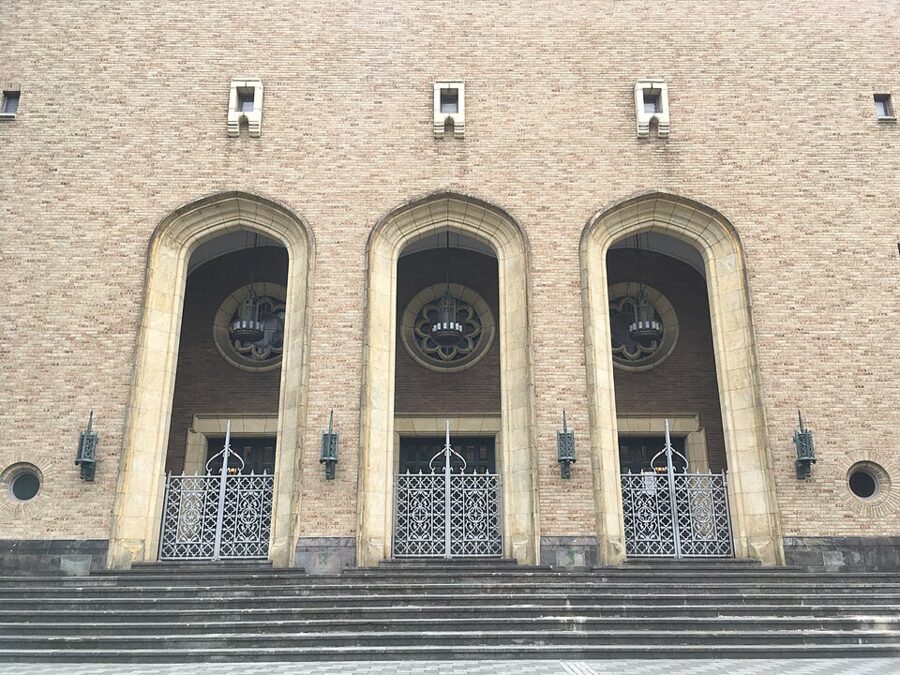
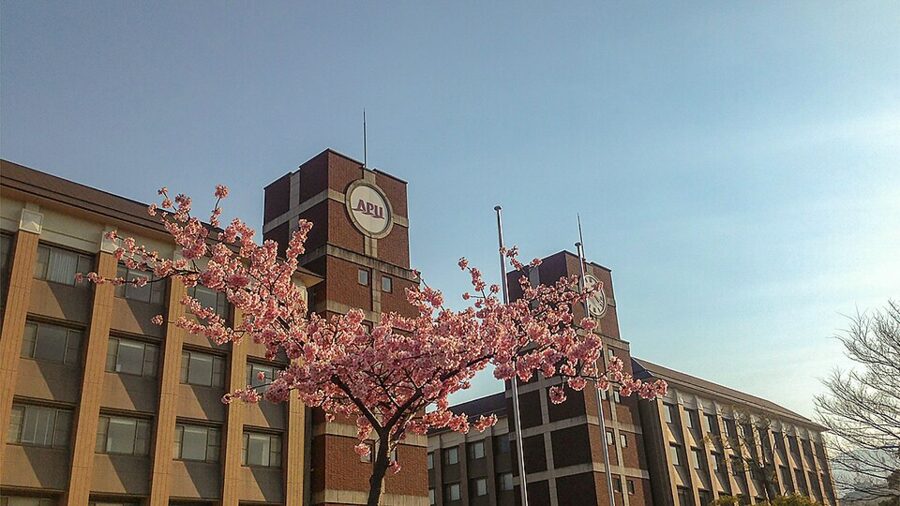
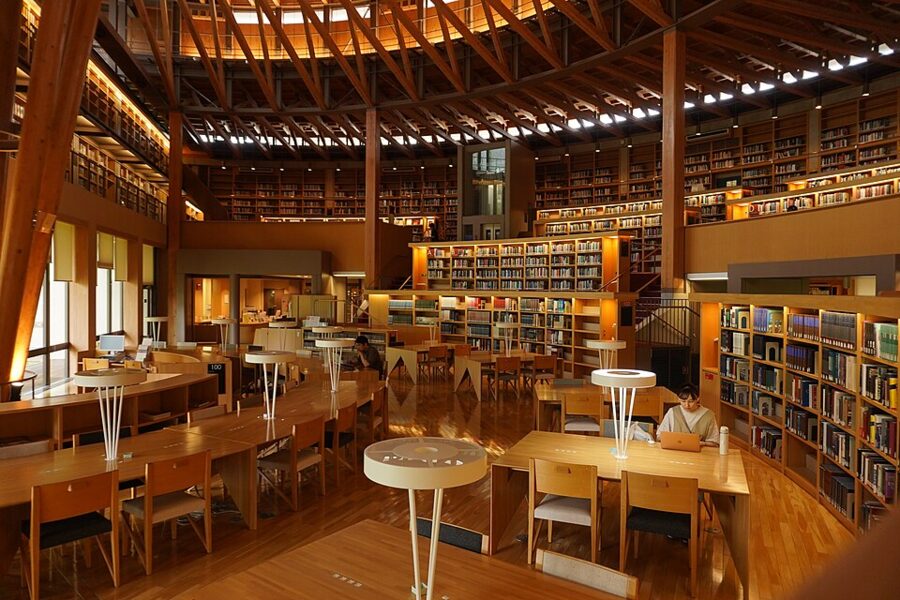
English-taught degrees exist at both levels, at universities and graduate schools but not at vocational colleges or colleges of technology. JASSO keeps a searchable list, and two smaller universities are built around international teaching. Akita International University (国際教養大学) teaches every class in English and sends its own students abroad for a year, and Ritsumeikan Asia Pacific University (立命館アジア太平洋大学) in Beppu lets you enrol on an English or a Japanese basis and expects you to learn the other language by graduation.

Graduate study works differently. A master’s takes two years and a doctorate three more, and in most fields you find your own supervisor before you apply, by writing to a professor with your research record and a proposal of about 2,000 words. Some graduate schools take applications directly; others prefer that you start as a kenkyusei (研究生), a non-degree research student, which gives both sides a trial. Graduate schools also run more English-taught programmes than undergraduate faculties, and JASSO’s guide for them is a TOEFL iBT score of 75–80 or IELTS 6.
Exchange through your home university
If you are already at university, check first whether it has an agreement with a Japanese one. An exchange lasts a semester or a year, you pay your own university’s fees, the credits come home with you, and many partner schools teach exchange students in English with Japanese classes alongside. It is the cheapest serious way to live in Japan as a student.
JASSO’s Student Exchange Support Program pays ¥80,000 a month to selected exchange students who could not otherwise afford to come, for anything from eight days to a year; you apply through your home university, not directly. MEXT also offers a one-year Japanese Studies scholarship to undergraduates aged 18 to 29 who are majoring in Japanese language or culture at a university abroad.

Short courses and summer schools
A short course needs no student visa at all. The Temporary Visitor status given to short-stay arrivals explicitly covers attending courses, for up to 90 days, so citizens of the countries whose nationals need no visa for a short stay can simply turn up for a summer school or a few weeks at a language school. What you cannot do on it is work.
Universities run most of these in July and August, with a smaller crop in winter. The University of Tokyo’s winter Japanese programme for the 2026 academic year priced its courses from ¥32,000, and Okayama University’s summer programme, from 2 to 18 July 2026 for students of its partner universities, cost ¥280,000 including a dormitory room. Private language schools also take short-course students year-round, usually by the week.

What it costs
Rent and food depend more on the city than on the school. Every two years JASSO asks a sample of privately funded international students what they spend; the latest, carried out over the winter of 2023–24 with 7,599 usable answers, gives these monthly averages.
| Region | Rent | Food | All living costs (excluding tuition) |
|---|---|---|---|
| Tokyo | ¥57,000 | ¥37,000 | ¥130,000 |
| Kanto (including Tokyo) | ¥51,000 | ¥36,000 | ¥123,000 |
| Kinki (Osaka, Kyoto, Kobe) | ¥40,000 | ¥32,000 | ¥101,000 |
| Hokkaido | ¥34,000 | ¥29,000 | ¥94,000 |
| Chubu | ¥30,000 | ¥30,000 | ¥89,000 |
| Chugoku | ¥26,000 | ¥29,000 | ¥84,000 |
| Tohoku | ¥26,000 | ¥27,000 | ¥82,000 |
| Kyushu | ¥29,000 | ¥27,000 | ¥82,000 |
| Shikoku | ¥27,000 | ¥28,000 | ¥80,000 |
| National average | ¥41,000 | ¥32,000 | ¥105,000 |
The last column adds up rent, food, utilities, commuting, insurance and medical costs, leisure and everyday spending. Prices have moved since the survey, food most of all: the national retail price survey had 5 kg of rice at ¥4,979 in December 2025. I’d add ten per cent to every figure in the table and treat the result as a floor, not a budget.
Scholarships
The Japanese government’s MEXT scholarship is the big one, and it pays tuition, a return flight and a monthly stipend: ¥117,000 for undergraduates and ¥143,000–145,000 for research students at graduate level. You apply either through the Japanese embassy in your country or through a Japanese university with a quota. The embassy round for 2027 arrivals closed around May and June 2026, which tells you the lead time: apply ten to sixteen months before you mean to arrive, and expect written exams and an interview at the embassy.
JASSO’s Monbukagakusho Honors Scholarship pays ¥48,000 a month to privately funded students at universities, graduate schools and vocational colleges, and ¥30,000 at language schools, normally for a year. You apply through your school once you are enrolled, though strong EJU candidates can be reserved a place before they arrive by ticking a box on the exam application. Universities, local governments and company foundations add their own grants and fee cuts, nearly all applied for after arrival. In JASSO’s survey about a third of privately funded students had a scholarship of some kind.

The timeline: a year out to the first day
For a language school, start about a year before the intake. Choose a school by seven months out, apply five to seven months before the start, and expect the acceptance letter, and the bill for the first year’s fees, about three months before. In practice that means applying in the autumn for April and in spring for October.
For a degree, start eleven or twelve months ahead. Register for the EJU about nine months before (applications open in February for the June sitting and in July for November), send the university application six to eight months out, and sit its interview or test two to five months before term. A September or October start shifts the whole sequence by six months. Arriving for an April start puts you in Japan for the cherry blossom; for what the other months bring, see the best time to visit Japan.
The visa, in outline
Once you are accepted, the school applies to its regional immigration bureau in Japan for a Certificate of Eligibility (在留資格認定証明書), the document that says immigration has already approved you. You send it, or a copy, to the Japanese embassy or consulate at home with your passport, a form and a photo, and receive a Student visa. At the airport you are given a residence card and a period of stay set case by case, up to four years and three months.
Proof of money is the part people get wrong. You or a sponsor must show savings and income that cover tuition and living costs for the period, with bank certificates and an explanation of where the money came from. Extending your stay later costs more than it used to: from 1 October 2026, an extension granted at a counter costs ¥25,000 for more than six months but under a year, ¥33,000 for exactly a year and ¥48,000 for one to three years, against ¥6,000 before.

The two exams: EJU and JLPT
The EJU, Nihon ryugaku shiken (日本留学試験), is the entrance test built for international applicants to Japanese universities. It has a Japanese paper (400 points for reading and listening, 50 for writing) and academic papers in science, mathematics and a mix of civics, geography and history called Japan and the World, each out of 200 and available in Japanese or English. It sits in June and November (20 June and 14 November in 2027), in 17 prefectures and in 17 cities across Asia but nowhere in the Americas, Europe or Africa. In Japan the 2026 fee was ¥12,000 for one subject and ¥23,000 for two or three, rising to ¥13,000 and ¥25,000 for 2027, and scores stay valid for two years.
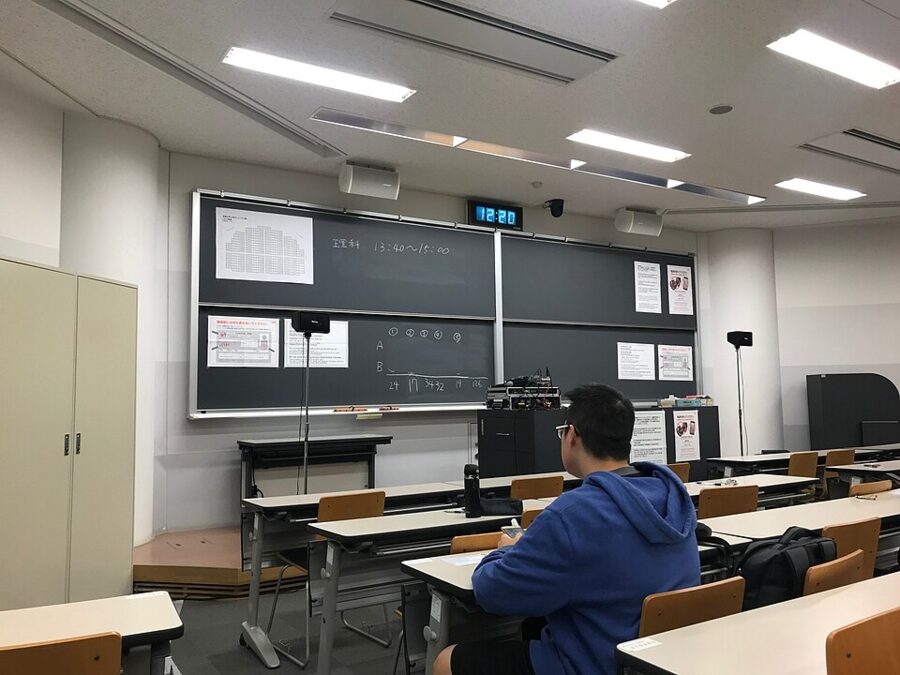

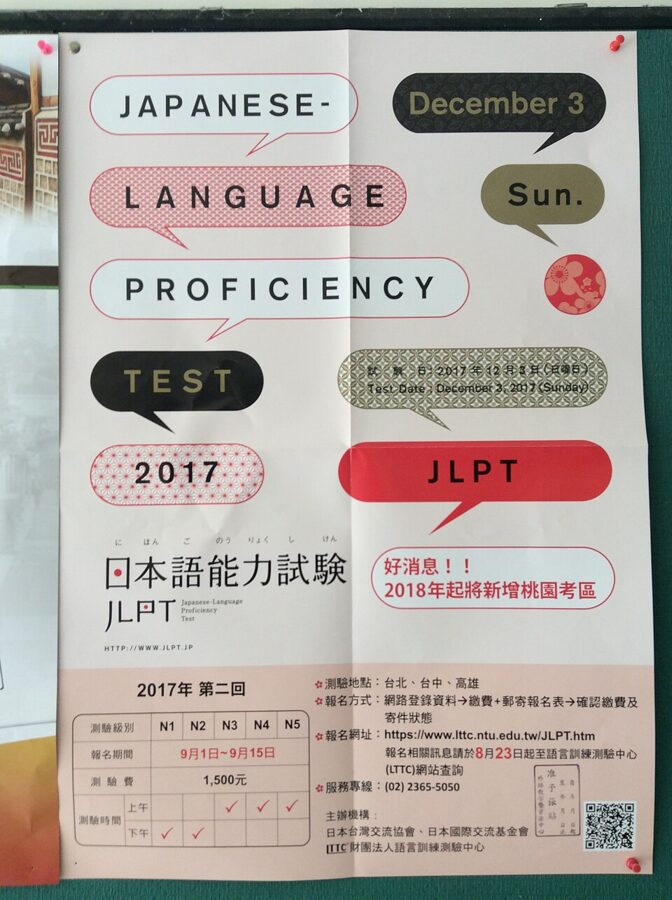
The JLPT, the Japanese-Language Proficiency Test, measures general Japanese on five levels from N5, the easiest, to N1. It is held on a Sunday in early July and early December in all 47 prefectures and in about 280 cities abroad. N2 is the usual bar for a course taught in Japanese, N1 for the demanding ones. Demand is at a record: about 1.9 million people applied worldwide in 2025, and test centres in Japan have struggled to find enough rooms.

Living as a student
Residence card, health insurance and pension
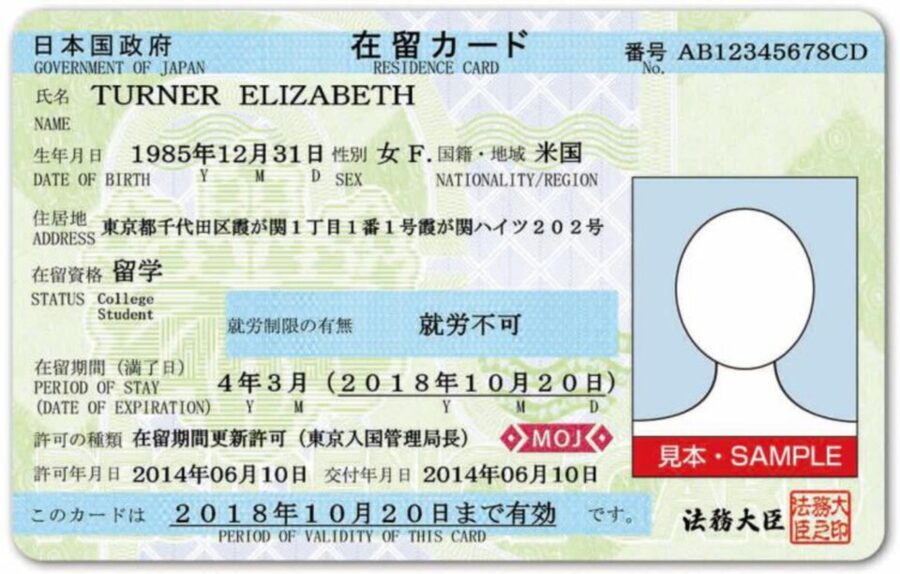
The residence card, zairyu kado (在留カード), is your identity in Japan, and you carry it at all times. Within 14 days of finding somewhere to live you take it to the city or ward office and register the address. At the same counters you join National Health Insurance, compulsory for anyone staying three months or more, which pays 70% of medical bills; the premium is set from last year’s income and reduced if that income was low, but only if you declare it, even when the answer is nothing.
If you are 20 or over you are also enrolled in the National Pension. Students can apply to defer the contributions under the student payment special system (学生納付特例), which covers universities, vocational colleges and language schools that are prefecture-approved miscellaneous schools with courses of a year or more; ask your school which it is. A letter with your twelve-digit My Number, the tax and social security number, follows by post; employers and banks will ask for it.

Part-time work and the 28-hour rule
The Student status does not allow work until you have permission for “activities other than those permitted”, which costs nothing and which first-time arrivals can get at the airport. With it you may work up to 28 hours a week during term and up to eight hours a day during the long holidays, and never in host or hostess clubs, pachinko or mahjong parlours, or anything else classed as adult entertainment. Go over the hours, or let attendance slide, and the next visa extension is refused; JASSO reports students sent home this way every year.
About 65% of privately funded students work, and in JASSO’s survey they earned about ¥81,000 a month on average, most often in restaurants (39.2%) and shops (28.4%). Wages have risen since: Tokyo’s minimum wage went up to ¥1,280 an hour on 1 October 2026, and the national weighted average for 2026 is ¥1,177. Twenty-eight hours at Tokyo’s minimum comes to about ¥155,000 a month before tax, which covers living costs in Tokyo but not tuition as well, and immigration asks how you are paying your way each time you renew.

Housing
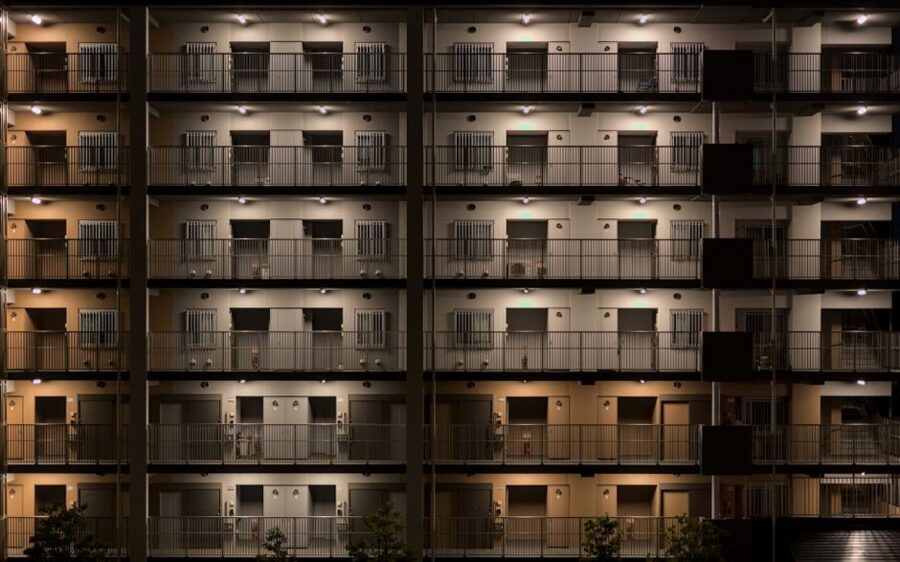
Dormitories are the cheap, easy option, and there are not enough of them. University and public dormitories usually charge no deposit or key money and come furnished; JASSO’s own Tokyo Japanese Language Education Center dormitory is about ¥28,000 a month. Most students end up elsewhere, 70.1% of them in private flats in JASSO’s survey, with share houses, where you rent a furnished room with a shared kitchen on a short contract, in between.
Renting a flat means paying up front: shikikin (敷金), a deposit of one or two months’ rent, often reikin (礼金), “key money” that you do not get back, an agent’s fee and the first month in advance. Nearly half of students were asked for a guarantor. Many landlords now accept a rent-guarantee company instead, for a fee, and some schools will act as guarantor for their students, backed by a renters’ insurance scheme for international students that schools arrange. Expect about ¥60,000 a month for a small flat in Tokyo and ¥30,000–40,000 outside the big cities.
Tokyo or somewhere else
Half of all international students in Japan are in the Kanto region around Tokyo, and Tokyo alone had 144,661 of them in May 2025. Then come Osaka (40,498), Fukuoka (25,683) and Kyoto (23,410). Tokyo has the most schools and universities, the most part-time work and the highest wages; it also has the highest rents, the longest commutes and the largest communities of students who share your language.
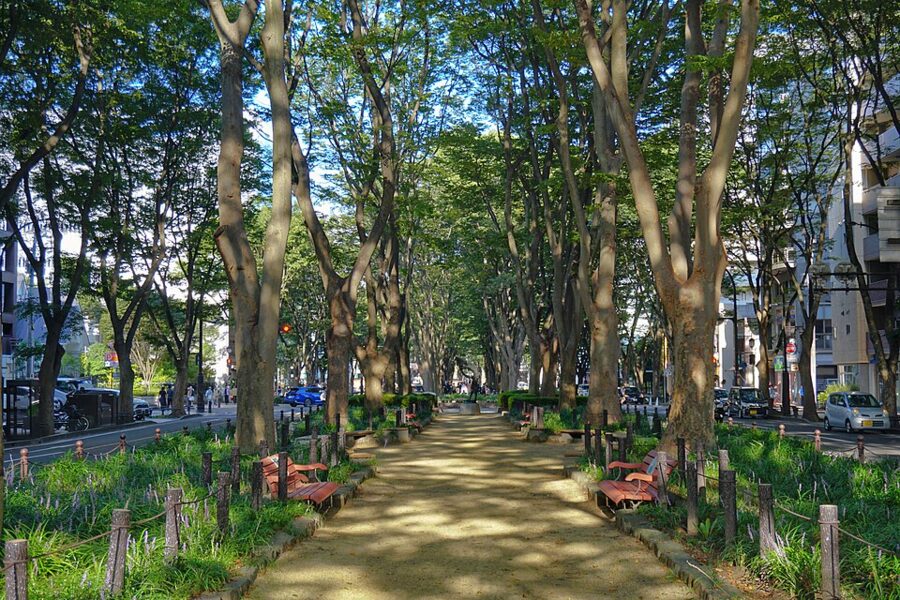
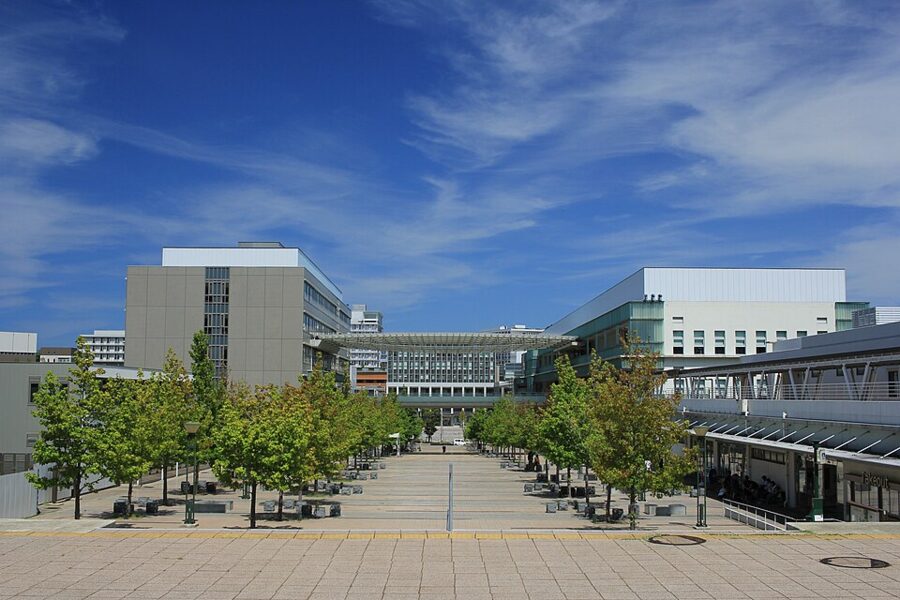
For learning the language, I’d choose a regional city. Rent in Tohoku or Chugoku averaged less than half of Tokyo’s, which buys time you would otherwise spend at a till, and a city where fewer people around you speak your language is one where you use Japanese all day. Sendai, Fukuoka, Okayama, Hiroshima, Sapporo and Kanazawa all have national universities, language schools, an EJU centre within reach and a shinkansen line or an airport to the capital. For a degree, choose the course first and the city second; for a language year, the other way round.

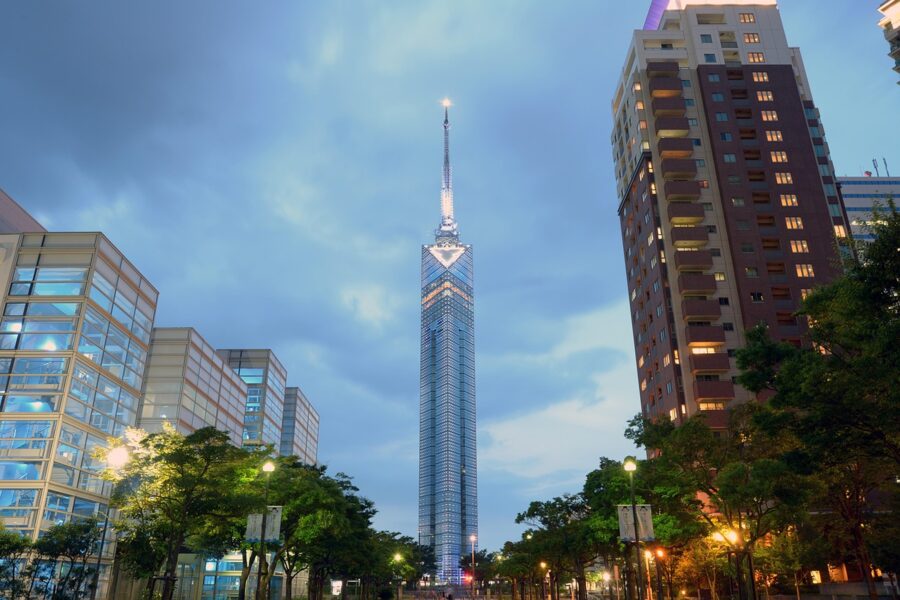
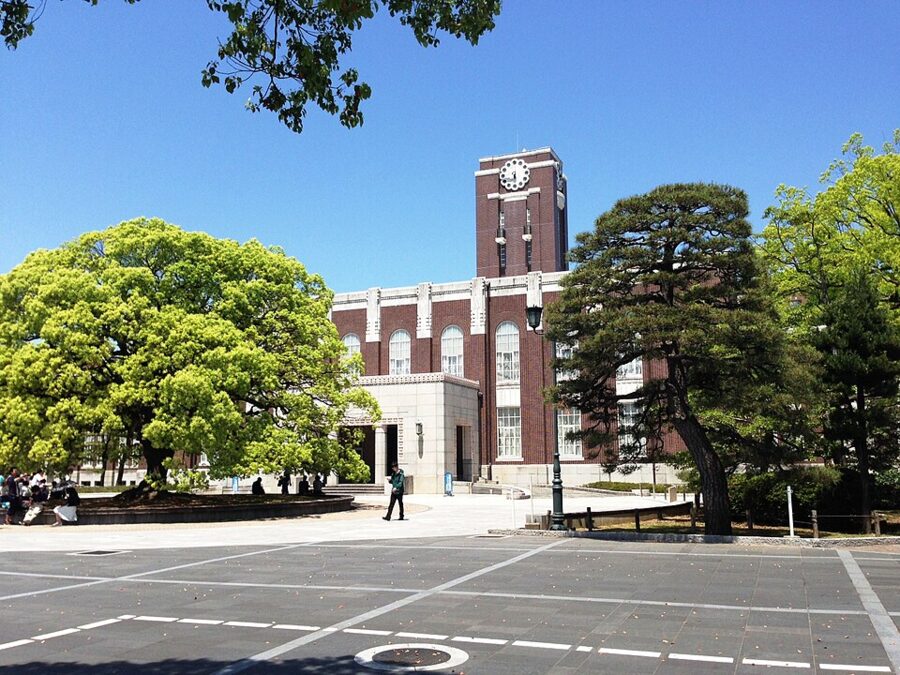
Fukuoka (福岡), the largest city in Kyushu, has more international students than any prefecture outside Tokyo and Osaka, a national university in Kyushu University and an airport two subway stops from Hakata station. Okayama (岡山) and Hiroshima (広島) in Chugoku are smaller and cheaper still, though Okayama’s fee rise from 2027 changes the sums for degree students there. In the Kansai cities, Osaka has the jobs and Kyoto has the universities, and the two are about half an hour apart by train.


Tokyo still makes sense if the course you want is there, if you need the part-time income, or if your career plan runs through the companies headquartered in Kanto. Budget for it: in JASSO’s survey students in Tokyo spent ¥6,000 a month just getting to class, against ¥1,000–3,000 in most other regions.
The first two weeks
The order matters, because each step needs a document from the one before.
- At the airport: collect the residence card at immigration (at the main international airports) and apply there for work permission.
- Days 1–3: get a Japanese SIM or eSIM. Banks, landlords and employers all want a Japanese phone number.
- Within 14 days of moving in: register your address at the city or ward office, and in the same visit join National Health Insurance and, if you are 20 or over, the National Pension, applying for the student deferral.
- The same week: enrol at your school, collect your student ID, and ask the international office about commuter passes, school insurance and scholarships.
- Once you have a registered address: open a bank account; your school will know which local branch opens them for new arrivals.
- Before your first shift: check that the job is within the 28-hour limit and the permitted kinds of work, and keep a record of your hours.
- Before any trip home: you need no re-entry permit for a stay abroad of up to a year within your period of stay, but tick the special re-entry box on the departure card and show your residence card.
Then the count starts again. On 1 May each year JASSO counts the international students at every university, college and language school in Japan, sorting them into seven columns: graduate school, undergraduate, junior college, college of technology, vocational college, preparatory course and language school. The first May count after you land will have you in one of them.