
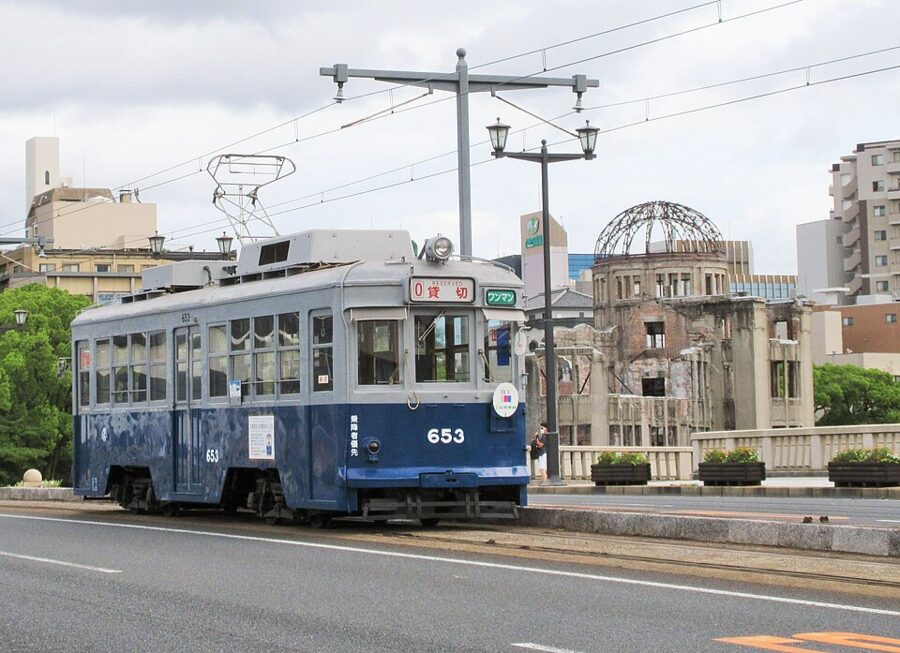

Every year on 6 August, Hiroden runs one of its 650 series trams on a timetable built around a single minute. The car is one of five built in 1942, all of which were burnt or wrecked in 1945, and it is scheduled to reach the Genbaku Dome-mae stop at 08:15. At that moment crews and passengers on every tram keep a minute’s silence, and the cars near the dome pull in at the nearest stop to wait it out.
The rest of the year, the same rails carry people to school, to the shops and to baseball. Hiroshima (広島) is a working city of more than a million people on the delta of the Ota River, the only one that size between Kobe and Fukuoka. Here a castle town became an army headquarters and then a target, and the evidence of all three stands within a few tram stops.
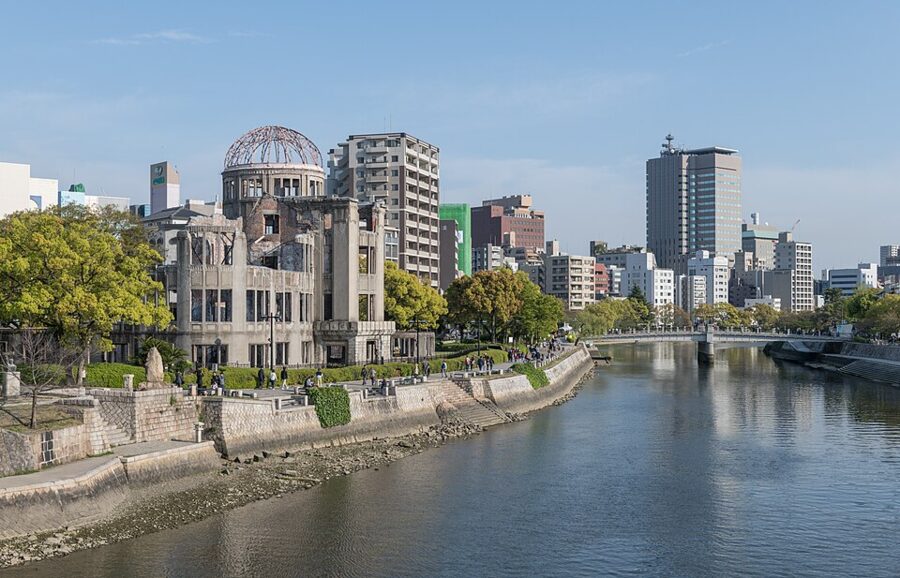

Hiroshima is the capital of its prefecture and the largest city in Chugoku, the western end of Honshu, and it has two World Heritage sites within an hour of each other: the dome in the centre, and Itsukushima Shrine on the island of Miyajima, at the end of the tram line and a short ferry ride.
In this guide
A castle town on the delta
Six hundred years ago most of today’s city centre was open water. The Ota River carries sand down from the Chugoku Mountains, and in the fifteenth and sixteenth centuries it carried far more than usual, because ironmakers upstream were washing hillsides into the river to sift out iron sand for their furnaces. By about 1500 a fan of low islands and sandbars had formed where Peace Boulevard now runs.
Mori Terumoto, grandson of the warlord Mori Motonari and master of most of western Japan, wanted a seat on the water instead of his grandfather’s mountain fortress at Yoshida. Early in 1589 he climbed three hills around the delta to survey it, and ground was broken in the fourth month of that year on the broadest of the islands. He moved in early in 1591, before the walls were finished.
Where the name came from is not settled. One explanation is the ground itself, the “broad island” (hiro, broad; shima, island) chosen for the castle. Another, recorded in temple chronicles, joins the first syllable of the Mori ancestor Oe no Hiromoto to the surname of Fukushima Motonaga, the local man who guided Terumoto round the site.
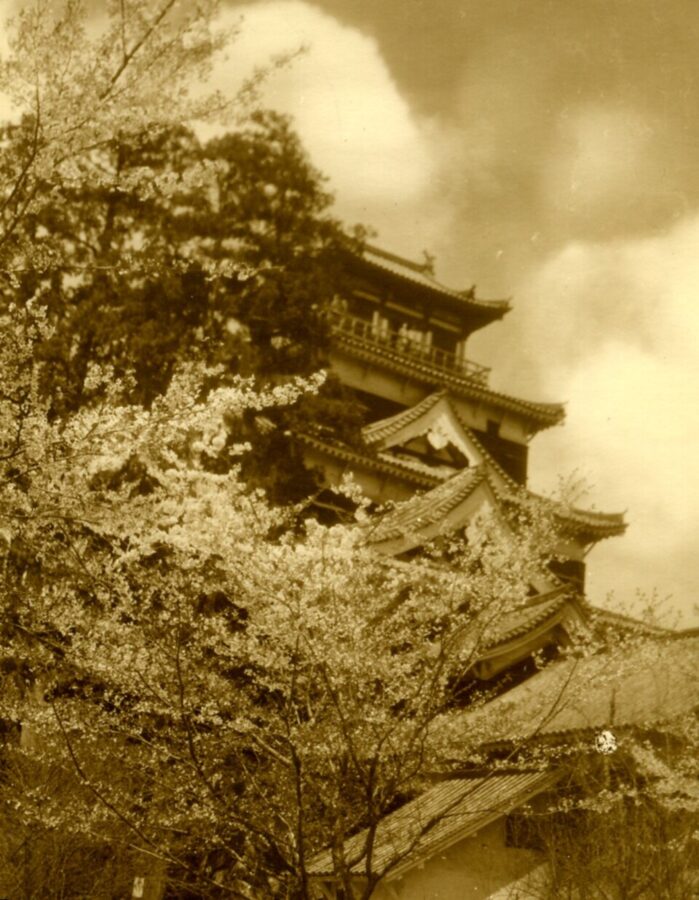
Terumoto did not keep it long. He backed the losing side at Sekigahara in 1600 and was pushed back to Hagi, and Fukushima Masanori took over, extending the moats and moving the main western highway south so that it ran through the town. His rebuilding after a flood without the shogunate’s permission cost him the domain in 1619. The Asano family then held Hiroshima for twelve generations and about 250 years, a domain rated at 426,000 koku of rice, one of the largest in western Japan.
The Asano years went on reclamation and flood control; in 1628 the domain banned iron-sand washing in the Ota basin to stop the moats silting up. By the end of the Edo period the town held about 70,000 people, behind only the three great cities, Nagoya and Kanazawa. Its plan is still under the modern grid: Hatchobori and Yagenbori are named after moats, and Hondori follows the highway Fukushima brought through the town.
The military city and the port at Ujina
When the domain was abolished in 1871, the army moved into the castle. A garrison headquarters was set up in the inner bailey in 1873, it became the Fifth Division in 1888, and by the turn of the century barracks, parade grounds and supply depots covered most of the land north of today’s Peace Park.
The port came next. In 1884 the prefectural governor, Sendakata Sadaaki, began reclaiming land and building a harbour at Ujina, south of the city; the works ran over budget, and he was transferred to Niigata before they were finished in 1889. Five years later the Sanyo Railway reached Hiroshima, and when war with China began in 1894 the army had a railhead and a deep-water port side by side. A branch line from the station to Ujina was laid in about two weeks that August.
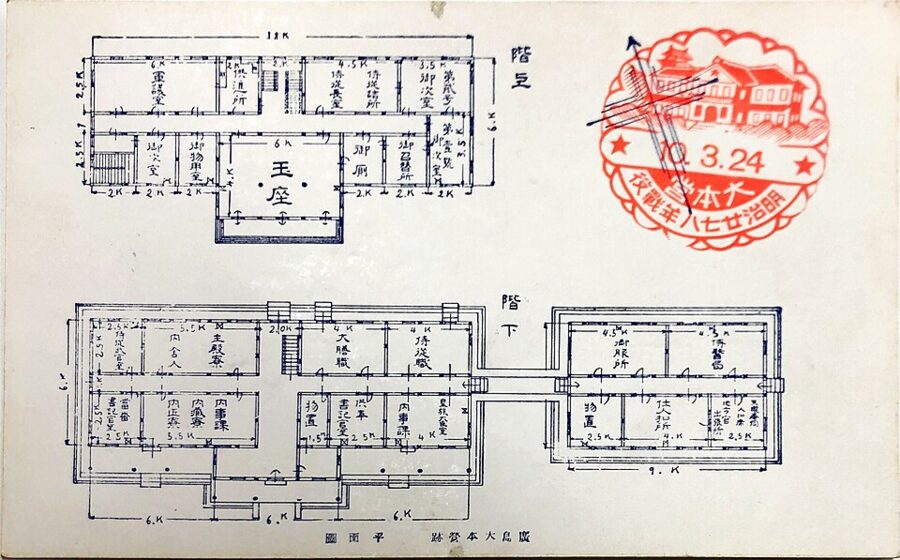
In September 1894 the Imperial General Headquarters moved from Tokyo into a two-storey wooden building in the castle, and Emperor Meiji came with it. The Diet was called to Hiroshima that October and sat for four days in a temporary hall on the western parade ground. For seven months Hiroshima was effectively the capital, the only time since the Meiji Restoration that the seat of government has left Tokyo.
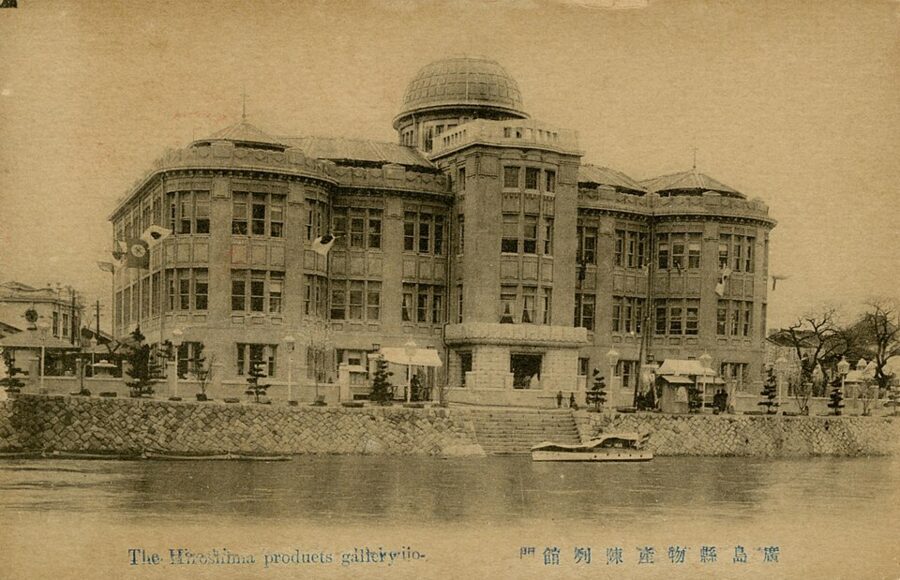
From then until 1945, Ujina was where soldiers left for the mainland of Asia, and the city grew around the army’s canning plants, depots and transport command. In 1915 the prefecture opened a Commercial Exhibition Hall designed by the Czech architect Jan Letzel beside the Motoyasu River, with a copper dome about 25 metres up. In 1919 it hosted an exhibition by German prisoners of war held on nearby Ninoshima, at which Karl Juchheim sold what is usually cited as Japan’s first baumkuchen.
6 August 1945
At 08:15 on 6 August 1945 the B-29 Enola Gay released a uranium bomb over the city centre. It was aimed at the Aioi Bridge, fell for about 43 seconds and exploded about 600 metres above the Shima Hospital, some 150 metres from the exhibition hall. About 350,000 people are thought to have been in the city that morning, including about 40,000 military personnel.
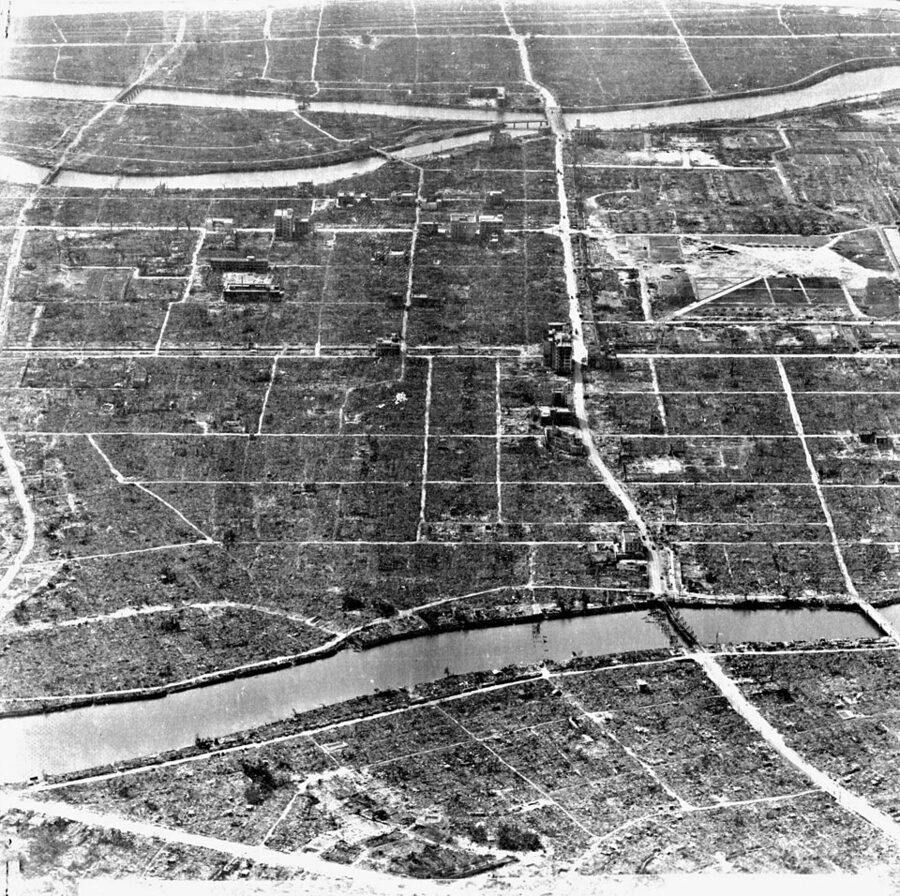
Within 500 metres of the hypocentre more than nine in ten people died on the day. Wooden houses within two kilometres collapsed, and the fires that followed burned for hours. Of about 8,000 secondary-school pupils mobilised to clear firebreaks across the city that week, about 6,000 died that day or within a few days, because they were working in the open.
How many died in total is still not a single number. The city and its museum use about 140,000 by the end of 1945, with a margin of about 10,000 either way; other estimates run from about 90,000 to more than 160,000, depending on who was counted and over what period. The deaths did not stop that December, and the people who survived, the hibakusha (literally “bomb-affected people”), lived with burns, radiation illness and, for many, discrimination over marriage and work.
The second city struck was Nagasaki, three days later. In Hiroshima, some things kept working. The Miyajima line of the tramway was running again from the western suburbs on the 7th, and on the 9th a single-track service ran in the west of the city with power from the substation at Hatsukaichi, staffed in part by the teenage girls of the company’s driving school. Conductors did not insist on fares.
The rebuilding
Rebuilding began in the ruins. People returned to plots where their houses had stood and put up sheds of salvaged timber; returnees from the former colonies dug vegetable gardens on the old western parade ground, and by the late 1940s a district of shacks had grown along the river by the castle. A typhoon in September 1945 killed more than 2,000 people in the prefecture and washed away much of what had been left.
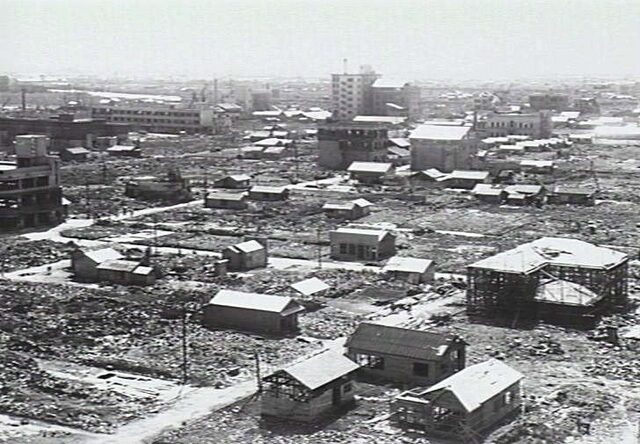
The turning point was a law. The mayor, Hamai Shinzo, lobbied the occupation authorities and the parties in Tokyo for a statute giving Hiroshima national money and former military land, and the Diet passed the Hiroshima Peace Memorial City Construction Law in May 1949. Because it applied to one city only, it needed a local referendum, the first held under Article 95 of the constitution, and it came into force on 6 August 1949.
That law paid for the modern centre. A competition that year for a peace park drew about 140 entries, and the team led by the young architect Tange Kenzo won with the axis that runs through the museum and the cenotaph to the dome. A 100-metre-wide avenue was cut across the city east to west and named Peace Boulevard after a public vote in 1951.
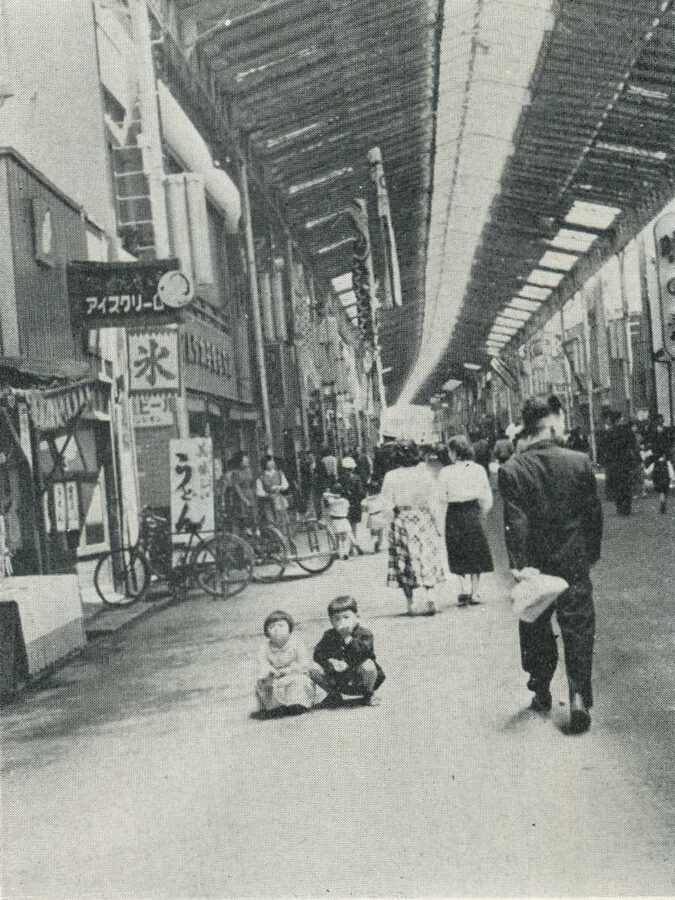
The baseball club, the Carp, was founded in December 1949, the Peace Memorial Museum opened in 1955, and a concrete copy of the castle keep went up in 1958. The Shinkansen arrived in 1975, and the population passed a million ten years later.
The Peace Memorial Park
The park covers the northern tip of Nakajima, the island between the Motoyasu and Honkawa rivers, and before 1945 it was not a park at all but one of the city’s busiest shopping and entertainment districts, within 500 metres of the hypocentre. Walk it in Tange’s order: from Peace Boulevard through the museum’s pillars, past the cenotaph and the Flame of Peace, then north to the Children’s Peace Monument and across the river to the dome.
The Peace Memorial Museum
The museum is two buildings joined by a bridge, and the permanent exhibition runs in a fixed order: an introduction on the third floor of the East Building, the Main Building for the reality of the bombing, then back to the East Building for the danger of nuclear weapons and Hiroshima’s history. Both buildings were rebuilt inside and reopened in 2017 and 2019.
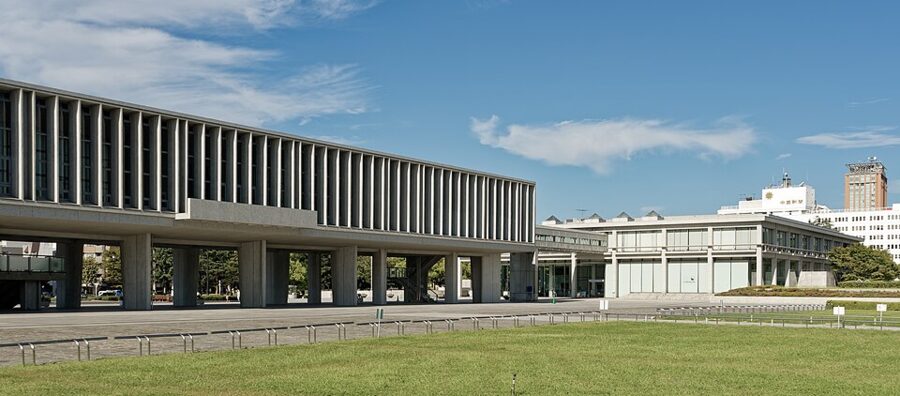

The Main Building is the hard part. It is built around personal belongings, each with a name and a short account from the family: a lunchbox, a school uniform, a tricycle, skin and fingernails kept by a mother. Most people need longer here than they expect, and I would allow at least two hours for the whole route.
Admission is ¥200 for adults, ¥100 for high-school students and free for younger children. The museum opens at 07:30 all year and closes at 19:00 from March to November, at 20:00 in August and at 18:00 from December to February; entry in the first hour and in the last hour before closing needs a ticket booked online in advance. It is closed on 30 and 31 December, and an audio guide costs ¥500. The quietest way in is one of the reserved early slots, before the school groups arrive.
The cenotaph and the flame
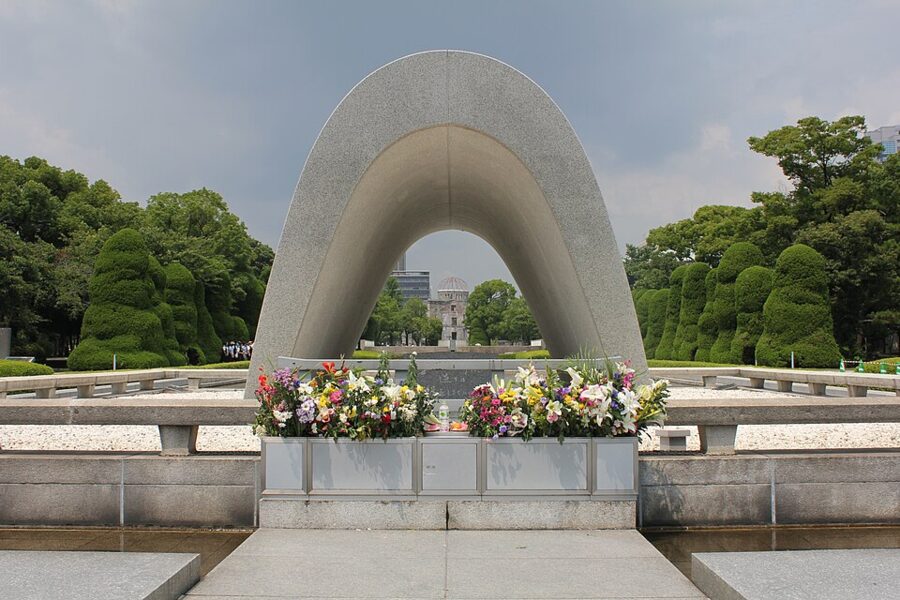
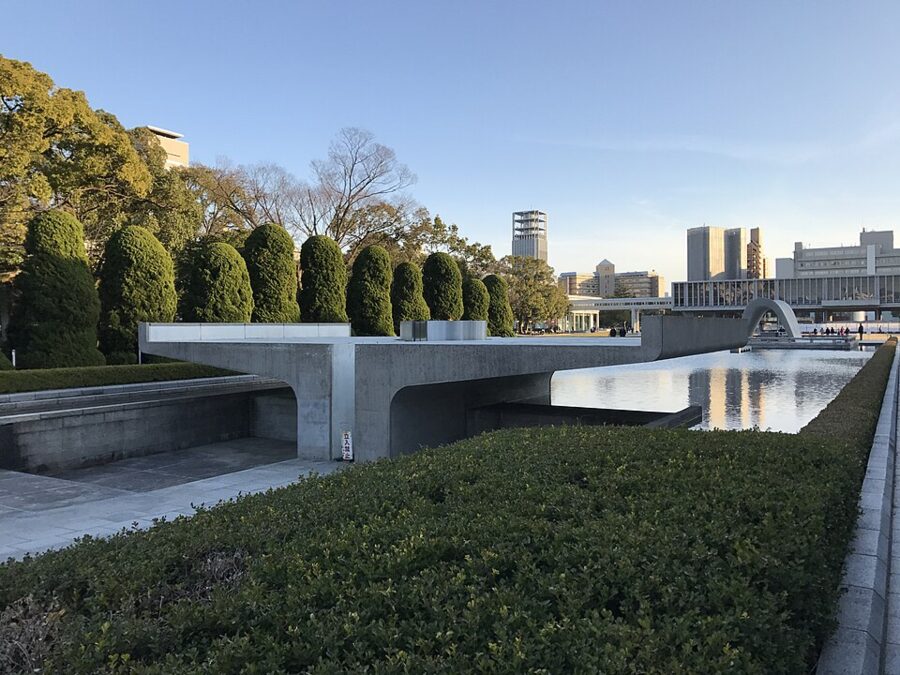
The Memorial Cenotaph is a saddle-shaped arch of granite over a stone chest that holds the register of the dead, every person known to have died of the bomb, whatever their nationality. Names are added each year, and by 2026 the register held more than 350,000. The arch takes the form of an ancient clay house model, a shelter for the souls of the dead.
The inscription, by the English literature professor Saika Tadayoshi, has been argued over since 1952 because Japanese lets a sentence go without a subject. His own English version reads “Let all the souls here rest in peace, for we shall not repeat the evil”, and a plaque added in 1983 explains that the “we” means all humanity. The Flame of Peace beyond it has burned since 1964 and is to stay alight until the last nuclear weapon is gone.

Underground on the east side of the park is the Hiroshima National Peace Memorial Hall for the Atomic Bomb Victims, which is free. Its Hall of Remembrance is a circular room tiled with a panorama of the destroyed city, made of 140,000 tiles, one for each estimated death by the end of 1945.
The Children’s Peace Monument
Sasaki Sadako was two when the bomb fell about 1.6 kilometres from her home. She developed leukaemia at 12 and died in October 1955, having folded paper cranes through her months in hospital, following the old saying that a thousand cranes grant a wish. Her classmates began collecting money for a memorial to her and to the other children killed by the bomb, and pupils at more than 3,000 schools around Japan joined in.
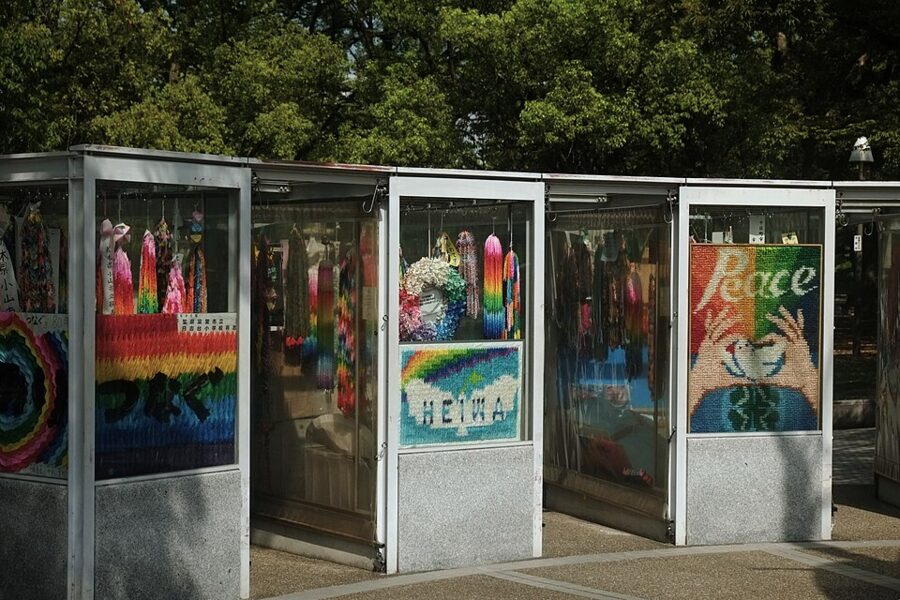

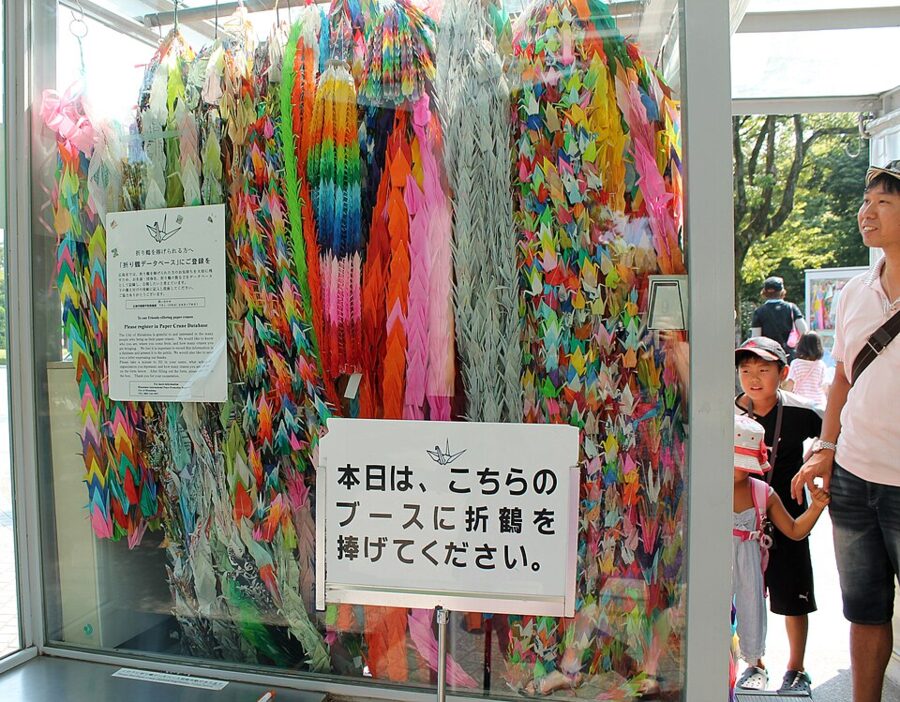
The monument, by the sculptor Kikuchi Kazuo, was unveiled on 5 May 1958, Children’s Day: a girl on top of a tall arched pedestal holding up a crane. Inside the arch hangs a bell with a gold crane for a clapper, and the words on it were written by the physicist Yukawa Hideki. Schools still send strings of a thousand cranes, and they are hung in the booths behind it.

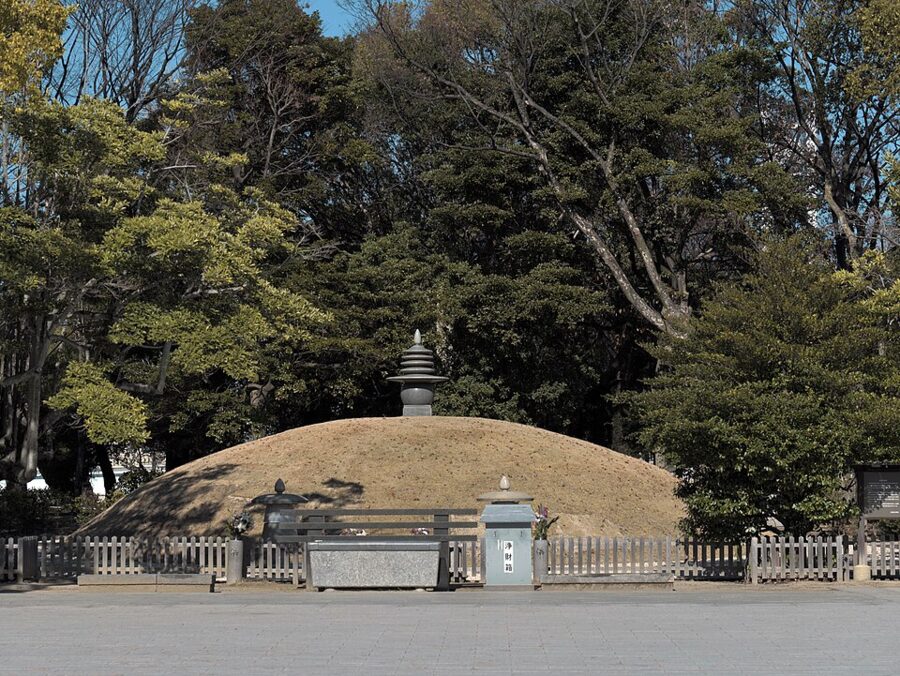
North of it, the Atomic Bomb Memorial Mound is a grassed burial mound holding the ashes of about 70,000 people who were never identified. The Peace Bell nearby is free to ring, and its surface is cast with a map of the world.

The Genbaku Dome
Letzel’s exhibition hall was renamed the Prefectural Industrial Promotion Hall in 1933 and, by August 1945, was full of government offices. The thirty or so people working inside are thought to have died instantly. Because the blast came from almost straight above, and the copper roof melted in the flash and let the pressure through, the central walls and the steel frame of the dome stayed up while the rest fell.
For twenty years the city argued over whether to keep it. Some survivors wanted it gone, and the walls shook when trams went past. What changed minds was the diary of Kajiyama Hiroko, exposed to the bomb as a baby a kilometre away, who died of leukaemia in 1960 at 16 and had written that the ruin might be the only thing left to speak about the bomb. A schoolchildren’s campaign followed, and on 11 July 1966 the city council voted to preserve it.
The first preservation work, paid for by donations from across Japan, injected resin into more than 10,000 cracks in 1967. The dome became a national historic site in 1995 and was inscribed on the World Heritage List in December 1996, with the United States dissociating itself from the decision and China abstaining. It is one of the UNESCO World Heritage sites in Japan listed on a single criterion, its meaning rather than its architecture, and in 2025 it was raised to a Special Historic Site, the first modern structure in Japan to receive that status.
You cannot go inside. Walk round it, then look from the west bank by the Aioi Bridge, the T-shaped aiming point, to see how close they stand.
Buildings and trees that survived
The city began a register of surviving buildings in the 1990s with 103 entries, and 17 of them had been pulled down by 2015. Three of those still standing are easy to see on foot from the park.
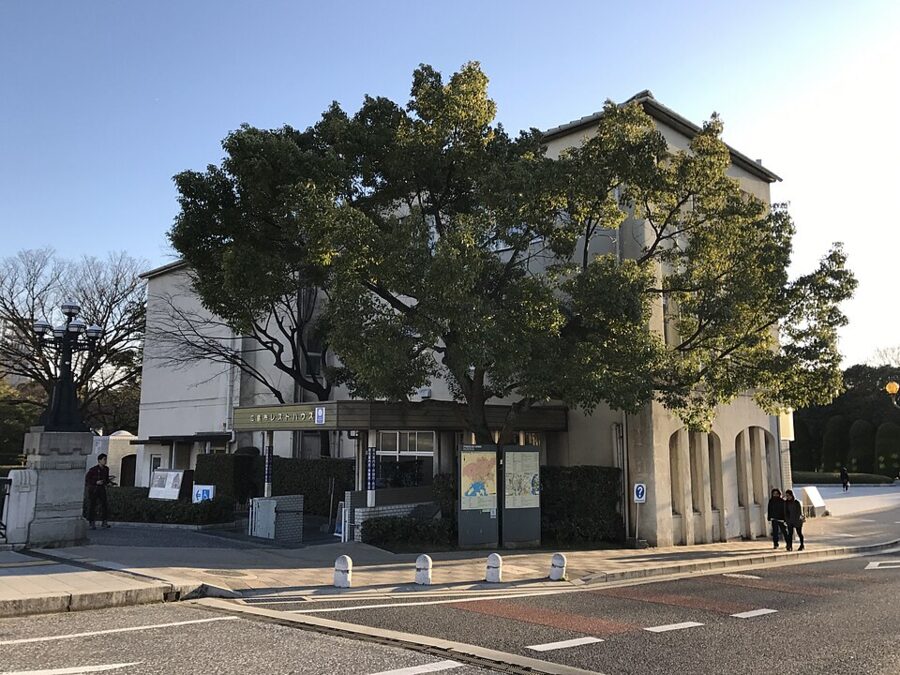

The Rest House, at the park end of the Motoyasu Bridge, was in 1945 the office of the prefectural fuel rationing union. Of the 37 people working there that morning, only Nomura Eizo, who had gone down to the basement to fetch papers, survived; he walked out through the burning district and lived until 1982, one of very few witnesses from so close.
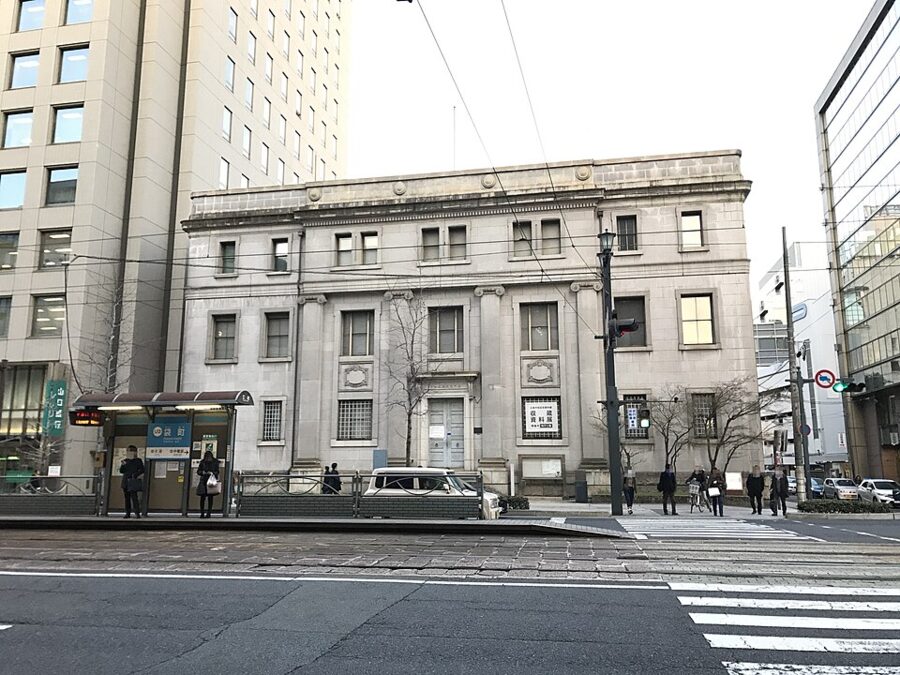

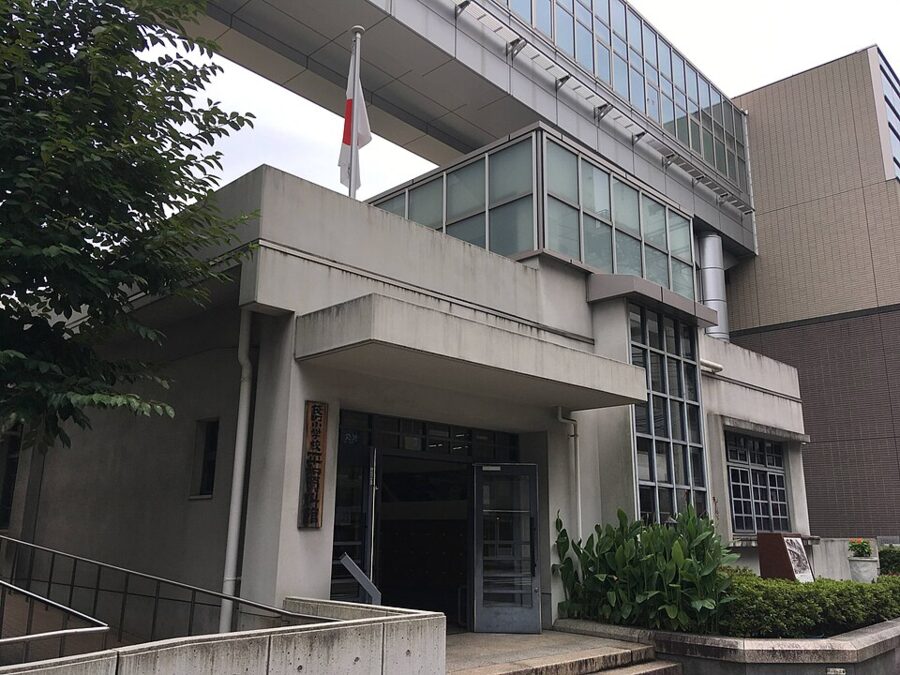
Ten minutes east, beside the Fukuromachi tram stop, the former Bank of Japan Hiroshima Branch of 1936 stood 380 metres from the hypocentre and kept its shell. Round the corner, the Fukuromachi Elementary School Peace Museum keeps part of the school’s concrete west building, which became a first-aid station. During demolition in 2000, workers found messages written on the walls by people searching for their families, and that part of the building was kept.

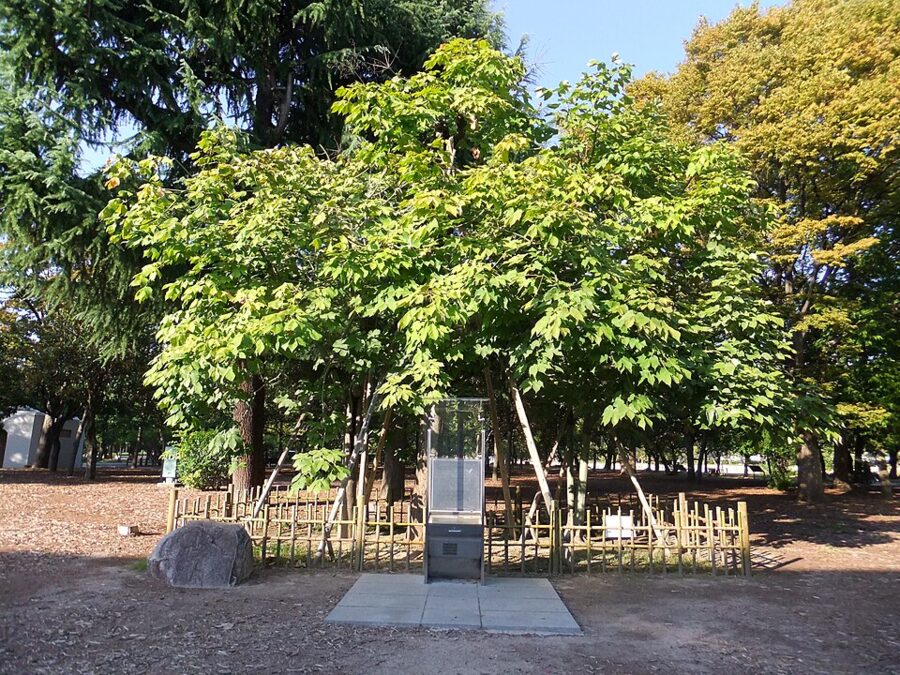
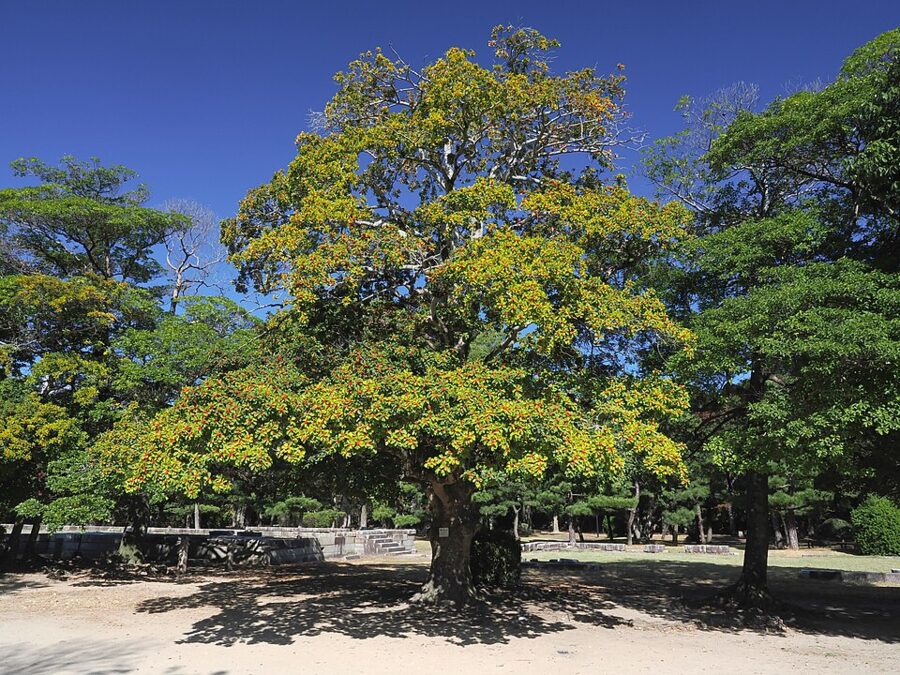
The trees are the other survivors. A survey published in 2011 counted about 170 trees in the city that had stood there before the bombing, the hibaku jumoku, and the city marks them with small numbered plates. The nearest, a weeping willow on the riverbank 370 metres from the hypocentre, fell in the blast and grew again from its roots.

The rest of the city
Hiroshima is easy to underrate because it is so easy to visit in a day. The centre is flat, compact and on the tram, with riverside promenades and shopping streets busy late into the evening.
Hiroshima Castle
The castle is called Rijo, carp castle, possibly because the area was once known as Koi-no-ura, which sounds like “carp” (koi), possibly because of the carp in the moat; the name first appears in writing in the late Edo period. The baseball team took its name from it.
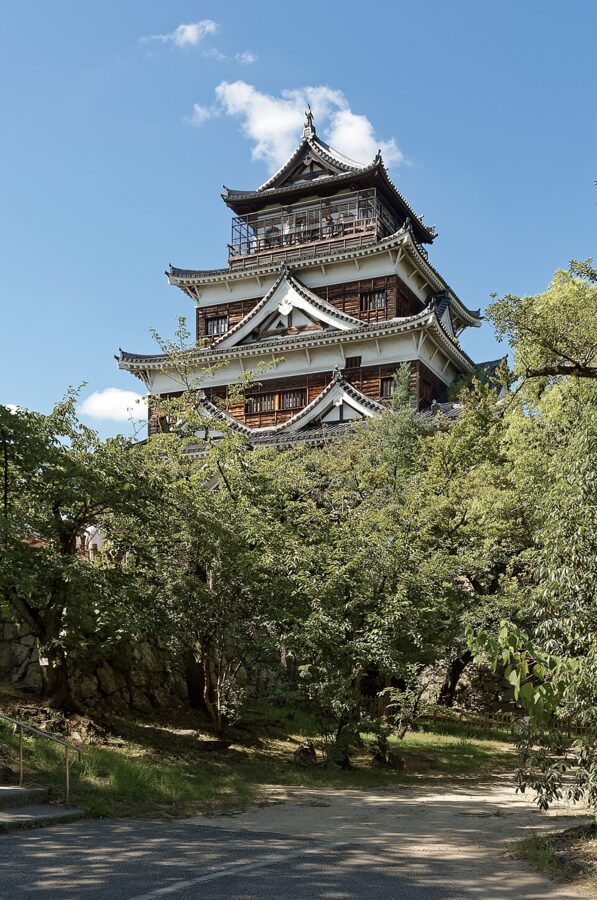

The keep is a concrete copy built in five months for the 1958 Hiroshima Reconstruction Exposition, and for 68 years it was the castle museum. It closed to visitors in March 2026 because it no longer meets earthquake standards. An expert committee has studied a wooden reconstruction without a decision being announced, and the collection is moving to a new Sannomaru History Museum in the outer bailey, due to open in 2027.
The grounds are still worth the walk. In the second bailey, the main gate and three turrets were rebuilt in wood by traditional methods between 1989 and 1994, and they are open free from 09:00 to 17:30 between April and September and to 16:30 the rest of the year. In the inner bailey are the foundation stones of the 1894 Imperial Headquarters and, against the inner moat, the half-buried concrete operations room of the regional army command, the one building in the bailey left standing, from which a mobilised schoolgirl telephoned the first report of the bombing.

Shukkeien
Shukkeien (縮景園), the “shrunken scenery garden”, was begun in 1620 by the first Asano lord, Asano Nagaakira, and laid out by his senior retainer Ueda Soko, a tea master and warrior. The name is usually read as a miniature of famous views, often said to be West Lake in Hangzhou, and the pond is divided by the arched stone Koko Bridge, finished in 1786 and one of the few things in the garden older than 1945.
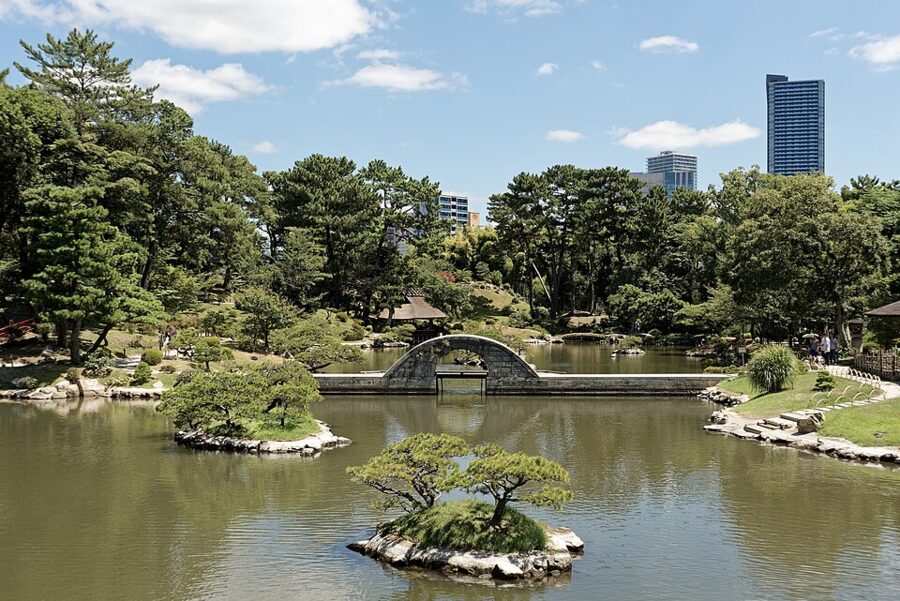

In 1894 the garden’s main hall became the Emperor’s quarters in reserve. In 1945 the garden was an official refuge 1.35 kilometres from the hypocentre, and the injured crowded into it; the writer Hara Tamiki described those days on the riverbank here in his story Summer Flower. In 1987 a dig prompted by a 1945 newspaper photograph recovered the remains of 64 people buried in the garden, and a memorial now marks the spot.
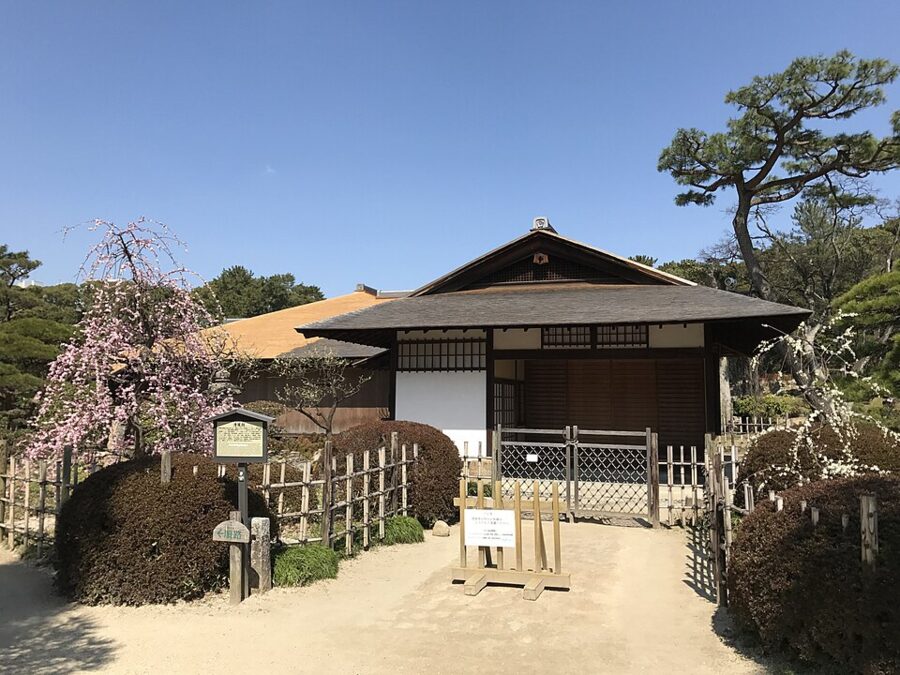

Entry is ¥350 for adults and free for school pupils. The garden opens at 09:00 and closes at 18:00 from mid-March to mid-September and at 17:00 the rest of the year. The prefectural art museum next door shares the gate.
Hondori and the shopping streets
Hondori is a covered shopping street that runs 577 metres east from the Peace Park on the line of the old Saigoku highway, and the paving still carries the highway’s name. With the Hatchobori department stores and the side streets of Nagarekawa, the nightlife district, it is where the city eats, drinks and shops.
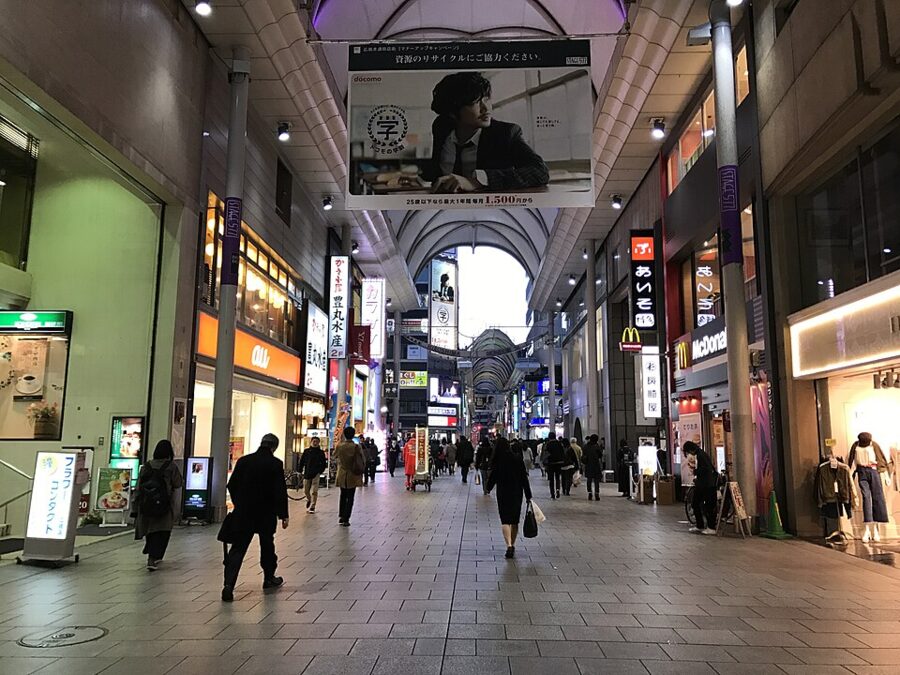

You will hear the local speech here more than anywhere. Hiroshima’s is one of the better-known Japanese dialects, partly from a run of 1970s gangster films set in the city and in Kure; the word to listen for is buchi, “very”, as in buchi umai, very tasty.
The Carp and Mazda Stadium
The Hiroshima Toyo Carp have no big corporate parent, unusual in Japanese professional baseball, and they began as a citizens’ club. When the team ran out of money in 1951 and the league proposed a merger, local people kept it alive with donations, famously collected in sake barrels at the ballpark gates. The first Central League pennant came in 1975, the year the caps turned red.
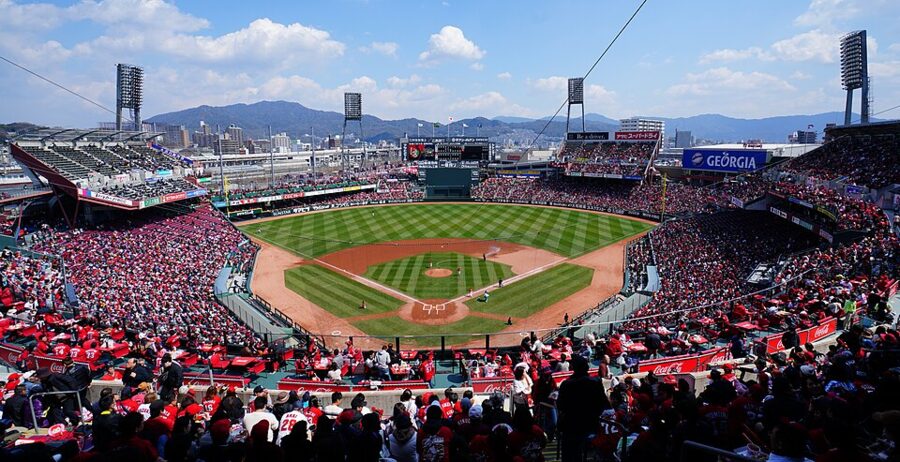

Since 2009 the Carp have played at the 32,000-seat Mazda Zoom-Zoom Stadium, about ten minutes’ walk from Hiroshima Station. The season runs from late March to late September and weekend tickets go fast; failing that, the game will be on the television in any okonomiyaki shop.
The trams
Hiroden, the Hiroshima Electric Railway, has run trams here since November 1912, when the first line opened from the station to the Miyuki Bridge and the castle moats had just been filled to make room. With six city lines and the suburban Miyajima line, about 36 kilometres in all, it is the largest tram operator in Japan.
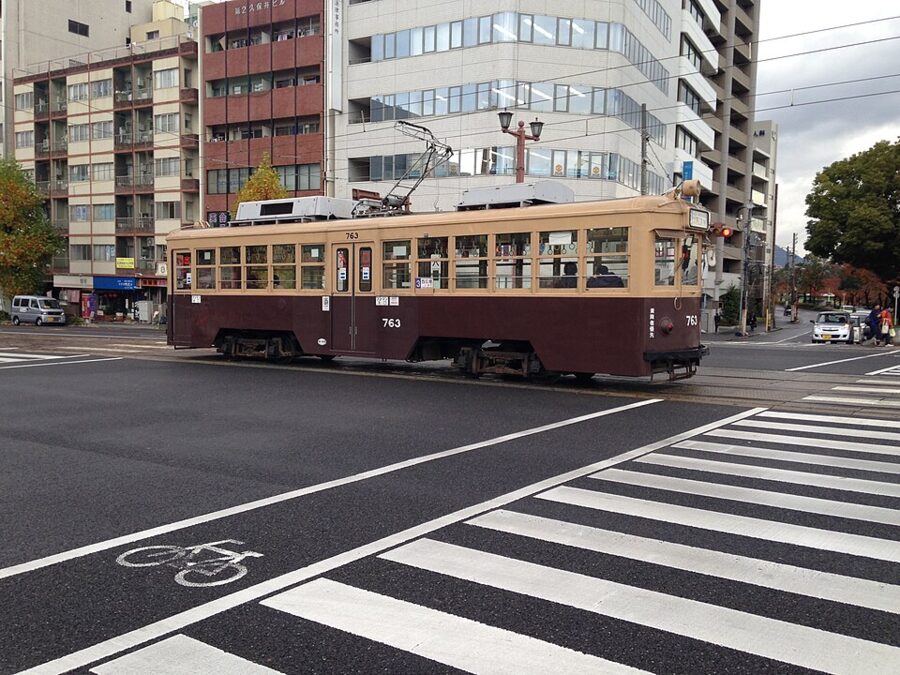

Every ride costs ¥240 for adults, on the city lines and all the way out to Miyajimaguchi, paid when you get off. A one-day paper pass is ¥700. Since August 2025 the trams no longer stop in the street outside Hiroshima Station: a new line over the Ekimae Ohashi bridge runs on a viaduct straight into the second floor of the rebuilt station building, a layout Japan had not seen since Tokyu’s tram terminus at Shibuya closed in 1969.
Food
Okonomiyaki
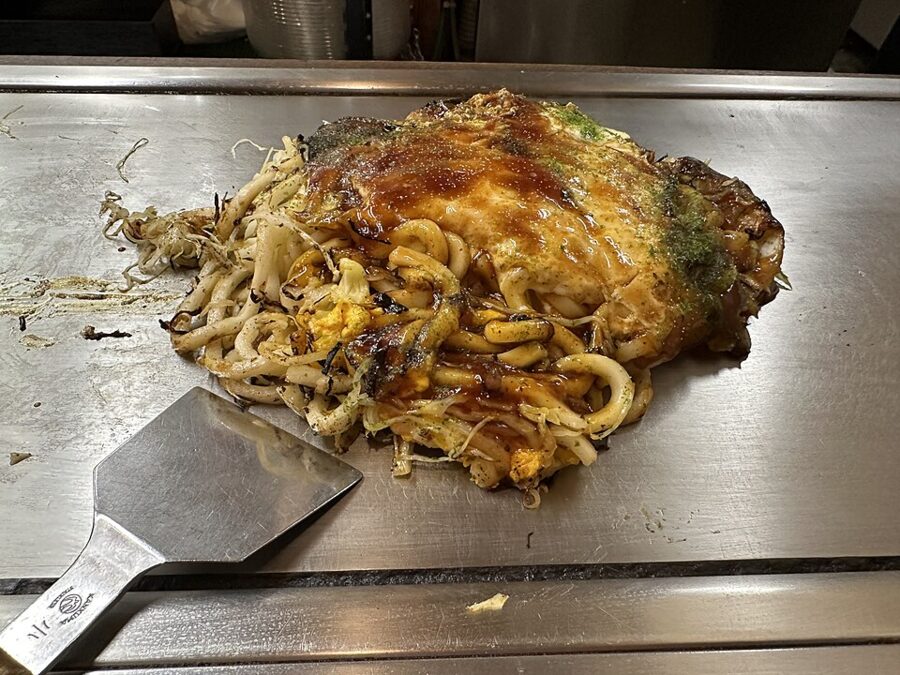
Before the war, children all over western Japan bought issen yoshoku, “one-sen Western food”: a thin batter pancake with green onion and a splash of sauce. In Hiroshima after 1945, with aid flour, iron plates from the factories and onions from the farms at Kannon, stallholders built it into a meal, and by the mid-1950s they were adding Chinese noodles. It is cooked in layers, not mixed: batter, a heap of cabbage and bean sprouts, pork belly, noodles, a fried egg, then sauce.

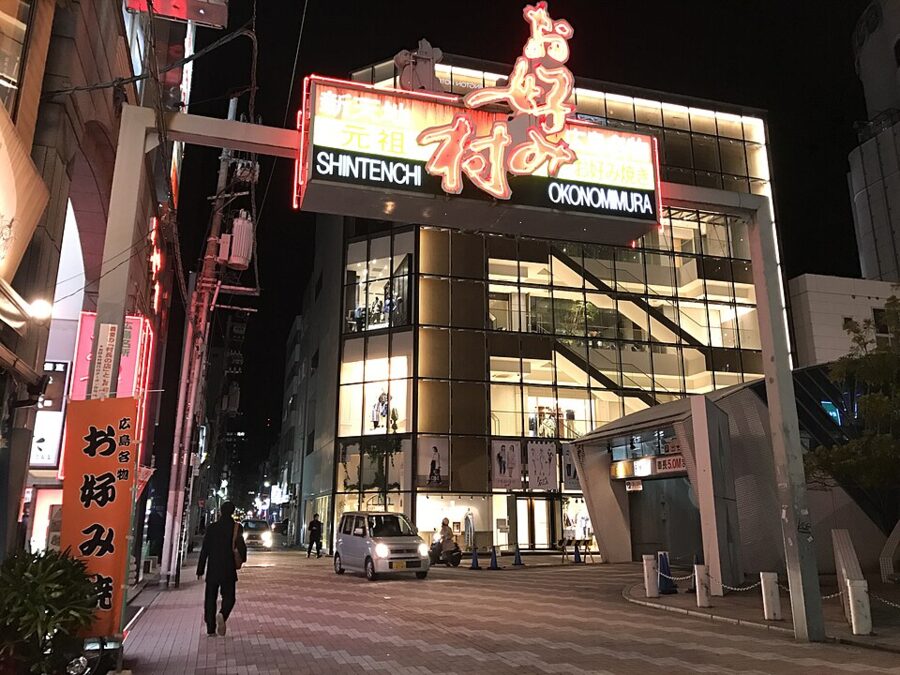
The stalls began on Chuo-dori around 1950, moved to two squares in Shintenchi in 1957 and were cleared when the squares became parks in 1965. Fourteen owners who found no premises formed Okonomimura, the “okonomiyaki village”, in a building on its present Shintenchi plot since 1967; about two dozen counters now fill three floors.

Mitchan, which began as one of those stalls in 1950 and is often credited with fixing the dish’s form and its sauce, still runs its main shop in Hatchobori. You do not need a famous name, though: the city has hundreds of small okonomiyaki shops, many in the front room of the owner’s house.
Oysters
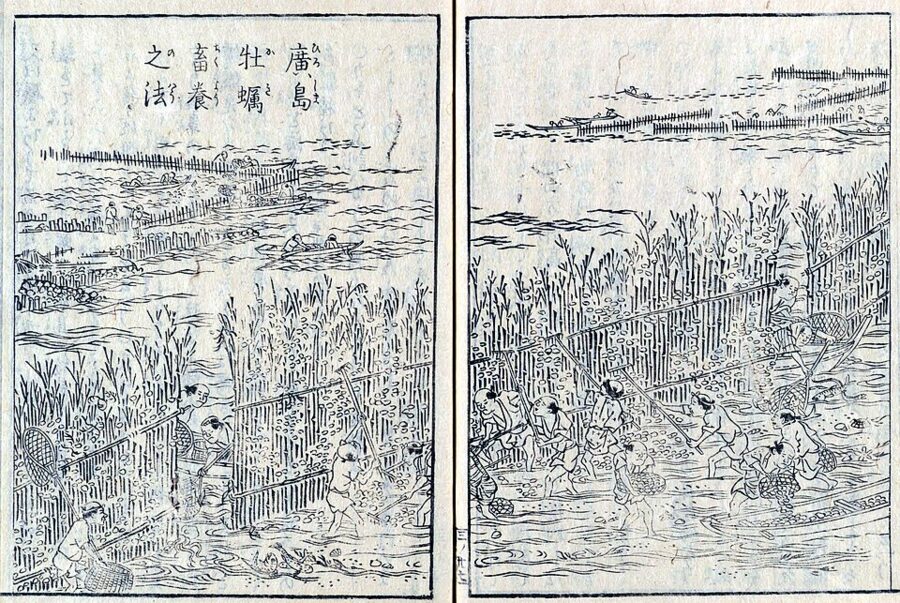
Hiroshima Bay has farmed oysters since at least the Edo period, and the prefecture grows more than any other in Japan. The Edo method was to set bamboo stakes in the tidal shallows for young oysters to settle on, and in winter boats carried the crop to Osaka, where they moored as floating oyster restaurants.
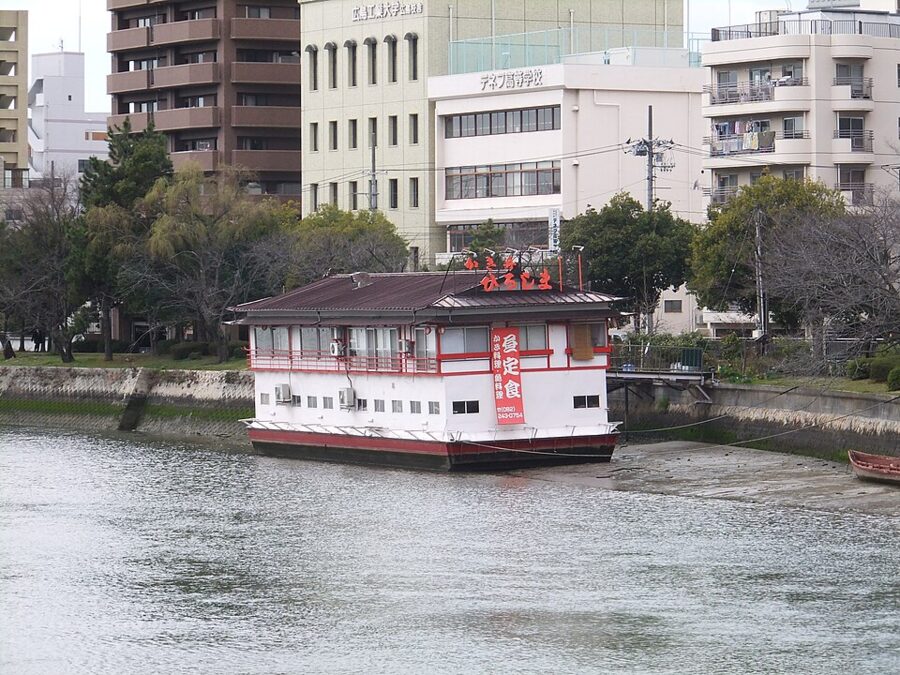
The season runs roughly from late autumn to early spring. Try them grilled in the shell on Miyajima, fried in breadcrumbs as kaki furai, or stewed in a miso-lined pot as dote nabe. A few restaurant boats, kakibune, still moor in the city’s rivers.

Tsukemen, brushes and sake
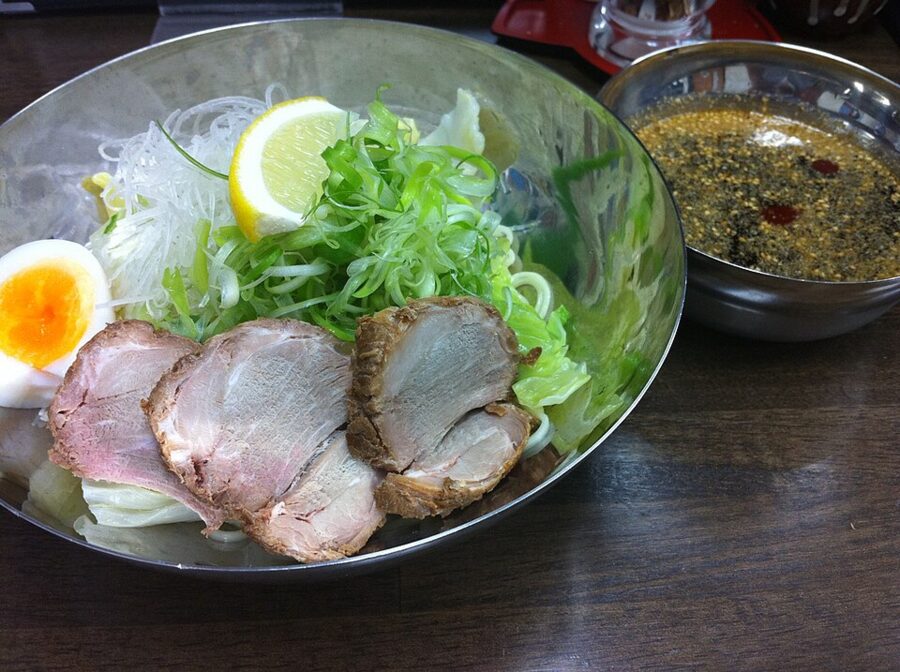
Hiroshima tsukemen are cold noodles dipped in a sauce sharp with chilli oil and sesame, served with a heap of cabbage and green onion; shops let you choose the heat level, and the top numbers are not a joke.

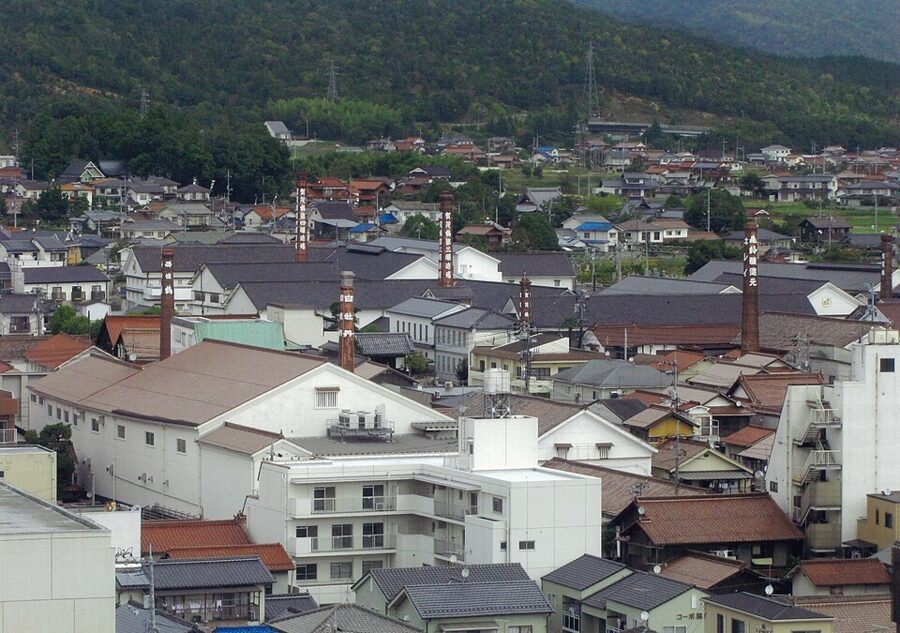
For something to take home, the hill town of Kumano, a bus ride east of the city, makes about 80 percent of Japan’s writing brushes, and its make-up brushes have a following of their own; the brush festival is held each autumn equinox. In Saijo, about 35 minutes east of Hiroshima by JR, seven breweries stand within about 800 metres of the station, a cluster that grew after Miura Senzaburo of nearby Akitsu worked out in 1897 how to brew good sake from soft water. The town’s sake festival falls on the second weekend of October.

Miyajima
Itsukushima (厳島), the shrine island usually called Miyajima, lies a ten-minute ferry ride off the coast west of the city. It is one of the traditional Three Views of Japan, and for most of its history the island itself was treated as sacred: the dead were taken across to the mainland for burial, and the shrine was built out over the water rather than on the island’s soil.
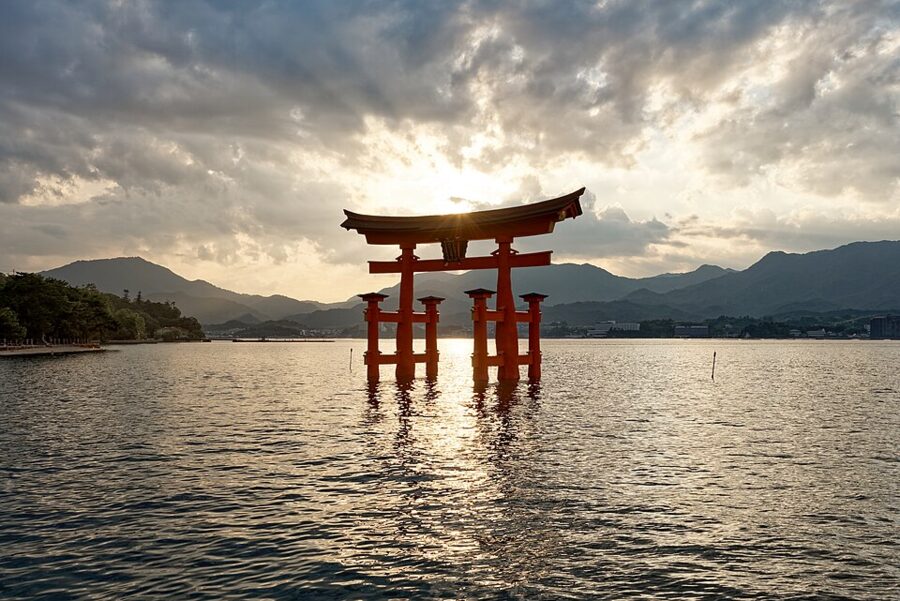

Itsukushima Shrine
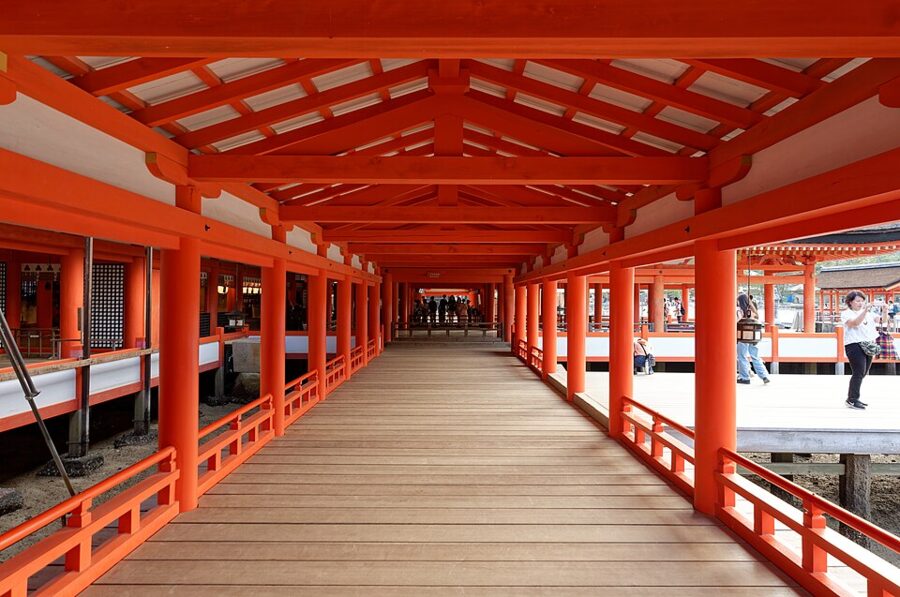
The shrine’s own tradition dates its founding to 593. Its present form comes from Taira no Kiyomori, the warlord who governed Aki province and made the shrine his clan’s, and who rebuilt it on a grand scale around 1168. Fires in 1207 and 1223 destroyed it, and most of the halls standing now date from the rebuilding of 1241, which kept Kiyomori’s plan; the main sanctuary itself was rebuilt in 1571.
The halls stand on wooden piles over a tidal bay, linked by corridors of vermilion boards. The piles rest on stone footings like any building on land, and rotten ones are cut off and spliced. The architectural historian Miura Masayuki argues that the main halls were sited above a once-in-200-years tide, which is why storms have damaged the later outbuildings rather than the halls Kiyomori planned.

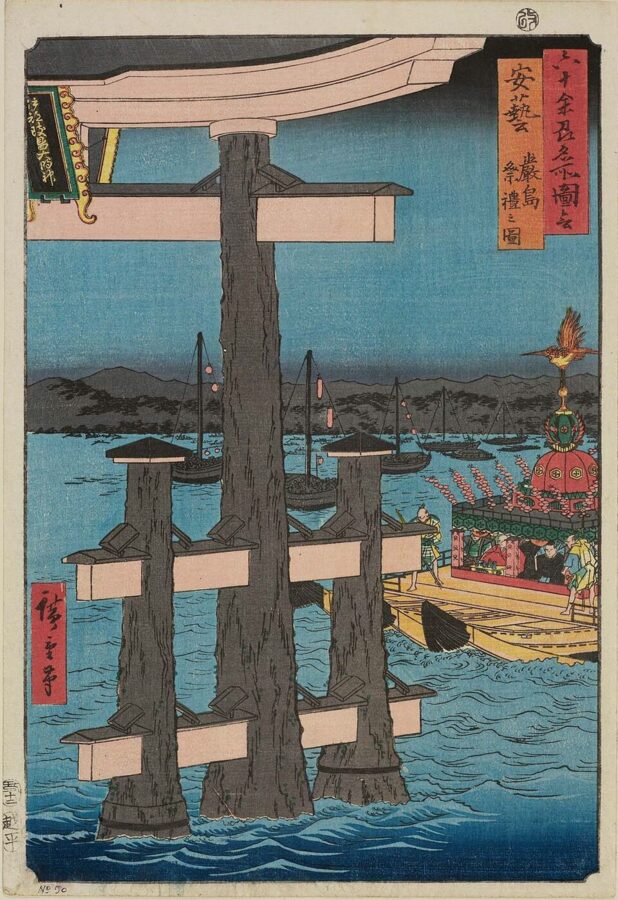
The great torii is the eighth since Kiyomori’s time and dates from 1875. It is 16.6 metres tall, its two main pillars are whole camphor trunks, and it is not fixed to the seabed at all: the hollow beams across the top are packed with about seven tonnes of stones, and the whole gate, about 60 tonnes, stands on its own weight on a bed of piles. It was under scaffolding for repairs from 2019 to the end of 2022.
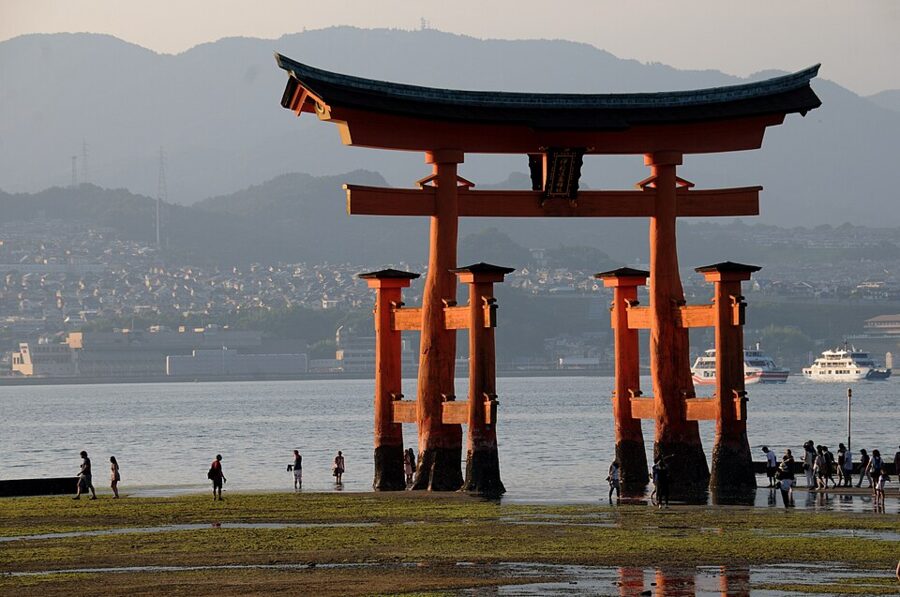

Plan the day around the tide: at high tide the shrine and gate stand in the water, at low tide you can walk to the torii, and with the table in hand you can see both. Shrine admission is ¥300 for adults, and the gate opens at 06:30 and closes between 17:00 and 18:00 depending on the season.
The great festival, Kangensai, falls on the seventeenth day of the sixth lunar month, in July or August, when a boat carrying court musicians is rowed across the bay at night.
The island beyond the shrine
Most day-trippers see the shrine and the shopping street, eat grilled oysters and momiji manju (maple-leaf cakes filled with bean paste) and leave. Stay longer and climb Mount Misen, the 535-metre peak behind the shrine. Temple tradition says the monk Kukai trained on it in the ninth century, and halls near the summit keep a fire said to have burned since his time.
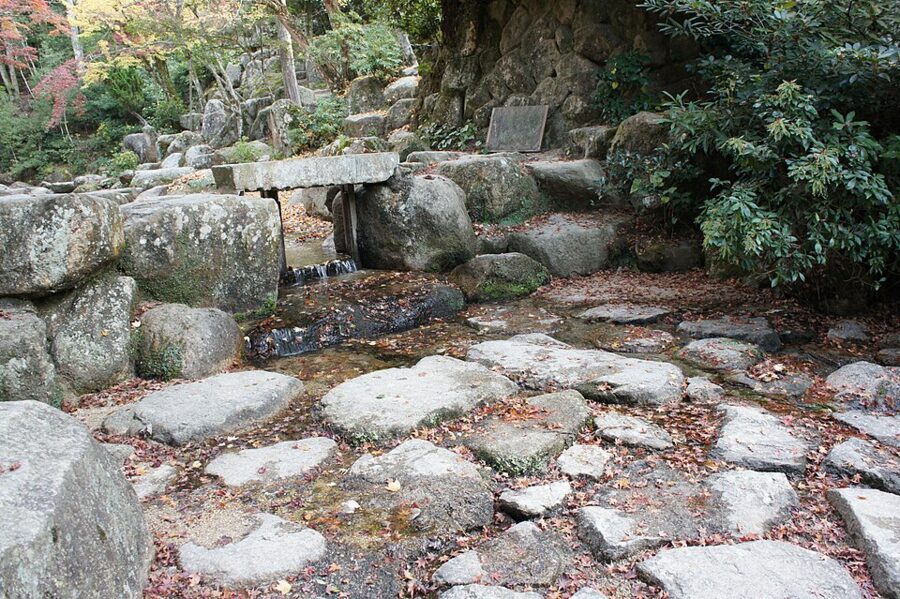

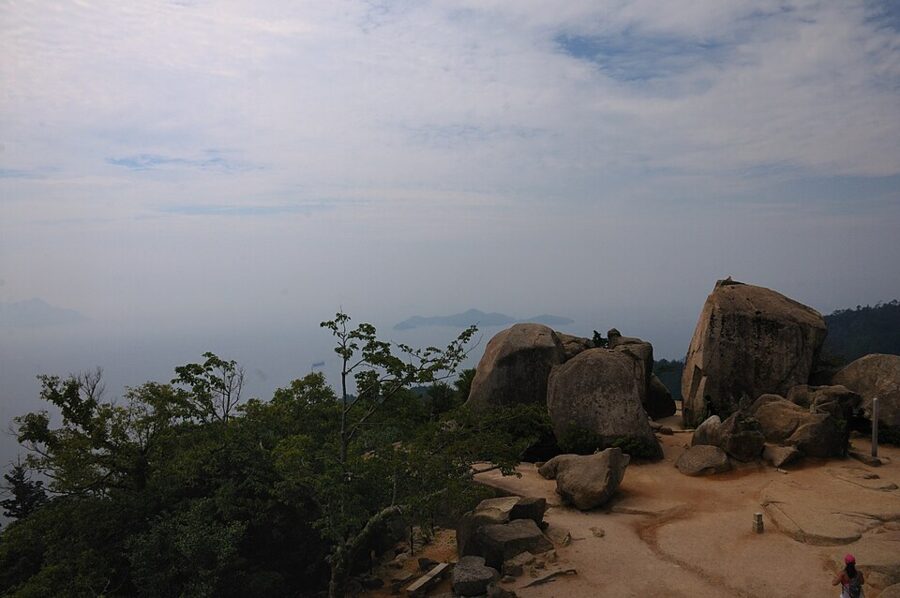

The Miyajima Ropeway climbs from Momijidani in two stages, a small gondola line and a 35-person car, and costs ¥2,000 return or ¥1,100 one way. Cars go up from 09:00 to 16:00 and the last car down leaves at 16:30; on busy autumn weekends rides must be booked in advance. The walking paths up are steep but well made and take about 90 minutes to two hours.
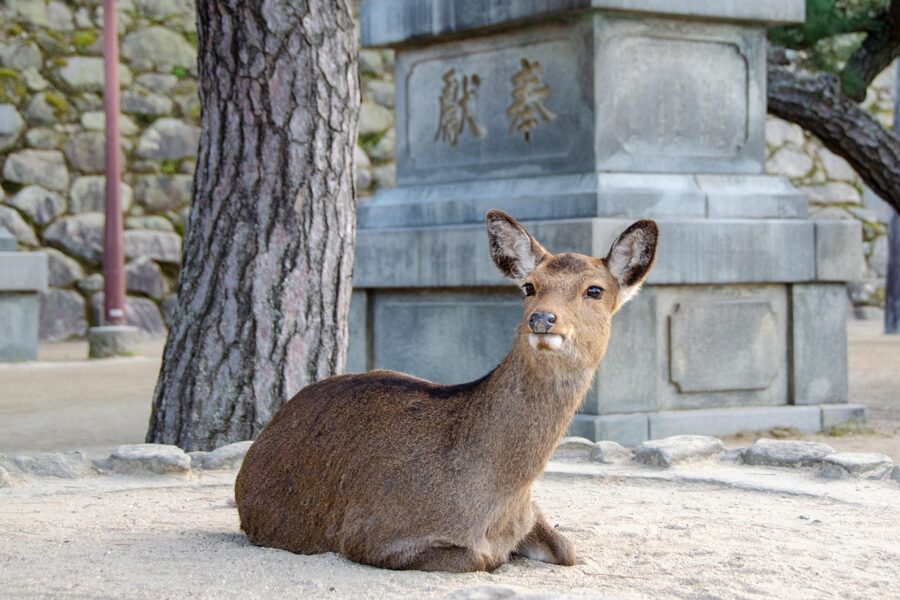
Stay the night if you can. The day crowd leaves on the evening ferries, and in the early morning the shrine opens to almost no one.
Getting to Miyajima
Two companies run ferries from Miyajimaguchi on the mainland, and both take about ten minutes. JR West’s adult fare is ¥200 one way, and its boats on a set daytime schedule swing close to the torii before docking. Every visitor also pays a Miyajima visitor tax of ¥100 per trip, introduced by Hatsukaichi City in October 2023 and collected with the ferry ticket, or ¥500 for a year.
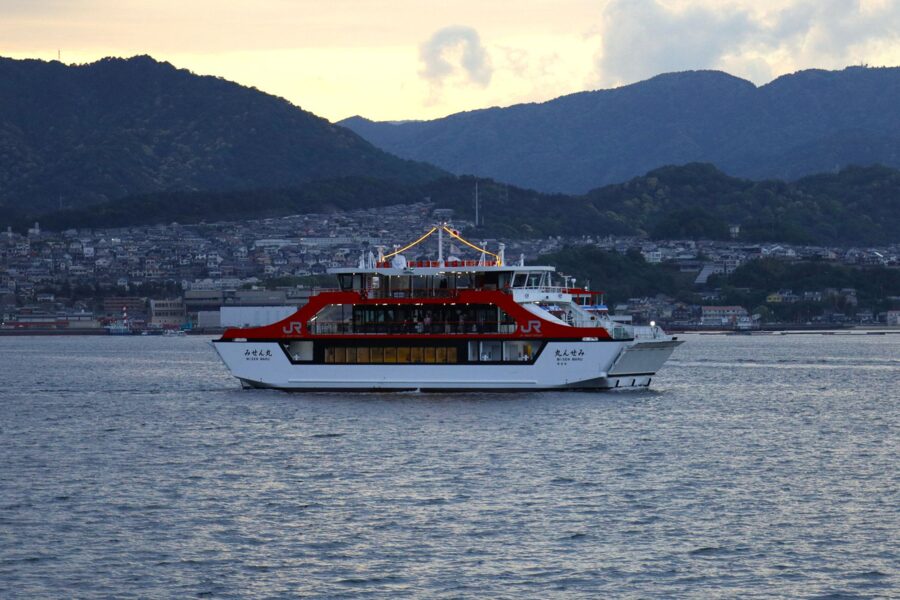
Miyajimaguchi is about 25 to 30 minutes from Hiroshima Station on the JR Sanyo Line, or a little over an hour on tram line 2, which runs all the way for the same ¥240 flat fare. The tram is slower, but from the Peace Park or Hondori it saves going back to the station, and the ferry piers are a minute’s walk from its terminus.
Day trips beyond Miyajima
Four old ports along the coast make good day trips by train. Further afield, Okayama and the Sea of Japan coast belong to the rest of Chugoku, one of the eight regions of Japan.
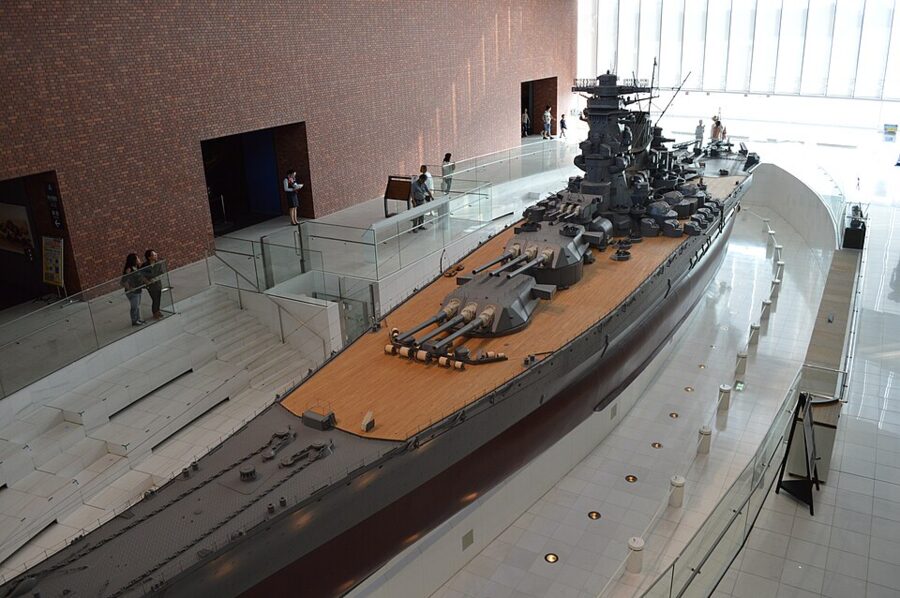

Kure, about 35 to 50 minutes southeast on the JR Kure Line, was a great naval arsenal, and its harbour museum tells the story of the ships built there.
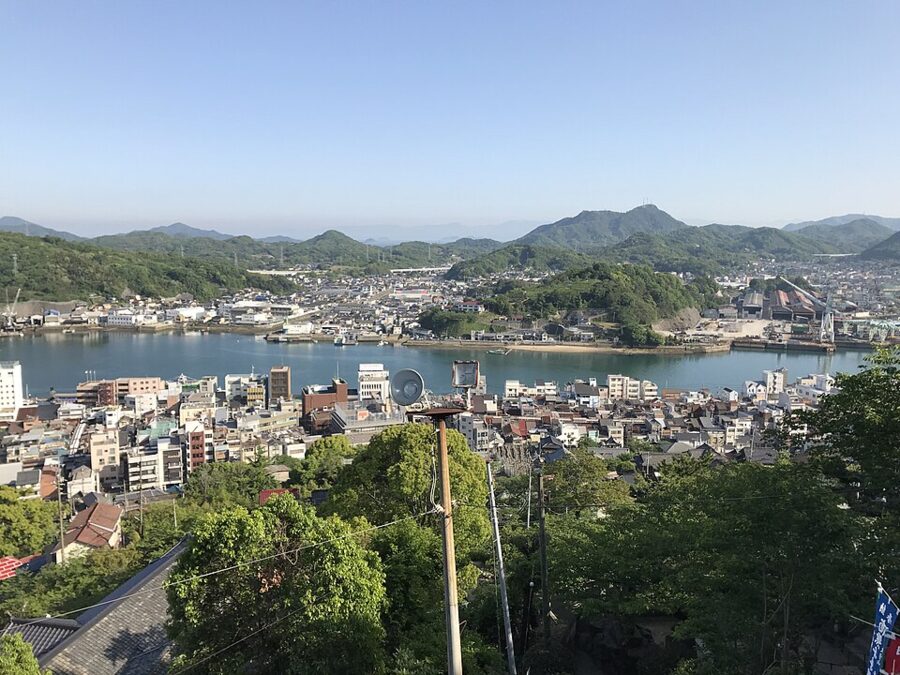
Onomichi, about 80 minutes east by JR local train, is a port of temples stacked on a hillside above a narrow channel, and the start of the Shimanami Kaido bridge and cycle route across the islands to Shikoku.

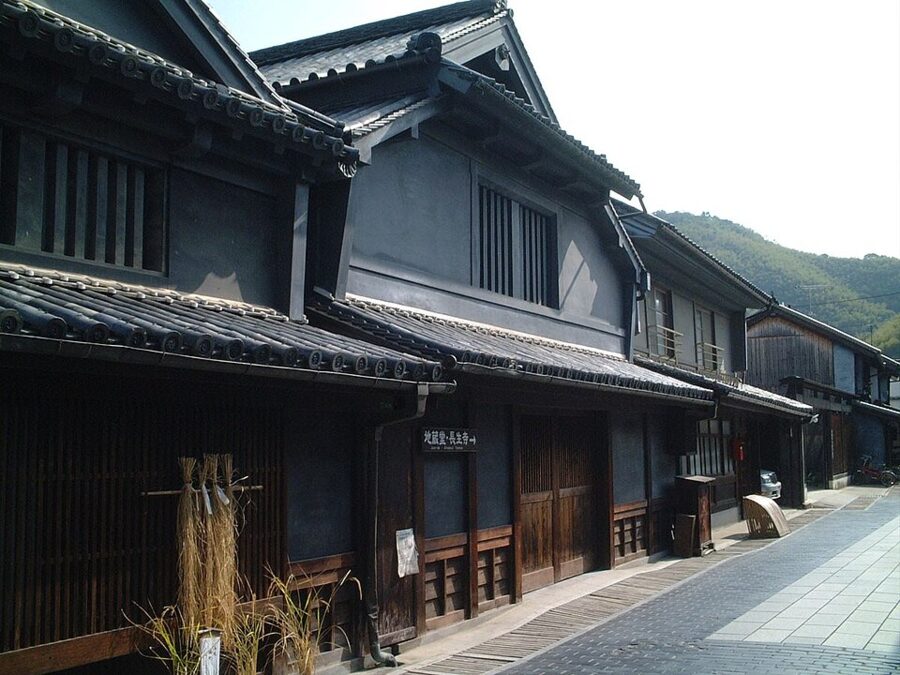
Takehara, on the coast between Kure and Mihara, made its money from salt pans and sake in the late Edo period; its preserved merchant quarter has been a protected townscape since 1982, and the ferry port of Tadanoumi down the road serves Okunoshima, the former poison-gas island now overrun by about 500 wild rabbits.

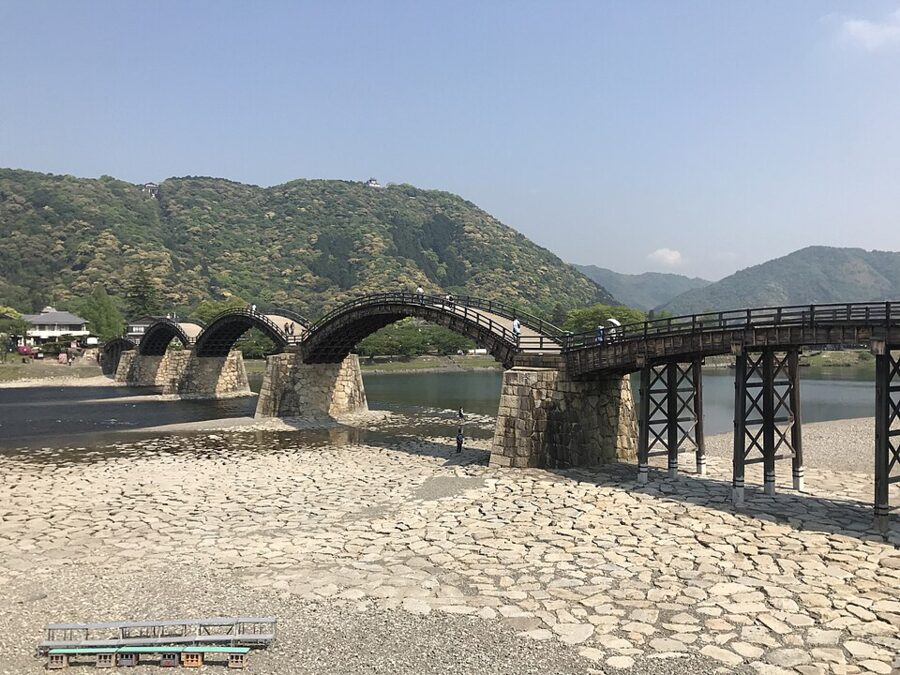
Iwakuni, across the prefectural border in Yamaguchi about 50 minutes west by JR, has Kintaikyo, a bridge of five wooden arches first built in 1673. A typhoon washed it away in 1950 after 276 years; it was rebuilt in wood by 1953 and its spans are replaced in turn as they age.

Getting there and getting around
Hiroshima is on the Sanyo Shinkansen, about four hours from Tokyo on the fastest Nozomi trains, about 1 hour 25 minutes from Shin-Osaka in Kansai and about 1 hour 5 minutes from Hakata in Kyushu, so it is an easy stop between Kyoto and Fukuoka.
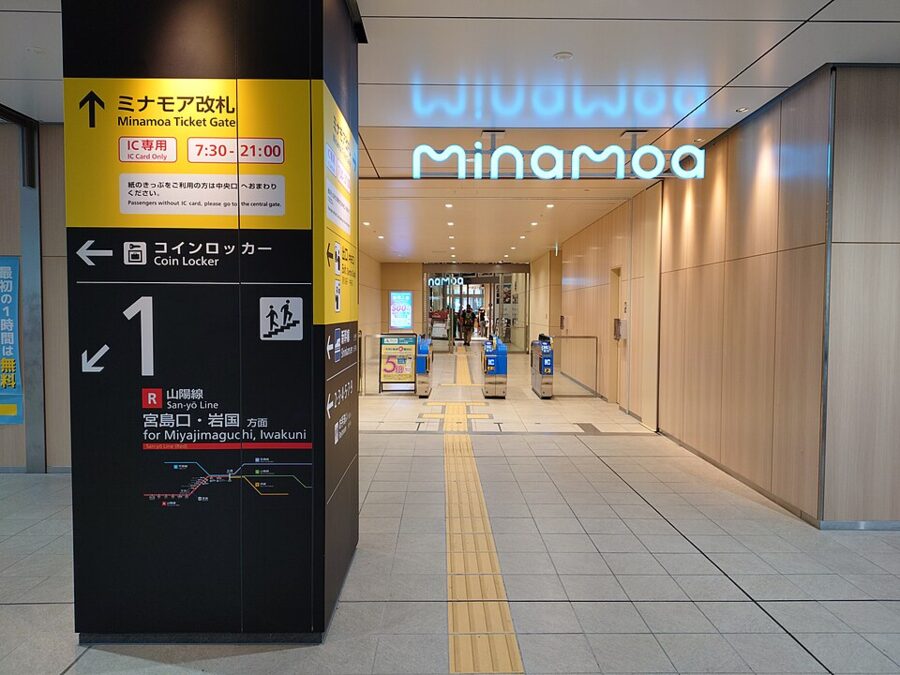
If you hold the national Japan Rail Pass, it covers the Hikari and Sakura trains on this line, the JR local line to Miyajimaguchi and the JR ferry, but not the trams or the visitor tax. Hiroshima Airport is about an hour by limousine bus east of the city, with flights mainly to Tokyo.
Inside the city, the tram goes nearly everywhere you need. Line 2 links the station with the Genbaku Dome and runs on to Miyajimaguchi, and the dome is about 20 minutes from the station by tram. A sightseeing loop bus, the Hiroshima Meipuru-pu, runs on two routes from the Shinkansen exit past the main sights.
Summers are hot and humid, with August averaging 28.5°C and daytime highs around 33°C, and June and July bring the rainy season. Winters are mild, about 5°C in January. Cherry blossom along the rivers and the maples at Momijidani on Miyajima, usually best in mid to late November, make spring and autumn the best time to visit Japan here as in most of the country. Around 6 August the city is crowded and solemn, and hotels fill early.
Where to stay
Around Hiroshima Station is the practical choice for day trips by train, with the most hotels and the Shinkansen and airport bus at the door.
Hatchobori and Kamiyacho, the commercial centre, put you among the restaurants and the bars of Nagarekawa, within walking distance of both the castle and the Peace Park.
The Peace Park side is quieter after dark and good for an early start at the museum.
Miyajima has inns and a few hotels along the shore. They cost more and need booking further ahead, but I think one night on the island is worth it.
Plans for one to three days
One day. The Peace Park and museum from opening time, okonomiyaki in Shintenchi for lunch, then the castle grounds and Shukkeien, finishing on Hondori. If you want Miyajima too, take the train out after lunch and accept that both halves will be rushed.
Two days. Day one as above. On day two go to Miyajima early, see the shrine at high tide, go up Misen, eat grilled oysters and stay for the low-tide walk, or better, for the night.
Three days. Add a day along the coast: Kure for the navy, Onomichi for walkers and cyclists, Saijo for sake. Fit a Carp game into any evening.
Whichever plan you choose, ride the tram at least once past the dome. The cars that came through 1945 still run on that line, and at 08:15 on 6 August they stop.