


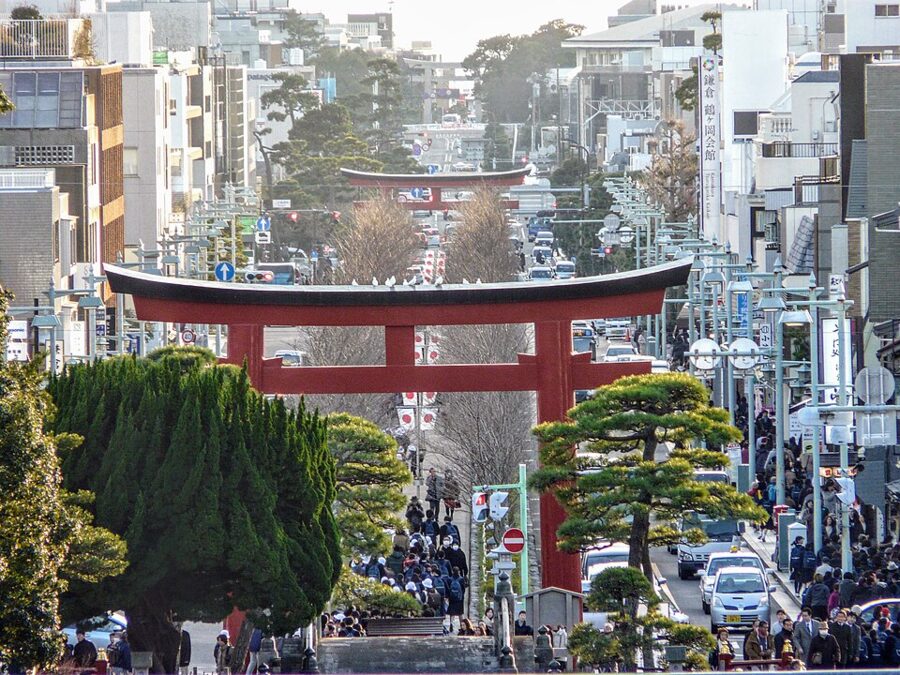
From the top of the stone steps at Tsurugaoka Hachimangu you look straight down the plan of a medieval city. Below you are the steps, an open-sided dance stage, a pair of ponds and an arched bridge, and beyond them a raised path between cherry trees that becomes an avenue and runs south through three great gateways for about 1.8 km until it stops at the sea. Kamakura (鎌倉) was laid out along that line in the 1180s by the first warrior government in Japanese history, and nearly everything worth seeing in the town is either on it or tucked into the wooded hills on either side.
The town sits on the coast of Kanagawa Prefecture (神奈川県), about an hour south of Tokyo by train, and it ruled Japan from the 1180s until 1333. What it left is a bronze Buddha in the open air, a cluster of Zen monasteries founded by Chinese monks, cave tombs cut into the cliffs, footpaths along the ridges and a long sandy bay. One day covers the famous sights if you start early. I would give it two, sleep by the sea, and keep the second morning for the hills, where the town still feels like the fortress it was built to be.


In this guide
- A capital built in a bowl of hills
- Tsurugaoka Hachimangu and the road to the sea
- The Great Buddha, Hase-dera and the Enoden
- Kita-Kamakura and the five great Zen temples
- Over the hills: trails, cave tombs and a bamboo grove
- Down to the coast: Yuigahama, Shichirigahama and Enoshima
- What to eat
- Crowds, manners and how the town copes
- Getting there from Tokyo and Yokohama
- A day, or two
A capital built in a bowl of hills
In the autumn of 1180 Minamoto no Yoritomo, an exile who had spent twenty years under guard in Izu, raised an army against the Taira clan who controlled the imperial court. He lost his first battle, escaped by boat to the Boso peninsula, gathered the warrior families of the Kanto plain and in the tenth month rode into Kamakura. The place had family meaning: his ancestor Minamoto no Yoriyoshi had founded a shrine to Hachiman, the war god of the Minamoto, near the beach at Yui in 1063.
The site also made military sense. Kamakura is a small coastal plain enclosed on three sides by steep hills of soft sandstone, none of them much over 150 metres, with Sagami Bay on the fourth. An army coming overland had to squeeze through narrow valleys or climb, and the sea side could be watched. Yoritomo moved the Hachiman shrine to the foot of the northern hills in 1180, built his residence at Okura to the east of it, and set up a board of retainers that became the core of a government.
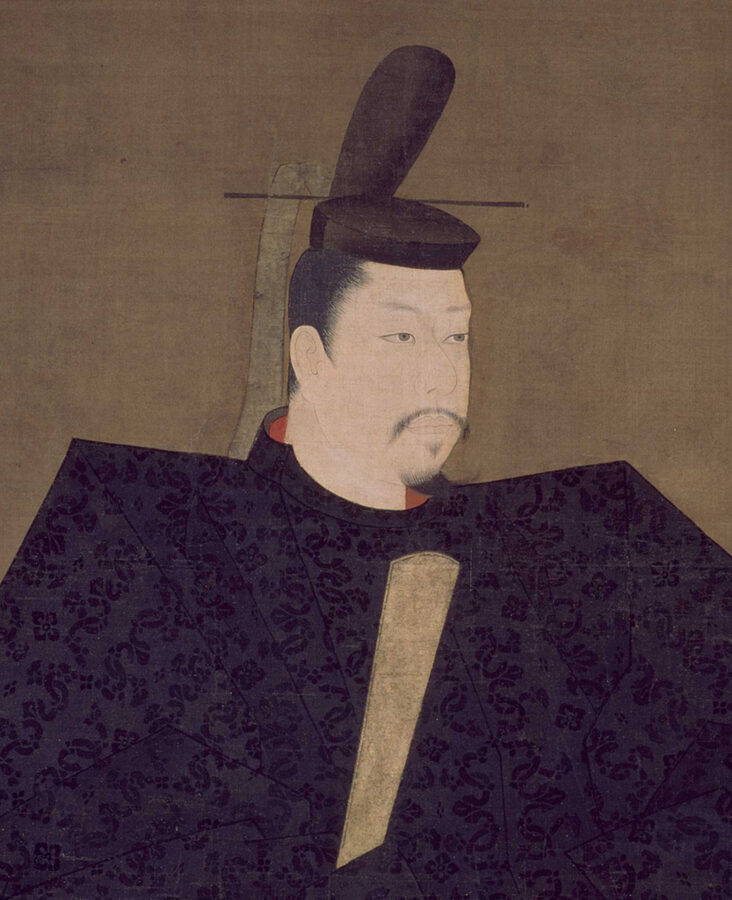
When that government began is still argued over in Japanese classrooms. Schoolchildren once learned 1192, the year the court named Yoritomo seii taishogun, “great general who subdues the barbarians”, the title later shortened to shogun. Many textbooks now prefer 1185, when the Taira were destroyed at Dan-no-ura and Yoritomo won the right to place his own constables and land stewards in every province; others point to 1180 or 1183. Kamakura is happy with any of them.
Yoritomo died in 1199, by most accounts after a fall from his horse. His sons did not last: the second shogun was deposed and murdered, and the third, Sanetomo, a gifted poet, was cut down on the steps of the Hachiman shrine in 1219 by his own nephew. Power passed to the family of Yoritomo’s widow, Hojo Masako. The Hojo ruled as shikken, regents, behind a line of figurehead shoguns brought from Kyoto, and it was they who made Kamakura a city of temples, inviting monks from Song China, building great Zen monasteries and seeing off two Mongol invasions in 1274 and 1281.
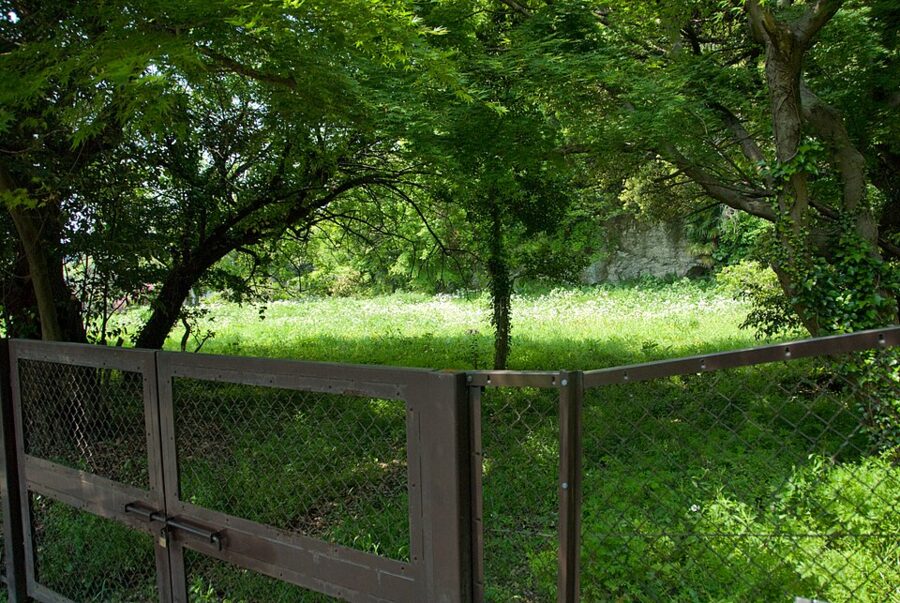
The end came in a week in the summer of 1333. Nitta Yoshisada, a lord from Kozuke, marched south for the exiled Emperor Go-Daigo, beat the Hojo armies on the way and attacked the passes into Kamakura from three sides. The defenders held.
According to the war chronicle Taiheiki, Nitta threw his sword into the sea at Inamuragasaki, the tide drew back, and his men walked round the headland along the beach and into the city; whatever the truth of the sword, an unusually low tide is the likeliest explanation. The regent Hojo Takatoki retreated to the family temple of Tosho-ji and killed himself there with his kin and retainers, 870 people in the chronicle’s count, which most historians treat as an exaggeration.
Kamakura stayed the seat of the Ashikaga deputies who governed the east for another century, then faded into a farming and fishing village with famous ruins. Edo-period pilgrims came on a round trip that took in Mount Oyama, Enoshima and the temples here. The Yokosuka railway arrived in 1889, Tokyo money built seaside villas, and between the wars so many novelists settled here that they became known as the Kamakura bunshi, the Kamakura literati.
Seven ways in
The hills that made Kamakura safe also made it hard to supply, so the shogunate cut roads through them. These kiridoshi (切通), literally “cut-throughs”, are steep, narrow lanes sunk between walls of rock, kept tight, the usual explanation goes, so that a few men could hold them. Edo-period guidebooks list seven, the Kamakura Nanakuchi or seven entrances; six are national historic sites.
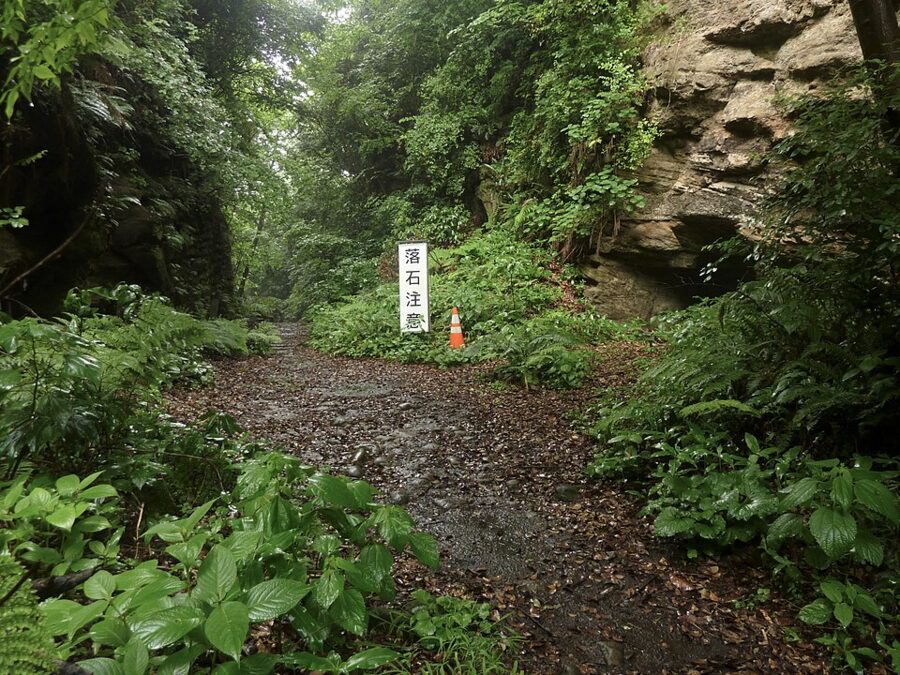

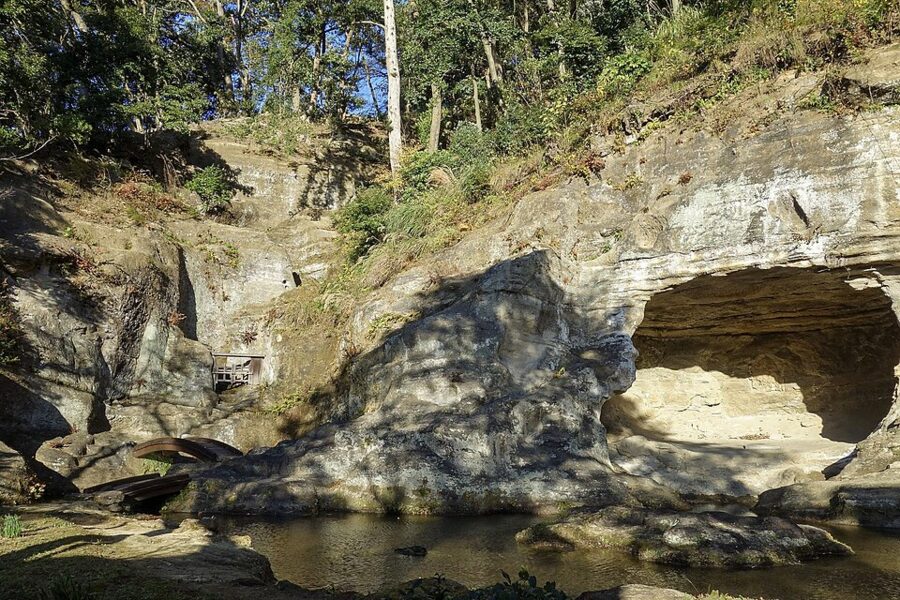
Three are easy to walk today. Kewaizaka climbs from the Ogigayatsu valley up to Genjiyama park on the Daibutsu trail, Daibutsu kiridoshi runs behind the Great Buddha, and Asaina kiridoshi, the grandest, carries an old road east over the hills towards the port of Mutsuura. Flat land was so scarce inside the bowl that the dead were put into the cliffs as well, in yagura, square tomb caves cut into the rock face. They are everywhere, often with a weathered stone pagoda inside.
Tsurugaoka Hachimangu and the road to the sea
Tsurugaoka Hachimangu (鶴岡八幡宮) is the anchor of the plan. The main hall stands on a terrace at the top of 61 steps, a vermilion building in the ornate style of the late Edo period, rebuilt in 1828 by the shogun Tokugawa Ienari and listed as an Important Cultural Property. Below it is the open-sided Maiden stage where, tradition says, the dancer Shizuka sang of her lover Yoshitsune, Yoritomo’s estranged brother, in front of Yoritomo himself; the stage was built later, so if she sang at all it was in the corridor of the old lower shrine.
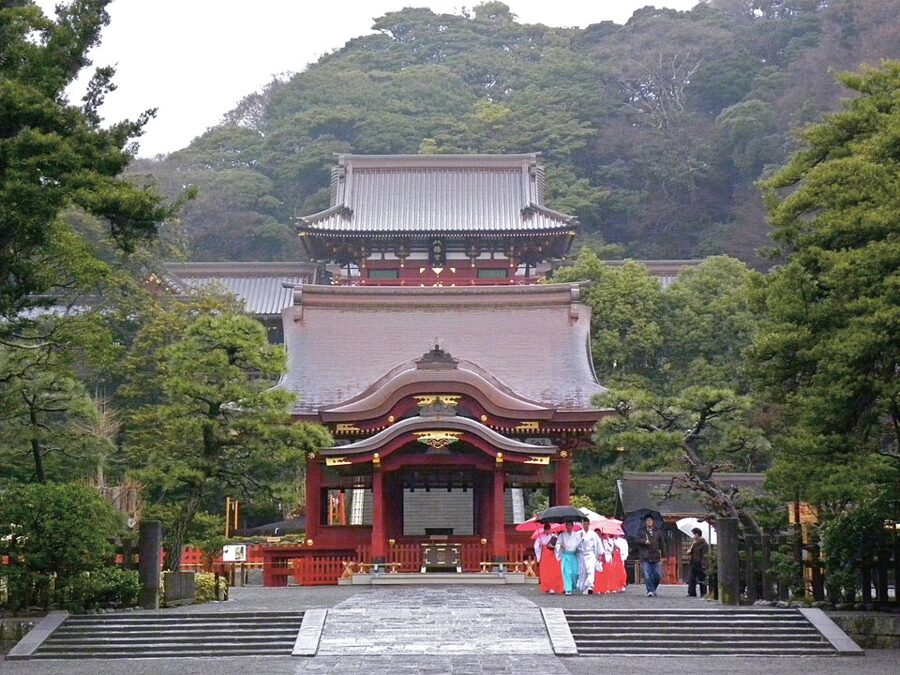

Before the steps lie two ponds dug in 1182, the Genpei ponds. The story goes that Masako had three islands placed in the eastern pond for the Minamoto, three being read as san, birth, and four in the western one for the Taira, four being shi, death. Gates open 06:00–20:00 all year and entry is free.
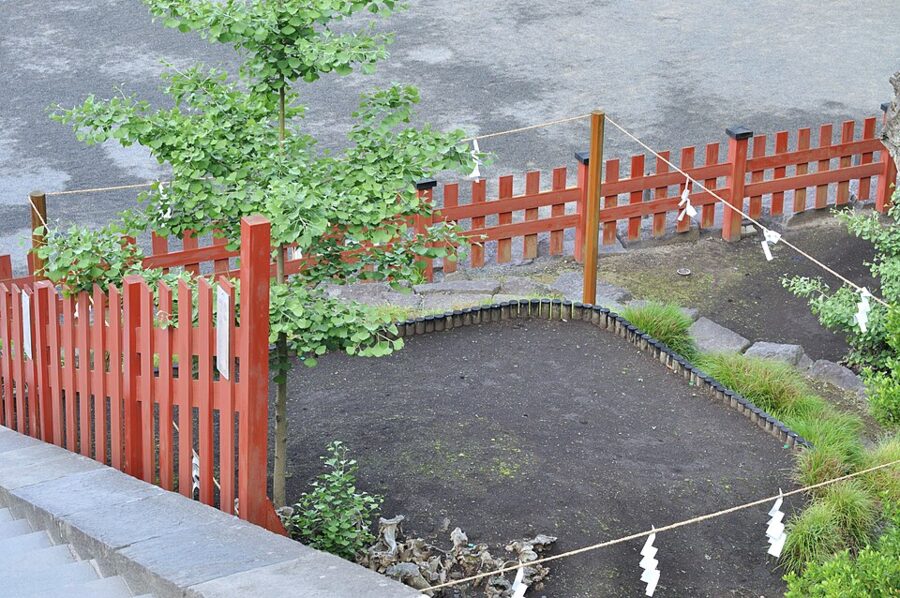
Halfway up the steps on the left is the stump of a ginkgo. The great ginkgo that stood here, said to be about a thousand years old, came down in a gale before dawn on 10 March 2010. A four-metre section of the trunk was replanted a few metres away, sprouted within a month and now carries a thicket of young growth. Tradition says the assassin of Sanetomo hid behind this tree in 1219, though the story first appears in the Edo period and none of the contemporary chronicles mention a ginkgo.
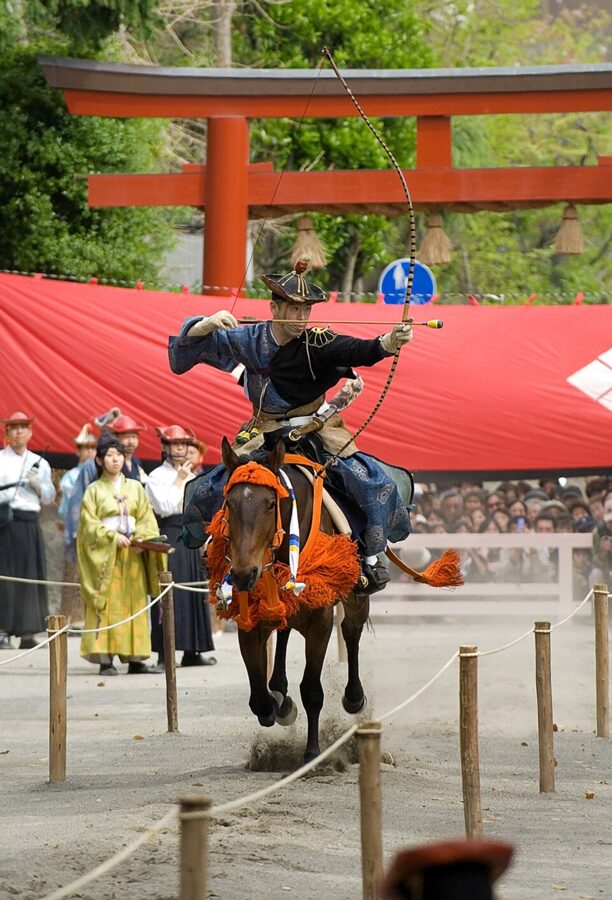
The shrine’s great festival is held on 14–16 September every year, as it has been since 1187 according to the shogunate’s own chronicle, the Azuma Kagami. Its last day is the yabusame, mounted archery, in which riders in hunting dress gallop down a straight track under the trees and loose arrows at three wooden targets. A second yabusame is held during the Kamakura Matsuri in April, and the paper-lantern Bonbori festival lights the precinct in early August.

Wakamiya-oji and the dankazura
Wakamiya-oji (若宮大路) runs straight from the shrine to the beach at Yuigahama, modelled on Suzaku-oji, the processional avenue of the old capital in Kyoto. The shrine says Yoritomo had it built in 1182 as a prayer for the safe delivery of Masako’s first son, with the warrior families carrying earth and stone themselves. Three great torii stand along it; the first, nearest the sea, began as a stone gate given by the shogun Tokugawa Ietsuna in 1668, fell in the 1923 earthquake and was rebuilt in 1936.
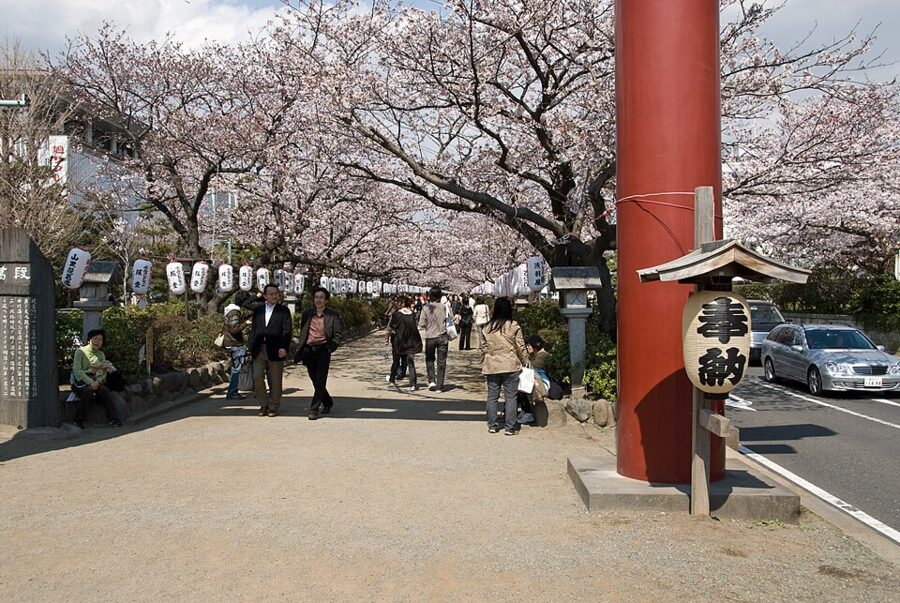
Between the second and third torii the centre of the avenue rises into a raised path about 45 centimetres high, the dankazura (段葛). It was probably built because the ground here was marshy and the road turned to mud in rain. It narrows as it approaches the shrine, so the shrine looks further away than it is. A rebuilding finished in 2016 raised the stone kerbs, paved the surface and replaced the old cherry trees, cutting their number from about 250 to about 180, which is still enough to make it a tunnel of blossom in early April.
Komachi-dori and the shrine quarter
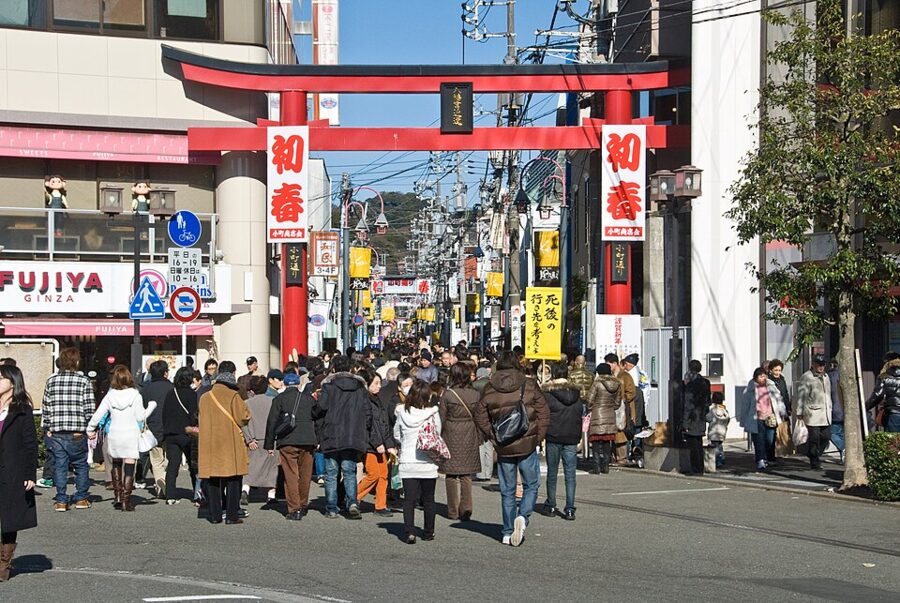
Most people walk up from the station along Komachi-dori, the narrow street that runs parallel to Wakamiya-oji on its west side, entered under a red torii by the station’s east exit. It is all snacks, sweets, souvenirs and queues, cheerful enough at 09:00 and solid with people by noon on a weekend. The town asks you not to eat on the move in crowded streets; this is a request under a city manners ordinance rather than a ban, so step to the side and finish your snack before walking on.
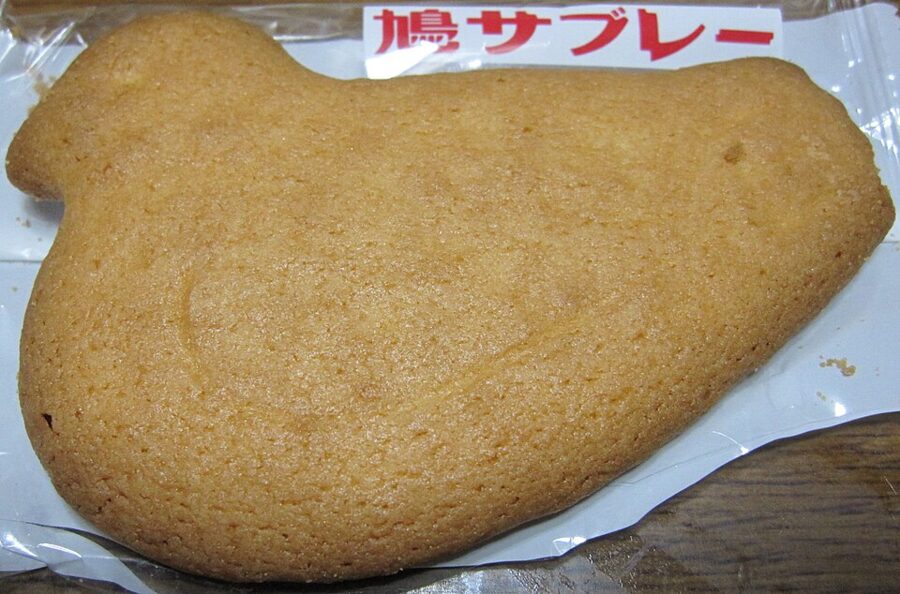
On Wakamiya-oji itself is the main shop of Toshimaya, maker of the hato sable, a butter biscuit in the shape of a dove, the bird of Hachiman. Its founder, Kubota Kyujiro, began working on it in 1894 after a foreign guest at a seaside hotel gave him a large biscuit to taste, and it has been the town’s standard gift ever since. Next to the shrine, the Kamakura Museum of National Treasures opened in 1928 to keep the temples’ sculpture and paintings safe after the earthquake; its permanent room of Kamakura-period carved Buddhas is the best hour you can spend indoors in the town.
The Great Buddha, Hase-dera and the Enoden
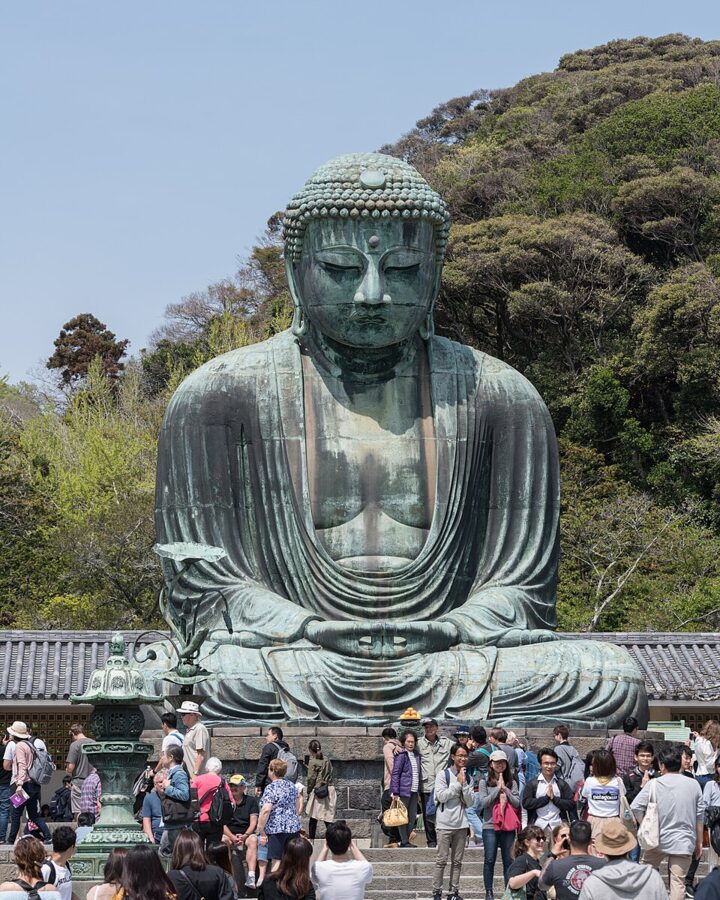
The Great Buddha sits at Kotoku-in (高徳院), a Pure Land temple at the western end of town, and he has sat in the open air for about five hundred years. The shogunate’s chronicle records that casting began in 1252. A monk named Joko raised donations for it, and an earlier wooden statue on the site was already being built in 1242, when a travelling hermit described it in his diary. Who modelled the bronze is unknown; the temple describes him as a Kamakura-period statue that mixes the style of the Kei school of sculptors with the influence of Song China.
He is 13.35 metres tall including the lotus base, the body alone 11.31 metres, and he weighs about 121 tonnes. He was cast in sections, about forty separate pours, the body in seven horizontal tiers, and you can see the seams from inside. The surface was once covered in gold leaf, of which traces remain on the cheeks. He sat inside a great hall that storms damaged more than once; the hall was lost for good, most historians think, in the earthquake and tsunami of 1498, and by the end of the Muromachi period the Buddha was outdoors.
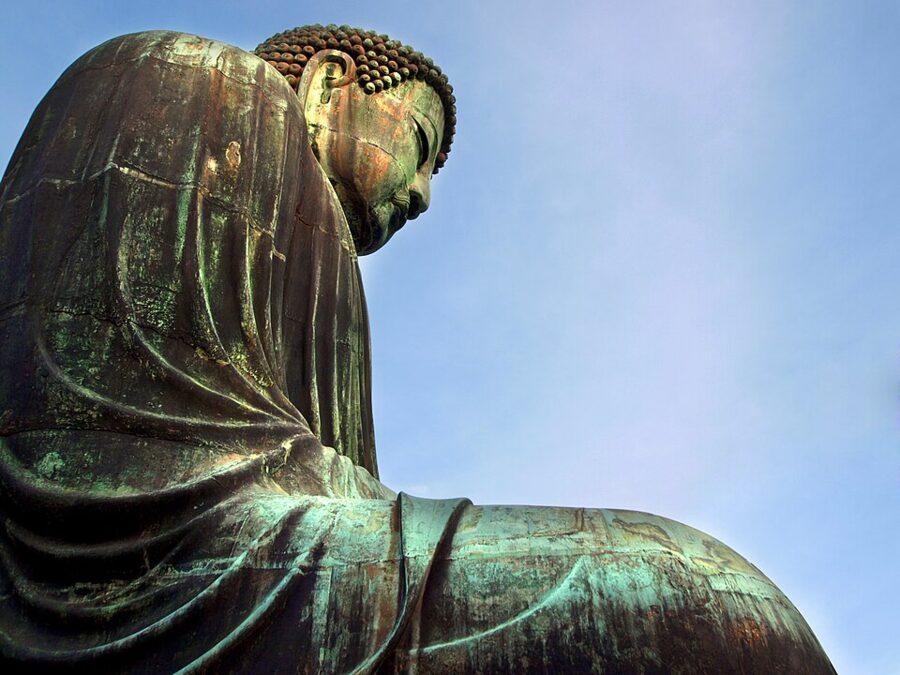

Admission is ¥300 for adults, and climbing inside the hollow statue costs another ¥50, 08:00–16:30 all year. The gates open at 08:00 and close at 17:30 from April to September and at 17:00 from October to March. Eating is banned anywhere in the precinct, including packed lunches; sealed water bottles are allowed. He was a favourite of foreigners from the start: after Yokohama opened in 1859, treaty residents could travel only a limited distance from their settlement, and Kamakura was inside the line.
Hase-dera (長谷寺), five minutes’ walk down the hill, climbs a slope above the bay in terraces. The temple dates its founding to 736 and is number four on the Bando pilgrimage of 33 Kannon temples in eastern Japan. Its main image is a gilded eleven-headed Kannon, the bodhisattva of compassion, 9.18 metres tall and one of the largest wooden statues in the country; the 1923 earthquake wrecked the old hall and the present one was finished in 1986. From the terrace in front of it you look over the roofs of Hase to the whole curve of Yuigahama.
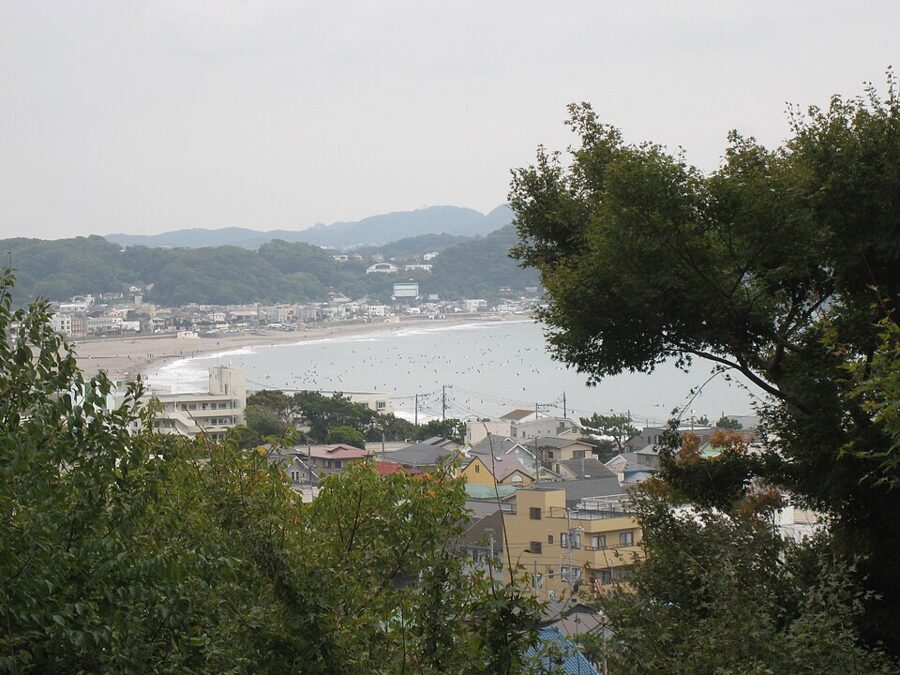

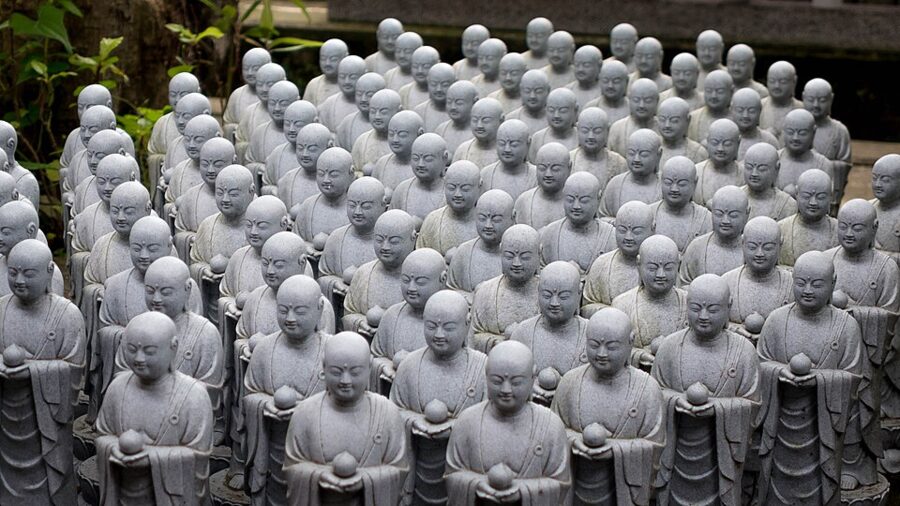
Lower down, a hall and garden fill with thousands of small stone Jizo figures, left by parents mourning children lost before or soon after birth. A revolving sutra library inside the sutra hall gives you, the temple says, the merit of reading every scripture in it with one turn, but it is only turned on the 18th of each month and a few festival days. Admission is ¥400, with entry 08:00–16:30, until 17:00 from April to June. The temple runs its own restaurant, Kaikoan, in the grounds.
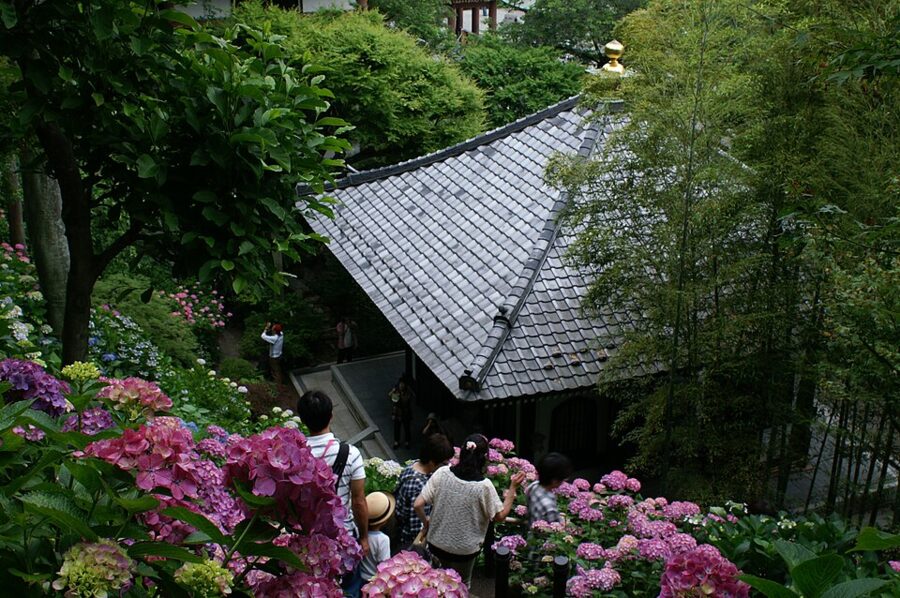
In June the hydrangea path on the hillside above the hall, with about 2,500 plants of 40 varieties and a view out to Sagami Bay, is sold by a separate timed ticket that you book online in advance. The rest of the year it is just part of the walk, and in late November the temple has been opening in the evenings for the autumn leaves.

Gokuraku-ji and the coast line
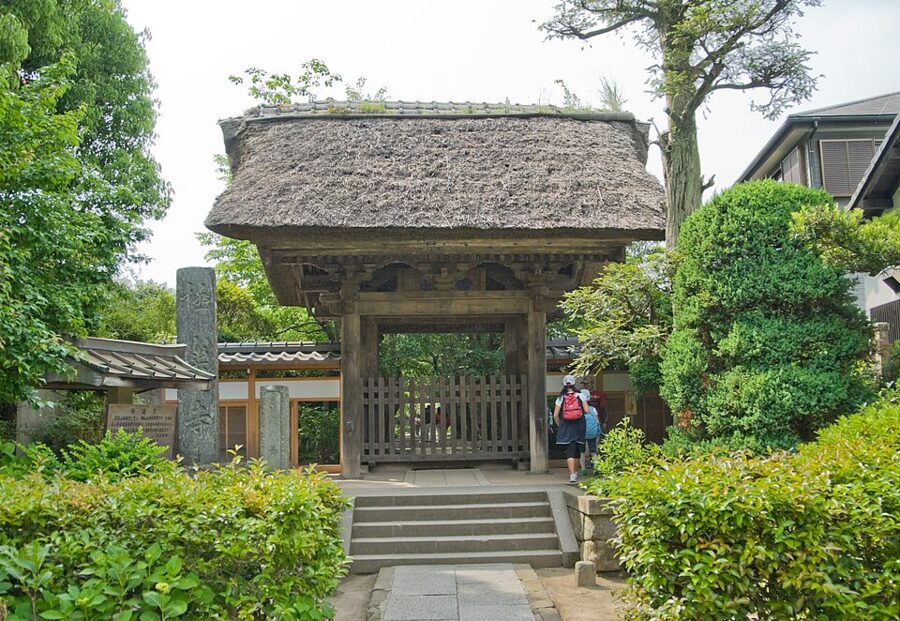
Two stops west of Hase, the temple that gives Gokuraku-ji station its name is two minutes from the platform. Gokuraku-ji was founded in 1259 by Hojo Shigetoki, and its first abbot, the monk Ninsho, ran it as a relief centre with a hospital, a pharmacy and a home for the sick poor; a stone medicine mortar from that time is still in the grounds. Ninsho is also credited with cutting the Gokurakuji-zaka pass towards Hase. Fires and an earthquake in the fifteenth century left only a small hall and a thatched gate, and entry is by donation.
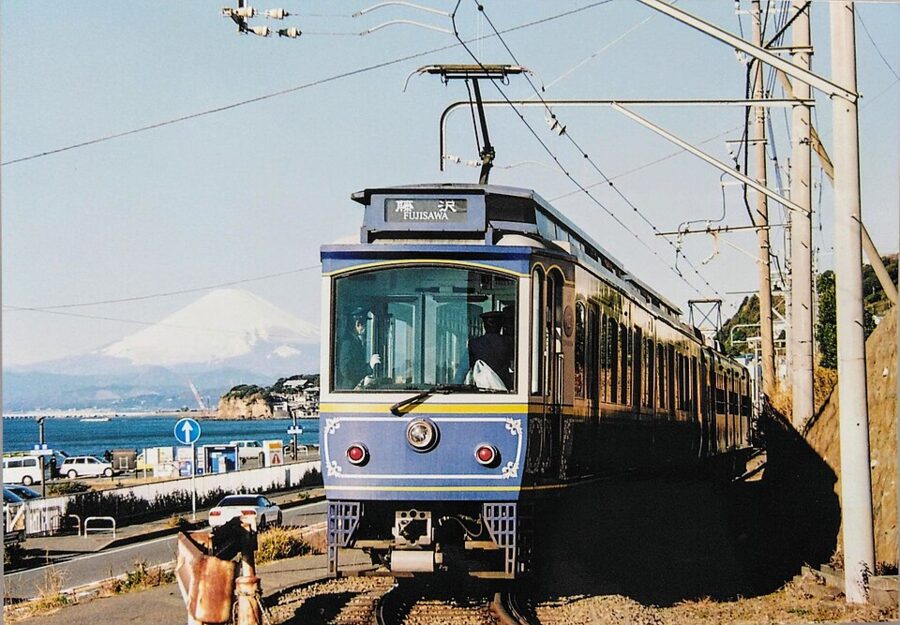
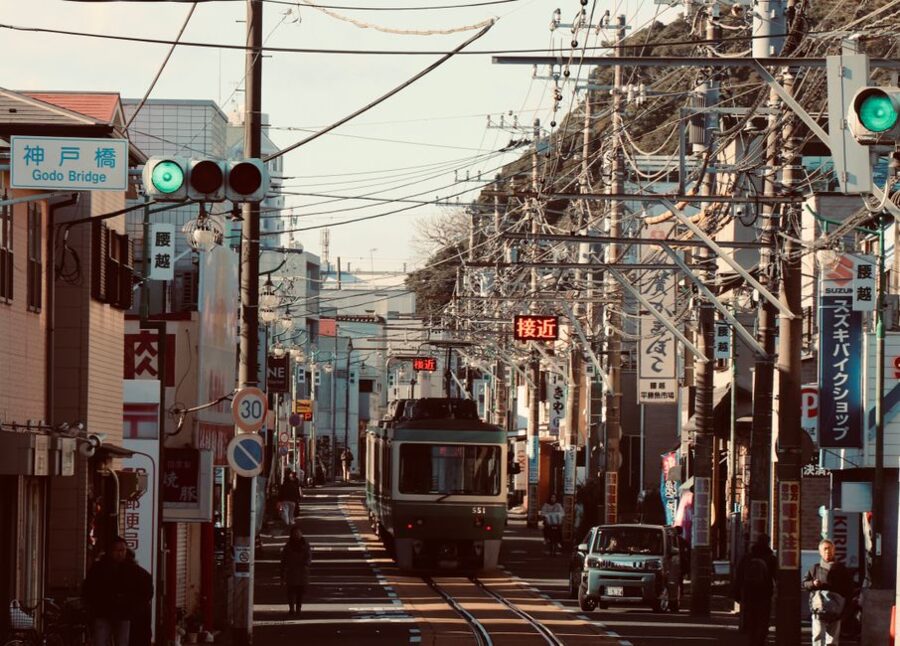
The line that links all this is the Enoshima Electric Railway, the Enoden, opened between Fujisawa and Katase (now Enoshima) in 1902 and extended into Kamakura by 1910. It is 10 km long with 15 stations, single track for most of the way, and for a stretch near Enoshima it runs down the middle of a shopping street with cars. Kamakura to Hase takes five minutes and costs ¥200; the end-to-end run to Fujisawa is about 34 minutes. A Noriorikun day ticket gives unlimited rides for ¥800 and pays for itself in three or four journeys.
Kita-Kamakura and the five great Zen temples
Kita-Kamakura, one stop before Kamakura on the Yokosuka Line, is a narrow valley where the Hojo regents built their monasteries. It is the best start to a day in the town, because the temples open early and the tour groups arrive late. By the fourteenth century the shogunate had ranked the city’s Zen houses on the Song Chinese model of five “mountains”; the Kamakura Gozan are Kencho-ji, Engaku-ji, Jufuku-ji, Jochi-ji and Jomyo-ji, in that order, and two of them stand on opposite sides of this valley.
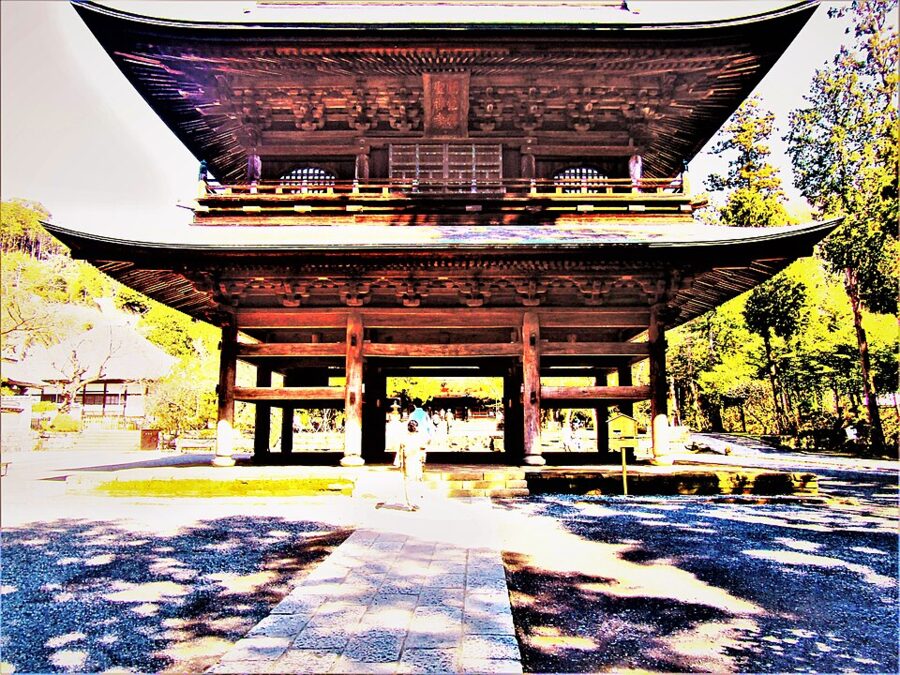
Engaku-ji (円覚寺) starts at the platform’s end: the station was built through its precinct, and the temple’s pond lies across the tracks from its gate. The regent Hojo Tokimune founded it in 1282 to pray for the dead of both sides in the Mongol invasions, and invited the Chinese monk Wuxue Zuyuan, Mugaku Sogen in Japanese, as its first abbot. The buildings climb a side valley in a line, from the two-storey Sanmon gate through the Buddha hall to the abbot’s quarters. Admission is ¥500, 08:30–16:30, until 16:00 from December to February.

At the back of the precinct is the Shariden, a small hall with a steep, deep thatched roof built to hold a relic of the Buddha’s tooth. It is the only building in Kanagawa listed as a National Treasure and is opened to the public for only a few days a year, around the start of November when the temple airs its treasures. Up a long flight of steps on the other side stands the great bell, also a National Treasure, cast in 1301. Natsume Soseki sat Zen here in his twenties and put the experience into his novel Mon (The Gate); the temple still runs public zazen sessions at weekends.
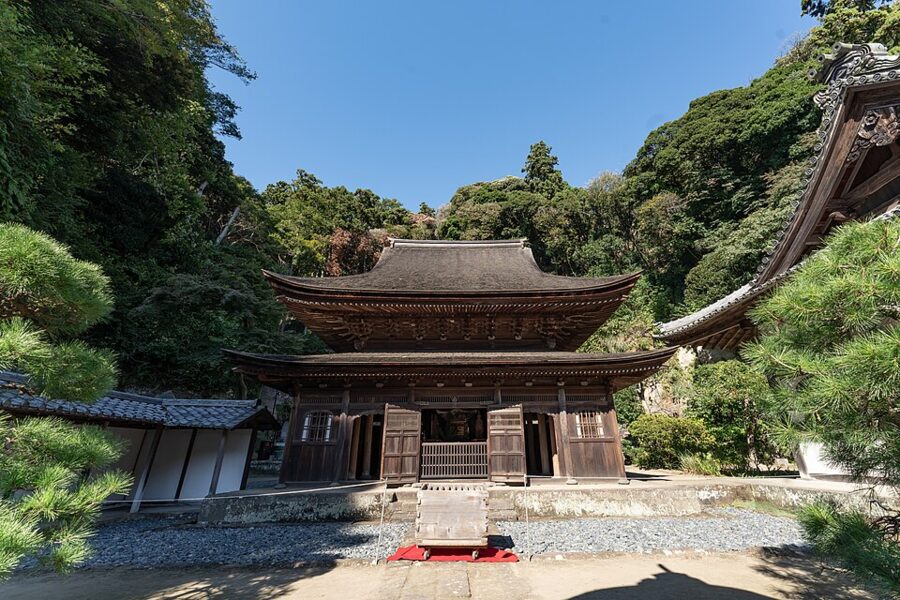

Kencho-ji (建長寺), first of the five, is a ten-minute walk up the main road towards Kamakura. The regent Hojo Tokiyori built it in 1253 for the Chinese master Lanxi Daolong, Rankei Doryu in Japanese, who had sailed from Song China a few years before. The great Sanmon gate dates from 1775, the bell from 1255, and the Buddha hall holds a Jizo rather than the usual Shaka. Admission is ¥500, cash only, 08:30–16:30, and people coming through on the hiking trail are asked to pay too.
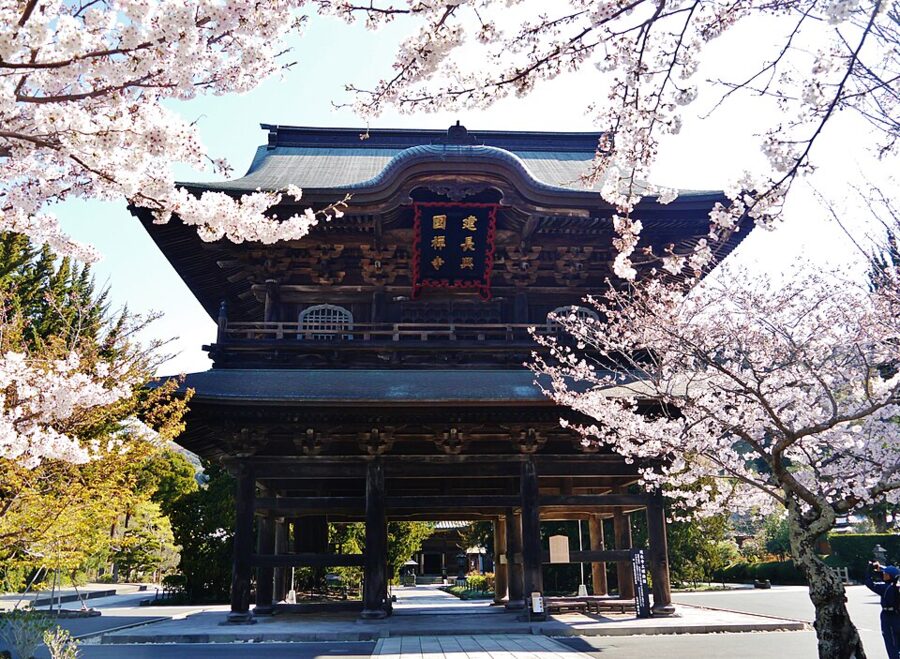

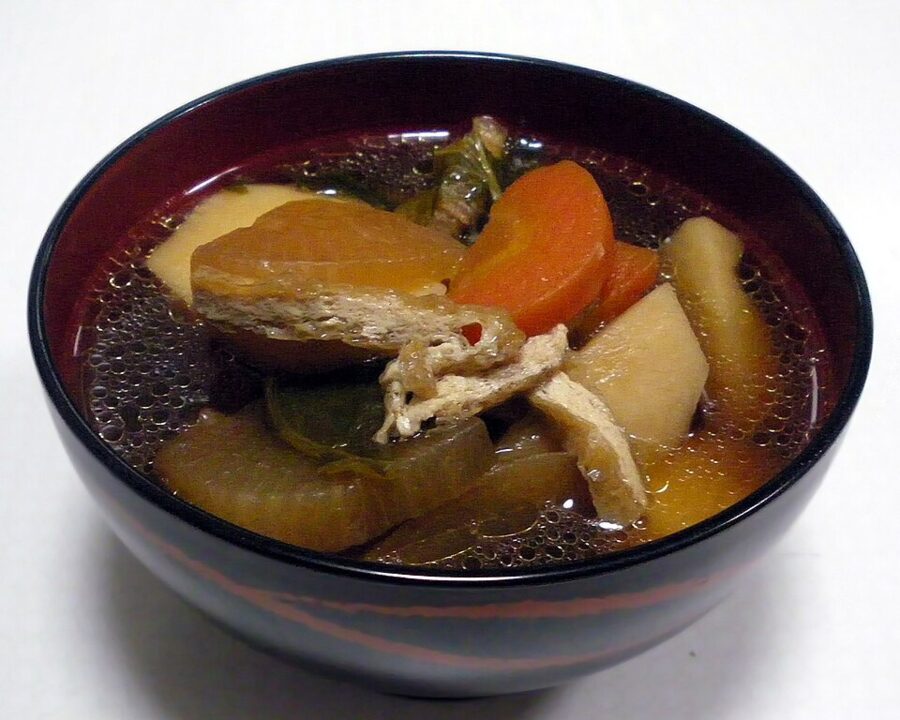
Behind the main buildings a path climbs past statues of long-nosed tengu goblins to Hansobo, a mountain shrine brought here in 1890, and on to the start of the Tenen trail. The temple vegetable soup kenchin-jiru is popularly said to have started here as Kencho-jiru. Dictionaries prefer a Chinese origin for the name, but Tenshin-an by the temple gate serves a version the temple approves of, and on a cold day it is the right lunch.
Meigetsu-in, Tokei-ji and Jochi-ji
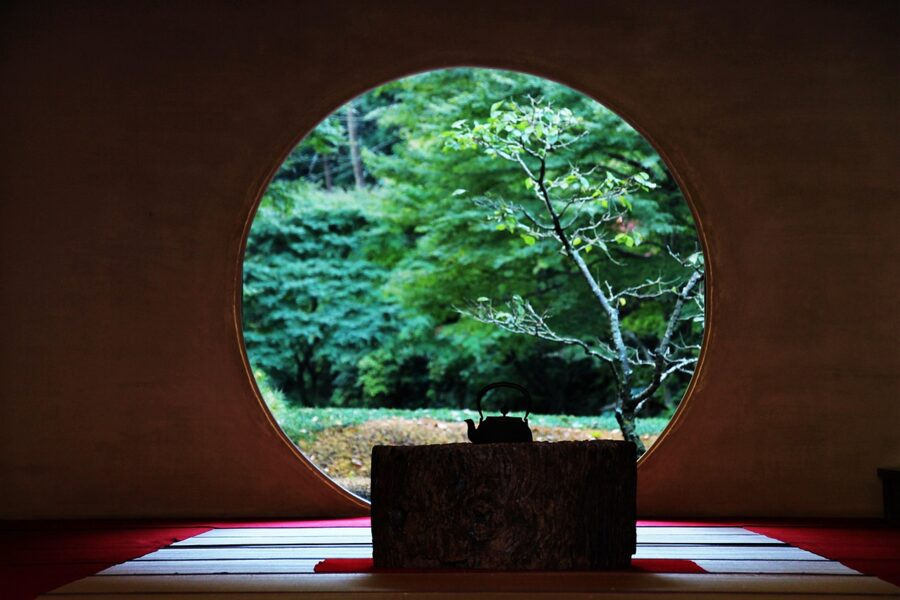
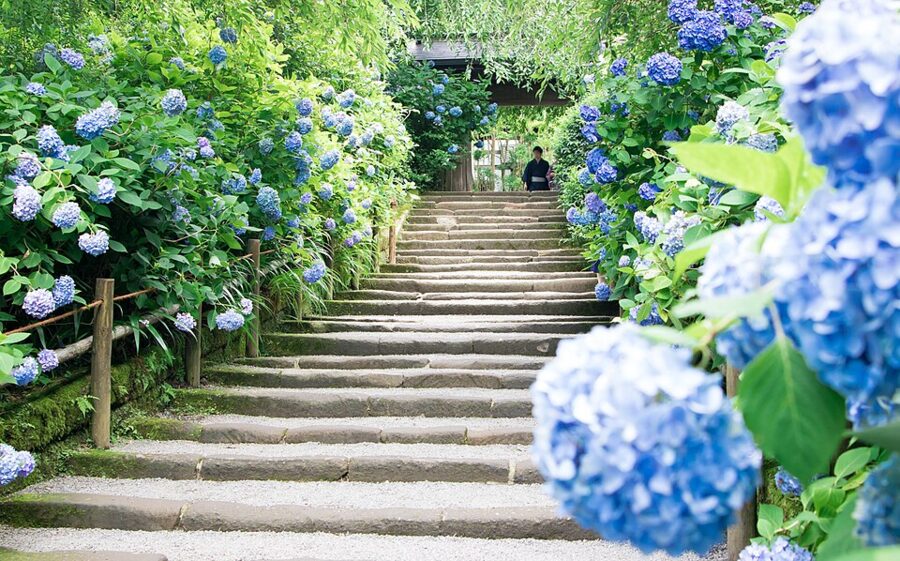
Meigetsu-in (明月院), up a side valley a few minutes from the station, is the hydrangea temple, and in June its paths disappear under thousands of blue bushes, a shade people call Meigetsu-in blue. It began in 1159 as a memorial chapel and survived when the larger temple it belonged to was abolished in the early Meiji period. The round window in the main hall, the “window of enlightenment”, frames the garden behind, which is opened only in the iris season and in autumn. Admission is ¥500, 09:00–16:00.
Tokei-ji (東慶寺), four minutes’ walk from the station, was founded in 1285 by Tokimune’s widow, the nun Kakusan, and for six hundred years it was a refuge for women. At a time when only a husband could end a marriage, a wife who reached its gate and stayed for the set term could obtain a divorce; the privilege ended in 1871, and the temple stopped being a nunnery in 1902. Its later abbesses included a daughter of Toyotomi Hideyori, spared after the fall of Osaka Castle, and in 1905 the Zen master Shaku Soen revived it; his student Daisetsu Suzuki, who spent his life explaining Zen to Western readers, founded a library on the hill behind.
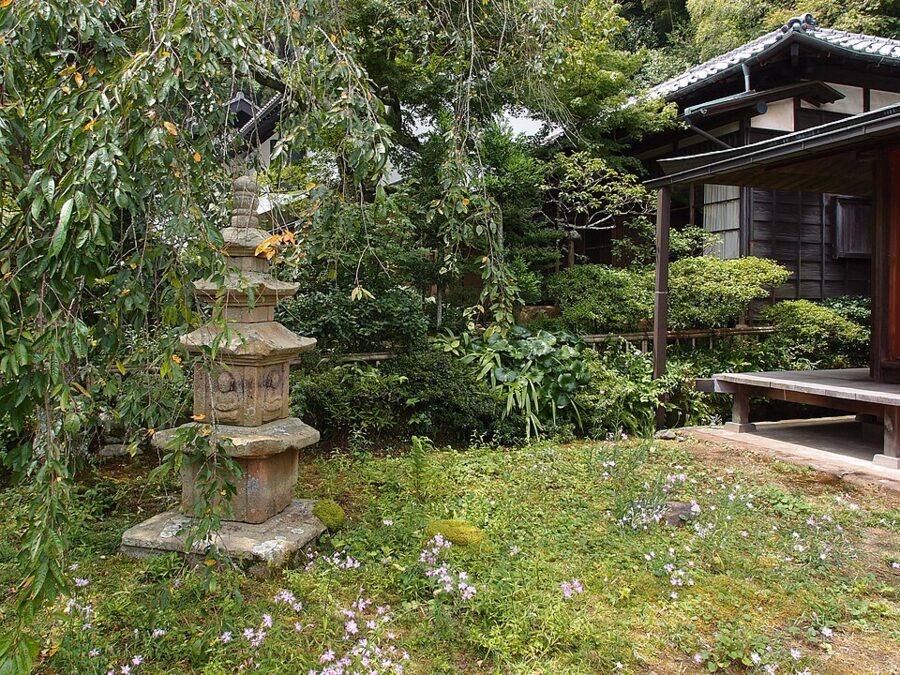

Tokei-ji charges no admission but asks you to pray at the main hall and leave an offering, 09:00–16:00. Since 2022 it has banned photography of any kind in its precinct, because, the temple explained, people had started photographing without looking. It is a rule I would happily see copied.
Jochi-ji (浄智寺), fourth of the five, sits up mossy steps a few minutes further on. Its gate doubles as a belfry, an unusual arrangement in Japan, and the bell inside was cast in 1340; in the Buddha hall three seated Buddhas stand for past, present and future. Admission is ¥300, 09:00–16:30, and the path to the Daibutsu trail starts beside it.

Over the hills: trails, cave tombs and a bamboo grove
The ridges that ring Kamakura carry a network of footpaths, well signposted at every junction. They are short, rarely more than an hour or two, and they are the best way to understand why the shogunate chose this place: from the top you see how tightly the hills close round the plain. They are also real paths, rooty and steep in places and slick with mud after rain, so wear proper shoes and leave them alone in a downpour. Hornets are active from summer into autumn, bikes are banned, and you carry your rubbish out.
The Kuzuharaoka-Daibutsu course, about 3 km and an hour and a half, is the one to do if you do only one. It starts by Jochi-ji in Kita-Kamakura, climbs to Kuzuharaoka Jinja and Genjiyama park, where a seated statue of Yoritomo has the hilltop to himself, and drops down beside the Great Buddha. A short detour leads to Zeniarai Benten, a shrine reached through a tunnel in the rock, where people wash coins and banknotes in a spring in the hope of having them returned many times over.
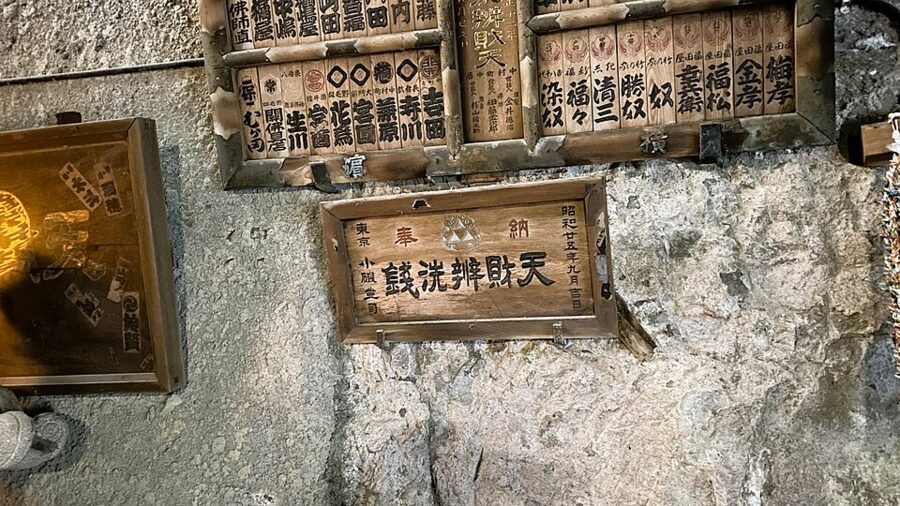

The shrine’s story says Yoritomo was told in a dream in 1185 to worship the god of this spring, and that the regent Hojo Tokiyori began the custom of washing money in it. It takes a donation and is open 08:00–16:30. The Tenen course runs along the northern ridge from behind Kencho-ji to Zuisen-ji in the east, past cave tombs and over Ohirayama, at 159.4 metres the highest point in the city; the old teahouse at the top closed in 2016. Branch paths drop down through the Shishimai valley, whose maples turn in early December.
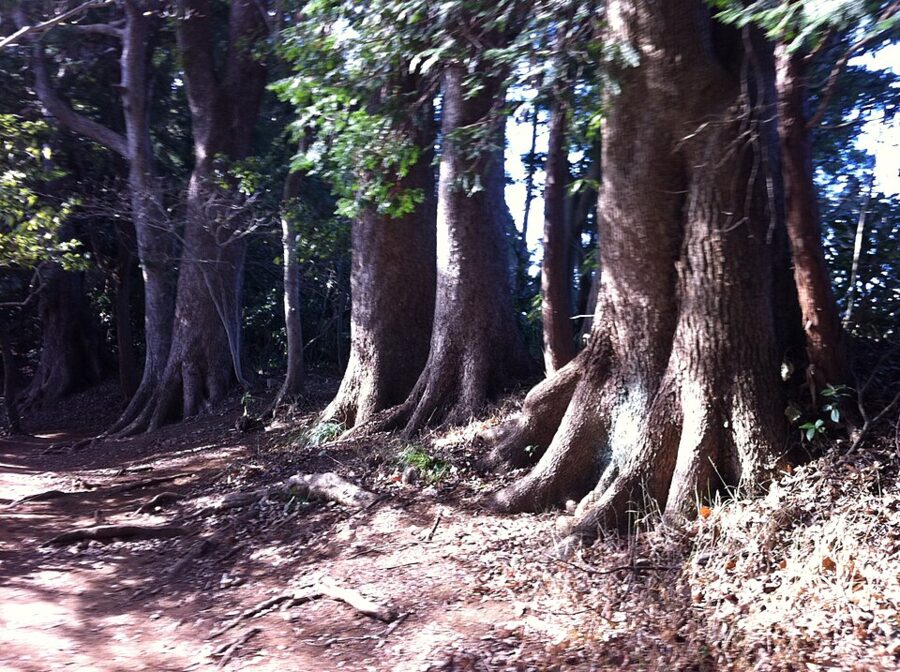

The Gionyama course is the shortest, about half an hour from Yagumo Jinja over a small hill to the ruins of Tosho-ji, where the Hojo died in 1333. Typhoons in 2019 brought down trees and slopes and it was closed until April 2023. At its foot is the Harakiri Yagura, the tomb cave where Takatoki is said to have killed himself; excavations found roof tiles with the Hojo crest but no bones, and the area round it is closed off because of falling rock. Near it, Hokai-ji, the bush clover temple, was built in 1335 on the site of the Hojo mansion by order of Go-Daigo to console their spirits.
Hokoku-ji and the eastern valleys
East of the shrine, a bus ride or a 20-minute walk along the Kanazawa road, the valleys are quieter. Hokoku-ji (報国寺) was founded in 1334, and behind its main hall about two thousand stems of bamboo stand in a small grove, with a path through the middle and yagura tombs in the cliff at the back, said to hold the founder, Ashikaga Ietoki, and Yoshihisa, son of the Kamakura governor Ashikaga Mochiuji, who killed himself here in 1438. Admission is ¥400, 09:00–16:00, closed 29 December to 3 January.
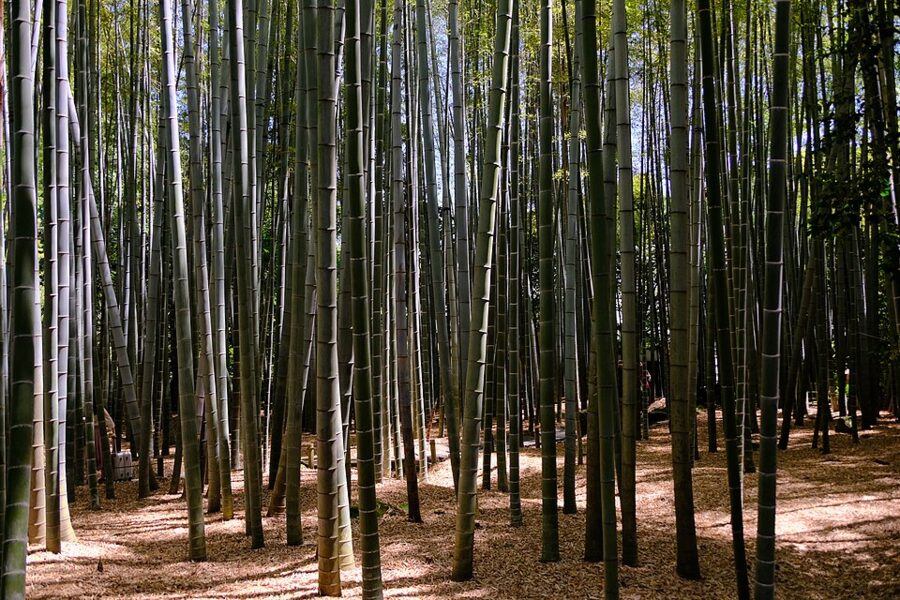

Its tea house, Kyukoan, serves a bowl of matcha with dry sweets looking into the bamboo for ¥600 extra, tickets on sale until 15:30. It closes for rebuilding from 18 January 2027 until about mid-March. Go early, because the grove is small and fills quickly.
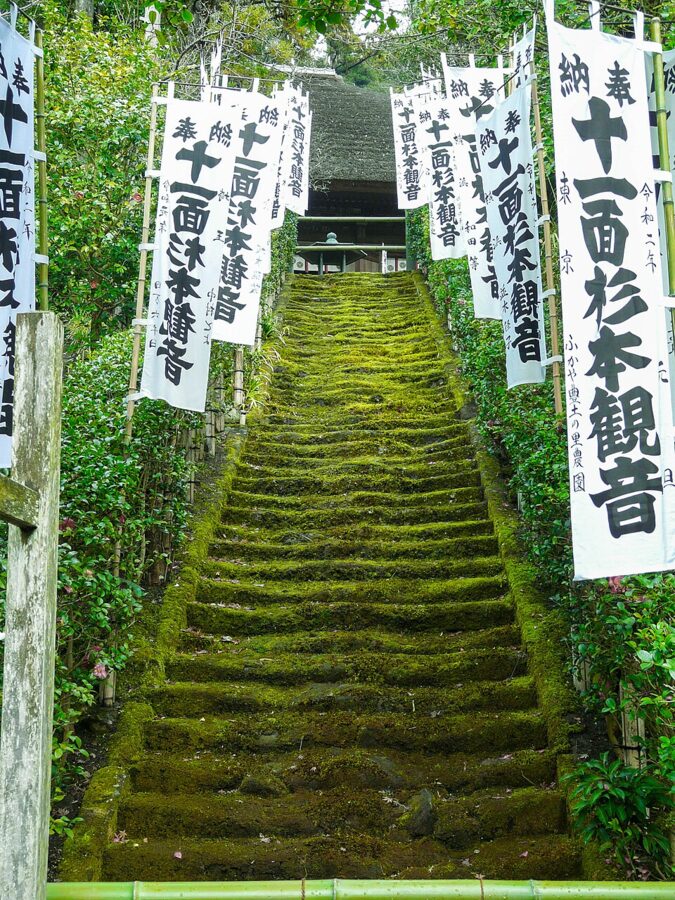
Nearby are Jomyo-ji, fifth of the Gozan, founded in 1188, and Sugimoto-dera, founded according to tradition in 734, which claims to be the oldest temple in the city and stands at the top of worn, mossy steps behind a thatched gate. At the end of the valley, Zuisen-ji has a garden that the priest Muso Soseki carved straight into the rock face in 1327, with a cave and a pond, the source of a whole later tradition of temple gardens. Admission is ¥200.


When to come
Kamakura’s two crowded seasons are its two best. The hydrangeas peak in June, during the rainy season, and Meigetsu-in and Hase-dera are packed for the whole month; a quieter route is the walk from Gokuraku-ji to Jojuin and Goryo Jinja near Hase, where bushes line the lanes and the Enoden. The autumn colour comes late, generally from late November into early December, weeks after the maples of Nikko.

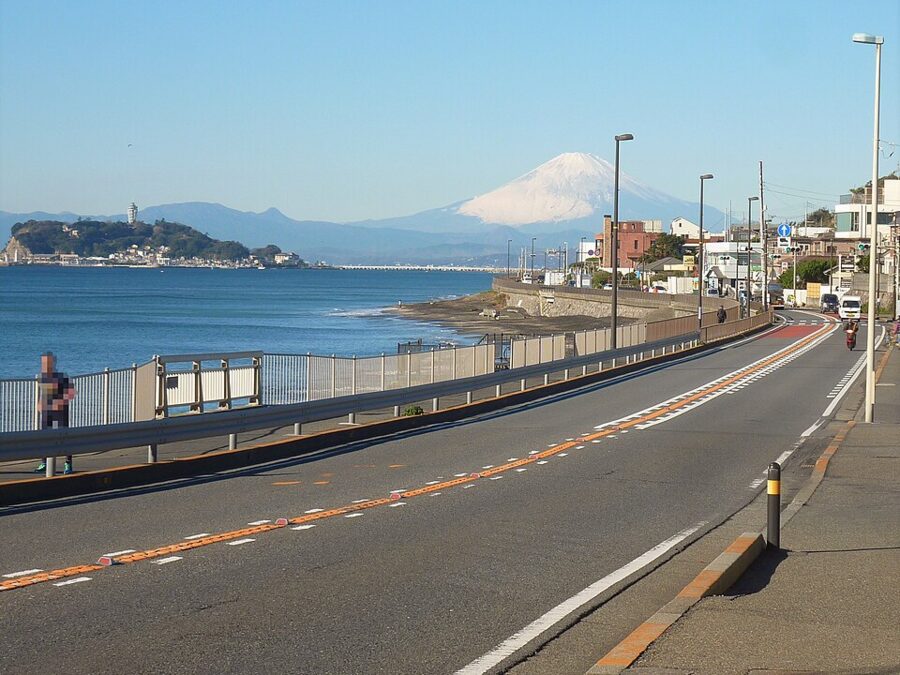
Early April brings the cherries of the dankazura and the Kamakura Matsuri. July and August are beach season, hot and humid, when the town fills with swimmers rather than sightseers. Winter is underrated: the air over Sagami Bay is at its clearest, plum trees flower in the temple gardens from late January, and on a clear day Mount Fuji stands over Enoshima. For how this fits a wider trip, the best time to visit Japan runs through the seasons across the country.
Down to the coast: Yuigahama, Shichirigahama and Enoshima
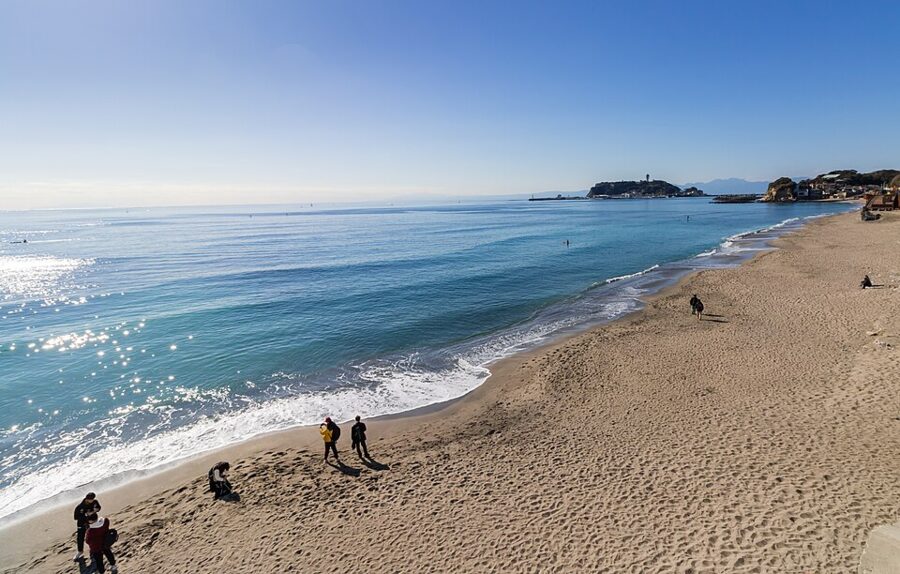
Wakamiya-oji ends at Yuigahama, a broad beach that joins Zaimokuza to the east, about 20 minutes on foot from the station. The swimming season is July and August, when beach huts go up with showers and bars, and these are the closest sandy beaches to Tokyo, so they are full. Out of season the bay belongs to dog walkers and surfers. Mind the black kites overhead: they take food out of people’s hands.
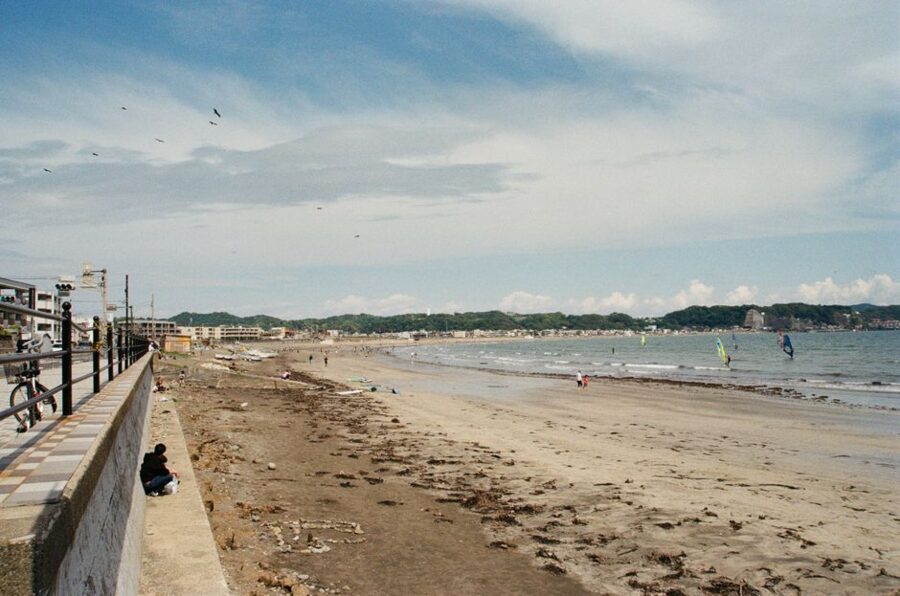
West of Hase the Enoden runs out along the coast. Inamuragasaki, the headland that Nitta’s army is said to have rounded at low tide, is now a small park with the best view in town of Enoshima with Mount Fuji behind it, at its sharpest on clear winter days. Beyond it Shichirigahama, the “seven-ri beach”, runs about 2.9 km to Koshigoe. Seven ri should be about 28 km, and since the beach is nowhere near that, the name has two explanations: the old Kanto ri was much shorter, or the distance was counted from the shrine.

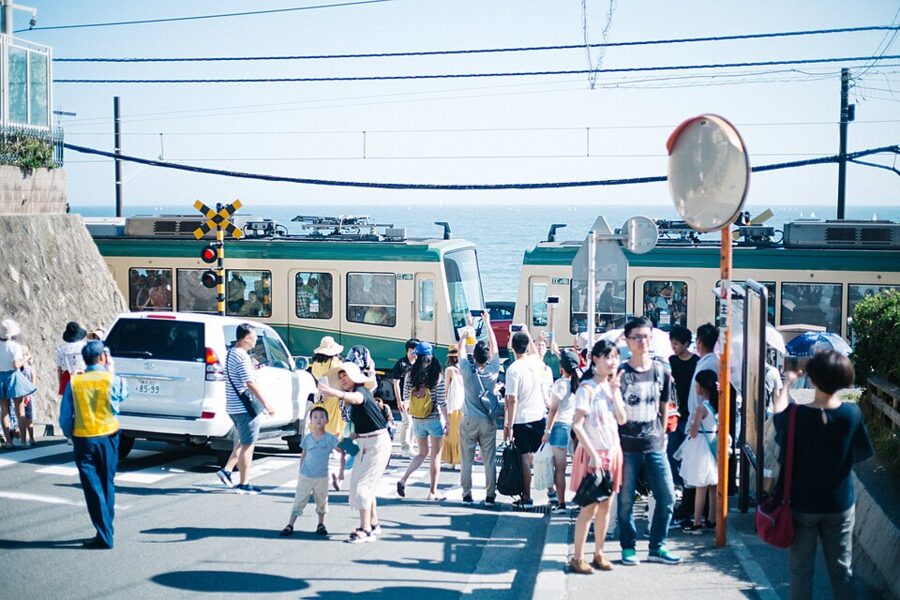
The level crossing by Kamakura-Kokomae station, where the Enoden runs between the sea and a steep street, has become a pilgrimage for fans of the basketball series Slam Dunk, whose opening sequence shows it. On weekends and holidays the pavement fills, guards wave people back from the road, and the people who live on the street push through the crowd to get home. If you want the view, ride through it; the line runs right along the shore here and the sea is outside the window.

Enoshima (江の島) is a small island off the coast of neighbouring Fujisawa, tied to the shore by a sandbar about 600 metres long that once showed only at low tide; the 1923 earthquake lifted the whole island, and today a bridge carries you across. It is about 4 km round and 60 metres high, its southern side all sea cliffs and caves. Its shrine is one of the three great shrines of Benzaiten, goddess of music and water, and its caves, the Iwaya, have drawn ascetics and pilgrims since the Nara period; they were closed for years after a rockfall in 1971 and are now part of a ticketed walk round the far end of the island.
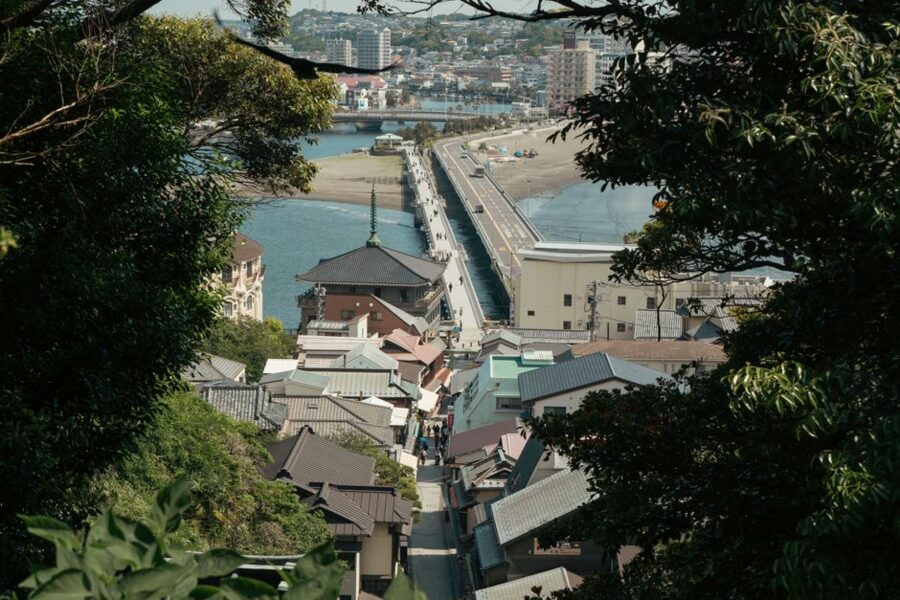
On top are a botanical garden and an observation lighthouse, the Sea Candle, sold on combined tickets. The island hosted the sailing at both Tokyo Olympics, 1964 and 2021, and its harbour was built for the first. It also has a place in science: the American zoologist Edward Morse set up a seaside laboratory here in 1877, and a monument on the island marks it as a birthplace of modern zoology in Japan. Walk across from Enoshima or Katase-Enoshima station, climb to the top, and take the steps down to the wave-cut rocks at the far end, where the Iwaya caves open onto the sea.
Japan put the city on its World Heritage tentative list in 1992 and nominated it in 2012 as “Kamakura, Home of the Samurai”, arguing that the bowl of hills, the passes and the temples together showed the first warrior capital. ICOMOS, UNESCO’s advisory body, recommended in April 2013 that it not be inscribed, the first time it had given that lowest verdict to a site nominated by Japan alone, and the government withdrew the nomination that June; in 2016 the city was named a Japan Heritage area instead. The tentative list and the sites that did get through are covered in UNESCO World Heritage sites in Japan.

What to eat
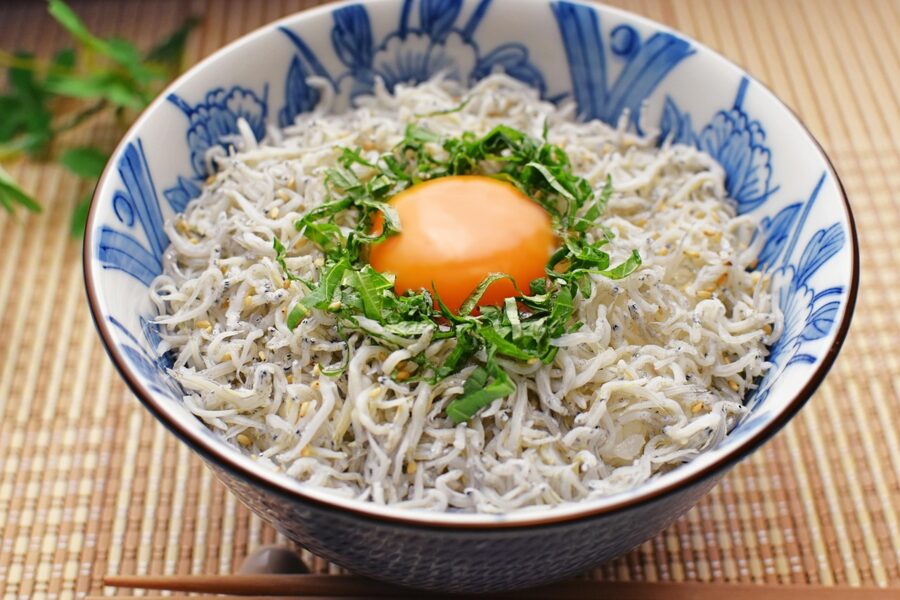
The fish that defines this coast is shirasu, the tiny translucent fry of sardines and anchovies, netted in Sagami Bay from Koshigoe and other small ports. The fishery is closed from 1 January to 10 March each year. In season you can eat it boiled and salted (kamaage), or raw (nama shirasu), which is served only when that morning’s catch is in; if the sign says no raw shirasu today, the boats stayed in. Both come piled on rice as shirasu-don, often with a raw egg yolk or ginger, at lunch counters all along the Enoden and in Koshigoe.
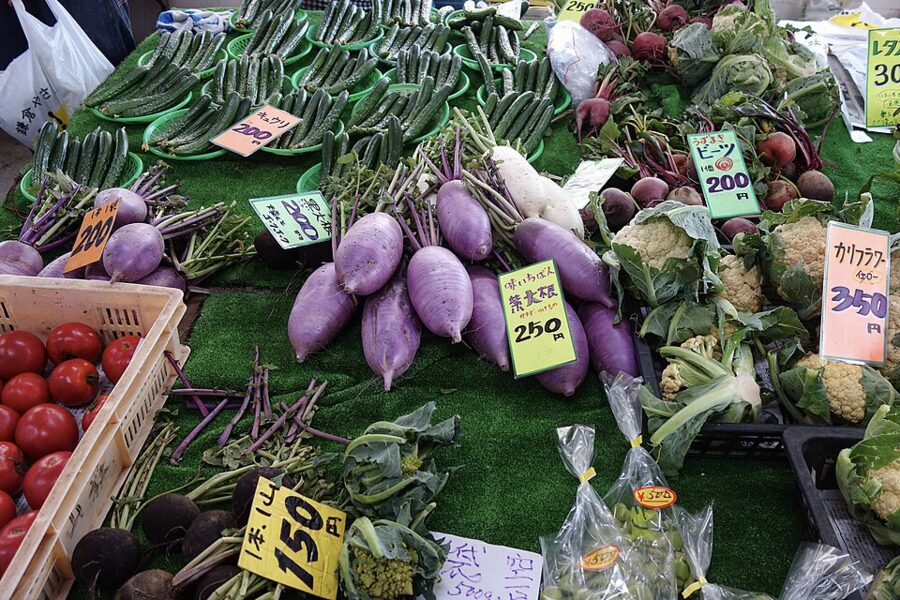
The other local food is vegetables. Small farms on the western and northern edges of the city grow many crops at once in patchwork plots, and from about 1998 Tokyo chefs started coming down to buy them. The place to see them is the farmers’ market near the station that everyone calls Renbai, the Kamakura City Agricultural Cooperative market. It began in 1928, after a foreign missionary told local farmers that in Europe growers sold direct to customers at a fixed place, and the member farms take turns at the stalls in rotating groups; go in the morning, before the restaurant buyers have cleared the tables.

Zen temples brought shojin ryori, Buddhist vegetarian cooking without meat, fish or strong flavourings, and the temples of Kita-Kamakura are the place to try it. The simplest version is that bowl of kenchin-jiru by the gate of Kencho-ji. At Hase-dera, Kaikoan serves lunch looking over the bay, and the matcha at Hokoku-ji’s Kyukoan is the best-value hour in the eastern valleys. Take a box of hato sable home; nobody in Tokyo will be surprised, but nobody will refuse one either.

Crowds, manners and how the town copes
Kamakura is a small town with a big-city catchment. On weekends, during Golden Week at the start of May, through the hydrangea weeks and in late November the station plaza, Komachi-dori, the Enoden and the road to the Great Buddha all jam at once. On busy holidays the queue to board the Enoden at Kamakura can run out of the station and down the street, and it is often quicker to walk to Hase, about 25 minutes, than to wait.
The town and its temples have responded piecemeal. The city’s manners ordinance asks people not to block narrow streets for photos or eat on the move in crowds, temples have added rules of their own, from Kotoku-in’s food ban to Tokei-ji’s camera ban, and the tourism association’s guide links to a live congestion map of the main sights. Most of the pressure falls on residents who still have to get to work on the Enoden, which is worth remembering at the Kamakura-Kokomae crossing.
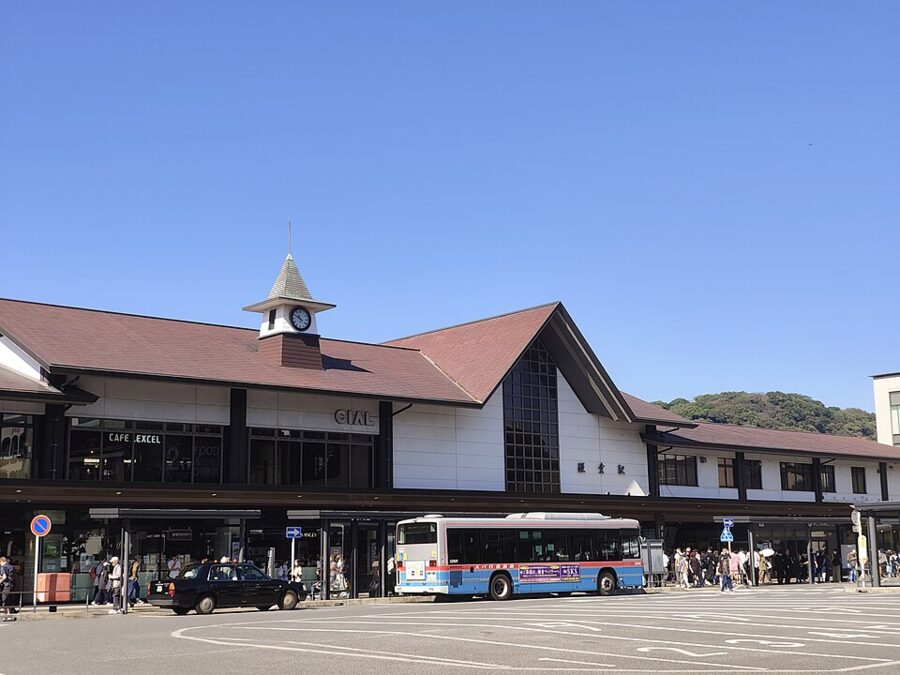

The practical answer is time. Start at Kita-Kamakura when Engaku-ji opens at 08:30, do the Great Buddha either before 10:00 or after 15:00, and save Komachi-dori for the evening, when the day crowd has gone home. Weekdays outside June and late November are a different town. Staying the night helps more than anything: the beach at sunset and the temples at opening time are when Kamakura feels like itself.
Getting there from Tokyo and Yokohama
The JR Yokosuka Line runs direct from Tokyo Station, Shimbashi and Shinagawa to Kita-Kamakura and Kamakura, about 55 minutes from Tokyo. The Shonan-Shinjuku Line runs from Shinjuku and Shibuya in about an hour, with some trains through to Kamakura and others needing a change at Ofuna. From Yokohama it is about 24 minutes, and none of these trains needs a reservation.
| From | Route | Time | Fare (IC card / ticket) |
|---|---|---|---|
| Tokyo | JR Yokosuka Line to Kamakura | about 55 minutes | ¥1,034 / ¥1,040 |
| Shinjuku | JR Shonan-Shinjuku Line to Kamakura | about 1 hour | ¥1,034 / ¥1,040 |
| Yokohama | JR Yokosuka Line to Kamakura | about 24 minutes | ¥440 |
| Shinjuku | Odakyu Line to Katase-Enoshima (for Enoshima first) | about 1 hour 10 minutes | ¥649 / ¥650 |
Fares rose with the JR East revision of March 2026, so older guides quote less. Two passes are worth knowing. The Odakyu Enoshima-Kamakura Freepass costs ¥1,640 from Shinjuku, covering a round trip to Fujisawa, unlimited Odakyu trains between Fujisawa and Katase-Enoshima and the whole Enoden for a day; it pays if you want Enoshima and the coast. The Kamakura Free Kankyo Tegata, ¥900, covers five local bus routes and the Enoden between Kamakura and Hase, and is sold at the Enoden’s Kamakura and Hase stations; it pays if you want the eastern temples by bus.
The national Japan Rail Pass covers the JR lines here, but at about ¥1,040 each way Kamakura alone is nowhere near worth a pass day. If you are already using one, Kamakura and Kita-Kamakura are free stops on it; the Enoden and the Odakyu are not covered. Kamakura is the classic first day trip in Kanto, and pairs well with a night in Hakone, an hour or so further west.
A day, or two
One day. Take the Yokosuka Line to Kita-Kamakura for 08:30 and walk through Engaku-ji, then Tokei-ji and Jochi-ji. Either walk the Daibutsu trail over Genjiyama to the Great Buddha, about an hour and a half with stops, or take the train one stop to Kamakura and the Enoden to Hase. See the Buddha and Hase-dera, eat shirasu or lunch at Kaikoan, then ride the Enoden back to Kamakura and walk up Wakamiya-oji to Tsurugaoka Hachimangu in the late afternoon, returning by Komachi-dori.
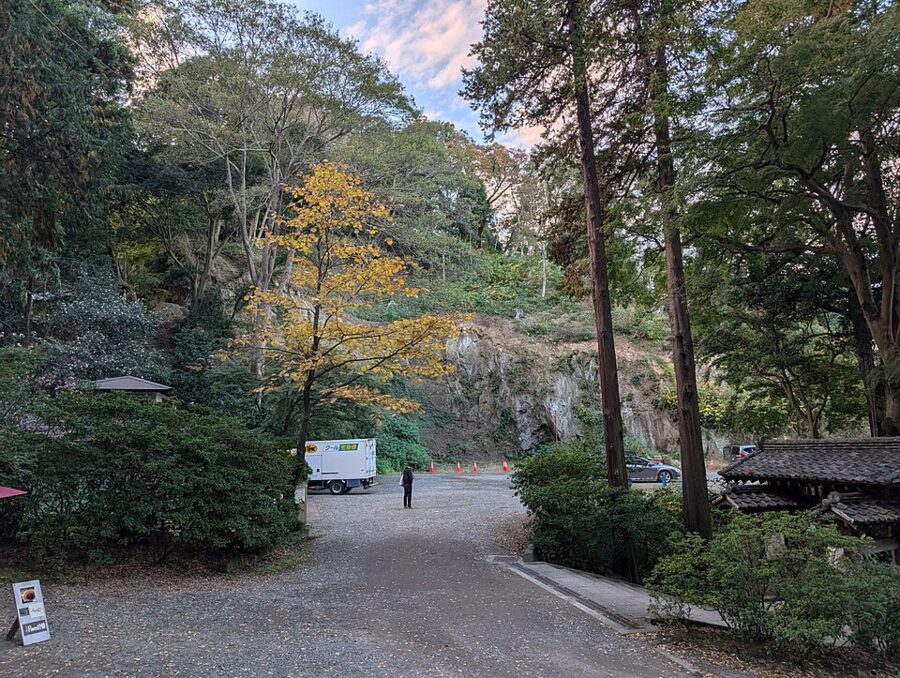
Two days. Do the first day as above but end it on the coast: Enoden from Hase to Inamuragasaki for sunset, then on to Enoshima, and sleep near the sea. On the second morning take the bus from Kamakura Station to Hokoku-ji for opening at 09:00, walk on to Jomyo-ji and Zuisen-ji, and climb onto the Tenen ridge from Zuisen-ji to come down behind Kencho-ji in the early afternoon. Finish at the Museum of National Treasures beside the shrine and take the train home from Kamakura.
If you have an extra hour on either day, give it to the ruins of Tosho-ji and the Gionyama path. It is a short walk from the shrine, almost nobody goes, and standing among the trees where the Hojo ended you understand what the hills were for.
Then walk the line once in reverse. Go down from the shrine at dusk, past the third torii and along the dankazura to the second, under the railway and on past the first to the beach at Yuigahama. Turn round there and the avenue runs back up to the shrine on its hill, exactly where Yoritomo put it, and direct trains back to Tokyo run until after 23:00.