

On a few mornings in winter the sea off Otaru’s eastern shore turns the colour of skimmed milk. Shoals of herring come into the shallows to spawn, the males release their milt, and for a day or two a band of water along the coast from Asari towards Zenibako goes pale and opaque. Fishermen call it kuki (群来), the arrival of the shoal, and for half a century it was something old people described rather than something anyone saw.
The town was built on it. Otaru (小樽) sits in a bowl of hills on the western shore of Ishikari Bay, about 40 kilometres from Sapporo, and almost everything people come to see here is left over from the decades when herring, coal and the Sakhalin trade made it the richest port in Hokkaido (北海道). The stone warehouses held the fish meal and the rice, and the banks lent against the catch.
Then the fish went, the coal went, the trade moved to Sapporo and the Pacific ports, and Otaru was left with a waterfront it could not afford to use and could not quite bring itself to pull down. That reluctance is the reason you can still walk through it. The city held just over 100,000 people at the end of October 2026, about half its peak in the 1960s, and it takes most of its living from visitors who come for an afternoon.
An afternoon is enough to see the canal and buy a glass. A night, or better two, lets you see the town the merchants built, the hill that looks down on it, and the headland where the herring bosses lived.

In this guide
- How a sandy river became Hokkaido's port
- Otaru Canal: the fight over a ditch
- The Wall Street of the North
- Glass, music boxes and Sakaimachi-dori
- Sushi, the market and what Otaru drinks
- The Snow Light Path
- Out of the centre
- Day trips west: Yoichi and Shakotan
- Getting there and getting around
- Half a day, a day or two
How a sandy river became Hokkaido’s port
The name is Ainu. The usual reading is ota-or-nay, “the river in the sand”, though dictionaries also give ota-ru-nay, “the river where the sand dissolves”, and as with most Ainu place names in Hokkaido the etymology is argued over. The odd thing is that it did not originally mean this place at all. Otarunai was the name of a river mouth to the east, on what is now the boundary with Sapporo, where the Matsumae domain set up a trading post in the Edo period.
That post faced straight into the winter monsoon, so the traders moved west to a sheltered cove the Ainu called Kuttar-ush, “where the knotweed grows”, near today’s Irifune. They brought the old name with them. Kuttar-ush became Otarunai, and in 1869, when the Meiji government renamed the whole island, Otarunai was shortened to Otaru and written with the characters for “small barrel”, which have nothing to do with either river.
Herring
Through the late Edo and Meiji periods the coast from here to Rumoi and Wakkanai lived on Pacific herring that came inshore every spring to spawn. At the peak, in the late Meiji and Taisho years, Hokkaido’s west coast landed close to a million tonnes in a season. Most of it was never eaten fresh. It was boiled, pressed for oil and dried into nishin-kasu, herring meal, which went south on the Kitamae trading ships as fertiliser for the cotton, indigo and rapeseed fields of Honshu.
Otaru was where that trade met the rest of the world. Merchants from Omi, Echigo and Kaga set up shop here, the ships unloaded rice, cloth and supplies for the fishing camps, and the fishing bosses up the coast banked their profits in town. By 1899, when Otaru was opened as an international trading port, there were about 250 commercial warehouses along the shore and more than a hundred of them were stone.
Coal and the Temiya railway
The second fortune came from inland. The new colonial government in Sapporo wanted the coal of the Horonai field, far up the Ishikari valley, and it needed a harbour to ship it from. On 28 November 1880 the Horonai Railway opened from Temiya, on the Otaru waterfront, to Sapporo, the first railway in Hokkaido and the third in Japan. An American engineer, Joseph Crawford, laid it out on American lines, with flag-stop stations and American locomotives, which is why the oldest engines in the town museum look like something from a Western.
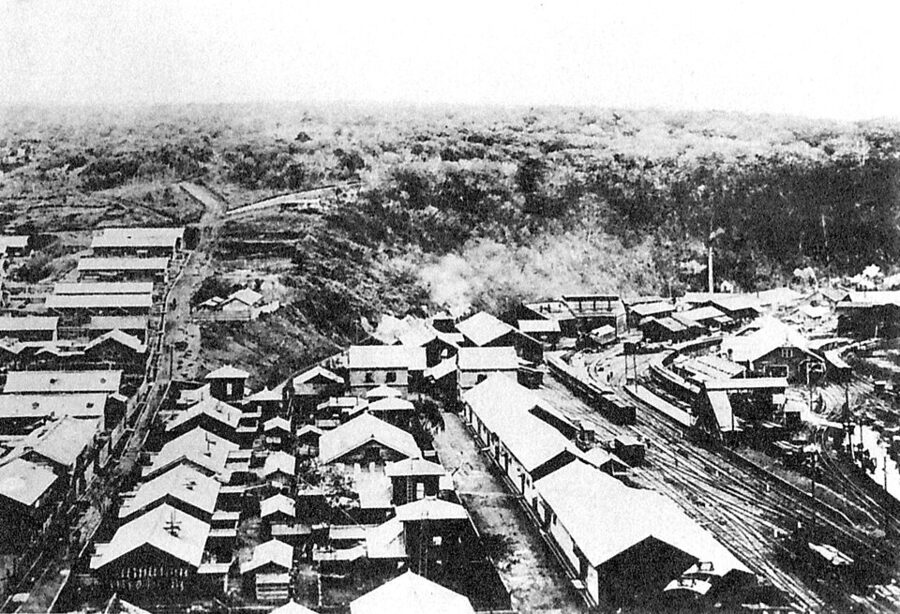
Coal brought settlers, and settlers needed everything. As migration to Hokkaido gathered pace after the 1890s, Otaru became the island’s supply depot: rice, salt, cloth and tools came in by sea and went inland by rail, and the produce of the new farms went out the same way. After the Russo-Japanese War of 1904–05 gave Japan the southern half of Sakhalin, Otaru was also the jumping-off point for Karafuto, and shipping lines and trading houses opened branches to handle the traffic.
The banks, and the long decline
Money followed. The Bank of Japan and the big commercial banks of Tokyo and Osaka opened branches, and the streets of Ironai filled with granite and stone banking halls. At the census of 1920 Otaru counted 108,113 people, second in Hokkaido after Hakodate and ahead of Sapporo. The novelist Kobayashi Takiji, who grew up here and worked as a bank clerk on one of those streets, called it a city like the heart of Hokkaido, and in 2025 the Agency for Cultural Affairs used his phrase when it listed the town as a Japan Heritage site.
The heart stopped in stages. Japan lost Sakhalin in 1945, and the herring catch began to collapse in 1953, down to about 50,000 tonnes two years later, for reasons still argued over: overfishing, a shift in sea temperatures, or both. Coal gave way to oil, Sapporo took the business and the Pacific ports took the shipping. Otaru’s population peaked at 207,093 in 1964 and has fallen ever since.
There is a coda. Since the 1990s the fisheries have released juvenile herring into Ishikari Bay and widened their net mesh to spare the young fish, and in recent winters the milky water of the kuki has been seen again along the shore east of the town. The catch is a fraction of what it was. The colour is the same.
Otaru Canal: the fight over a ditch
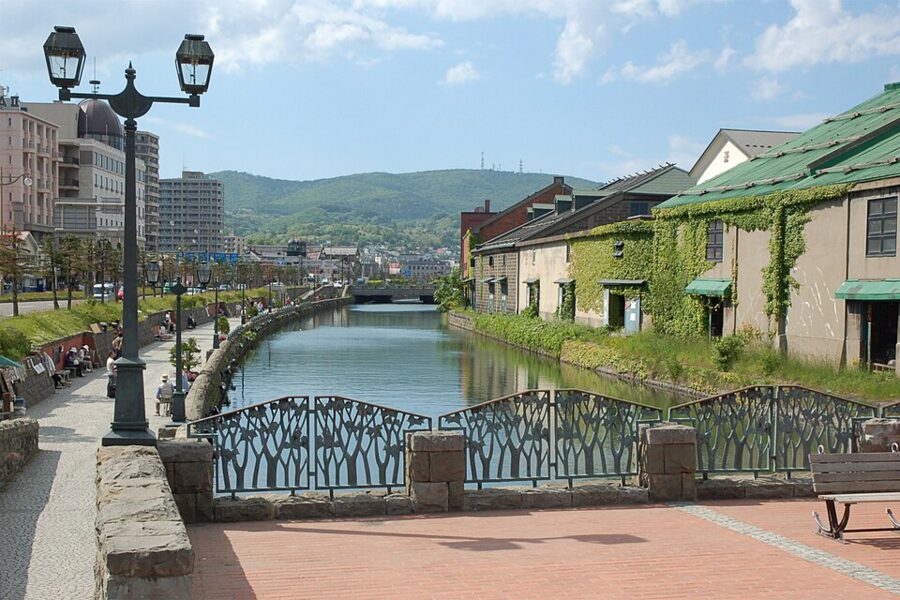
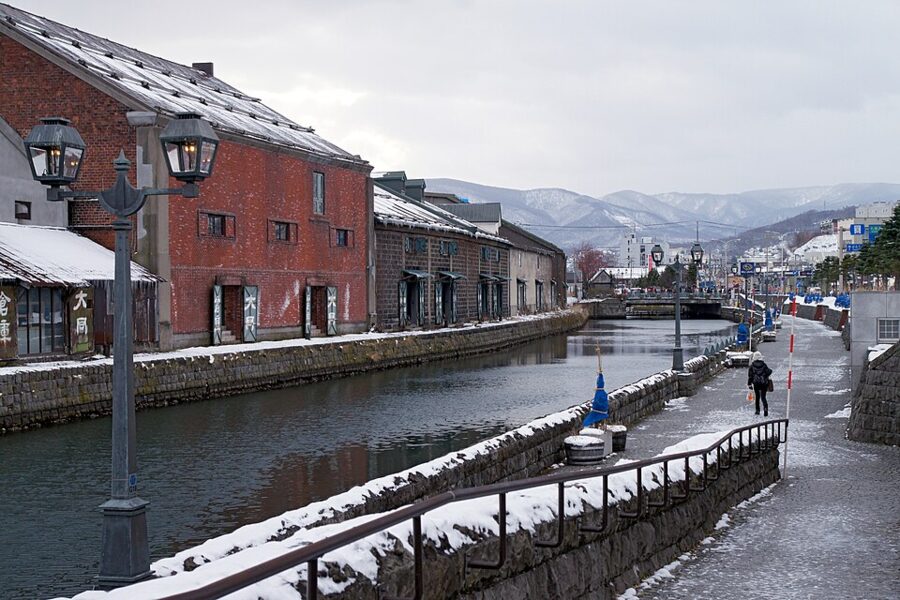
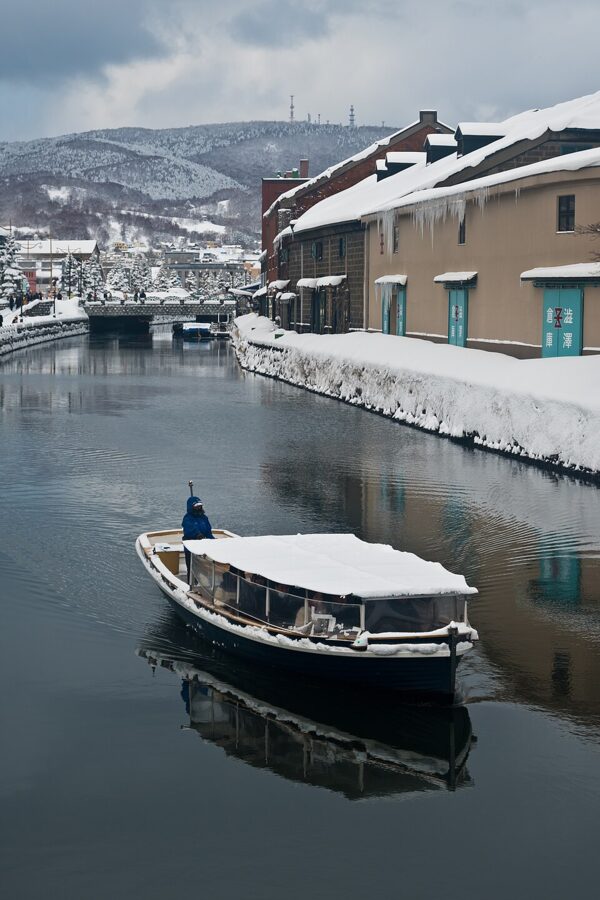
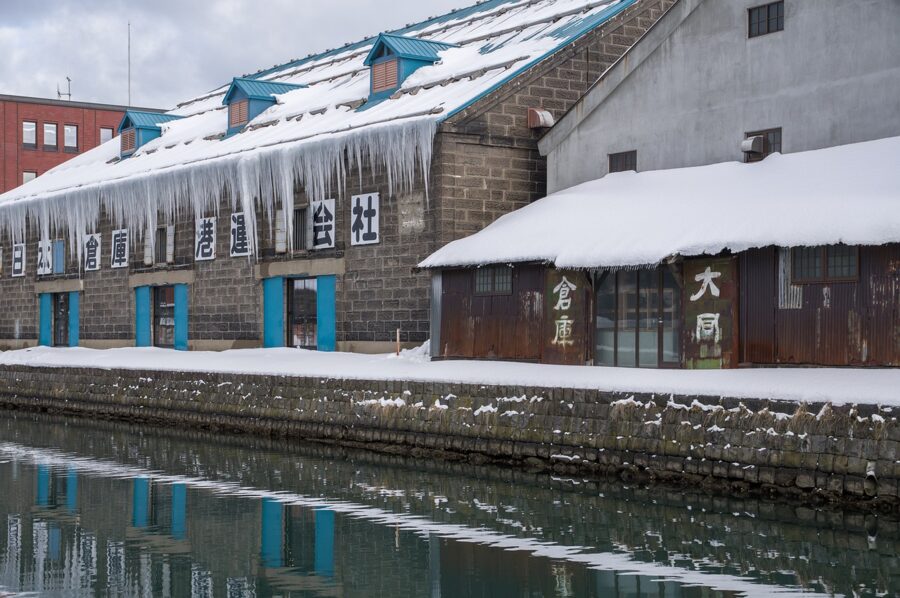
Otaru Canal (小樽運河) is not quite a canal in the usual sense. Between 1914 and 1923 the city reclaimed a strip of land offshore and left a channel between the new ground and the old shore, so that the waterway was made by filling the sea rather than by digging the land. It is the only canal in Japan built this way, and it explains the gentle curve, which follows the line of the old beach. When it was finished it ran for 1,140 metres and was 40 metres wide.
The point of it was lighters. Steamers anchored in the harbour, and small barges called hashike carried the cargo in to the warehouses, which now stood on the canal’s inner bank with their loading doors facing the water. It worked for about thirty years. After the Second World War the port built proper piers where ships could tie up and unload directly, the lighters went out of business, and the canal silted up and began to smell.

A road, a society and a compromise
In 1966 the city approved a plan to fill the canal and run a six-lane coastal road over it, which meant demolishing most of the warehouses. In 1973 residents formed the Society to Protect Otaru Canal, and for more than ten years the argument split the town between people who saw a road and jobs and people who saw the only record of what Otaru had been. Mineyama Fumi, a former primary-school employee who was the society’s vice-chair at its founding and its chair from 1978, became the campaign’s public face.
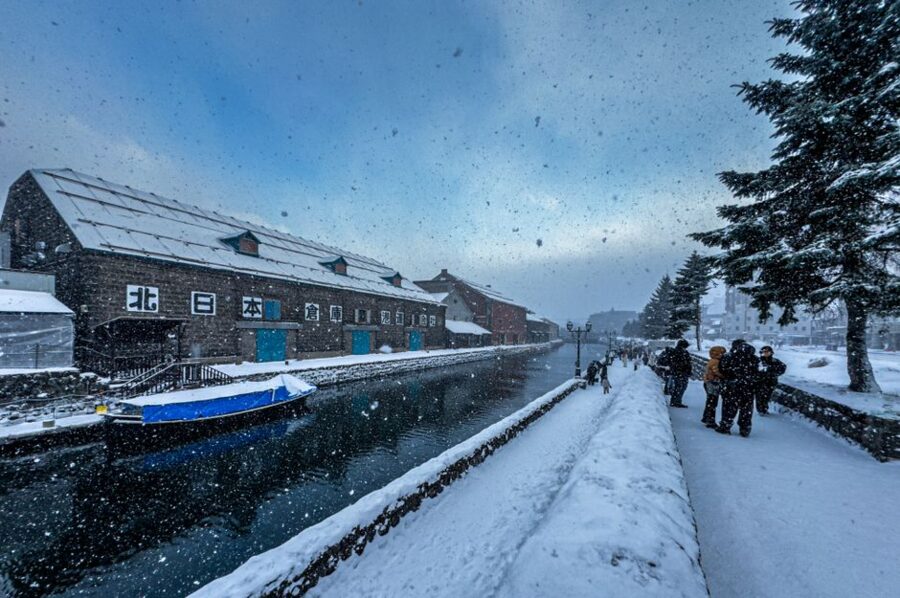
In 1983 a broader citizens’ committee gathered about 100,000 signatures, and in the same year the city passed Hokkaido’s first ordinance protecting historic buildings and townscapes. The final settlement, backed by the governor of Hokkaido, Yokomichi Takahiro, split the difference. The road was built, but along the central stretch it took only half the canal’s width. The other half kept its water, gained a stone promenade with 63 gas lamps, and opened in 1986.
The northern section, the Kita-unga, kept its full 40 metres. Most visitors never see it, and it is the better half.

Walking it, by day and after dark
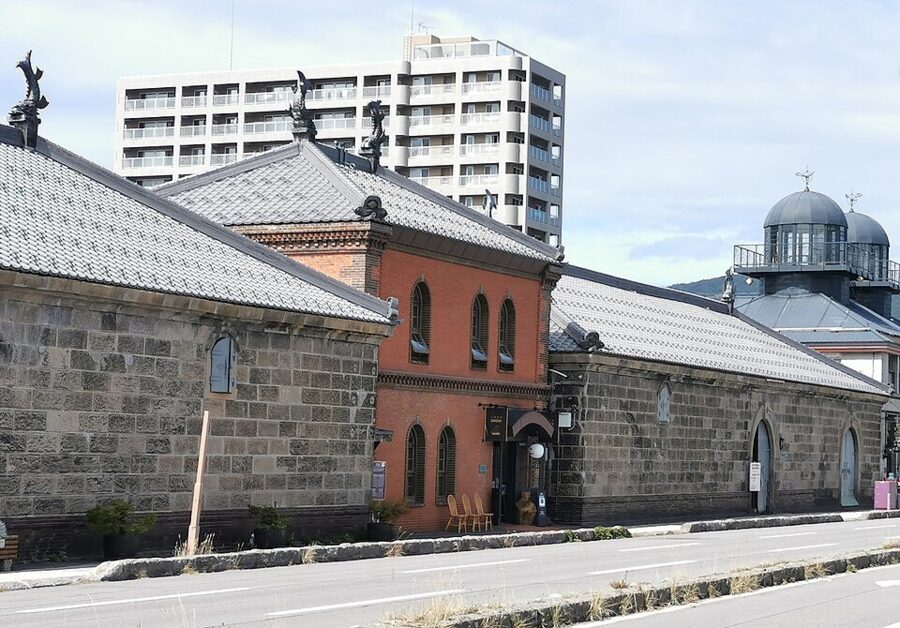
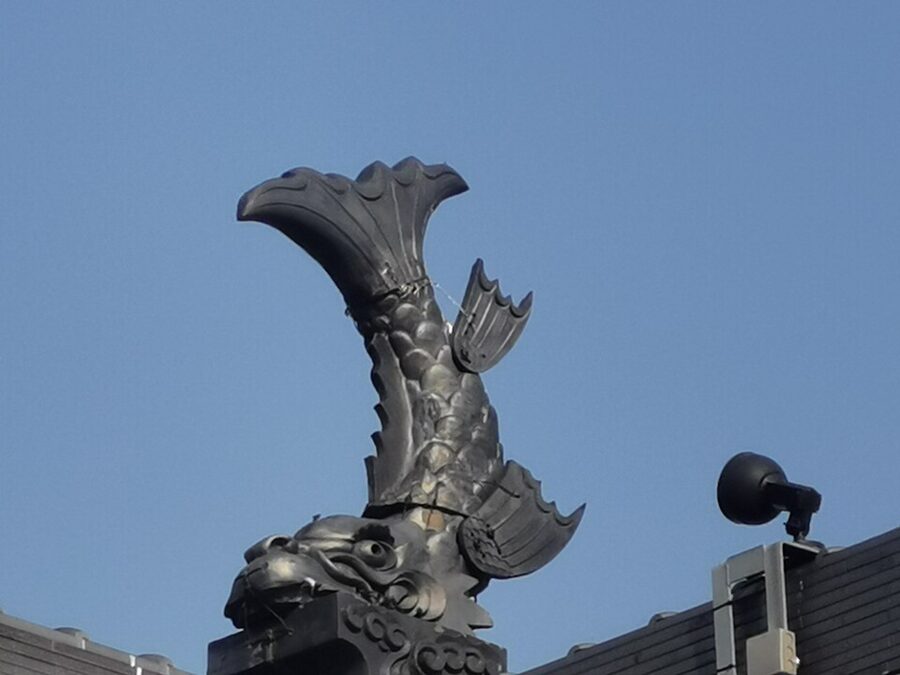
Start at Asakusa-bashi, the bridge at the southern end of the promenade, about ten minutes’ walk downhill from Otaru Station, where every group photo of the canal is taken. The promenade runs north on the warehouse side to the Former Otaru Warehouse, now the museum’s canal building (¥300, open daily), with eight shachi, the mythical fish that ward off fire, on its tiled roof. Then keep going.

The north canal is wider, quieter and less tidy. Boats tie up along it, some of the warehouses still look like warehouses, and the stone building of the Former Otaru Branch of Nippon Yusen stands on the corner. Allow an hour for the full length out and back, more if you stop.
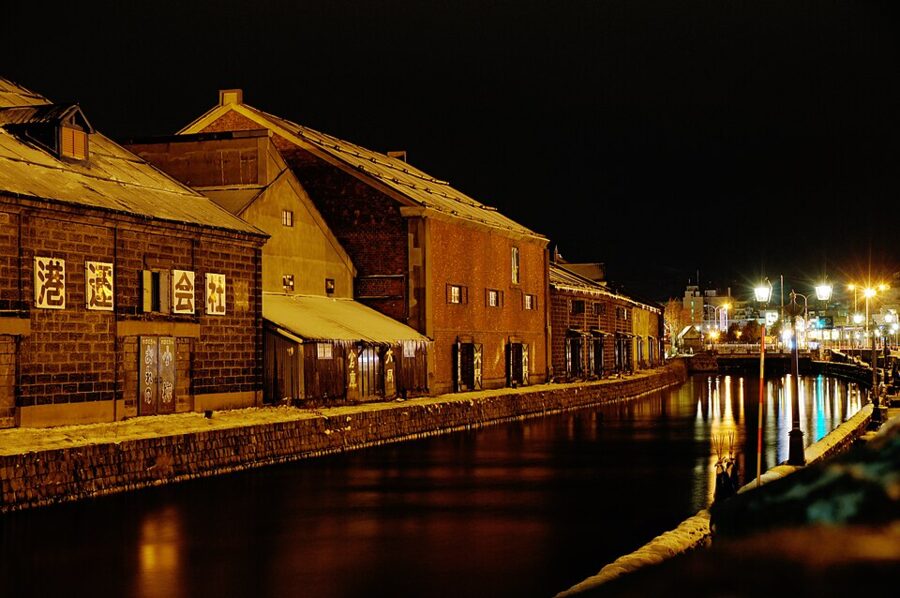
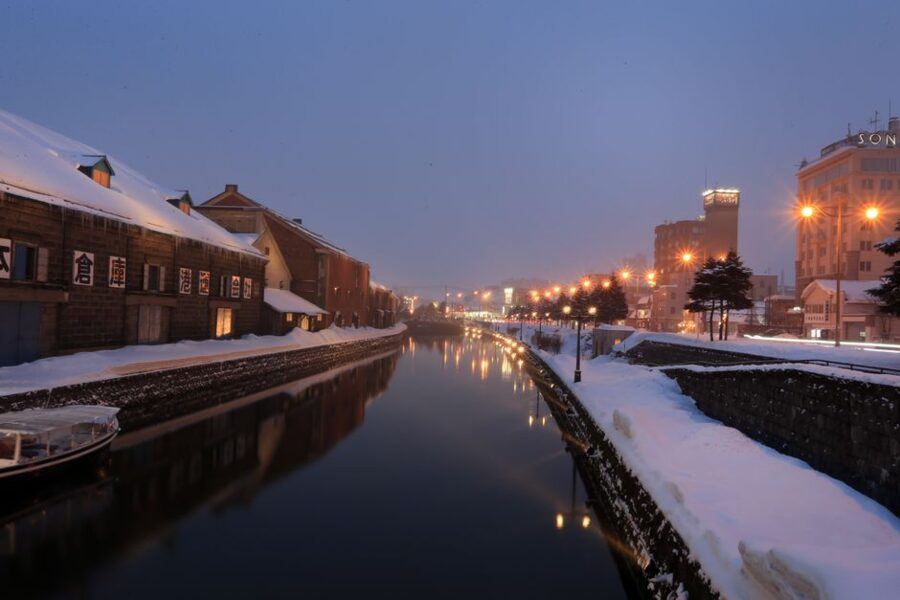
Come back after dark. The floodlights come on at dusk, the gas lamps are lit, and from November to January the stretch between Asakusa-bashi and Chuo-bashi is strung with blue lights for the winter illumination the tourist association calls the Blue Canal, lit from sunset until 22:30 for the 2026–27 season. The best half hour is the one just after sunset, when the sky is still lighter than the water.
Otaru Canal Cruise runs boats of about 40 minutes from a landing near Chuo-bashi, round the north canal and out into the harbour, with the captain giving a live commentary. Day departures cost ¥1,800 and night departures ¥2,000, and in the snow months the boats carry a hood.
The Wall Street of the North
One block inland from the canal, the streets of Ironai (色内) are lined with the banks that made the name. Before the war this was the largest financial district in northern Japan, with branches of the Bank of Japan, Mitsui, Mitsubishi, Yasuda, Dai-ichi, the Hokkaido Takushoku Bank and a cluster of regional banks within a few hundred metres of one another. Almost all of them have closed or moved to Sapporo. Almost none of the buildings have been knocked down.
The Bank of Japan Otaru Museum
The best of them is the Bank of Japan’s own. Tatsuno Kingo, who designed the bank’s head office in Tokyo and later Tokyo Station, drew it with his pupil Nagano Uheiji and with Okada Shintaro, and it was finished in July 1912. It is brick under a skin of mortar scored to look like stone, with a steel roof frame made from early Yawata steelworks girders, which let the banking hall rise two storeys with no columns. The four small domes face north up the street, and a four-storey lookout tower on the southeast corner was there so the branch could watch the harbour.
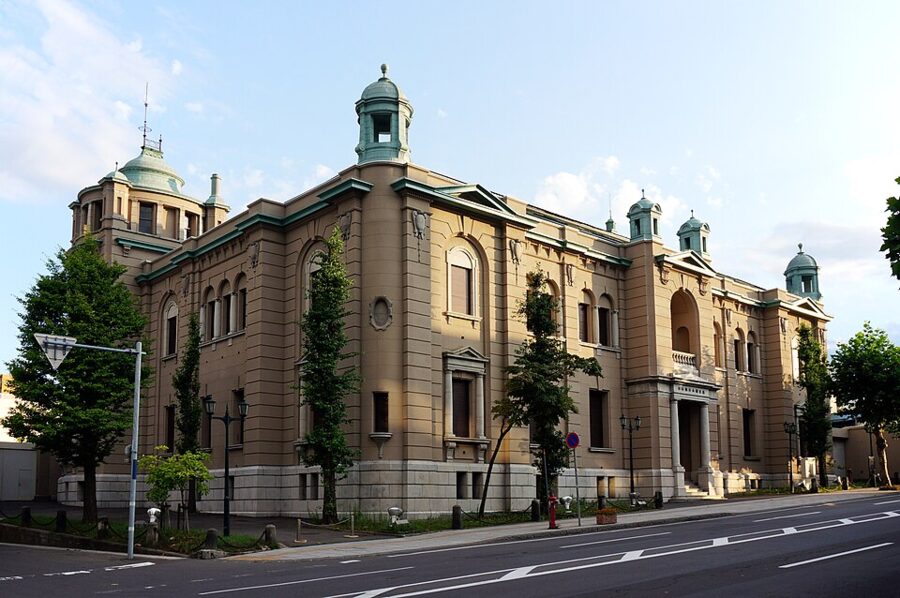

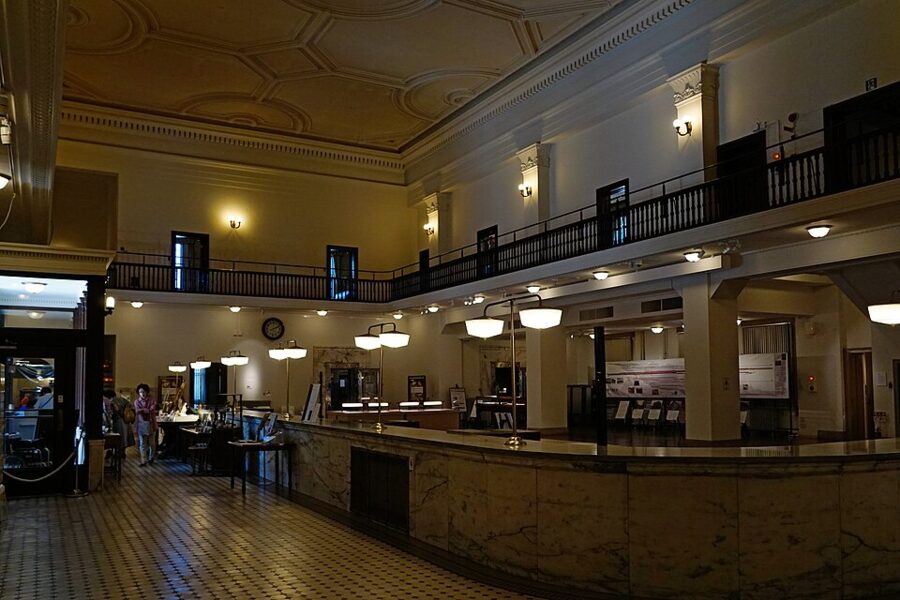
It closed as a working branch in 2002 and is now the Bank of Japan Otaru Museum. Admission is free; hours are 09:30–17:00 in April–November and 10:00–17:00 in December–March, and it closes on Wednesdays (open when a Wednesday is a holiday) and from 29 December to 5 January. Inside are the counters in Akasaka marble from Gifu, the vault, a block of notes weighing what a hundred million yen weighs, and displays on how the branch financed the herring and the coal. Give it 45 minutes.
The rest of the street
Opposite stands the Former Hokkaido Bank head office of 1912, also by Nagano Uheiji (an older Hokkaido Bank, unrelated to today’s), owned by the Chuo Bus company since 1965 and now partly the Otaru Bine wine bar. North along the same street the Former Mitsui Bank Otaru Branch, finished in 1927 in reinforced concrete faced with North American granite, was the last city bank to trade in Otaru when it closed in 2002. It became an Important Cultural Property in 2022 and is now part of Otaru Art Base, the museums the furniture company Nitori runs in the district’s old buildings.

The Former Hokkaido Takushoku Bank Otaru Branch, a few doors along, is where Kobayashi Takiji worked from 1924 while writing in the evenings. In 1929 he published Kani Kosen, The Crab Cannery Ship, and in November of that year the bank dismissed him over a second novel, The Absentee Landlord; four years later he died in police custody in Tokyo.
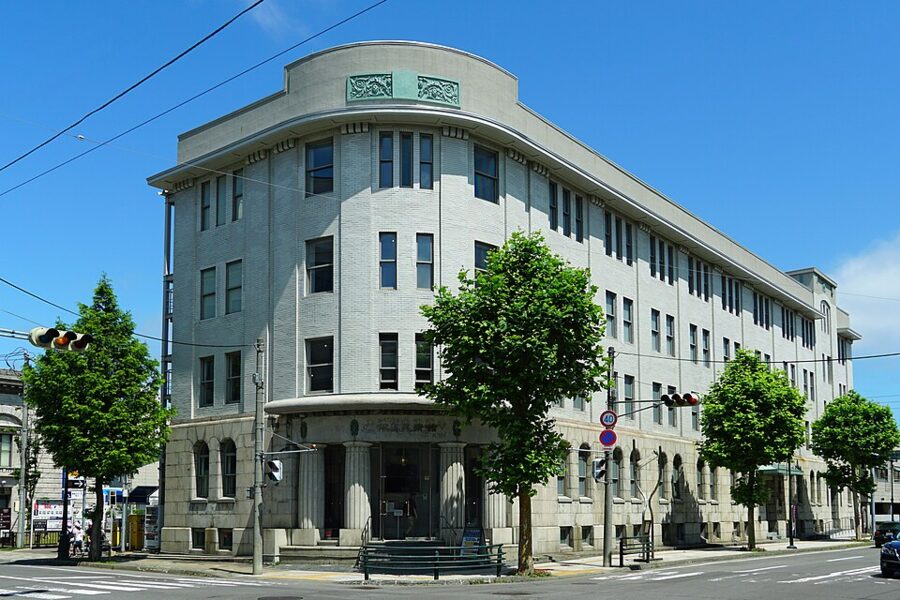

At the north end of the canal, the Former Otaru Branch of Nippon Yusen (NYK) is the oldest of the set and the most beautiful inside. Sadachi Shichijiro, one of the first four architects trained in Japan under Josiah Conder, designed it in local stone, and it was finished in 1906. The upstairs reception room and boardroom are papered in kinkarakawa-shi, embossed and gilded paper made to imitate tooled leather. The city runs it with the Otaru Museum; a combined ticket for the museum’s two buildings and the NYK branch costs ¥600 and is valid for two days.
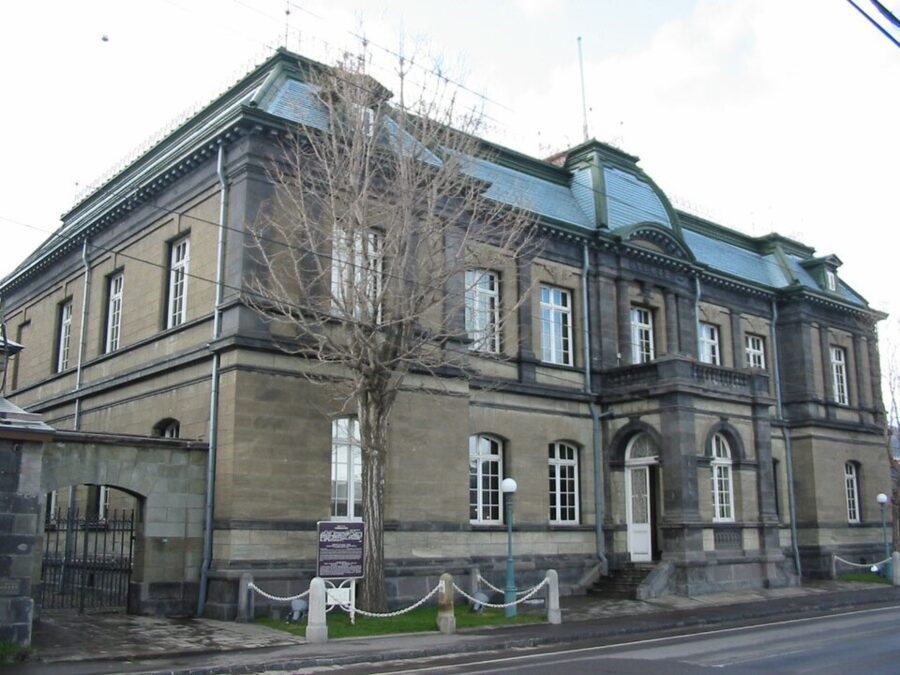

Between the banks and the canal, the Former Takahashi Warehouse of 1923, a grain store in timber and stone, holds Otaru Art Base’s stained glass museum: windows made in England between the late nineteenth century and the First World War for churches that have since been demolished. It is the most unexpected room in Otaru, and worth the ticket even if you have had enough of banks.

Glass, music boxes and Sakaimachi-dori
South of the canal, Sakaimachi-dori (堺町通り) runs from the edge of Ironai to Marchen Crossing, and it is where most of the people you met on the canal are going. The street was a row of merchant houses and warehouses; it is now a row of glass shops, sweet shops, music box shops and seafood grills, most of them in the old buildings. On a summer afternoon it is solid with people. Before 10:00 or after 17:00 it is a different street.
Why Otaru makes glass
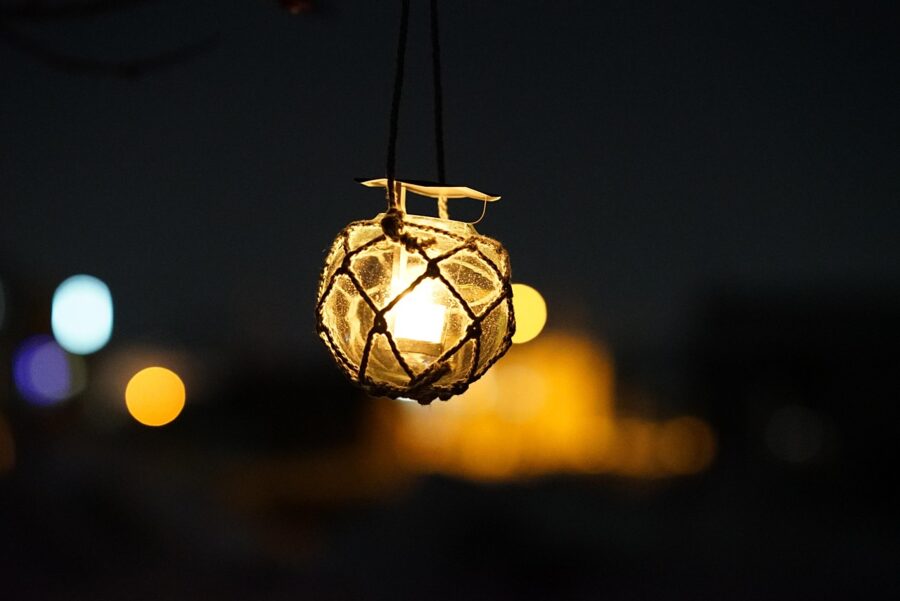
In 1901 Asahara Kyukichi, a glassmaker from Kyushu, opened a workshop in Otaru making oil lamps, at a time when electric light was still a novelty in Hokkaido. In 1910 he added glass fishing floats, the hollow balls in rope nets that held up the herring nets, and the business grew to factories in Otaru, Muroran, Asahikawa, Kushiro and Sakhalin with about 400 workers. When plastic replaced glass floats and the herring had gone, the firm was on its last legs.
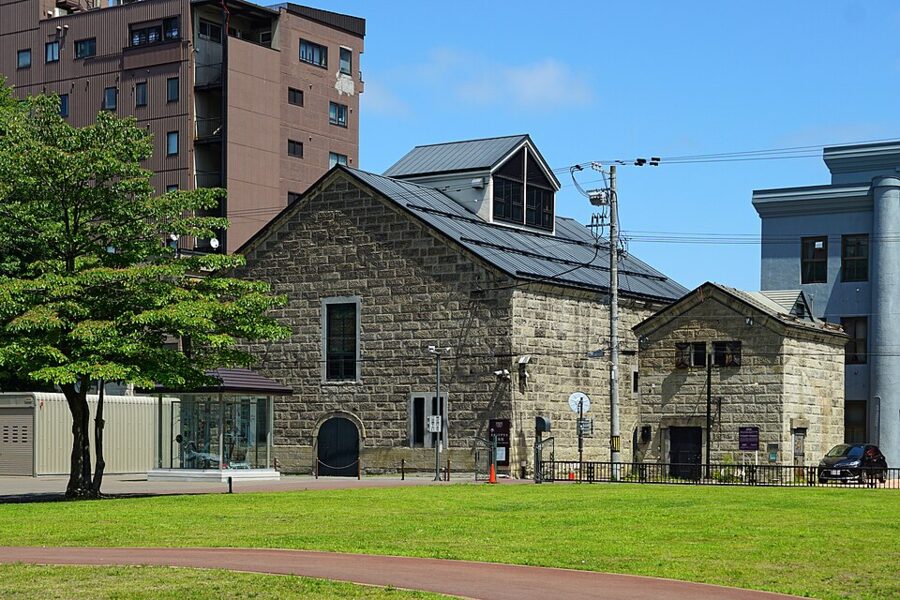
Kitaichi Glass, run by the founder’s younger son’s line, survived by turning a stone herring warehouse of 1891 into a showroom just as the canal campaign brought the first visitors. Tourist glass shops all over Japan copied the idea, and Sakaimachi now has more than a dozen. The original Asahara Glass works is still run by the elder son’s line, still blows floats, and lets you blow one yourself: ¥2,900 for a float, ¥3,300 and up for a drinking glass, booked in advance, 10:00–15:00.
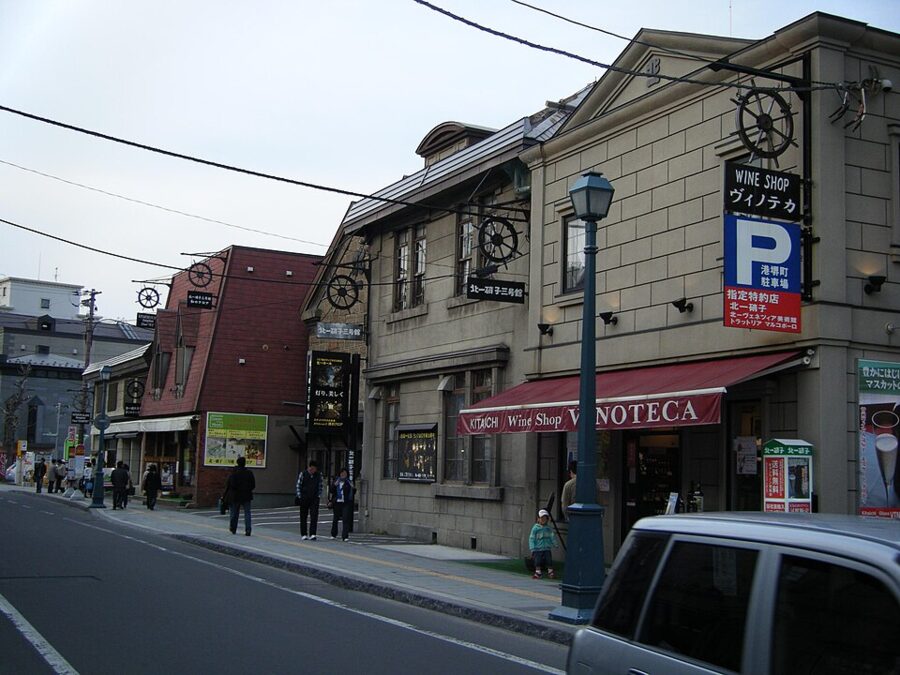

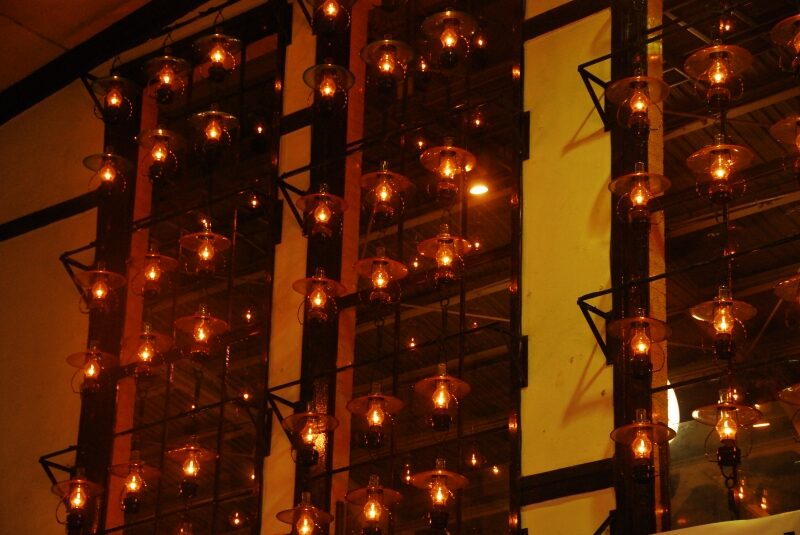
Inside Sangokan, Kitaichi Hall is a dim café lit only by 167 oil lamps. Staff light them one by one when it opens at 09:00, and you can watch from the door until about 09:30; it is the best quarter of an hour on the street. Seats cannot be booked and there is a piano most days.

The Music Box Museum and Marchen Crossing
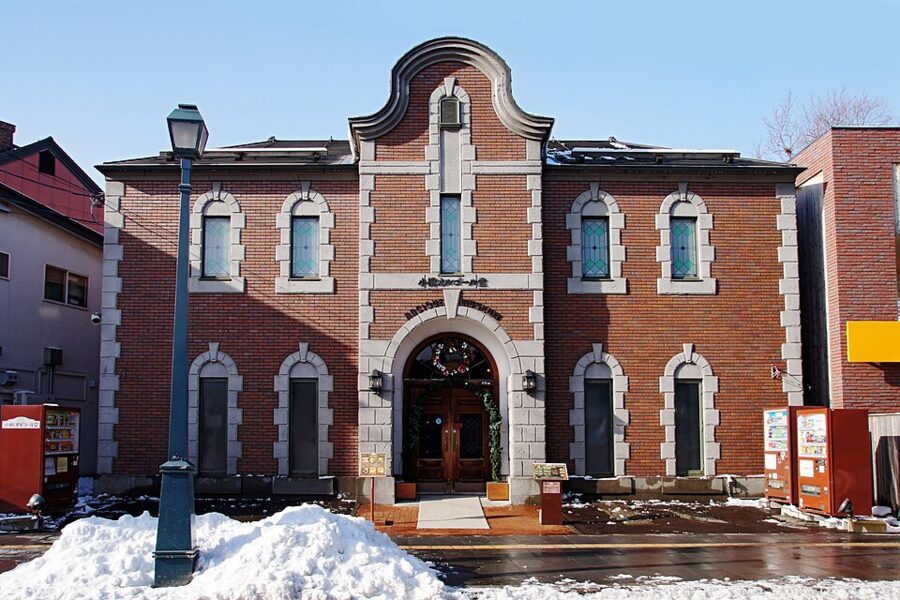
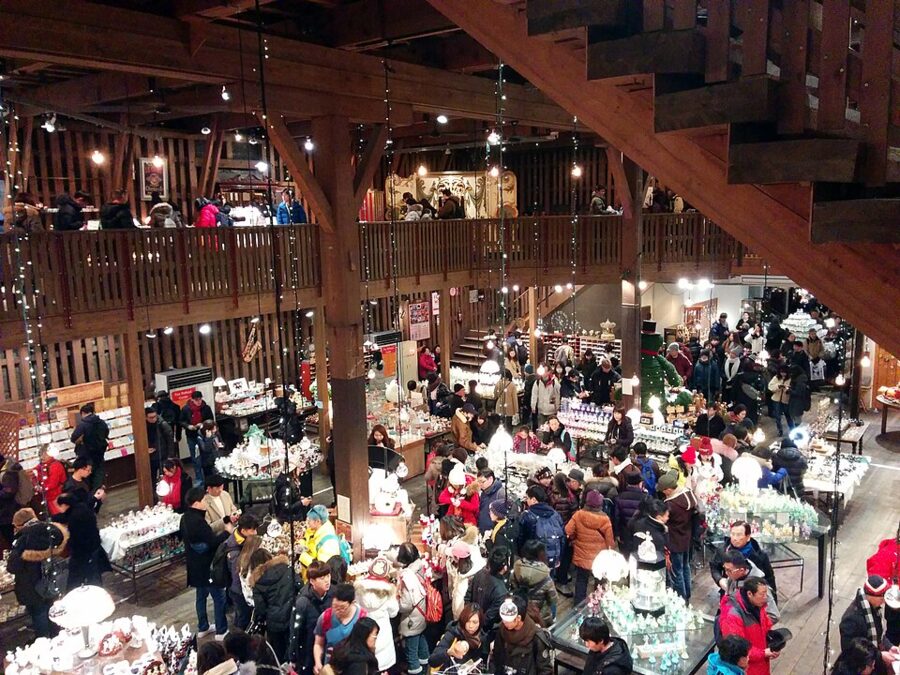
At the southern end of the street, the Otaru Music Box Museum main building (小樽オルゴール堂本館) occupies the red-brick office and warehouse that the rice merchants Kyosei Company built in 1915, unusual in a town of stone. The name is generous: it is a shop rather than a museum, with about 3,200 designs and 38,000 boxes on five floors around a nine-metre atrium. The antique collection, with a pipe organ, is in the separate No. 2 building nearby, and the main building costs nothing to go into.


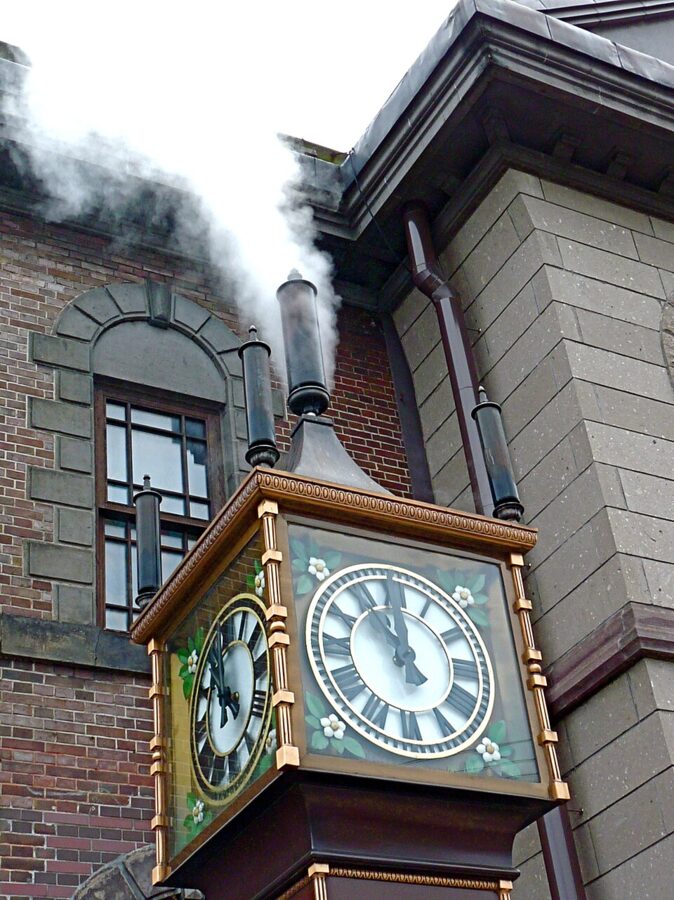
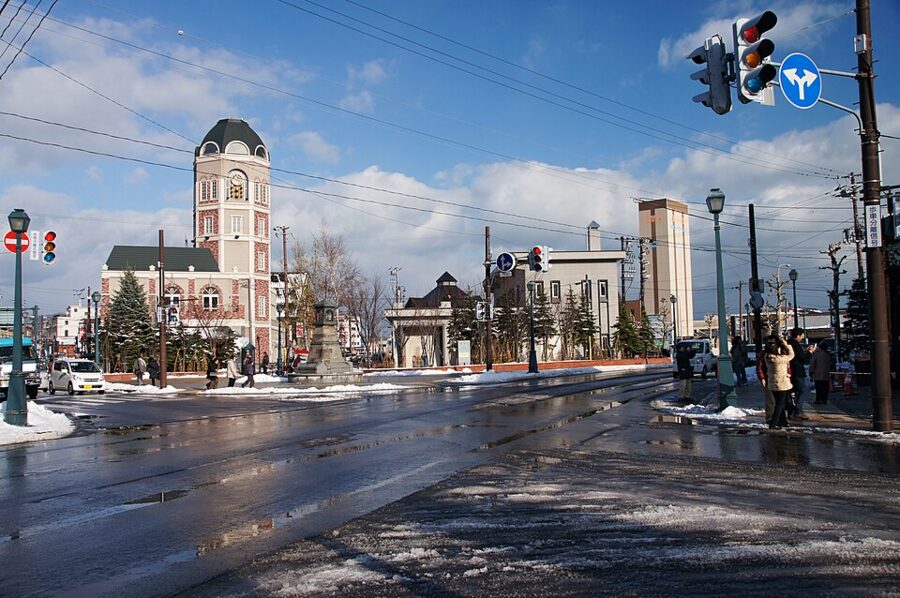
Outside it stands the steam clock, 5.5 metres of bronze made by Raymond Saunders, the Vancouver clockmaker who built the first one for Gastown in 1977. Otaru’s is his second, installed on 25 June 1994, and every fifteen minutes it blows a five-note tune on steam whistles. The crossing it stands on is called Marchen Crossing, and across the road the LeTAO main store has its own clock tower. Local tradition calls this corner the birthplace of Otaru, since the cove of Kuttar-ush, where the traders settled, lay just along the shore.


Sweets
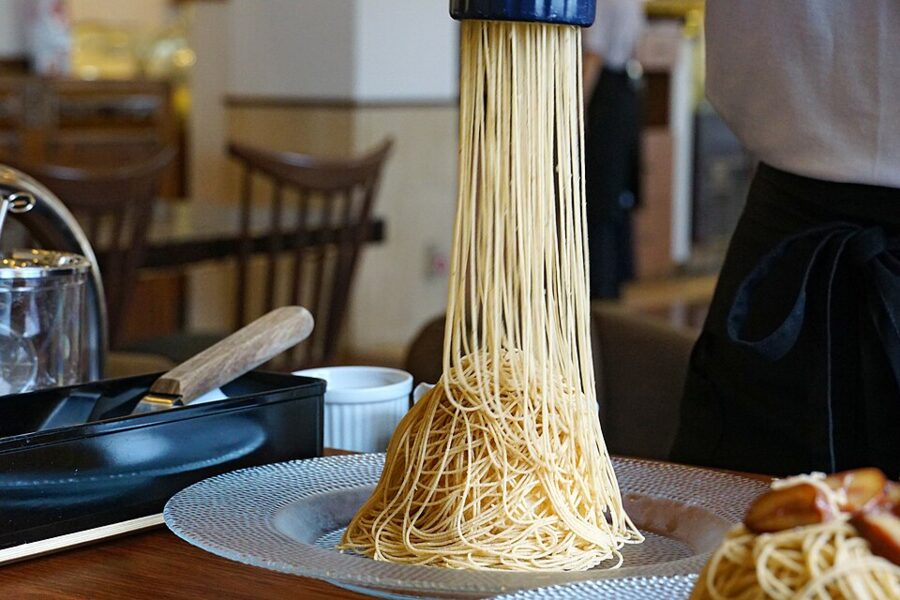
Otaru’s confectioners are a reason to come in themselves. LeTAO, which takes its name from La Tour Amitié Otaru, opened its main store at the crossing in 1998 and made its name with the Double Fromage, a baked cheesecake under a layer of mascarpone cheesecake; the main store also does a Mont Blanc finished in front of you, mornings only. A little up the street, Kitakaro’s Otaru main store (10:00–18:00) is the place for baumkuchen and for cream-filled pies that leak if you are not careful.

The older taste is at Amato, about six minutes’ walk from the station, which has sold its cream zenzai, sweet red beans with ice cream and soft rice cake, since 1960. The shop downstairs opens 10:00–18:30 and the café upstairs 12:00–17:00; both close on Wednesdays and Thursdays.
Sushi, the market and what Otaru drinks
Otaru sells itself on sushi, and the claim is fair as far as the fish goes: herring, squid, sea urchin, salmon roe, scallops, crab and, in season, shako, mantis shrimp, all come from the waters within a day’s sailing. Sushiya-dori, the sushi street, runs uphill from near the canal towards Hanazono, crossing the Temiya Line, with a counter every few doors. It is not cheap, and the set menus aimed at tour groups are the least interesting thing on any menu.
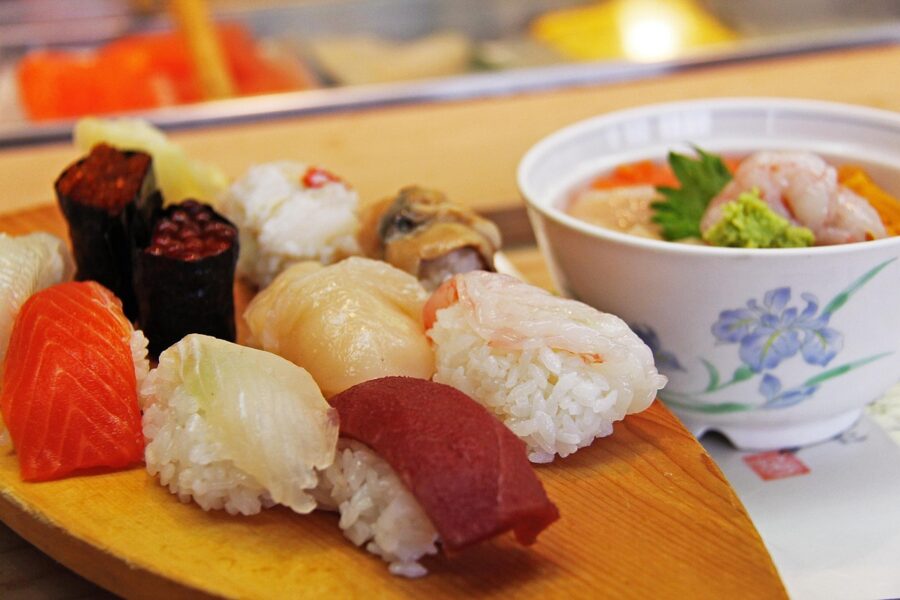
Masazushi’s main restaurant on Sushiya-dori is the best known of the old houses, with a counter of 30 seats; it opens 11:00–15:00 and 17:00–21:00 and closes on Wednesdays. For less money and more noise, eat in the markets.
Sankaku Market
Sankaku Market (三角市場) takes its name from the triangle of land it stands on, a wedge between the station and the main road. It began around 1948 as seven or eight stalls set up outside the station, selling to shoppers who came by train from as far as the Kamikawa and Hidaka districts, and the present roofed market went up in 1957. It is a one-minute walk from the ticket gates, which makes it either the first or the last thing most people see in Otaru.
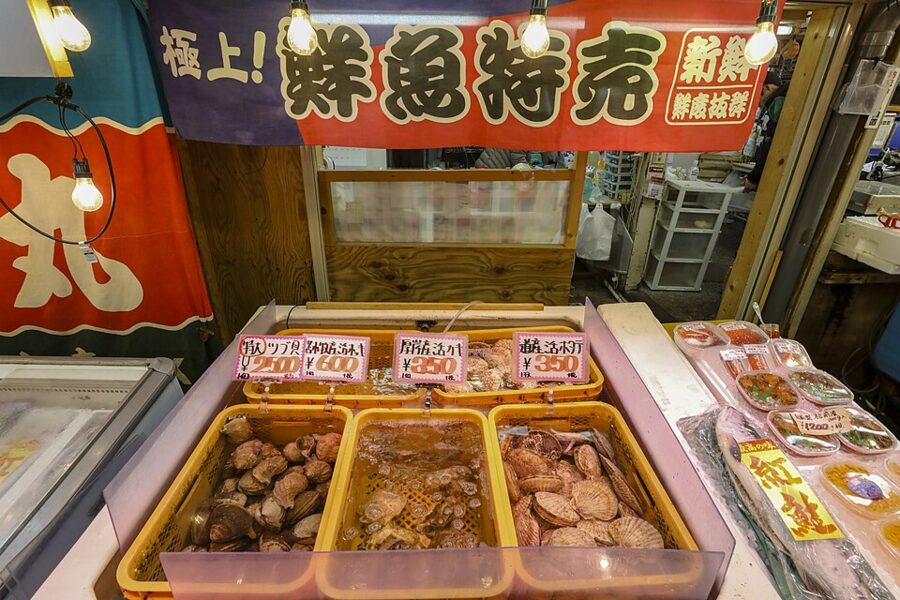

Inside, fishmongers alternate with small restaurants serving kaisendon, rice topped with raw seafood, where you can pick the toppings from the counter. The best-known places draw queues; the quieter ones a few doors away are often no worse.
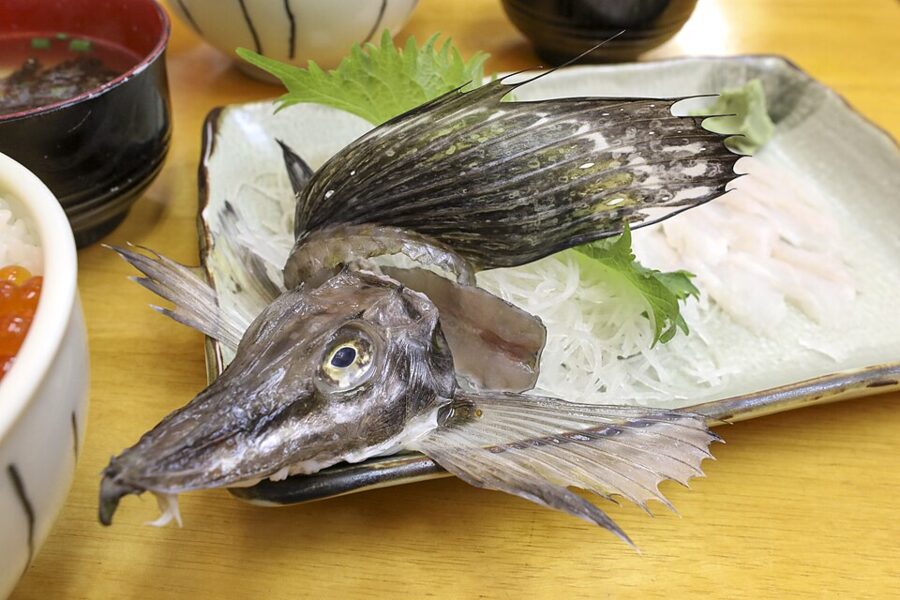

What locals eat
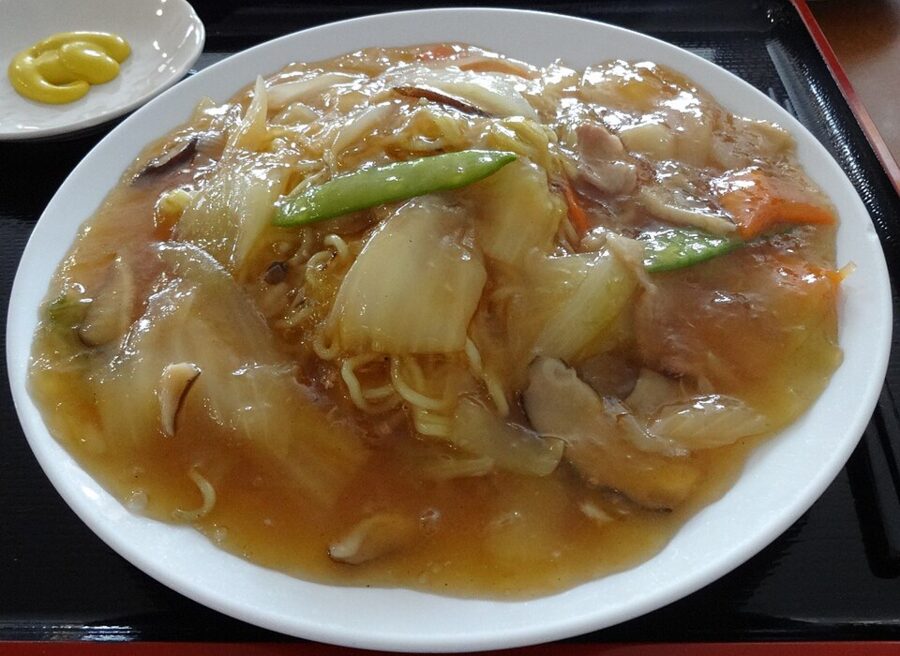
Otaru’s own dish is not sushi. Ankake yakisoba, fried noodles drowned in a thick, glossy sauce of vegetables, pork and seafood, is on the menu of almost every Chinese-style diner and coffee shop in town. Wakadori Jidai Naruto, near the station on Yanagawa-dori (11:00–21:00), is known for a different local habit, half a young chicken deep-fried whole, eaten with your hands.
Beer and wine
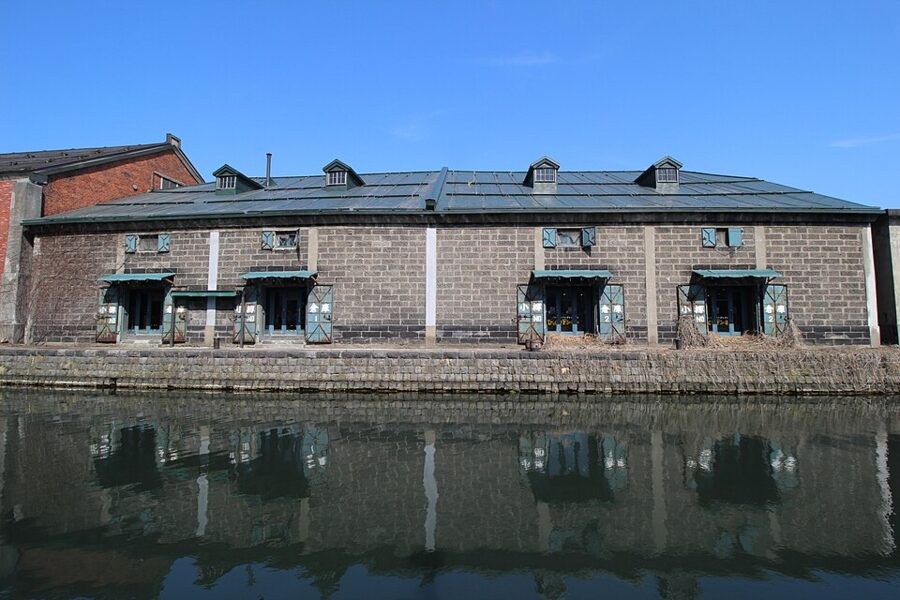
Otaru Beer brews to the German purity law, with malt from Bamberg, unfiltered and unpasteurised, and its brew pub, Otaru Soko No.1, fills a stone warehouse on the canal at Minato-machi (11:00–22:00) and brews in the building as well as pouring. On Thursdays and Saturdays ¥2,500 buys two hours of as much as you can drink, which is the sort of offer that ends a canal walk early.

Hokkaido Wine, founded in 1974 with its winery at Asarigawa Onsen in the hills behind the town, makes more wine from Japanese-grown grapes than any other producer in the country, much of it from growers under contract across Hokkaido. Its new-season Otaru Hatsushibori comes out in November, and the winery has its own shop, the Otaru Wine Gallery.
The Snow Light Path
For most of the 1990s Otaru emptied in winter. The canal campaign had brought the tourists, but they came between May and September, and the town’s winter festival, with its snow slides and character shows, was being called stale even by the people who ran it. In February 1999, with a national ski meeting in town, the tourism promoters tried something cheap: candles in the snow along the canal and the disused Temiya Line.
The Otaru Snow Light Path (小樽雪あかりの路) has been held every February since, apart from a cancelled 2021. It takes its name from Yukiakari no Michi, a collection of poems Ito Sei published in 1926, when he was teaching English in the town after studying at the Otaru Higher Commercial School, the same college as Kobayashi Takiji. The 2027 festival opens on 6 February; the closing date had not been announced in November 2026, but recent festivals have run for eight days and overlapped the Sapporo Snow Festival.
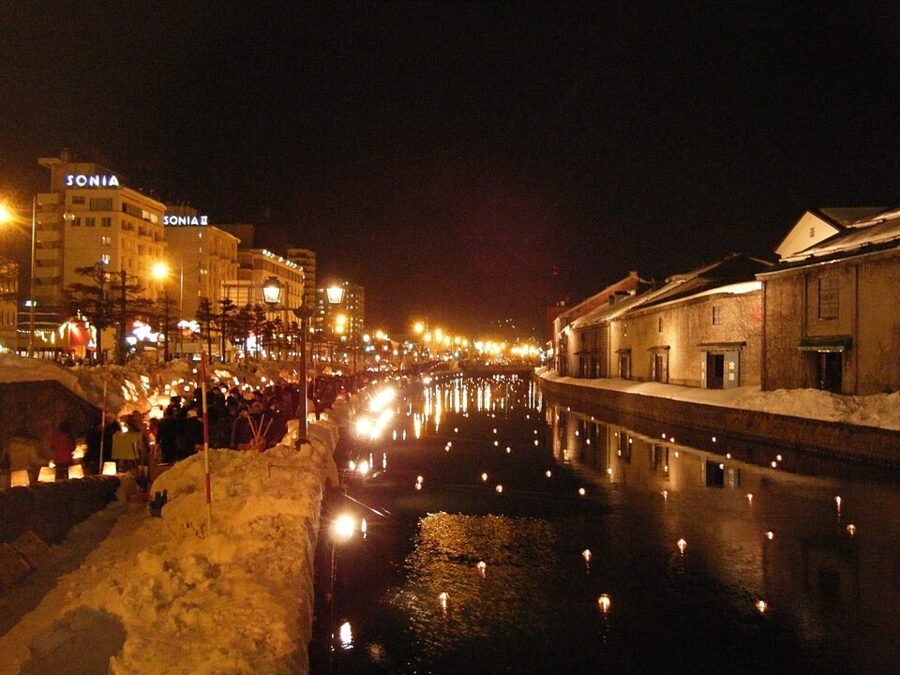

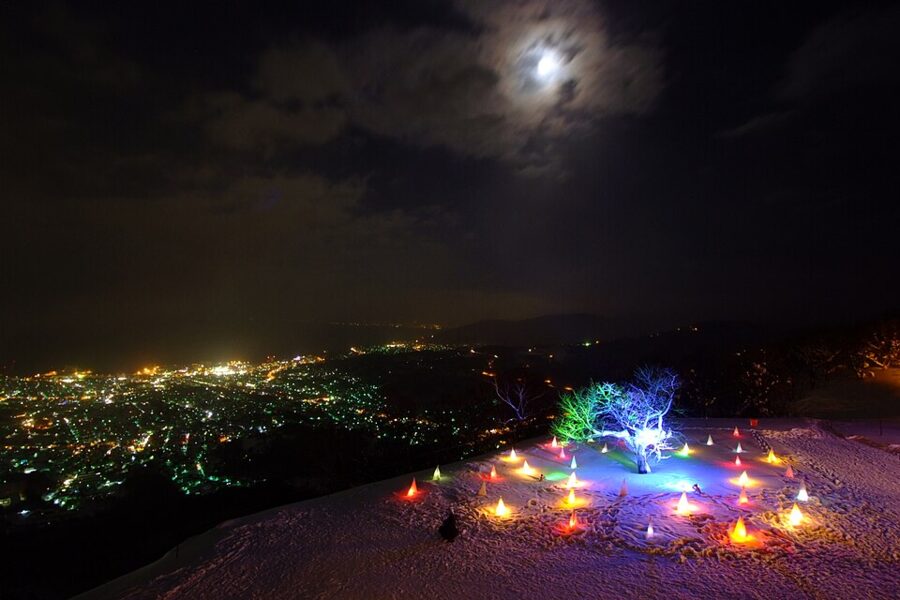
The two main sites are the canal, where candles float on the water and line the promenade in snow lanterns, and the Temiya Line, where the old track becomes an avenue of lanterns and snow sculptures. Dozens of smaller venues, shop doorways, the station and the slopes of Tenguyama light up as well. In 2026 they burned from 17:00 to 21:00.
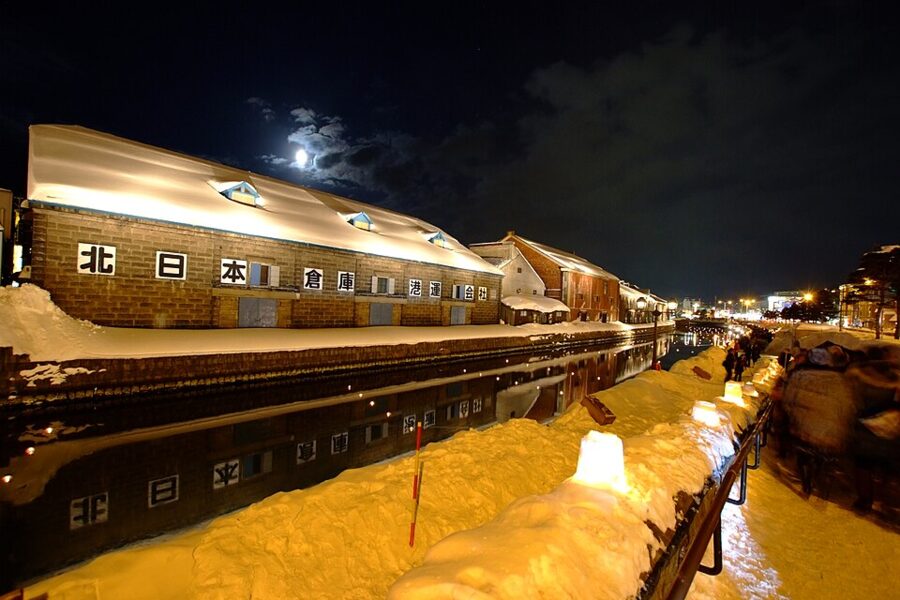

It is a quieter thing than Sapporo’s festival, which is the point of it. Wear proper boots and dress for minus five. The canal is at its most crowded in the first hours after dark; the Temiya Line is better late, when the day-trippers head for the trains.

Out of the centre
The Temiya Line and the Otaru Museum
The railway that made the town is still there, in a way. The Temiya Line carried its last passengers in 1962 and its last coal train in 1985, when it was briefly the shortest line on the national network at 2.8 kilometres; it closed on 5 November that year. The city bought the land, and after a long argument over whether to run trams on it, kept the rails and turned about 1.6 kilometres of track into a path, finished in 2016.
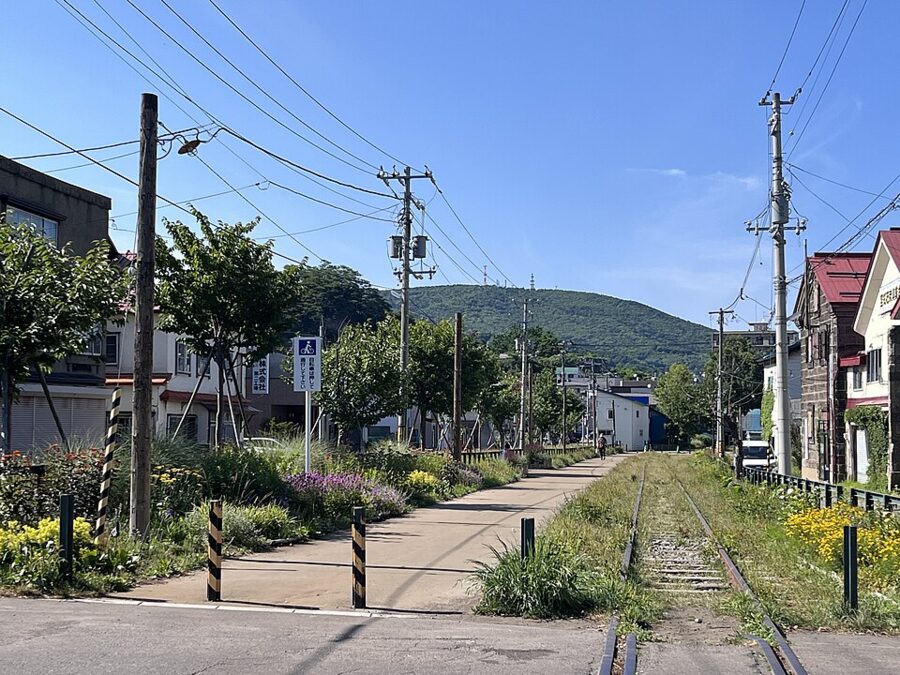
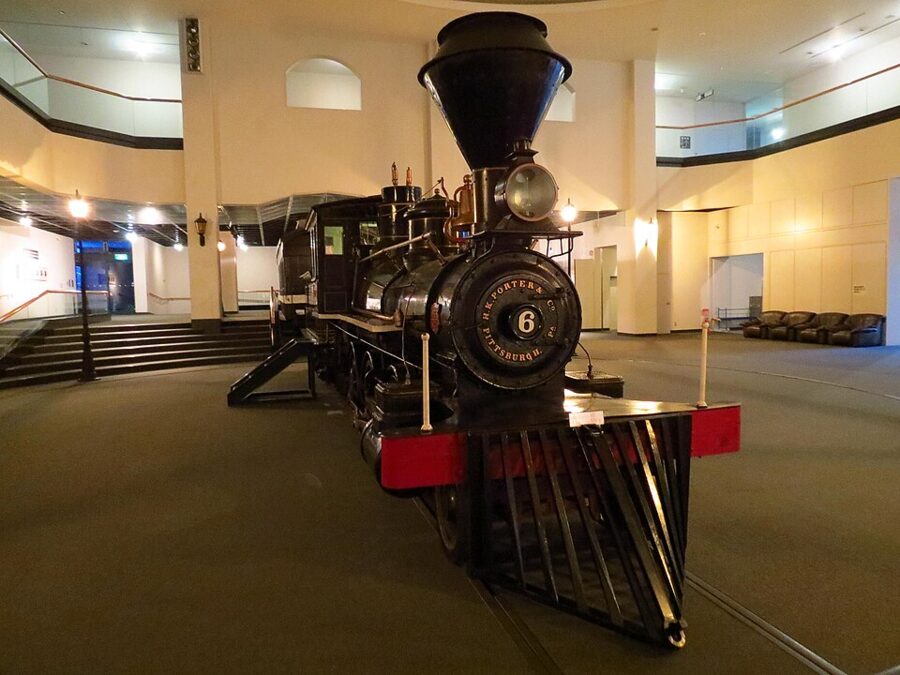
At its end, on the site of Temiya station, the Otaru Museum main building (小樽市総合博物館本館) is the best railway museum in Hokkaido. The brick engine shed is the oldest surviving in Japan and an Important Cultural Property, and inside the main hall stands Shizuka, one of the American-built locomotives of the Horonai Railway, with rows of later steam, diesel and snowplough engines in the yard outside. It opens 09:30–17:00 and closes on Tuesdays; admission is ¥400, or ¥300 from early November to late April, when some of the outdoor exhibits are closed.

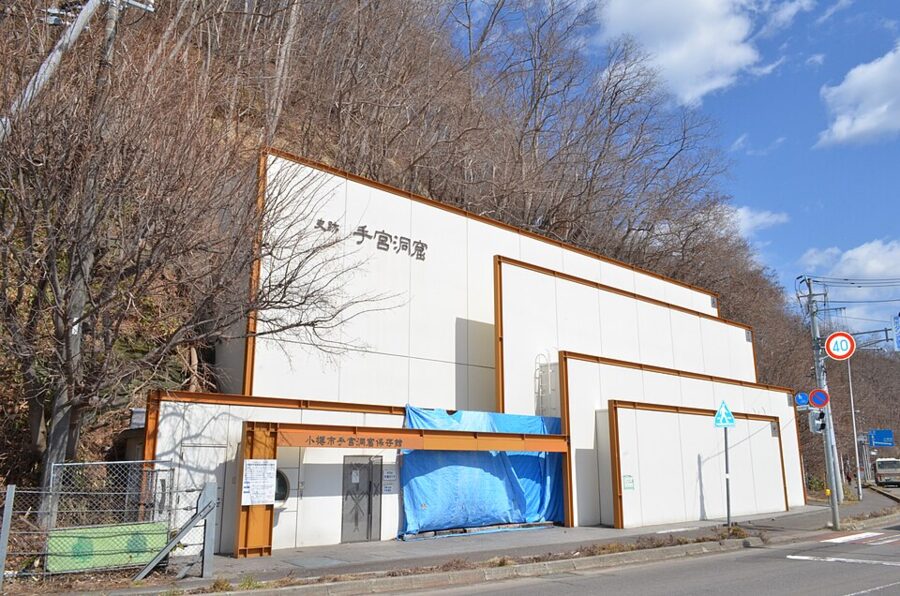
A short walk from the museum, the Temiya Cave Preservation Centre shelters carvings cut into a soft tuff cliff about 1,600 years ago, in the Epi-Jomon period: human figures with horns or masks, perhaps shamans, much like those at the Fugoppe cave in Yoichi and along the Amur river in Russia. A stonemason from Odawara looking for building stone found them in 1866. The centre opens from late April to early November (¥100) and is closed on Tuesdays.

Shukutsu and the herring mansions
Shukutsu (祝津), on the headland north of the port, was a herring village, and it is where the fishing bosses built. The Otaru Nishin Goten (小樽市鰊御殿), the “herring palace”, was built between 1891 and 1897 by Tanaka Fukumatsu at Tomari, a fishing village on the Shakotan coast, and moved here piece by piece in 1958. At the height of the season about 120 fishermen ate and slept in its great timber hall, across an earth-floored passage from the rooms where the boss’s family lived. It opens from early April to 23 November, 09:00–17:00 (to 16:00 from mid-October), for ¥300.
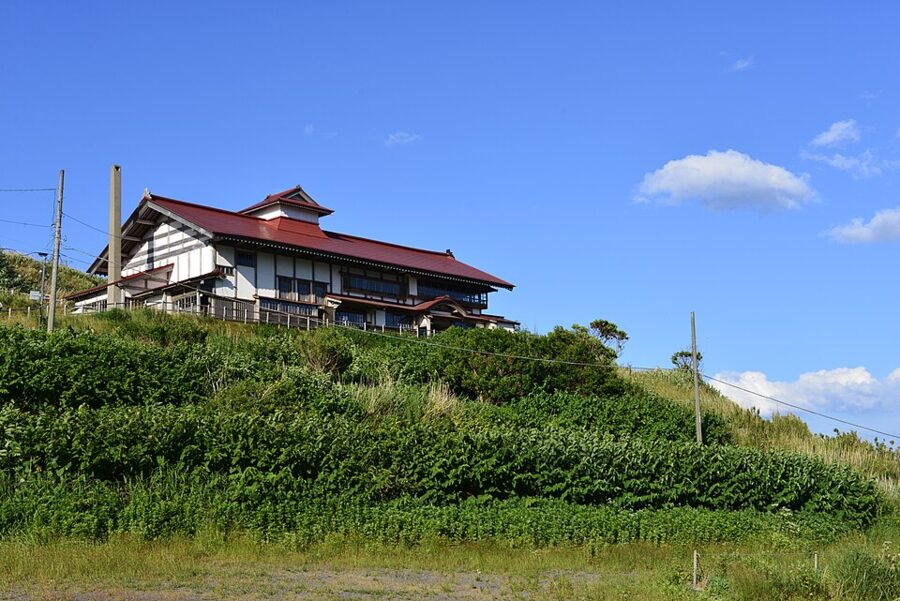

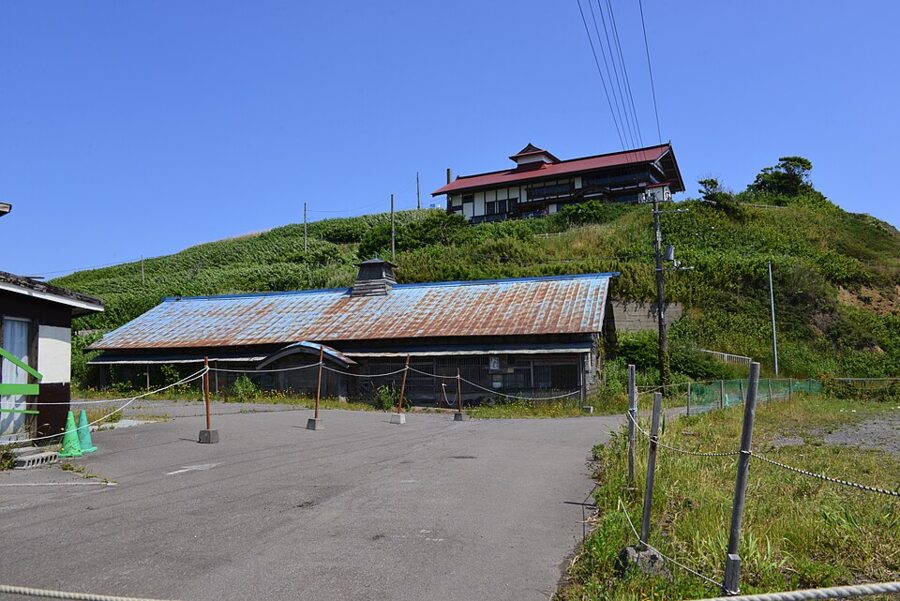

The grander house, also at Shukutsu, is the Former Aoyama Villa, now the Otaru Kihinkan (小樽貴賓館). The Aoyama family made their fortune in herring, and the story is that Masae, of the third generation, saw the Honma family’s mansion in Sakata as a girl of seventeen and wanted one like it; the house took six and a half years from 1917 and has eighteen rooms. It opens daily (09:00–17:00 April to October, 09:00–16:00 November to March) for ¥1,300, and the restaurant serves herring simmered in soy until the bones are soft.
Below the headland, the Hiyoriyama Lighthouse stands on the cliff, red and white, and the Otaru Aquarium uses a natural inlet of the shore as a pool for its seals, sea lions and walruses. The aquarium’s main season in 2026 runs from mid-March to 23 November, 09:00–17:00 (to 16:00 from mid-October), for ¥1,800; its winter season, 12 December to 23 February, opens 10:00–16:00 and leaves the outdoor marine mammal park closed, though the penguins are walked through the snow.
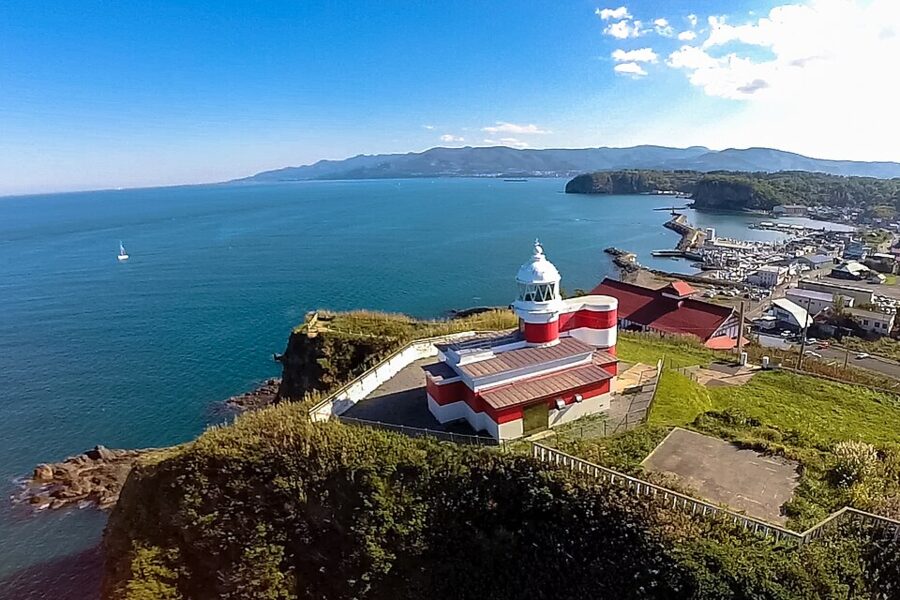

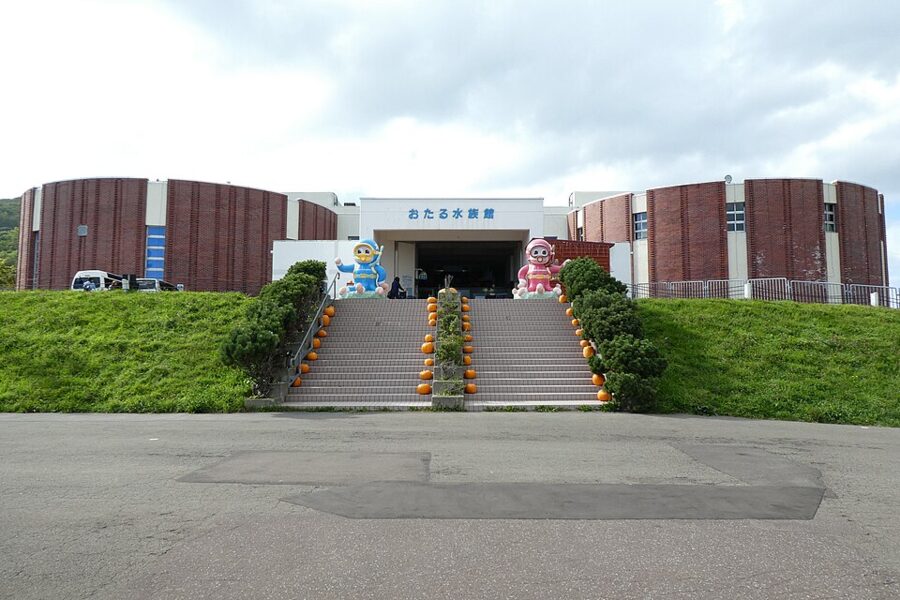

Chuo Bus runs from Otaru Station to the aquarium in about 25 minutes. The Nishin Goten, the lighthouse and the aquarium make a three-hour outing with lunch.
Tenguyama
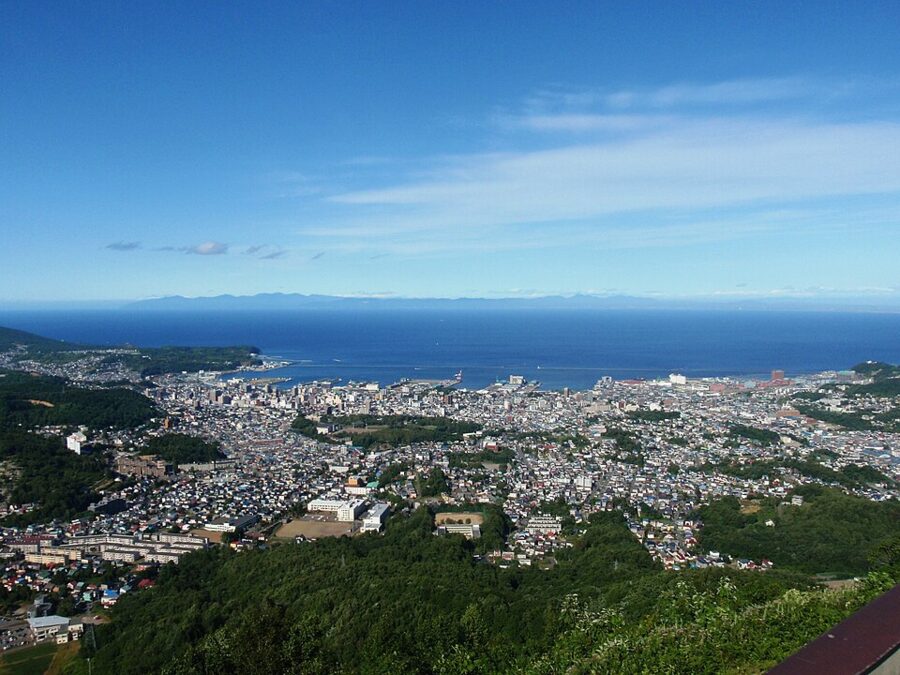
Tenguyama (天狗山), 532.5 metres, is the hill that stands behind the town, named, depending on whom you believe, for the goblin fires seen on it, for the shape of its rocks, or by settlers from Tohoku who had a Tenguyama at home. The Otaru Tenguyama Ropeway runs from the foot to just below the top every twelve minutes; the return fare is ¥1,800 in the summer season and ¥2,000 in winter (28 November 2026 to 28 March 2027), when the last car up leaves at 19:48. Chuo Bus runs from Otaru Station to the Tenguyama Ropeway stop at the foot.
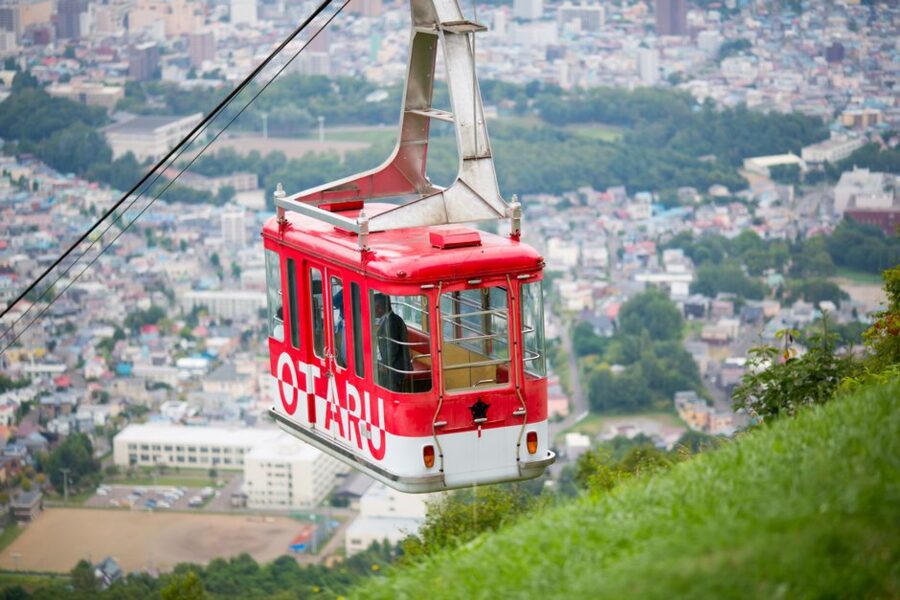
The night view from the summit is counted, with Hakodate-yama and Moiwa-yama in Sapporo, among the three great night views of Hokkaido, and of the three it is the one where you can still pick out individual streets. Go up half an hour before sunset and stay for the lights to come on.
Day trips west: Yoichi and Shakotan
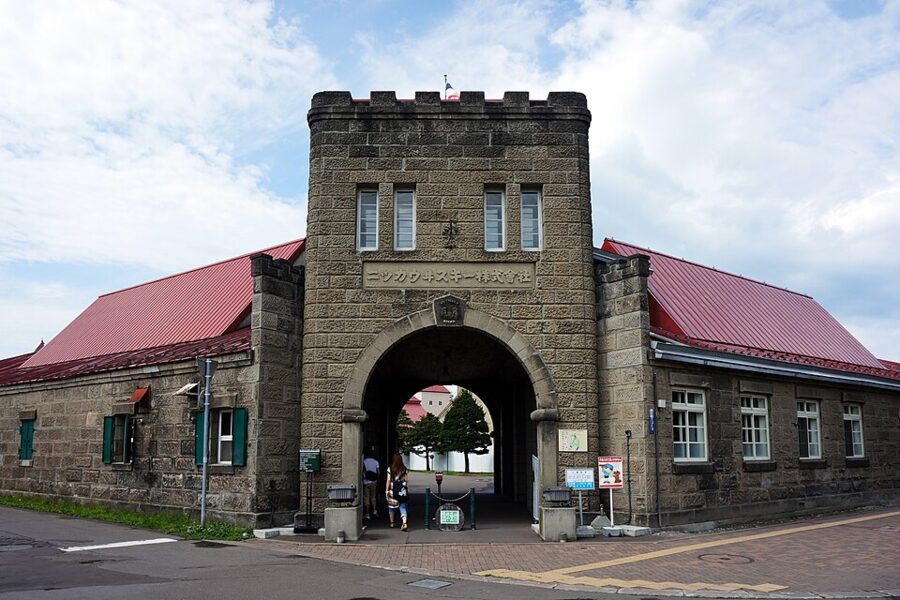
Yoichi (余市), 24 minutes and ¥470 from Otaru by train, is where Taketsuru Masataka built the Nikka Whisky Yoichi Distillery in 1934, choosing it for its likeness to Scotland, and its pot stills are still fired with coal; the guided tours are free, with a tasting, but must be booked.

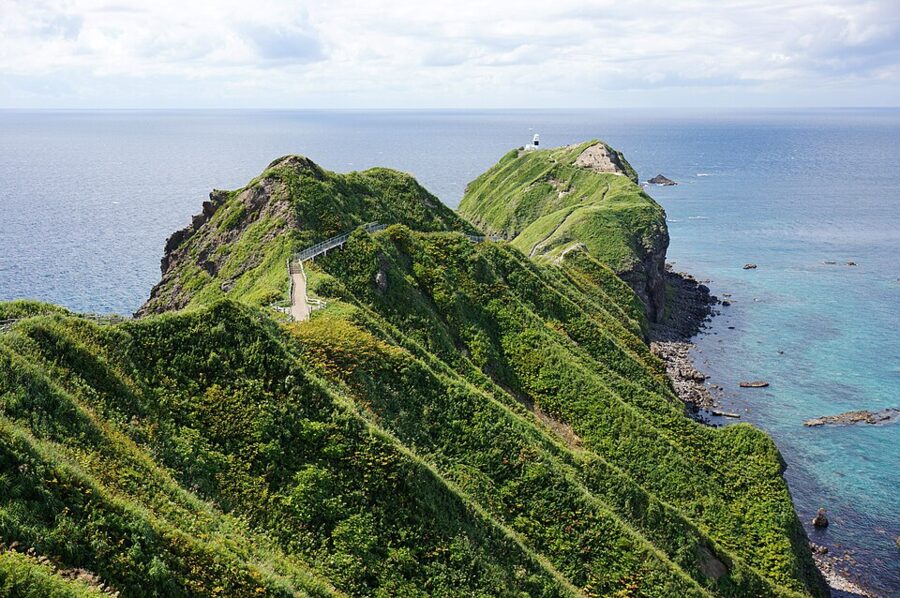
Beyond it, the Shakotan Peninsula (積丹半島) ends at Cape Kamui, where a 770-metre path, the Charenka Trail, runs along a knife-edge ridge over water of an improbable blue, and the village restaurants serve fresh sea urchin in season, early June to the end of August.

Getting there and getting around
From Sapporo and New Chitose Airport
JR Hokkaido’s Hakodate Line follows the shore between Sapporo and Otaru, and on the right-hand side of the train going west the sea comes almost up to the rails between Zenibako and Asari. Rapid trains take about 35 minutes and locals about 45, and the fare is ¥800; Suica and other IC cards work as far as Otaru. The Rapid Airport from New Chitose Airport runs through to Otaru on some services, taking from about 75 minutes to an hour and a half, for ¥2,040. Highway buses (Kosoku Otaru-go) leave Sapporo every 5 to 15 minutes for ¥730 and are a fair alternative if your hotel is near a stop.
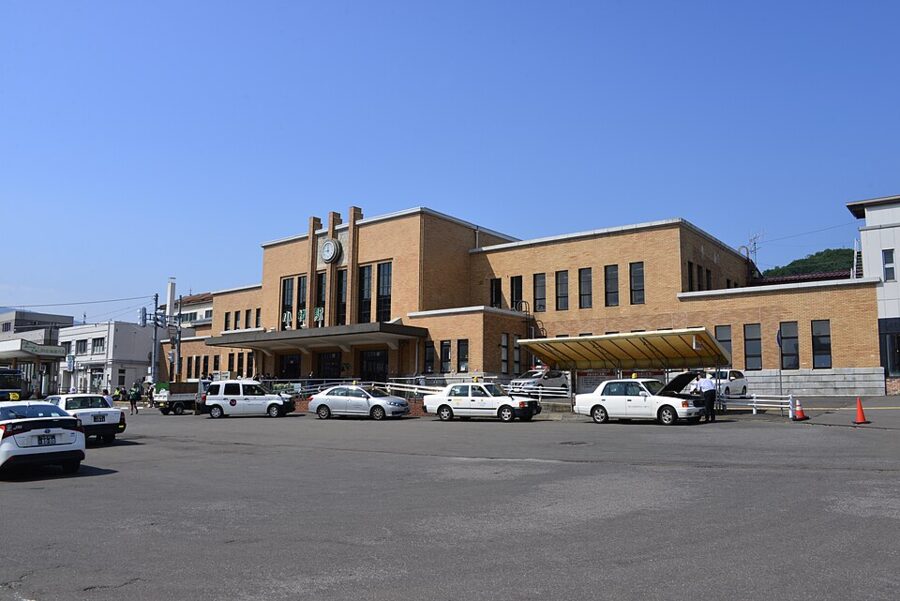

None of these journeys justifies a national Japan Rail Pass on its own. If you are also going to Noboribetsu or Furano, JR Hokkaido’s Sapporo-Noboribetsu Area Pass (¥10,000 bought before arrival, ¥11,000 at a station, four days) covers the airport, Otaru and the line south; ordinary return tickets from Sapporo to Noboribetsu and to Otaru already cost more.
By ferry
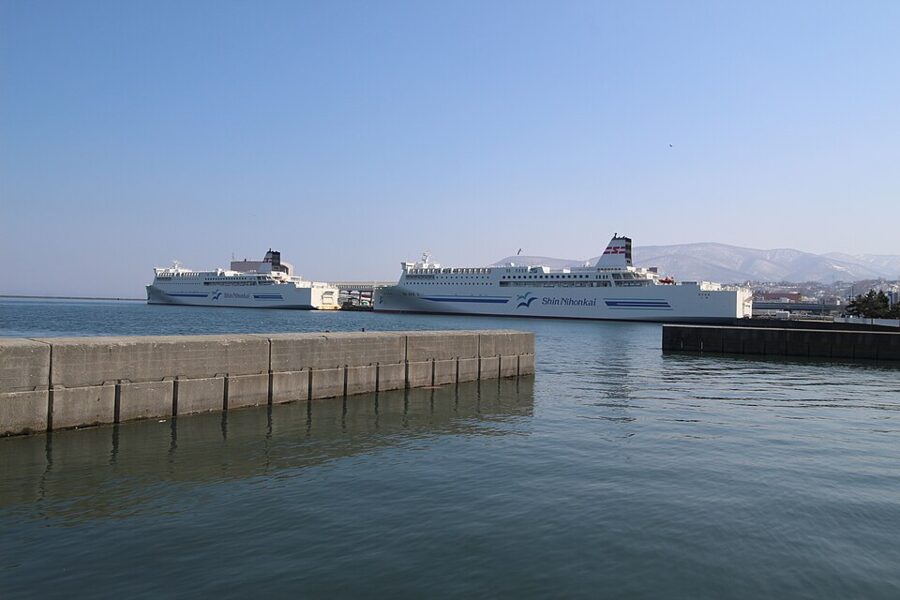
Otaru is also one of the two Hokkaido ports of Shin Nihonkai Ferry. Ships leave Maizuru, north of Kyoto, at 23:50 and reach Otaru at 20:45 the next evening, and leave Niigata (Tuesday to Sunday) at 12:00 to arrive at 04:30. Going south, the Maizuru ship leaves Otaru at 23:30 and the Niigata ship at 16:45 (Monday to Saturday), with fares set by season and cabin. On sailing days a Chuo Bus service runs from Otaru Station to the ferry terminal at Katsunai.

Getting around
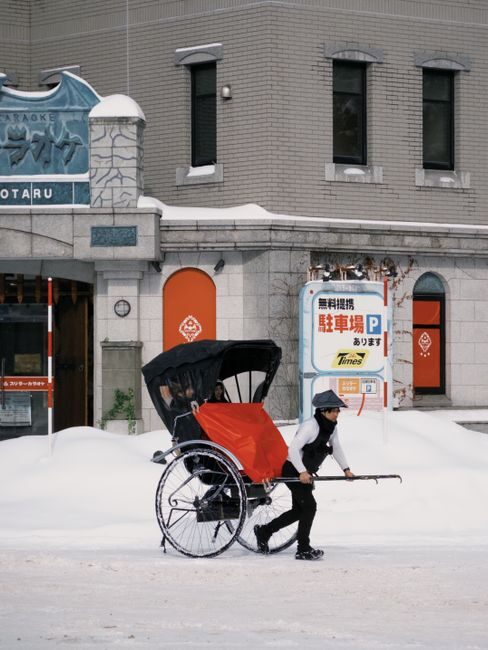
The centre is walkable and all downhill from the station: about ten minutes to the canal or the Bank of Japan, twenty-odd to Marchen Crossing. Minami-Otaru Station, one stop east, is closer to the south end of Sakaimachi. Chuo Bus runs to Shukutsu and the aquarium, to Tenguyama and to the Temiya museum. Rickshaw pullers wait along the canal for anyone who would rather be told the stories and carried uphill.
The map will change. The Hokkaido Shinkansen is being extended from Shin-Hakodate-Hokuto to Sapporo with a new station in the hills behind the town, but tunnelling problems have pushed the opening back, and a government panel in 2025 put the likeliest date at around the end of fiscal 2038 while declining to fix one. When it does open, the old Hakodate Line west of Otaru, through Yoichi and the mountains to Oshamambe, is due to close and be replaced by buses.
Half a day, a day or two
Half a day
Take a morning train from Sapporo. Walk down from the station to Asakusa-bashi, north along the canal to the Nippon Yusen building, back through Ironai past the banks and the Bank of Japan Otaru Museum, and down Sakaimachi to Marchen Crossing. Eat in Sankaku Market on the way in or at a counter on Sushiya-dori on the way out, and catch the train back from Minami-Otaru.
One day
Start with Kitaichi Hall’s lamp lighting at 09:00, then walk the Temiya Line to the Otaru Museum. Do the banks and Sakaimachi in the afternoon, go up Tenguyama for sunset, and come back down for the canal after dark and a glass in Otaru Soko No.1.
Two days
Spend the second morning at Shukutsu: the Nishin Goten, the Aoyama villa and the lighthouse, with the aquarium if it is open. In the afternoon take the train to Yoichi for the distillery, or in summer drive the coast to Shakotan for sea urchin and Cape Kamui. Otaru is at its best in the early morning and late evening, when the visitors from Sapporo have gone, and only a night here gives you both.
If you can choose the season, come in February for the candles, and keep one morning free for the coast road towards Zenibako. Most mornings you will see only grey water. On the right one you may see what the whole town was built on: a stretch of sea gone suddenly white, and the herring back in the shallows.