

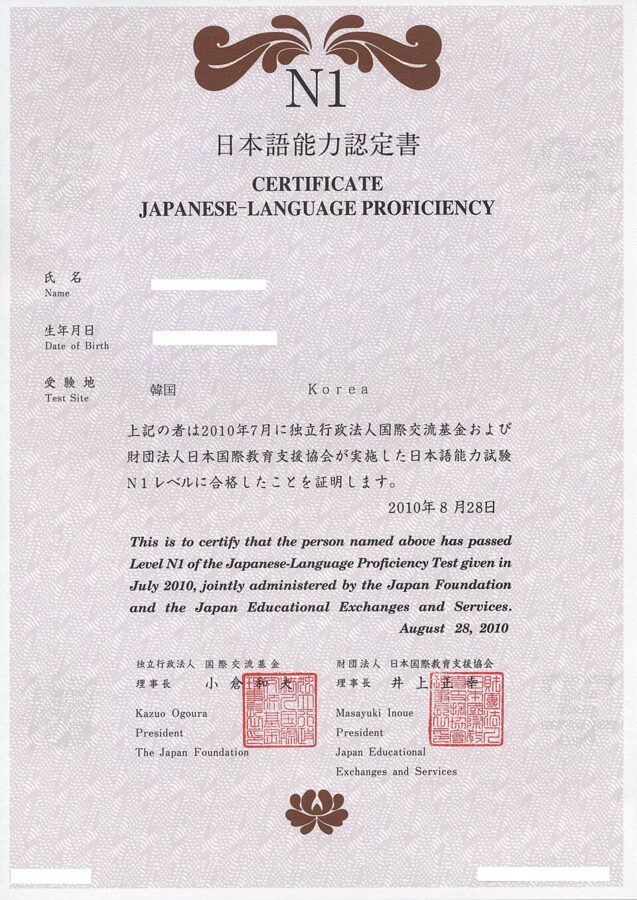

Nobody says a word of Japanese in the Japanese-Language Proficiency Test (日本語能力試験), and nobody writes one. The JLPT is a multiple-choice paper test of reading and listening in five levels, N5 (the easiest) to N1, held twice a year on a Sunday in early July and early December. In Japan the fee is ¥7,500 at every level, and you pass by reaching an overall pass mark and a minimum in every section.
Getting a seat is now the hard part. Applications in Japan open for two or three weeks before each sitting, and the popular levels fill early: in the December 2026 window, N1 and N2 closed a week before the advertised deadline. Apply on the day the window opens.
| Level | What a pass says you can do | Test time | Pass mark | Passed, July 2026 |
|---|---|---|---|---|
| N1 | Read editorials and critiques; follow lectures and news at natural speed | 165 min | 100 of 180 | 29.3% |
| N2 | Read newspaper articles; follow news at nearly natural speed | 155 min | 90 of 180 | 29.8% |
| N3 | Read everyday material and headlines; follow everyday conversation | 140 min | 95 of 180 | 37.0% |
| N4 | Read short passages on familiar topics; follow slow conversation | 115 min | 90 of 180 | 39.6% |
| N5 | Read kana and basic kanji; catch short, slow exchanges | 90 min | 80 of 180 | 49.3% |
The 2026 dates were Sunday 5 July and Sunday 6 December. Sitting the test in Japan now requires a residence card, so a tourist on a short stay cannot take it there; outside Japan you register with a local host institution, and many cities hold only one of the two sittings.
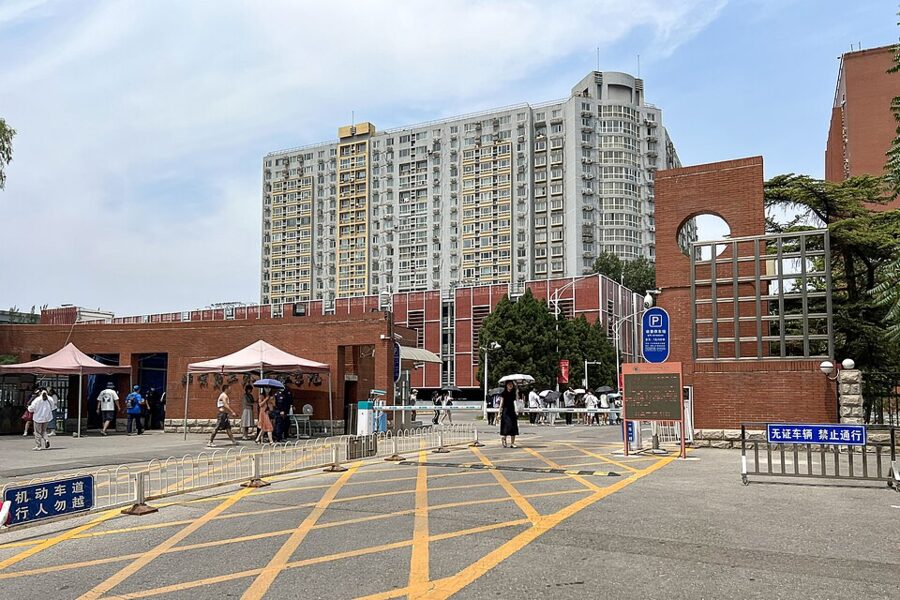

The certificate matters most in Japan itself: N2 is the usual benchmark for university study and office work, and N1 earns 15 immigration points and is required before an overseas-trained doctor or nurse can sit a Japanese licensing exam. For some readers one of the alternatives is the better choice.
In this guide
What each level means, from N5 to N1
The organisers describe each level by what you can read and follow by ear, not by lists of words. N4 and N5 test the Japanese learnt mainly in class, N1 and N2 the Japanese of real life, and N3 bridges the gap. The “N” stands for both nihongo and “new”, a leftover from the 2010 revision, when four levels became five. Every test covers language knowledge (characters, vocabulary, grammar), reading and listening, all multiple choice.
N5 and N4: the classroom levels
N5 certifies that you can read typical expressions and sentences written in hiragana, katakana and basic kanji, and pick out what you need from short, slow conversations about daily life and the classroom. It is the level of a first textbook finished properly, and enough for a student visa at a Japanese language school.
N4 asks for “basic Japanese”: passages on familiar topics in basic vocabulary and kanji, and everyday conversations if they are spoken slowly. In practice: a station board, a menu, a text from a friend. It is also the level named for the “Specified Skilled Worker (i)” visa, used in care, construction, food service and similar work.
N3: the bridge
N3 was created in 2010 to fill the long gap between the old Levels 3 and 2. A pass says you can read everyday material, grasp newspaper headlines and follow conversations at near-natural speed, and read slightly difficult writing “if some alternative phrases are available”.

I think N3 is the level that tells you most. It is where Japanese stops being a subject and starts being a tool, and the jump from N4 is bigger than the pass marks suggest.
N2 and N1: Japanese for work and study
N2 means reading clearly written newspaper and magazine articles, and following news and conversation at nearly natural speed. It is the level most employers and universities in Japan quote.
N1 goes further: editorials and critiques with abstract content, and lectures and news at natural speed, down to the logical structure of what is said. A pass does not mean fluency. It means you can read the paper.

Kanji counts, word counts, and why the official guide has neither
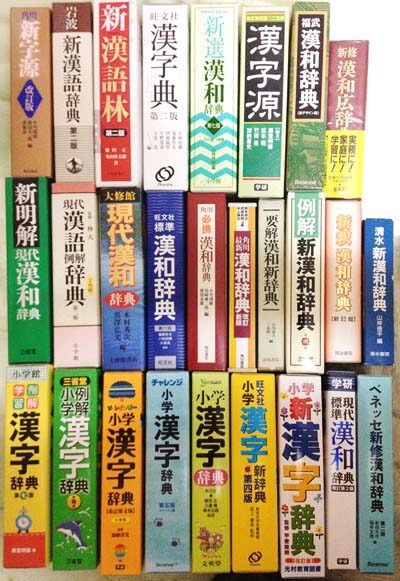
You will see confident figures everywhere: 2,000 kanji for N1, 100 for N5. They come from the old test, and the organisers’ comparison of old and new levels still gives them. Level 1 meant about 2,000 kanji and 10,000 words; Level 2 about 1,000 kanji and 6,000 words; Level 3 about 300 and 1,500; Level 4 about 100 and 800.

Old Levels 1 and 2 map onto N1 and N2, old Level 3 onto N4 and old Level 4 onto N5. N3 has no old equivalent, so any kanji count you see for it is someone’s estimate.
The current test publishes no lists, and the organisers say why: the goal is to communicate, not to memorise items, and a list would point learners the wrong way. Instead they publish the level summaries, sample questions and a “Can-do” list drawn from a survey of about 65,000 successful candidates.
Since the December 2025 test, passing score reports also carry a reference level on the Common European Framework (CEFR). N5 maps to A1 and N4 to A2. N3 is A2 below 104 points and B1 from 104; N2 is B1 below 112 and B2 from 112; N1 is B2 below 142 and C1 from 142. There is no C2.
Test dates and registration
The test has been held twice a year since 2009, recently on the first Sunday of July and December; the 2027 dates had not been published by late November 2026. You take one level per sitting, and nothing forces you to start at N5.
Applying in Japan
In Japan the test is run by Japan Educational Exchanges and Services (JEES), and applications are online only, through a MyJLPT account you can open at any time. For 2026 the July window ran from 17 March to 7 April and the December window from 24 August to 7 September, closing at 17:00. The fee, ¥7,500 including tax, is paid by card, Pay-easy bank transfer or at a convenience store.
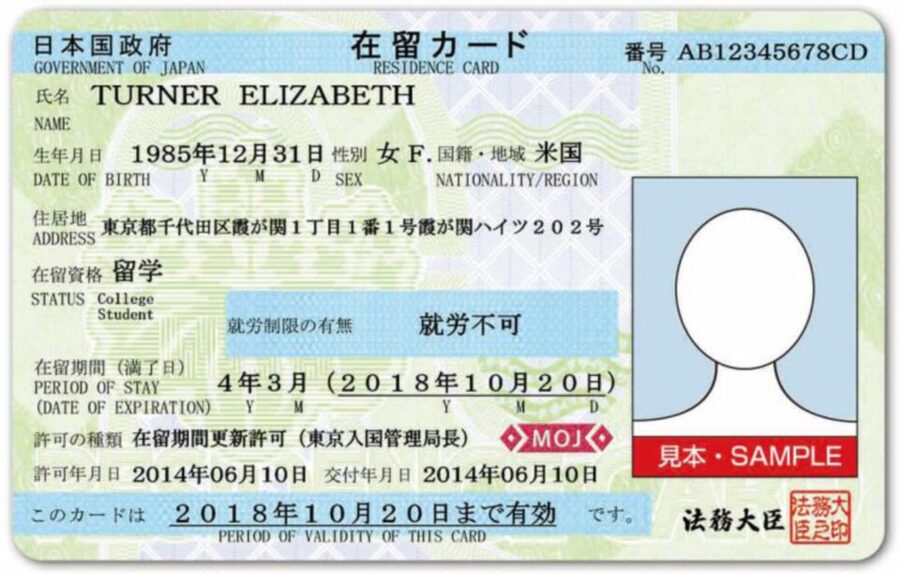

The 2026 rules state that the test in Japan is for non-native speakers who are mid- to long-term residents or special permanent residents; tourists are not eligible. A few groups without cards, such as diplomats and Japanese nationals who are not native speakers, declare their status instead. In September 2026 JEES asked some December applicants to upload proof of eligibility, with no refund for anyone who did not.
Applications close early when sites fill, and in 2026 they did: N1 and N2 closed at noon on 31 August, and N3 reopened on 2 September for Tokyo and Osaka only. Fees are never refunded, and a July application cannot be moved to December.
You choose a test area, not a building. JEES divides the country into eleven areas that follow the familiar regions: Hokkaido, Tohoku, Kanto, Niigata with Yamanashi and Nagano, Hokuriku, Tokai, Kansai, Chugoku, Shikoku, Kyushu and Okinawa. Apply outside your own area and you sit in a fixed city such as Sapporo or Fukuoka. The site appears only on the test voucher, mailed about two weeks before (by 20 November in 2026).

Taking it outside Japan
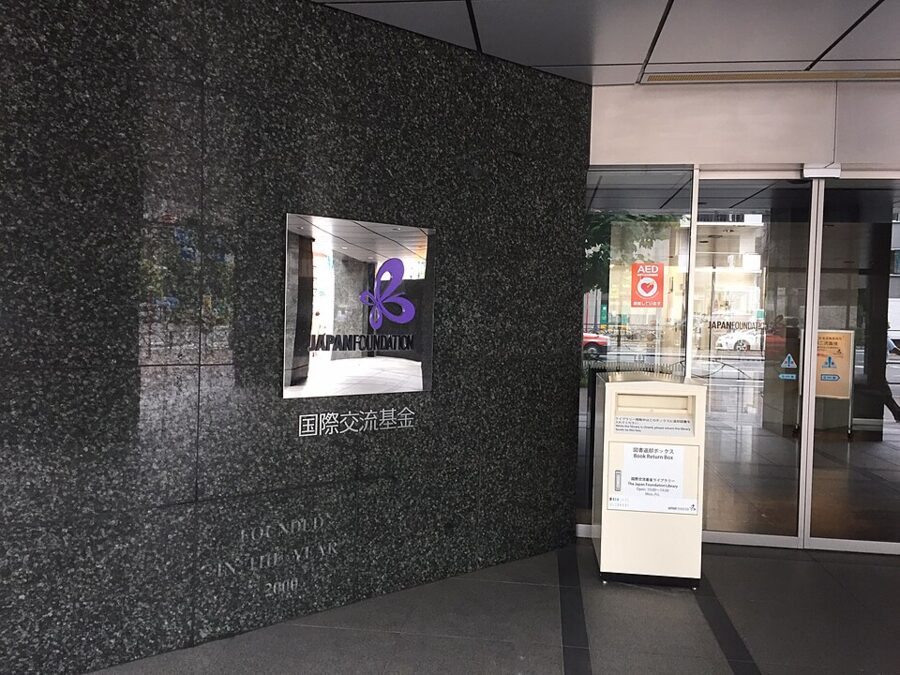
Abroad, the Japan Foundation runs the test with a local host in each city, usually a university or teachers’ association, which sets its own fee, window and payment rules. An application cannot move between countries, and the organisers’ city list shows which sitting each city holds.

The United States holds December only, organised by the American Association of Teachers of Japanese. In Britain, London and Leicester hold both sittings and Edinburgh December only; in Canada, Vancouver and Edmonton hold both and Toronto, Ottawa, London and Montreal December only. Australia is a patchwork: Gold Coast holds both, Canberra July for N1 to N3 only, Sydney July for N4 and N5 and December for all. Italy holds December only, Leiden in the Netherlands July only.
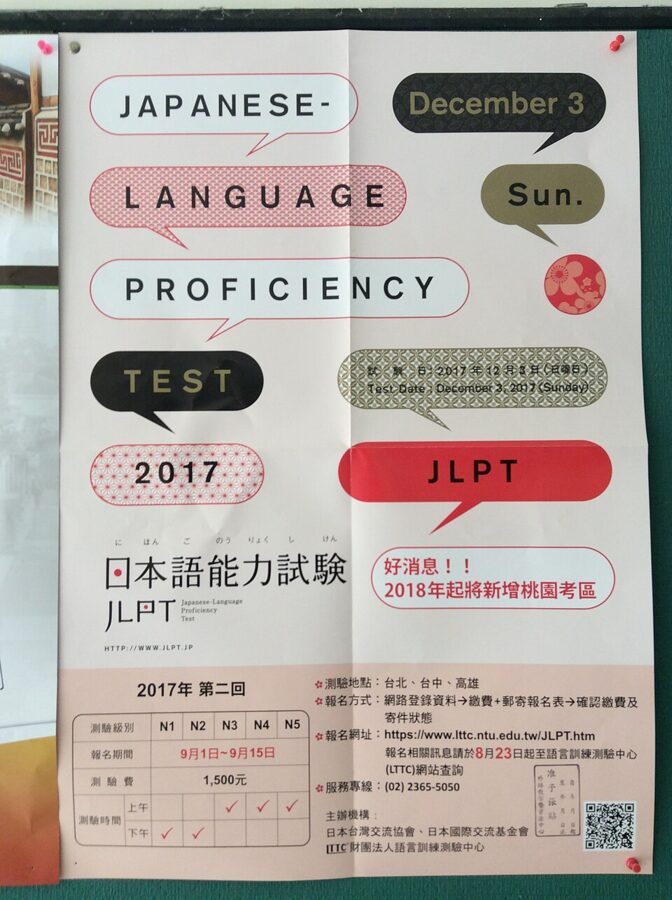

December-only cities are the trap: miss one sitting and the next is a year away. Since July 2025, phones and smartwatches at overseas sites must stay off for the whole test, breaks included.
On the day
In 2026 the test in Japan was split by level: N1 and N2 in the morning (rooms open 08:30, start 09:10), N3 to N5 in the afternoon (rooms open 14:30, start 15:10). Arrive late and you may sit the later sections, but you cannot pass.
| Level | Language knowledge and reading | Listening |
|---|---|---|
| N1 | 09:10–11:20 (110 min of answering) | 11:50–13:00 (55 min) |
| N2 | 09:10–11:15 (105 min) | 11:45–12:50 (50 min) |
| N3 | Vocabulary 15:10–16:00 (30 min); grammar and reading 16:20–17:45 (70 min) | 18:15–19:10 (40 min) |
| N4 | Vocabulary 15:10–15:55 (25 min); grammar and reading 16:15–17:25 (55 min) | 17:55–18:45 (35 min) |
| N5 | Vocabulary 15:10–15:50 (20 min); grammar and reading 16:10–17:05 (40 min) | 17:35–18:20 (30 min) |
The times include instructions. N3 to N5 split vocabulary from grammar and reading because, with fewer items at those levels, one question could give away another.
Bring the voucher printed on paper; a phone screen is refused. Walking out with the question booklet means automatic failure. After the last section you wait about 20 minutes while proctors count papers, so an N3 candidate leaves at about 19:30.

How the scoring works
Every level is scored out of 180. N1 to N3 report three sections of 60: language knowledge, reading and listening. N4 and N5 report language knowledge and reading together out of 120, and listening out of 60.
To pass you need two things. Your total must reach the level’s pass mark (100 for N1, 90 for N2, 95 for N3, 90 for N4, 80 for N5), and every section must reach its own minimum: 19 of 60 for each section, or 38 of 120 for the combined N4 and N5 section. An N2 candidate with 125 points overall and 18 in listening fails. Miss a section and you fail too.
The scores are scaled, not counted. The JLPT uses item response theory, which weighs which questions you got right rather than how many, so two candidates with the same number correct can score differently. The organisers will not discuss individual scores; the report adds a rough guide for each part, A (67% or more correct), B (34 to 66%) or C (below 34%).

For the July 2026 test in Japan, results appeared on MyJLPT in late August and were mailed on 25 September; for December 2026 they are due online in late January 2027 and by post in late February. Those who pass also receive the certificate, which never expires, though an employer may set its own limit. A formal Certificate of Result and Scores costs ¥1,000 a copy, plus ¥500 express or ¥1,000 for EMS abroad.
Pass rates are lower than most people expect. In July 2026, 800,931 people sat the test and 35.2% passed, from 49.3% at N5 to 29.3% at N1. Inside Japan, N1 dropped to 24.6%.
How long each level takes to study for
The organisers stopped publishing study hours in 2010, but the old figures are still the most quoted: about 150 hours for Level 4 (now N5), 300 for Level 3 (N4), 600 for Level 2 (N2) and 900 for Level 1 (N1). Those were classroom hours.
For English speakers, the figures look optimistic at the top. The US Foreign Service Institute puts Japanese in its hardest category, alongside Arabic, Chinese and Korean, and allows 88 weeks, about 2,200 class hours plus 17 hours a week of self-study, to reach professional working proficiency in speaking and listening. That is a different target from N1, but a fair warning.
The biggest variable is kanji. Candidates who already read Chinese characters start N2 and N1 with much of the reading load carried. From English, I’d plan on a year of steady study for N4 and three to four years for N2, and treat anyone promising N1 in eighteen months as selling something.
What to use, and how
Start with the free sample questions and audio on the official site. Then the two volumes of the Official Practice Workbook (2012 and 2018), which reuse real questions from tests since 2010, about one test’s worth per level, at ¥700 plus tax each: the closest thing to past papers the organisers sell.

The method is plain. Read every day, graded readers first and then adult news. Listen every day, because the listening minimum is where self-taught learners most often fail. Drill vocabulary and kanji readings with spaced-repetition flashcards, and sit at least two full practice tests against the clock.
The test has no speaking and no writing, so an N2 certificate tells an employer you can read a memo, not answer the phone. If you plan to live in Japan, practise conversation from the start.
What the certificate is used for
The JLPT is a measuring stick other institutions borrow, each setting its own level. These are the 2026 requirements.
Universities and language schools
For a student visa at a Japanese language school, N5 or above meets the language requirement. For degree study in Japan, the Immigration Services Agency treats N2 as the benchmark, but universities decide for themselves, and most national and public universities and many private ones ask for the EJU (below) rather than the JLPT for undergraduate entry. Programmes taught in English often ask for neither.


Jobs and visas
N2 is the level usually named as the hiring guideline for office work, and the immigration rules use it twice. It meets the language requirement for the “Business Manager” status, held either by the applicant or by a full-time employee, and for the “Engineer/Specialist in Humanities/International Services” status where the job itself needs Japanese. For the “Specified Skilled Worker (i)” status, N4 is enough, or the JFT-Basic instead.
The points-based system for highly skilled professionals gives 15 points for N1 and 10 for N2, out of the 70 needed for preferential treatment, and a separate 10 points for a degree from a Japanese university. A score of 480 or more on the BJT counts the same as N1 and 400 or more the same as N2.

Not every visa asks. The working holiday visa requires no language test at all. I’d sit N4 or N3 during the year anyway: it gives the year a target, and the certificate outlasts the visa.
Medicine, nursing and other licences
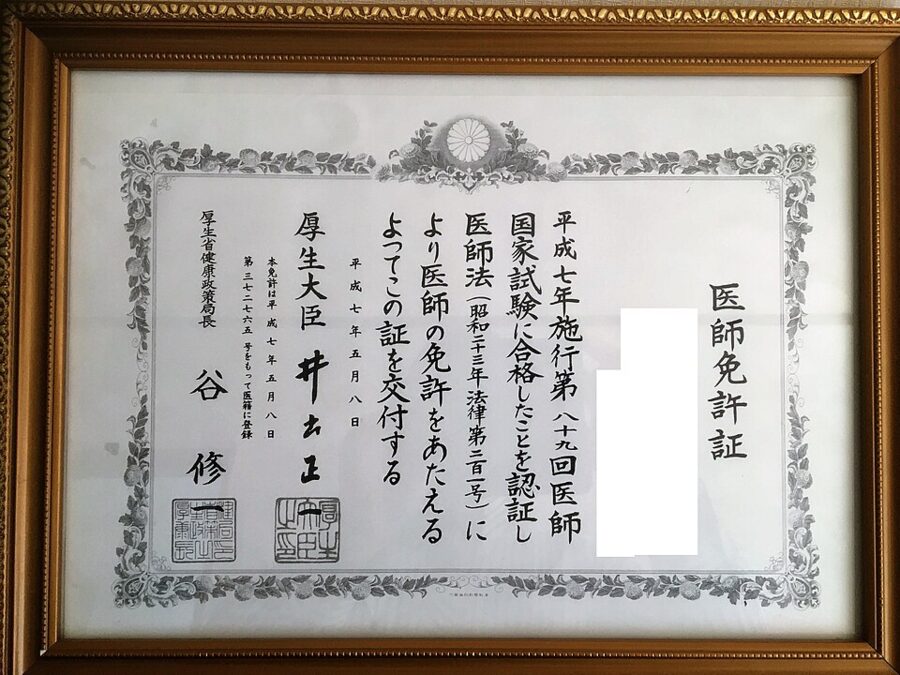
Here N1 is not optional. Doctors trained abroad need an N1 certificate to apply for Japan’s national medical exam, as do candidates for the national exams for dentists, nurses, pharmacists, midwives, physiotherapists, veterinarians and more than a dozen other professions. Overseas nursing graduates need N1 for the prefectural assistant nurse exam.

Under Japan’s Economic Partnership Agreements, nurse and caregiver candidates need roughly N5 from the Philippines, roughly N4 from Indonesia and N3 from Vietnam. And a foreign national with N1 or N2 is excused the Japanese paper of the government’s junior high school equivalency exam.
The alternatives, and when they suit you better
The JLPT is the default, not the only option, and its organisers now point candidates to other tests when applications outrun seats.
EJU: for undergraduate entry
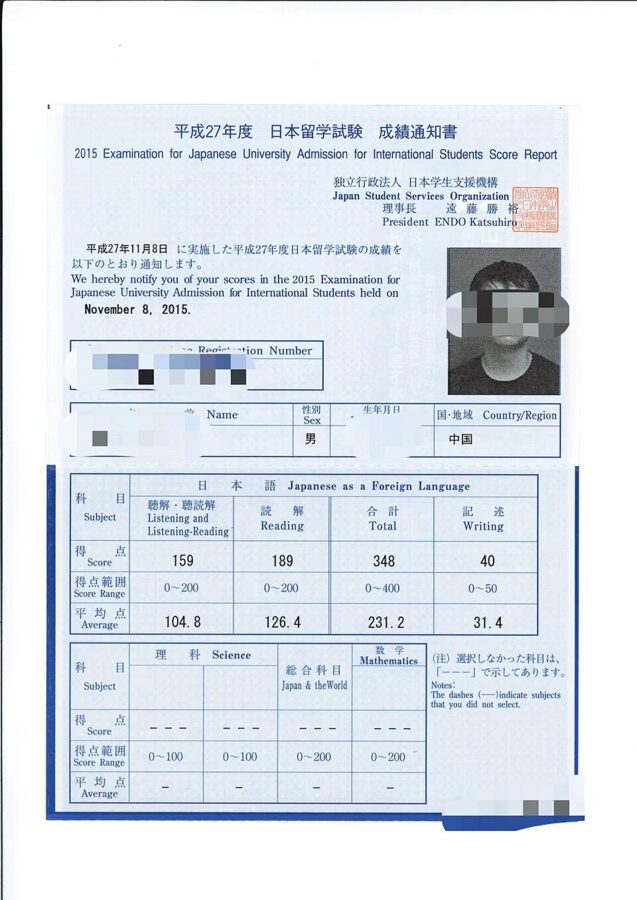
The Examination for Japanese University Admission for International Students (日本留学試験), run by JASSO, tests Japanese and academic subjects. The Japanese paper has a 30-minute writing task out of 50, then reading and listening out of 400; the subject papers are science, mathematics and “Japan and the World”, as your university specifies.
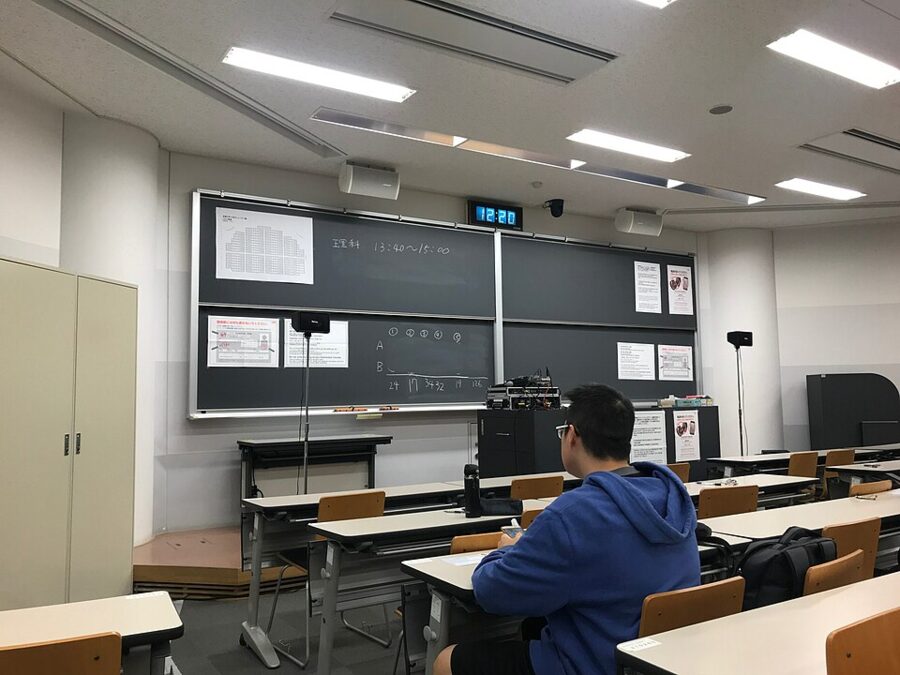

The EJU is held in June and November: in 2026 on 21 June and 8 November, and in 2027 on 20 June and 14 November. In Japan the 2026 fee was ¥12,000 for one subject and ¥23,000 for two or three; for 2027 it rises to ¥13,000 and ¥25,000. Check your university’s admissions page before you spend a year preparing for the wrong test.

BJT: business Japanese, any day you like
The BJT Business Japanese Proficiency Test is a computer test of business listening and reading, taken at Pearson centres on a date you choose, in 21 Japanese cities from Sapporo to Naha. Since April 2026 it costs ¥8,000 in Japan, with three months between attempts. It reports a score and grade, and for immigration 480 equals N1: the faster route if you need an N1 equivalent before the next JLPT result.
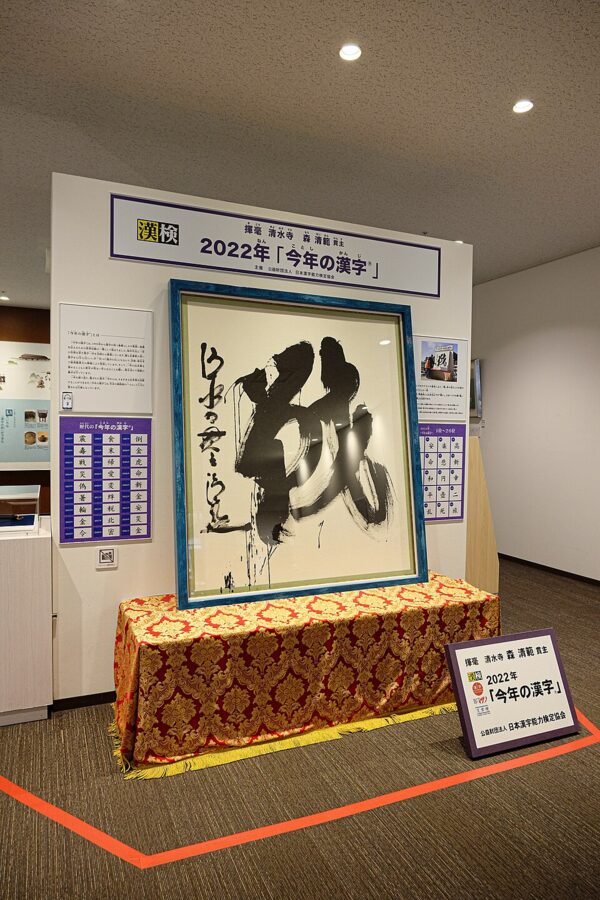

The museum is worth an hour if you are in Kyoto with a kanji habit. It stands on the site of a former junior high school near Yasaka Shrine and turned ten in 2026.
J.TEST and NAT-TEST: more sittings
J.TEST (Test of Practical Japanese) has run since 1991 and is taken by about 60,000 people a year. In Japan its advanced and intermediate tests run six times a year, every other month from January. The advanced test is scored out of 1,000 with a certificate from 600; the organisers place N1 at about 700. The fee in Japan is ¥5,800, rising to ¥6,600 from May 2027.
NAT-TEST copies the JLPT’s structure, with levels 1Q to 5Q mirroring N1 to N5, and holds several sittings a year, mostly in Asia. Both issue score certificates for immigration use, mainly for language-school students; check with the school before relying on either.
JFT-Basic: for specified skilled workers
The Japan Foundation Test for Basic Japanese was built for the “Specified Skilled Worker (i)” status and the new “Employment for Skill Development” programme, and is also accepted for language-school student visas. It is a computer test, held as a rule every month, with about 50 questions in 60 minutes and the result available at once.
Scores run from 10 to 250, and 200 or more is A2; since August 2026 the test also reports A1 (145 to 174) and A2.1 (175 to 199). For a worker who needs A2 by a fixed date, a monthly test beats waiting for July or December.
If you need a certificate by a fixed date, count back from the results, not from the test. A December sitting in Japan reports online in late January from an application made in late August, and a July sitting reports in late August from one made in March. Miss a window and the next result is six months further off, or a year in a December-only city abroad.