

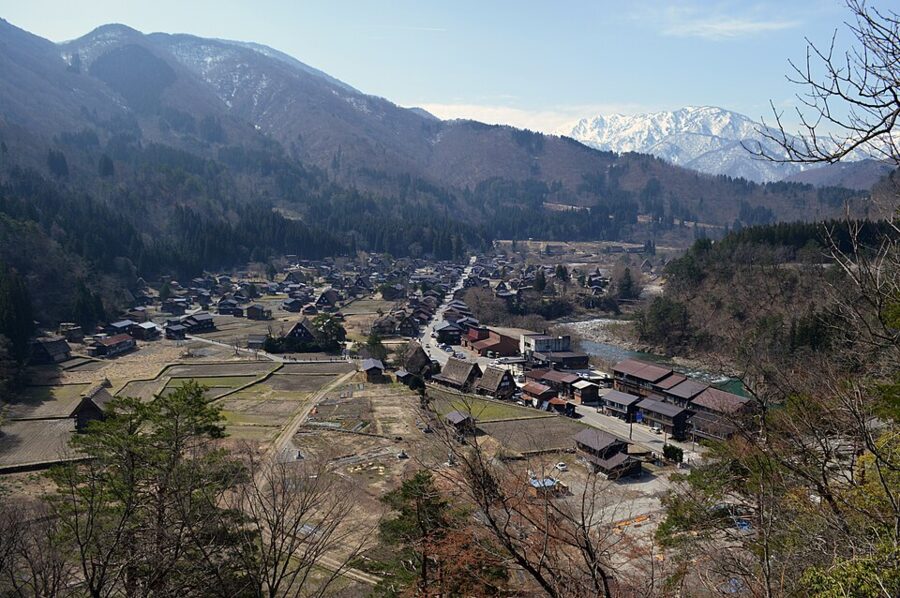
At five in the afternoon the car park across the Sho river stops letting cars in, the last day buses pull out for Takayama and Kanazawa, and Ogimachi goes back to the five hundred or so people who live there. If you have a bed in one of its thatched farmhouses, the evening is yours: lit paper windows under roofs as steep as a pair of hands pressed together, water running in the stone channels beside the paths, and at first light a valley with almost nobody in it.
Shirakawa-go (白川郷) is the old name for the upper valley of the Sho river in the far north-west of Gifu (岐阜県), and Ogimachi (荻町) is the largest of its villages, with 59 gassho-zukuri (合掌造り), the steep-roofed farmhouses named after hands joined in prayer. Downstream, across the border in Toyama (富山県), the hamlets of Ainokura and Suganuma in Gokayama (五箇山) share the same World Heritage listing. Together they are what survives of more than 1,800 thatched houses that stood in the two valleys at the end of the nineteenth century.
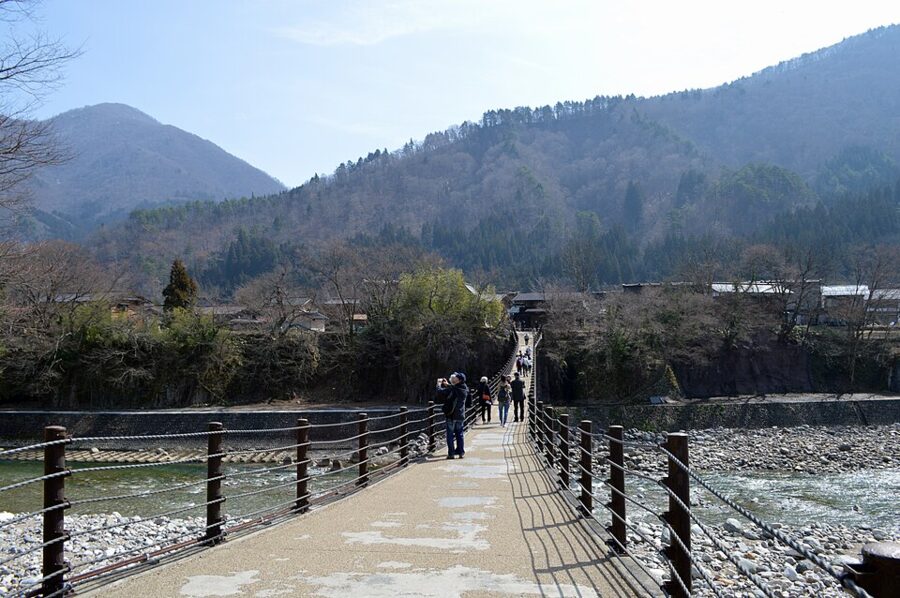
About 2.3 million people came in 2025, a record, and only about one in twenty stayed the night. Most arrive on the bus from Takayama or Kanazawa, walk the main street for two hours and leave. The houses make more sense once you know what went on in their attics and under their floors.
In this guide
The Sho valley: snow, silk and saltpetre
The Sho runs north for about 115 kilometres to Toyama Bay, through a gorge so narrow that forest covers almost 96 per cent of Shirakawa village. Shirakawa means “white river”; the village’s own explanation is that hot-spring minerals from the volcano Haku-san cloud one of its tributaries. Ogimachi stands on a crescent of river terrace about 1.5 kilometres long and 350 metres wide, and that is nearly all the flat ground there is.
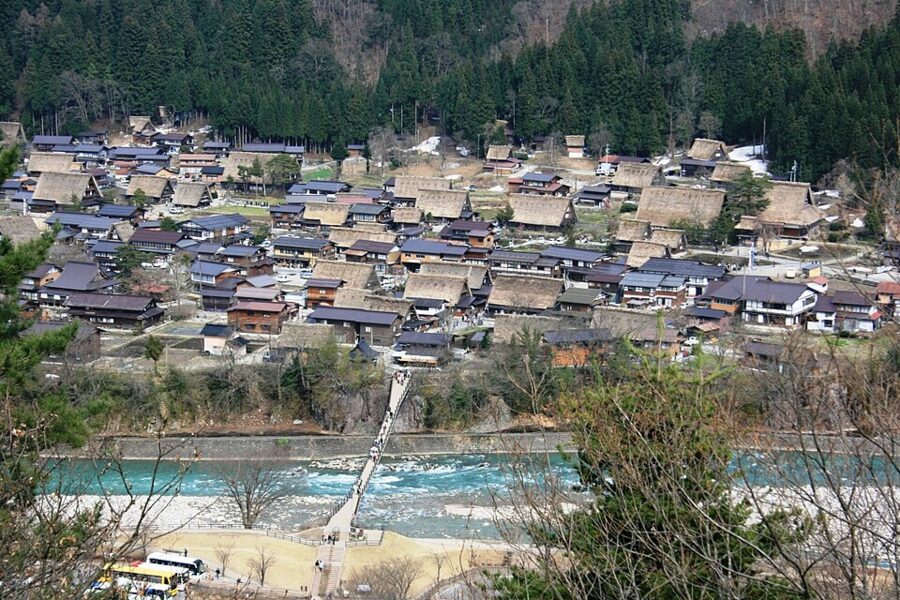
Snow is the other fact of life. The Japan Meteorological Agency’s station at Shirakawa records, on average, about nine and a half metres of snowfall over a winter, a deepest lying snow of 173 centimetres in February and barely 41 hours of sunshine in January. In the great snows of 1963 some hamlets were cut off for months, and that winter pushed many families to leave for good.
Politics kept the valley apart as well. Shirakawa-go passed from the Uchigashima clan, whose castle was buried by the earthquake of 1585, to the lords of Takayama and in 1692 to the shogunate itself, while Gokayama belonged to the Maeda lords of Kaga until 1871. Neither valley could grow much rice: the old fields were slash-and-burn plots of millet and buckwheat, and the money came from things made indoors.
Silk in the attic
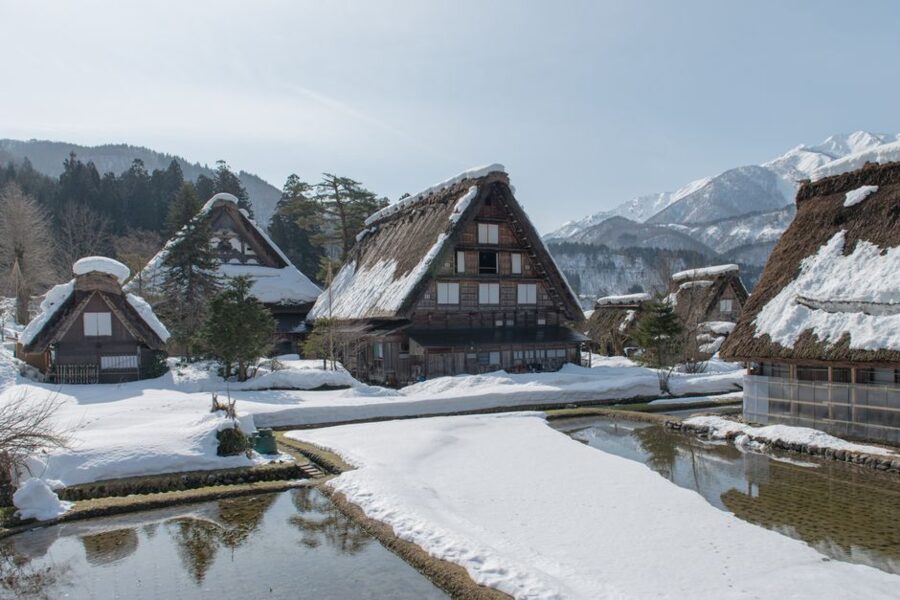
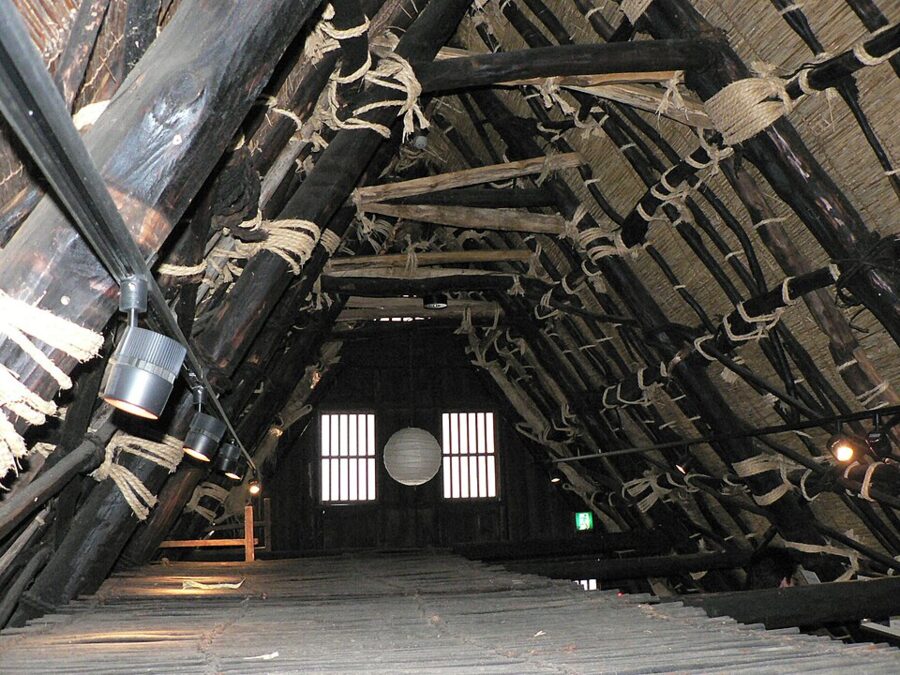
Silkworms were the main one, and they are why the houses grew so tall. A gable roof encloses more attic than a hipped one, and a steeper pitch fits two, three or even four floors under the thatch. The attic floors are slats of bamboo or wood with gaps between them, so the warmth and smoke of the hearth below rise through the whole roof; the warmth let families start rearing before the late mountain spring, and the smoke kept insects out of the thatch.
There was no flat land to spare for mulberry orchards, so the women picked leaves from wild mulberry scattered across the slopes, and in the 1930s the writer Ema Mieko recorded them reeling silk at home from July until the autumn equinox, by oil lamp once the days grew short. Sericulture in Shirakawa village had stopped entirely by 1979.
Saltpetre under the floor
The second trade was secret. Beside the hearth, under the floorboards, families dug a pit and filled it with soil, mugwort and other grasses, and silkworm droppings, then left it for four or five years while bacteria turned the mixture rich in nitrates. The soil was then washed with lye from wood ash and boiled down into crystals of ensho, saltpetre, the ingredient of gunpowder that a wet country could not dig out of the ground.
Gokayama’s saltpetre went to the Kaga domain, which with a rated income of a million koku of rice was the largest fief in Japan, held by an outside lord whom the shogunate watched warily. Gokayama paid its tax in money instead of rice, and an isolated valley suited a military secret. Local tradition says its saltpetre also supplied the Ishiyama Hongan-ji in its war against Oda Nobunaga, which ended in 1580. The trade withered in the Meiji period, once imported Chilean nitrate undercut it.
The big households of Nakagiri
Silk needed hands, and the valley had too little land to divide among sons. In the southern part of Shirakawa village, an area called Nakagiri, every house in a hamlet ran as one large household: only the heir married into the house, while his brothers and sisters stayed in the homes they were born in and visited their spouses, and the children grew up in their mother’s house. The Toyama house at Miboro held about 45 people at its peak around 1900, and the Wada house in Ogimachi more than 20.
Early researchers from the cities wrote this up as a relic of ancient times. The family papers say otherwise: on every fifth day, a shingai day, the junior couples cooked in their own pot, worked their own plots and sold what they grew to the head of the house, who kept a ledger of the purchases. The sociologist Kakizaki Kyoichi, who studied the village from 1953, concluded that it was a working arrangement for a cash crop, with room for private life inside it.
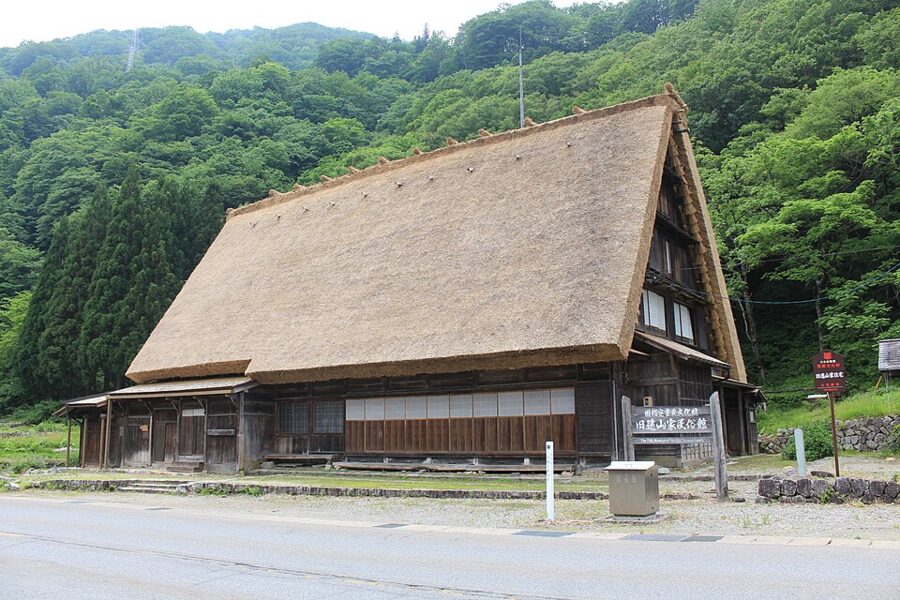
The former Toyama house, an Important Cultural Property from the first half of the nineteenth century (sources give 1827 and 1850), stands at Miboro, about 10 minutes’ walk from the Maki bus stop south of Ogimachi. Admission is ¥300, 09:00–16:00 (10:00–16:00 from December to March), closed on Wednesdays.

The dam that drowned the upper valley
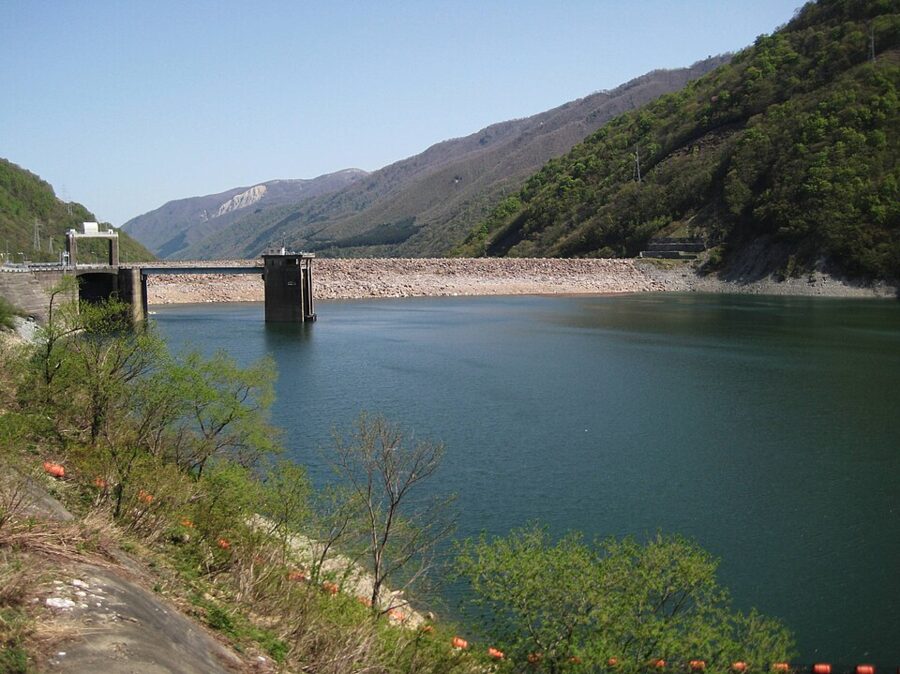
The Sho is steep and fast, ideal for hydroelectric power, and from the 1920s dams climbed the river one after another. The largest is Miboro, a rock-fill dam 131 metres high finished in 1961, which flooded the most fertile part of the upper valley. The 230 households in its path fought it for about seven years before the last of them agreed to go.

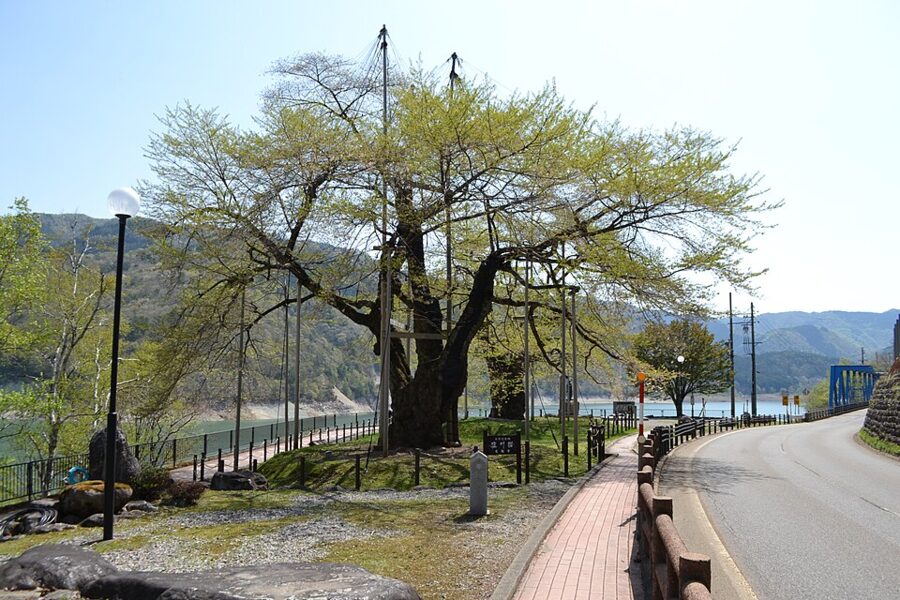
Takasaki Tatsunosuke, head of the power company, walked the doomed villages after the deal and stopped at two cherry trees more than 400 years old, at the temples of Korin-ji and Shoren-ji. In 1960 they were dug up, cut back and hauled up to the edge of the future lake, against warnings that they would die. Both were in full flower by 1970, and as the Shokawa-zakura they still bloom beside Route 156 in late April or early May.
How a gassho house works
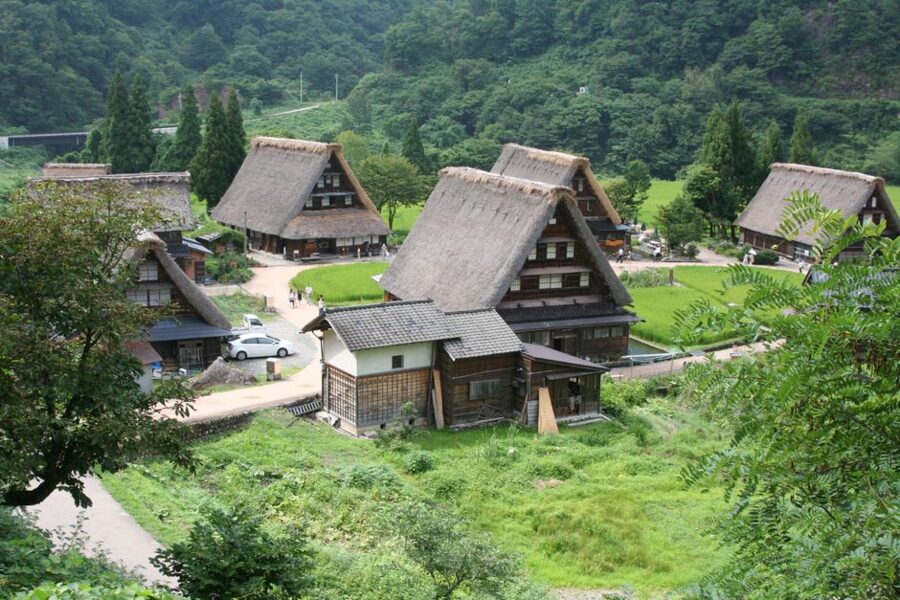
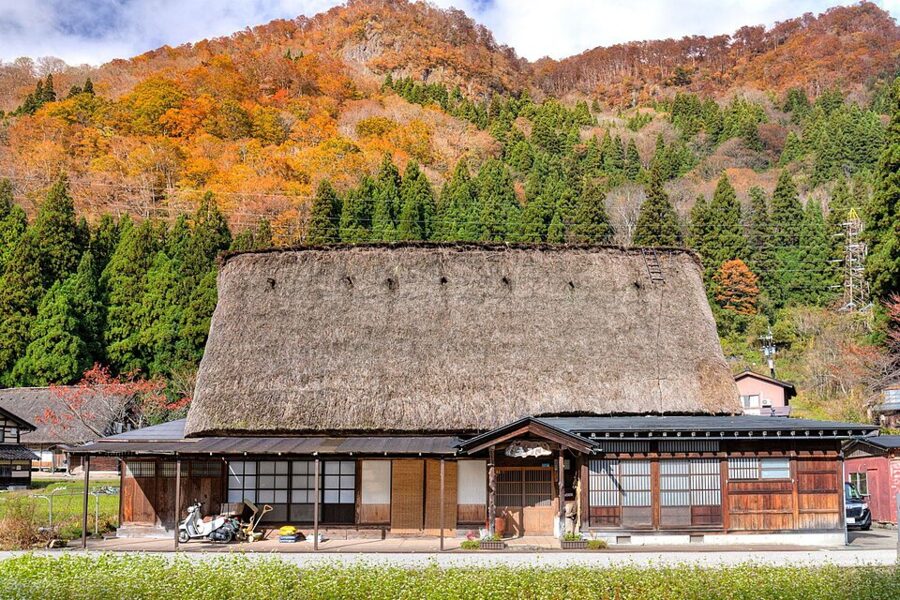
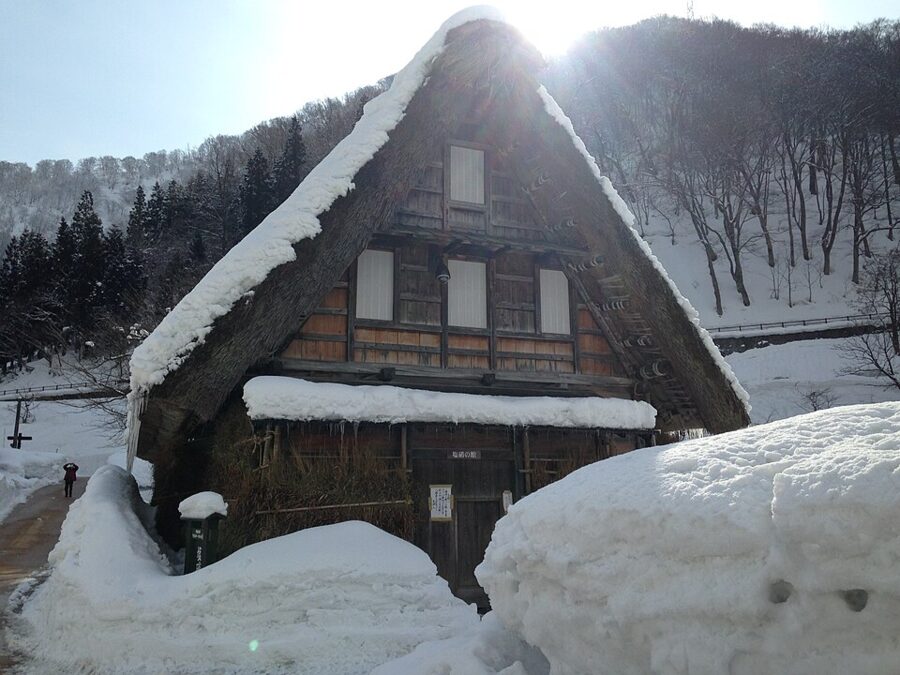
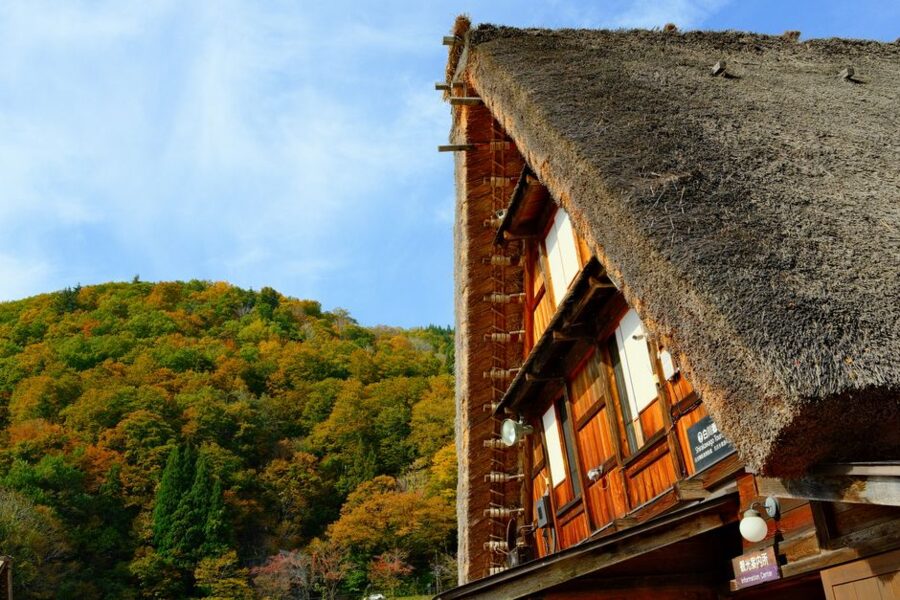
A gassho house is two buildings, one on top of the other. The ground floor is a timber frame of posts and beams, planed smooth and fitted with proper joints, and it was built by hired carpenters, many of them from the Okubo guild that served the Kaga domain. The roof was built by the villagers themselves from round logs, held together with straw rope and neso, green witch-hazel saplings that tighten as they dry. The usual claim that a gassho house has no nails is true of the roof only; the floorboards are nailed.
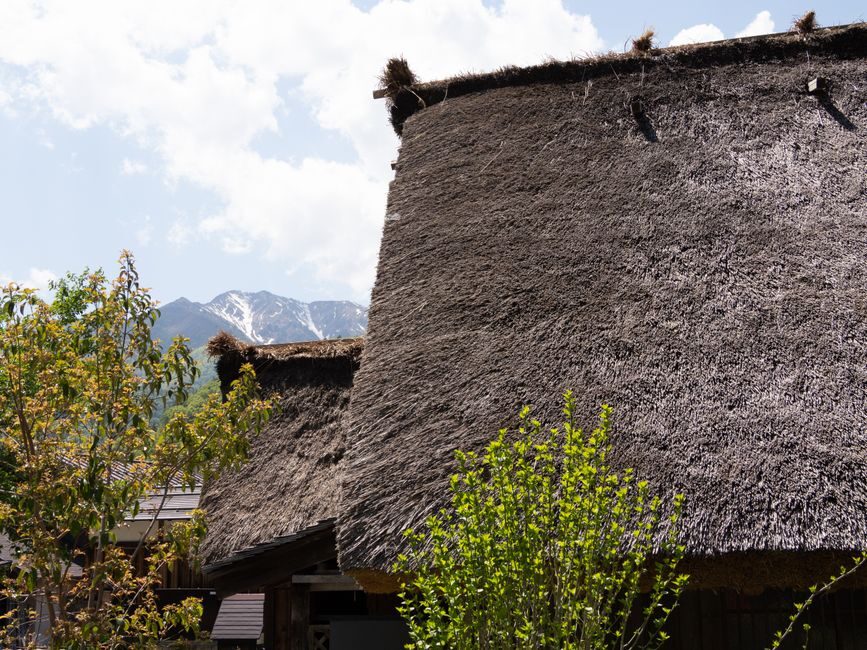
The triangle is made of pairs of heavy poles, the gassho proper, set about every 1.8 metres. Their lower ends are sharpened like the point of a spinning top and rest in hollows cut into a tie beam only about nine centimetres thick, so each pair behaves as a pinned truss: the weight of snow pushes the feet outwards against the beam instead of bending the posts below. Diagonal braces across the underside of the roof stop the whole frame racking sideways in wind or an earthquake.
Pitches run from about 45 to 60 degrees, and the older the house, the gentler the roof tends to be. In Ogimachi the gables face north and south for three reasons usually given: both roof slopes get the same sun, the narrow end meets the wind that funnels up and down the valley, and in summer the gable windows let a draught through for the silkworms. A gassho house in Ogimachi that faces another way has usually been moved there from somewhere else.
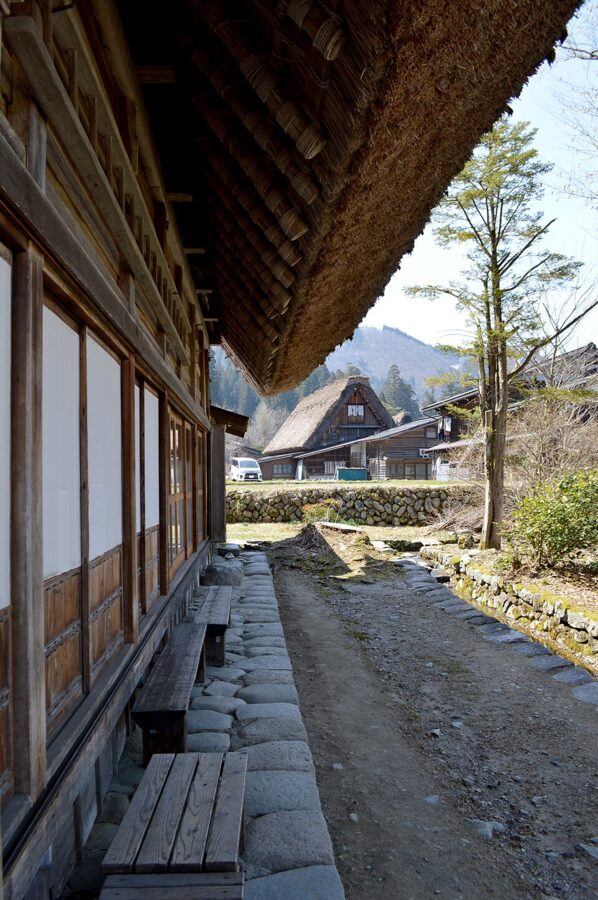
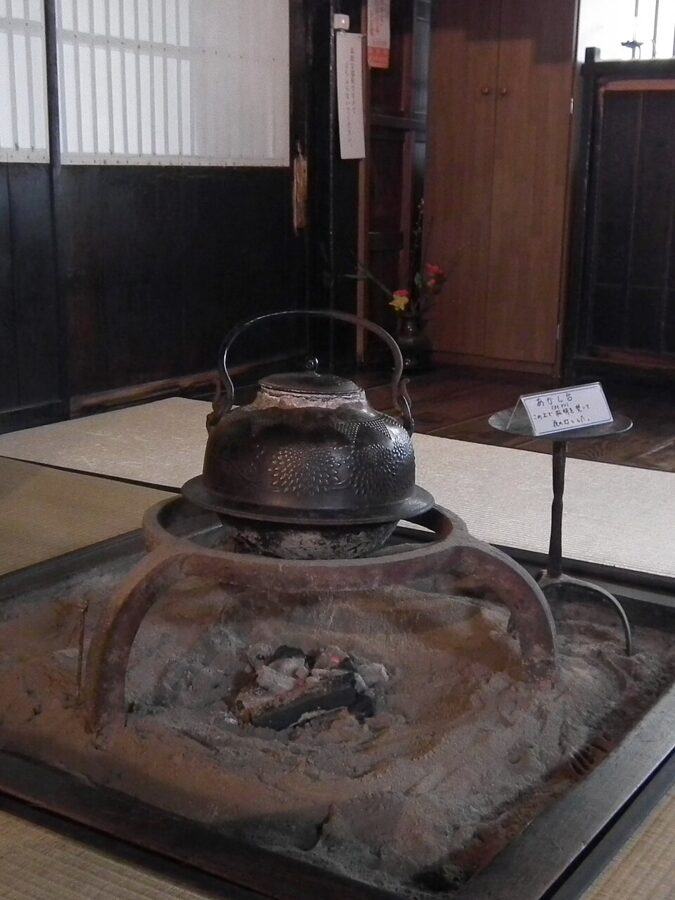
Inside, the ground floor is arranged round the irori, the sunken hearth, with a tatami room before the family’s Buddhist altar, a bedroom at the back and, in older houses, a stall for the horse. In Shirakawa-go the entrance is usually on the long side; in Gokayama it is usually in the gable end, under a thatched lean-to that makes the roofs look hipped when they are in fact gabled.

Thatch and yui
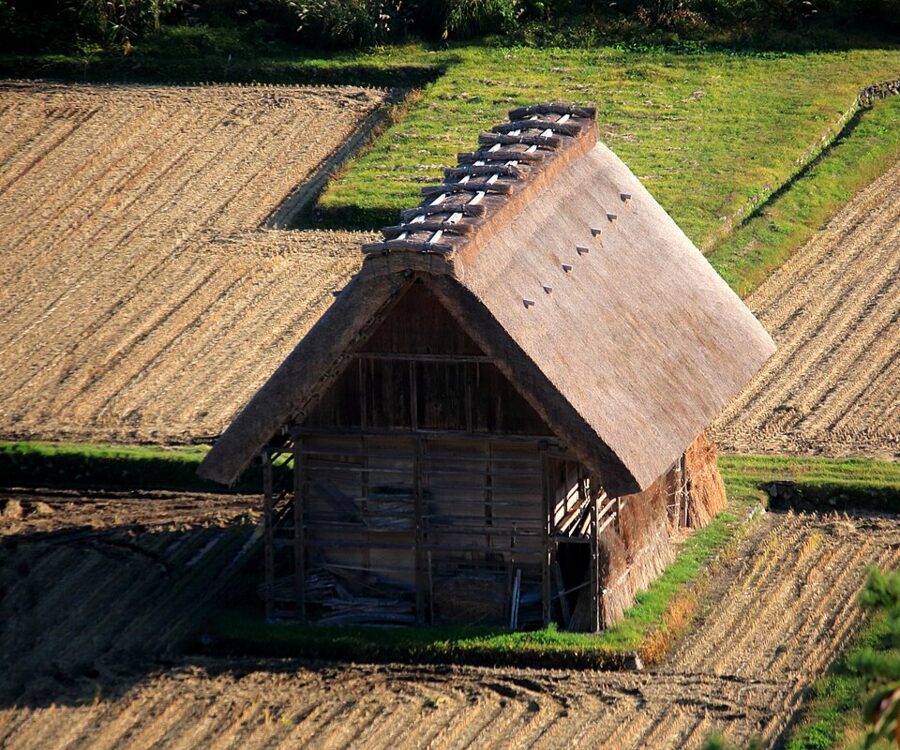
The thatch in Shirakawa-go is kaya, mostly miscanthus grass, cut between late October and the first snow and stored outdoors in stooks until spring. Families lent each other thatch freely, because grass in a stook rots a little every year while grass lent to a neighbour comes back fresh when your own roof is due.
How often a roof is redone depends on whom you ask. The village office says every 20 to 30 years; the World Heritage Centre run by Shirakawa and Nanto says families here aimed for 40 to 60, sometimes 80. Gokayama re-laid its roofs a sixth at a time on a cycle of about ten years, and fed the old thatch to the mulberry fields.
A full roof face in Shirakawa-go goes on in a single day, by 100 to 200 people working under the custom of yui, mutual labour repaid in kind. The host family strips the old thatch before dawn, the most experienced hands supervise, the young pass up bundles, and the day ends with a feast. Every contribution, from hours of work to bottles of sake, goes in a yui-cho, a ledger, and the oldest that survives, from the Toyama house, is dated 1792.
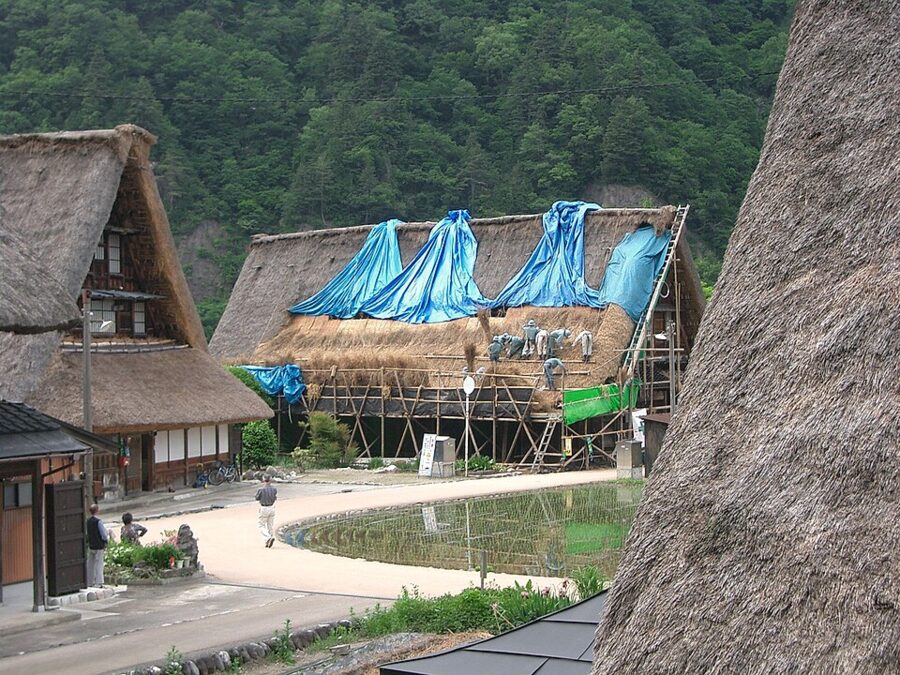

Most re-roofing is now done by professional thatchers, paid for partly from public funds and partly from the village car park. Ogimachi still thatches at least one roof a year the old way so that the young learn how, and every spring snow sliding off the roofs leaves holes to be patched.
Fire and the water cannons
A village of thatch and timber burns. Fires swept western Ogimachi in 1718 and 1749, and the people there founded the shrine that became Akiba Jinja, dedicated to the god of fire. Since 1981 the village has had about 60 water cannons in little shelters between the houses, fed by gravity from a 600-tonne tank on the hill; once a year, on a morning in late October, all of them fire at once to throw curtains of water between the roofs. Residents still walk the lanes calling a fire warning three times a day.
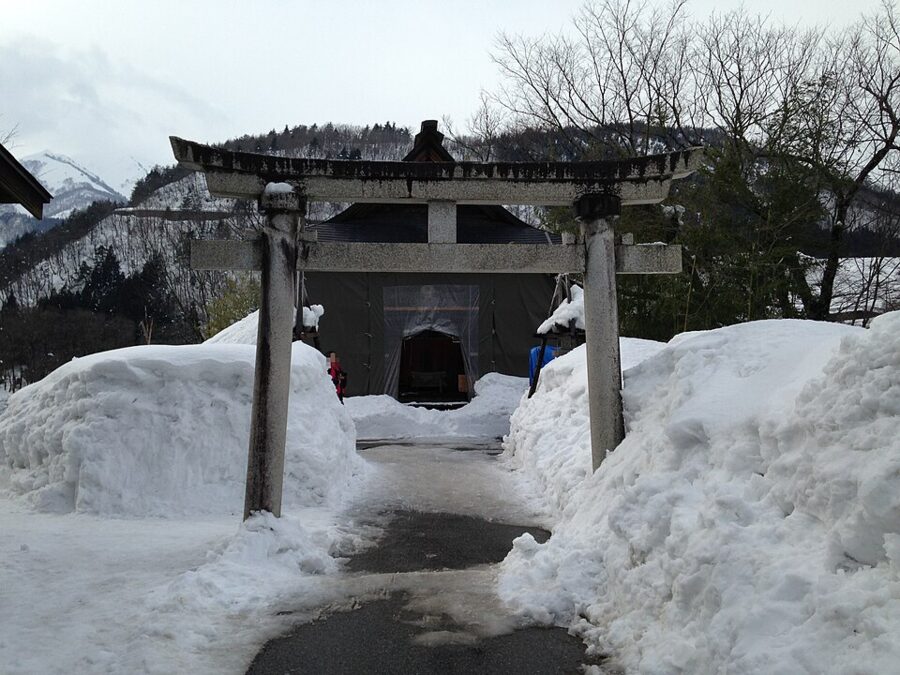

The system was tested for real at Suganuma on 30 July 2026. Workers repairing the thatch of the Ensho-no-Yakata, the saltpetre museum, were killing wasps with an insecticide spray and an electric bug racket, and the grass is thought to have caught from them. A twelve-year-old boy who lives in the hamlet, and had helped at every annual drill, ran to the alarm, broke the cover and pressed the button; residents had seven of the hamlet’s 24 cannons running before the fire engines arrived, and no other house caught. It was the first fire in either Gokayama village since the 1995 listing.
1995, and living inside a World Heritage Site
The German architect Bruno Taut spent two days in Shirakawa in May 1935 and praised its houses in a lecture that year; the government quoted him when it nominated the villages. In between, the thatched houses nearly vanished. The two valleys had more than 1,800 gassho houses at the end of the nineteenth century, and by 1994 only 144.
Ogimachi stopped the losses itself. In December 1971 its residents formed an association and adopted three rules for gassho houses and their land: do not sell, do not rent, do not pull down. The rule against renting was relaxed in 2023 so that empty houses could find tenants, and the association still meets monthly to vet every application to alter a building.
In 1976 Ogimachi was among the first seven districts protected under a new national scheme for traditional townscapes, alongside the post town of Tsumago, from which it had learned. On 9 December 1995 the World Heritage Committee, meeting in Berlin, listed it with Ainokura and Suganuma, Japan’s sixth site after Horyu-ji, Himeji, Yakushima and Shirakami-Sanchi in 1993 and Kyoto in 1994. Only two living villages had been listed before, Hollókő in Hungary and Vlkolínec in Slovakia; Japan’s other sites are in the guide to UNESCO World Heritage sites in Japan.

Crowds, cars and the parking fee
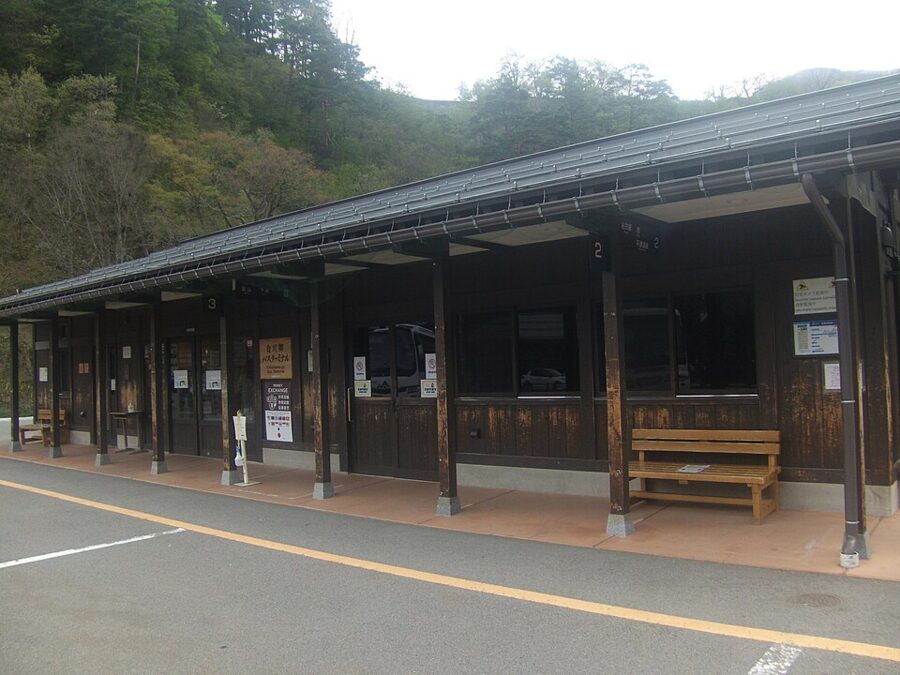
Shirakawa village has about 1,500 people, a third of them in Ogimachi, and a little over half of its 2025 arrivals came from abroad. The only road in from the expressway runs about five kilometres, and on peak weekends the queue for the car park can take more than two hours; since 2023 the road to the lookout has been closed to cars.
Ogimachi charges no admission. It is not a theme park, the village says, and the car park fee stands in for a ticket, with part of it paying for thatch: ¥2,000 a car and ¥10,000 a coach since October 2025, and from 1 December 2026 coaches need an advance booking. Come by public bus and none of this touches you, except that the village is calmer on weekdays and before 10:00.
Village manners
Day sightseeing runs from 08:00 to 17:00; after that the village belongs to its residents and their overnight guests. There are no litter bins in Ogimachi, because the village has no waste plant of its own and pays a town about 50 kilometres away to take its rubbish, so take yours with you. Smoking is allowed only at three marked places, drones are banned everywhere, and the gardens, field edges and the ground under the eaves of every house are private, however photogenic.
Ogimachi, house by house
Ogimachi is small enough to walk end to end in twenty minutes and full enough to fill a day. The open houses lie along the main street in a line: Wada at the north end, Kanda and Nagase in the middle, then Myozen-ji and the Hachiman shrine to the south, with the open-air museum back across the river.
Wada house (和田家)
The Wada house is the largest gassho house in Ogimachi and the only one that is a national Important Cultural Property, designated in December 1995 with its storehouse, its outside privy and its plot of land. The family traces itself to 1573. In the Edo period its heads were village headmen and officials at the Ushikubi checkpoint on the road north, and they grew rich trading saltpetre; more than 20 people lived here at a time.
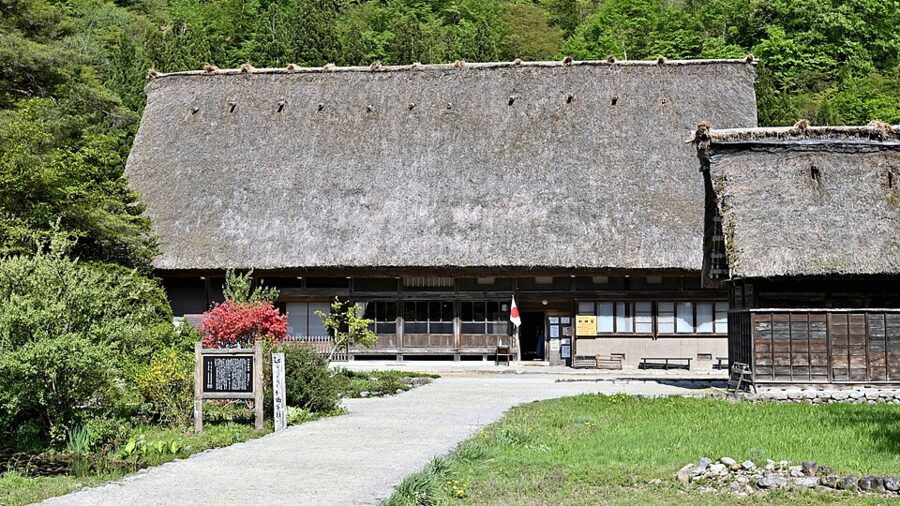

The family still lives here, so only the ground and first floors are open, including a raised entrance step for receiving officials that ordinary houses did not have. Silkworms are reared in July and August, and recorded commentary plays in Japanese downstairs and English upstairs. Admission is ¥400, 09:00–17:00, closed on irregular days; it is four minutes’ walk from the bus terminal, and the path to the lookout starts just behind it.
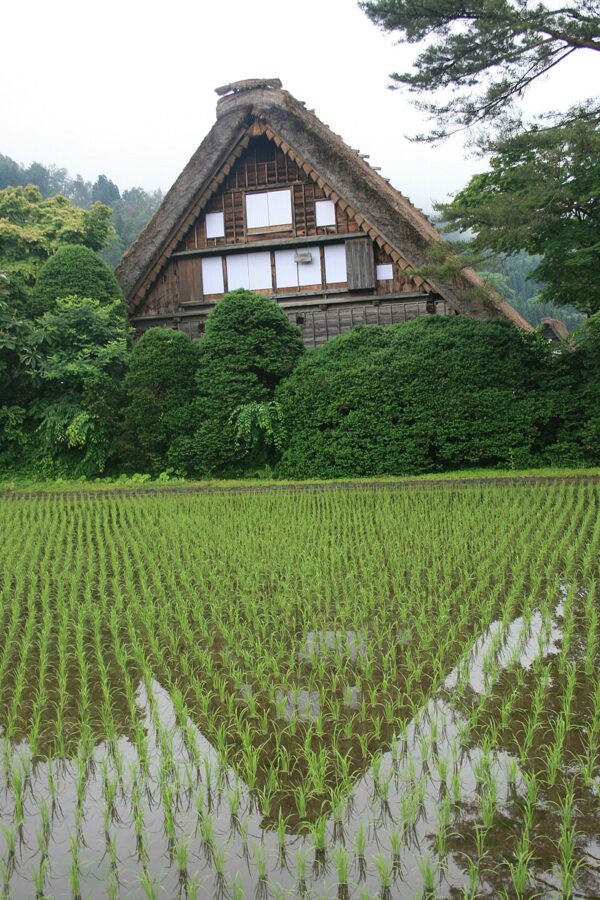

Kanda house (神田家)
The Kanda family branched off from the Wadas and ran a sake brewery. Their house, built around 1850, is a refined piece of work: the tourist association says it took about ten years to complete, and the carpenters, specialists in temples from Ishikawa, wrote all over the roof frame in ink. It has four floors, and the top-floor window looks out over the neighbouring roofs.
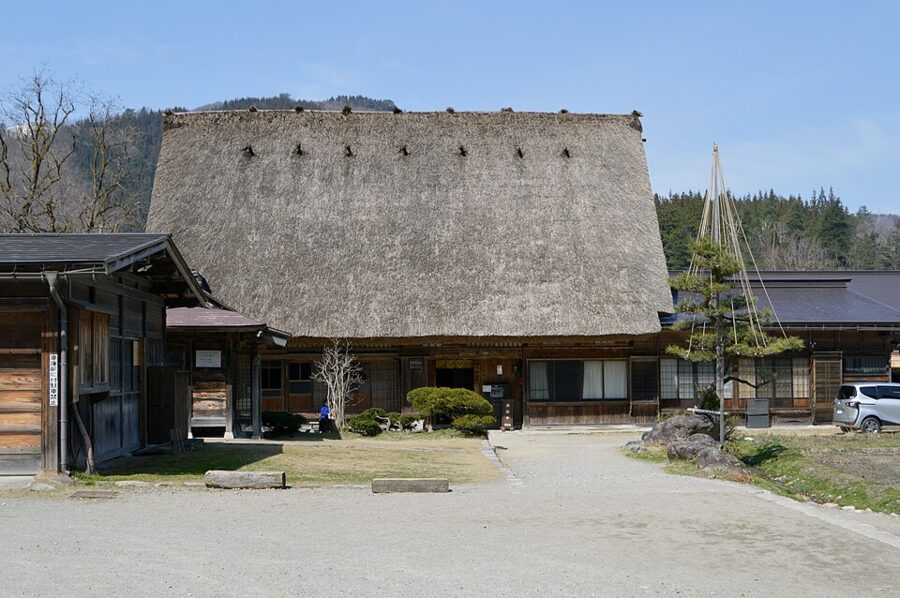
The hearth is still lit and tea is served beside it. Admission is ¥400, 10:00–16:00, closed on Wednesdays unless Wednesday is a public holiday.
Nagase house (長瀬家)
The Nagase house is younger, finished in 1890, and taller: five floors under rafters about eleven metres long, each cut from a single tree. The first three heads of the family were physicians, by the household’s own account to the Kaga domain, and the ground floor shows their instruments and a large Buddhist altar the family dates to about 500 years ago. When the roof was re-thatched by yui in 2001, around 500 people came to help, and the house shows a film of the day.
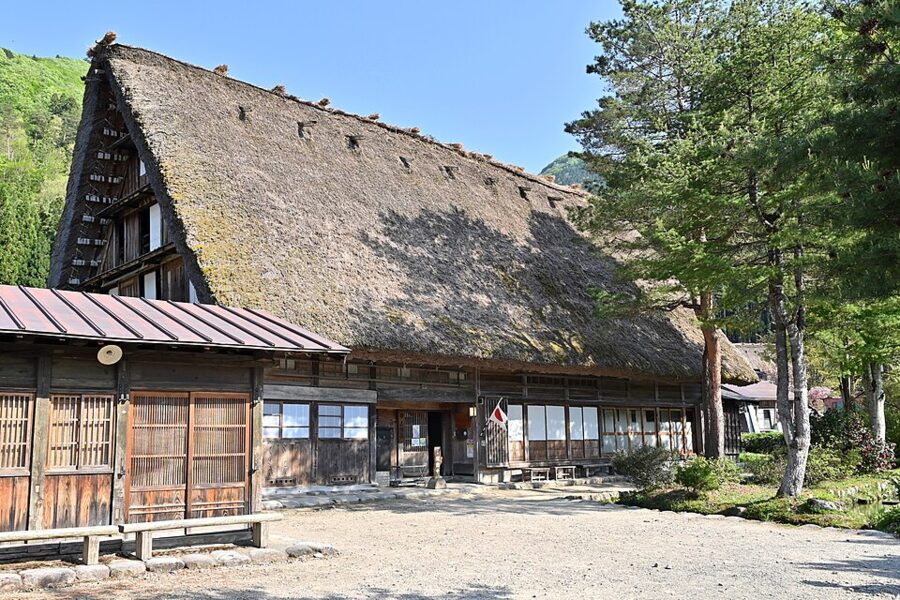

Admission is ¥400, 09:00–16:00, closed on irregular days. If you have time for only one of the three houses, I would choose Kanda for the building and the pit; if you are with someone who wants to climb, Nagase.
Myozen-ji (明善寺)
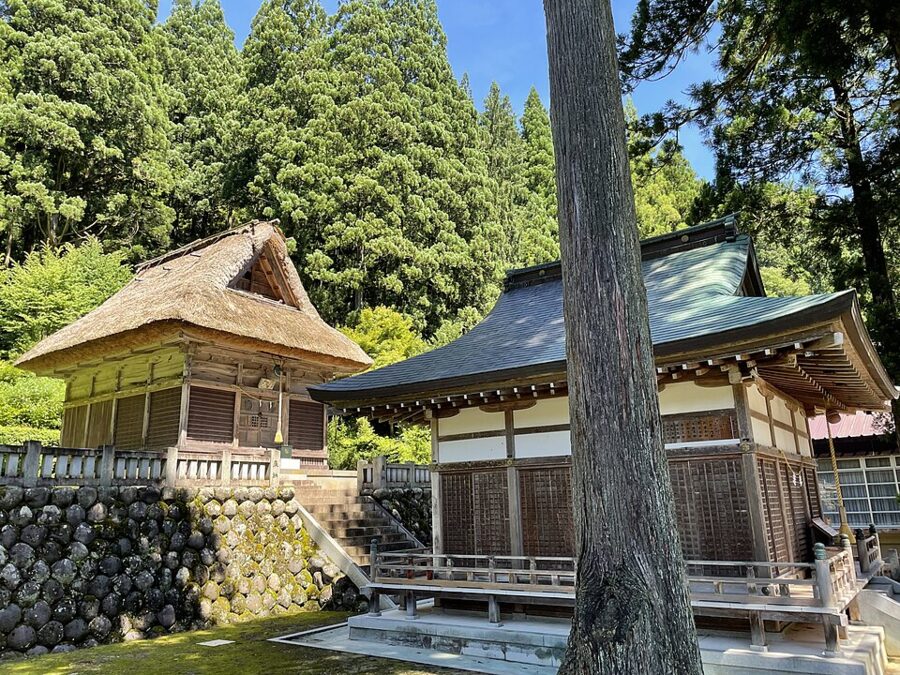
Ogimachi’s temple belongs to the Otani branch of Shin Buddhism, the sect that has held this valley since a disciple of Shinran founded a meeting hall at Hatogaya in the thirteenth century. Its main hall, bell-tower gate and priests’ quarters are all thatched, a set the tourist association says has no equal, and the priests’ quarters are built as a gassho house, the 60th in the protected district.
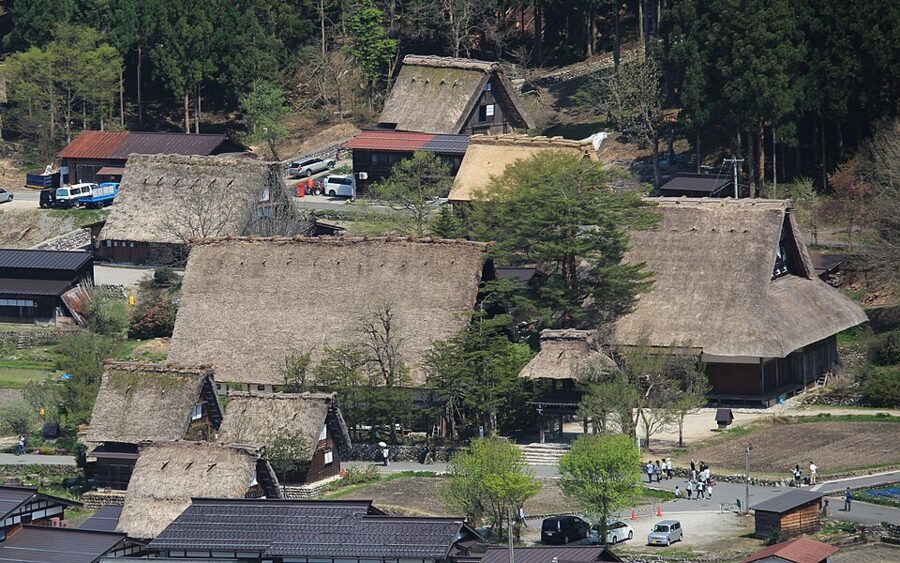

The priests’ quarters are open as the Myozen-ji Kyodokan, a folk museum with a hearth lit every day, and the ticket includes the main hall. Admission is ¥400, 08:30–17:00 from April to November and 09:00–16:00 from December to March.
Gassho-zukuri Minkaen (合掌造り民家園)
Across the river from the main village, the open-air museum gathers 25 thatched buildings, many moved from hamlets that were abandoned, including nine prefectural Important Cultural Properties, a shrine, a temple hall and a water mill. It opened in 1972 as the Gassho Village, when Shirakawa was still losing houses every year. The Yamashita house here is one of the few gassho houses in the village from the eighteenth century.
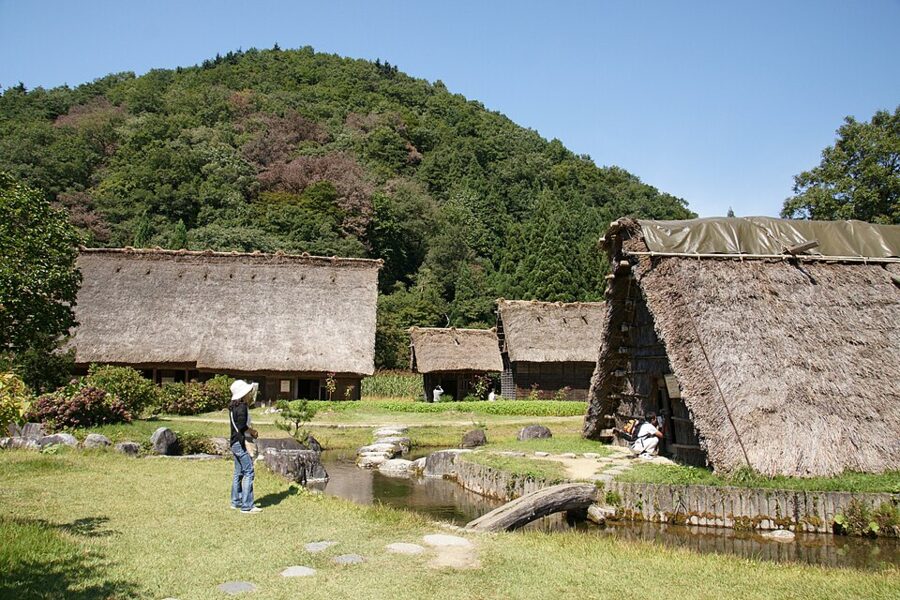

Admission is ¥800. It opens 08:40–17:00 from March to November and 09:00–16:00 from December to February, and closes on Thursdays from December to March. It is about 12 minutes’ walk from the bus terminal, and it is the place to see how a whole hamlet worked rather than a single house.
The castle-site lookout
The view on most posters of Shirakawa-go is taken from the site of Ogimachi Castle, a small hill fort about 60 metres above the village; when Toyama University excavated it in 2005 they found almost nothing, and it may only ever have been a temporary stronghold. The public lookout sits on the castle site, with a private one, the Tenshukaku, beside it.
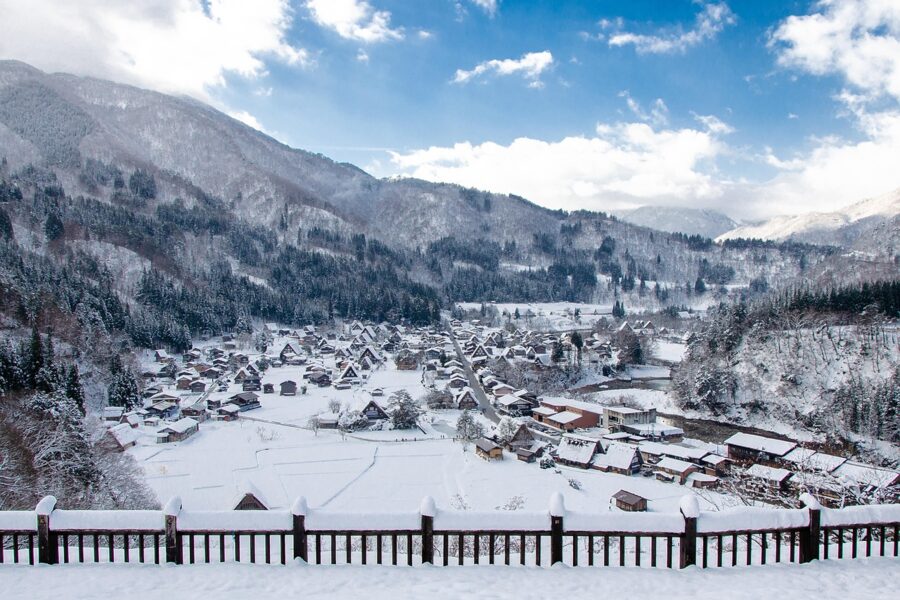
The walk up starts behind the Wada house and takes 15 to 20 minutes. The paid shuttle bus leaves from a stop near the bus terminal about every 20 minutes and costs ¥300 each way; it runs uphill from 09:00 to 15:40 and down until 16:10, with a gap around midday. In snow the path is steep and slippery, and I would ride up and walk down.

Shirakawa Hachiman and the Doburoku festival
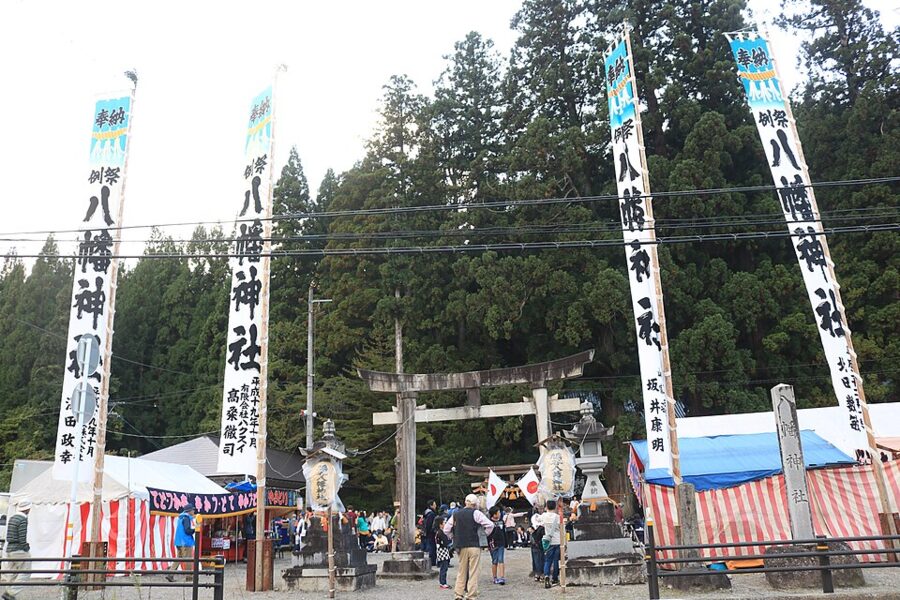
At the southern end of the village, among tall cedars, stands Shirakawa Hachiman, Ogimachi’s main shrine, rebuilt in the seventeenth century by Yamashita Ujikatsu, the samurai who held the castle. In mid-October the valley’s shrines hold their harvest festivals one after another, each centred on doburoku, rough unfiltered sake that the shrine brews itself: by the usual calendar Shirakawa Hachiman on 14 and 15 October, Hatogaya on the 16th and 17th, and Iijima on the 18th and 19th.
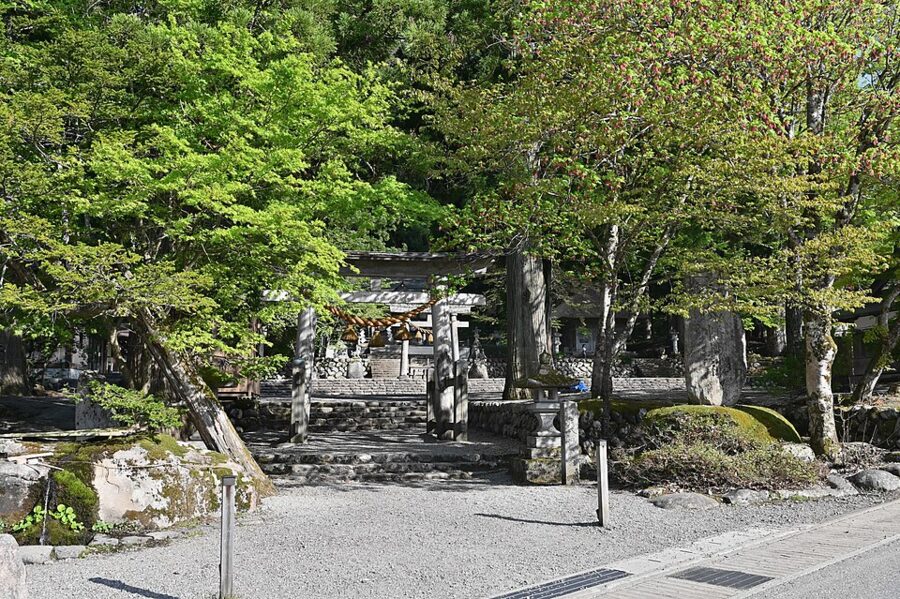

The shrines have held special brewing licences since 1896, when the government banned home brewing but exempted sake made for the gods, on condition that it is never sold. In return for a donation, the village office says ¥400, you receive a cup that is refilled as often as you like. A portable shrine goes from house to house, there is lion dancing, and the Seven Lucky Gods of harukoma, a comic play that once toured the houses in early spring, turn up too.

Gokayama: Ainokura and Suganuma
Gokayama means, by the most popular account, “five valleys”, though some scholars argue that goka comes from an old word for wild, unclaimed land and the five was a later explanation. Its two listed villages are smaller and quieter than Ogimachi for a reason that has nothing to do with merit: most buses from Takayama and Kanazawa run straight past them on the expressway.
Kaga used Gokayama as a prison as well as a gunpowder works. From 1690 the domain exiled people to the villages on the right bank of the Sho, where no bridge was allowed; the only way over was a basket hung from a rope of twisted vines, the kago-no-watashi. Some exiled samurai taught the village children to read, and one villager learned medicine from a prisoner and vaccinated the valley against smallpox in the early Meiji years.
Ainokura (相倉)
Ainokura is the larger of the two, with 20 gassho houses on a terrace at about 400 metres and 16 households in 2023. The oldest may go back to the seventeenth century, and an older form survives too: a roof set straight on the ground with no walls at all, once a home and now a shed.

From the Ainokura-guchi bus stop it is about five minutes’ walk up to the village, and there are coin lockers at the stop for ¥200. Drivers pay a ¥1,000 conservation charge at the car park. For the view, climb the path beside the terraced fields from the car park for five or six minutes; sightseeing ends at 17:00.

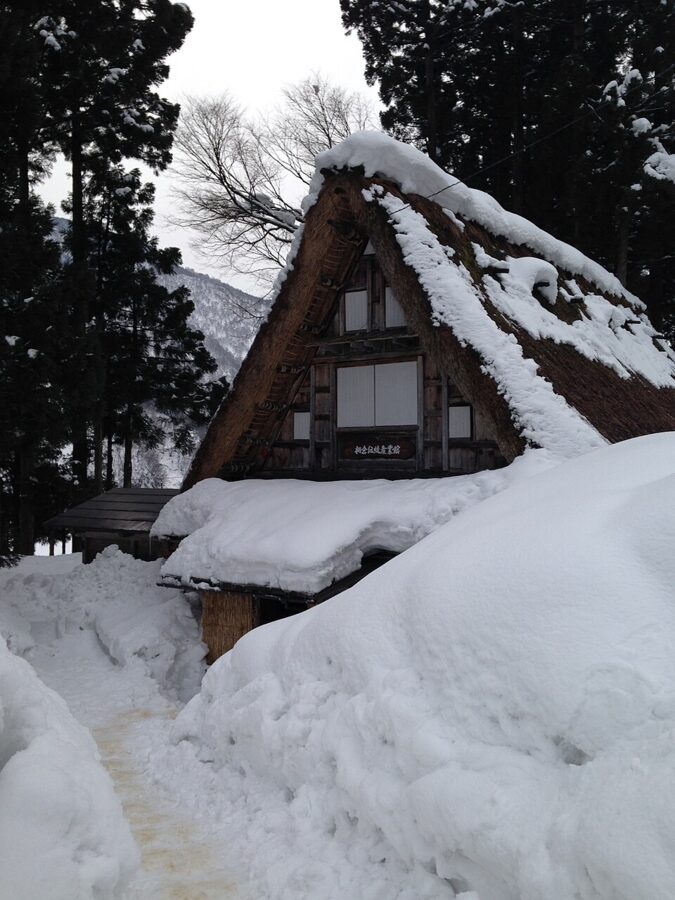
The Ainokura Traditional Industry Museum, in a gassho house, covers the three trades of Gokayama: saltpetre, silk and washi paper. The folk museum next door may still be closed, so check before counting on it.

Suganuma (菅沼)
Suganuma has nine gassho houses on a tongue of terrace at about 330 metres, where the Sho swings from north to east. Two date from the end of the Edo period, six from Meiji and one from 1925, proof that people were still building in the old way a century ago.
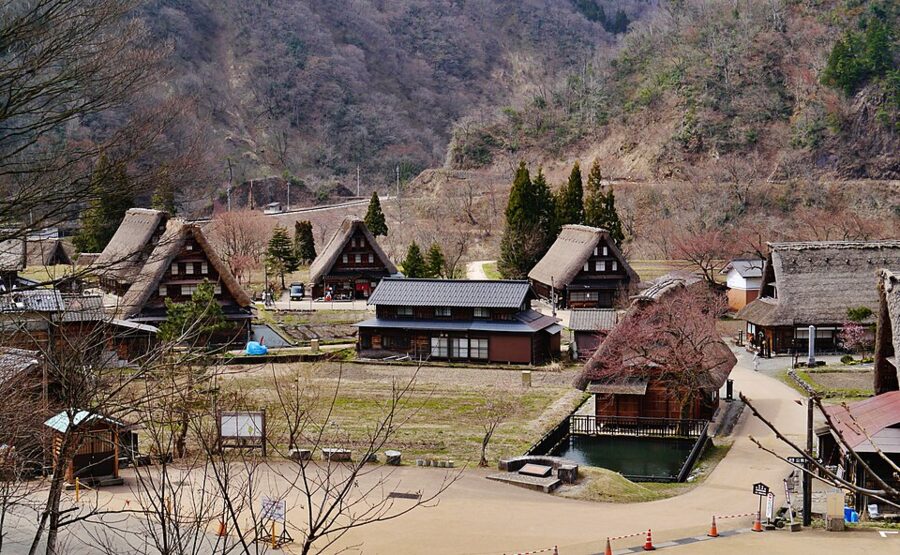

The village is open 08:00–17:00 (from 09:00 between December and March), and parking is ¥1,000. The bus stop is a minute from the houses, with coin lockers on the Takaoka-bound side, and some Kanazawa buses stop here too, which makes Suganuma the easiest Gokayama village to fit into a day.

Gokayama had 13 basket crossings in the Edo period; Suganuma’s was replaced by a suspension bridge in 1879, and a copy now hangs over the river below Suganuma bridge.
Kokiriko, the oldest song
Gokayama is known across Japan for kokiriko-bushi, often called the oldest folk song in the country; the written evidence goes back to about 1800, and claims of a seventh-century origin are a matter of faith. Its name comes from the kokiriko, two sticks of smoked bamboo about 23 centimetres long, spun in the fingers and clacked together.
The dancers carry binzasara, 108 thin wooden boards on a cord, one for each of the worldly desires of Buddhist teaching, and clap them together with a flick of the wrist. By the 1930s the song had nearly died out, until in 1939 a local headmaster, Takakuwa Keichika, wrote it down from an old woman of Kaminashi, Yamazaki Shii, who had learned it as a child; school music books did the rest after 1969.
The winter light-up
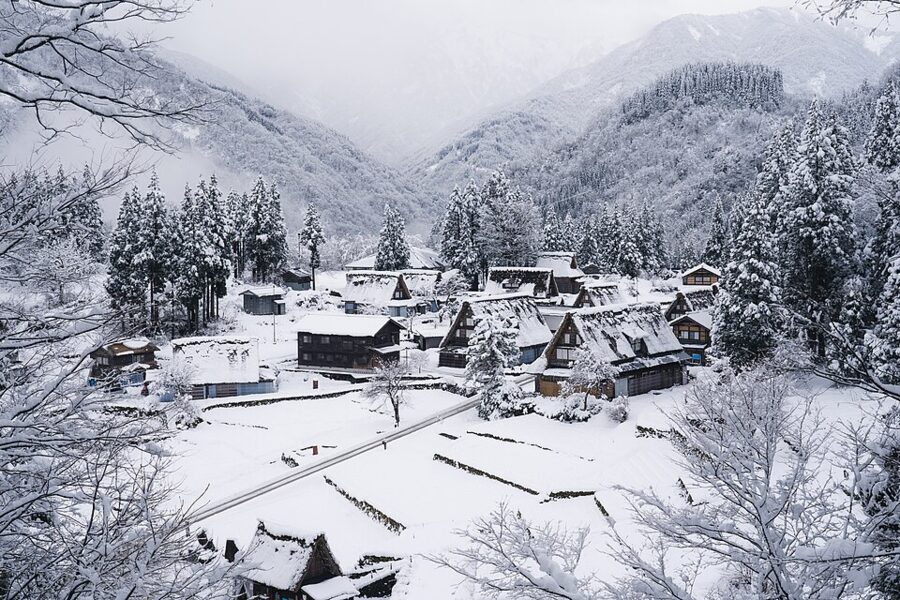
On a few January evenings Ogimachi’s houses are floodlit from 17:30 to 19:30, and the picture of lit gables in snow from the lookout is the one most people know. It has run since the 1980s; by 2018 it drew seven to eight thousand people a night, with cars queuing for parking that did not exist and crowds left waiting for buses home, and since 2019 the village has run it by advance booking only. The 2027 event, the 41st, is on 11, 17, 24 and 31 January, the first a public holiday Monday and the rest Sundays, with a cap of about 4,000 people a night.
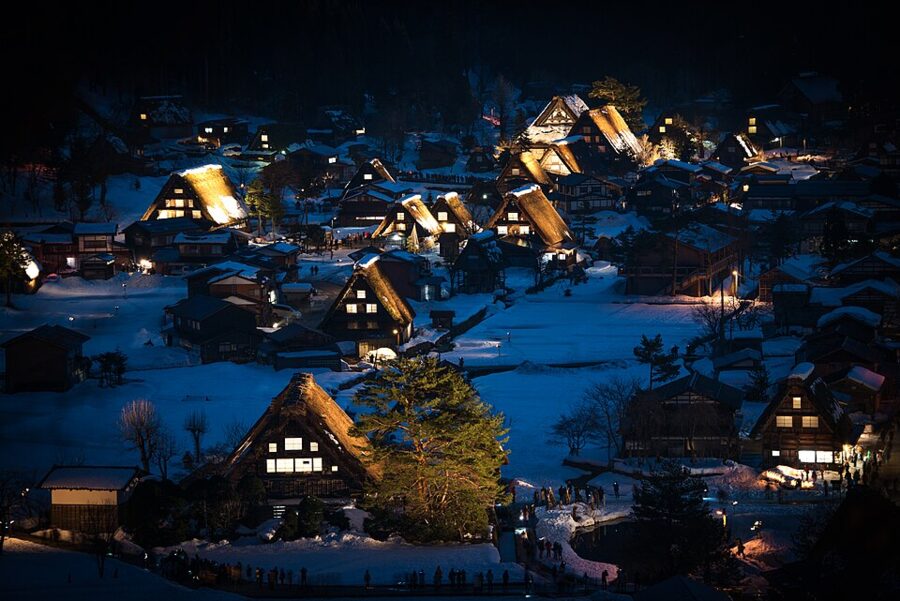

The rules are strict. Nobody gets in without a reservation, no tickets are sold on the day, and each person wears a colour-coded pass round the neck for the date booked. From 15:30 a gate closes the village to anyone without one, so if you are sightseeing by day on a light-up date you must be on a regular bus that arrives by 15:20, and without an event pass you cannot stay on for the lights.
There are five ways in: a night at an inn in Shirakawa village, a reserved parking space, a parking space plus taxi, a travel-agency coach tour, or a tour run by one of the bus companies. Rooms go by lottery, and for 2027 the results came out on 10 November; rooms that winners turned down go on sale, first come first served, from 13:00 on 26 November. A second round of car spaces goes on sale at 13:00 on 1 December at ¥7,000 for up to five people.
Only people staying in the village, and passengers on the bus-company tours that include it, may walk up to the lookout, in three timed sessions and without tripods. Nohi Bus runs three tours from Takayama, one with the lookout, one with the open-air museum and one with a hot-spring stop; there is no scheduled bus back after the event. If you miss out, Suganuma lights up on 26 January and 6 and 7 February 2027 and Ainokura on 20 and 21 February, and cars need no booking for either.
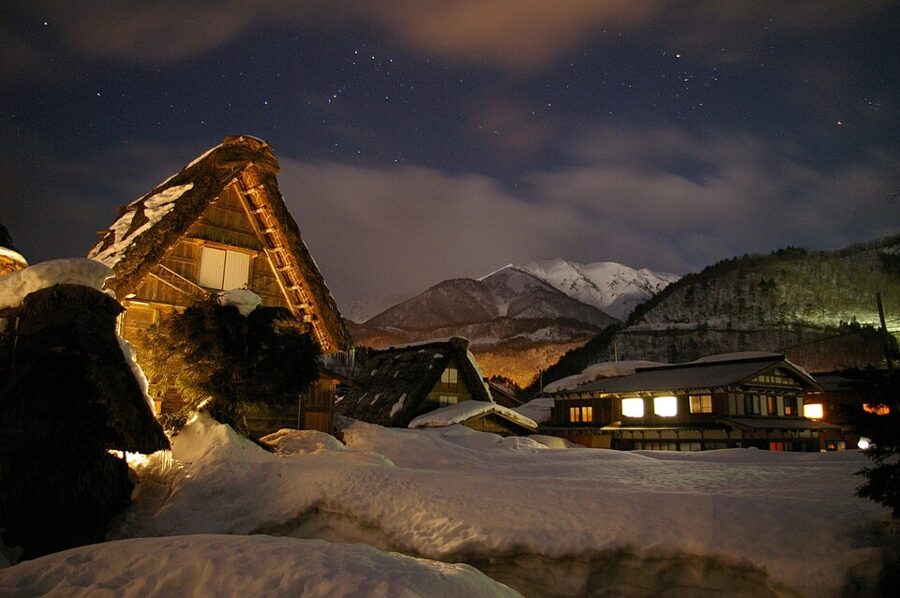

A night in a gassho minshuku
The tourist association lists about forty places to stay in Shirakawa village, and many of them are family-run inns, minshuku, in the gassho houses of Ogimachi. Staying in one is the best thing you can do in the valley, because you get the village at dusk and dawn, which no day trip can give you. You also get supper round the hearth: river fish, wild mountain greens, home-grown rice, at some inns Hida beef grilled on a magnolia leaf with miso, and in the colder months perhaps suttate-jiru, a soup of ground soybeans that is the village’s own dish.
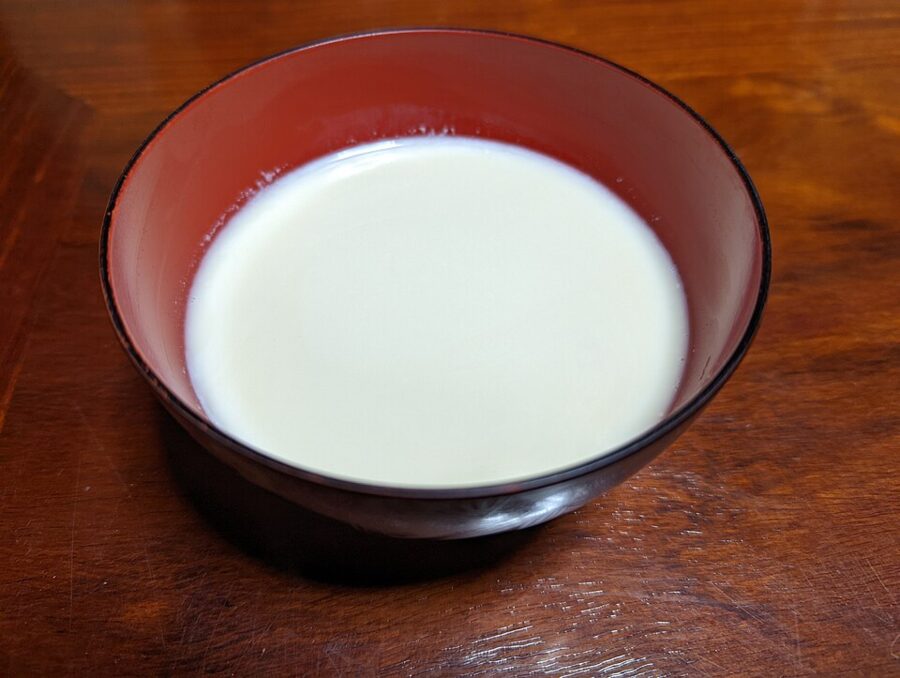
Expect a tatami room with futons laid out after supper, thin sliding walls, often shared toilets and washrooms, and a bath that may be small or may be only a shower, in which case Shirakawa-go no Yu, the hot spring near the terminal, takes ¥100 off its ¥900 entry for minshuku guests. Check-in is usually from 15:00, breakfast early, and you will be out by about 09:00. Payment in cash is still common, so bring enough.
The inns vary. Among those on the tourist association’s list, Rihei, in a house it calls 400 years old, does not take guests for two nights running; Nodaniya, opposite the Hachiman shrine, serves no meals and takes one party a night; and Hisamatsu also takes one party a night. For January or the autumn leaf weeks, book months ahead.
The house rules are those of a family home: supper at a set time, a quiet house by mid-evening, and a walk after dark round a village that is going to bed. Gokayama has its own gassho minshuku in Ainokura and Suganuma, quieter still, and the Gokayama information centre at Kaminashi lists them.
Getting there
There is no railway to Shirakawa-go. The JR station called Shirakawaguchi, on the Takayama Line, belongs to the town of Shirakawa in southern Gifu, a different place several hours away, and has nothing to do with the village. Everyone else comes by bus, and the buses are good: Nohi Bus and its partners run about 16 return services a day between Takayama and Shirakawa-go, many continuing to Kanazawa, Toyama or Takaoka.
| From | Operators | Time | Fare (one way) |
|---|---|---|---|
| Takayama Nohi Bus Center | Nohi Bus with Hokutetsu, Toyama Chiho Railway, Kaetsuno, Iruka Kotsu | about 50 minutes | ¥2,900 |
| Kanazawa Station | Hokutetsu, Nohi Bus | about 1 hour 15 minutes | ¥2,900 |
| Toyama Station | Toyama Chiho Railway, Nohi Bus | about 1 hour 20 minutes | ¥2,400 |
| Takaoka or Shin-Takaoka | Kaetsuno, Iruka Kotsu, Nohi Bus | about 1 hour 25 minutes | ¥2,200 |
| Nagoya (Meitetsu Bus Center) | Gifu Bus, Meitetsu Bus | about 2 hours 30 minutes to 3 hours | ¥3,600–4,700, by date |
The fares are Nohi Bus’s from 1 December 2026, when the Takayama and Kanazawa fares rose by ¥100; Gifu Bus’s Nagoya fare varies by date. Many services must be booked in advance and sell out in the leaf season and January, so book as soon as your dates are fixed, and to stop off between Takayama and Kanazawa buy two tickets.
For Gokayama, Kaetsuno’s World Heritage Bus runs from Takaoka and Shin-Takaoka on the Hokuriku Shinkansen via Johana to Ainokura-guchi, Suganuma and Shirakawa-go. You can board without a reservation, and a two-day ticket for the whole line costs ¥4,000, enough to see both Gokayama villages and sleep in Ogimachi.
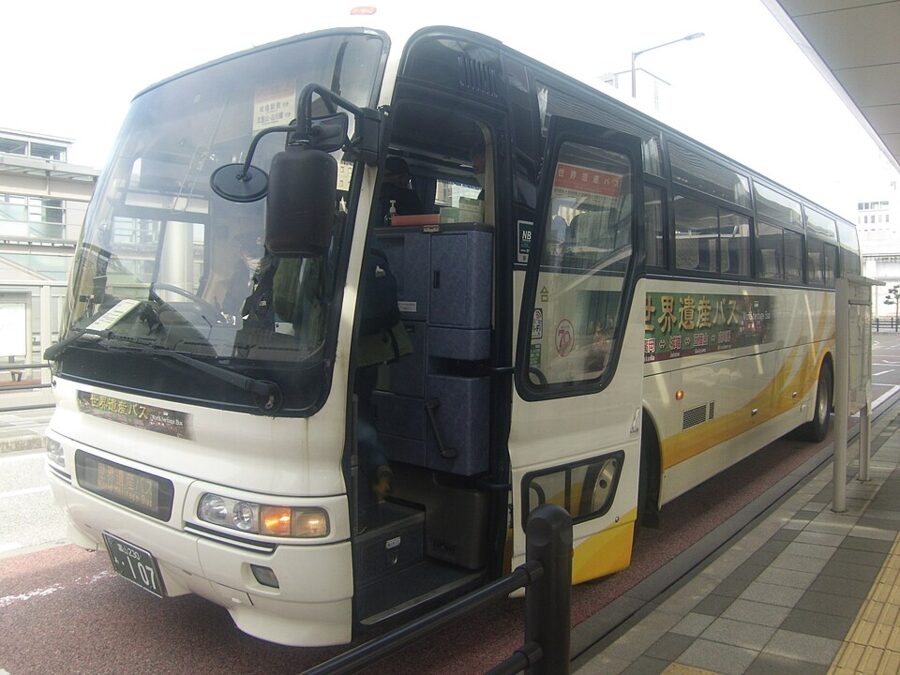

Large suitcases go in the hold, which is small, and you load them yourself; the operators may refuse very big items. For a day trip leave the case in a station locker, or send it ahead to your next hotel by courier. If you are touring the region, JR Central’s Takayama-Hokuriku Area Tourist Pass (¥19,800 for five days) covers the Hida trains from Nagoya and the buses through Shirakawa-go; the Japan Rail Pass does not cover the buses at all.
By car, the village is about 50 minutes from Takayama and 70 from Kanazawa on the Tokai-Hokuriku Expressway; from early December to late March you need winter tyres even when the roads look clear. The car park is open 08:00–17:00, with last entry at 16:30.
Seasons and plans
Each season changes the village completely. Snow lies from December into March, and January and February are the months for the classic white roofs, the light-up and the biggest crowds of the year. The snow melts in March and the cherries flower from mid-April into early May; then the rice is planted, and for a few weeks in late spring the flooded paddies mirror the houses, which is my favourite time to come.
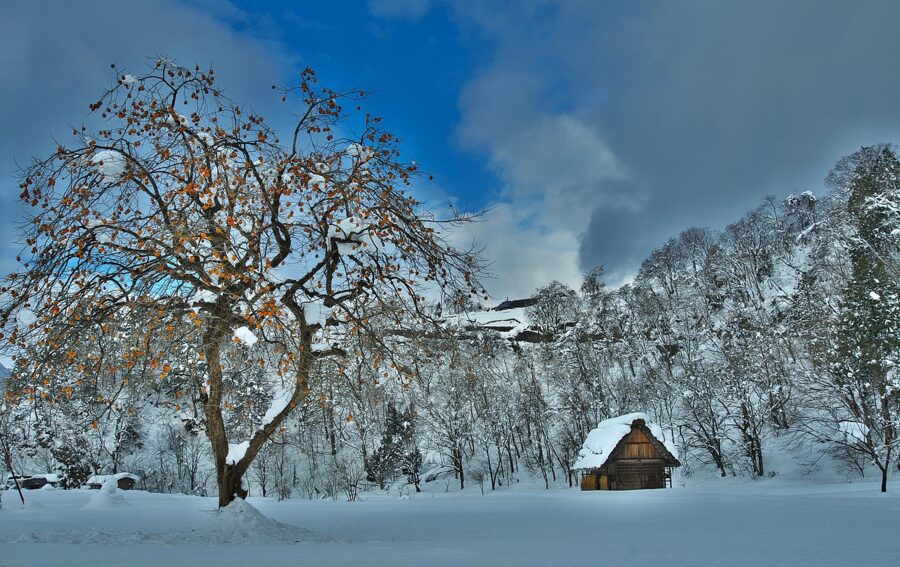
Summer is green, warm and wet, with about 2,460 millimetres of rain a year, and cool evenings at 500 metres. Autumn colour runs from late October to mid-November, with the doburoku festivals and the water-cannon drill in October; after January it is the busiest season. For the national calendar see the best time to visit Japan, and for the region around the valley, Chubu.

Here is how I would plan it.
- A day trip from Takayama. Take a bus before 09:00 and go straight up to the lookout before the coaches arrive. Walk down past the Wada house, see Kanda or Nagase, cross to the open-air museum after lunch and catch a mid-afternoon bus back.
- Takayama to Kanazawa via Shirakawa-go. The best use of a day if you are moving between the two cities anyway; book both legs and send your case ahead.
- One night in Ogimachi. Arrive by early afternoon, see the houses, climb to the lookout for the late light and stay when the day buses leave. Walk the empty main street before 08:00 next morning.
- Gokayama as well. From Takaoka on the World Heritage Bus, see Ainokura in the morning and Suganuma at midday, and finish in Ogimachi to stay the night.
Whichever you choose, try to be in Ogimachi at five o’clock. The car park closes, the last day buses leave from the crossroads, and the main street empties within minutes. In the houses the hearths are being lit for supper, and you will see why the people who live here have spent half a century keeping the roofs on.