

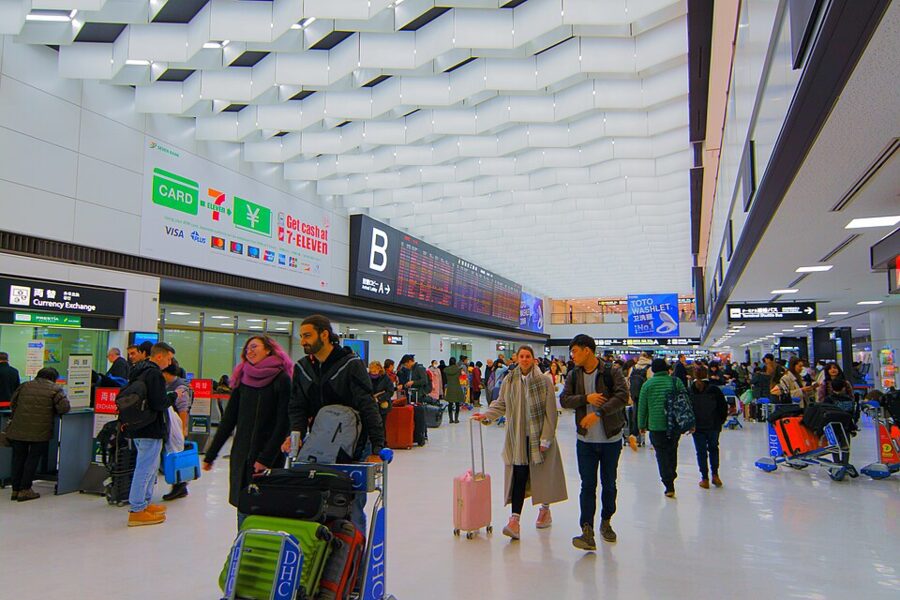

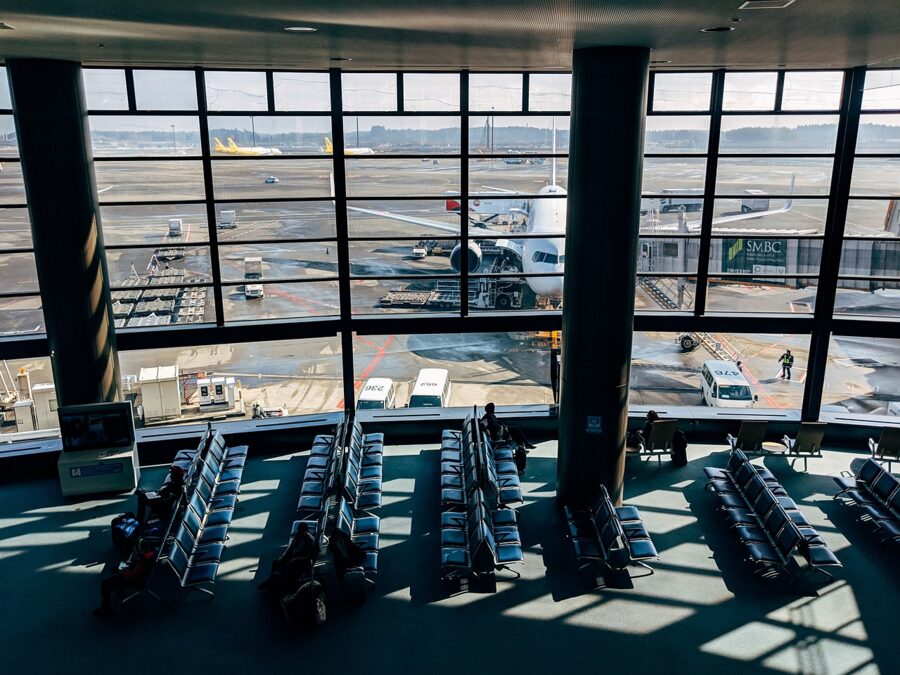
At the arrival desk at Narita the visa you spent months getting is used up in a few minutes. The inspector checks it against your passport, takes two fingerprints and a photograph, stamps a landing permission and hands you a plastic card printed with the characters 留学, ryugaku, “study abroad”. From that moment the card, not the visa, is what lets you stay in Japan.
Any course in Japan longer than three months, at a university, a vocational college or a Japanese-language school, needs the status of residence called Student (留学, ryugaku), and you get it in two steps. Your school applies to immigration in Japan for a Certificate of Eligibility in your name; when it is issued, you take it to the Japanese embassy or consulate at home, which puts the visa in your passport in about a week. From the school’s acceptance to your flight, allow four to six months.
| Question | Answer for late 2026 |
|---|---|
| Status of residence | Student (留学); the residence card reads “College Student” in English |
| Who applies first | Your school, as your proxy, at its regional immigration bureau |
| Certificate of Eligibility | Officially 1–3 months; the average was 48 days for certificates issued in September 2026 and 86 days in February 2026 |
| The visa | About 5 working days at the embassy with the certificate; ¥15,000 single entry since 1 July 2026, charged in local currency |
| Deadline to fly | The certificate is valid for 3 months from issue |
| Period of stay | Set case by case, up to 4 years 3 months, then extended |
| Work | Only with permission: up to 28 hours a week, 8 hours a day in school holidays |
| Extending | From 1 October 2026, ¥33,000 for a one-year extension at the counter |
How a degree, an exchange and a language course compare on cost is in the study in Japan guide, and the school itself, from fees to choosing one, is in the guide to Japanese-language schools.
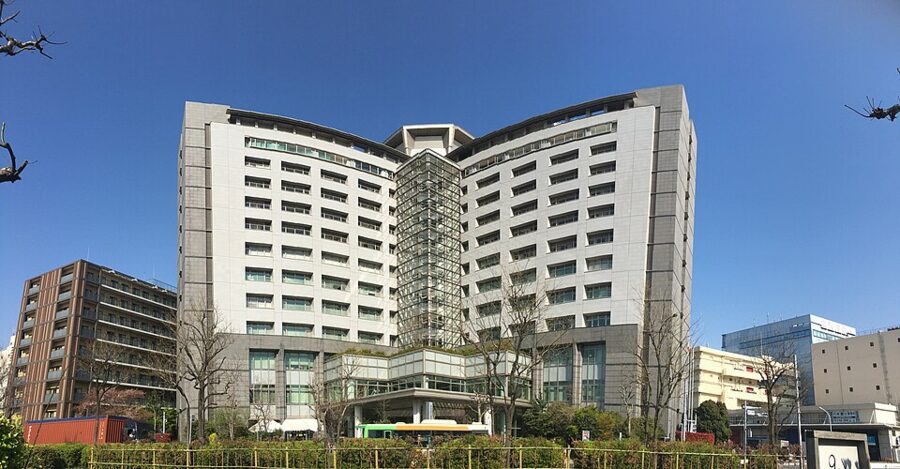

The word “visa” causes most of the confusion. In Japanese law the visa (査証, sasho) is only a recommendation from the embassy that you be admitted; it is spent on arrival. What you live on is the status of residence (在留資格, zairyu shikaku), which decides what you may do and for how long, and the residence card (在留カード, zairyu kado) is its proof. Every later step, from extensions to a first job, is done to the status.


In this guide
Who needs it, and who does not
You need Student status if your main purpose in Japan is full-time study at a school that immigration recognises, for longer than three months. That covers universities and graduate schools, junior colleges, colleges of technology, vocational colleges (専門学校, senmon gakko), Japanese-language schools on immigration’s notice or certified by the Ministry of Education, and, under stricter conditions, high schools. Evening and correspondence study do not qualify, and a research student who only attends lectures must sit in on at least ten hours a week.
The period of stay is set for each student, never more than 4 years 3 months at a time, and language schools have a separate ceiling: normally two years in all, however many schools you attend. Two consequences follow. A four-year degree usually needs at least one extension, and a language-school student who wants a third year has to move up to a vocational college or university to get it.
Short courses and the working holiday
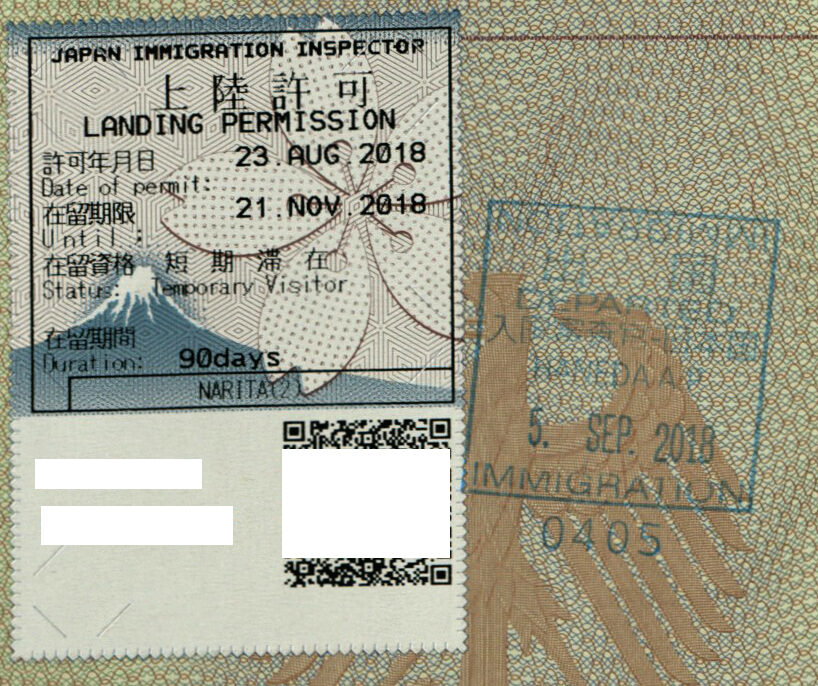
A course of 90 days or less needs no student visa if your passport already lets you into Japan without one, as British, Irish, American, Canadian, Australian and New Zealand passports do. You arrive as a Temporary Visitor, attend classes, and leave. What you cannot do is stay on: someone who comes as a visitor, sits a university’s entrance exam and passes is told to go home and apply for the student visa there.
The other way in is the working holiday visa, a different status (Designated Activities) for young people from partner countries. It lets you study part-time and work as much as you like for up to a year, which suits a few months of classes followed by a winter in a ski resort. Most nationalities can hold it only once, so it is worth saving for the year it fits best.
The Certificate of Eligibility
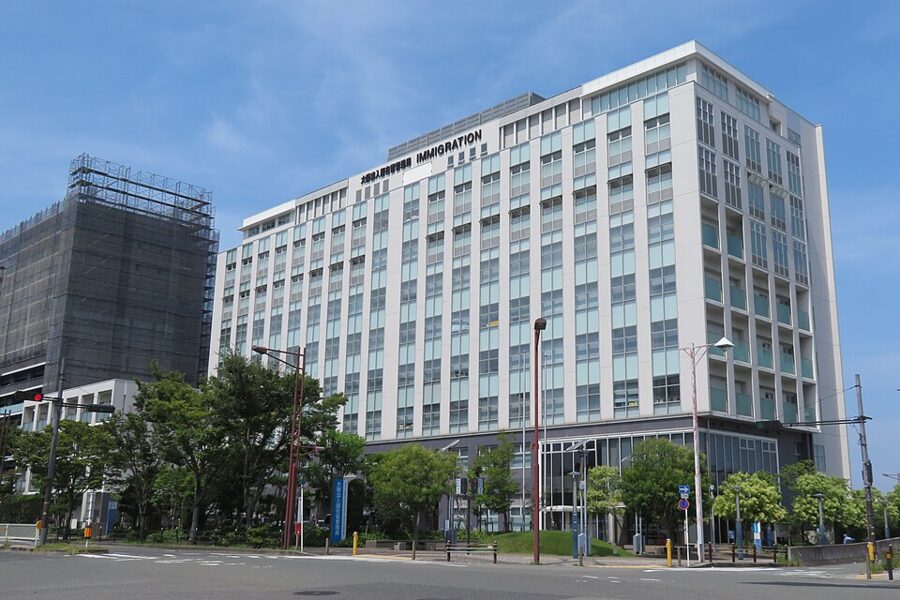
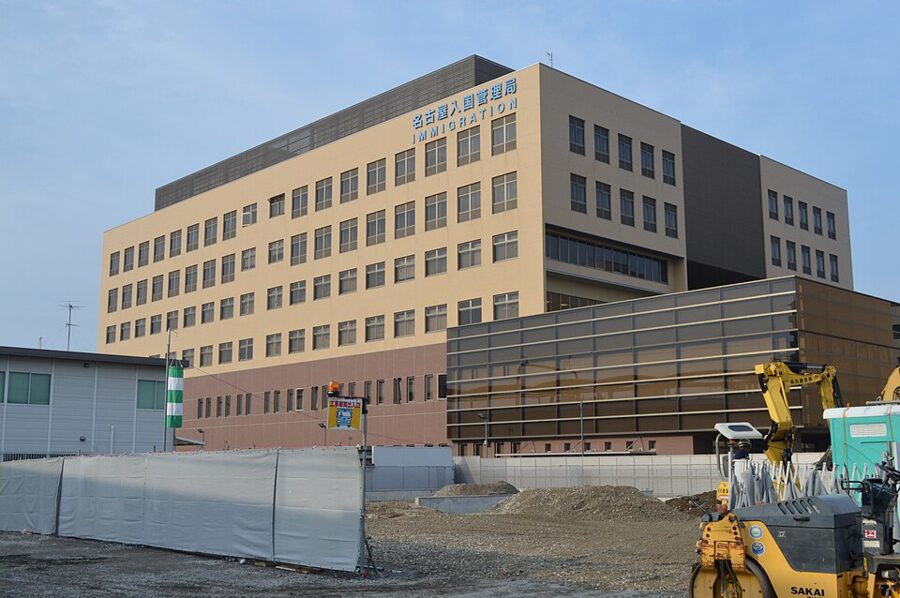
The Certificate of Eligibility (在留資格認定証明書, zairyu shikaku nintei shomeisho) is immigration’s advance ruling that your plans fit the Student status. You can in theory apply for it yourself, but you would have to be in Japan to do so; in practice the school files it for you as your proxy, at the bureau or branch office that covers the school’s address. Applications are not accepted by post.
Immigration’s standard processing period is one to three months, and it publishes the real figures every month. Certificates for Student status issued in September 2026 had taken an average of 48 days; those issued in February 2026, the rush for April courses, took 86. The agency notes the same pattern every year, with queues lengthening before the language schools’ April and October intakes.

What goes in the file
The core is short: the application form, one photograph, a stamped return envelope and the school’s papers on what you will study. The weight is in the attachments, and those depend on two things immigration publishes: how the school has been rated and where you come from.
Schools are graded on how their past students behaved. A school notified as “appropriate” (適正校, tekiseiko) class I, with a clean record, files a lighter set of papers than one with no rating.
Applicants are graded too. Immigration keeps a list of countries and regions whose nationals are exempt from its “careful examination”, among them Britain, Ireland, the United States, Canada, Australia, New Zealand, most of Europe, China, South Korea and Taiwan. Students from countries off the list, which includes Vietnam, Nepal, the Philippines, Myanmar and Sri Lanka, submit their academic records and their sponsor’s finances in full even at a well-rated school.
Japanese is the part that changed this year. A language school must confirm that you already have about A1 on Japan’s reference framework for Japanese-language education, roughly JLPT N5. For students starting from October 2026, a certificate of 150 hours of study no longer proves it on its own: the school must test you or interview you, write down how, and send that record with the application. Nationals of the listed countries who hold a degree from a university abroad are spared this step.
One more requirement depends on your passport. Nationals of the Philippines, Nepal and Vietnam who are coming for more than three months must now include a certificate from a clinic approved by the Japanese government showing they do not have active tuberculosis, valid for 180 days from the chest X-ray. For Indonesians the certificate is compulsory from 4 January 2027, and Myanmar and China are to follow on dates not yet set.

Proof of funds and the sponsor
Immigration sets no minimum balance. What it asks is whether you, or whoever is paying, can cover the whole course and your living costs, and where that money came from. The sponsor signs a statement of financial support (経費支弁書, keihi shibensho) and backs it with a bank balance certificate, a certificate of income for the past year, and evidence of how the savings were built up. A scholarship replaces most of this with a single award letter.
The amounts schools ask for, and why a lump deposited last month counts against you, are in the language-schools guide. The newer point is that the schools now carry part of the responsibility. For language-school students entering from April 2027, the school must sign a separate confirmation (経費支弁能力に係る確認書) that it has itself checked the financial evidence, including the papers explaining how the sponsor came to be paying.
Immigration is blunt about the plan it will not accept: paying for school out of part-time work. Its own page for prospective language-school students warns against brokers who claim you can earn ¥300,000 a month in Japan and send money home. The 28-hour limit makes that impossible, and students who arrive in debt to such brokers are the ones who break it.
Why certificates are refused
Immigration does not publish a list of reasons, but refusals come back to the four things the examiner is testing. The money does not add up, or its source is not explained. The record does not fit: a gap of years since school, transcripts that contradict the application, an earlier overstay in Japan. The Japanese is not there.
Or the school is the problem. Immigration rates schools on the share of their students who overstayed, were refused extensions or lost their status, and in its rules for one later scheme it treats a rate above 5 per cent as a sign of a school that is not managing its students. A cheap school with a bad record can cost you the certificate before anyone reads your file.
There is no appeal against a refusal. The school can ask the bureau what was wrong, and you can apply again for a later intake with the gap filled. What you must never do is fix it with an invented document: a false paper in the file is a ground for refusal now and for revoking the status later, years after you have arrived.
At the embassy
The certificate itself is free. When it is issued, the school usually asks for the rest of the year’s fees, then sends it to you. Since 17 March 2023 it can come as an email: the school forwards the electronic certificate, and you show it on your phone at the embassy and again on landing. Paper or email, it is valid for three months from issue, and you must land in Japan inside that time.

The embassy wants your passport, its visa application form, one photograph and the certificate. Some nationalities add more: Chinese applicants, for example, also bring a household register, a questionnaire and their graduation certificate. Some missions take applications only through an outsourced visa centre, others only by appointment.
With a certificate the Ministry of Foreign Affairs’ standard is five working days from the day after the application is received. Without one, applying straight to the embassy is possible but slow, because the embassy then refers your case to Japan, and it can take months. The fee is charged only if the visa is issued, in local currency. On 1 July 2026 it rose for the first time since 1978, from ¥3,000 to ¥15,000 for a single-entry visa and from ¥6,000 to ¥30,000 for a multiple-entry one, and some nationalities pay a different rate under agreements with Japan.
Landing, and the first fortnight
On the plane, fill in the arrival details on Visit Japan Web, the government’s online form for immigration and customs, or the paper card handed out on board. At the desk you show the passport with its visa and the certificate, give fingerprints and a photograph, and receive the landing stamp and, at the main international airports, your residence card. Check the card before you walk away: the status should read “College Student” and the period of stay should match what you expected.
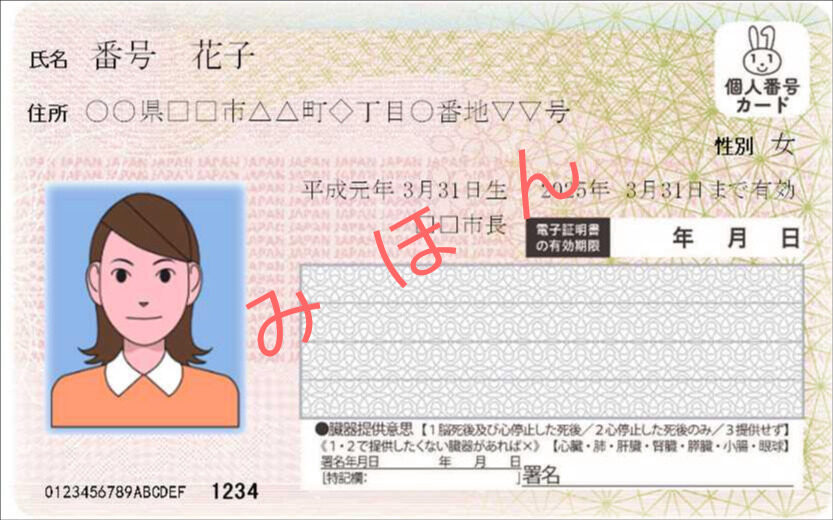
Within 14 days of finding somewhere to live, take the card to the ward or city office for your address and register as a resident. The clerk writes the address on the back of the card, and the same visit is the moment to join National Health Insurance, which every resident staying more than three months must have, and the National Pension, which has a deferral scheme for students. A notice of your twelve-digit individual number, My Number, follows by post; employers and banks will ask for it.


Permission to work, and the 28 hours
Student status allows no paid work at all on its own. What you need is “permission to engage in an activity other than that permitted by the status of residence” (資格外活動許可, shikakugai katsudo kyoka), and a new student staying more than three months can ask for it at the airport desk on arrival, free of charge. It is stamped on the back of the residence card. If you miss it at the airport, apply at the bureau for your address; that is free too.
The standard blanket permission (包括許可, hokatsu kyoka) allows up to 28 hours a week, across all your jobs added together, and up to eight hours a day during the school’s official long holidays. Work in the adult-entertainment trades is excluded whatever the hours: hostess and host bars, pachinko and mahjong parlours, and the like. Final-year university students on an internship, and work whose hours cannot be counted, such as freelance contracts, need a separate individual permission.
The limit is now checked from both sides. Since 2026 immigration has asked language schools to ask every student, every three months, where they work and for how many hours each day, to keep the record, and to report employers who push students past 28 hours. Going over is the surest way to lose an extension, and immigration warns that it can end in deportation.
Leaving and coming back
You can leave Japan and return without any extra paperwork if you come back within a year and before your period of stay runs out. On departure, show your residence card and tick the box for “special re-entry permission” on the re-entry card you fill in at the desk. Forget the tick and the status ends at the gate.

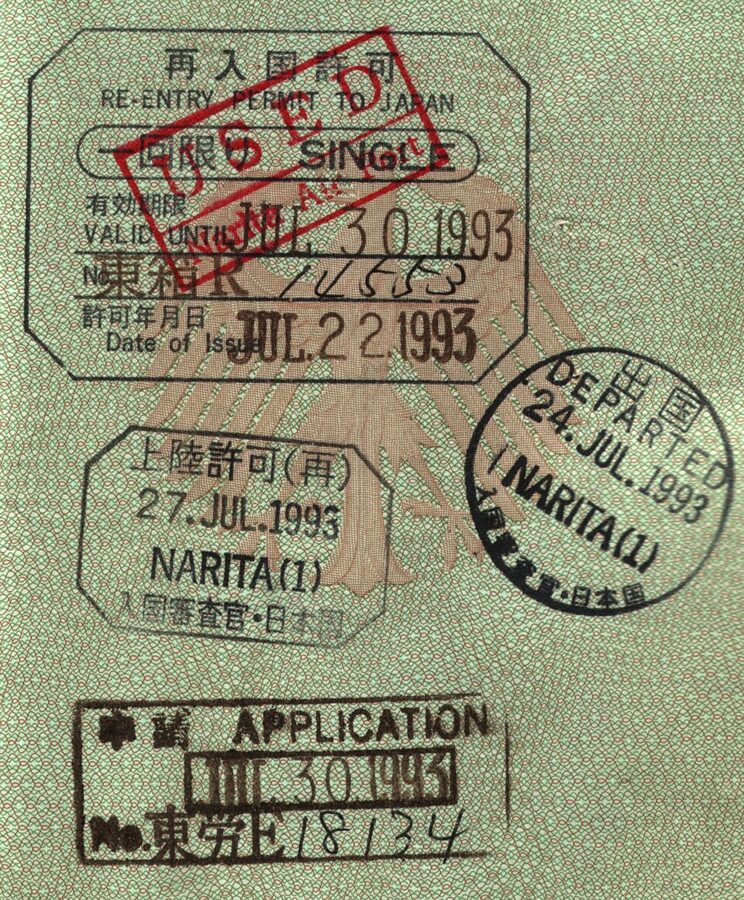
For longer absences, apply for a re-entry permit before you go: ¥4,000 for one trip or ¥7,000 for multiple trips at the counter, or ¥3,500 and ¥6,500 online, to which a payment charge of ¥220 has been added since October 2026. For a student the case is rare. Months away from class are hard to explain at the next extension.
Staying on: extensions, attendance and changing schools
An extension of the period of stay (在留期間更新, zairyu kikan koshin) can be filed from about three months before your current period ends, at the bureau for your address or online, and most schools file it for their students or walk them through it. If you apply before the expiry date and the decision is late, you may stay lawfully while you wait, for up to two months past the old date. The average wait for a Student extension in September 2026 was 59 days, because April and October bring every school’s students to the counter at once.
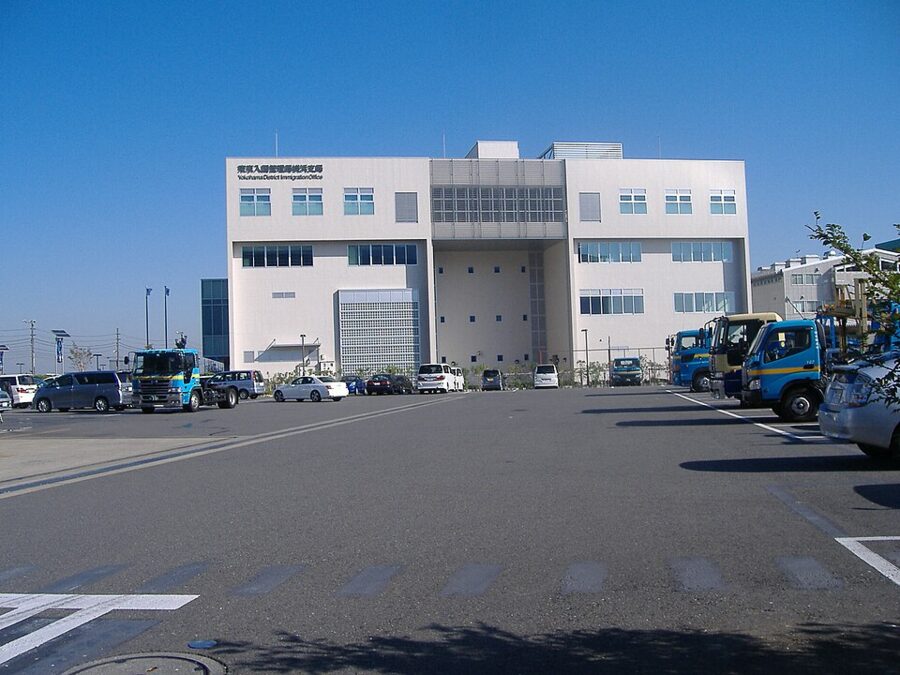
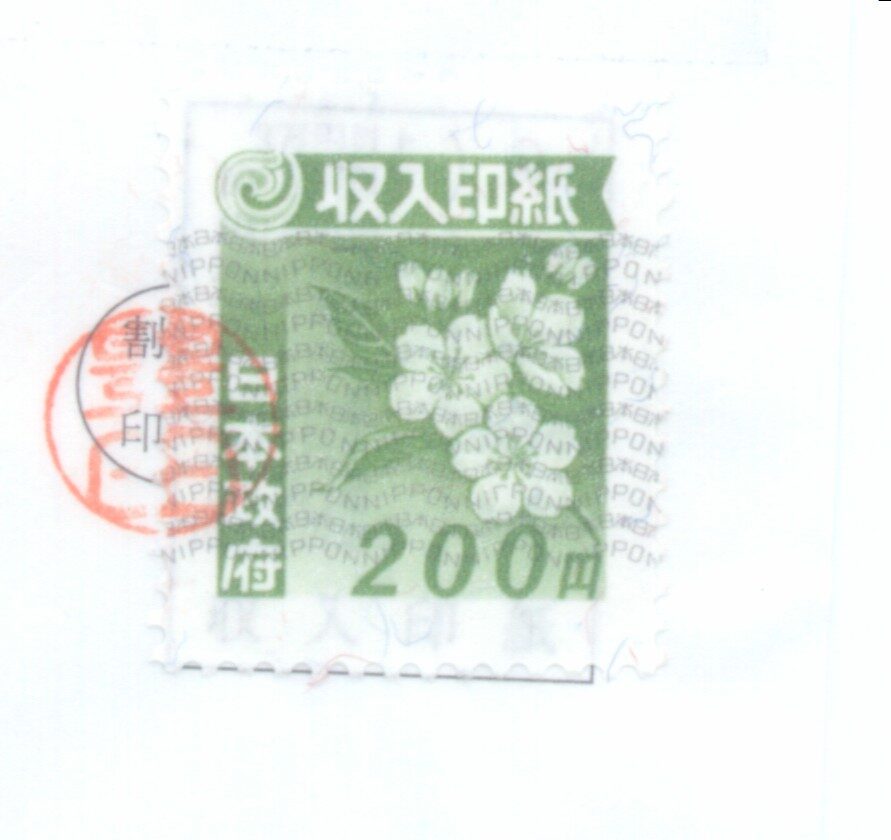
The fee is the big change of 2026. Until 30 September an extension cost ¥6,000 at the counter whatever its length; from 1 October the fee depends on the period you are granted.
| Period granted | At the counter | Online (plus payment charge) |
|---|---|---|
| 3 months or less | ¥10,000 | ¥10,000 (+¥330) |
| Over 3 months, up to 6 months | ¥18,000 | ¥15,000 (+¥330) |
| Over 6 months, under 1 year | ¥25,000 | ¥21,000 (+¥330) |
| 1 year | ¥33,000 | ¥27,000 (+¥330) |
| Over 1 year, under 3 years | ¥48,000 | ¥42,000 (+¥330) |
The same scale applies to a change of status, so a student who moves into a job pays it again. Online is ¥5,670 cheaper on a one-year extension, and I would set up the online account in the first month for that reason alone. A reduced fee of ¥10,000 exists only for people in hardship close to the level of welfare recipients, and it cannot be claimed online.
What an extension looks at
The extension form asks your school for your attendance and grades, and it asks you how you are paying. Attendance is the figure examiners read first, because it shows whether you are studying or mainly working. Immigration publishes no single cut-off, but its rules for language-school leavers who stay on to look for a job ask for “about 90 per cent or more”, which shows where it puts a good record. The official Study in Japan site warns that every year some students have to leave because work pulled their attendance down and their extensions were refused.
Changing schools
Any change of school must be reported to immigration within 14 days, whether you leave, transfer or move up: online through its electronic notification system at any hour, at a bureau counter, or by post to the Tokyo bureau’s notification office in Yotsuya. Moving up from a language school is the common case. A vocational college will only take you on Student status if you have spent at least a year at a language school, passed a test of Japanese good enough for the course, or studied for a year at a Japanese school; the language-school guide covers what that means for the JLPT levels schools ask for.
Bringing a family
A spouse and children can join you under Dependent status (家族滞在, kazoku taizai) only if you study at a university, graduate school, junior college, college of technology or the specialist course of a vocational college. Students at a language school, or at a university’s Japanese-only preparatory course, cannot sponsor dependants. A dependant may also work up to 28 hours a week with the same permission, and the official advice is to bring the family once you are settled: Dependent status is hard to get from inside Japan for someone who first came as a visitor.
After study
Graduation ends the Student status in practice, even if the card shows months left, because you are no longer doing what it was granted for. Status can be revoked after three months without studying unless there is a good reason, and leaving school, by dropping out or being expelled, must be reported within 14 days like any other change. There are three ways forward.

Staying to look for a job
A graduate of a Japanese university, or of a vocational college with the diploma title senmonshi, who has not found a job by the end of the course can switch to Designated Activities (特定活動, tokutei katsudo) for job hunting, with a recommendation from the school. It is granted for six months and can be extended once, giving a year in all, with permission to work up to 28 hours a week. A second year is possible where a local government runs an approved job-placement scheme for graduates.

Language-school leavers now have a narrower version, open only to those who already hold a degree from a university abroad. The conditions are strict: attendance of about 90 per cent, job hunting started while still enrolled, the school’s recommendation and regular meetings with it after leaving, and a school with a placement record and a clean recent history.
Changing to a work status
Most graduates who take an office job move to Engineer/Specialist in Humanities/International Services (技術・人文知識・国際業務, gijutsu jinbun chishiki kokusai gyomu). The job must use what you studied, and you need a degree, from Japan or abroad, or a Japanese vocational diploma in a related field; a language-school certificate alone does not qualify. Changes to that status granted in September 2026 had taken an average of 47 days, and longer each spring as April hiring brings every graduate to the counter.
A graduate of a Japanese university with JLPT N1, or a score of 480 on the Business Japanese Proficiency Test, has a wider option: a Designated Activities status that allows a far broader range of full-time work, provided it uses Japanese, including the shop-floor and hotel jobs the office status excludes. Specified Skilled Worker, for jobs in named fields such as care, hospitality and food service, needs its own skills and language tests.
Two or four years after that first desk at Narita, the card goes back across another one like it, or stays in your wallet, depending on whether you mean to return. If you do mean to, the safest preparation starts long before the airport: an attendance record you would be happy for an examiner to read, and an online account at immigration set up before your first extension is due.