

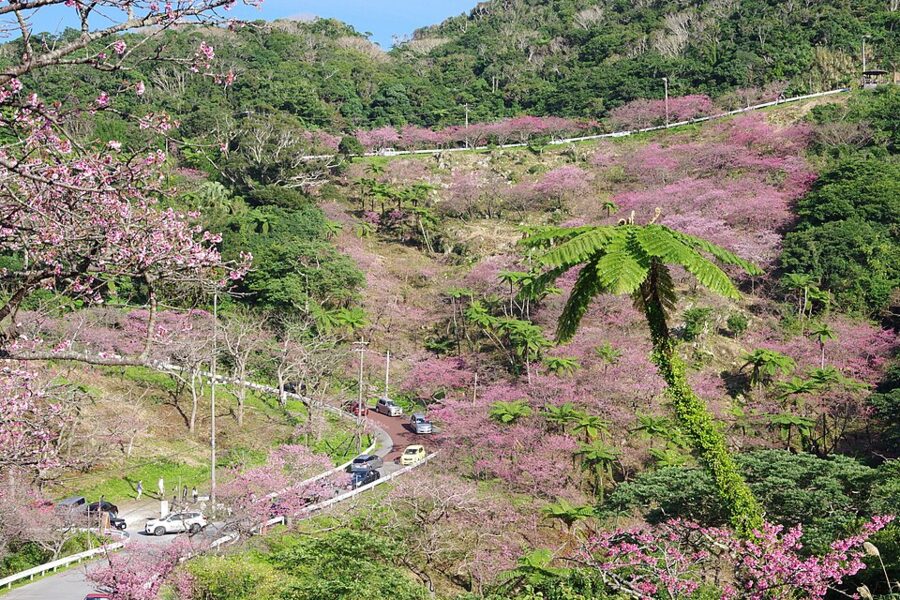

The earliest of the cherry trees watched by the weather service of Japan (日本) stands in a park in Naha, the capital of Okinawa (沖縄). By the 1991–2020 average it flowers on 16 January. The last is at Kushiro, on the Pacific coast of eastern Hokkaido (北海道), and it opens on 16 May.
Four months to cross one country. That gap is the plainest answer to when to go: there is no single best time to visit Japan, because on any given day the country holds several seasons at once. What there is, for each month, is a right place to be and a list of places and dates to avoid.

For a first trip that takes in Tokyo, Kyoto and Osaka, I’d go between the middle of October and the end of November, or in May once Golden Week is over. For almost anything else, the answer depends on where.
In this guide
The short answer, month by month
| Month | Go for | Watch out for |
|---|---|---|
| January | Clear skies and Fuji views on the Pacific side; snow in Hokkaido and Tohoku; Okinawa’s cherry blossom | New Year travel, 1–3 January |
| February | Sapporo Snow Festival, drift ice off Abashiri, plum blossom | Bitter cold and short days in the north |
| March | Plum blossom, then cherry blossom in Tokyo and the west in the last ten days | School holidays in the second half |
| April | Cherry blossom through Honshu and Tohoku; Takayama’s spring festival | The busiest month; Golden Week from the 29th |
| May | Fresh green and mild weather once Golden Week is over; Hokkaido’s cherries | Golden Week to the 5th; Okinawa’s rains from about 10 May |
| June | Hokkaido at its best; hydrangeas and moss gardens | The rainy season everywhere south of Hokkaido |
| July | Kyoto’s Gion Matsuri, the Fuji climbing season, Furano lavender | Heat after mid-month; typhoons around Okinawa |
| August | Tohoku’s great festivals, the Alps, Hokkaido | Heat, Obon travel (13–16 August), typhoons |
| September | The first autumn colour in the Daisetsuzan; clear days in the Alps | The peak typhoon month on the main islands |
| October | Good walking weather; Nagasaki Kunchi and Takayama’s autumn festival; colour in Tohoku and Nikko | Tokyo’s wettest month on average |
| November | Autumn colour in Tokyo, Kyoto and Nara | Kyoto at the weekends around 23 November |
| December | The last colour in the west early in the month; bright Pacific-side winter; skiing begins | Closures and crowded trains from 28 December to 3 January |

Why there is no single best time
Nearly 3,000 kilometres of latitude
From Cape Soya at the northern tip of Hokkaido to Yonaguni, the last island before Taiwan, is about 2,900 kilometres in a straight line. Cape Soya sits at about 45.5 degrees north, level with Milan; Hateruma, the southernmost inhabited island, at about 24 degrees, just north of the Tropic of Cancer. One country, more than 21 degrees of latitude.
The temperature figures show what that means. On the 1991–2020 averages, January in Asahikawa, in central Hokkaido, has a mean of minus 7.0°C, while January in Naha has a mean of 17.3°C. Asahikawa also holds the national low, minus 41.0°C, recorded on 25 January 1902.
Summer runs the other way round, and less dramatically. Sapporo’s August averages a daily high of 26.4°C. Kyoto’s averages 33.7°C, hotter than Naha’s 31.8°C: Kyoto sits in a basin closed by hills on three sides, while Naha is on the open sea.

Two coasts with opposite winters
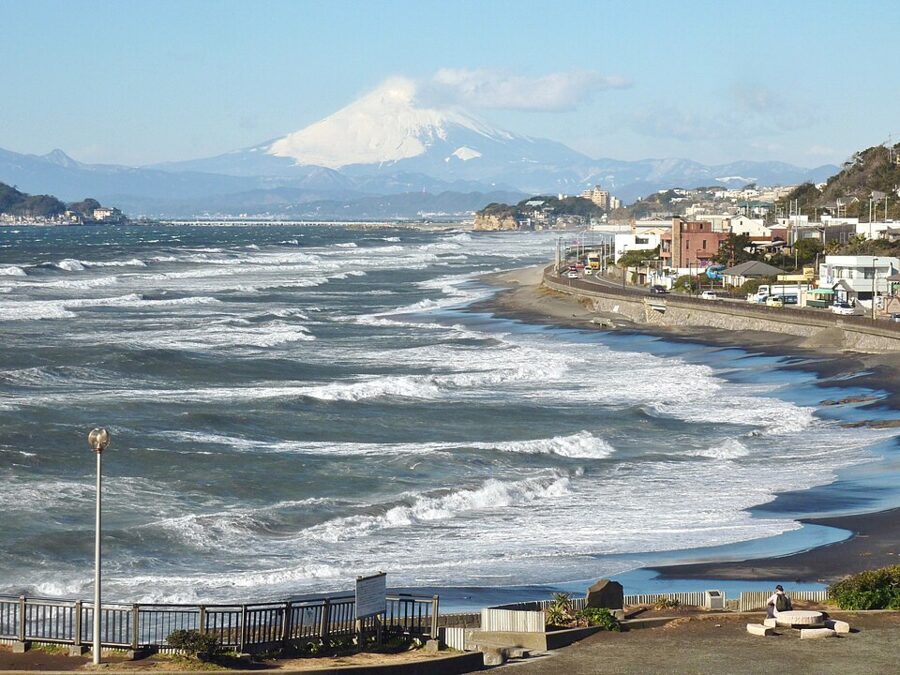
The second split runs down the middle of Honshu. In winter a cold high-pressure system over Siberia pushes dry air south-east across the Sea of Japan, and the warm Tsushima Current underneath loads it with moisture. When that air hits the mountain spine of the main island it drops the water as snow on the Sea of Japan side, then comes down the Pacific side dry and clear.
The averages for January make the point. Kanazawa (金沢), on the Sea of Japan coast, gets 256 millimetres of precipitation and 62 hours of sunshine. Tokyo, on the Pacific side and about 300 kilometres away, gets 60 millimetres and 193 hours. Aomori, the prefectural capital at the northern end of Honshu, averages 567 centimetres of snowfall a year.
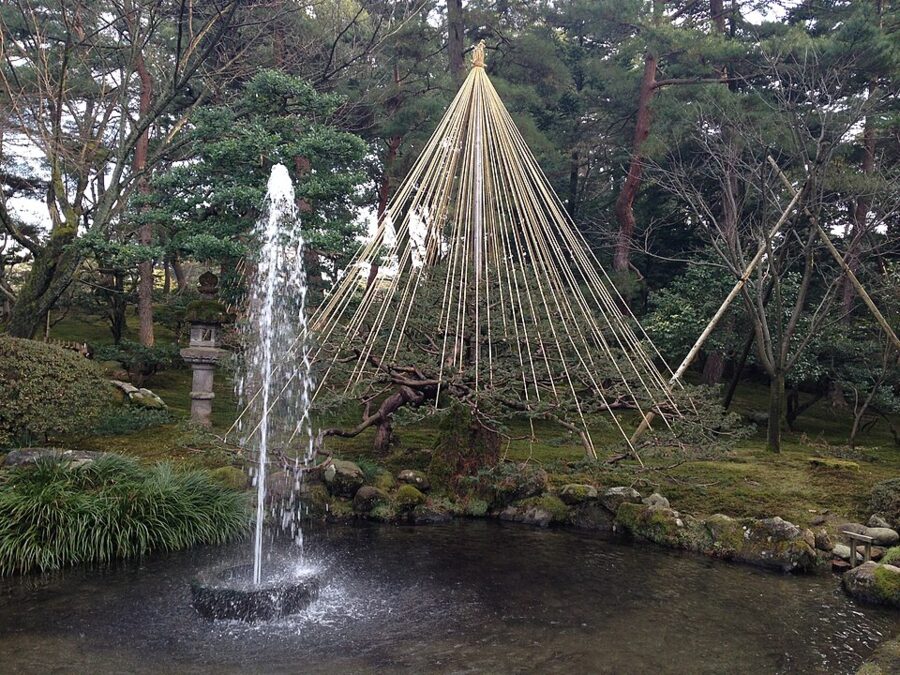

For a winter trip this decides almost everything. If you want blue skies and Fuji on the horizon, base yourself on the Pacific side; if you want snow on temple roofs, cross the mountains to Kanazawa, Shirakawa-go or the hot-spring towns of Niigata and Yamagata.
Altitude, and the mountain spine
About 61 per cent of the country is mountain and another 12 per cent hill country, by the national land survey. Height changes the season as much as latitude does. Takayama, in a basin in the Hida mountains, has a January mean of minus 1.2°C, only two degrees warmer than Sapporo’s minus 3.2°C, although it lies about 850 kilometres further south.
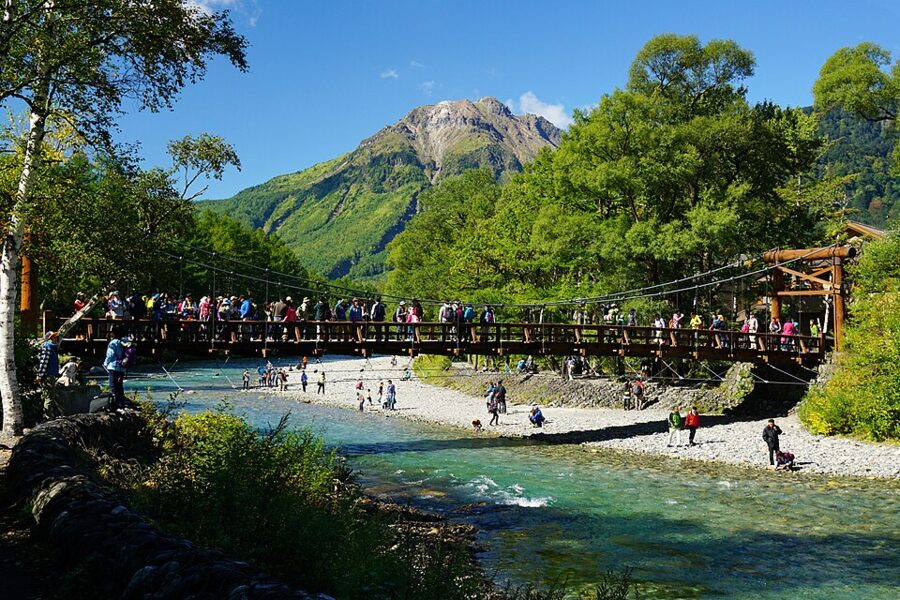

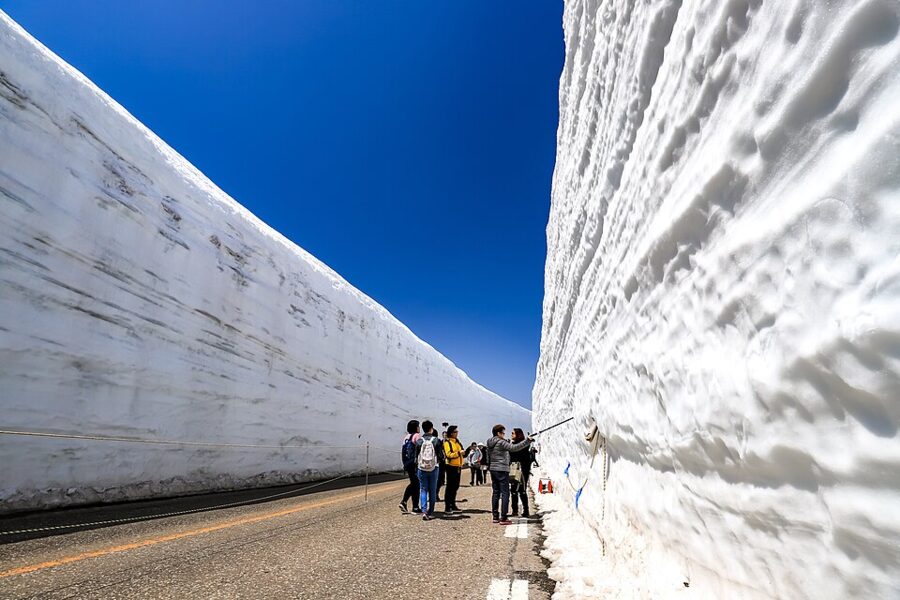
The high country also runs on its own calendar. The Tateyama Kurobe Alpine Route (立山黒部アルペンルート), which crosses the Northern Alps from Toyama to Nagano and tops out at 2,450 metres at Murodo, opens each spring through walls of cleared snow; in 2026 it ran from 15 April to 30 November. Mount Fuji has an official climbing season of about ten weeks, and the rest of the year the trails to the summit are closed.

The seasons, and the fronts that carry them
The cherry front
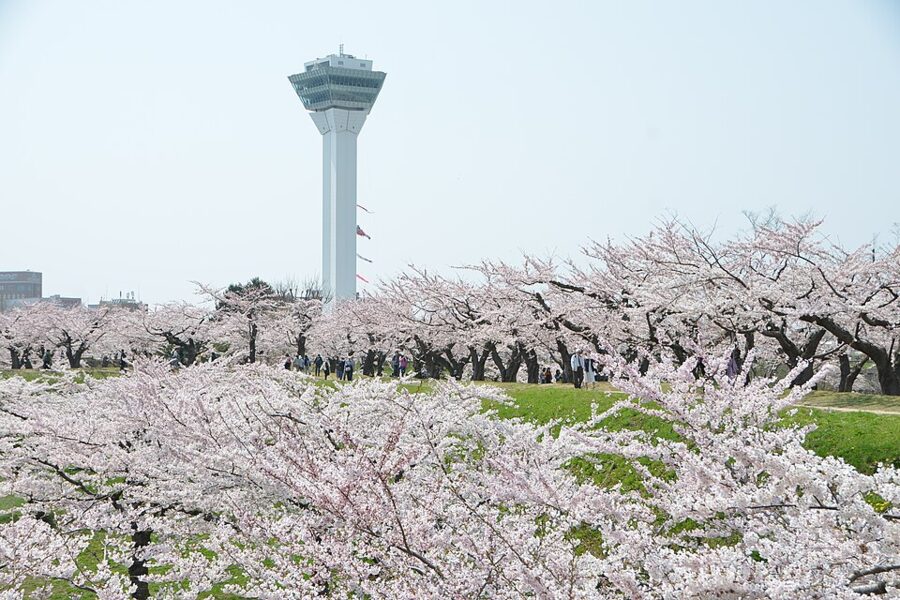
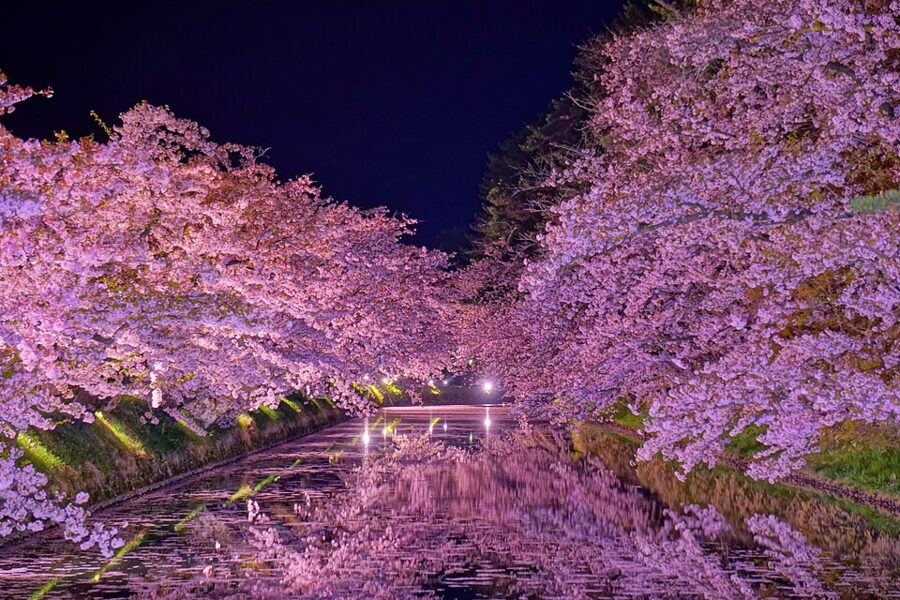
Newspapers and television have a word for the line of opening cherry trees as it moves north: sakura zensen, the cherry front, a press coinage rather than an official term. The Japan Meteorological Agency watches named specimen trees at its observatories, mostly Somei-yoshino, the grafted variety that fills almost every park on Honshu. By its rules a tree is flowering when five or six blossoms are open, and in full bloom when about eight in ten buds are.
On the 1991–2020 averages the Somei-yoshino flower in Tokyo on 24 March and reach full bloom on 31 March. Kyoto follows at 26 March and 4 April, Sendai at 8 and 13 April, Aomori at 22 and 26 April, and Sapporo at 1 and 6 May. In the far north and east the agency watches the hardier ezo-yamazakura instead.
The front does not simply start in the south. Somei-yoshino need a cold winter to break their dormancy, and in mild Kyushu they get less of it, so Kagoshima‘s average full-bloom date, 5 April, is later than Tokyo’s. That is also why Okinawa grows a different tree altogether.
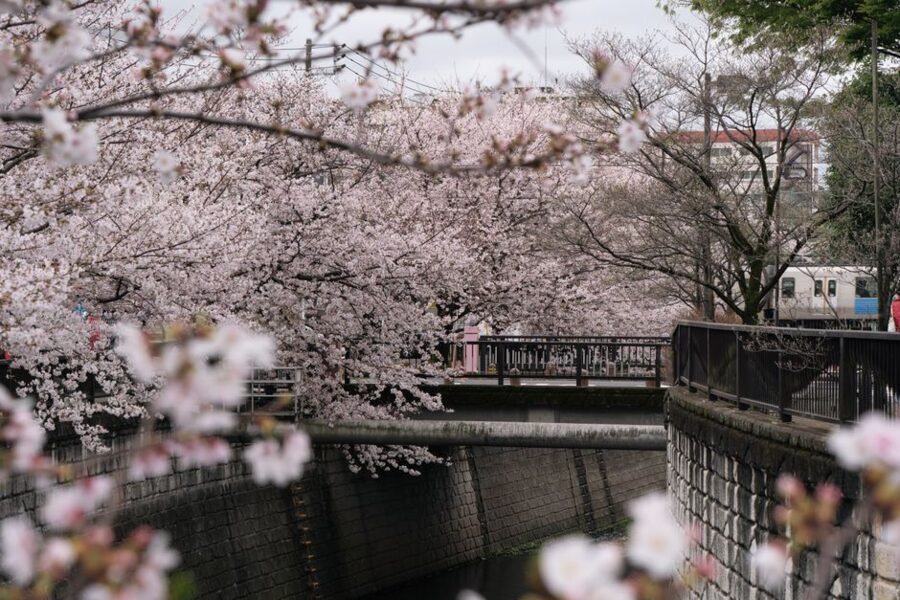
The averages are also out of date in a useful way. In every year from 2021 to 2026 the Aomori observatory tree reached full bloom between 11 and 22 April, against an average of 26 April, and Sapporo’s flowered on 18 April in 2026, thirteen days early. If you are aiming at the north, plan for a week or more ahead of the old averages, and follow the forecasts that private weather companies publish each spring; the agency stopped issuing its own in 2010.

Tsuyu, the rainy season
Between spring and summer a stationary front settles over the islands and brings weeks of cloud and rain: tsuyu, written with the characters for plum and rain (梅雨). One explanation is that it comes as the plums ripen; another is that the word began as 黴雨, “mould rain”, and took the prettier character of the same sound. It is not a monsoon: most days are grey and damp, with some heavy rain and dry spells between.
It moves north like the cherry front, and the agency publishes average start and end dates for each region. Okinawa runs from about 10 May to 21 June; northern Kyushu from 4 June to 19 July; Kinki, which includes Kyoto and Osaka, from 6 June to 19 July; Kanto-Koshin, around Tokyo, from 7 June to 19 July; northern Tohoku from 15 June to 28 July. Hokkaido and the Ogasawara Islands have no rainy season in the official sense.
The dates move about a great deal. In 2025 the agency’s final figures put the start of the season in Kinki on 17 May and the end on 27 June, both far earlier than usual; in 2026 northern Tohoku stayed in the rainy season until 3 August. The south-west gets the most water from it: Kagoshima’s June averages 570 millimetres and Yakushima’s 860.
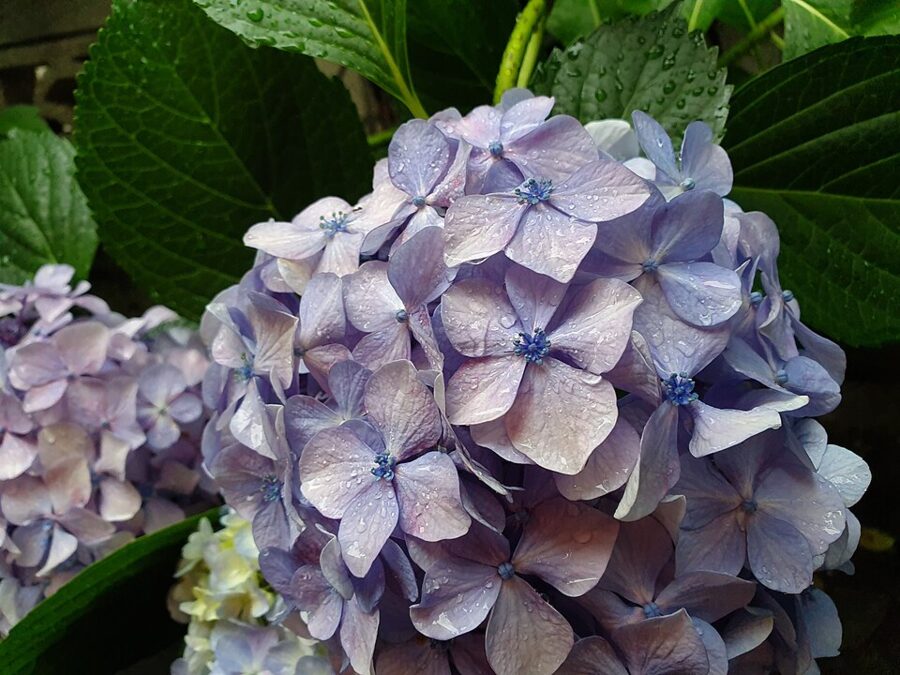
I would not rule June out. Temples look better wet than dusty, the moss gardens are at their greenest, hotels are easier to find, and Hokkaido is having its best weeks. What I would not do is plan a mountain hike or a boat trip on a fixed date in the second half of June anywhere south of Tohoku.
The summer heat
When the rainy season ends, the Pacific high-pressure system takes over and the main islands turn hot and humid. Kyoto’s averages for August are a daily high of 33.7°C and a nightly low of 24.7°C; Osaka’s are 33.7°C and 25.8°C. Those are thirty-year averages, and recent summers have run well above them.
The national record is now 41.8°C, set at Isesaki in Gunma Prefecture on 5 August 2025. At least six weather stations reached 41°C or more in the summer of 2025, and Sakuma, in Shizuoka, reached 41.1°C on 23 July 2026. In practice that means sightseeing early in the morning and in the evening, and a long lunch somewhere air-conditioned.
The heat is also why the north and the mountains fill up in summer. If a summer trip is the only option, I would put most of it north of Sendai or above 1,000 metres.
Typhoons
Typhoons form over the western Pacific all year, but they reach Japan in summer and early autumn. On the 1991–2020 averages about 25 typhoons form each year, about 12 pass within 300 kilometres of a Japanese weather station, and three make landfall on one of the four main islands. August and September are the peak months, with about 3.3 approaches each.
Okinawa sees the most: about 7.7 typhoons a year come within range of it, with August the worst month. On the main islands the peak shifts to September. A typhoon rarely stops a trip for more than a day or two, but while one passes, flights, ferries and even the Shinkansen are often suspended.
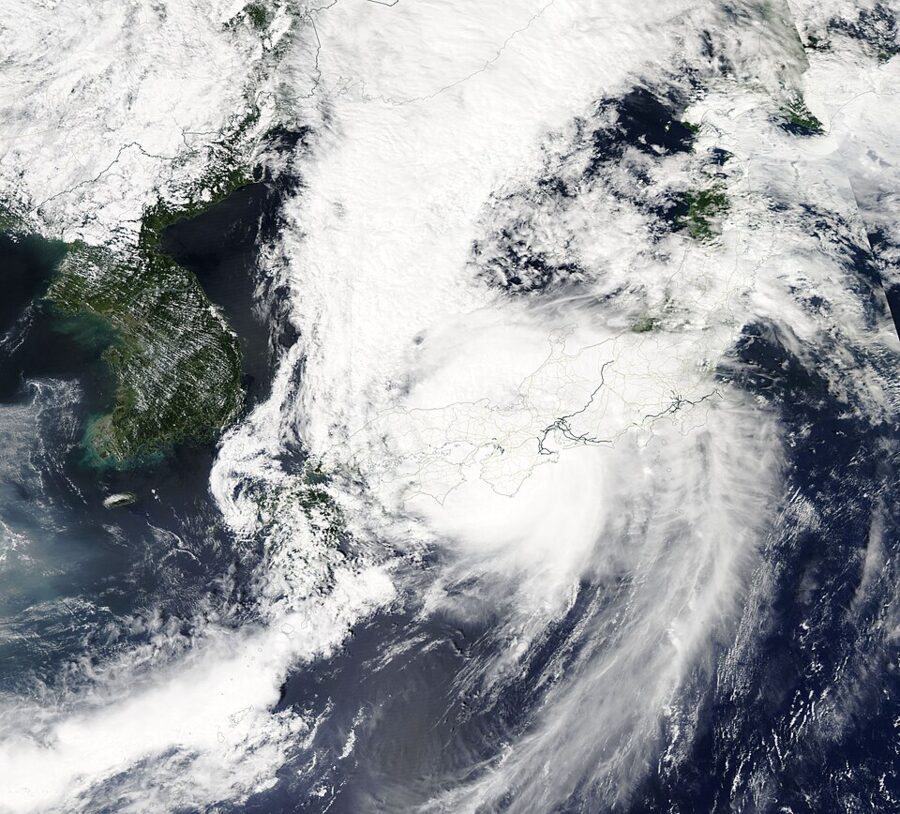
The practical rule: between July and October, keep a spare day before any flight home, ferry or island hop, and watch the agency’s forecast track, published several days ahead.
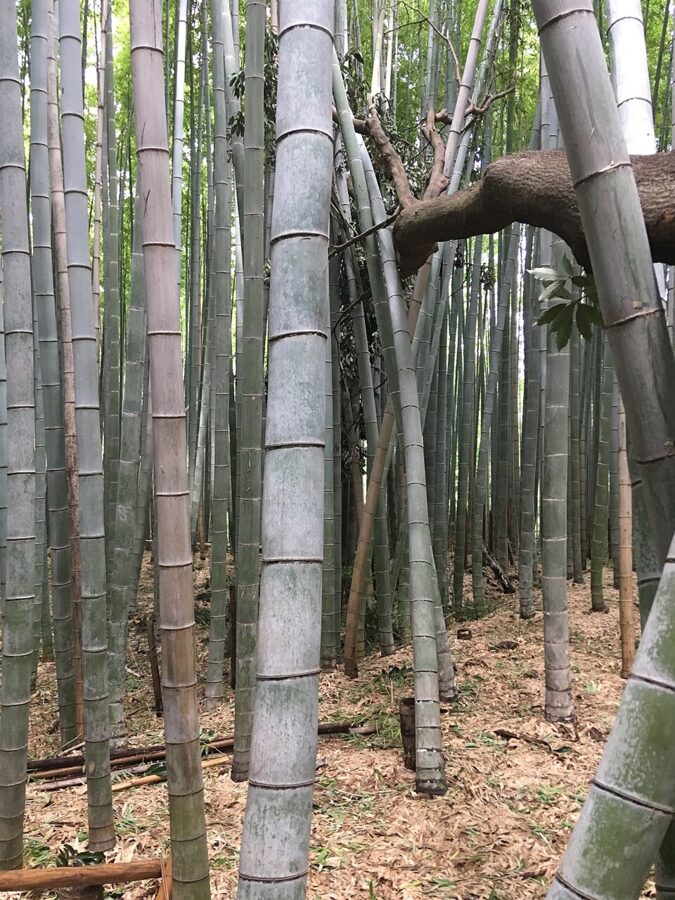

The autumn colour front
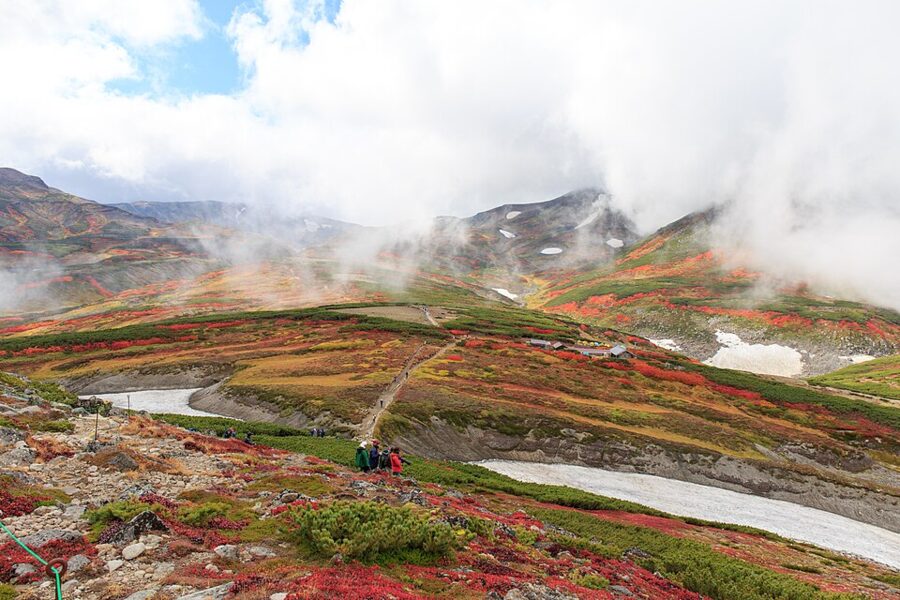
Autumn has its own front, koyo zensen, and it runs the opposite way: from the north and from the mountains down. The alpine shrubs of the Daisetsuzan range in central Hokkaido turn from September. At the city observatories, where the agency watches a maple tree, the averages for leaves turning red are about 23 October in Asahikawa, 28 October in Sapporo, 21 November in Sendai, 28 November in Tokyo and 5 December in Kyoto.
Those dates surprise people who have planned around a “November in Kyoto” photograph. In 2025 the Kyoto observatory maple turned on 10 December, and the temple gardens in the hills around the city are usually at their best from the middle of November into the first week of December. The colour in lowland Kyushu comes about the same time.
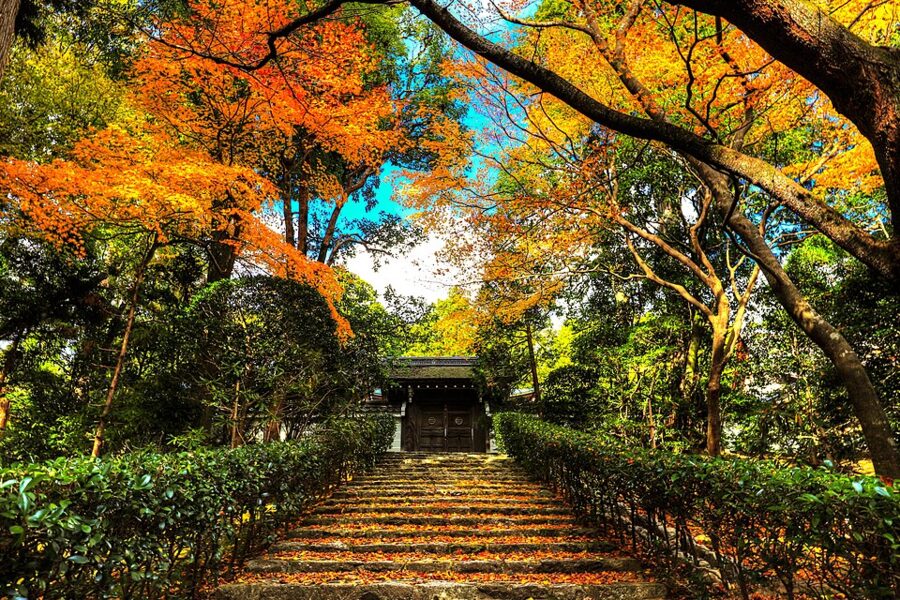

That length is autumn’s great advantage over the cherry: from the Hokkaido mountains in September to Kyoto in December, somewhere is at its peak for about three months.
Snow
Snow is the season most visitors underrate. Hokkaido and the Sea of Japan side of Honshu are among the snowiest inhabited places on earth: Sapporo, the largest city in Japan outside the three great metropolitan areas, averages 479 centimetres of snowfall a year. The deepest snow cover ever measured in Japan was 1,182 centimetres on Mount Ibuki in Shiga, on 14 February 1927; among stations still recording, the record is 566 centimetres at Sukayu Onsen in the Hakkoda mountains of Aomori, on 26 February 2013.
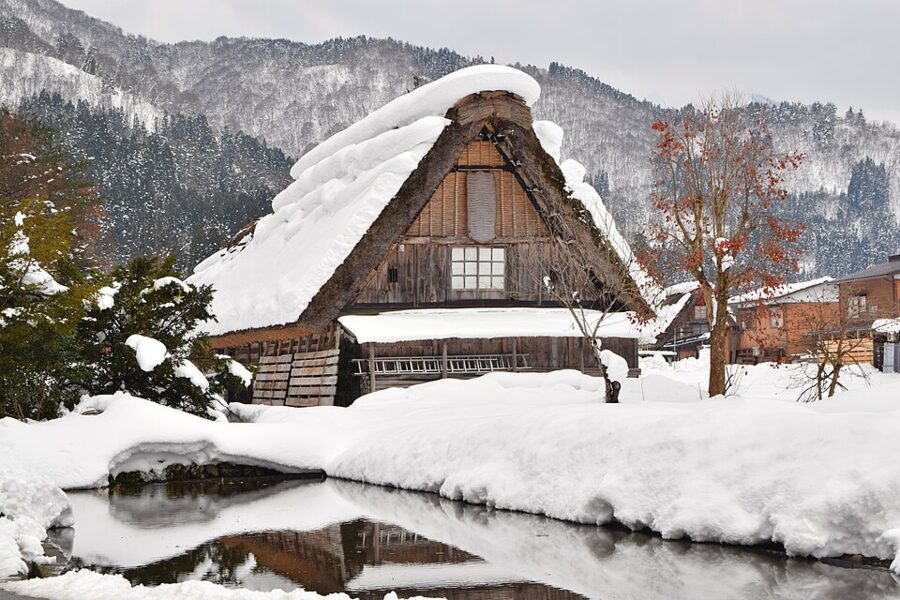

For a city trip, winter on the Pacific side is the clearest time of year. Tokyo, Kyoto, Osaka, Hiroshima and Fukuoka rarely see lying snow, and the days are short but bright. Pack a proper coat: Kyoto’s January averages a high of 9.1°C and a low of 1.5°C, and unheated temple halls are colder than the street.
Crowds, holidays and prices
Japan’s weather explains the scenery; its holidays explain the queues. Three holiday periods send most of the country on the move together, and trains, flights and hotels fill. Overseas visitors spread more evenly: in a record 2025 of 42.7 million arrivals, the busiest months, April and October, had about 3.9 million each and the quietest, February and September, about 3.26 million.
Golden Week
Golden Week is the cluster of national holidays at the turn of April and May: Showa Day on 29 April, then Constitution Memorial Day, Greenery Day and Children’s Day on 3, 4 and 5 May. In 2027, 29 April falls on a Thursday and the three May holidays on Monday to Wednesday, so the main block runs from Saturday 1 May to Wednesday 5 May, and many people will take 30 April off to join it to the Thursday.
For those days, book early or avoid the famous places. The good news is the week after: from about 6 May until the rains, Honshu is mild and settled, the fresh green is out in the hills, and the crowds have gone back to work.
Obon
Obon, the Buddhist festival when the spirits of the dead are believed to return home, is kept by most of Japan from 13 to 16 August. Families travel back to their home towns, so the Shinkansen and the expressways jam in both directions at the start and end of the week. In 2027 Obon falls from Friday 13 to Monday 16 August, with Mountain Day, a national holiday, on Wednesday 11 August just before it.
New Year
New Year is a family holiday, closer to Christmas in Britain than to New Year’s Eve. Government offices close from 29 December to 3 January, as do many museums and small restaurants, and the trains run holiday timetables from 30 December. The roads and trains are busiest in the days before the 31st and again on 2 and 3 January.
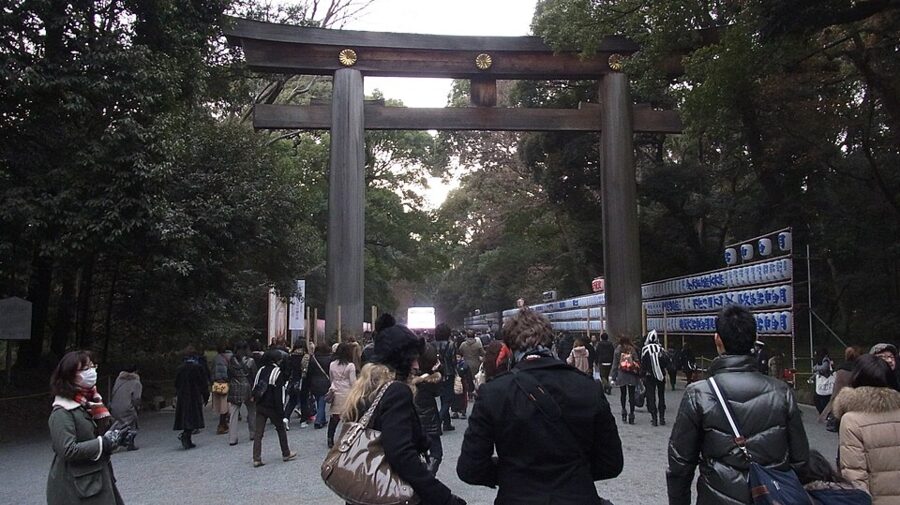
The first days of January are also when shrines and temples are at their most crowded, for hatsumode, the first shrine visit of the year. Meiji Jingu (明治神宮) in Tokyo draws more New Year worshippers than any other shrine in the country, year after year. If you want to see it, go on 1 or 2 January and accept the queue; if you want to see Tokyo, go in the second week of January.

Long weekends, school trips and the famous fortnights
Outside the big three, Japan has sixteen national holidays, several of them moved to Mondays to make three-day weekends. When Respect for the Aged Day and the autumn equinox fall close together, the result is a five-day “Silver Week”, as in September 2026; in 2027 they do not line up. Check the Cabinet Office’s holiday list before fixing dates; long weekends fill the hot-spring towns near the big cities.
Kyoto and Nara have a second crowd of their own: the shugaku ryoko, the school trip, which since the 1950s has taken generations of Japanese schoolchildren to the old capitals. And everywhere, the weekends of peak cherry blossom and peak autumn colour are the most crowded days of the year at the famous spots. If you can only manage one change to a plan, move the big sights to weekdays and do them before 09:00.
Month by month
January
The first week belongs to New Year, and after that January is one of the quietest and clearest months on the Pacific side. Tokyo averages a high of 9.8°C, little rain and the most sunshine of its year, and the views of Fuji from the city and the coast are at their most reliable. Okinawa’s cherry season starts in the middle of the month, with Naha at 17°C or so and the hills of Motobu turning pink.
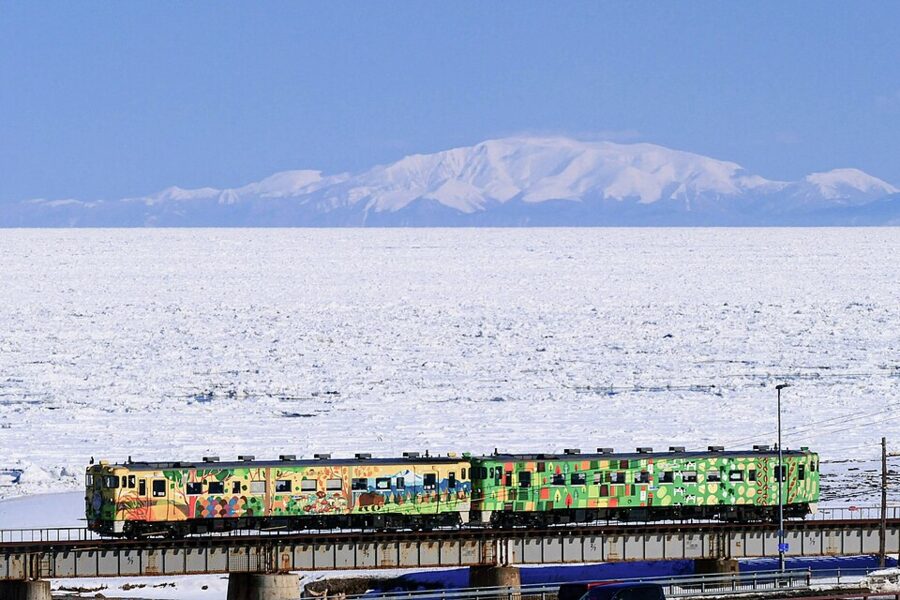
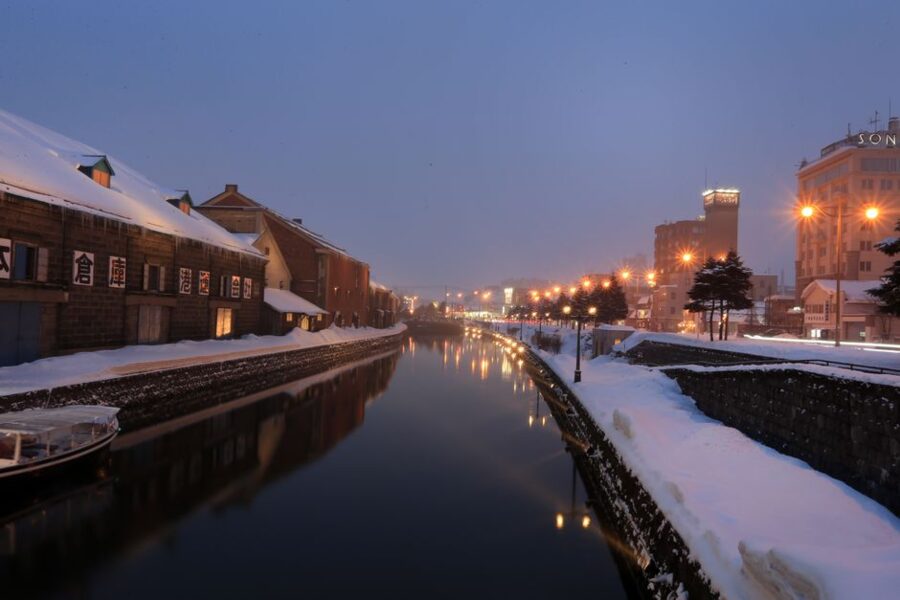
Go north for snow: the Hokkaido ski fields, the hot-spring towns of Tohoku, and the Sea of Japan coast are all deep in it. From the middle of the month to late January, drift ice from the Sea of Okhotsk first appears off the Hokkaido coast around Abashiri (網走), and it usually reaches the shore between late January and early February. Avoid: the first three days of the year if you want to travel anywhere by train.
February
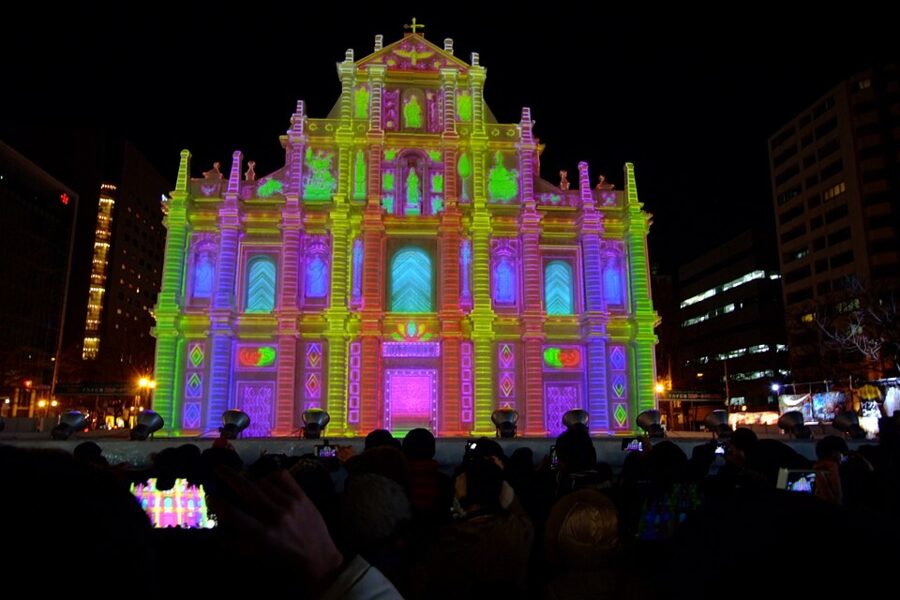
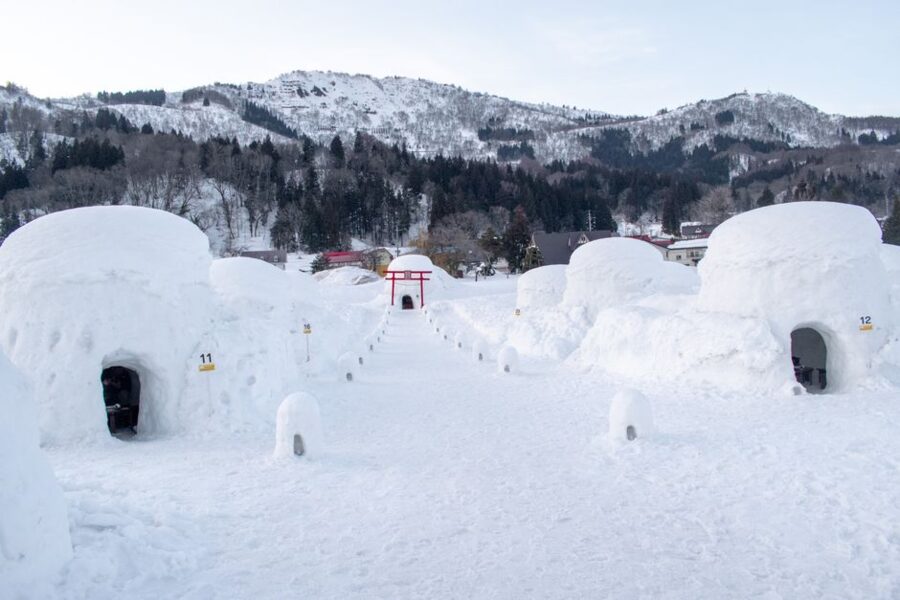
February is still winter almost everywhere except Okinawa, and the festivals follow the snow. The Sapporo Snow Festival fills Odori Park with snow sculptures and the Susukino entertainment district with ice ones; the 2027 festival runs from 4 to 11 February. In Akita Prefecture, Yokote builds its kamakura snow huts; from 2026 to 2029 the town is trying them on the second Friday and Saturday of February, which in 2027 means 12 and 13 February, instead of their traditional mid-February dates.

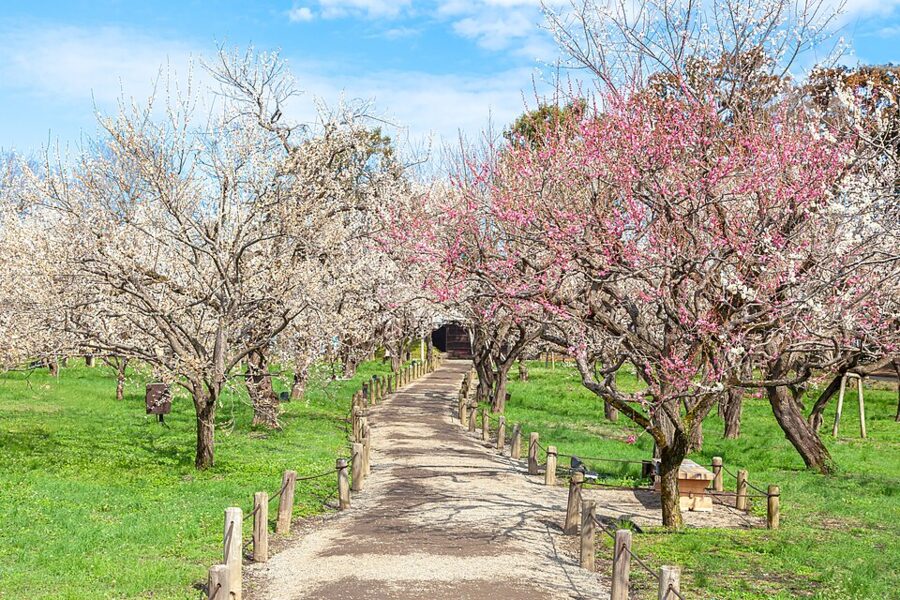
The plum trees flower before the cherries, and Mito’s plum festival opens in the middle of the month. February was also, with September, the quietest month for overseas arrivals in 2025, and the big cities are easier to book. Avoid: the Sapporo festival week if you want a cheap room in Sapporo.
March
March is the turning month. The plum groves are at their best in the first half, and the cherry front reaches Tokyo, Nagoya and western Japan in the last ten days. Japanese schools break up for spring in the second half of the month, so that half is busier than the first.

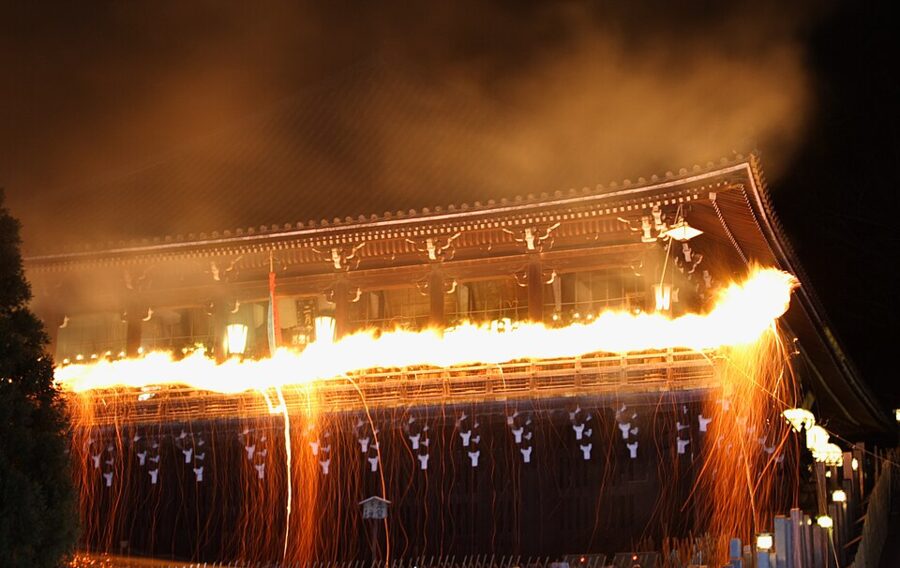
In Nara, the Shuni-e at Todai-ji (東大寺), known as Omizutori, runs every night from 1 to 14 March, with burning torches carried along the balcony of the Nigatsu-do hall. By the temple’s account it has been held every year without a break since 752, the year the Great Buddha was dedicated. Avoid: assuming late March means full bloom; in a cold year Tokyo’s trees can still be bare on the 25th.

April
April is the famous month and the crowded one. The first week usually catches full bloom in Tokyo, Kyoto and Osaka, and the front then moves through central Honshu and Tohoku for the rest of the month. In 2025 it was the busiest month of the year for overseas arrivals, and Kyoto’s hotels fill early.
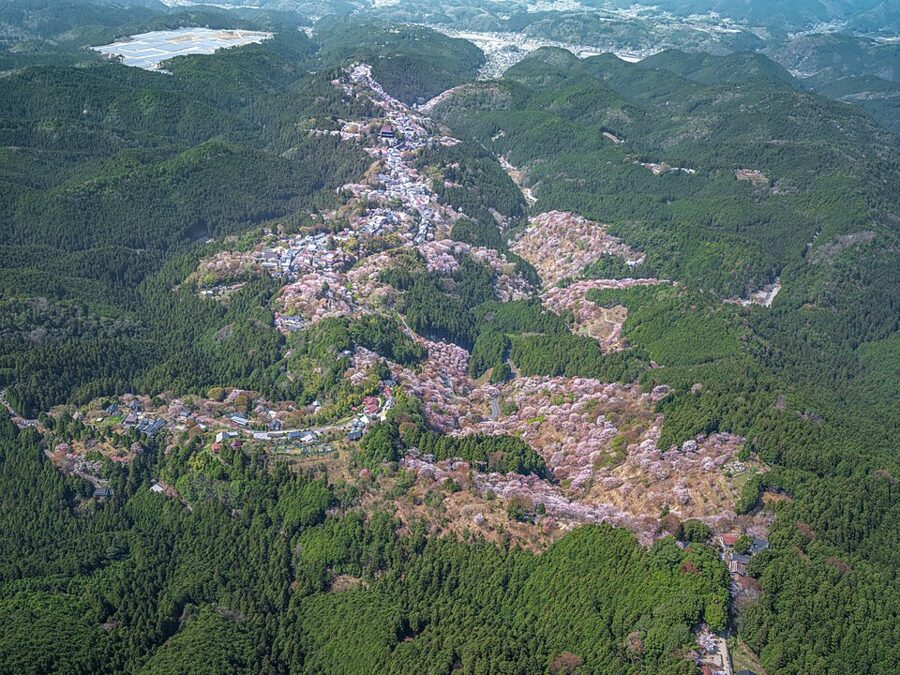

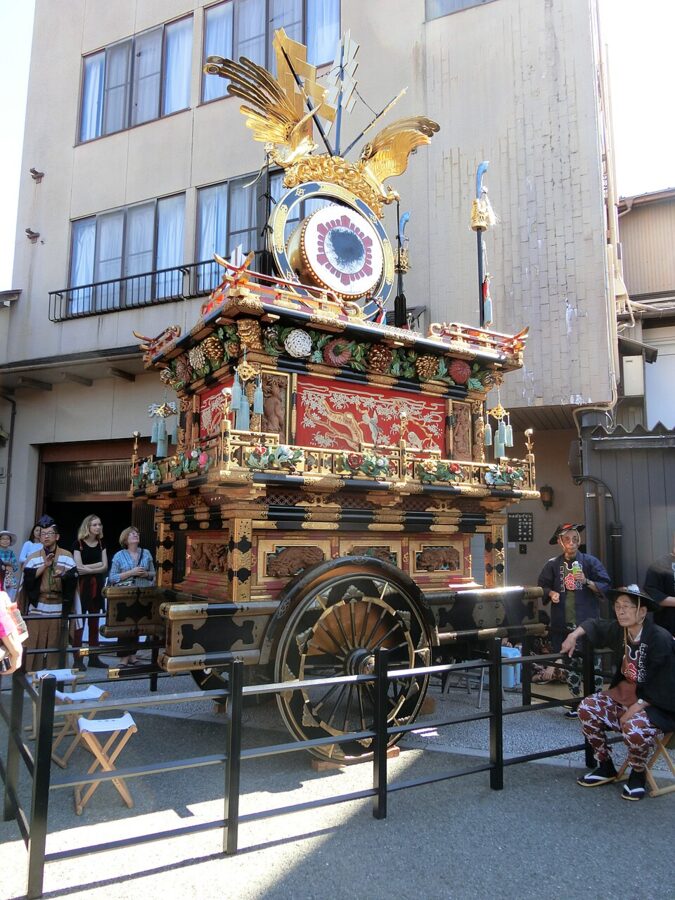
The month has two good festivals outside the cherry. Takayama holds its spring festival on 14 and 15 April, when the decorated festival floats of the old town are brought out, and the Tateyama Kurobe Alpine Route opens on 15 April with its corridor of snow. Avoid: the last days of the month, when Golden Week begins.
May
Once Golden Week is over, May is my favourite month on the main islands. Tokyo averages a high of 23.6°C, the evenings are long, and the green in the hills is new. In Kyoto, the Aoi Matsuri procession on 15 May is one of the city’s three great festivals; in Tokyo, the Kanda Matsuri holds its full festival in odd-numbered years, so 2027 is a main year, in the middle of the month.
Hokkaido has its cherry blossom in late April and early May, and the far east of the island follows in mid-May. Okinawa’s rainy season starts around 10 May. Avoid: the first five days of the month, and island trips in Okinawa in the second half.
June
June is the rainy month for most of the country, and one of the quieter ones. The upside is hydrangeas, moss gardens, and fewer overseas groups; in 2026 June had one of the lowest monthly totals of overseas visitors of the year.
Hokkaido is the exception and the obvious choice. With no rainy season and an average June high of 21.8°C in Sapporo, it is at its freshest, and the early flowers are out in the farms around Furano. Avoid: mountain walks on fixed dates in Kyushu and western Honshu.
July
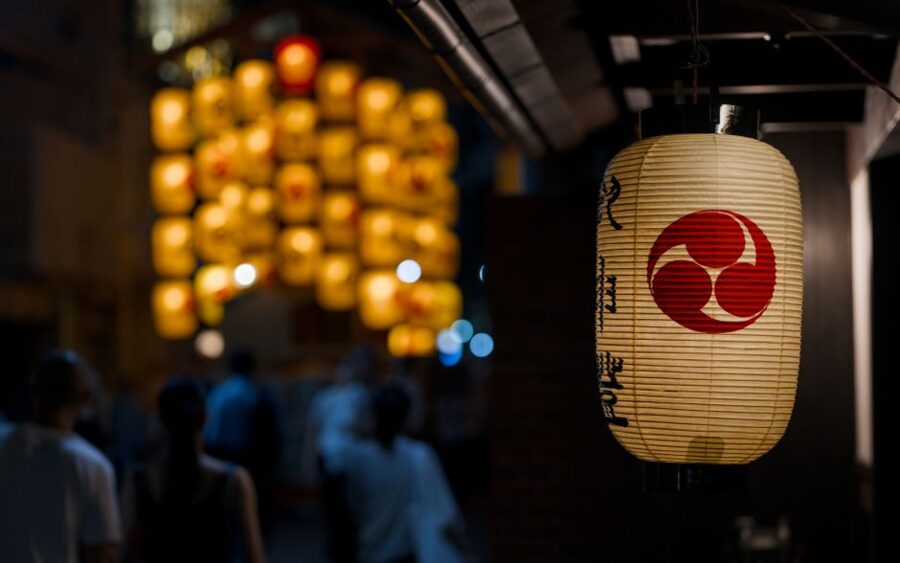
The rainy season ends in the middle of the month on Honshu, and the heat arrives with it. The festivals are among the best of the year. Kyoto’s Gion Matsuri runs through the whole month, with its float processions on 17 and 24 July; in 2027 both fall on Saturdays, so expect the crowds to be heavier than usual. In Fukuoka, the Hakata Gion Yamakasa runs from 1 to 15 July and ends with the oiyama, a timed race of the floats through the streets that starts at 04:59 on the 15th.
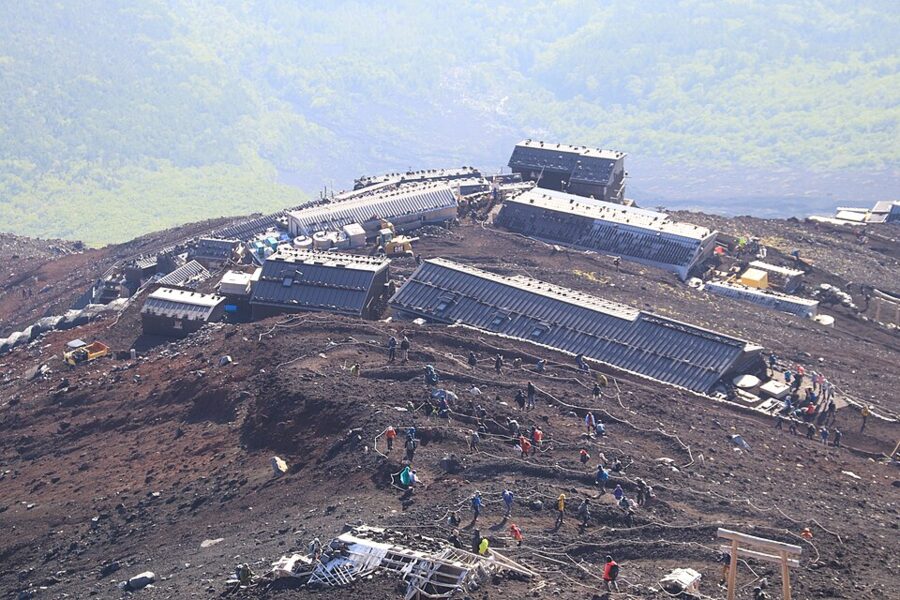
Mount Fuji opens to climbers. In 2026 the Yoshida and Subashiri trails opened on 1 July and the Fujinomiya and Gotemba trails on 10 July, and all four closed on 10 September. Every climber now pays a fee of ¥4,000, on either side of the mountain.

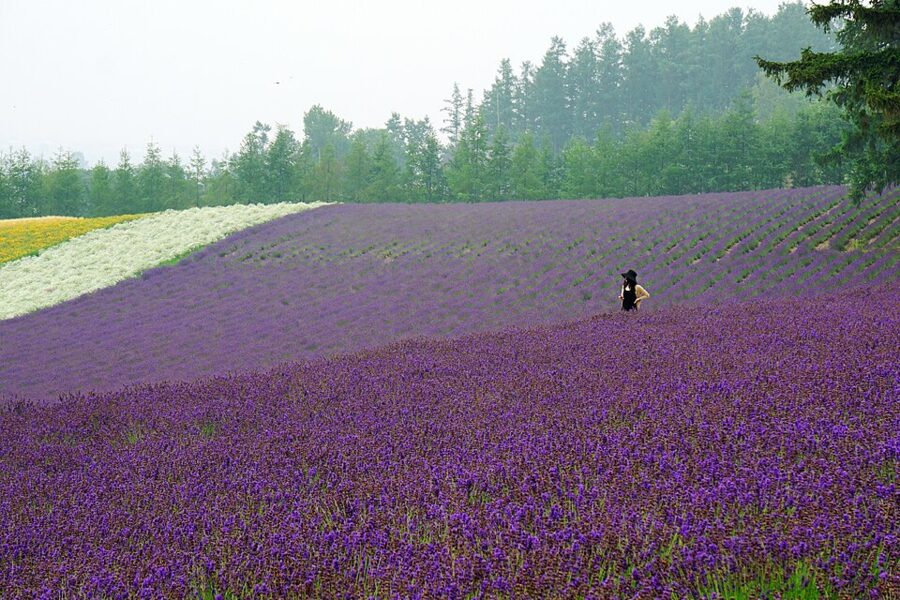
July is lavender month in the Furano valley, and Okinawa, out of its rainy season, has its sunniest month: Naha averages 227 hours of sunshine in July. Avoid: Kyoto at midday, and the beaches after about 20 July, when the school summer holidays begin.

August
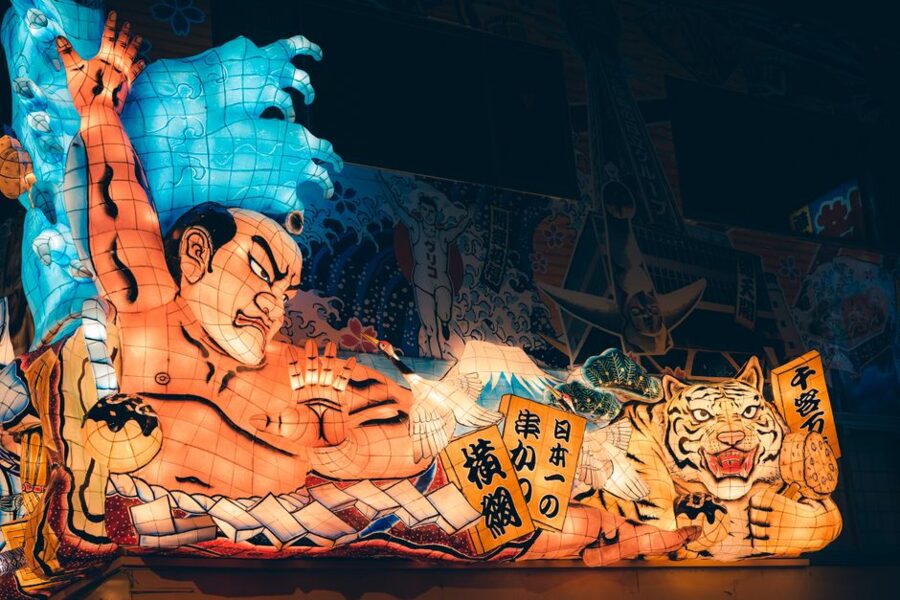
August is the hottest month and the month of the great northern festivals, all in its first week. Aomori’s Nebuta festival runs from 2 to 7 August, with huge lit paper figures pulled through the streets at night.
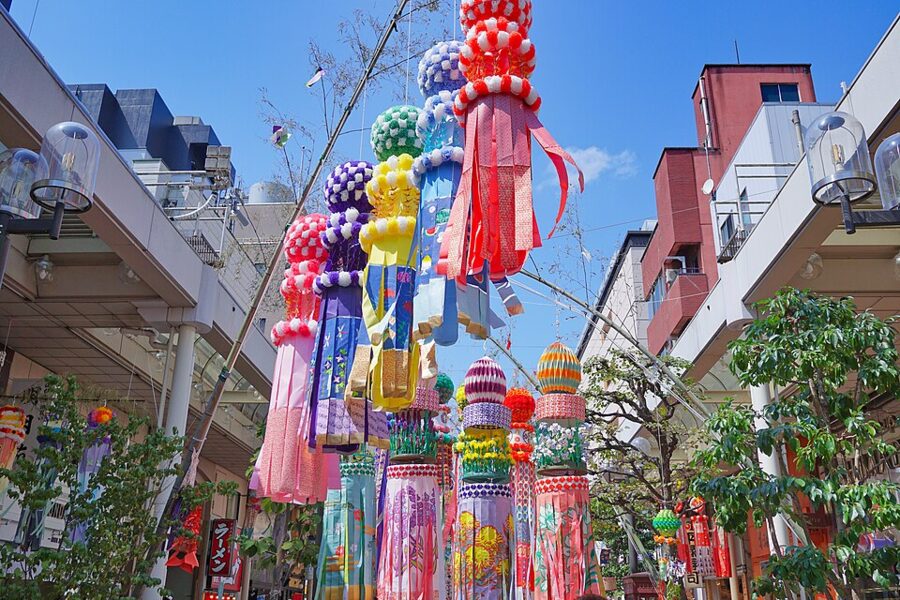
Akita’s Kanto festival, with its poles of lanterns balanced on the performers’ palms and foreheads, follows from 3 to 6 August, and Sendai’s Tanabata from 6 to 8 August.

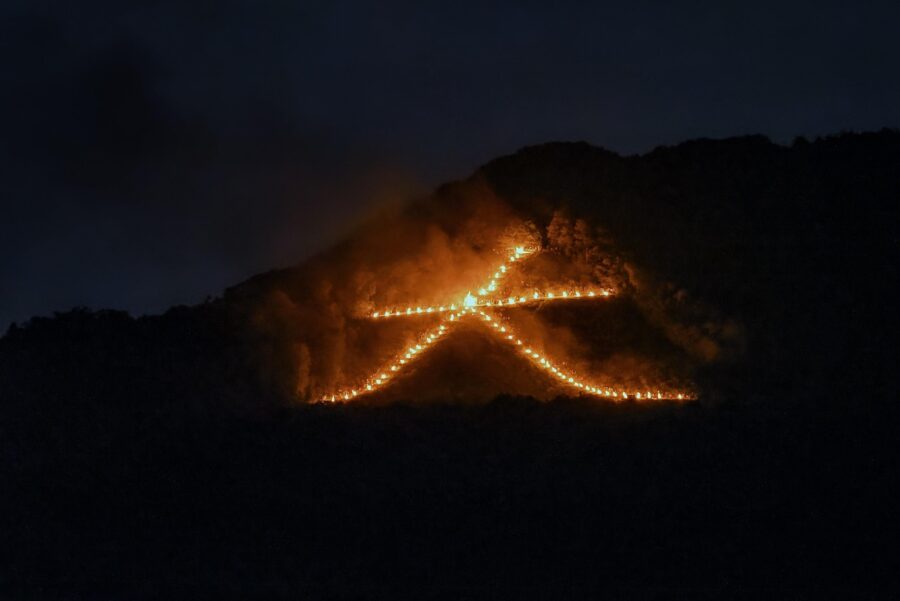
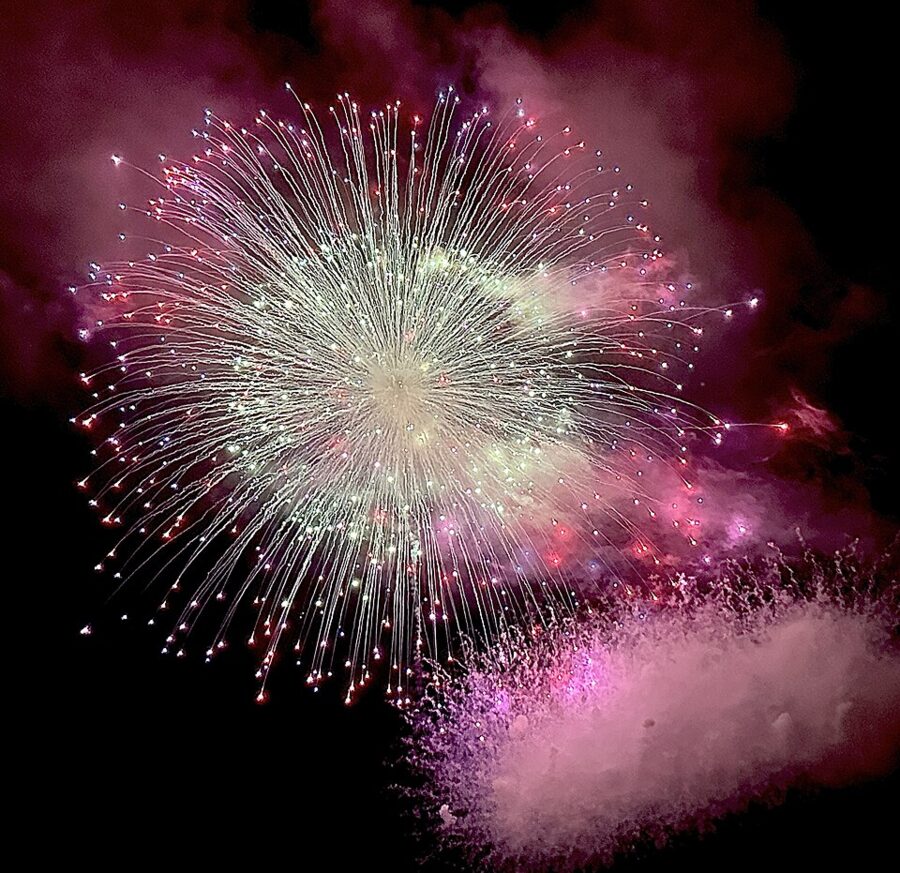
Then comes Obon. Tokushima’s Awa Odori, the biggest of the summer dance festivals, fills the city from 12 to 15 August, and Kyoto ends the season with the Gozan Okuribi fires on the 16th. It is a rewarding month in the north and in the mountains and a hard one in the cities of the south-west.
Avoid: long-distance travel at the start and end of Obon week, around 13 and 16 August, and booking an island holiday in Okinawa without a spare day for a typhoon.
September
September is still summer in the south, and it is the peak month for typhoons on the main islands. It is also, with February, the quietest month for overseas arrivals, and once the first half has gone the heat eases. The alpine colour starts in the Daisetsuzan range in Hokkaido, and the higher Alps on Honshu are clear of summer haze on good days.
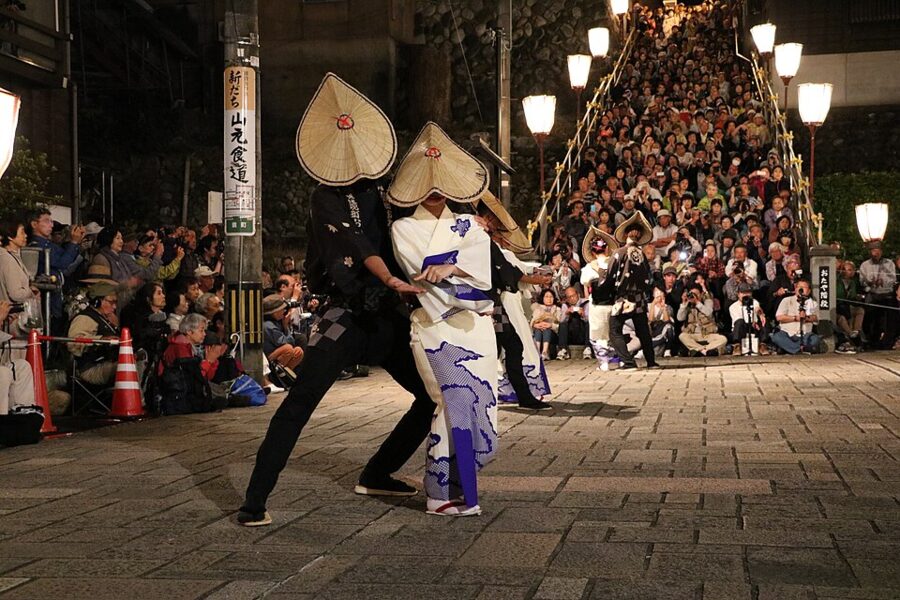
The festival to go out of your way for is the Owara Kaze no Bon in Yatsuo, in the hills at the southern edge of Toyama city, from 1 to 3 September. Dancers in deep straw hats move slowly through the old streets to the sound of the kokyu, a bowed string instrument, and the shamisen, late into the night; about 250,000 people come over the three days, so book early or plan to come in by train. Avoid: tight connections in the second half of the month.

October
October is one of the two best months for a first trip, with a catch for Tokyo: by the 1991–2020 averages it is the city’s wettest month, with 235 millimetres of rain, because of the autumn rain front and late typhoons. The rain comes in spells, though, and between them the air is clear and the temperature right for walking, with an average high of 22°C.
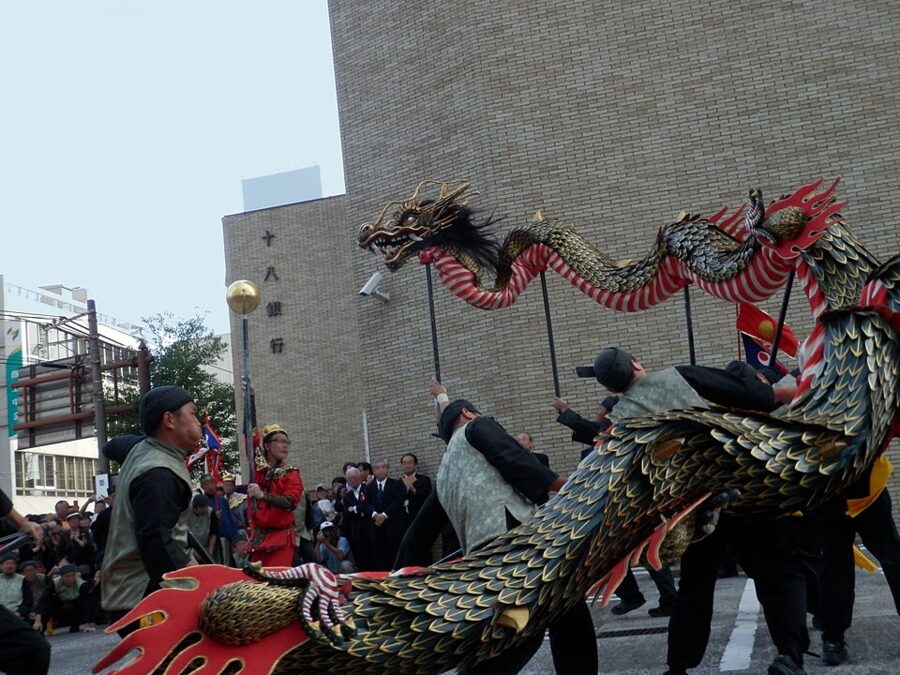
The festivals are some of the oldest in the country. Nagasaki‘s Kunchi, at Suwa Shrine, runs from 7 to 9 October, with its Chinese-style dragon dance; Takayama’s autumn festival is on 9 and 10 October; and Kyoto’s Jidai Matsuri, a procession in the dress of each period of the city’s history, is on 22 October, the day the capital moved to Kyoto in 794. In the north, the colour comes down through the mountains of Tohoku, and Nikko‘s lake and gorges turn from the middle of the month.

October 2025 was the second-busiest month of that year for overseas arrivals, and October 2026, at about 3.9 million, the busiest of 2026 so far. Avoid: the Monday holiday weekend in the middle of the month for hot-spring towns.
November
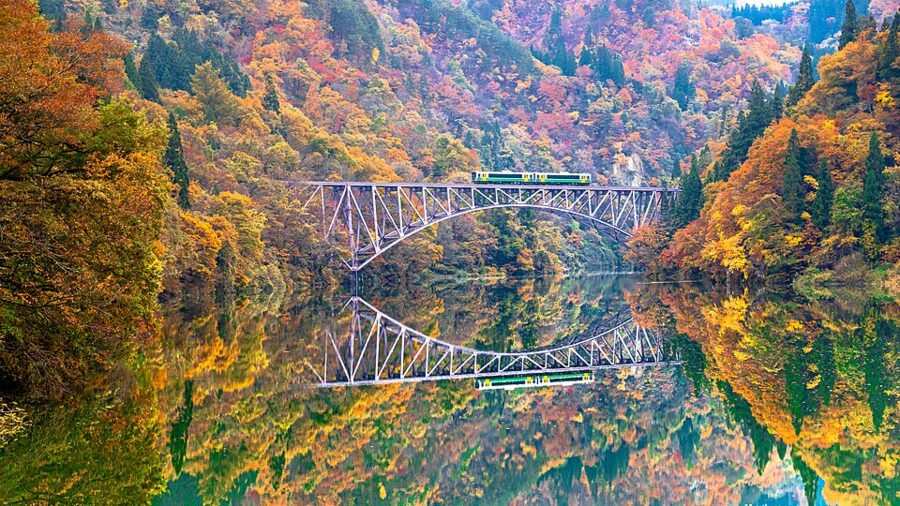
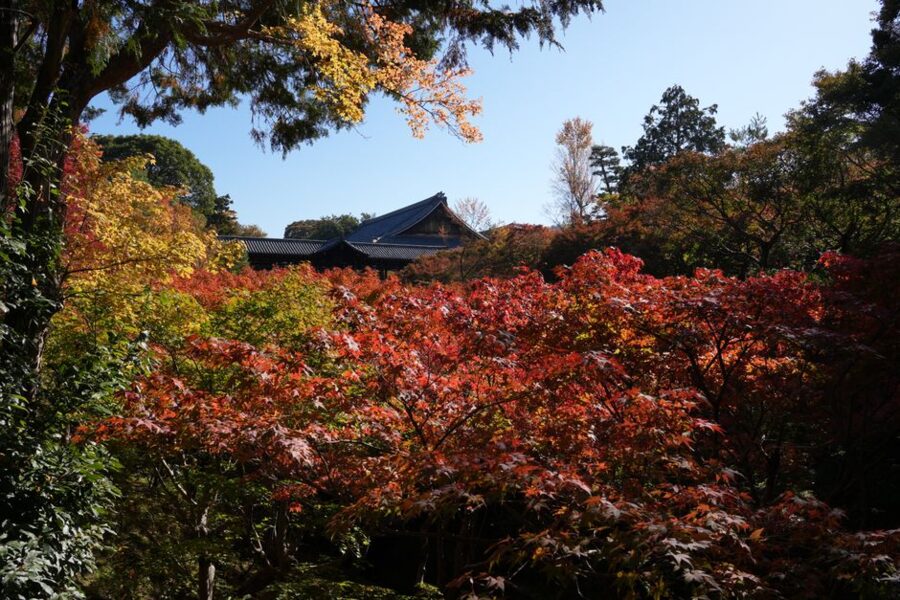
November is my first choice for Honshu. The rains of October are over, Tokyo averages 96 millimetres and a high of 16.7°C, and the colour front reaches the cities in the second half of the month. Nikko and the mountains are past their best by the first week, but the gardens of Tokyo, Kyoto and Nara turn from the middle of the month to its end.

Two November facts change the plan. The ski season begins in the north and the Alps; Happo-one in Hakuba opened for the 2026–27 season on 22 November. And in Okinawa, the rebuilt main hall of Shuri Castle (首里城), burned down in 2019, is open to the public from 23 November 2026, by advance booking. Avoid: the weekends around 23 November, Labour Thanksgiving Day, in Kyoto.
December
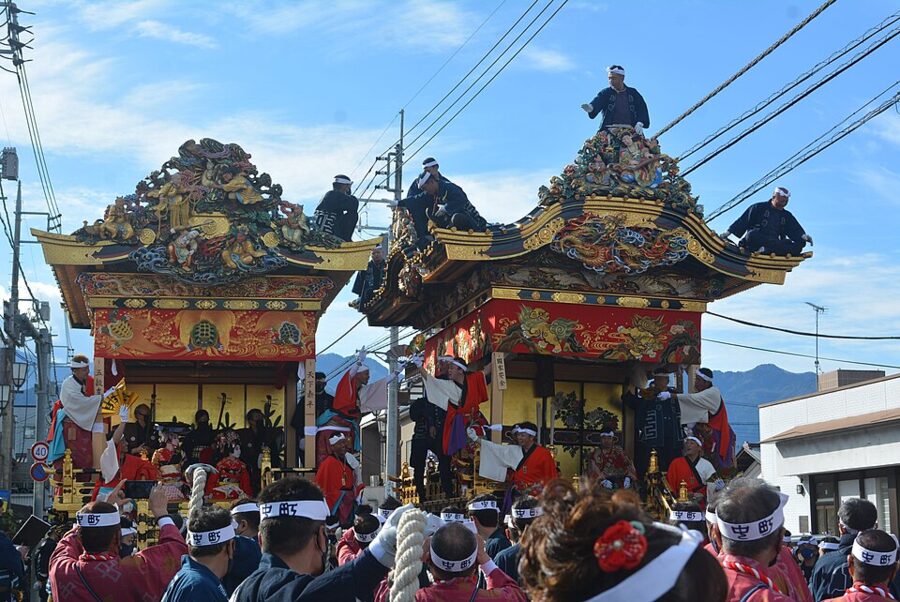
Early December is the tail of the autumn colour in Kyoto, Osaka, Kyushu and the warmer parts of Shikoku, and the start of the dry, bright winter on the Pacific side. The cities put up their winter illuminations. In the hills west of Tokyo, Chichibu holds its night festival on 2 and 3 December, with huge floats hauled up a slope through the town and fireworks in the cold.

The snow arrives on the Sea of Japan side and in Hokkaido during the month, and the ski fields come into their season. Avoid: travelling between 28 December and 3 January if you can, and expect many small restaurants and museums to be shut from the 29th.
By kind of trip
A first visit
For a first trip on the usual Tokyo, Kyoto and Osaka route, the best windows are mid-October to the end of November and about 6 May to the start of June: mild weather and autumn colour or fresh green, without the cherry crowds or the summer heat. Cherry season is worth it if you accept the crowds and keep a week’s flexibility either way.
If a Japan Rail Pass is part of the plan, the season does not change its price: the seven-day ordinary pass costs ¥50,000 at any time of year. What changes is whether you can get seats, and in Golden Week, Obon and New Year, reserved seats on the Shinkansen sell out days ahead.
Hiking
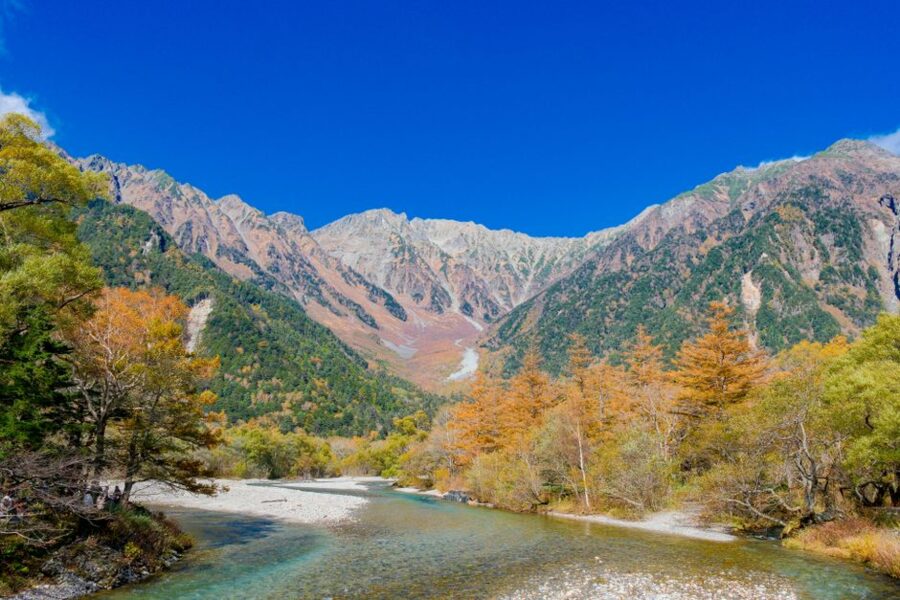
Japan’s mountains are a summer and autumn range. Fuji has its ten-week season from early July to 10 September. The Northern Alps around Kamikochi are best from July into October, after the snow has gone from the high trails and before it returns, and the Daisetsuzan range in Hokkaido is at its finest in September, when the colour comes, with the risk of the first snow by the middle of the month.
For lower walks, spring and autumn are better than summer. May and the first half of June, before the rains, suit the old pilgrim roads of the Kii Peninsula and the forested island of Yakushima, though Yakushima is wet all year, with about 4,650 millimetres of rain on average.
Skiing and snow
The ski season in Hokkaido and the Alps runs from late November or December into April, and the snow is most reliable from January to early March. The famous dry powder of Hokkaido comes in January and February, when the cold air off Siberia is at its strongest; on the Sea of Japan side of Honshu the snow is heavier and wetter but deeper.
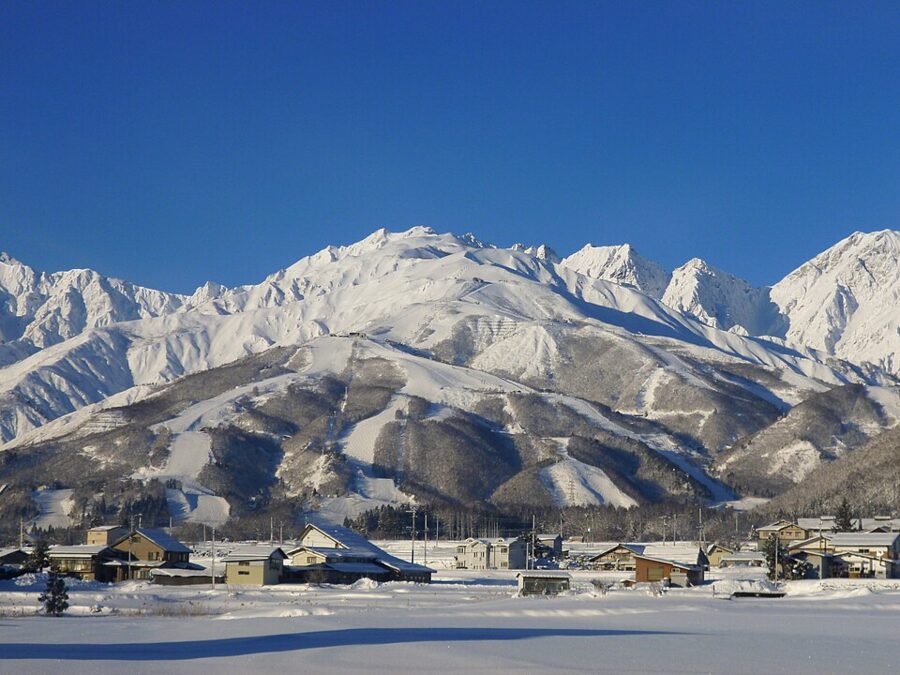
For snow without skiing, go to Shirakawa-go, Kanazawa or the Yamagata onsen towns in January and February, or to Abashiri for the drift ice.
Beaches and islands
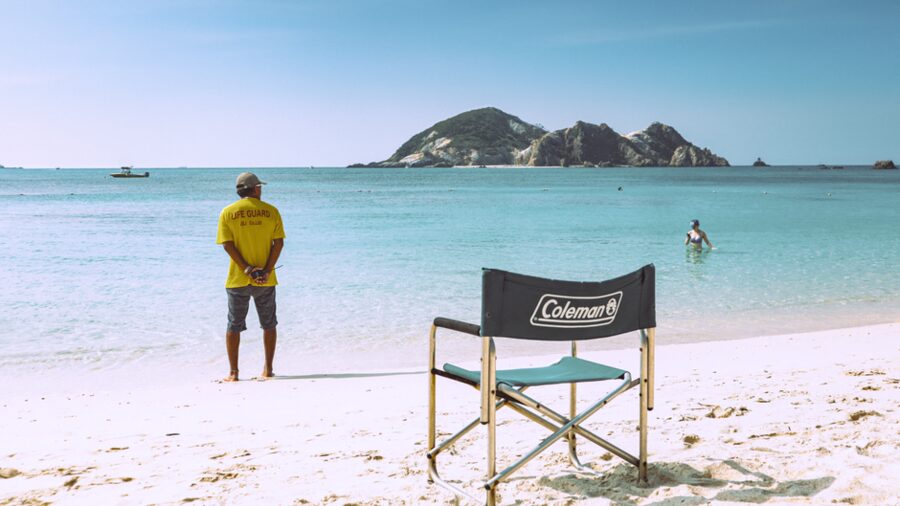
Most of Okinawa’s beaches hold their sea-opening in March or April. From June to October many of them put up nets against the box jellyfish called habu-kurage, so swim inside them. The best weeks are April to early May, before the rains, and late June to mid-July, just after them, when the typhoons are still few; October and November are quieter and still warm.
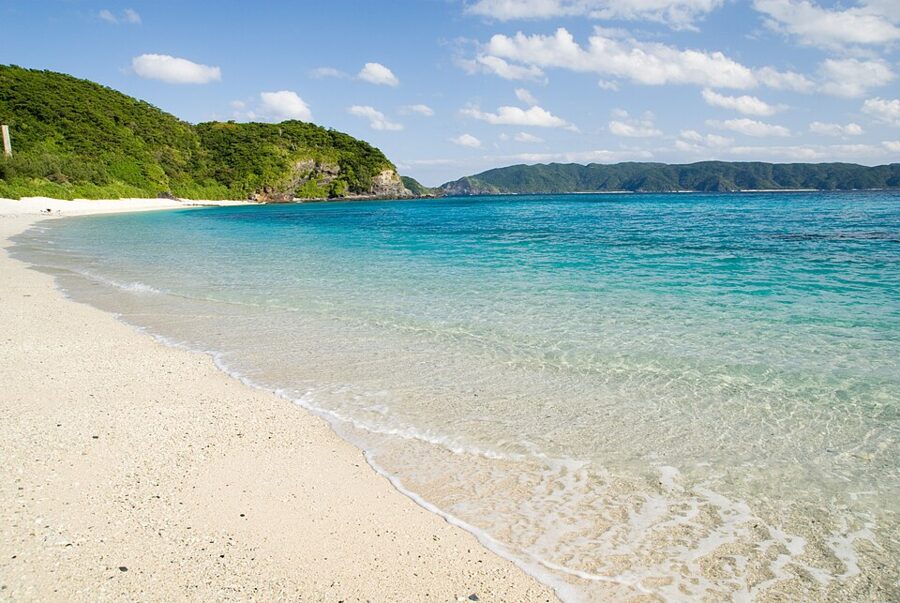

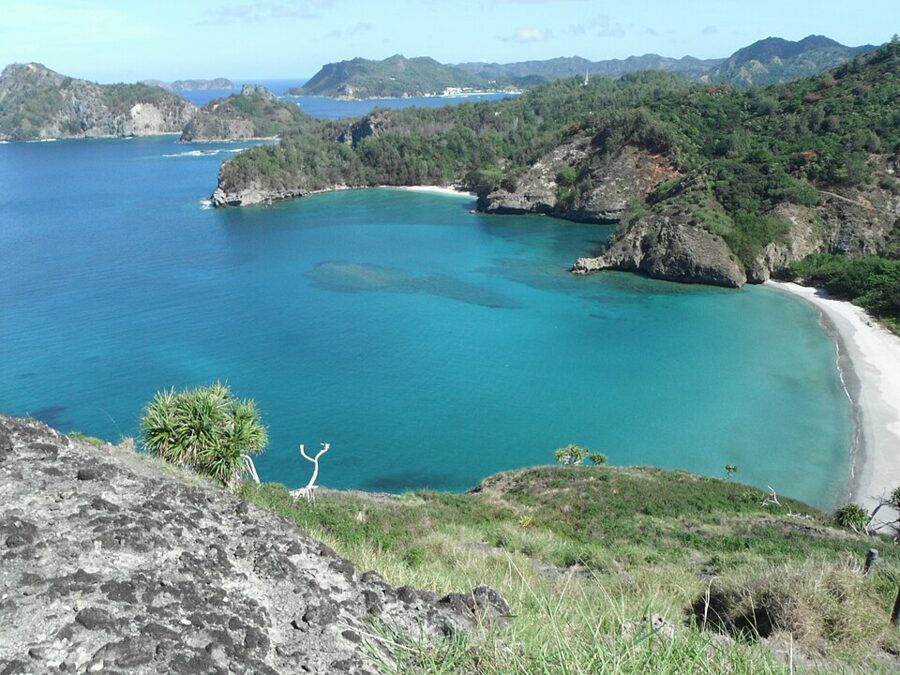
The Ogasawara Islands, 1,000 kilometres south of Tokyo, have their own calendar: Chichijima (父島) has held its sea-opening ceremony on New Year’s Day every year since 1982, the earliest in Japan. The ferry from Tokyo takes about a day each way, so the islands suit a long stay at any time of year rather than a weekend.
Festivals
For festivals, go in summer and accept the heat: July in Kyoto and Fukuoka, the first week of August in Tohoku, mid-August in Shikoku. October brings the harvest festivals of Nagasaki, Takayama and Kyoto, and February the snow festivals. Most keep fixed dates whatever the day of the week, and one that falls on a Saturday draws far bigger crowds.
On a budget
The cheapest times to travel are the months nobody plans around: January after the first week, February, June and early December, away from the holidays and the famous blossom and colour weekends.
The Seishun 18 ticket, the JR pass for slow trains, is only sold for the school holidays in spring, summer and winter. Since winter 2024 it has come as a three-day ticket at ¥10,000 or a five-day one at ¥12,050, used on consecutive days, on local and rapid trains only; for a slow journey along the coast it is still remarkable value.
Region by region
Each of the regions of Japan has its own best season, and a long trip can follow them north to south.
Hokkaido. Late June to September is the best all-round season: cool, no rainy season, lavender in July. Winter brings skiing, the Snow Festival and the drift ice; the cherry blossom comes at the turn of April and May.
Tohoku. Cherry blossom in April, the great festivals in the first week of August, autumn colour on the mountain roads in October, and snow-country onsen towns on the Sea of Japan side in winter.
Kanto and Tokyo. Best from mid-October to early December and from late March to May, and clearest in January and February. Avoid daytime walking in late July and August.
Chubu and the Alps. The Alps for July to October; Kanazawa and Shirakawa-go under snow in January and February; the Alpine Route from mid-April.
Kansai and Kyoto. Kyoto is at its best, and its most crowded, in the first week of April and from mid-November into December. My favourite Kyoto months are May and early December; August is the hardest to walk around.
Chugoku and Shikoku. The Inland Sea coast between them is one of the driest parts of Japan (Takamatsu averages about 1,150 millimetres of rain a year), good in any month outside tsuyu, and best in spring and autumn for the islands and the Shikoku pilgrimage.
Kyushu. The heaviest rain of tsuyu falls here between late May and mid-July. Spring and autumn are the times to go, and the hot-spring towns are good in winter.
Okinawa. Cherry blossom in January, rains in May and June, and the best beach weeks in April and early May or late June and early July; typhoons are the risk until October, and winter is for walking and the castle sites.
The Taiwan cherries in Naha will open again in January, and the last trees in Kushiro in May. Pick the month first, then go where it is kindest: if I could choose only one trip, I would take the Shinkansen into Kyoto in the third week of November, and fly home before the weekend.