


In 701 the Taiho Code let one province off the labour and tribute taxes that every other province paid in cloth and produce. Hida paid in carpenters instead. Each village sent its quota to the capital for a year at a time, close to a hundred men a year by the count Takayama’s tourism association gives, and for centuries the court’s building works included a contingent of mountain joiners who had walked over the passes from a basin that grew too little rice to be worth taxing.
That arrangement explains most of what you will see in Takayama (高山). The merchant houses with their grids of exposed beams, the festival floats that carry mechanical puppets on their upper decks, the yew carvings and the bentwood chairs all come from the same supply of timber and the same habit of working it well. The town is the capital of the old province of Hida (飛騨), now the northern half of Gifu Prefecture (岐阜県), and the carpenters are the reason it looks the way it does.
It is also a practical base. Takayama sits in a basin at about 560 metres between the Northern Alps and the Hakusan range, two and a half hours from Nagoya on one of Japan’s better railway journeys, and it is where to sleep if you want the thatched village of Shirakawa-go, the hot springs of Okuhida or the quieter canal town of Hida-Furukawa. About 4.8 million people came in the 2025 financial year, most of them to the same three streets. The trick is to be in those streets at the hours when the day-trippers are not.


In this guide
- Hida, the carpenters' province
- Kanamori's castle town and the shogun's timber
- Sanmachi, the merchants' quarter
- The morning markets
- The Takayama Festival
- Hida Kokubunji and the temples on the hill
- Hida Folk Village
- Crafts: yew, lacquer and bentwood
- What Takayama eats
- Getting there and getting around
- Staying, and when to come
- Day trips
- One, two or three days
Hida, the carpenters’ province
The province’s name has been written several ways. The Nihon Shoki uses 飛驒 and the Man’yoshu 斐太, and a fragment of the lost provincial gazetteer explains the later spelling with a story about timber for the palace at Otsu, loaded on packhorses that ran “as if flying”. Scholars treat that one as a later invention, but it gets the economy right. Hida had forests and very little flat land.
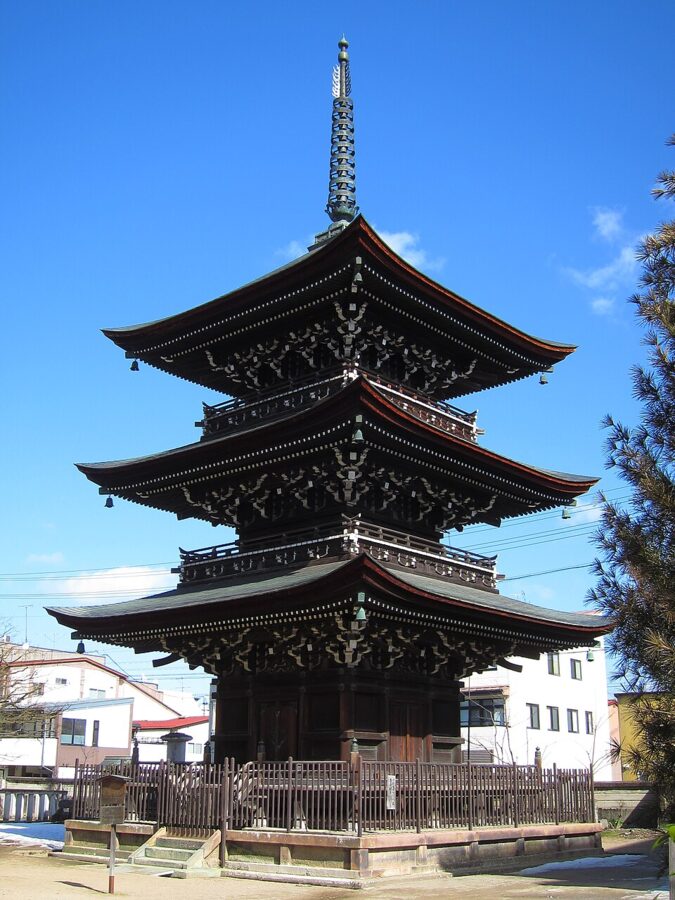
Under the eighth-century codes the province was among the most thinly populated in Japan, and the tax concession followed from that. The craftsmen it sent were called Hida no takumi, the artisans of Hida, and they served in the government’s carpentry bureau. The name outlived the system by a thousand years. The Agency for Cultural Affairs’ Japan Heritage scheme, which links sites into a single story, lists a set of Takayama buildings under the theme of the Hida carpenters’ skill and spirit, among them the Jinya, the Kusakabe and Yoshijima houses and Hida Kokubunji, and you can see most of them in a day.
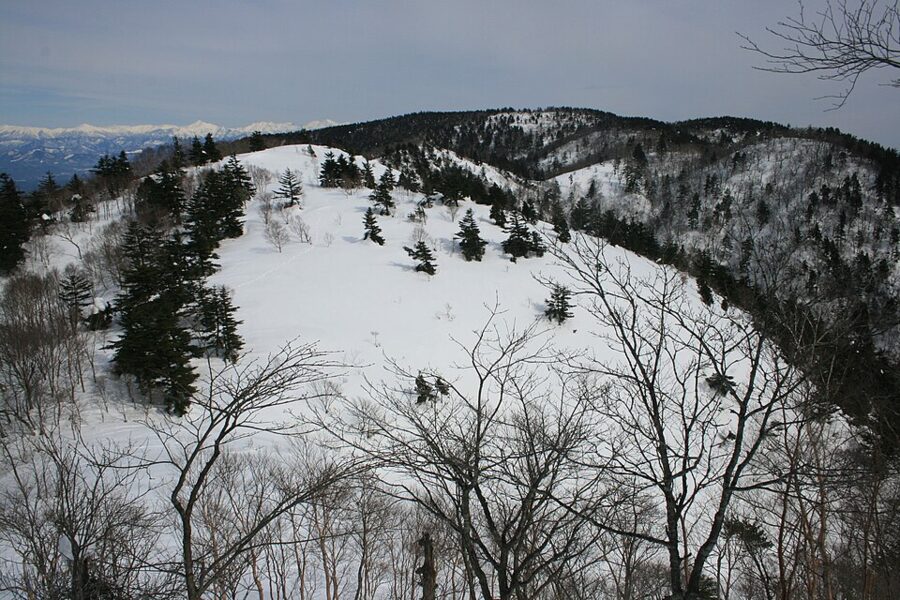
The road the conscripts took south ran past Kuraiyama (位山), a mountain on the watershed south of town. Its forest of Japanese yew supplied the flat wooden batons that court officials held, and the story goes that the tree was granted the first court rank for it. That is why yew is called ichii, “first rank”, and why Hida’s best-known carving is done in yew. Batons of Kuraiyama yew are still presented when an emperor is enthroned.
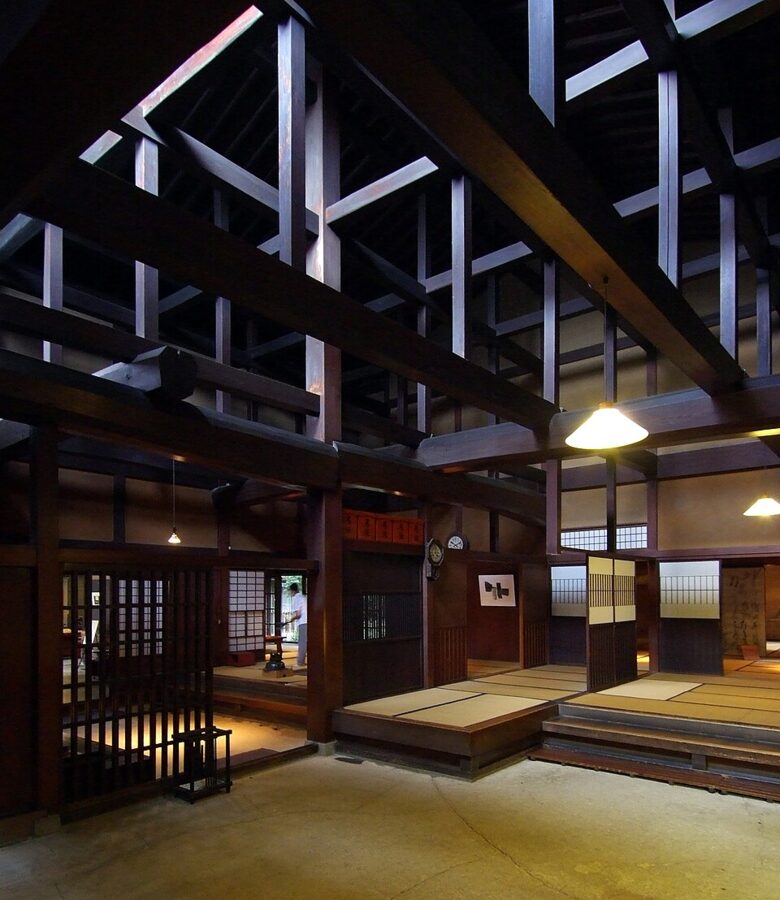
By the Edo period the takumi tradition had become a set of family workshops. The Mizuma line produced four generations of master carpenters who used the title Mizuma Sagami; the Taniguchi were another dynasty of builders; their pupils built the merchant houses, and a handful of specialist carvers worked on the festival floats. Kawajiri Jisuke, who rebuilt the Kusakabe house in 1879, trained under the Taniguchi; Nishida Isaburo, who rebuilt the Yoshijima house next door in 1907, came out of the Mizuma tradition.


Kanamori’s castle town and the shogun’s timber
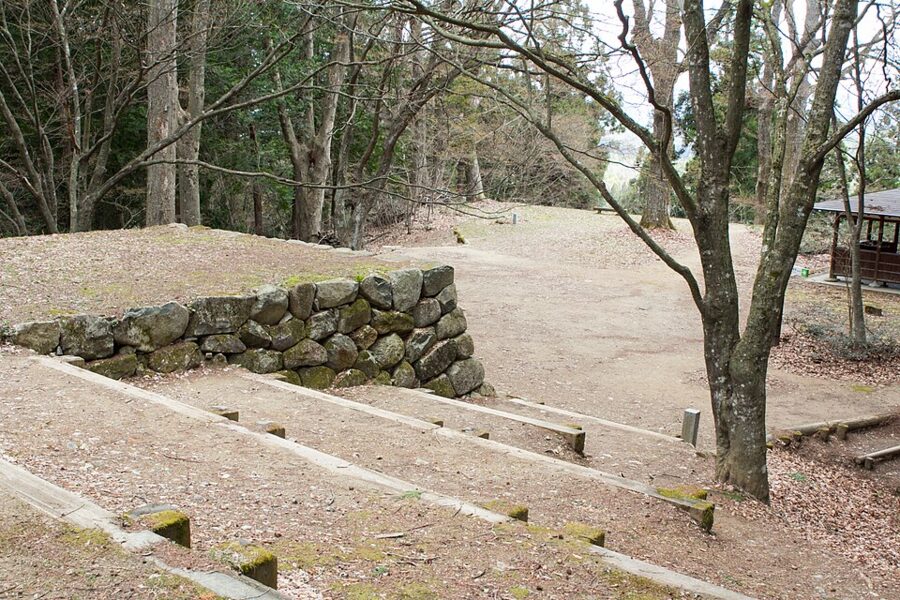
The town itself is younger than the province. In 1585 Toyotomi Hideyoshi sent Kanamori Nagachika, a veteran of Oda Nobunaga’s campaigns, to take Hida from the Mitsuki clan, and from 1586 Kanamori ruled it. In 1588 he began a castle on the hill now called Shiroyama, and by 1603 its three baileys were complete.
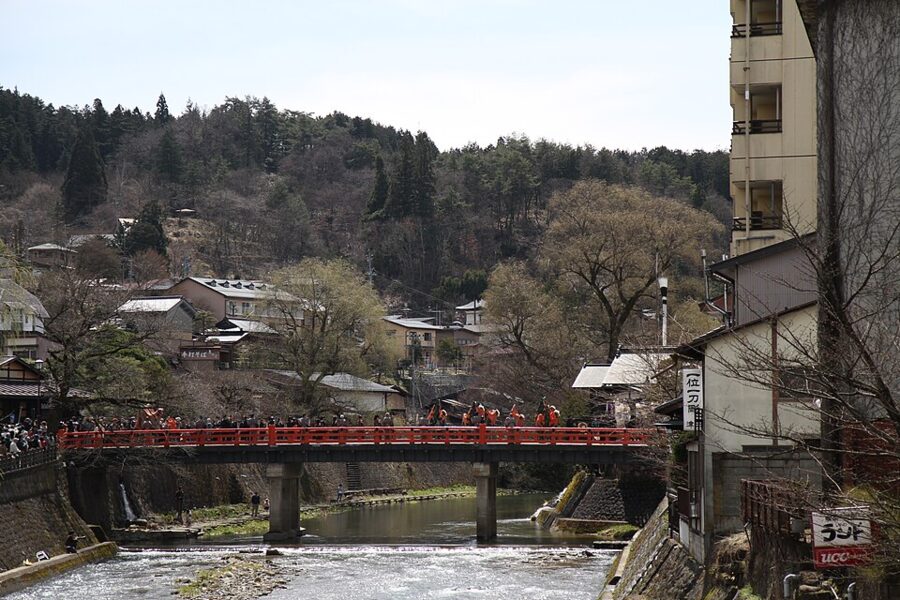
Below it he laid out a town: retainers’ houses on the higher ground, merchants on the lower terraces by the Miya River, and, following the model of Kyoto, the temples gathered along the eastern hills, the Higashiyama. The grid survives, which is why the old town is so easy to walk.
The Kanamori were men of taste as well as war. Nagachika’s grandson Shigechika was passed over for the succession and went to Kyoto as a tea master, founding a school of tea that still exists, and the family’s hand is in Takayama’s Shunkei lacquer and in the shrines of both its festivals. They held Hida for six generations and 107 years. In 1692 the shogunate moved them north to Kaminoyama, in Dewa, and took Hida for itself.
The usual explanation is the province’s gold, silver, copper and, above all, its timber, and the fact that the shogunate kept Hida under direct rule until 1868 supports it. The castle was held for three years by the Maeda lords of Kaga and then pulled down in 1695. Its rice store went to the new government office, and a temple gate and a temple hall in town are both said to have come from it.

Takayama Jinya
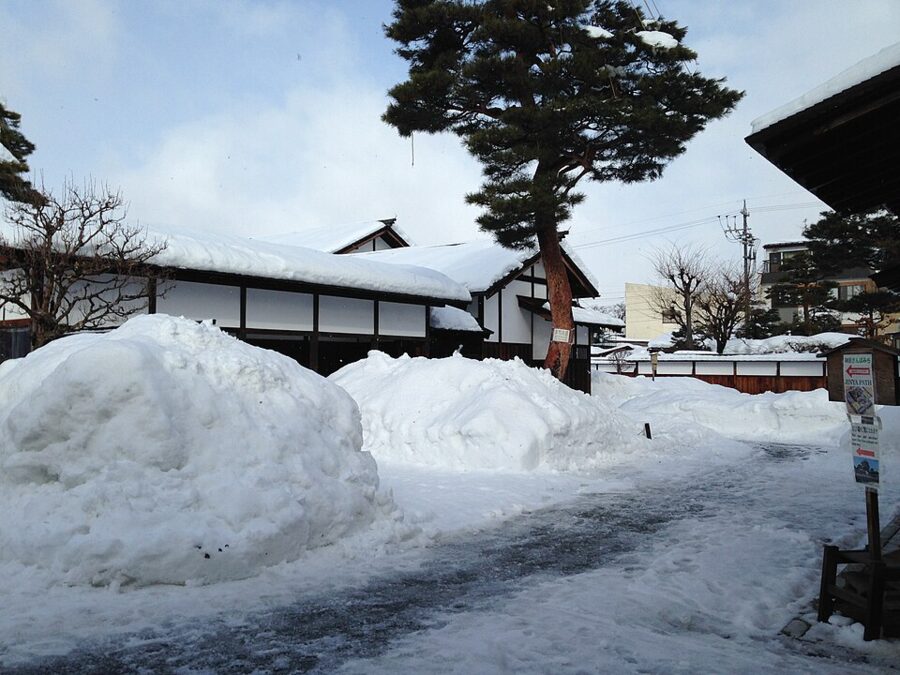
The shogun’s men needed an office, and they took over the Kanamori family’s secondary residence by the river. This became Takayama Jinya (高山陣屋), the seat of a daikan, an intendant sent from Edo, and from 1777 of a higher-ranking gundai. Over 176 years the shogunate sent twenty-five of them. After 1868 the buildings carried on as prefectural offices until 1969, which is how they survived: of the sixty-odd intendants’ offices that existed at the end of the Edo period, this is the only one whose main buildings still stand.
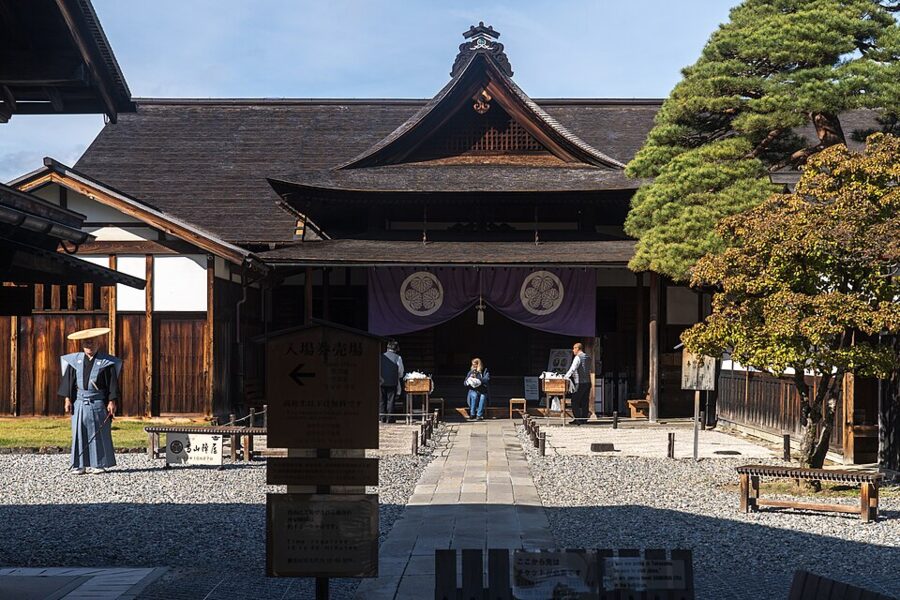

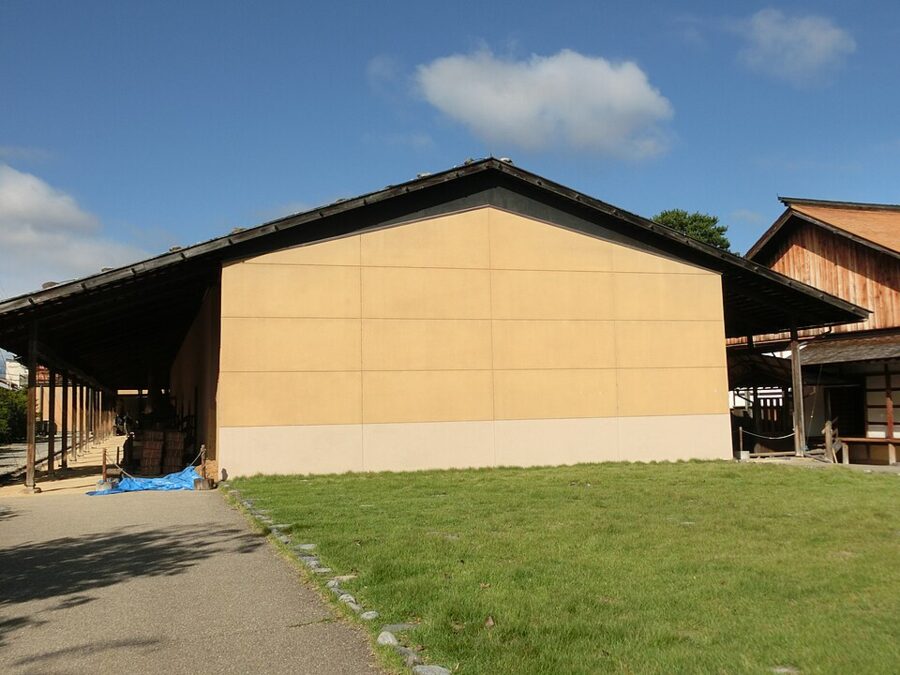
Inside you walk through the reception rooms, the intendant’s private quarters with their small tearoom, a run of three formal rooms totalling forty-nine mats, and the ginmisho, where suspects were questioned and sentenced. The rice storehouse at the back is older than the rest. It was built at the castle’s third bailey around 1600 and moved here in 1695, and it is the oldest surviving rice store of the period and one of the largest. The tax rice of the whole province passed through it, and in September 2026 Gifu Prefecture opened a public appeal to pay for its re-roofing.
The intendants were not loved. Ohara Tsugumasa, appointed in 1765, raised forced loans from the merchants and resurveyed the rice fields to raise the tax, at a time when the mountain villages were also losing the state timber work they lived on. Hida rose in three waves between 1771 and 1788, together called the Ohara Riots, and ringleaders were executed. The first mass meeting, in the winter of 1771, was held in the grounds of Hida Kokubunji, ten minutes’ walk from the office it was protesting against.
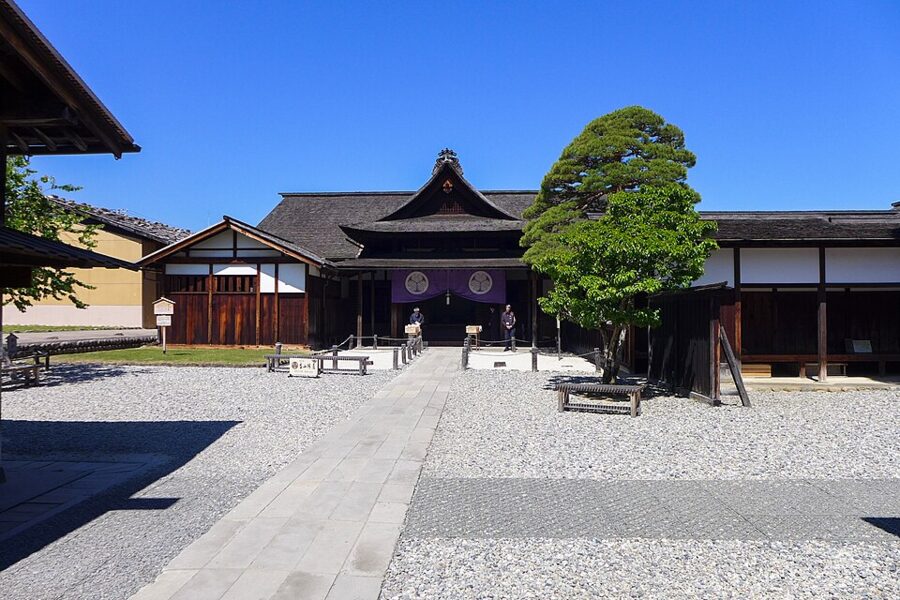

Takayama Jinya is open 08:45–17:00 from April to October and 08:45–16:30 from November to March, closed for a few days over New Year. Adult admission rose to ¥500 in April 2026.

Sanmachi, the merchants’ quarter
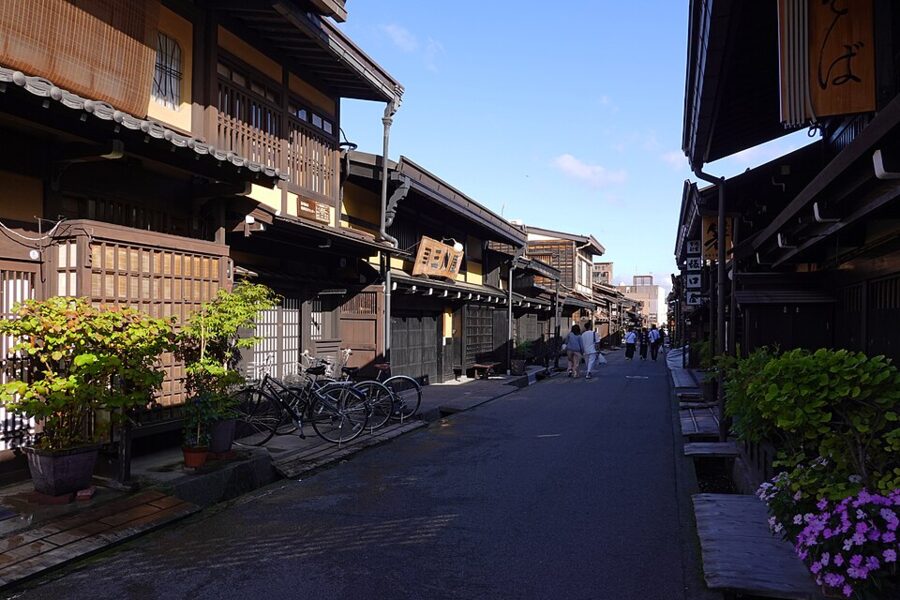
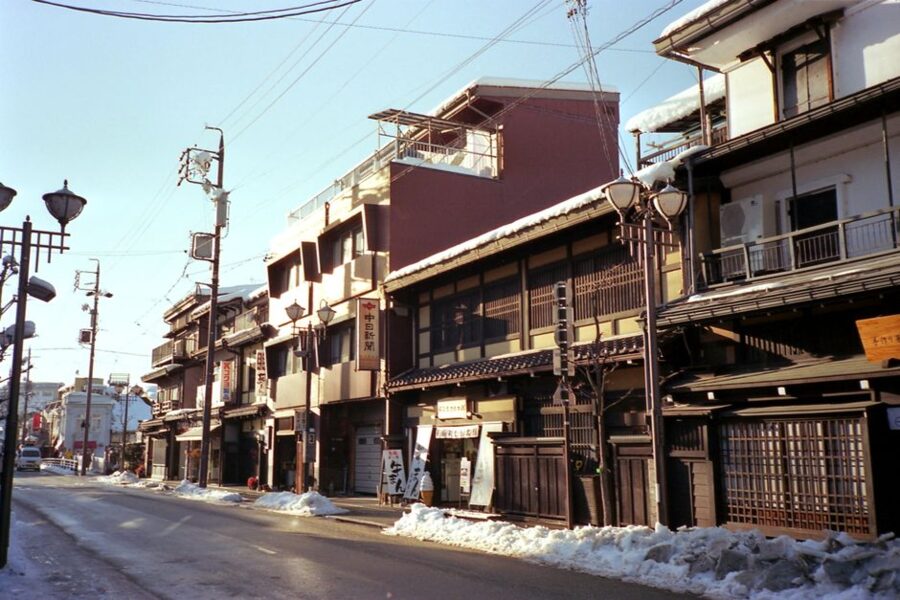
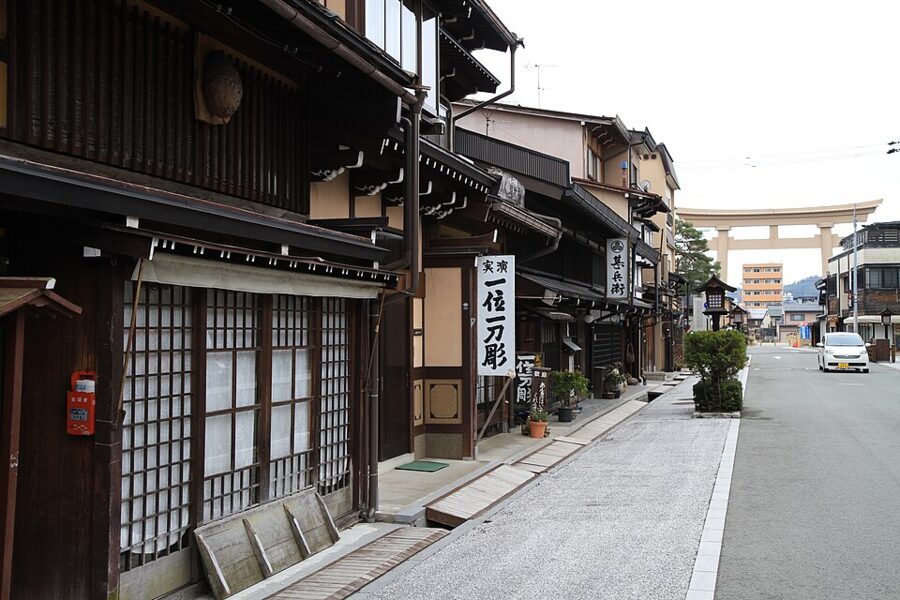
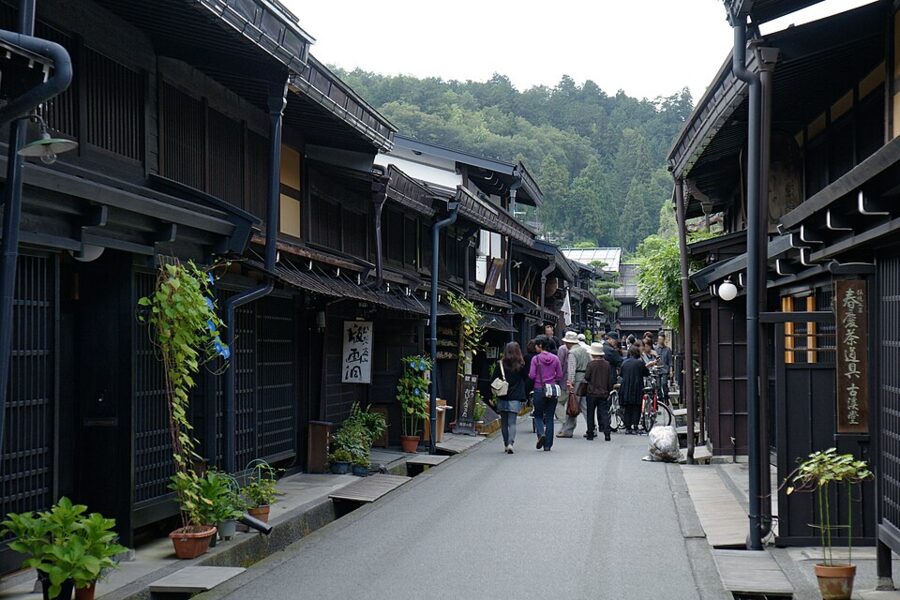
When the castle came down, the town below it lost its reason to exist and found another. Takayama became the market for the whole province, where timber, silk, rice and the money that moved them changed hands, and the merchants who handled it built the houses you now walk past. The streets east of the river, Kami-ichinomachi, Kami-ninomachi and Kami-sannomachi, are known together as Sanmachi (三町), “the three streets”.
Sanmachi was listed as a nationally protected townscape in 1979 after surveys by the Nara National Research Institute for Cultural Properties. The protected area is about 420 metres from north to south and 150 metres across, with 172 buildings in its preservation plan. A second district to the north, Shimo-ninomachi and Oshinmachi, was added in 2004, and its overhead wires were buried in 2007, so if you want a photograph without cables, that is the street.
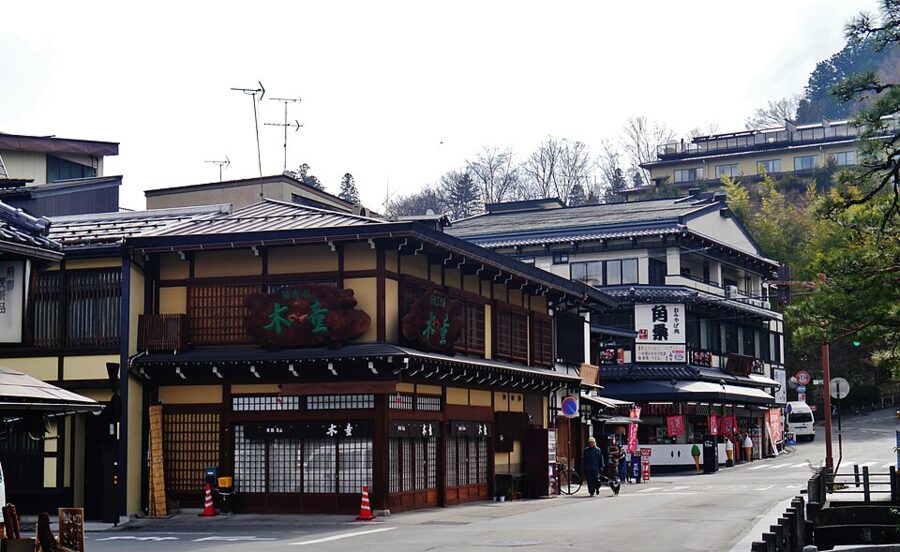

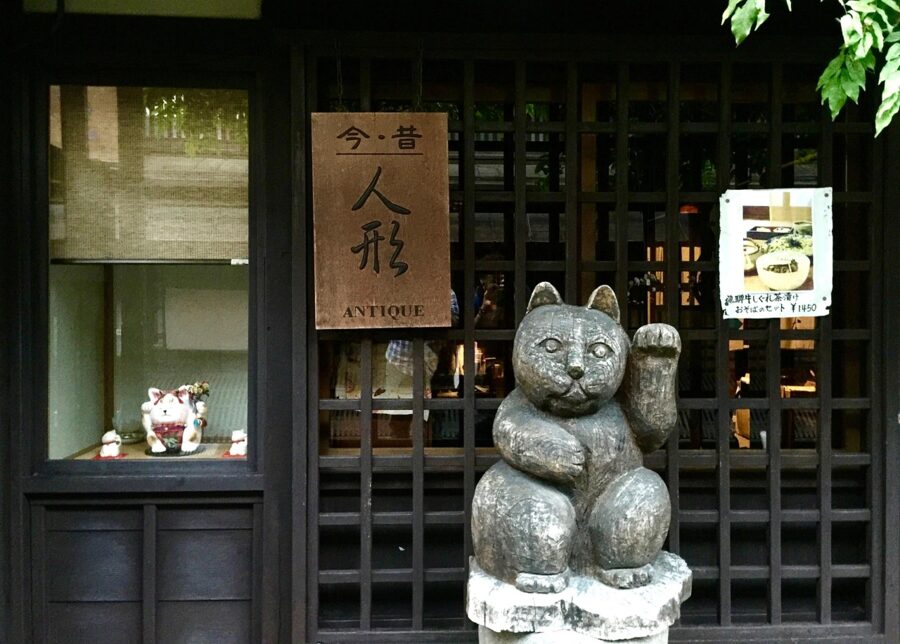
Go early or late. Between about 10:00 and 16:00 the three streets are as full as anywhere in Japan, and much of what is for sale is beef on skewers and snacks on sticks. At 07:30, walking up from the morning market, you will have them almost to yourself, and after the shops close in the late afternoon the dark wooden fronts shut up into what the town looked like before anyone came to see it.
The breweries and their cedar balls
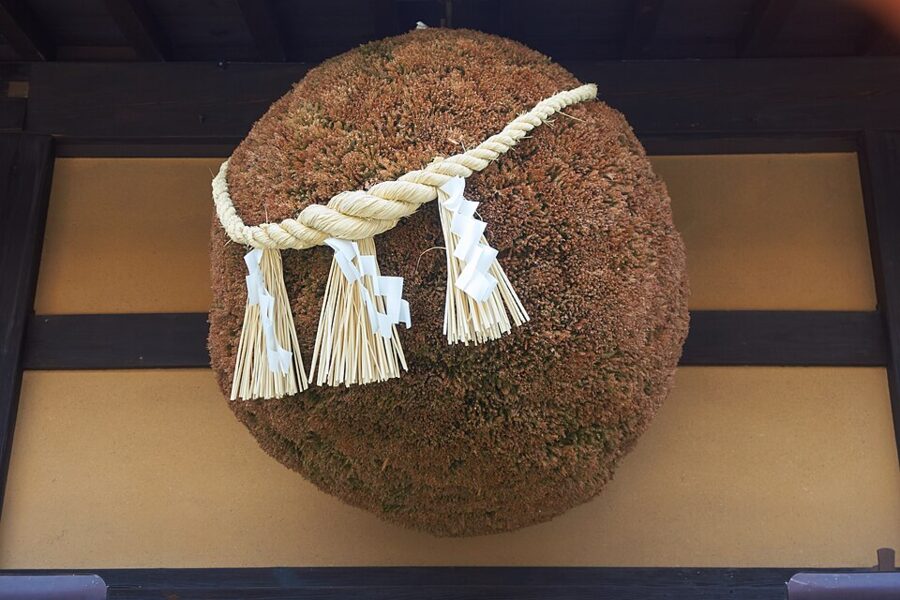
A ball of cedar twigs hanging over a door means a sake brewery. It is called a sugidama or sakabayashi; it goes up green when the new season’s sake is made and turns brown over the following months, so a brewery’s ball is also a rough calendar. Seven breweries still work in the old town. Funasaka on Kami-sannomachi, brewing there for about two hundred years, hangs its new ball in early December and runs a self-service tasting counter worked with tokens, open 08:30–18:00.

The Kusakabe and Yoshijima houses
North of the main streets, two merchant houses stand side by side on Oshinmachi and show what the carpenters could do with a free hand. The Kusakabe family were bankers to the intendants’ office, changing money and advancing funds to the government. Their house burned in the fire of 1875 and was rebuilt in 1879 by Kawajiri Jisuke, who brought techniques from temple building into a private home. It was designated an Important Cultural Property in 1966, and in the same year the eleventh head of the family, inspired by Yanagi Soetsu’s folk-craft movement, opened it as a museum.
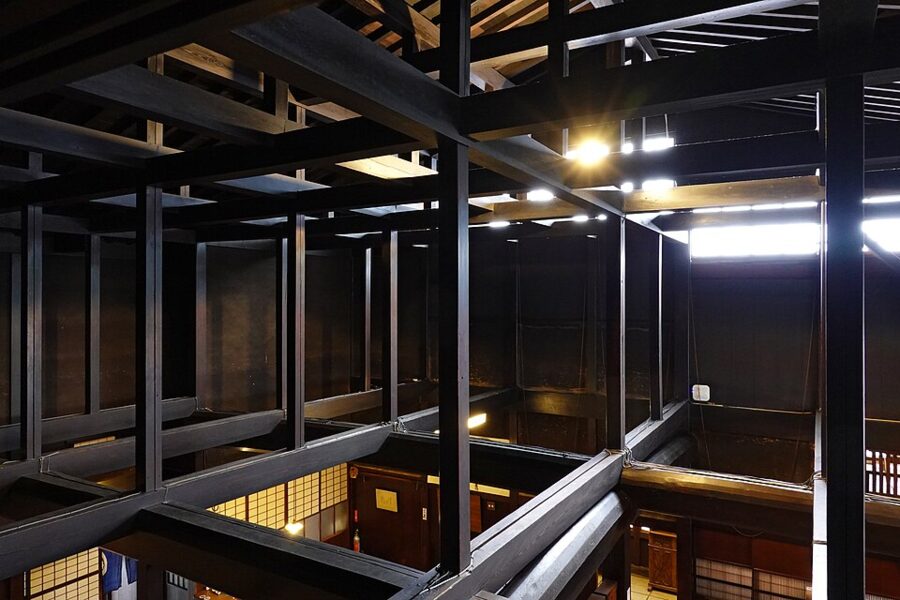

The Kusakabe Folk Museum (日下部民藝館) is open 10:00–16:00 and closed on Tuesdays (on Wednesday when Tuesday is a public holiday); adults pay ¥1,000. Next door, the Yoshijima house belonged to a family of sake brewers who also traded in silk. Where the Kusakabe house is weight, the Yoshijima house is lightness, with slimmer timbers and a high window. It opens on fewer days than its neighbour, so ask at the tourist office at the station before you walk out.
For the town’s history in one place, the Hida Takayama Town Museum is free and housed in a merchant family’s storehouses of 1875. It has material on the Kanamori lords, karakuri puppets from the floats, and a room of Buddhist figures by Enku, the seventeenth-century wandering monk who carved thousands of them, many in Hida.

The morning markets
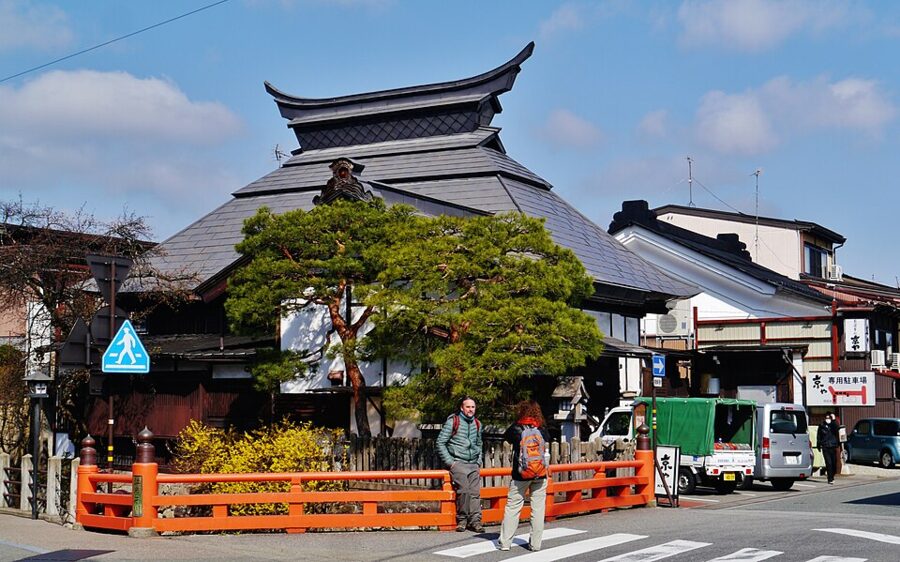
Takayama has held a market in the mornings since about 1820, when farmers sold mulberry leaves for silkworms around the big temple, Takayama Betsuin. Vegetables replaced mulberry in 1894, and after the war the market spread along the Yasugawa street before moving to the riverbank. There are now two markets, each open every morning from about 07:00 until noon.
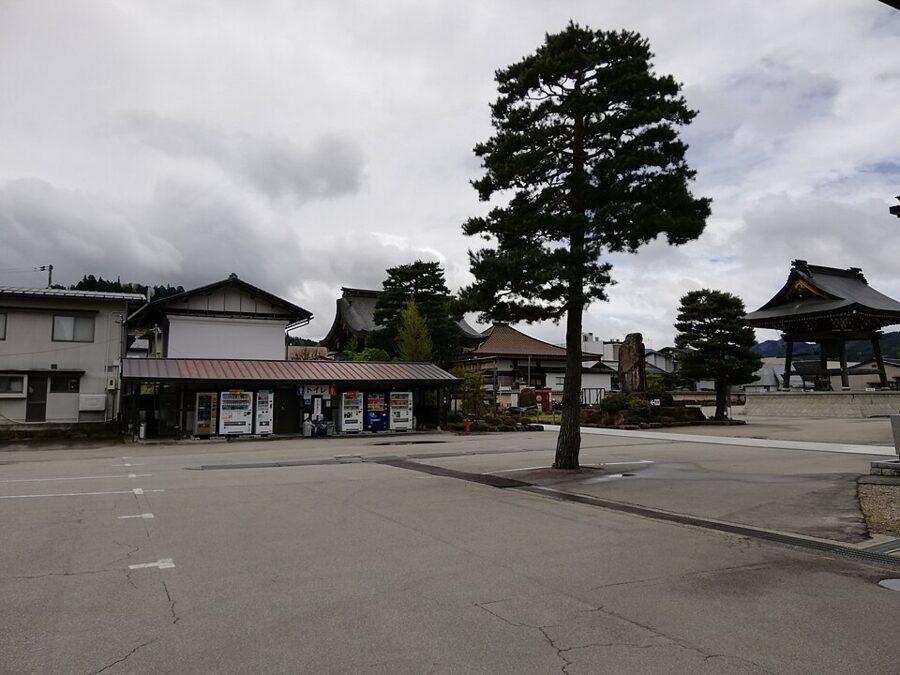
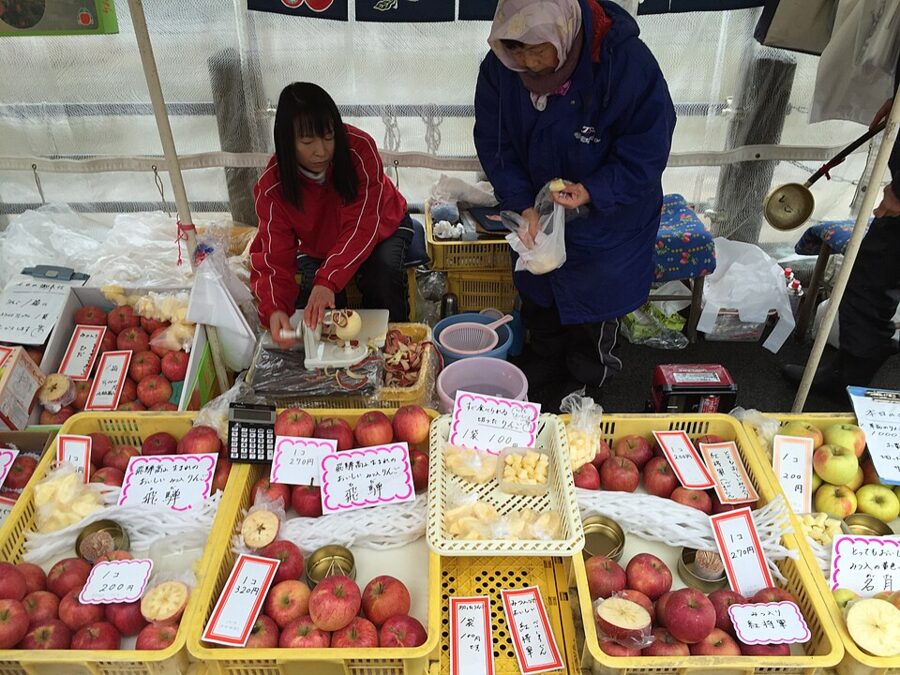
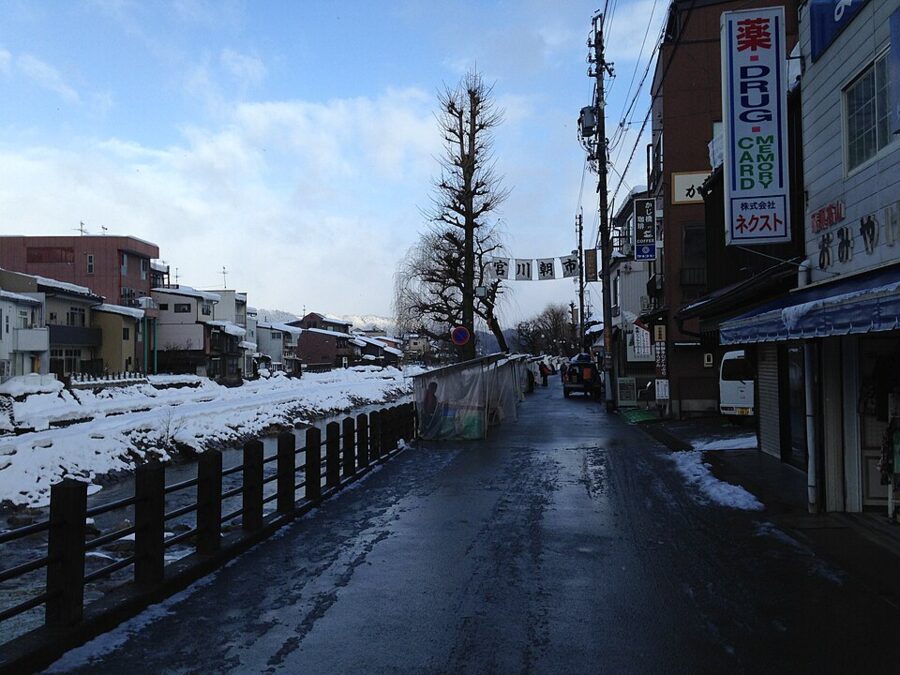
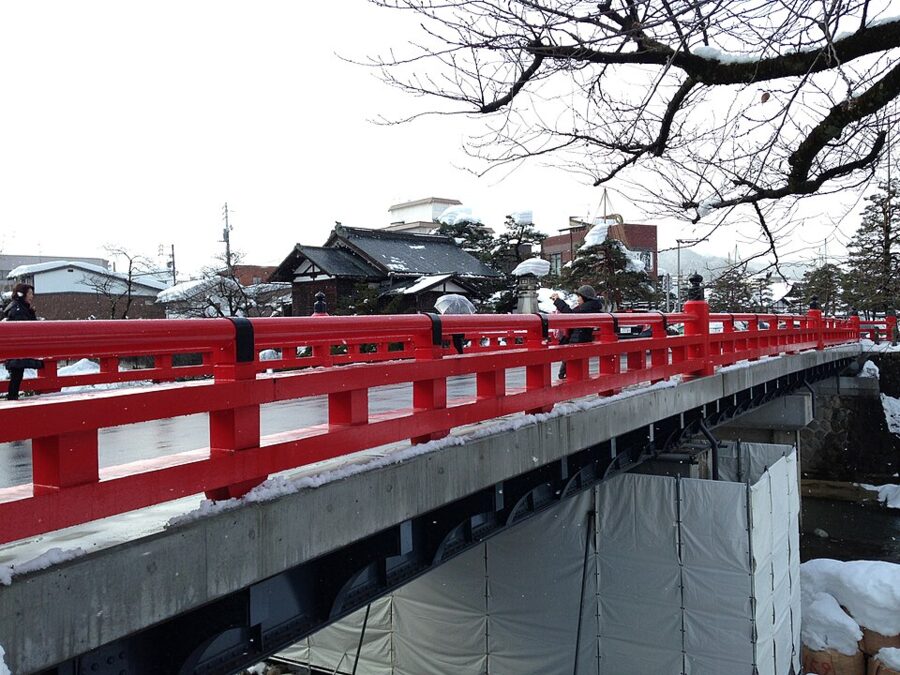
The Miyagawa market runs for about 700 metres along the east bank of the river, from the Kajibashi bridge north to the Yayoibashi, from 07:00 (08:00 from December to March). The stalls are white tents, and what is on them changes with the weeks: mountain vegetables in spring, tomatoes and cucumbers in summer, apples and new rice in autumn, and in winter miso, pickles and rice cakes. There are souvenir shops on the landward side of the road, but the river side is still a working market, kept mostly by local women.

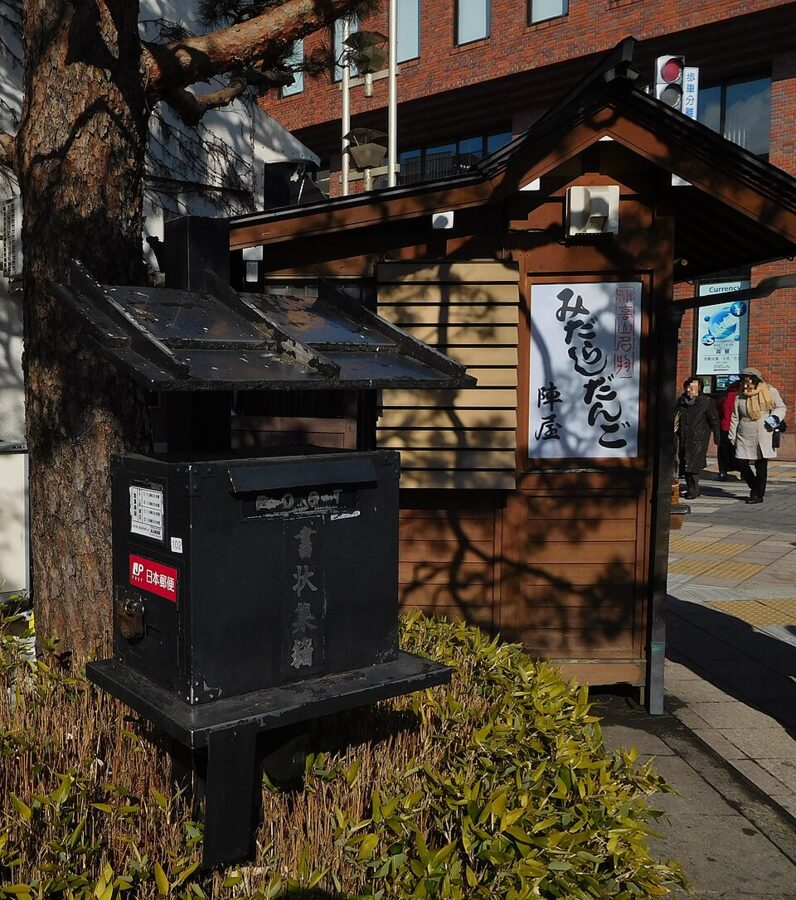
The smaller market in front of the gate of Takayama Jinya sells produce, fruit, miso and rice cakes, and is the place to try Hida’s version of mitarashi dango, rice dumplings on a skewer.


The Takayama Festival
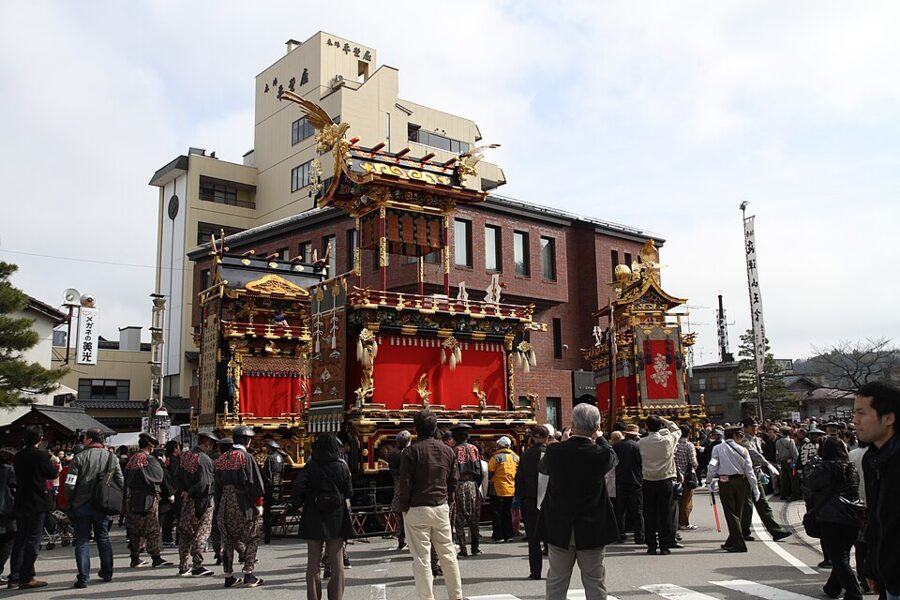
The Takayama Festival is two festivals that share a name and a tradition of floats. The Sanno Festival of Hie Shrine on 14 and 15 April belongs to the south of the old town, everything below the Yasugawa street; the Hachiman Festival of Sakurayama Hachimangu on 9 and 10 October belongs to the north. The dates do not move with the weekend. Records of the spring festival go back to 1652 and of the autumn one to 1716; the tall floats were added from the 1750s, when the merchants had money to spend.
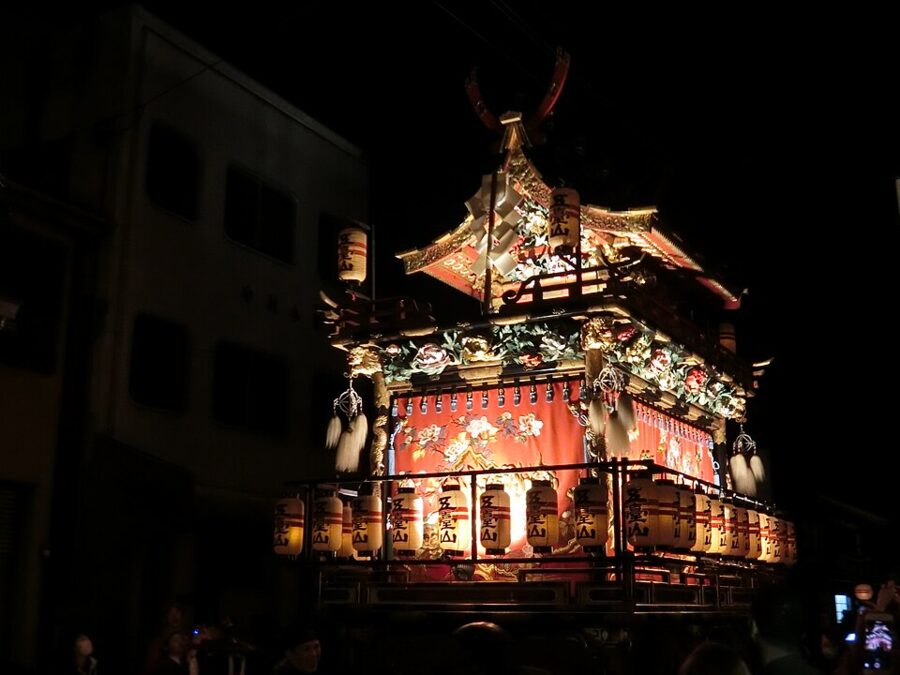
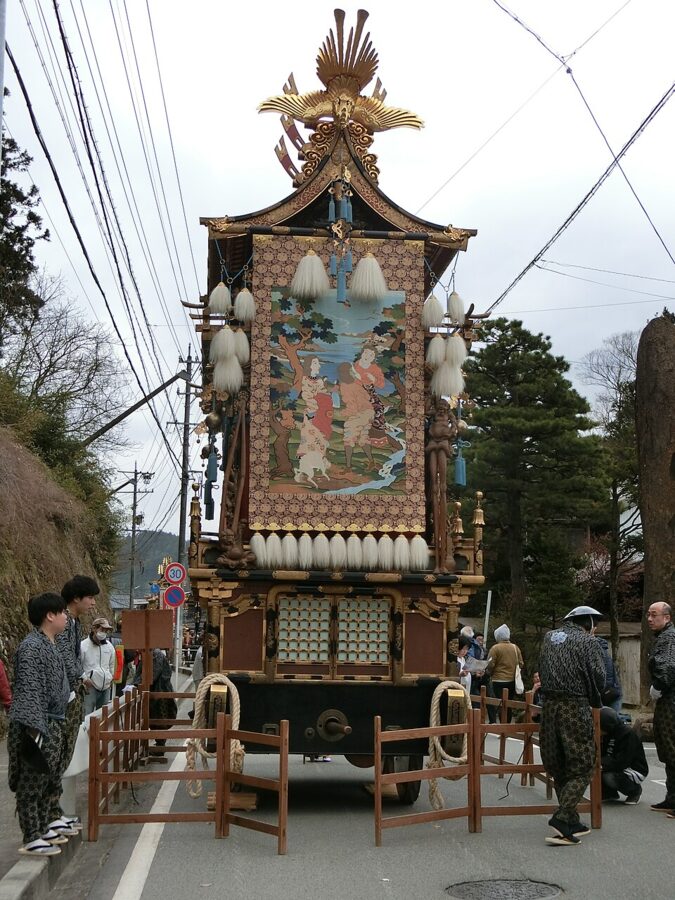
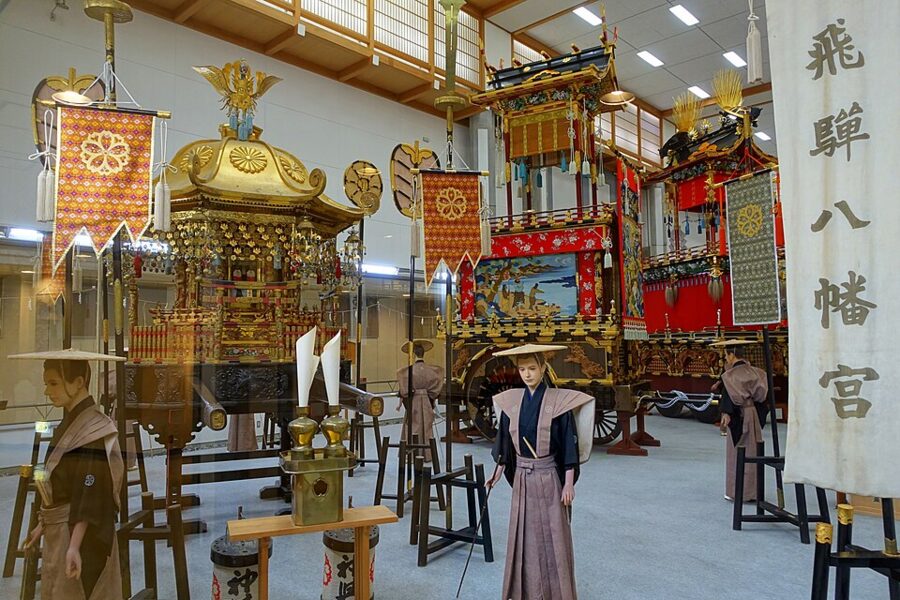
Each float, a yatai, belongs to a neighbourhood guild. There are twelve in spring and eleven in autumn, and the twenty-three were listed together as an Important Tangible Folk Cultural Property in 1960. The festival as an event was listed in 1979, and in 2016 UNESCO inscribed it with thirty-two other float festivals in Japan. Locals call the floats the “moving Yomeimon”, after the gilded gate of the Toshogu shrine at Nikko.

The floats and their storehouses
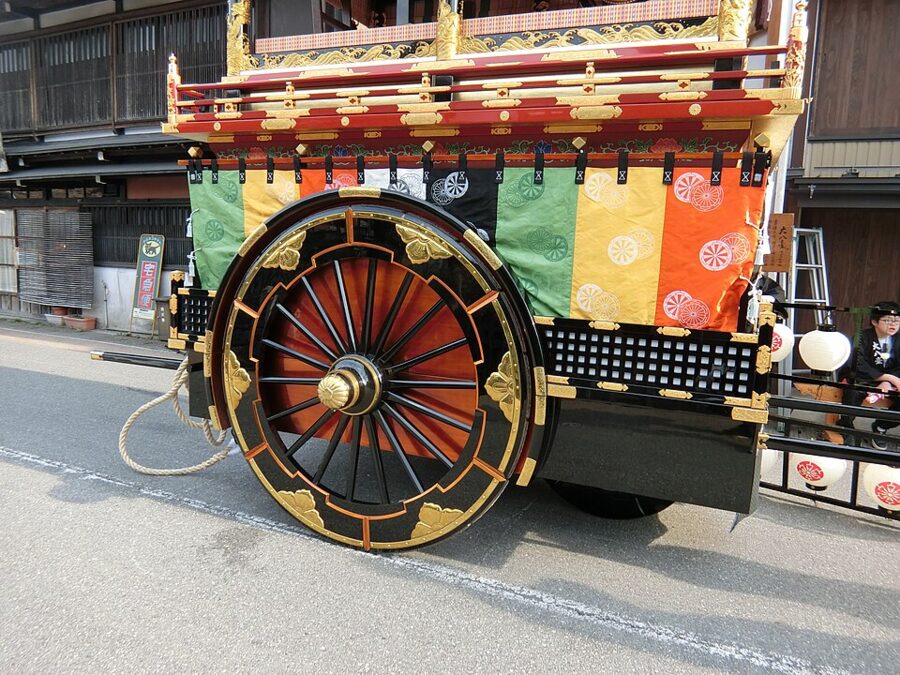
Look at the engineering as well as the gold. The upper roofs of the floats telescope down to clear wires and gateways, a feature inherited from the floats of Edo. Four-wheeled floats turn corners on an extra wheel, the modoshi-guruma, which is jacked down to lift two of the main wheels so the float can pivot. Daihachi-tai of the autumn festival runs on two great wheels 1.56 metres across and a small third one.
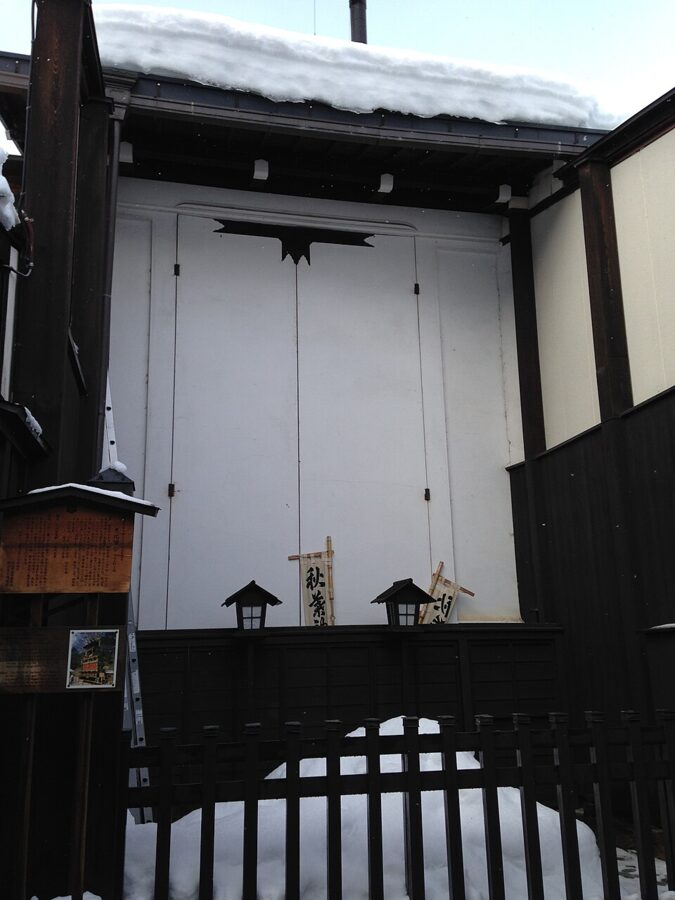
For the rest of the year the floats live in yatai-gura, tall white storehouses with doors two storeys high, scattered through the old town. You will walk past several without noticing. Early floats were taken apart after each festival and wore out in about fifty years; after fires in the 1830s destroyed many of them, the guilds built storehouses so the floats could stay assembled, and once they stayed assembled it was worth commissioning carvings for them.

The guilds competed, and they bought abroad. Hoo-tai’s middle-tier hangings are a three-colour weave brought in from Holland, and its back curtain a carpet from overseas. The carvings are the province’s carpenters at full stretch, and Taniguchi Yoroku’s long-armed and long-legged pair on Ebisu-tai is the model for the bronze figures on the Kajibashi bridge.
The karakuri puppets
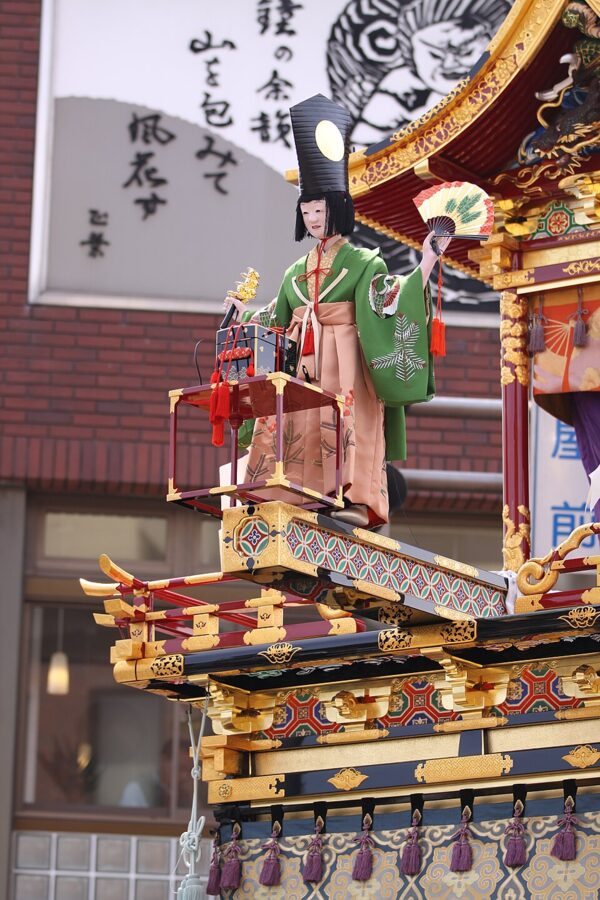
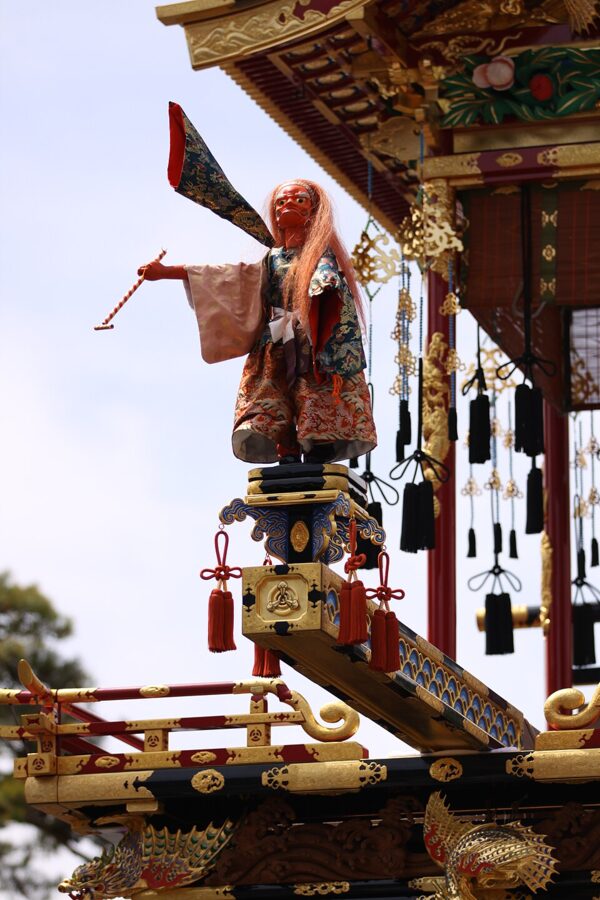
Four floats carry working karakuri, puppets moved by strings from inside the float. In spring, on Sanbaso, a puppet looks into Urashima Taro’s box, turns into an old man and dances with a fan and a shrine bell. On Ryujin-tai a Chinese boy makes a dragon god drunk, seals him in a jar and leaves him on Lake Biwa, and the dragon bursts out in a fury. On Shakkyo-tai a beautiful woman turns into a lion; that one was stopped as corrupting public morals and only came back in 1984, after about a century.

Autumn has only one, and it is the hardest. On Hotei-tai two Chinese boys swing from bar to bar along a ladder and land on the shoulders of Hotei, the fat god of good fortune. The puppets have been on the float since the 1780s. The performances take place at set times on both festival days.

Seeing it, and the Yatai Kaikan
Both festivals follow the same shape. On the first day the floats are drawn out and lined up, and a procession of a few hundred people in old costume escorts the portable shrine through the streets with lion dances and the gong-and-drum dance called tokeiraku. In the evening the floats are lit with lanterns and pulled back to their storehouses, and the second day repeats the daytime programme. Book a room months ahead; if you cannot get one, stay in Hida-Furukawa or Gero and come in by train.
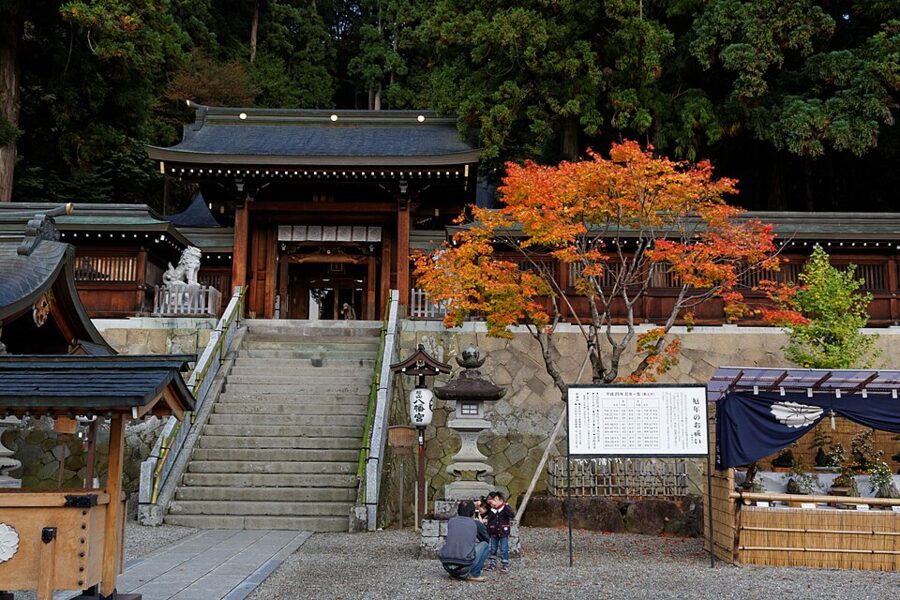

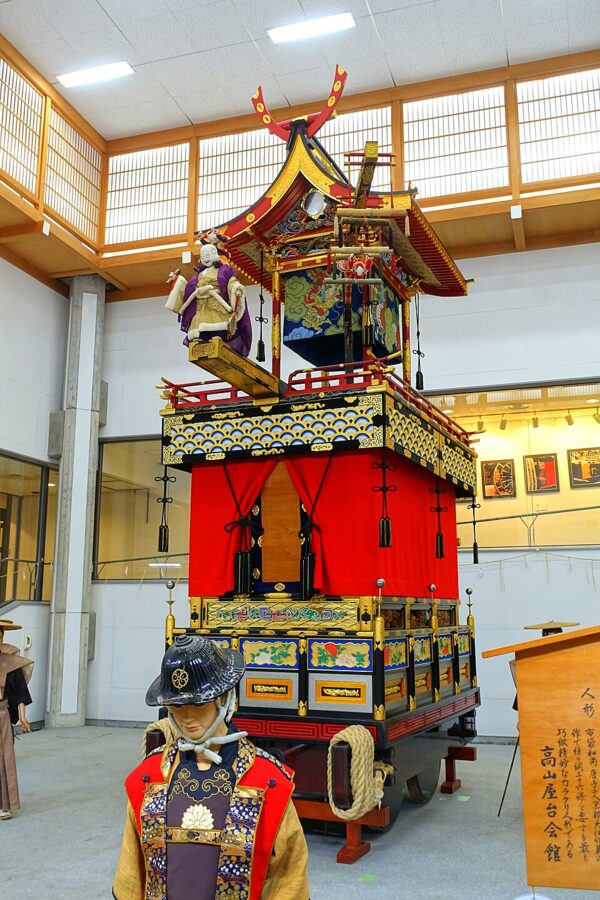
If your dates do not fit, the Takayama Festival Float Exhibition Hall (高山祭屋台会館), the Yatai Kaikan, in the grounds of Sakurayama Hachimangu, shows four of the eleven autumn floats at a time and changes them three times a year. It opened in 1968, and its takings pay for the upkeep of the floats. Admission is ¥1,000 and also covers a hall with a one-tenth scale model of the Toshogu shrine, made by thirty-three craftsmen over fifteen years in the Taisho era. It is open every day of the year.
Hida Kokubunji and the temples on the hill
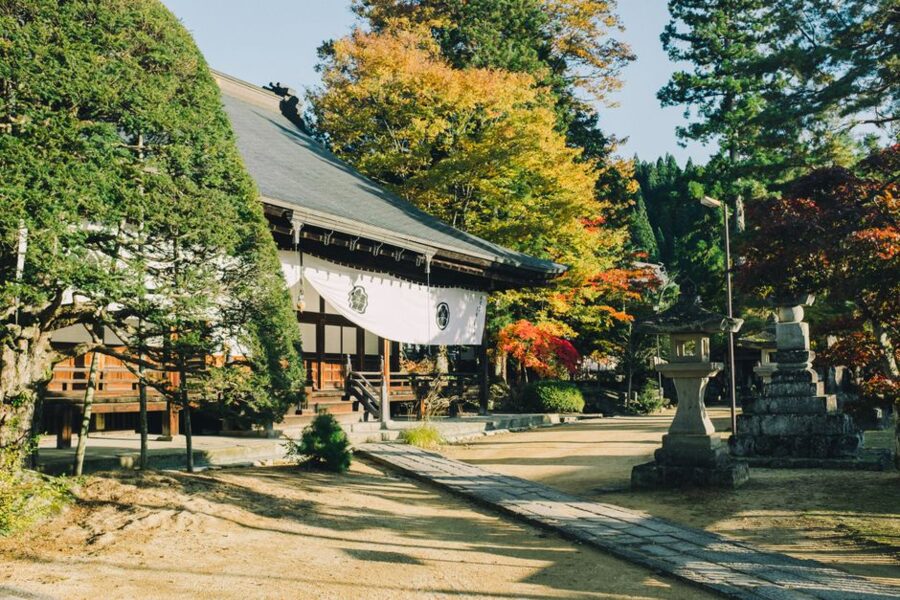
Five minutes’ walk from the station, Hida Kokubunji (飛騨国分寺) is the oldest foundation in town. Emperor Shomu ordered a state temple in every province in 741, and Hida’s was founded around 746; tradition credits the monk Gyoki. The foundation stone of its seven-storey pagoda is still in the grounds. The main hall is a Muromachi-period rebuilding and the oldest temple building in Hida, and the bell gate is said to have come from the demolished castle.
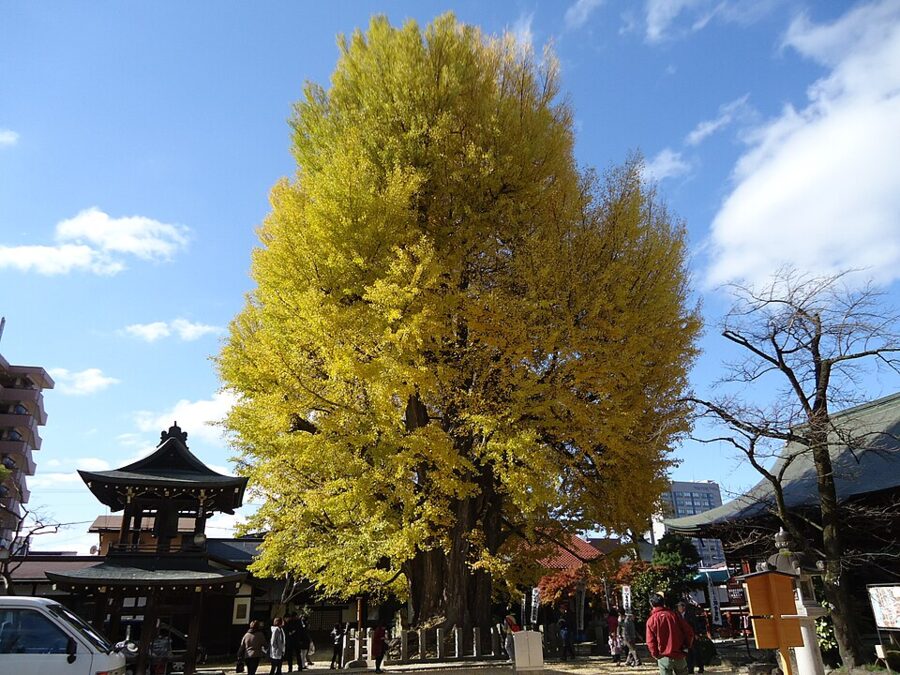

The tree comes with a darker story. When the first pagoda was built, the master carpenter cut the pillars short, and his daughter saved him by suggesting a set of bracket blocks on top to make up the height. To keep the secret she took her own life, and the ginkgo was planted on her grave. The temple also keeps a statue of Fujiwara no Muneyasu, the half-legendary builder honoured as the founder of the Hida carpenters.
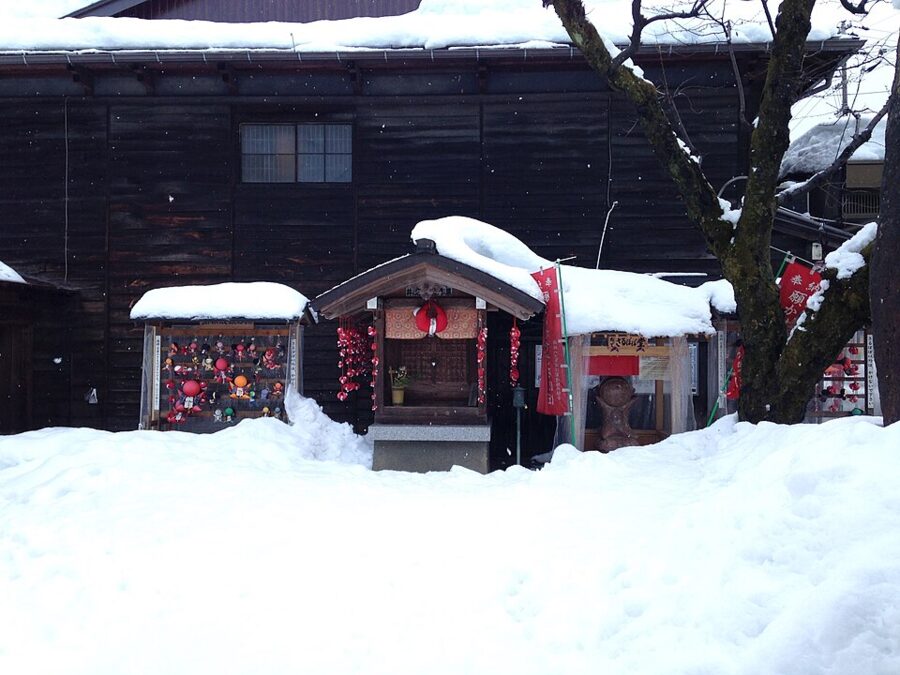

East of the river, the Higashiyama walking course follows the line of temples and shrines along the foot of the hills, from near Sakurayama Hachimangu south towards Shiroyama park. It is signposted in English and Japanese, and the temples are free to walk through; from the top of the steps at Hakusan shrine you can see the Northern Alps on a clear day.
Hida Folk Village
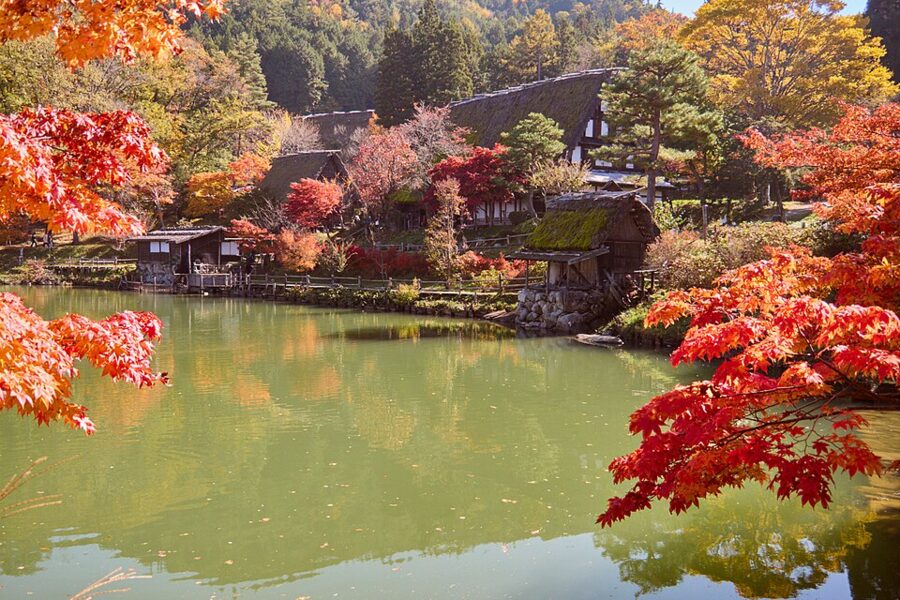
In the late 1950s the Miboro dam on the Sho River was about to drown a valley of thatched farmhouses, and one of them was sold to a garden in Yokohama. Takayama decided to keep the rest in Hida. The result is Hida Folk Village, Hida no Sato (飛騨の里), an open-air museum of about thirty farmhouses and storehouses moved from across the province, set around a pond on a hillside about two kilometres west of the station.
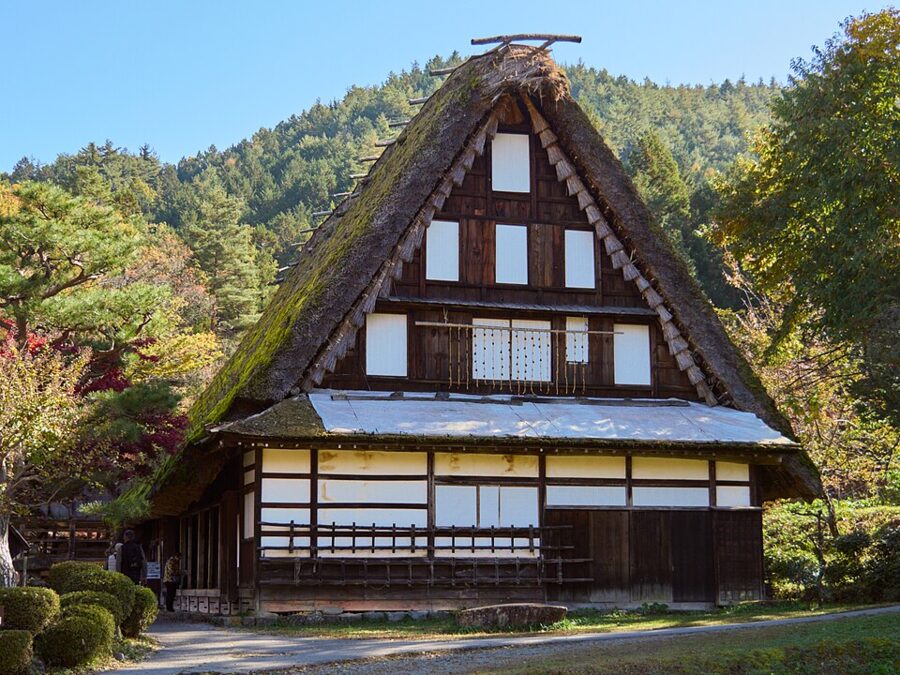
Four of the houses are Important Cultural Properties, including the Tanaka house, an early eighteenth-century farmhouse with a board roof weighted with stones. Craftspeople demonstrate weaving, straw work and Hida sashiko stitching, and there is a small shrine to the takumi. It is open 08:30–17:00 every day, ¥700 for adults, and the Sarubobo bus from the station takes about ten minutes. If you cannot reach Shirakawa-go, this is the next best thing, and in one way better, because you can walk through the houses.
Crafts: yew, lacquer and bentwood
Ichii itto-bori
Yew carving, ichii itto-bori (一位一刀彫), began in the early nineteenth century with Matsuda Sukenaga, a carver of netsuke, the toggles that hung from a man’s sash. Yew has a close grain, a reddish heartwood and a pale sapwood, and he worked with the contrast instead of painting over it. The rule still holds: no colour is added, and the wood deepens and glows with years of handling. The national government designated it a Traditional Craft in 1975.

The usual pieces are figurines, masks and tea utensils, and the good ones show the knife marks, which are the point. Buy where you can watch the carver at work.
Hida Shunkei lacquer
Shunkei lacquer has a story that ties it to the Kanamori. In the early seventeenth century a master carpenter called Takahashi Kizaemon split a piece of sawara cypress, liked the grain, and made a tray from it for Kanamori Shigechika, the tea-loving heir, who had it finished in clear lacquer by his lacquerer, Narita San’emon. The name may come from a famous yellow-glazed tea jar the finish resembled, or from the spring in which the tray was presented; no one has settled it.
Hida Shunkei (飛騨春慶) is two trades working together: the woodworker who shapes the piece, often bending thin boards into round boxes, and the lacquerer who stains it yellow and builds up coats of transparent lacquer until the grain shows amber through it. It was a lord’s luxury until the Kanamori left; then it went to market. Takayama’s private Shunkei museum closed in 2014 for lack of a successor and the trade has shrunk, but the old town’s shops still sell trays, sweet dishes, nested boxes and saucers.
Hida furniture and the sarubobo
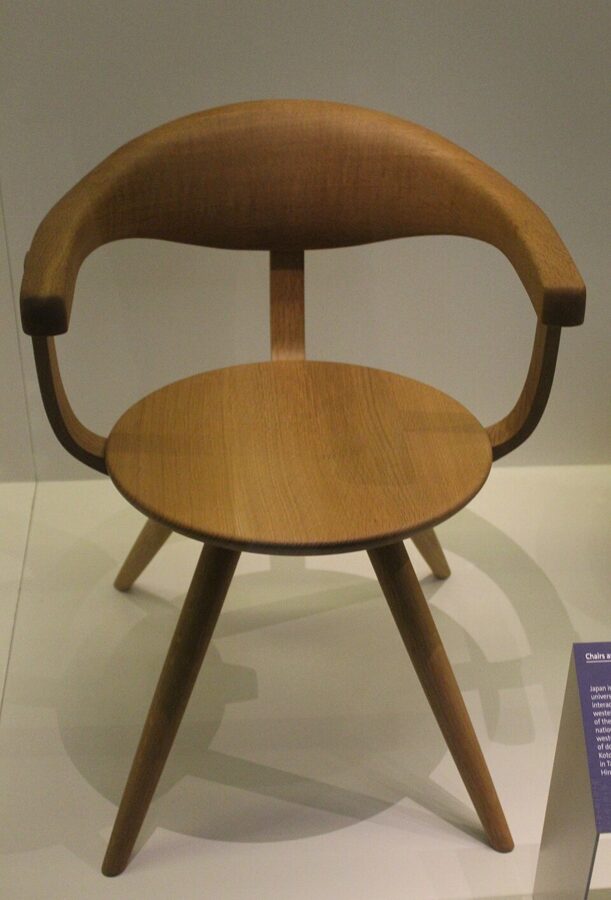
Hida’s beech forests were long little used. In 1920 local investors set up a company to make bentwood chairs from them; it became Hida Sangyo, and Takayama is still a furniture town, with several makers and showrooms.
The sarubobo, “monkey baby” in Hida dialect, is a faceless doll of red cloth that grandmothers made as a charm for safe childbirth, good marriages and healthy children. It is now on every shelf in town in every colour. Red is the original, and the plain red ones are the better buy.
What Takayama eats
Hida is a long way from the sea, and before refrigeration its food was what kept through a long winter: pickles, miso, dried mountain vegetables, rice cakes. The dish that brings people now is newer.
Hida beef
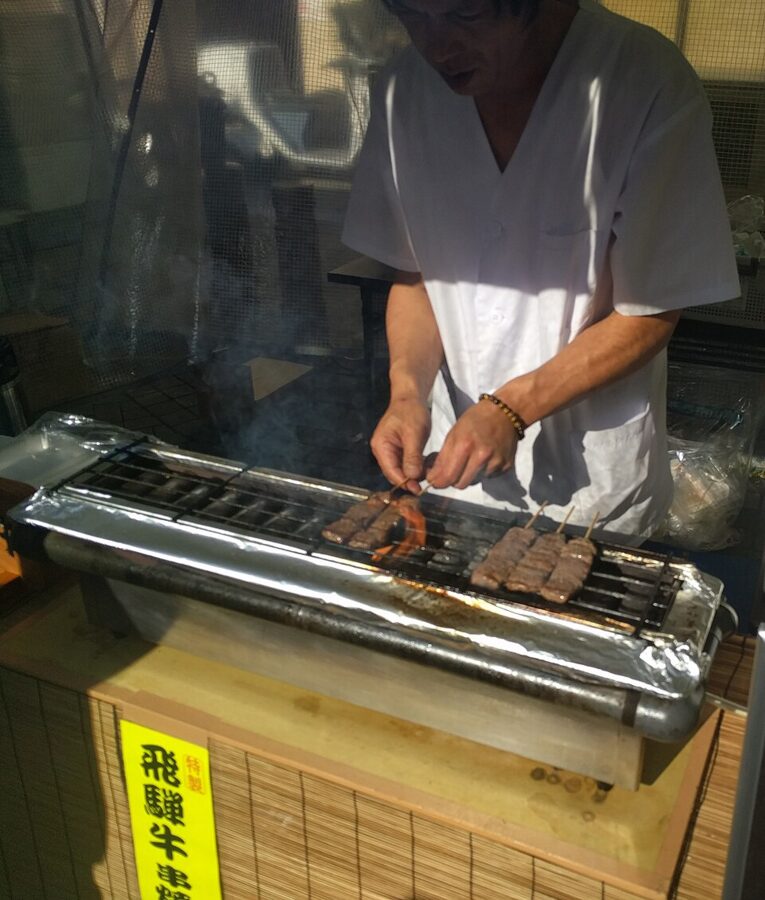
Hida’s cattle were working animals until the 1960s, when the province turned to beef. Hida beef (飛騨牛) is a regional brand with a strict definition: Japanese Black cattle fattened in Gifu Prefecture for at least fourteen months, graded 3 or above for meat quality and A or B for yield. Beef that misses the grade is sold as Hida wagyu. Most of it comes from Hida farms, where breeding cows go up to mountain pastures in summer and come down to barns for the winter.
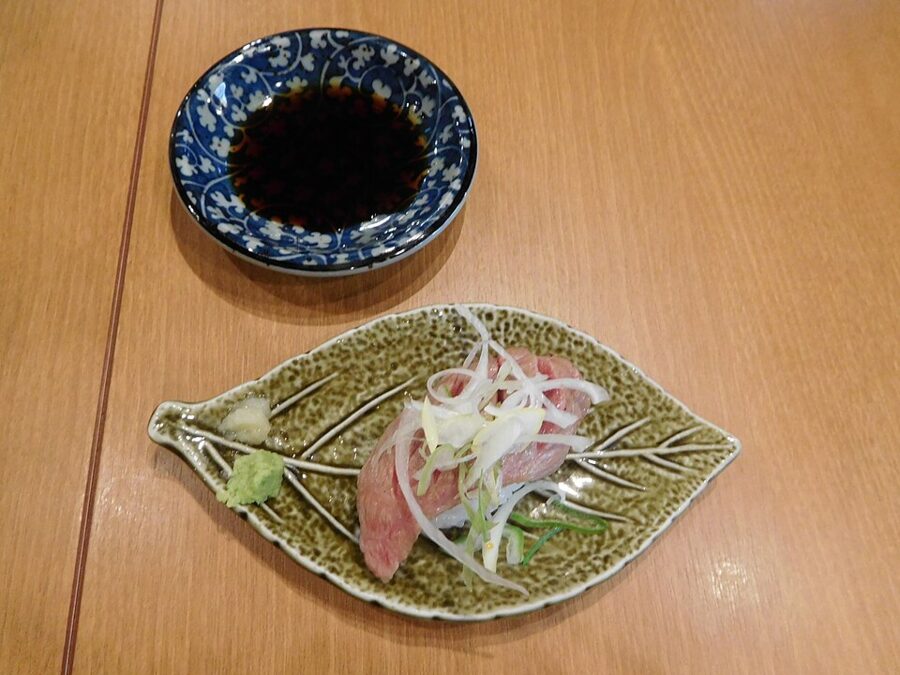

In the old town you will find it on rice, on skewers, in croquettes and steamed buns. For a sit-down meal, restaurants that serve sukiyaki and steak at night offer noticeably cheaper set menus at lunch. I would eat it once properly rather than three times off a stick.

Hoba miso
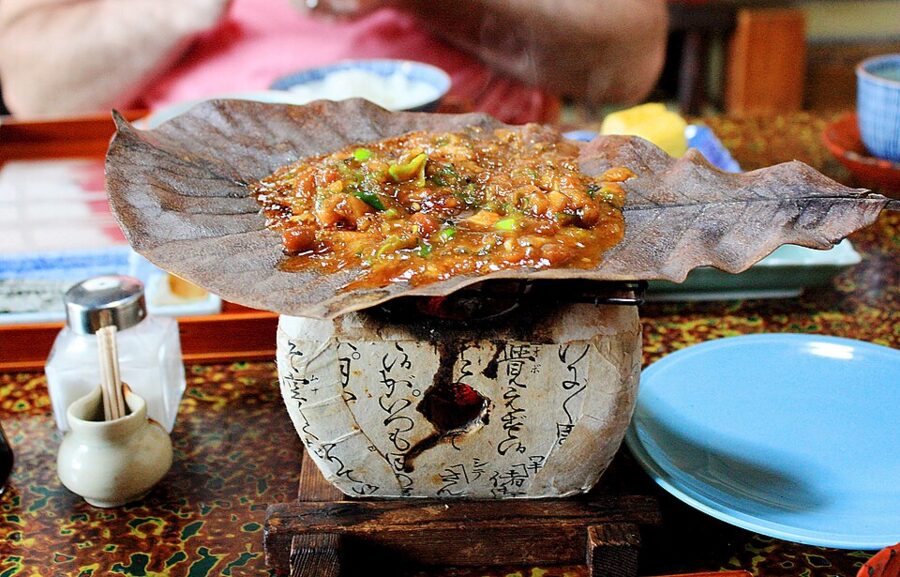
Hoba miso (朴葉味噌) is the farmhouse dish: miso mixed with spring onion and mushrooms, spread on a dried leaf of the Japanese big-leaf magnolia and set over a small burner until it bubbles and the leaf starts to scorch. You eat it with rice. Inns in Hida often serve it at breakfast, and restaurants now put Hida beef on top. Its origins are uncertain, but the story is of farmhouses warming miso on a leaf at the hearth through the winter.

Takayama ramen
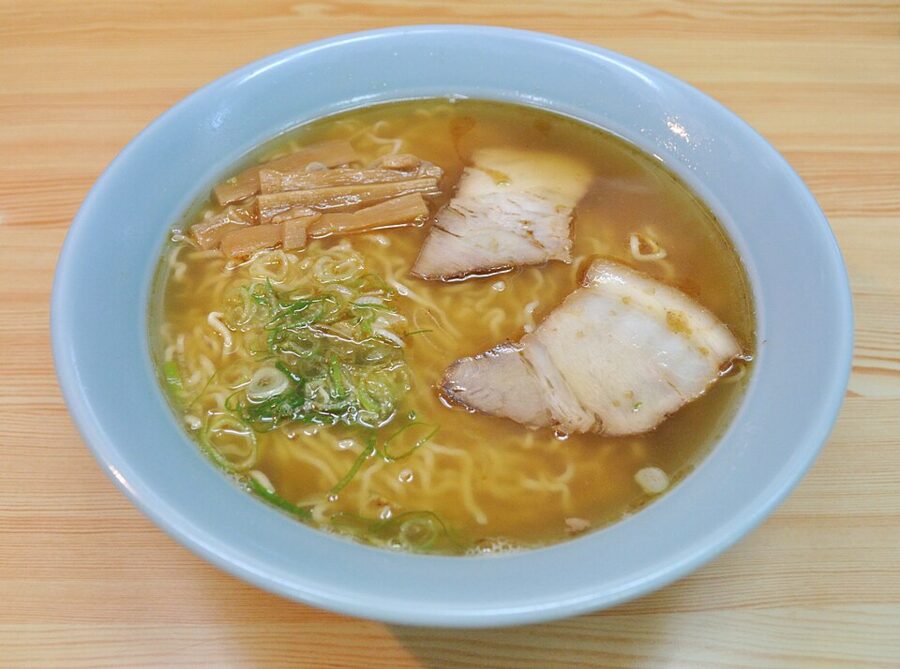
Takayama’s ramen dates from the early Showa years, and locals still call it chuka soba, Chinese noodles, keeping plain soba for the buckwheat kind. It is a light soy-sauce broth on chicken bones with very thin curly noodles, and the local difference is in the pot: the seasoning is simmered with the stock from the start instead of being added to each bowl. The town had about thirty ramen shops in 2015, and each makes it a little differently.
Getting there and getting around
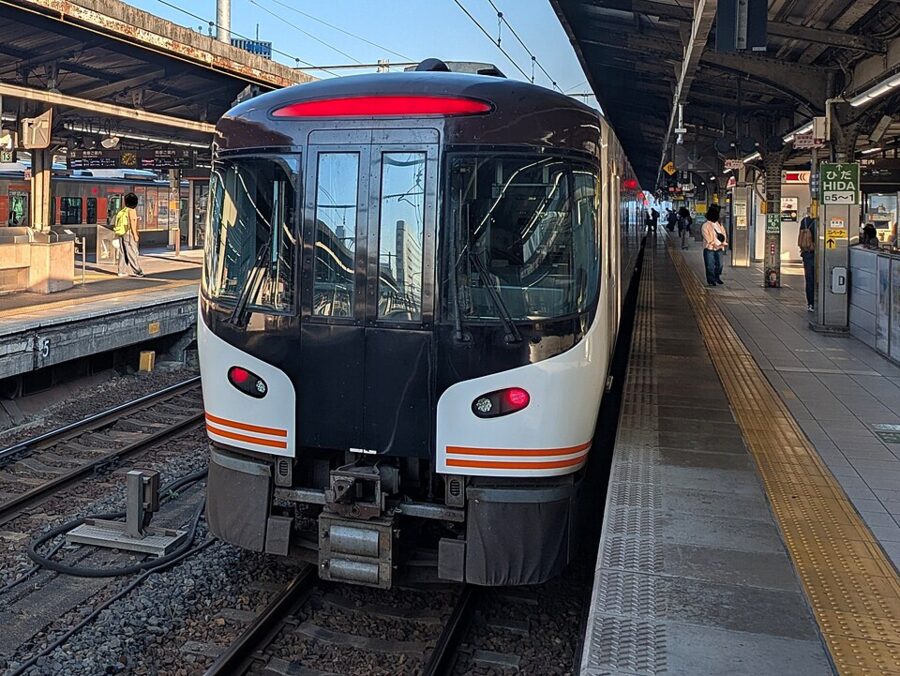
The Hida limited express runs from Nagoya to Takayama in about 2 hours 35 minutes, and the best of it is south of Gero, where the line threads the Hida River gorges. The fare is ¥5,610 with an unreserved seat in December 2026 (¥3,410 fare plus ¥2,200 express charge); reserved seats cost more and vary by season. The trains are JR Central’s HC85 hybrids, which took over every regular Hida service in March 2023.

From Tokyo, the usual route is the Tokaido Shinkansen to Nagoya and the Hida from there, about 4 hours 10 minutes in all for about ¥15,300. The alternative is the Hokuriku Shinkansen to Toyama and the Hida south, a little longer and a little dearer, and the obvious way if you are coming from Kanazawa. Toyama to Takayama takes about 1 hour 30 minutes for ¥2,890 unreserved. The national Japan Rail Pass covers the Hida, but JR Central’s Takayama-Hokuriku Area Tourist Pass, which also covers the Shirakawa-go buses, is usually the better buy if Takayama is your only long trip.
Highway buses are cheaper and often as quick. From Nagoya the bus takes about 2 hours 40 minutes for ¥3,600. From Shinjuku in Tokyo the direct bus takes about 5 hours 45 minutes and the fare changes with the date; it was ¥8,000 for a Tuesday in early December 2026. Buses from Matsumoto take about 2 hours 40 minutes (¥4,400) and from Kanazawa about 2 hours 20 minutes via Shirakawa-go (¥4,400), and both need a reservation.
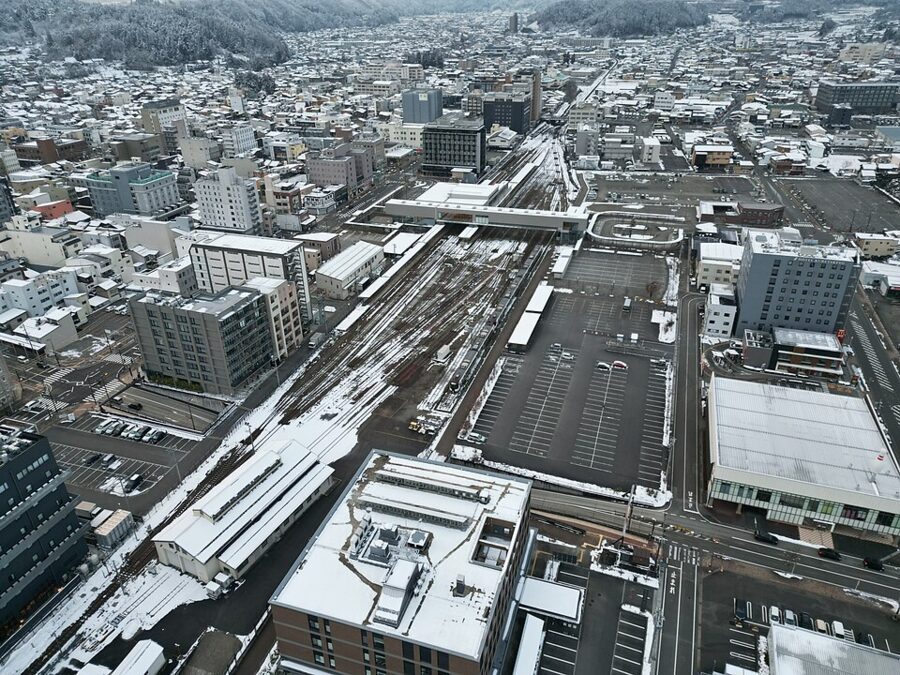

Once you are there, the old town is a ten-minute walk east of the station and everything in it is on foot. Two loop buses cover the outlying sights: the Machinami bus round the old town and the Sarubobo bus to Hida Folk Village. Takayama has charged an accommodation tax since October 2025, ¥100 to ¥300 per person per night depending on the room rate, with children of primary school age and under exempt.
Staying, and when to come
Takayama is worth at least two nights, and the reason is the hours. Day-trippers from Nagoya arrive mid-morning and leave mid-afternoon; if you sleep in town, you get the market at 07:00, the old streets before 09:00, and the lanes along the Enako River after dark. Most inns and hotels are between the station and the river. Choose one that serves dinner if you can: many newer hotels are room-only, and the town has fewer restaurants than its visitor numbers need, a problem the city has been trying to fix by recruiting restaurants from outside.

The climate is inland and mountain. January averages −1.2°C, with mornings around −5°C; August averages 24.4°C, with afternoons around 31°C. The two festivals are the peak.
The cherries usually flower in mid-April, so the spring festival often has both. Autumn colour comes down from the mountains through October and reaches the town in early November. Winter is the quietest season and, for the breweries and the snow on the roofs, my favourite; just be ready for cold rooms at the Jinya and early sunsets.
Day trips
Takayama is the hub for the whole of Hida and a good way into the mountain side of Chubu. These are the four I would choose, in order.
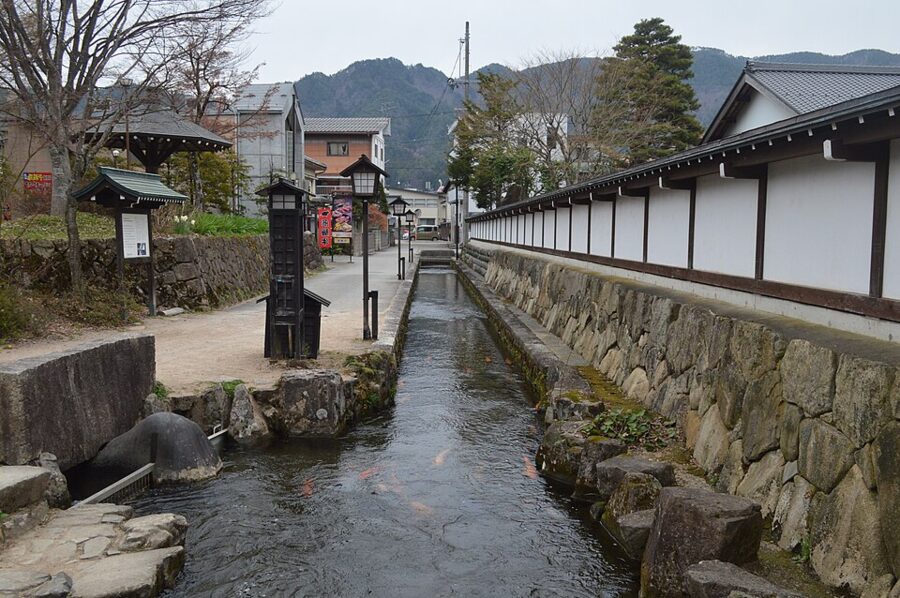
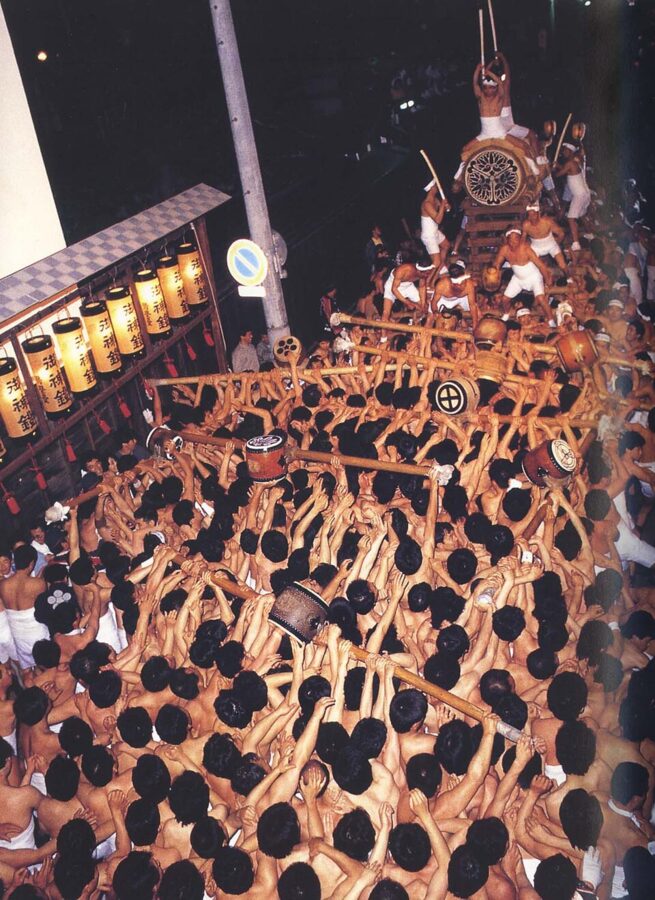
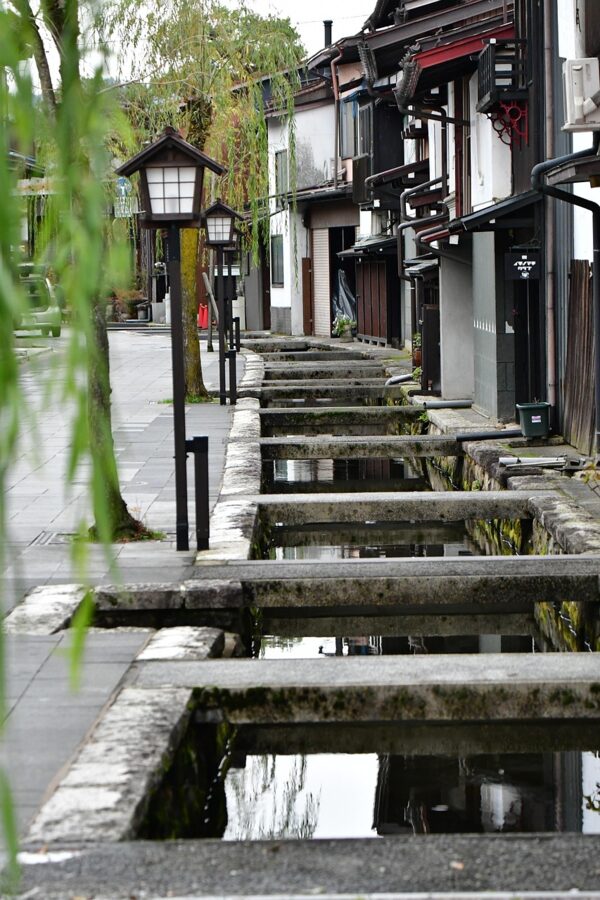
Hida-Furukawa is about 15 minutes north by local train (¥240), a smaller merchant town with white storehouses along the Seto River canal, carp in the water, and its own festival on 19 and 20 April, when a great drum is carried through the streets at night. Go in the afternoon after Takayama’s crowds have worn you out.

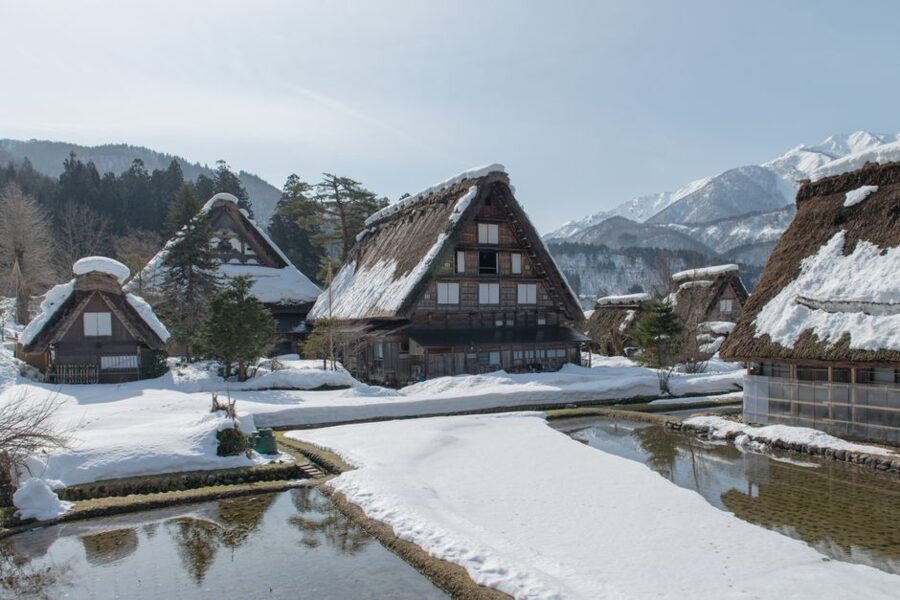
Shirakawa-go, the World Heritage village of thatched farmhouses, is about 50 minutes away by Nohi bus (¥2,900), and seats on some services must be booked. Okuhida, the five hot-spring villages of Hirayu, Fukuji, Shin-Hirayu, Tochio and Shinhotaka, is about an hour and a half east by bus. A landslide closed part of Route 158 in February 2026 and traffic uses a detour, so allow extra time. Gero, an old hot-spring town on the Hida line, makes an easy stop on the way back to Nagoya.

One, two or three days
One day. The Miyagawa market from 07:00, then Sanmachi before 09:00 while it is quiet. Takayama Jinya when it opens at 08:45, with its own market at the gate.
Late morning at the Yatai Kaikan and Sakurayama Hachimangu, then the Kusakabe house and the Town Museum. After lunch, Hida Kokubunji near the station, and the Higashiyama walk in the late afternoon light. Beef for dinner.
Two days. Add Hida Folk Village on the morning of the second day, then the train to Hida-Furukawa in the afternoon. Spend the evening on the lanes along the Enako River and the old streets after the shops shut.
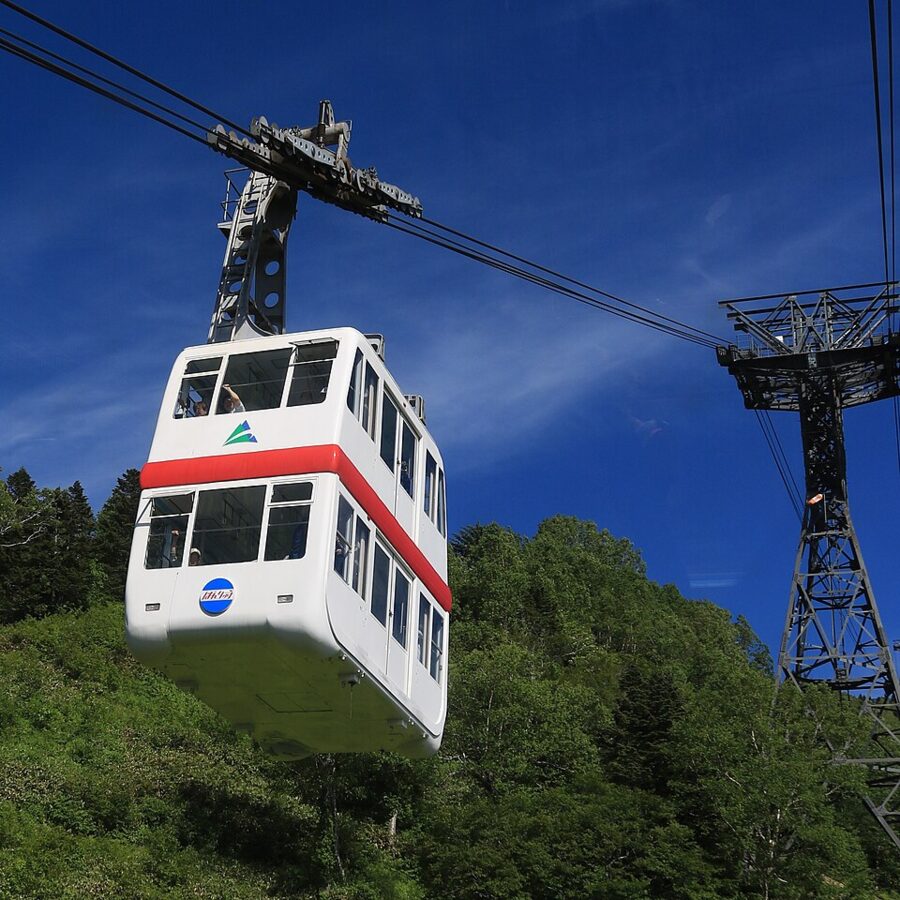
Three days. Use the third day for one of the longer trips: Shirakawa-go by an early bus, back by mid-afternoon, or a night in Okuhida with the Shinhotaka Ropeway in the morning. If you are travelling on to Kanazawa, take the bus through Shirakawa-go and stop there on the way.

Takayama is a town of carpenters before it is anything else. The conscripts who walked south past Kuraiyama went to build for someone else; their descendants stayed at home and built for the merchants and the festivals, and the furniture works on the edge of town are still bending beech. When you leave, the Hida line climbs out of the basin over the same watershed, under the same yew forest, on the way the carpenters went.