
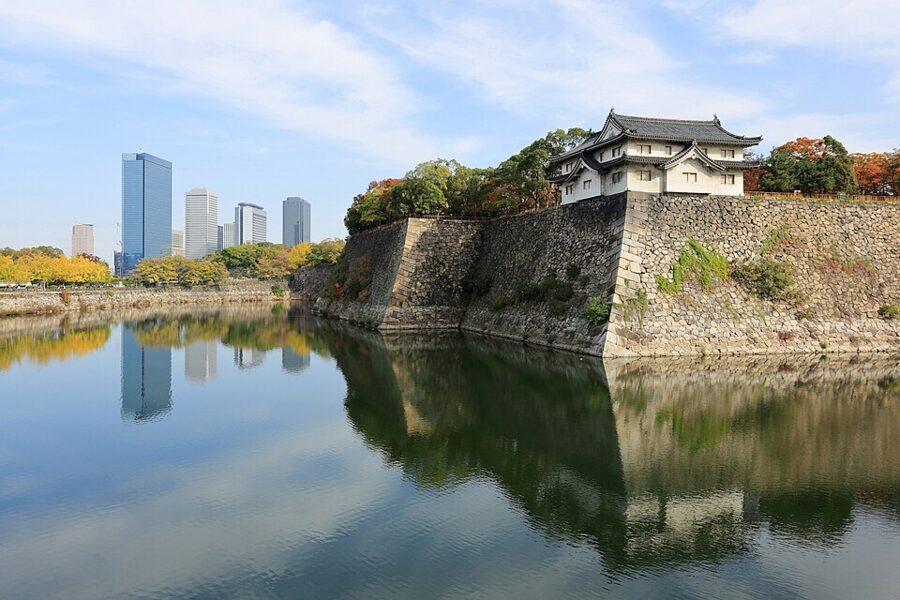

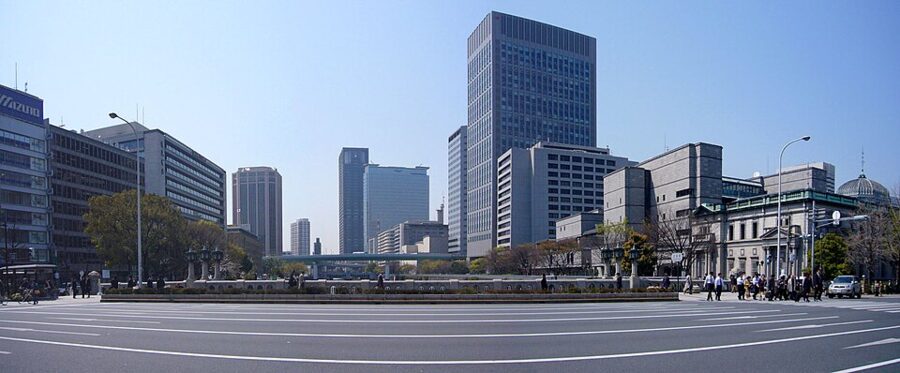
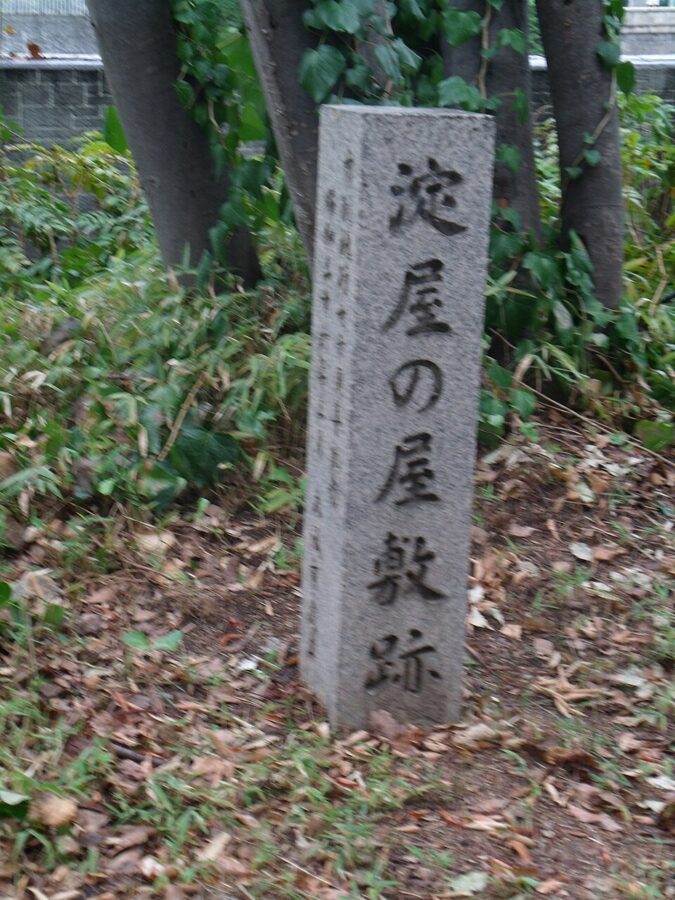
Of the 155 bridges Osaka counted over its rivers and canals in 1787, the shogunate had paid for twelve. Every other bridge was built and kept up by the townspeople who used it: a street association, a guild, or one merchant house that wanted a quicker way to its customers. One station on the Midosuji Line between Umeda and Namba still carries one of those private names. Yodoyabashi is the bridge of the Yodoya, a rice-trading family who put it across the Tosabori River so that buyers could reach the street-corner market outside their door.

That is the short version of how Osaka (大阪) came to be the way it is. Kyoto was built for an emperor and Tokyo for a shogun; Osaka was rebuilt after 1615 as a town of merchants, under the shogun’s direct rule but run day to day by the people who paid for its bridges, dug its canals and set the price of the nation’s rice. The castle on the hill is the famous part. The canals, the warehouses and the trading floor below it made the city.

The city today holds about 2.81 million people (the 2026 estimate), and most visitors meet it as a food town with neon on the water. Both are fair. I’d give Osaka three days at the least, because it is also the best base for the rest of Kansai.
In this guide
- Naniwa: a harbour at the end of a ridge
- The temple fortress and Hideyoshi's castle
- The kitchen of the realm
- Puppets, Kabuki and the five theatres
- Smoke capital: Meiji, Dai-Osaka and 1945
- Two Expos and an island
- Reading the city: the districts
- The merchant city now
- What Osaka eats
- Getting there and getting around
- Where to stay
- Day trips, and how long to stay
Naniwa: a harbour at the end of a ridge
Before there was an Osaka there was Naniwa (難波), and before there was much of either there was the Uemachi plateau. It is a ridge of higher ground running north from Sumiyoshi to the castle, and in the early centuries AD it stood out like a peninsula between the open bay to the west and a lagoon and reed marsh to the east. Everything that came by sea to the Yamato court, envoys from Korea and China, Buddhist monks and tribute, landed at its harbours.
One of their shrines survives. Sumiyoshi Taisha (住吉大社) guarded the port of Suminoe at the southern end of the ridge, and its gods sailed with the court’s envoys to Tang China. The sea has since retreated well to the west, so the shrine that once faced the waves now faces a tram line.
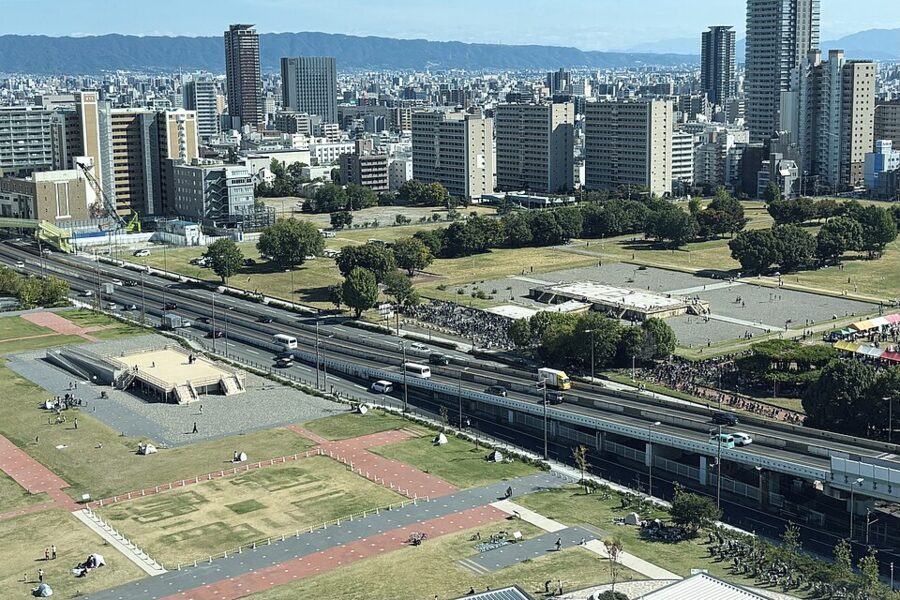
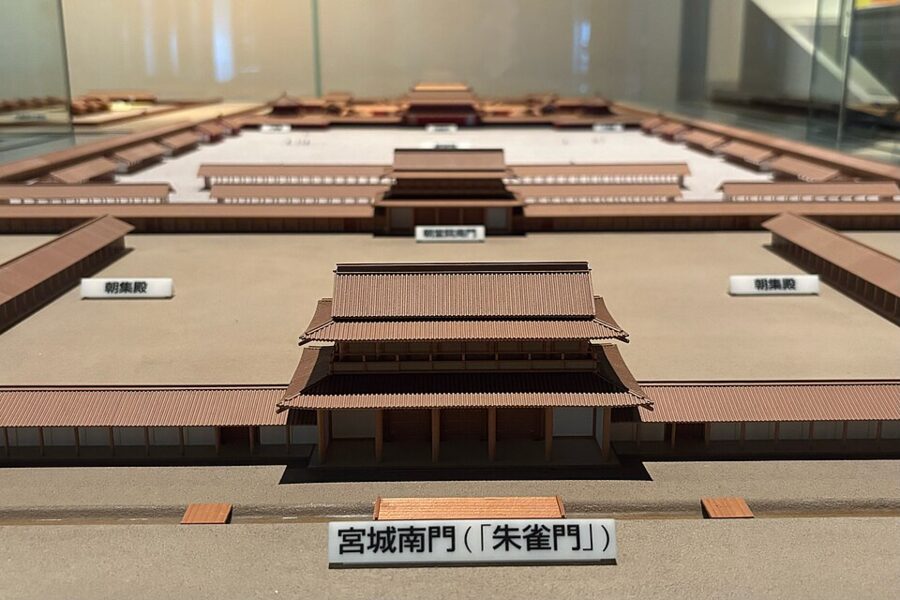
In 645 Emperor Kotoku moved his court to Naniwa after the palace coup that began the Taika reforms, and the palace built for him was the first in Japan laid out with a clear separation of residence, government halls and ceremonial courtyard. Later capitals copied the plan. The court soon moved on, and the palace was forgotten so completely that nobody knew where it had stood.
Tiles of the right age turned up south of the castle moat in 1913, but the land was the army’s. Only after 1945 could the archaeologist Yamane Tokutaro dig, and from 1954 he worked between new office blocks while colleagues joked about “Yamane’s palace”, until the great hall’s foundations proved him right.
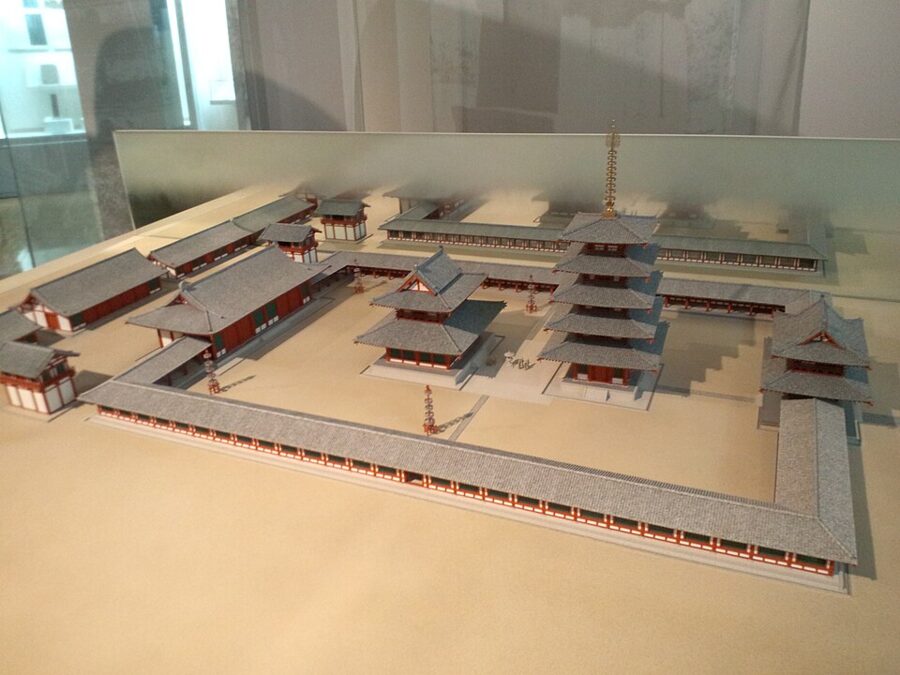
Shitennoji (四天王寺) is older still. The Nihon Shoki, the court chronicle of 720, says Prince Shotoku vowed to build a temple to the Four Heavenly Kings if his side won the war of 587 over Buddhism, and that work began at Naniwa in 593. The date is the chronicle’s, but Shitennoji is counted with Asuka-dera as one of the two oldest real Buddhist temples in Japan.

The name Osaka arrives only in 1496, in a letter of the priest Rennyo, who built a retreat for his Jodo Shinshu sect on the northern tip of the ridge. Sources disagree about where the name came from. The obvious reading, “big slope”, may be a later rationalisation, since the place was earlier written 小坂 and pronounced Ozaka, “small slope”.
The temple fortress and Hideyoshi’s castle
Rennyo’s retreat grew. In 1533 it became the head temple of his sect, Ishiyama Hongan-ji, with moats, earth ramparts and a temple town inside them, and the believers who ran it raised armies. From 1570 Oda Nobunaga besieged it for ten years. The sect’s leader Kennyo finally handed it over in 1580, and it burned soon afterwards.
Toyotomi Hideyoshi, who finished the unification of Japan, began his own castle on the same hilltop in 1583. It was built to be seen: a black-and-gold keep, a main compound in three levels, and a castle town of merchants, many of them moved in from Sakai. His heir Hideyori held it after Hideyoshi’s death in 1598, until the Tokugawa came for it in the winter of 1614 and again in the summer of 1615. In the summer campaign the castle fell and burned, and Hideyori and his mother Yodo-dono died inside.
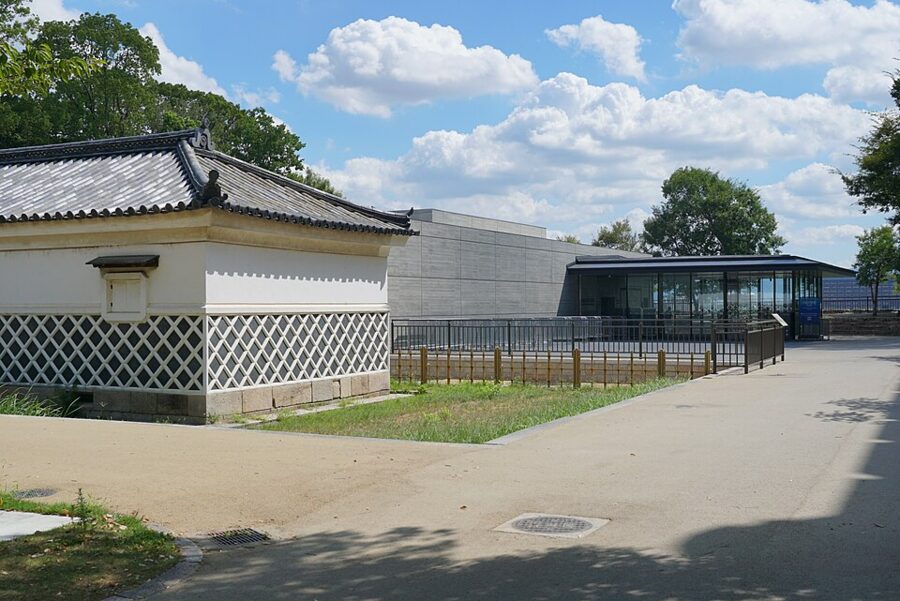

What the shogunate did next explains the castle you see. From 1620 it rebuilt Osaka Castle (大阪城) on a larger scale, and rather than clear the Toyotomi ruins it buried them, raising the middle level of the old main compound by about 6 metres of fill. Every wall and moat in the park today is Tokugawa work. Hideyoshi’s castle was under the lawn, out of sight and out of mind, until an excavation in 1984 found a stretch of its wall.
The Tokugawa keep burned after a lightning strike in 1665 and was never replaced, so Osaka went without one until 1931.
The kitchen of the realm
After 1615 the shogunate took Osaka under direct rule and set about filling it with business. The townspeople were organised into three districts, north, south and Tenma, which by the 1780s held more than 600 wards between them. And they dug. Canals were cut through the low ground west of the castle, usually by private developers who were paid in land along the banks.
Dotonbori (道頓堀) is the best-known case. Work on a new canal south of the town began in 1612, with four local landowners paying for it themselves; the leader, Nariyasu Doton, sided with the Toyotomi and died in the siege, and his partners Yasui Kyubei and Hirano Tojiro finished the job in 1615. The new lord of the city let the canal keep Doton’s name. Shinsaibashi to the north is the same pattern: Okada Shinsai, one of the four men who dug the Nagahori canal, bridged it in 1622 for his own ward.
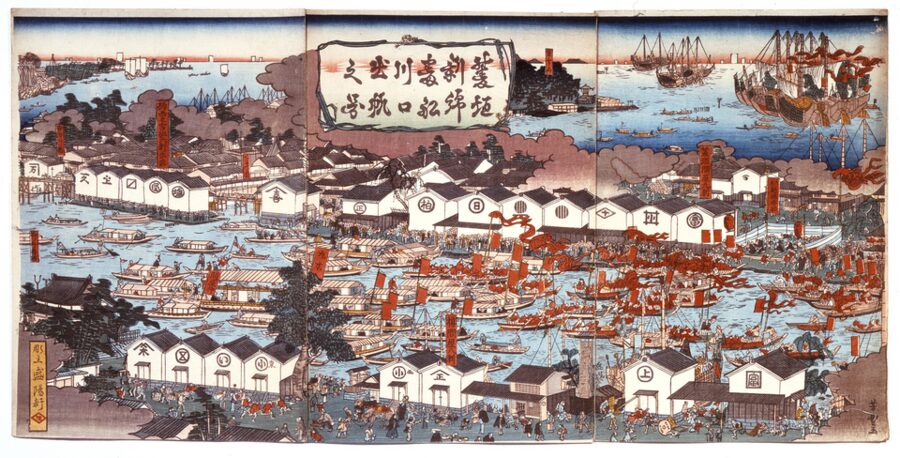
The point of all that water was rice. Under the Tokugawa a daimyo’s income was paid in rice, and rice is only money once someone buys it. So the domains of western and northern Japan shipped their tax rice to warehouse compounds called kurayashiki in Osaka, where merchants sold it and lent against next year’s crop. About 80 domains kept them in the 1670s and about 125 by the 1840s, most of them crowded on Nakanoshima and the canal banks either side.
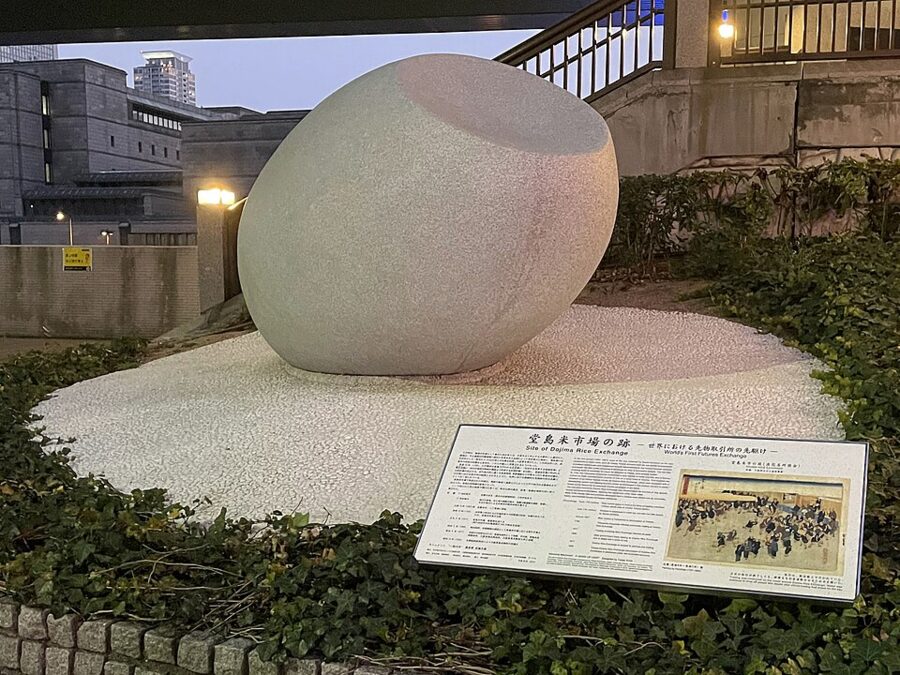
The rice market started on the street outside the Yodoya house, and in 1697 it moved across the river to the new ground at Dojima. There, in 1730, the shogunate licensed what amounted to a futures exchange. Traders posted a margin deposit and bought and sold rice for delivery in a future month, settling the difference in cash, and much of what happened at Dojima would be recognisable to a modern commodities floor.
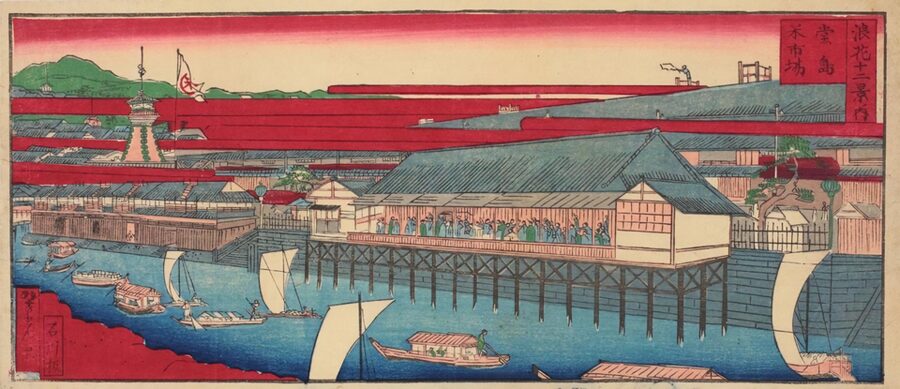
From this came the name everyone now uses for Edo-period Osaka, tenka no daidokoro, “the kitchen of the realm”. It is less old than it sounds. Edo documents call Osaka “the kitchen of the provinces” and “the provisioner of Japan”, but the exact phrase has not been found in any Edo text; it was settled as Osaka’s nickname by the 1890s and spread through the city’s own official history in the Taisho era.

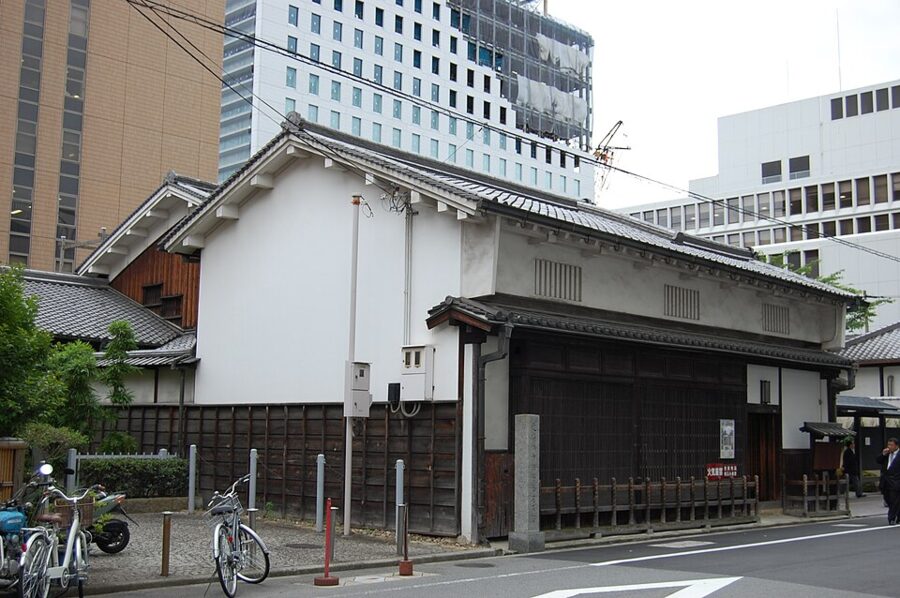
Merchant money also paid for schools. In 1724 five merchant houses founded the Kaitokudo, an academy in Senba where clerks and shopkeepers could study Confucian learning alongside the founders’ sons. In 1838 the physician Ogata Koan opened Tekijuku a few streets away to teach Western medicine from Dutch books. More than a thousand students passed through it, among them Fukuzawa Yukichi, who went on to found Keio University in Tokyo.

Not all of it was comfortable. In the famine of 1837 Oshio Heihachiro, a retired police officer and scholar, sold his library of some 50,000 volumes to feed the poor, and when the magistrates still did nothing he led an armed rising. It failed within a day, and the fires it started burned about a fifth of the city and left some 70,000 people homeless.
Puppets, Kabuki and the five theatres
All that commerce wanted entertainment, and Dotonbori supplied it. In 1653 the authorities licensed five theatres along the south bank of the new canal, with teahouses on the north bank to feed and book the audiences. The layout survives as habit: the south side of Dotonbori-dori is still mostly entertainment and the north side mostly restaurants.
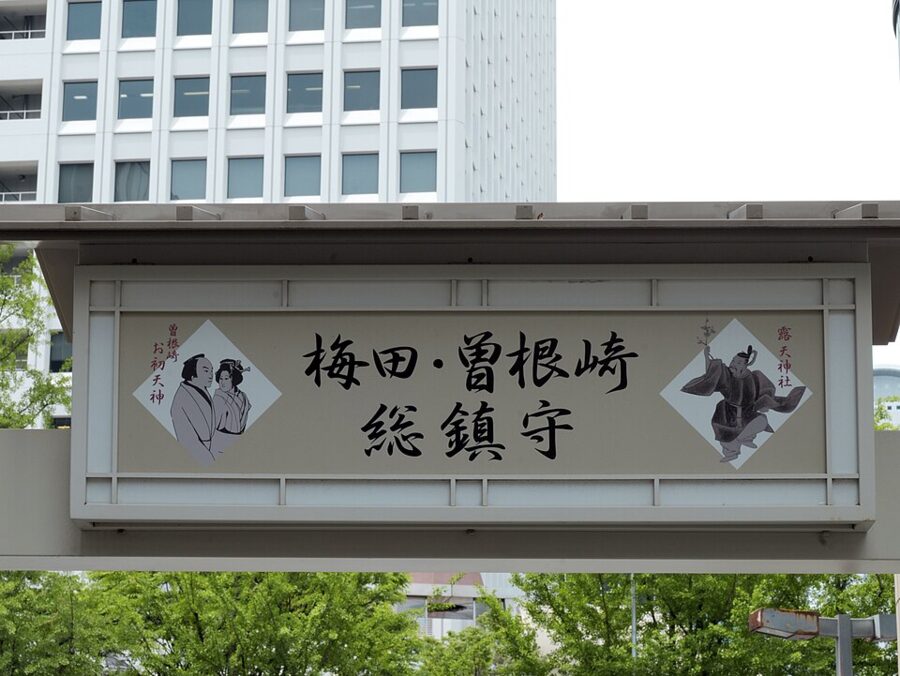
In 1684 the chanter Takemoto Gidayu opened his own theatre on Dotonbori and staged puppet plays to his style of narration, now called gidayu-bushi. His playwright was Chikamatsu Monzaemon. In 1703 Chikamatsu took a real event from that spring, the double suicide of a shop clerk and a courtesan in the woods of a shrine at Sonezaki, and turned it into Sonezaki Shinju, the first of his plays about ordinary townspeople rather than samurai or gods.

The puppet theatre that grew from Takemoto’s stage took its later name, Bunraku, from another Osaka theatre of the 19th century. Each main puppet needs three operators, and the chanter and the shamisen player sit on a platform to one side and carry the whole text. Bunraku was proclaimed a Masterpiece of the Oral and Intangible Heritage by UNESCO in 2003 and has been on the intangible heritage list since 2008.
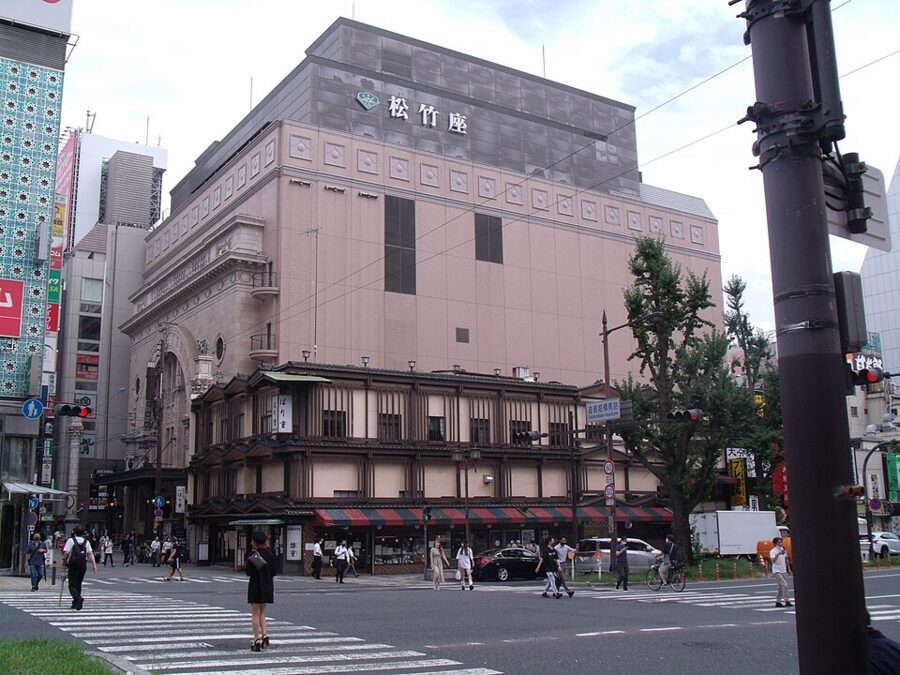
Kabuki shared the street, and both arts went on in Dotonbori through the 20th century, by then with Shochiku as the landlord. The old five theatres closed one by one from the 1980s. The Osaka Shochikuza, built in 1923 as the first Western-style theatre in Kansai, carried on the Kabuki tradition here until its last performance in May 2026.

Smoke capital: Meiji, Dai-Osaka and 1945
The Meiji Restoration nearly ruined Osaka. The new government cancelled the domains’ debts, which were largely owed to Osaka merchants, and abolished the merchant guilds that had kept order in the markets. Several of the great houses went under.
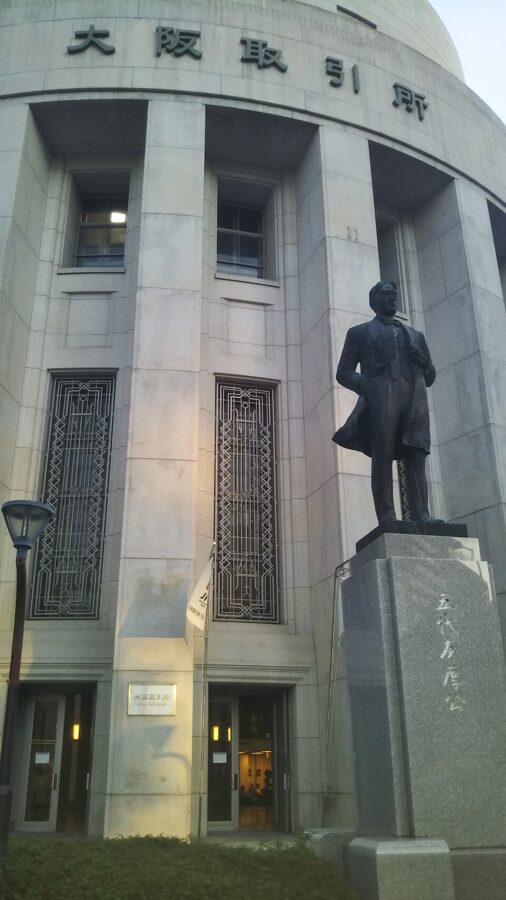
The recovery is tied to Godai Tomoatsu, a former Satsuma samurai who stayed on in Osaka after a government posting. In August 1878 he founded the Osaka Stock Exchange, and in September the Osaka Chamber of Commerce, with himself as its first president. Cotton spinning followed, and by the early 20th century Osaka’s mills and chimneys had earned it two nicknames, “the Manchester of the East” and “the city of smoke”.

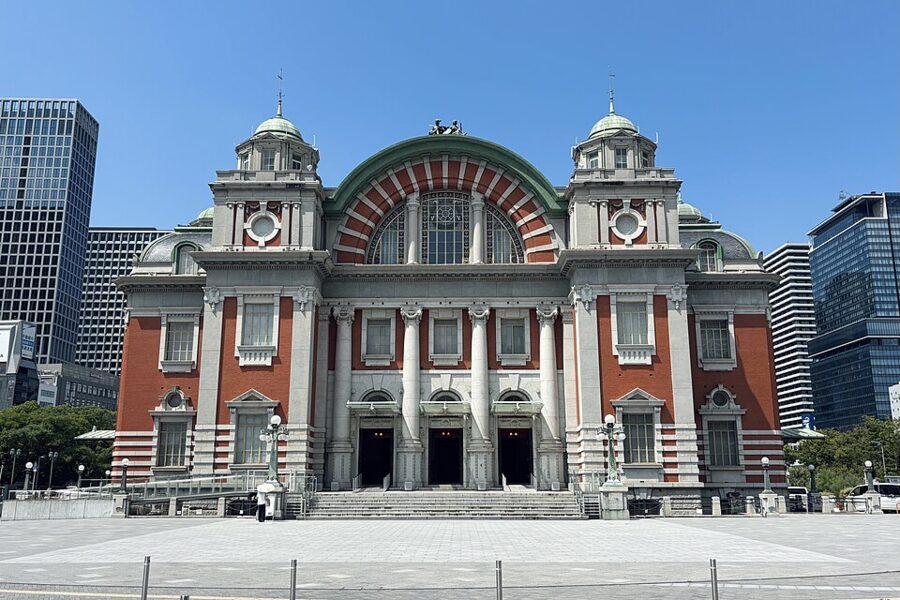
Money went into public buildings, and some of it from surprising places. In 1911 the stockbroker Iwamoto Einosuke gave one million yen, his inheritance plus most of his own fortune, to build a public hall for the city. The market turned against him and he shot himself in October 1916, two years before the Central Public Hall on Nakanoshima opened. The Sumitomo family had already built and given the city its library next door, in 1904.
On 1 April 1925 Osaka took in all 44 towns and villages of the two counties around it. Overnight it had 181 square kilometres and about 2.11 million people, more than Tokyo, which was still rebuilding after the 1923 earthquake, and the sixth-largest population of any city in the world. The years either side are remembered as Dai-Osaka, “Greater Osaka”.
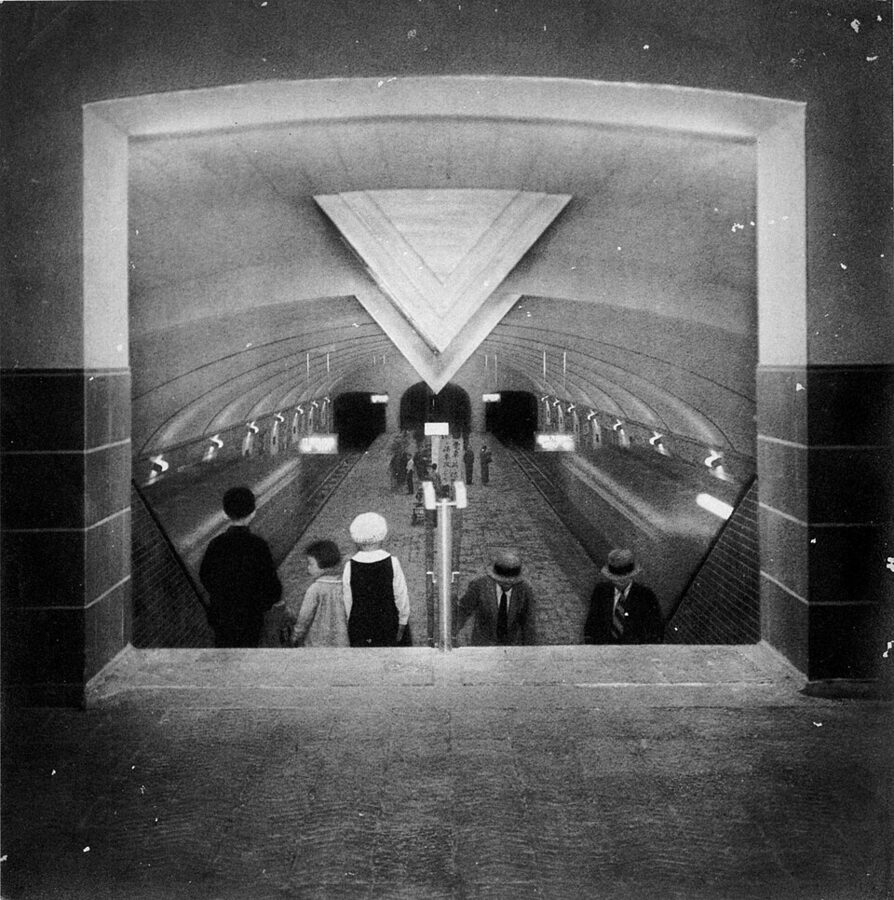
The mayor who shaped it was Seki Hajime, an economist from Tokyo who had studied in Belgium and Germany and came to Osaka as deputy mayor in 1914. Seki’s monument is a street. Midosuji had been a lane about 6 metres wide; he widened it to 43.6 metres across 4 kilometres from Umeda to Namba, finished in 1937, and put the city’s first subway line underneath it, opened between Umeda and Shinsaibashi in 1933.
In 1931 the city also got its castle keep back. The money, about 1.5 million yen, came from public subscription, and the new keep was built in steel-reinforced concrete as a museum from the start. In 2026 it was approved for designation as a national Important Cultural Property.
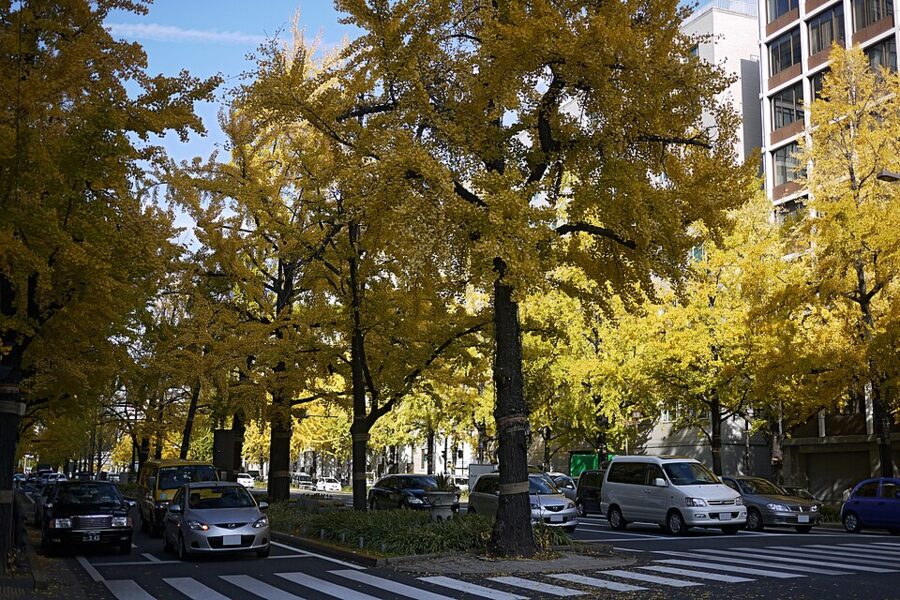

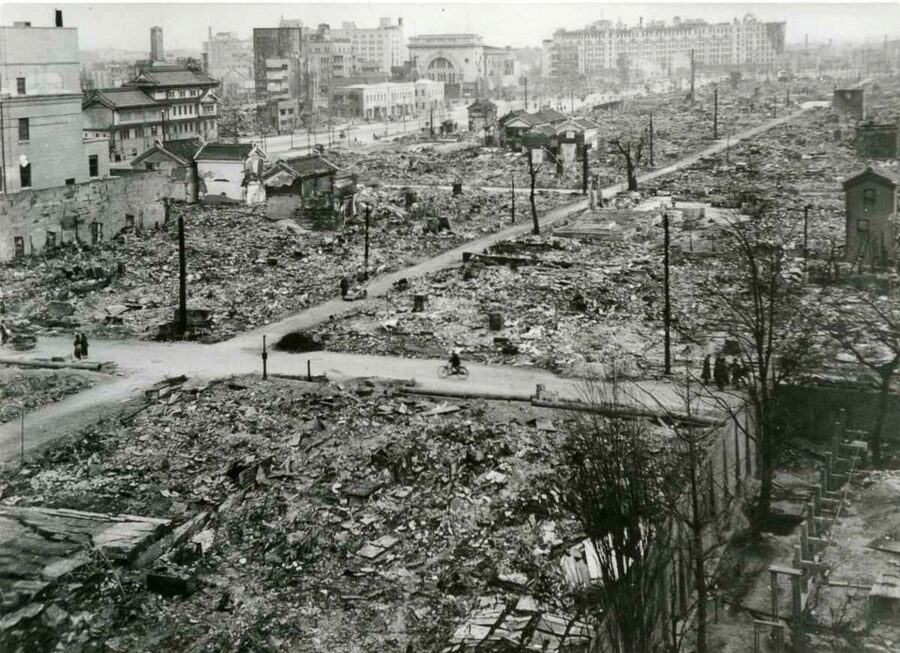
Most of that city burned in 1945. The first great raid came just before midnight on 13 March, when 274 B-29s dropped incendiaries on the crowded wards around the centre for about three and a half hours; 3,987 people were killed and 678 went missing. Seven more large raids followed before the surrender, and more than 10,000 civilians died in all. Shitennoji, whose pagoda had blown down in the typhoon of 1934 and been rebuilt in 1940, lost its whole central precinct in the first night.
Two Expos and an island
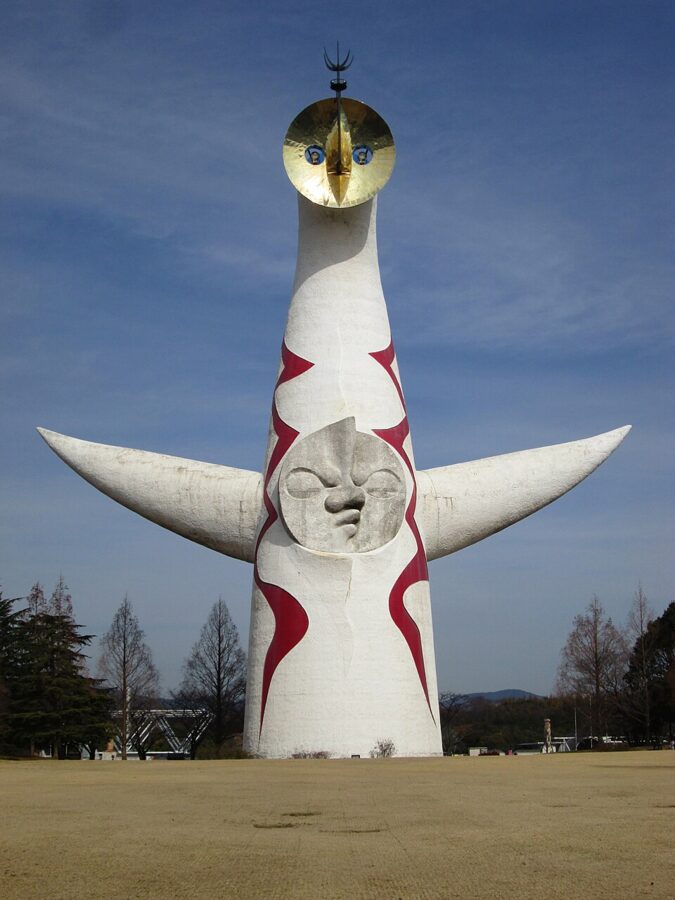
Rebuilt, Osaka showed itself to the world in 1970. Expo ’70 ran from 15 March to 13 September on the Senri hills north of the city, with 77 participating countries and 64,218,770 visitors, then a record. Its symbol was Okamoto Taro’s Tower of the Sun, which was meant to come down with everything else and is still standing.

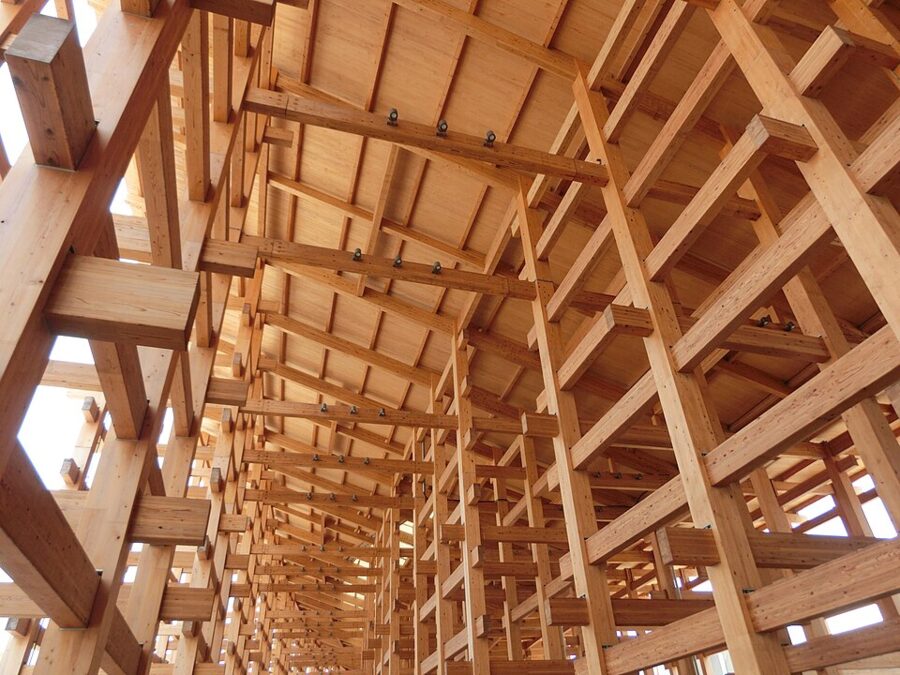
The second Expo, Expo 2025 Osaka, Kansai, ran from 13 April to 13 October 2025 on Yumeshima, a reclaimed island in the bay. It was the first Expo held on an island surrounded by sea, and its timber Grand Ring went round the whole site. The same island is now being built up as Osaka’s integrated resort with a casino, aimed to open around autumn 2030.
Reading the city: the districts
Osakans divide their city into Kita, “north”, around Umeda, and Minami, “south”, around Namba, with the business streets of Senba and Midosuji between them. Add the castle hill to the east, the old Uemachi ridge running south to Tennoji and Sumiyoshi, and the bay to the west, and you have the whole of it.
Osaka Castle and the Osaka Museum of History
Give the castle a morning. Enter the park from Tanimachi 4-chome station on the Osaka Metro (exit 1-B or 9) or Morinomiya on the JR Loop Line, and walk in by the Otemon gate so that you meet the Tokugawa walls in the order the defenders meant you to. The keep is open 09:00 to 18:00 with last entry at 17:30, and costs ¥1,200, or ¥600 for high school and university students with a student card; overseas students need an ISIC. It is closed from 28 December to 1 January.
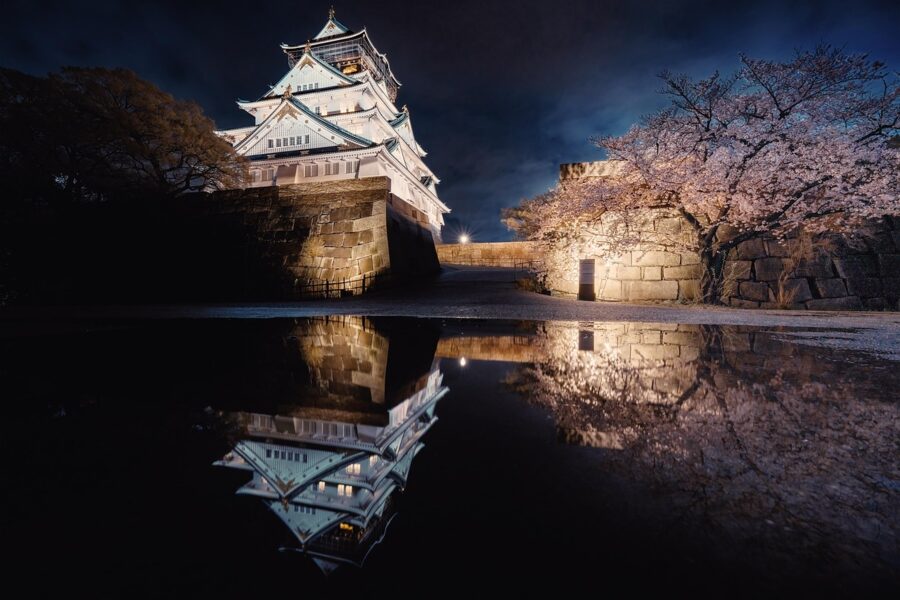
Inside, the museum follows Hideyoshi and the sieges with armour, letters and painted screens, changed through the year. The Toyotomi Stone Wall Museum is on the same ticket. I’d see it first: once you have stood 6 metres below the lawn looking at Hideyoshi’s wall, the rest of the castle makes sense.
Across the road to the southwest, the Osaka Museum of History is the best single place to understand the city, and the least crowded. It opens 09:30 to 17:00, closes on Tuesdays and costs ¥600, or ¥400 for high school and university students. You start on the 10th floor in the Naniwa palace with its hall reconstructed at full size and the real site out of the window, and work down through the Edo merchant town to the Dai-Osaka streets of the 1920s.
The Osaka Museum of Housing and Living near Tenjinbashisuji 6-chome station would normally be the next stop: a full-size Osaka street of the 1830s built indoors, with shops, a bathhouse and a sky that turns from day to night. It is closed for refurbishment until 5 January 2027, so check before you go.
Kita: Umeda, Nakanoshima and Kitahama
Umeda began as reclaimed marsh. The name is written 梅田, “plum field”, but it was first 埋田, “filled-in field”, and when Osaka station opened in 1874 it stood out here among paddies and a graveyard, well away from the merchant town. The station drew the private railways after it, and Hankyu opened a department store over its Umeda terminus in 1929, one of the first in Japan to be owned and run by a railway.
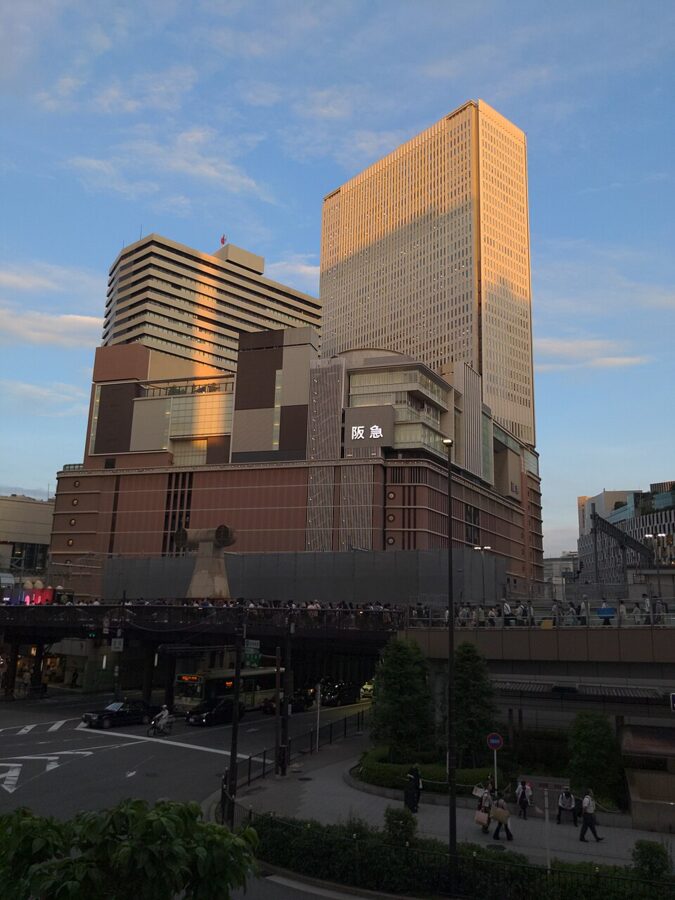

Walk south from Umeda for ten minutes and you reach water and the older city. Nakanoshima is the long island between the Dojima and Tosabori rivers where the domains’ rice warehouses stood. In their place now are the Central Public Hall, the domed Nakanoshima Library of 1904, the Bank of Japan’s Osaka branch in its 1903 building by Tatsuno Kingo, who designed Tokyo Station, and the city hall. It is the most handsome walk in Osaka.
Cross by Yodoyabashi or Naniwabashi into Kitahama, the old financial street, for the Osaka Exchange, Tekijuku and the Kaitokudo site. Senba lies behind it, the old merchant square about 2 kilometres long and 1 wide, which was once surrounded on all four sides by canals. The western canal was filled in 1962 and the southern one in 1964; the Hanshin Expressway’s loop now runs along the line of the west canal and above the east one, so the merchant quarter is still bordered by moving traffic.

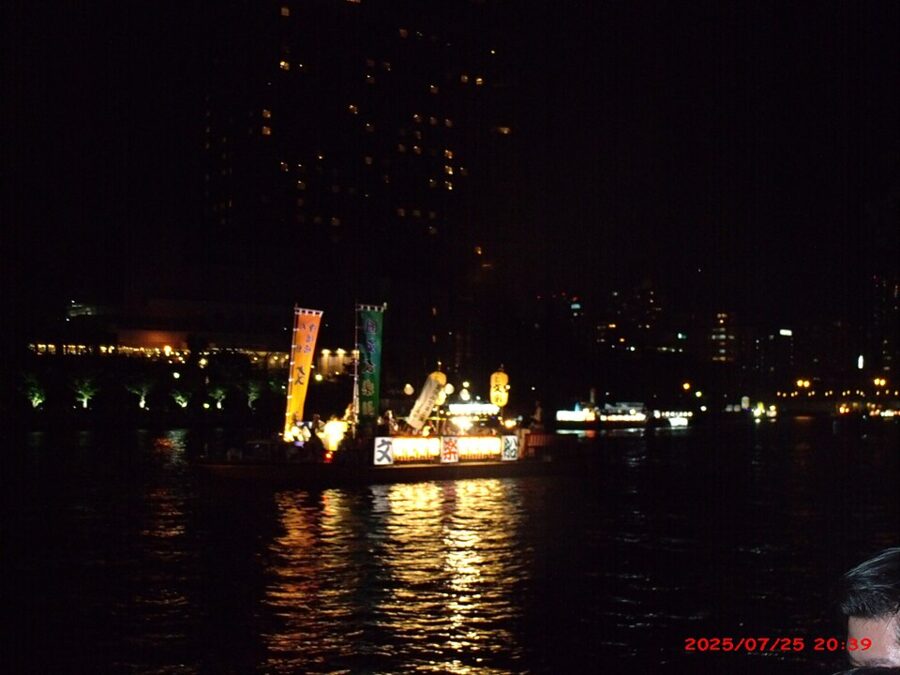
East of Umeda, Osaka Tenmangu shrine is the home of the Tenjin Matsuri, held each year on 24 and 25 July. On the evening of the 25th a river procession of about a hundred boats, lit with lanterns, carries the shrine’s deity up the Okawa while fireworks go up over the river. If you are in Kansai in late July, this is the night to be in Osaka.

Minami: Shinsaibashi, Dotonbori, Namba and Kuromon
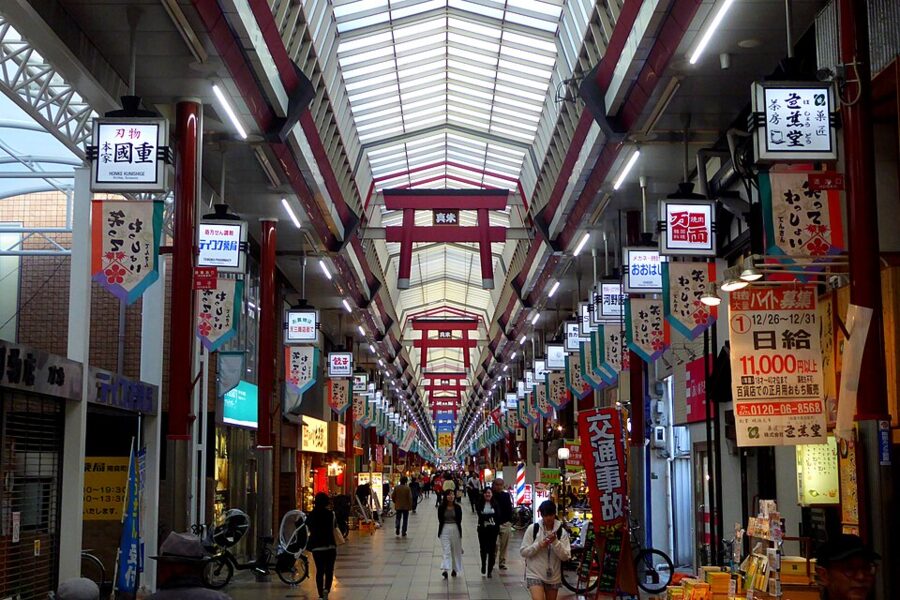
Minami starts at Shinsaibashi, though the bridge is gone, since the Nagahori canal it crossed was filled in 1964. The covered Shinsaibashi-suji arcade runs south from Senba to the canal at Dotonbori, and Midosuji’s department stores and brand shops run parallel a block to the west. It was the Edo town’s high street for kimono and books; it is now mostly international chains, and better for the walk than for the shopping.
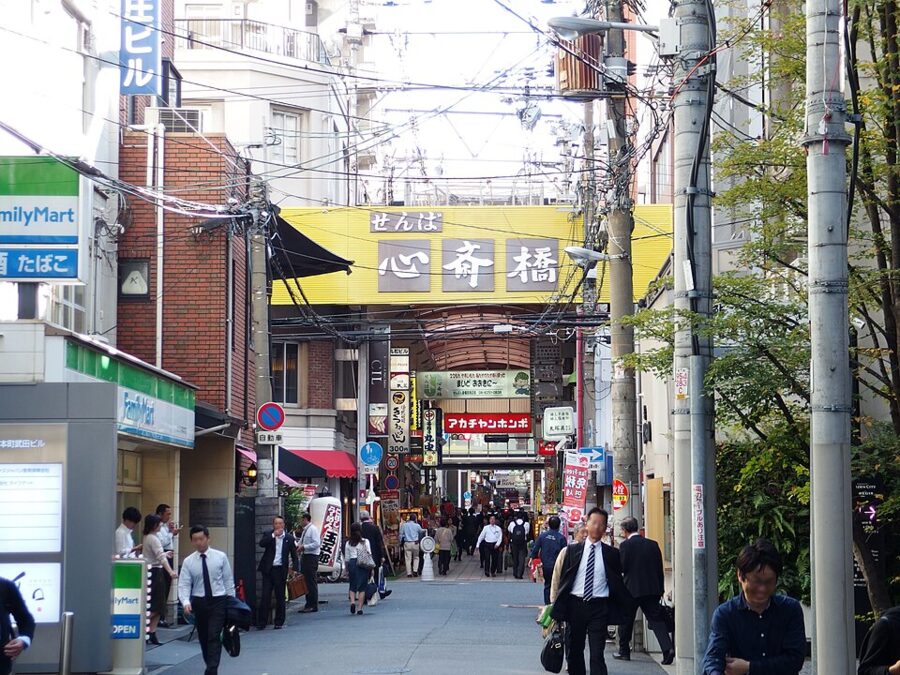

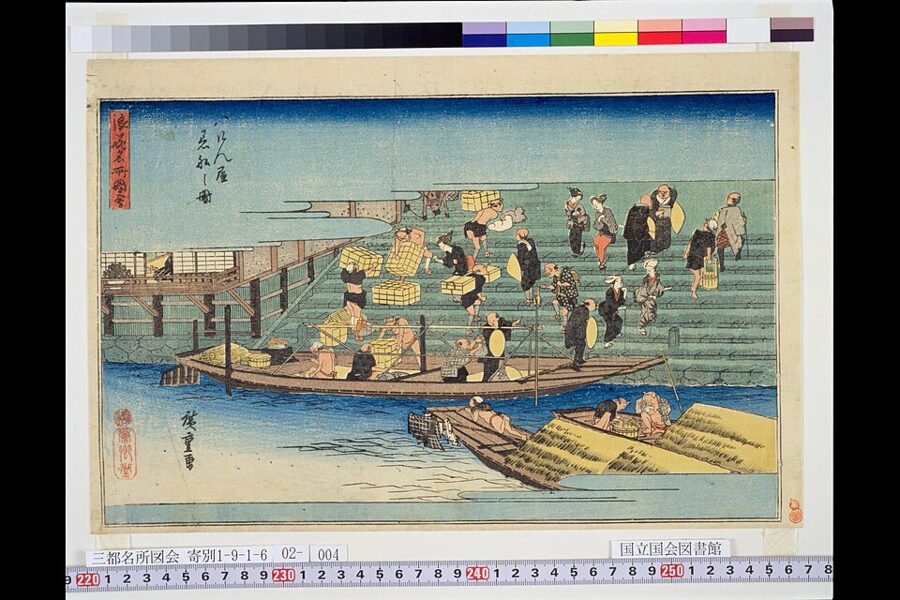
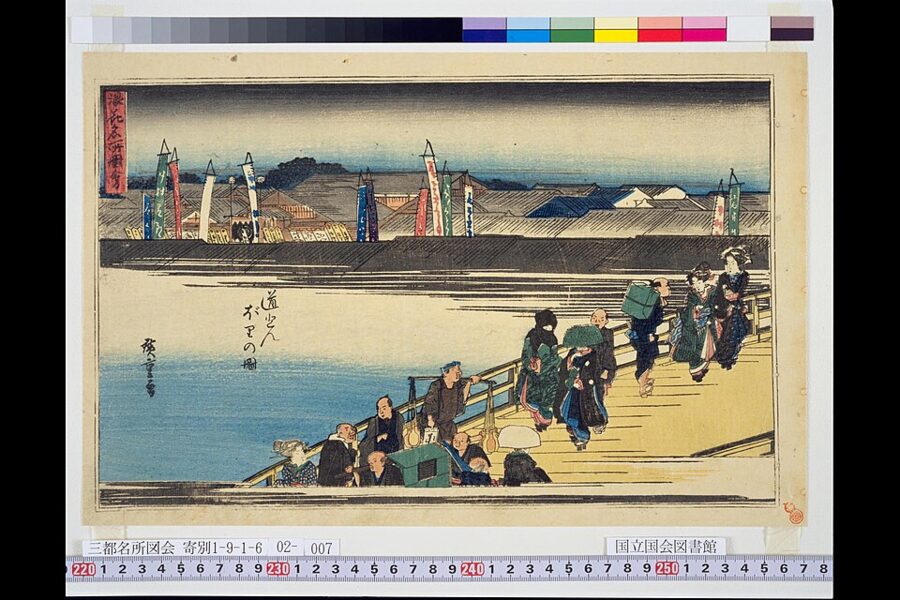
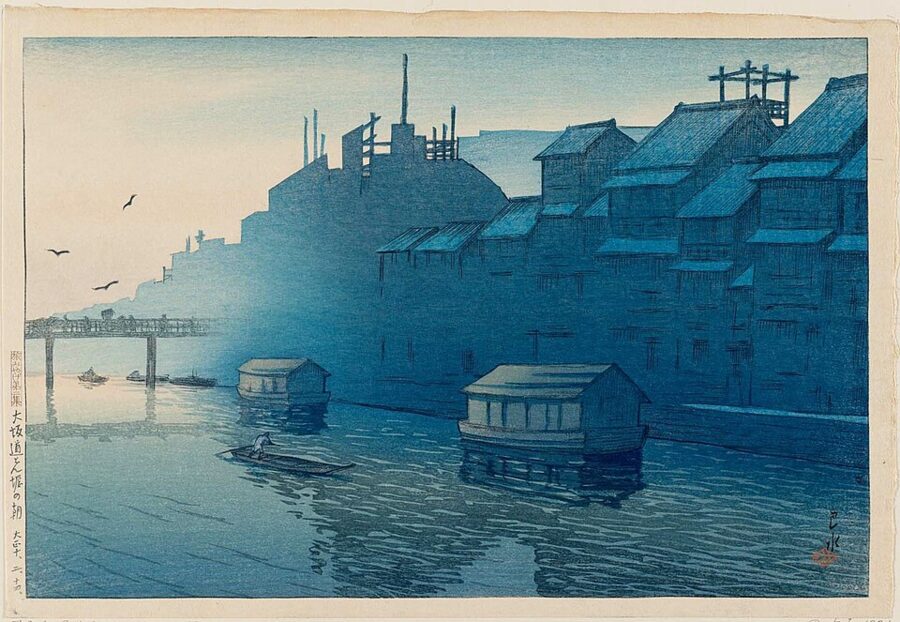
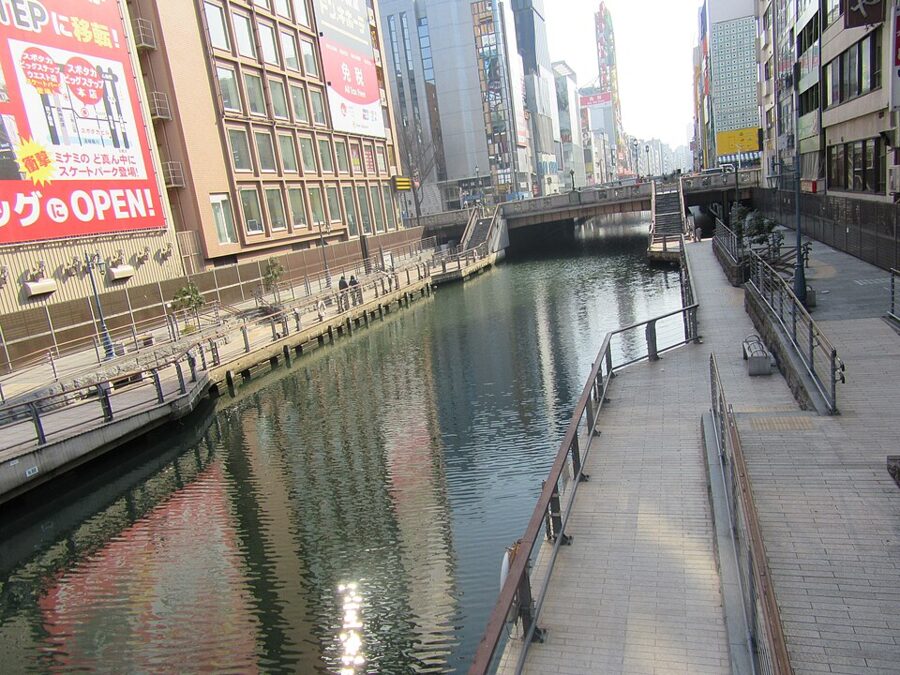
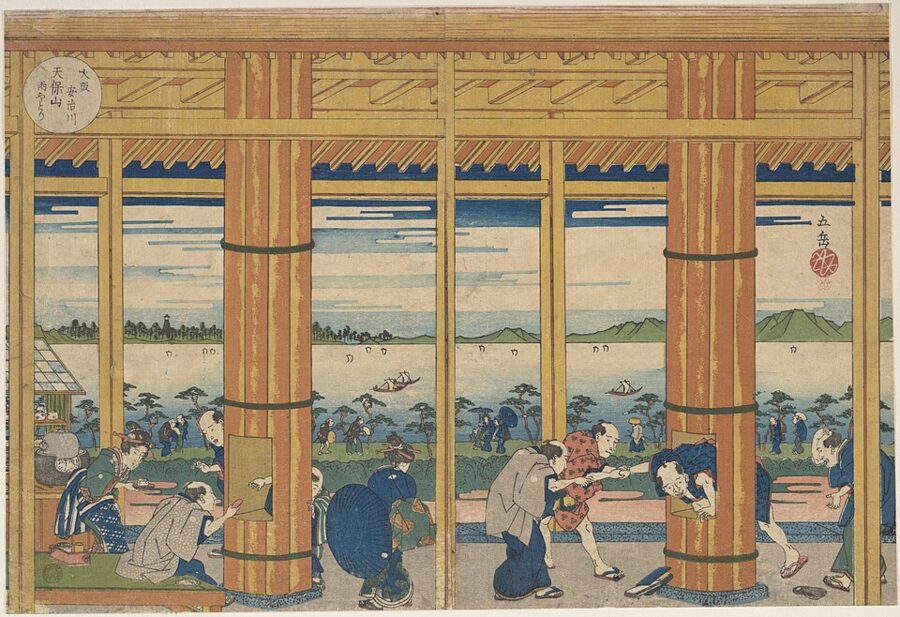
Dotonbori is a canal and its south-bank street, and everybody photographs it from Ebisubashi bridge, under the running man of the confectioner Glico. The canal-side path is a better way to walk it, and early morning is the time to see it with the shutters down and the light coming down the water the way it does in Hasui’s print.

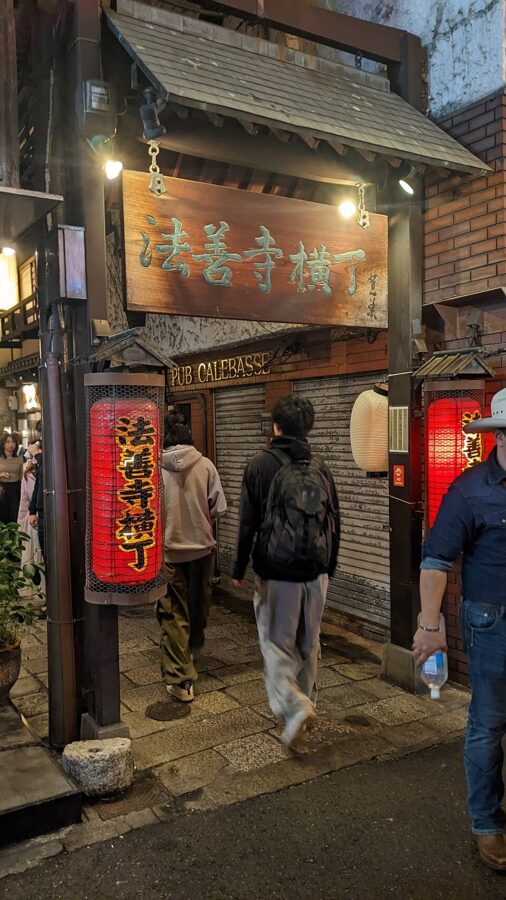
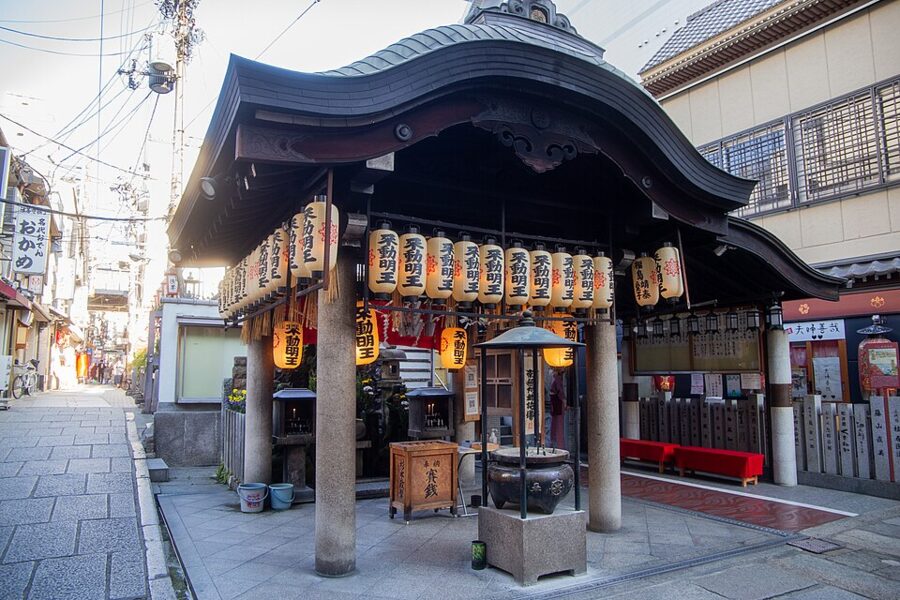
Two lanes south of the canal, Hozenji Yokocho is a flagstoned alley of small restaurants that survived as a stage set of old Minami. At its end is Hozenji temple and the Mizukake Fudo, a statue of the deity Fudo that people splash with water as they pray, so often that it is entirely green with moss.


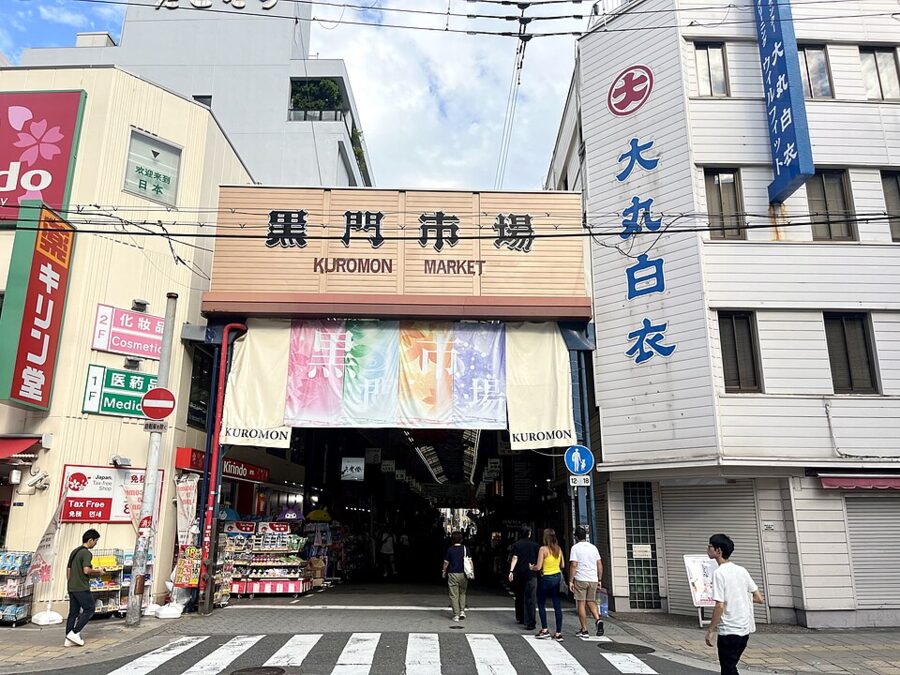
Kuromon Ichiba, a short walk east from Nipponbashi station, takes its name from the black-lacquered gate of a temple, Enmyoji, that stood nearby in the Edo period. The market is about 580 metres long under its roof, with about 150 shops. Its specialities are pike conger, hamo, in summer and blowfish, fugu, in winter, and about one fish shop in ten sells nothing but fugu.
Tennoji and Shinsekai
Shinsekai, “New World”, stands on the site of the Fifth National Industrial Exhibition of 1903, which drew 5.3 million visitors in five months. When the exhibition closed, the eastern part of the site became Tennoji Park and the western part was sold to developers, who opened a planned amusement district on 3 July 1912. Its working name had been New Paris, and it had streets fanning out like a Parisian rond-point at one end, the Luna Park funfair at the other, and a tower, Tsutenkaku, combining the Eiffel Tower and the Arc de Triomphe.
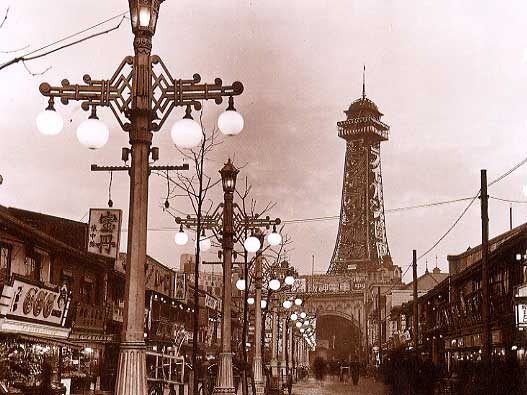
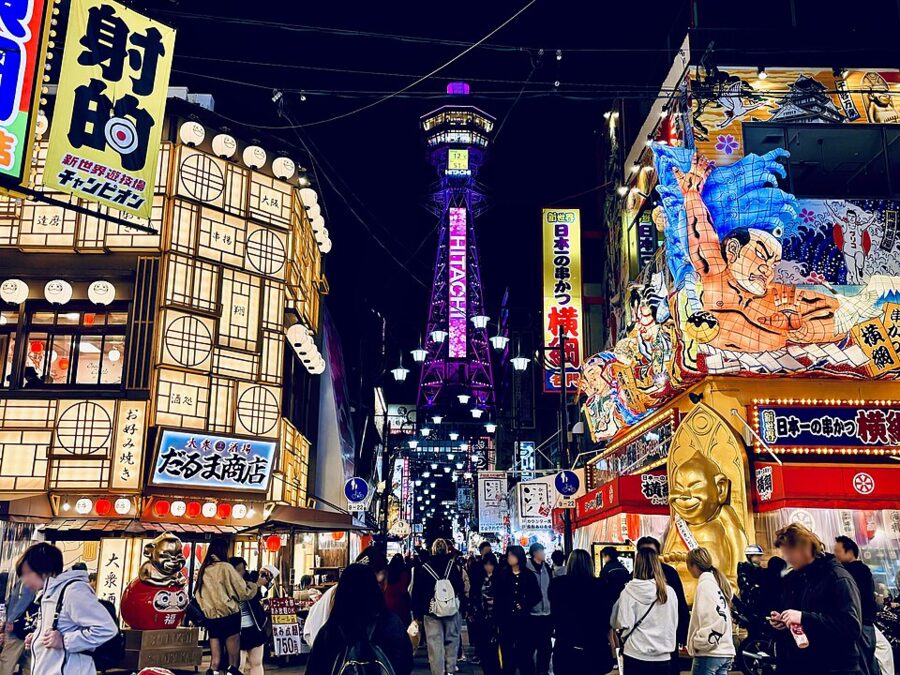
The present tower of 1956 is 108 metres to the tip of the lightning rod, carries a Hitachi sign it has worn since 1957, and has a weather forecast in coloured lights on top. Entry to the observation floors costs ¥1,500 for adults, with a timed reservation, and they usually stay open until about 21:45. Shinsekai went down in the world after the war and has been climbing back since the 1990s.
Across the park, Tennoji station and Abeno Harukas, at 300 metres one of the tallest buildings in Japan, mark the southern hub of the city. Kintetsu trains leave from Osaka Abenobashi beneath the tower, and the JR Haruka to Kansai Airport stops at Tennoji.
Shitennoji and Sumiyoshi Taisha
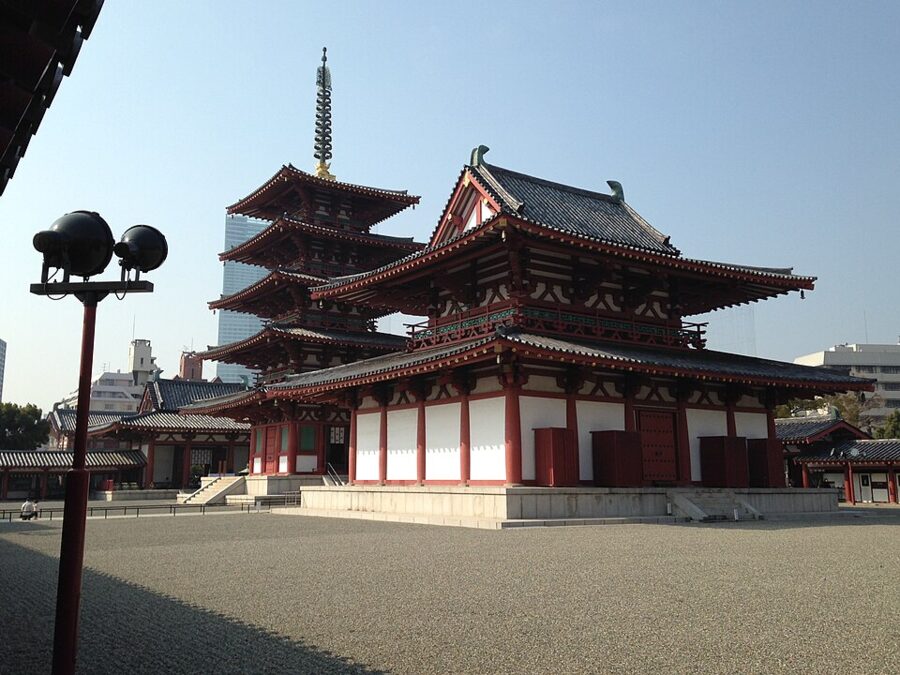
Shitennoji is a 12-minute walk north of Tennoji, or five minutes from Shitennoji-mae Yuhigaoka on the Tanimachi Line. The buildings you see in the central precinct were rebuilt in concrete between 1957 and 1963, on the plan of 593, after the 1945 fire: the seventh pagoda had stood for barely five years. The rebuilding followed the founding design as closely as the experts of the 1950s could reconstruct it, and the straight line of gate, pagoda, main hall and lecture hall is the oldest temple plan in Japan.

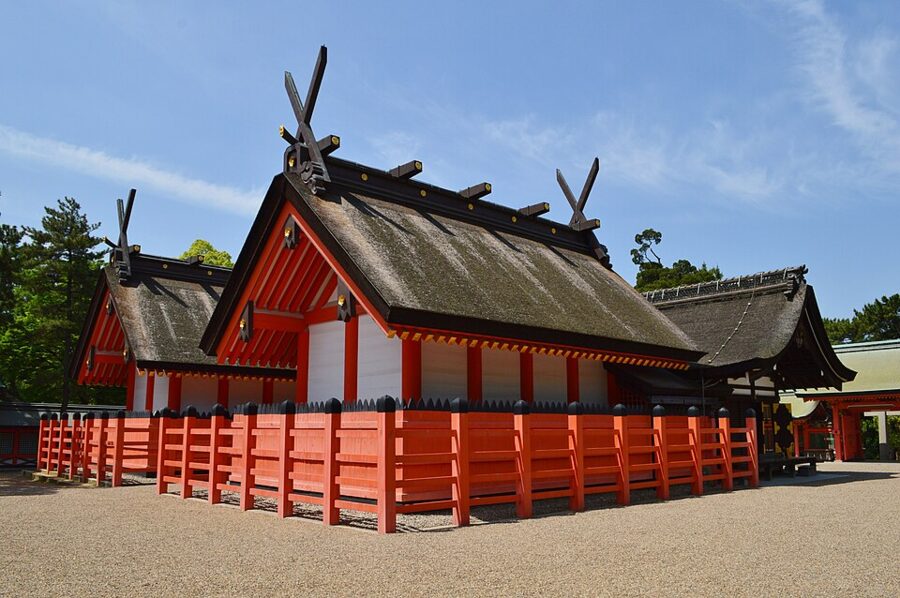
Sumiyoshi Taisha lies at the far southern end of the ridge, a few stops from Namba on the Nankai Main Line to Sumiyoshitaisha station. The four main halls were rebuilt in 1810 in sumiyoshi-zukuri, the straight-roofed style that is one of the oldest forms of shrine architecture in Japan, and all four are National Treasures. Three of them stand in a straight line facing west, towards the sea that is no longer there.
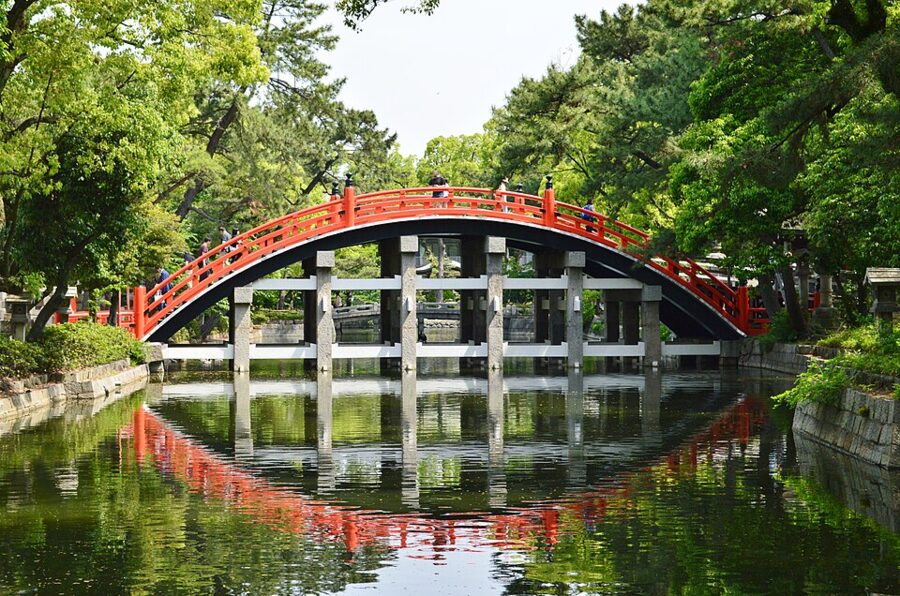
You enter over the Sorihashi, a red arched bridge 4.4 metres high, whose stone piers date from rebuilding ordered by Toyotomi Hideyori in 1606. The merchant city never stopped coming here. The shrine’s hatsutatsu mairi, a visit on the first Day of the Dragon each month to pray for a business to keep growing, is still busy, and the shrine counts some two million visitors in the first three days of each year.
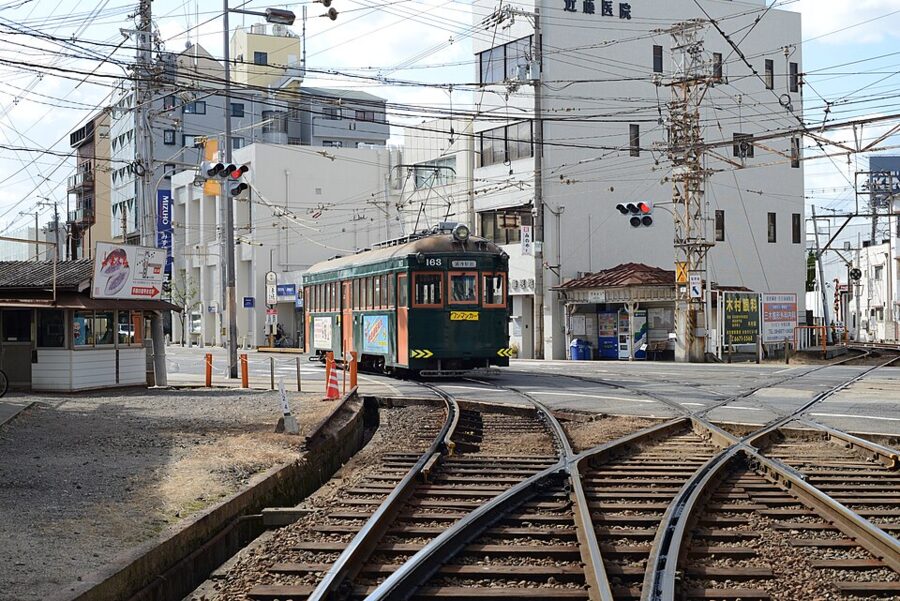
The Hankai tram, the last streetcar line in Osaka, runs past the shrine’s front gate from Tennoji Ekimae, and it is the slow and pleasant way between the two.

The bay: Tempozan and Kaiyukan
In 1831 the city dredged the Aji River to keep its main shipping channel open, and piled the spoil into a hill at the river mouth. Tempozan, named after the era, became a sightseeing spot within a few years, with tea stalls and pine trees and a view of the boats. At 4.53 metres it is one of the contenders for the title of lowest named mountain in Japan.
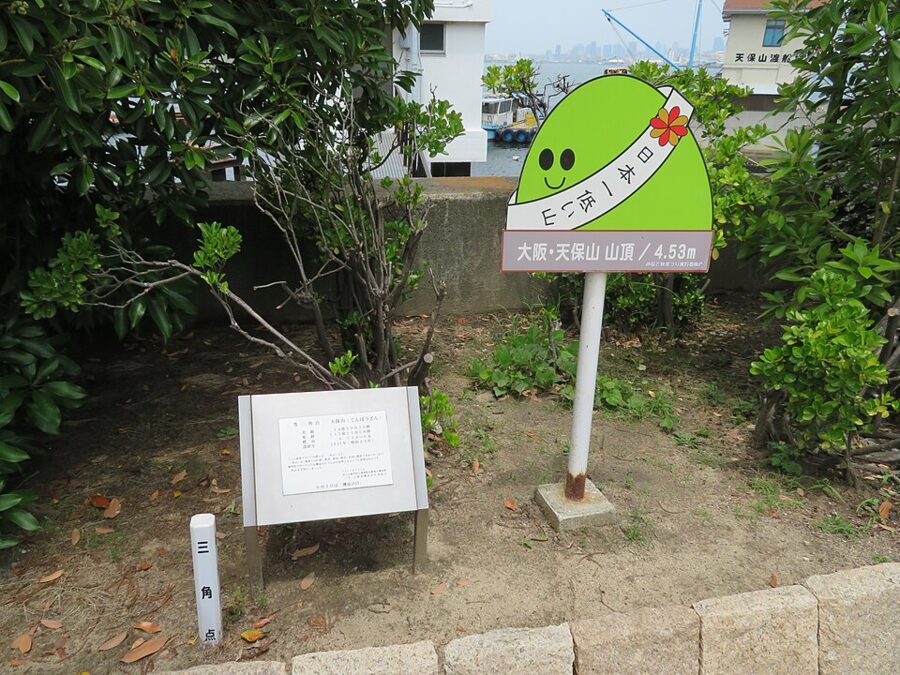

Next to it, the Kaiyukan aquarium, opened in 1990, is built around one Pacific tank with whale sharks and a spiral ramp down its side. Osakako station on the Chuo Line is about five minutes’ walk away. Universal Studios Japan is across the river at Sakurajima, on the JR Yumesaki Line.
The merchant city now
Ask an Osakan about the city’s character and you will hear the old saying: the people of Kyoto ruin themselves on clothes, the people of Osaka on food, Osaka no kuidaore. A longer modern version adds that Sakai ruins itself on building, Kobe on shoes and Nara on sleeping in. The Osaka half was already in use in the late Edo period.
The speech is the other half. Osaka’s dialect, the loudest member of the Kansai family of Japanese dialects, is the one every Japanese person can imitate, thanks to television comedy. The famous greeting, mokarimakka, “making money?”, with its reply bochibochi denna, “so-so”, was popularised by a novelist, Kikuta Kazuo, and real merchants seldom used it.
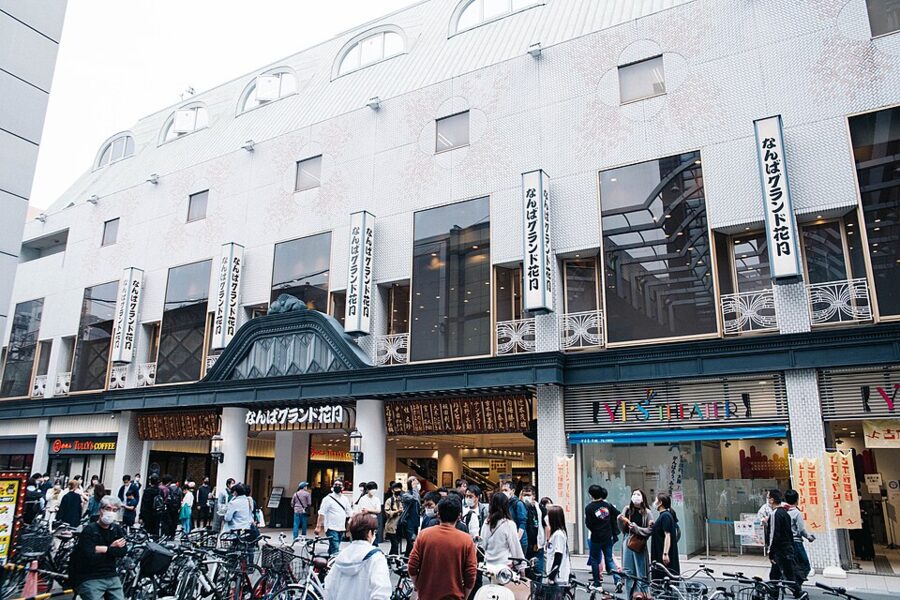
Comedy is Osaka’s own industry. Yoshimoto, founded in Osaka in 1912, built a chain of variety halls and went on to supply much of Japanese television comedy. Its flagship is Namba Grand Kagetsu, opened in 1987 near Sennichimae, with stand-up and manzai double acts followed by the slapstick troupe Yoshimoto Shinkigeki on most days. It is all in Japanese and fast, but the physical comedy carries a long way.

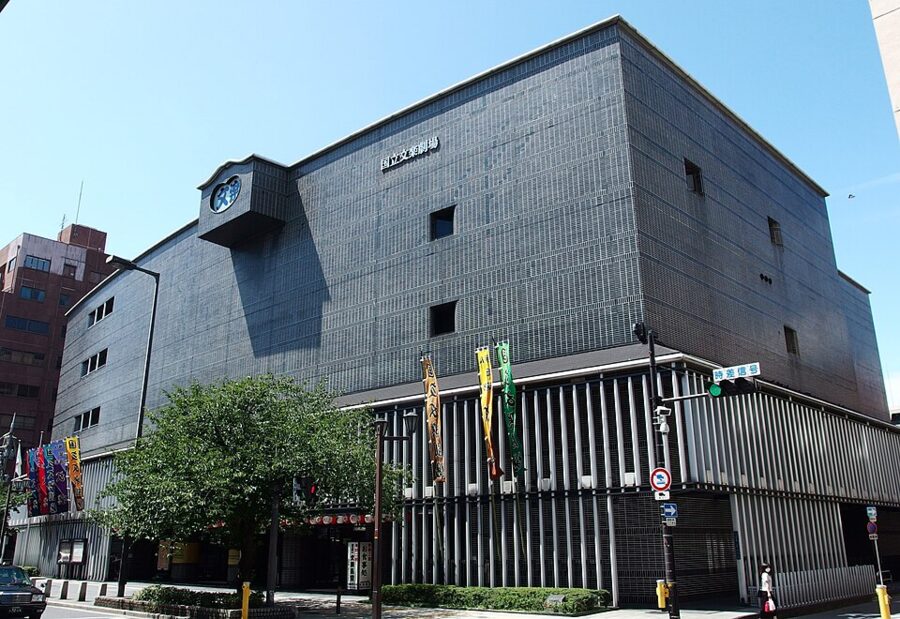
Bunraku has its home at the National Bunraku Theatre, opened in 1984 a minute’s walk from Nipponbashi station. It stages runs of about three weeks several times a year, including a New Year programme through most of January. Go even if you understand no Japanese: one long scene with three operators on a single puppet makes the case better than any explanation.

What Osaka eats
Osaka’s everyday food is konamon, things made from flour batter, cheap and cooked in front of you. Behind most of it is dashi stock made from kombu, the kelp that coastal ships brought round from Hokkaido for centuries to the Osaka market.
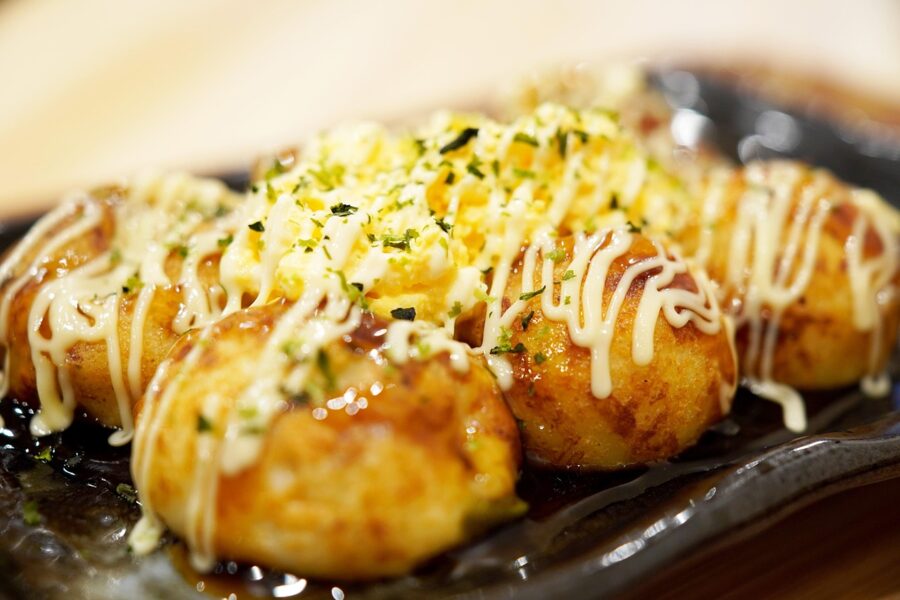
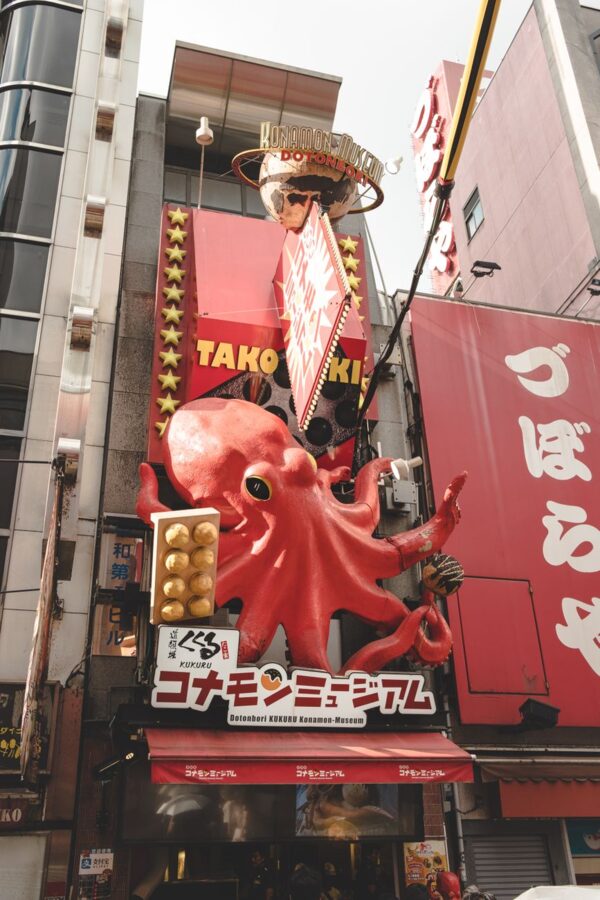
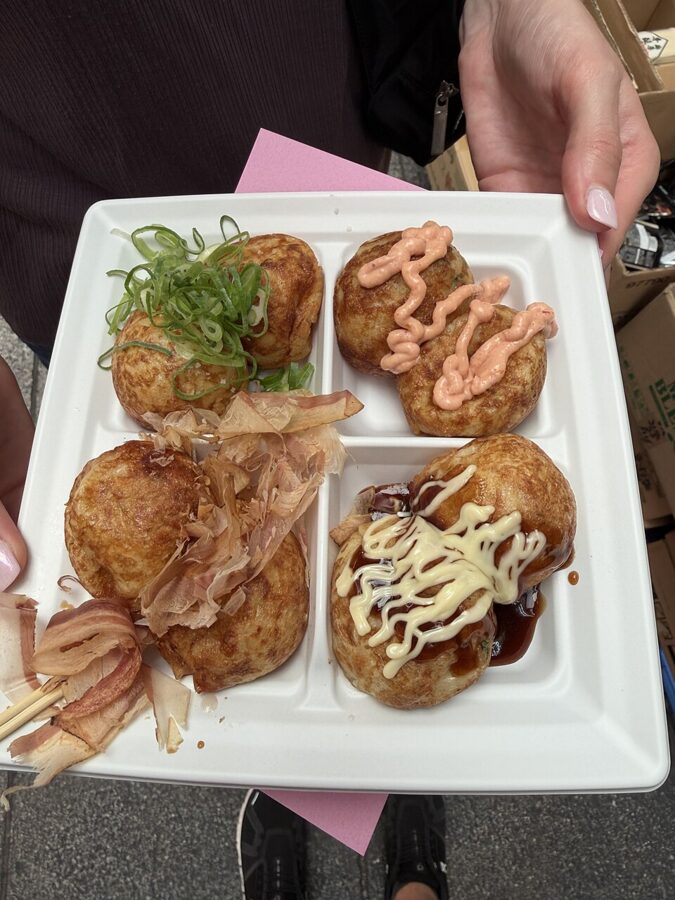
Takoyaki, balls of batter with a piece of octopus in each, were first sold in 1935 by Endo Tomekichi, whose shop Aizuya still serves them without sauce, the original way. Every other stall in the city paints them with sauce, mayonnaise and bonito flakes.
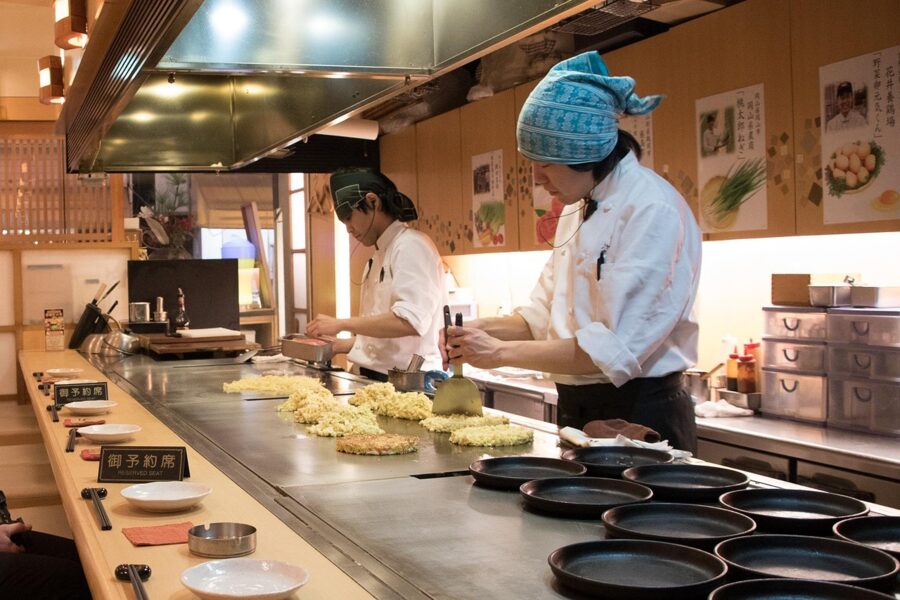
Okonomiyaki, “whatever you like, grilled”, is the other standard. Osaka style mixes shredded cabbage and the fillings into the batter and cooks it as one thick pancake on a hotplate, unlike the layered version of Hiroshima with noodles inside. On Dotonbori, Mizuno has made it for more than seventy years and is open 11:00 to 22:00 every day.
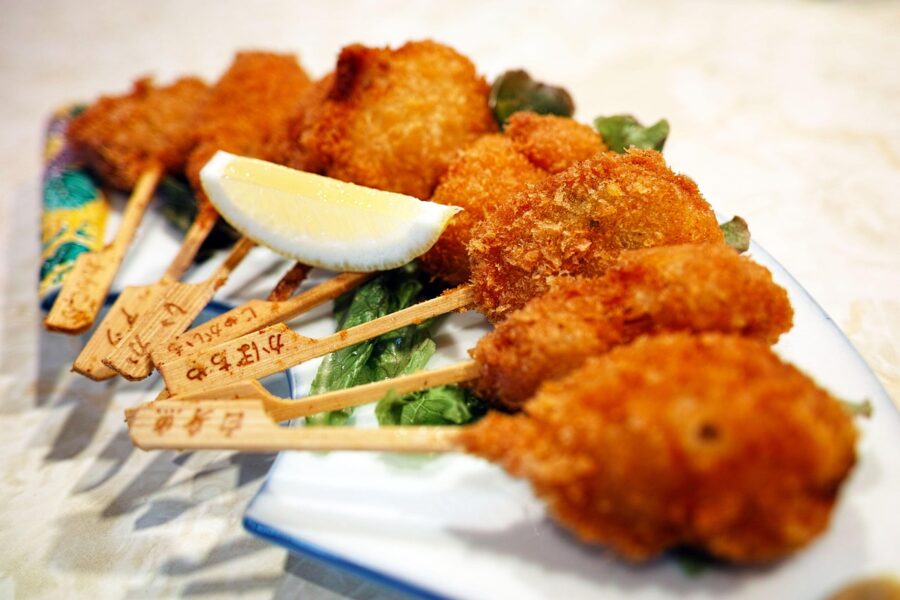
Kushikatsu, meat, fish and vegetables on skewers, battered, breadcrumbed and deep-fried, began in Shinsekai in 1929, when the proprietress of Daruma fried bite-sized pieces for the labourers of the nearby Kamagasaki district. There is one rule. The sauce pot is shared, so you dip each skewer once; to get more sauce, scoop it up with the free raw cabbage.
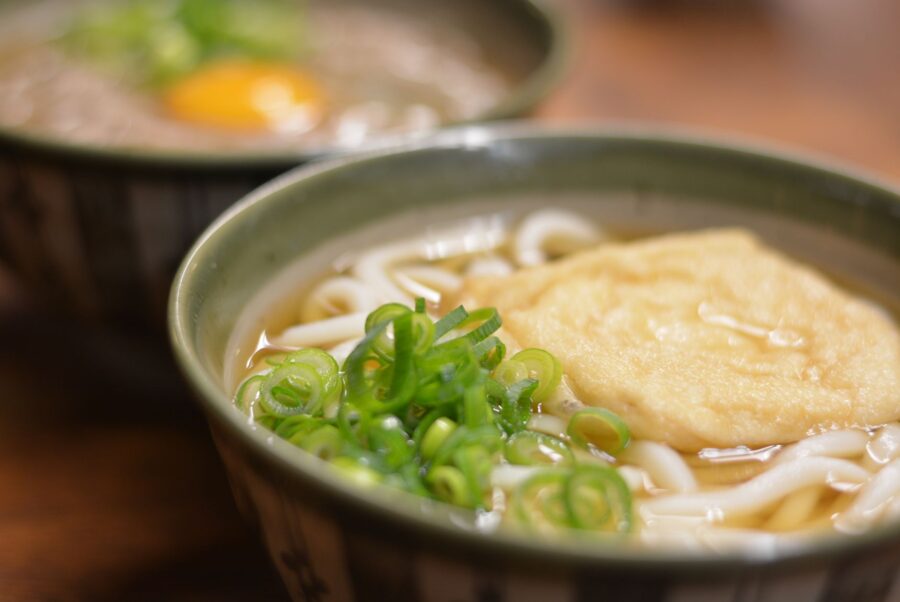
Kitsune udon, wheat noodles in kombu broth with a sheet of sweet, simmered fried tofu on top, is said to have been invented in an udon shop in Senba that opened in 1893. The fox, kitsune, is the messenger of the rice god Inari, who is supposed to love fried tofu. In Osaka a bowl is the cheap lunch of the office district, and the soup is pale and clear, not the dark soy broth of Tokyo.
Eating cheaply in Osaka is easy. Standing bars and noodle counters crowd the arcades of Tenjinbashisuji and the streets round Tennoji, Shinsekai’s kushikatsu counters charge by the skewer, and every department store basement sells good prepared food at half price in the last hour before closing.

Getting there and getting around
Arriving
Most international flights land at Kansai International Airport, on its own island in the bay south of the city. For Minami, take Nankai from the airport station: the Rapi:t limited express reaches Namba in about 35 to 40 minutes, and the cheaper airport express in about 45 to 50. For Tennoji, Shin-Osaka and Kyoto, JR West’s Haruka limited express is faster than the JR Kansai Airport Rapid, which takes about 70 minutes to Osaka station but needs no reservation.
Osaka International Airport at Itami, north of the city, handles domestic flights and is much closer. Airport buses reach Osaka station in about half an hour, or you can take the monorail to Hotarugaike and change to Hankyu for Umeda.
From Tokyo the Tokaido Shinkansen reaches Shin-Osaka in about 2 hours 30 minutes on a Nozomi. Shin-Osaka is a station, not a district: it is two stops on the Midosuji Line from Umeda, or four minutes on JR to Osaka station. Whether a Japan Rail Pass pays depends on the rest of your trip, not on Osaka, since inside the city JR is the line you will use least.
The Loop Line, the Metro and the private railways
The JR Osaka Loop Line runs a ring of 21.7 kilometres and 19 stations round the old city: Osaka (for Umeda), Kyobashi, Osakajokoen and Morinomiya for the castle, Tsuruhashi, Tennoji, Shin-Imamiya and Nishikujo. Most of what you want is inside the ring, though, and that means the subway.
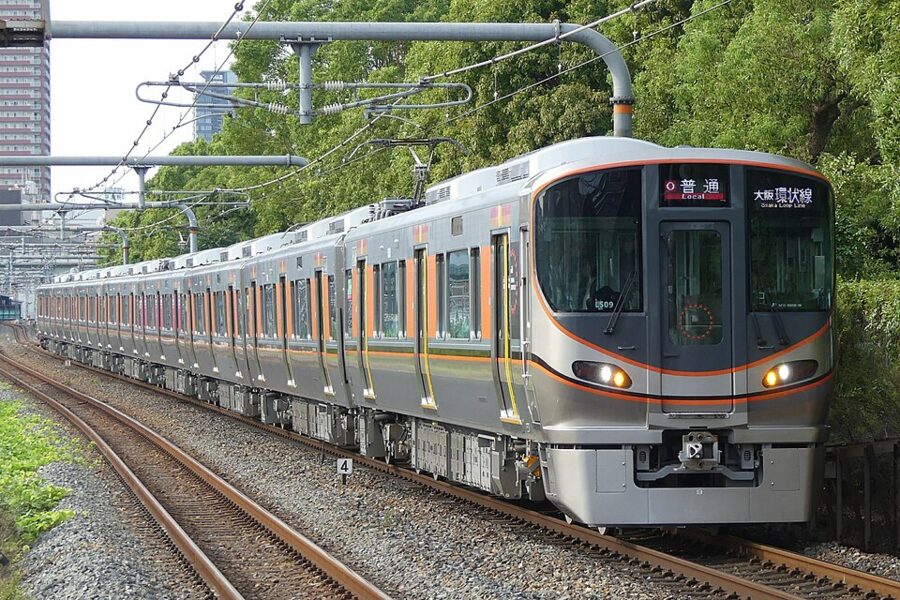

Osaka Metro runs eight subway lines and the New Tram to the bay. The red Midosuji Line, under Seki’s avenue, links Shin-Osaka, Umeda, Yodoyabashi, Hommachi, Shinsaibashi, Namba and Tennoji, and on a short visit it does most of the work. Fares run in five zones from ¥190 to ¥390. Transfers between Umeda, Higashi-Umeda and Nishi-Umeda are allowed outside the gates for a limited time, which is useful because the walk between them is long.
Then come the private railways, each built from an Osaka terminus out to its own territory. Hankyu runs from Umeda to Kyoto’s Kawaramachi, Kobe and Takarazuka; Hanshin runs along the shore to Kobe from Umeda and Namba; Keihan follows the Yodo River from Yodoyabashi and Nakanoshima to central Kyoto. Kintetsu leaves Namba, Uehommachi and Abenobashi for Nara, Yoshino and Ise, and Nankai leaves Namba for the airport, Koyasan and Wakayama.
ICOCA and the Osaka Amazing Pass
Every one of those lines, plus the buses, takes ICOCA, JR West’s prepaid IC card, or any of the other national cards such as Suica. A card costs ¥2,000, of which ¥500 is a refundable deposit. Tap in, tap out, and the fare comes off.
The Osaka Amazing Pass costs ¥3,500 for one day or ¥5,000 for two consecutive days. It gives unlimited rides on Osaka Metro, the city buses and the private railways in and around the city, though not on JR, and free entry to about 40 sights, among them Osaka Castle’s keep, Tsutenkaku, the Umeda Sky Building observatory and the Tombori River Cruise on Dotonbori. It now lives on a smartphone as a QR code, bought online by credit card; there is no child version.
Whether it pays is arithmetic. The castle and Tsutenkaku alone come to ¥2,700, so on a one-day pass you are in profit with one more paid sight and a few subway rides. On a day spent eating in Minami and walking, it will not pay, and an ICOCA is simpler.
Where to stay
Osaka hotels are cheaper and larger than Kyoto’s, which is half the reason to sleep here. Choose the district by where you are going next.
Umeda and Kita suit day trips by JR and Hankyu (Kyoto, Kobe, Himeji) and an early Shinkansen, since Shin-Osaka is six minutes away. Namba and Minami suit a first visit: the Rapi:t from the airport, Kintetsu to Nara, Nankai to Koyasan, and food until late. Light sleepers should avoid rooms facing Dotonbori.
Yodoyabashi, Kitahama and Hommachi sit between the two on the Midosuji Line, half a dozen stops from either end, with better prices and empty streets after 20:00. Tennoji is the budget choice with the Haruka and Kintetsu at the door, and Shinsekai a walk away. I’d skip Shin-Osaka for anything but a 06:00 train, and the bay unless you are spending a day at Universal Studios Japan.
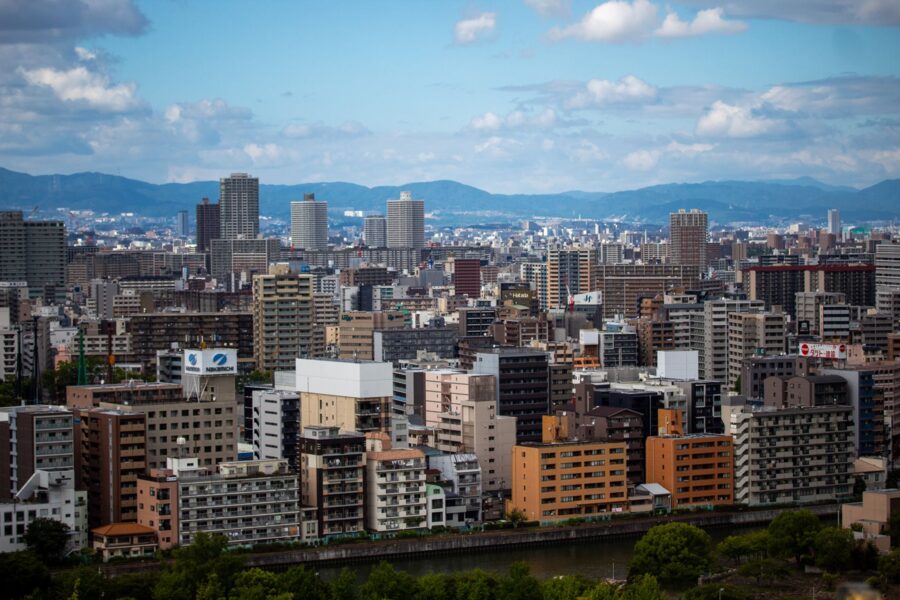
Spring and autumn are the easy seasons; summer is hot and humid, with the Tenjin Matsuri as its reward, and winter mild and mostly dry. The seasons across Japan follow the same pattern.
Day trips, and how long to stay
Kyoto: about 30 minutes from Osaka station by JR Special Rapid (¥580), or about 45 minutes by Hankyu from Umeda to Kawaramachi, which drops you in the centre. Nara: about 40 minutes by Kintetsu from Osaka-Namba to Kintetsu-Nara (¥680), five minutes’ walk from the temples and deer of Nara. Kobe: about 20 minutes by JR from Osaka to Sannomiya, for the old foreign settlement and the harbour.
Himeji: about an hour by JR Special Rapid, or 30 minutes from Shin-Osaka by Shinkansen, for Himeji Castle, one of the World Heritage sites in Japan and a keep that never burned. Koyasan: about two hours by Nankai from Namba and a cable car up the mountain, for the temple town where the Kohechi route of the Kumano Kodo begins; staying the night in a temple is better than a day trip. Hiroshima: about 1 hour 25 minutes from Shin-Osaka by Nozomi, a long day but a possible one.
Two days
Day one: the castle and the Toyotomi wall first thing, the Osaka Museum of History next door, then the Metro to Kitahama for Tekijuku, Nakanoshima and the rice-grain monument at Dojima, ending in Umeda. Day two: Shitennoji in the morning, the Hankai tram to Sumiyoshi Taisha, back to Shinsekai for lunch and Tsutenkaku, then Kuromon, Hozenji Yokocho and Dotonbori into the evening.
Three days
Add the bay and the stage: Tempozan and the Kaiyukan in the morning, Tenjinbashisuji and Tenmangu in the afternoon, and Bunraku or a Yoshimoto show at night. Or spend it in Nara or Kyoto and come back for dinner.
Four days
Keep the first three and give the fourth to Himeji or Koyasan, or to Expo ’70 Commemorative Park and the Tower of the Sun in the north. Four days in Osaka is not too many. It is cheaper than Kyoto, easier to talk to than Tokyo, and within an hour of Kyoto, Nara, Kobe and Himeji.
On the last night, take the Midosuji Line north from Namba and listen to the stations: Shinsaibashi, a merchant’s bridge over a canal that is now a road; Yodoyabashi, a rice dealer’s footbridge; Umeda, a filled-in field. The map of Osaka is a list of what its townspeople built for themselves, and by then you will have crossed most of it.