

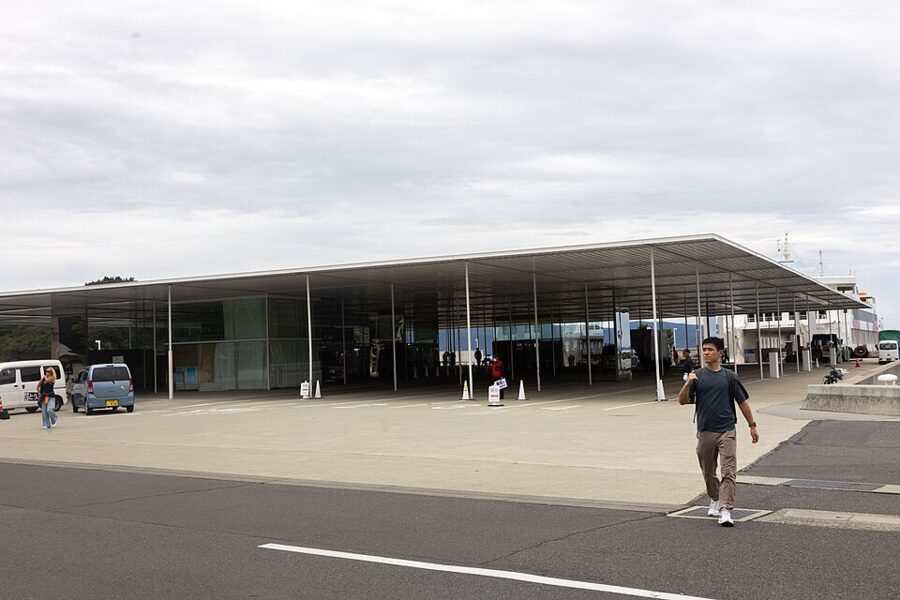
The ferry from Uno takes twenty minutes to cross to Naoshima (直島), and for much of the crossing the island shows you its working end first: the stacks, conveyors and quays of a copper smelter that has run on the north shore since 1917. Nothing about that end of the island suggests Monet. The art comes into view only as the boat swings round to Miyanoura, where a red pumpkin with holes in it sits on the quay beside a ferry terminal whose flat roof seems to float on its thin columns.
Both halves are the same island, and the pairing is the point. Naoshima, in Kagawa Prefecture (香川県) but only about 3 km off the coast of Okayama Prefecture (岡山県), spent most of the twentieth century as a company town with bare hills and a refinery. Since 1992 its southern end has filled with museums by Tadao Ando, and since 2010 the project has spread to Teshima (豊島) and Inujima (犬島), two neighbours that carried their own share of industrial damage. The whole enterprise, run by the Benesse group and the Fukutake Foundation, goes by the name Benesse Art Site Naoshima.

Most of what goes wrong on a visit is a Monday or a sold-out time slot, not the art.

In this guide
- A copper town that chose concrete
- Chichu Art Museum
- Benesse House Museum, the Valley Gallery and the shore
- Lee Ufan Museum
- Naoshima New Museum of Art
- Honmura and the Art House Project
- The pumpkins, the bathhouse and the works in the street
- Getting around Naoshima
- Teshima: the rice terraces and the droplet
- Inujima: the refinery on the edge of Okayama
- Planning: closing days, tickets and ferries
- One, two and three days
A copper town that chose concrete
The island’s name carries a legend. Emperor Sutoku, exiled to Sanuki after losing the Hogen Disturbance of 1156, is said to have stopped here and named it for the straight-dealing islanders: nao, upright, and shima, island. A local gazetteer offers a duller origin, a contraction of Machi-shima, “waiting island”. Either way, a song of the late twelfth century already mentions a crooked pine on Naoshima.

In the late sixteenth century a minor naval commander, Takahara Tsugitoshi, built a castle on the hill above the eastern bay and laid out Honmura (本村) below it as a small castle town. From 1672 the island was shogunate land under a hereditary headman of the Miyake family, living by shipping rice and salt. Shogunate status allowed theatre that a domain might have banned, which is why Naoshima still has its own women’s puppet troupe, Naoshima Onna Bunraku, listed as an intangible cultural property by Kagawa Prefecture.
The modern island begins in 1917. Copper refiners had learned from the Ashio poisoning scandal to put smelters on islands, where the smoke would blow out to sea, and Sumitomo at Shisakajima and an Okayama mine owner at Inujima had already done so. Mitsubishi approached Teshima first, without success. Naoshima’s mayor, looking at failed harvests and an epidemic, said yes.
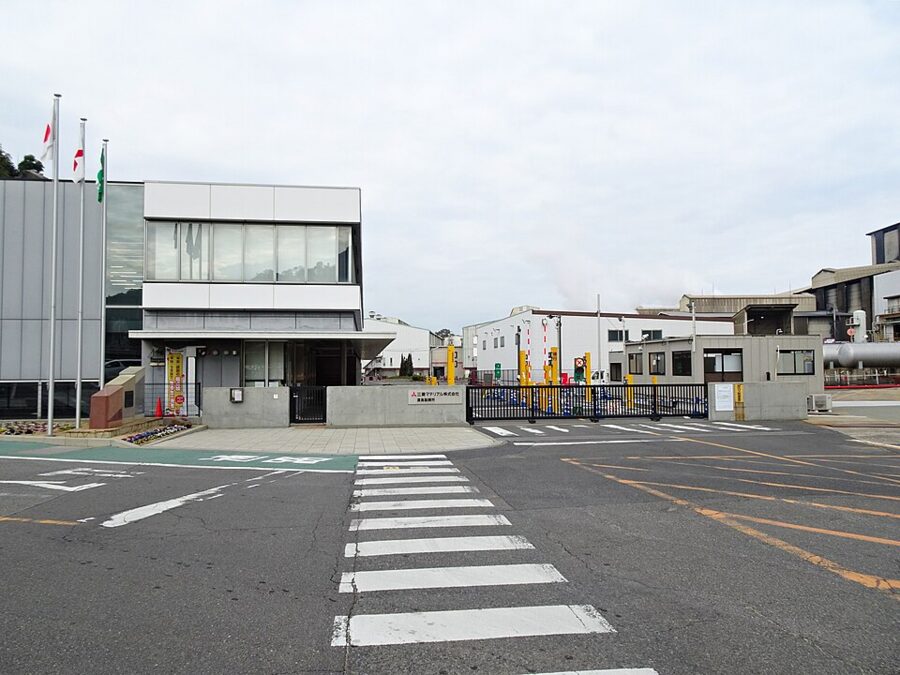
The smelter made Naoshima rich and then made it bald. Half the islanders came to work at the plant or its suppliers, the population rose from about 2,000 to a peak of 7,501 in 1955, and sulphur fumes killed the trees on the northern hills; replanting has gone on since the 1950s. The smelter still works, and it is still counted Japan’s largest producer of gold bullion.

By the 1980s the plant employed fewer people and the young were leaving. In 1985 Tetsuhiko Fukutake, founder of the Okayama publisher Fukutake Shoten (now Benesse), met the mayor, Miyake Chikatsugu, who wanted the empty southern end of the island given over to culture and education. Fukutake wanted a summer camp where children from anywhere could meet. He died in 1986, and his son Soichiro bought the land, opened the camp with Tadao Ando in 1989 and kept going.
Benesse House Museum opened in 1992, a museum with hotel rooms in it. Kusama’s pumpkin arrived for an outdoor exhibition in 1994, the first Art House Project building opened in Honmura in 1998, and the Chichu Art Museum followed in 2004. The Setouchi Triennale carried the idea to a dozen islands from 2010, and the Naoshima New Museum of Art in 2025 was Ando’s tenth building for the project.
Soichiro Fukutake describes the islands as places that carried the cost of Japan’s growth, with sulphur smoke on Naoshima and Inujima and illegal waste on Teshima, and he calls his method “using what exists to create what is to be”. The practical result is that the art here is nearly always set inside something older: a house, a refinery, a rice terrace, a shrine.
Three districts, three moods
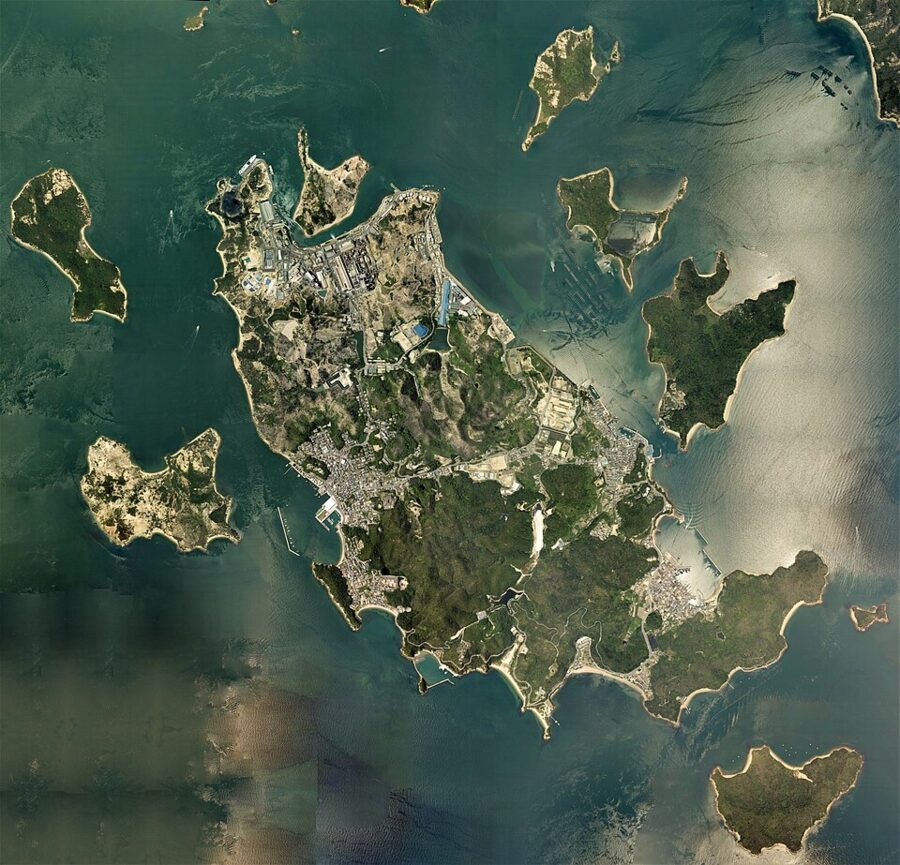
Naoshima is small enough to cross by bicycle in twenty minutes, but it divides cleanly. Miyanoura (宮浦) on the west coast is the ferry port and the largest settlement, with the bathhouse and the red pumpkin. Honmura on the east coast is the old castle town, home to the Art House Project, the Ando Museum and the new museum on its hill. The south, from Tsutsujiso to the Chichu Art Museum, is national park, and most of it is Benesse’s.
The north, the smelter, is off limits except on the tour. Look at it from the ferry anyway: every museum on the island is an answer to it.
Chichu Art Museum
Chichu (地中美術館) means “in the earth”. Ando sank the building into a hill above the southern shore in 2004 so that it would not interrupt the view, then cut it open to the sky in courtyards and slots so that every work in it is lit by daylight. There are only three artists: Claude Monet, James Turrell and Walter De Maria, and the rooms were designed around their works.

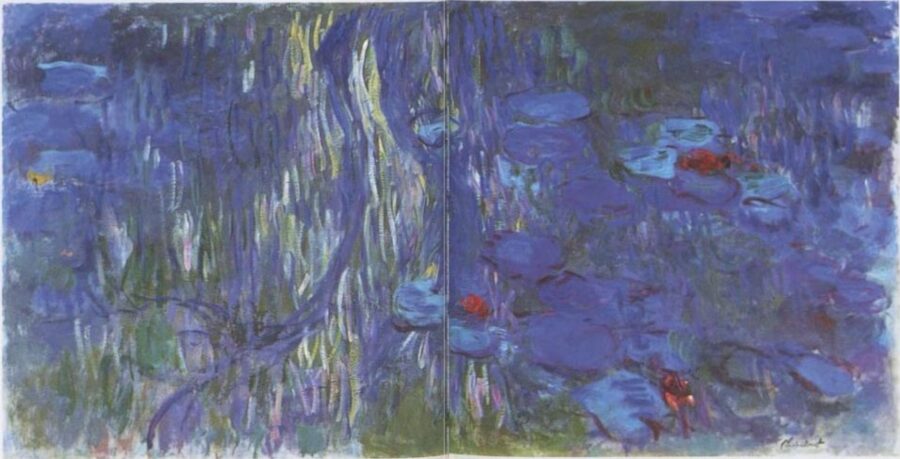
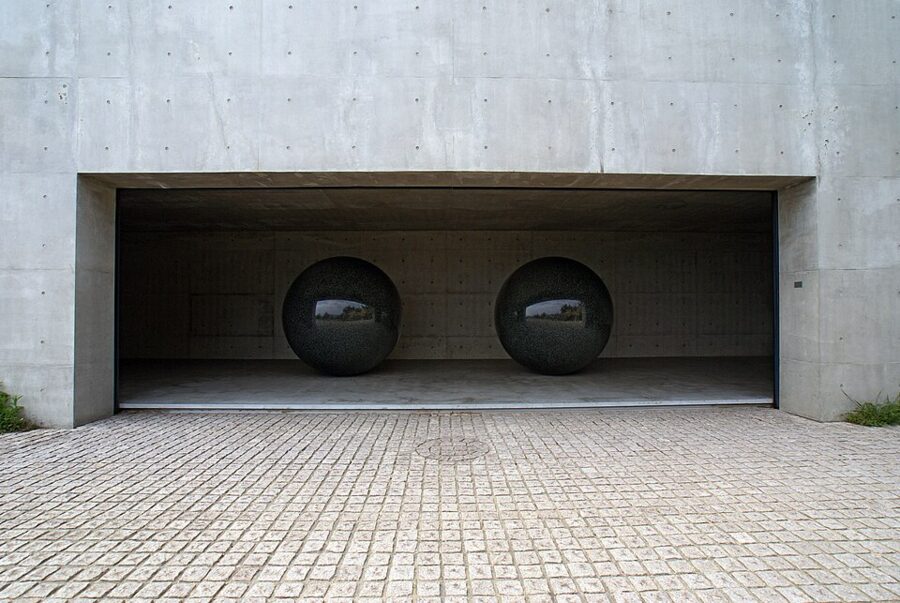
The Monet room holds five paintings from the water lily series, made at Giverny between about 1914 and 1926. You take your shoes off, the floor is of small white marble cubes, and the light comes through a diffusing ceiling, so the paintings change with the hour and the season. Turrell’s three works include Open Sky, a room with an opening cut in the ceiling; De Maria’s Time/Timeless/No Time is a granite sphere 2.2 metres across on a flight of steps, with 27 gilded wooden forms around the walls.
Tickets are sold online for a date and an entry time. On weekdays admission is ¥2,500 online or ¥2,800 at the door, and on weekends and holidays ¥2,700 or ¥3,000; children 15 and under are free but still need a reservation. If the online slots sell out, there is no door sale that day. The museum also warns that tickets bought through resale sites or agencies may be refused, so buy only from the art site’s own pages.
Hours are 10:00–17:00 with last entry at 16:00, closed Mondays (open on a Monday holiday, then closed the Tuesday). On Fridays and Saturdays an evening programme seats about thirty people under Open Sky for 45 minutes at sunset, at ¥3,700 including admission. If you are staying on the island and the dates fit, it is the best hour you can spend here.

Benesse House Museum, the Valley Gallery and the shore
Benesse House Museum (ベネッセハウス) is the oldest building and, to my mind, the most underrated. Ando’s first building for the project opened in 1992 on high ground over the sea, with walls that open whole rooms to the view. The collection runs from Giacometti, Rauschenberg, Basquiat and Hockney to works made for particular corners of the building: Richard Long’s driftwood and mud circles, Jannis Kounellis’s installations, Hiroshi Sugimoto’s seascapes hung outside, facing the sea.
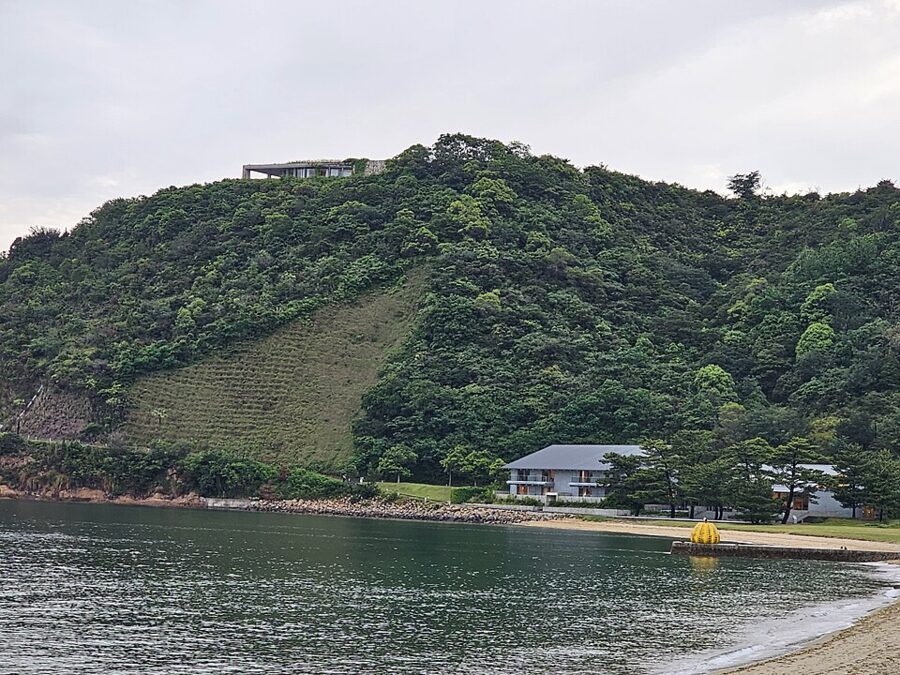

It is also the easiest museum to fit into a day. It opens 08:00–21:00 (last entry 20:00) every day of the year, without timed tickets, for ¥1,300 online or ¥1,500 at the door, free for children 15 and under and hotel guests. The only work you may not photograph is Yukinori Yanagi’s Banzai Corner.
The same ticket covers the Valley Gallery, a small Ando building like a shrine in a wooded valley near the Lee Ufan Museum, open 09:30–16:00. Outside it are Yayoi Kusama’s Narcissus Garden, hundreds of steel spheres, and Tsuyoshi Ozawa’s Slag Buddha 88, 88 small Buddhas cast from slag left by treating the industrial waste dumped on Teshima. Few people make the connection, and it is the shortest route into the subject of these islands.
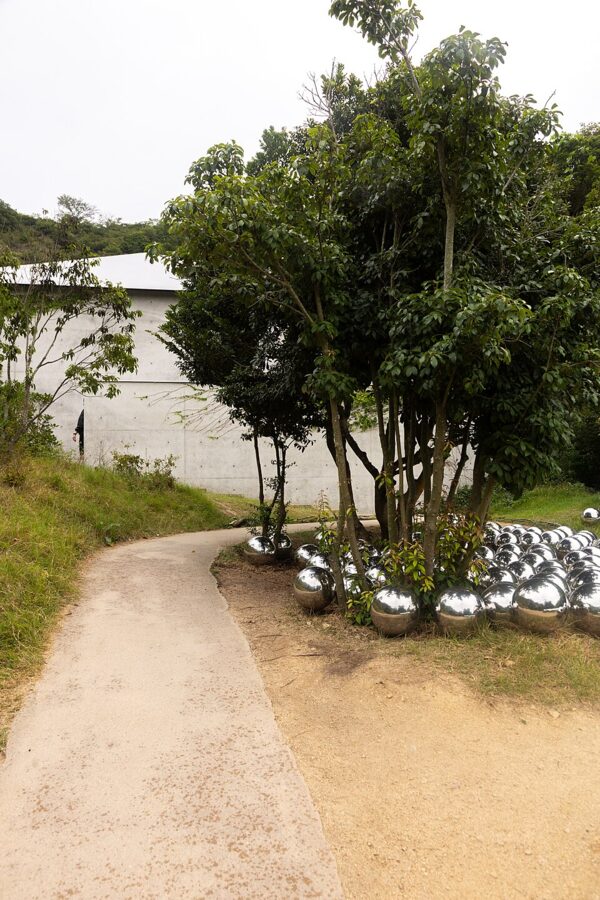

Nearby, the Hiroshi Sugimoto Gallery: Time Corridors shows his photographs and objects at full scale, by timed reservation, 11:00–15:00, at ¥1,600 online and free for hotel guests. It suits people who already like Sugimoto.
The outdoor works along the shore
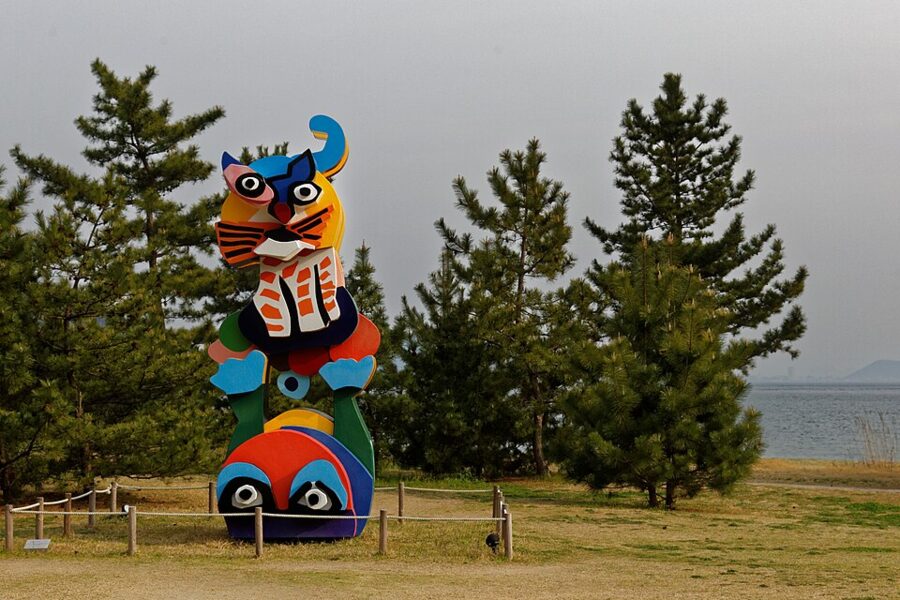
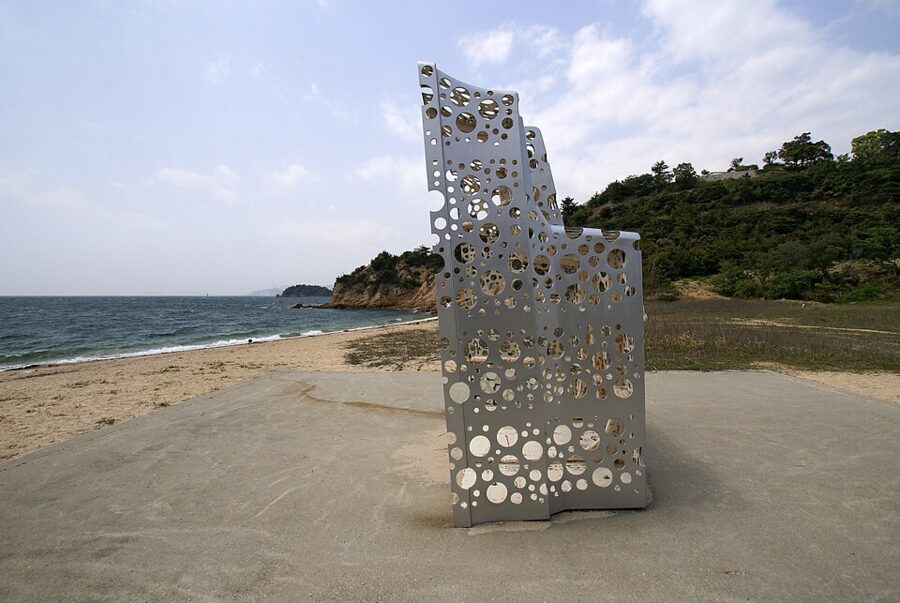
The coast between Benesse House and Gotanji beach is an open-air gallery you don’t pay for. Niki de Saint Phalle’s camel, elephant and cat stand on the grass by the beach, and Shinro Ohtake’s Shipyard Works are bows and sterns of boats cut through with holes. Walter De Maria’s Seen/Unseen Known/Unknown is in a small Ando gallery on the terraces south of the museum.


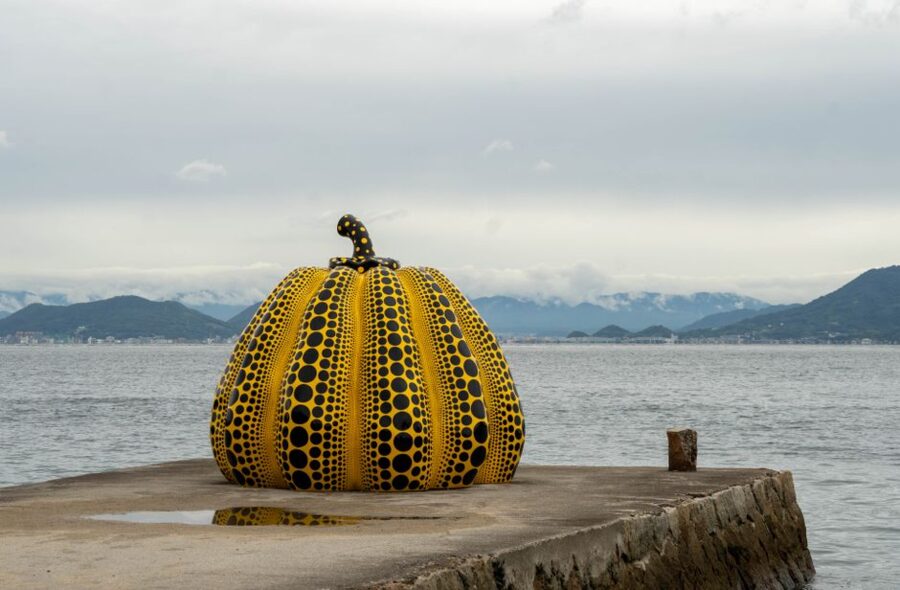
The yellow pumpkin is here too, at the end of an old concrete pier east of the museum, and at midday the queue for a picture can run back along the pier. Some works in the hotel’s Park and Beach wings are for guests only, and so is Cai Guo-Qiang’s Cultural Melting Bath, a bath set among rocks on the shore, open to them by booking on Sundays.
Lee Ufan Museum
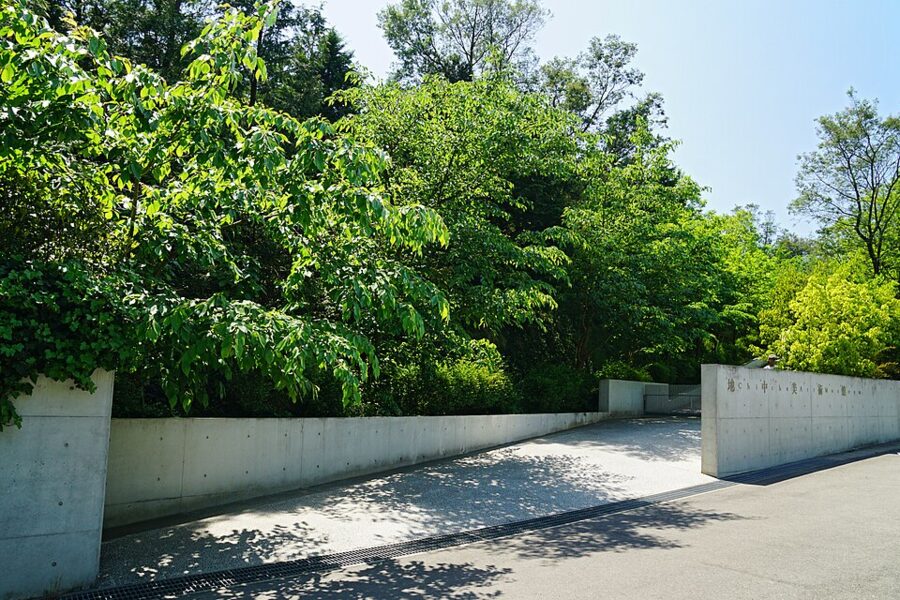
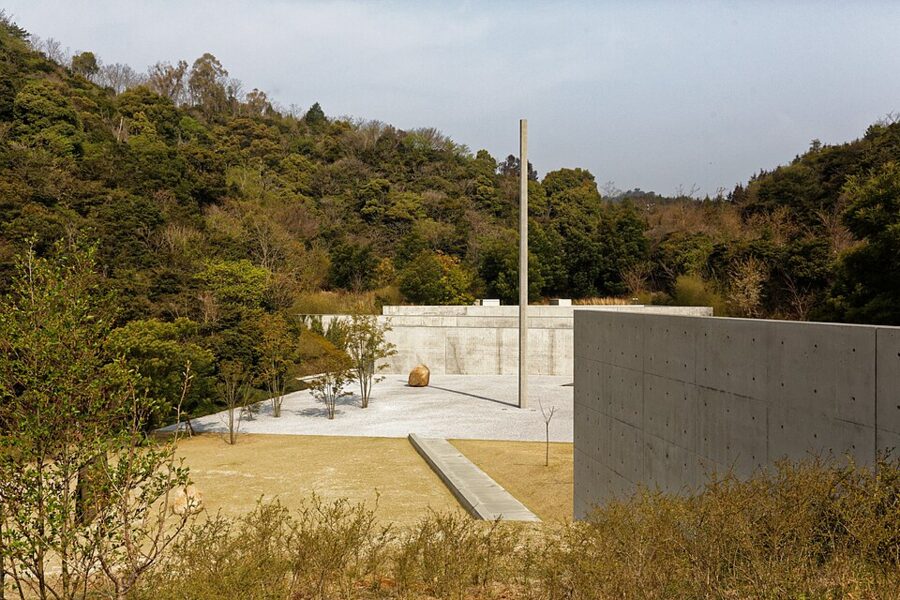
Between the Chichu Art Museum and Benesse House, a long concrete wall runs along a shallow valley open to the sea. Behind it is the Lee Ufan Museum (李禹煥美術館), opened in 2010, a half-buried Ando building for the work of Lee Ufan, the Korean-born artist who was a leading figure of Mono-ha, the “school of things” of late-1960s Tokyo. His sculptures set boulders against steel plates and alter them as little as possible; his paintings repeat a single brushstroke at the pace of a breath.
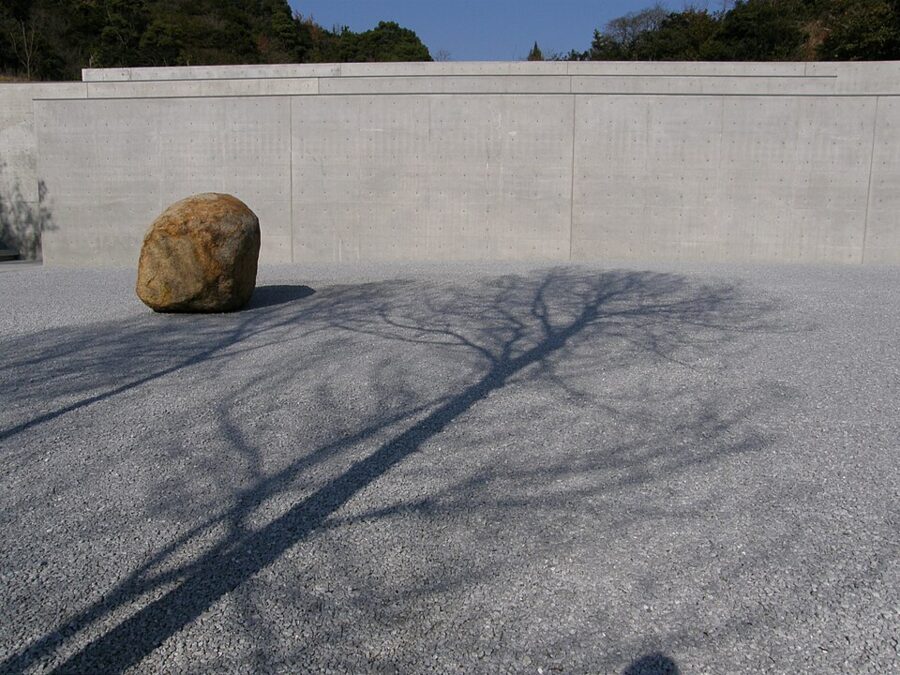

It is the quietest of the museums, and that cuts both ways. If you came for Monet, twenty minutes may be enough; if you came for Ando, this is his purest building here, with rooms called Encounter, Silence, Shadow and Meditation. Hours are 10:00–17:00 (last entry 16:30), closed Mondays, at ¥1,200 online or ¥1,400 at the door.

Naoshima New Museum of Art
The newest building opened in spring 2025 on a hilltop above Honmura, and it changed the balance of a visit. Until then Honmura was where you went between the big museums; now it has one of its own. The Naoshima New Museum of Art (直島新美術館), Ando’s tenth building for the project, has two floors underground and one above, with a stair hall lit from above and four galleries off it.
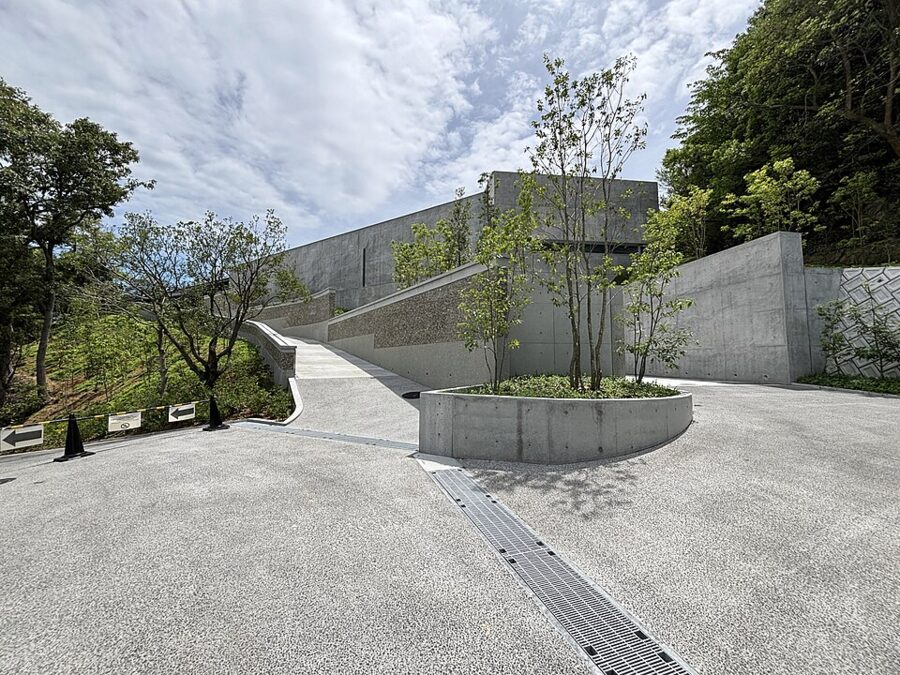

The collection is contemporary art from Asia, Japan included, and part of the display changes from time to time. The opening shows have included Cai Guo-Qiang, Takashi Murakami, Do Ho Suh and Aida Makoto. Hours are 10:00–16:30 (last entry 16:00), closed Mondays, at ¥1,500 online or ¥1,700. Unlike the older museums, it allows photography except of a few named works.
Its cafe, run with island residents, serves lunches based on local food, and its terrace is the best place in Honmura to sit for half an hour.
Honmura and the Art House Project
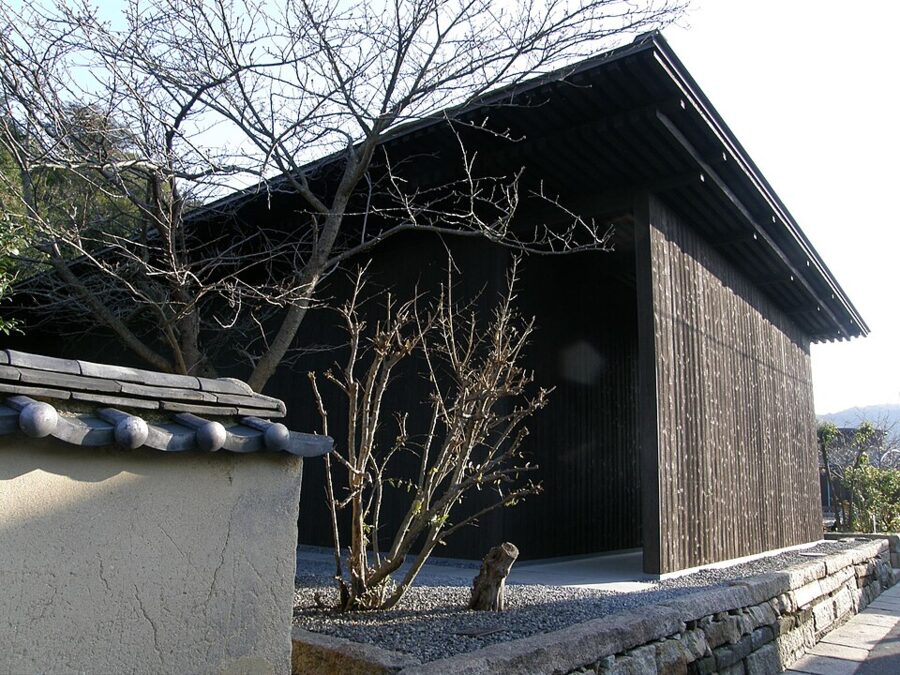
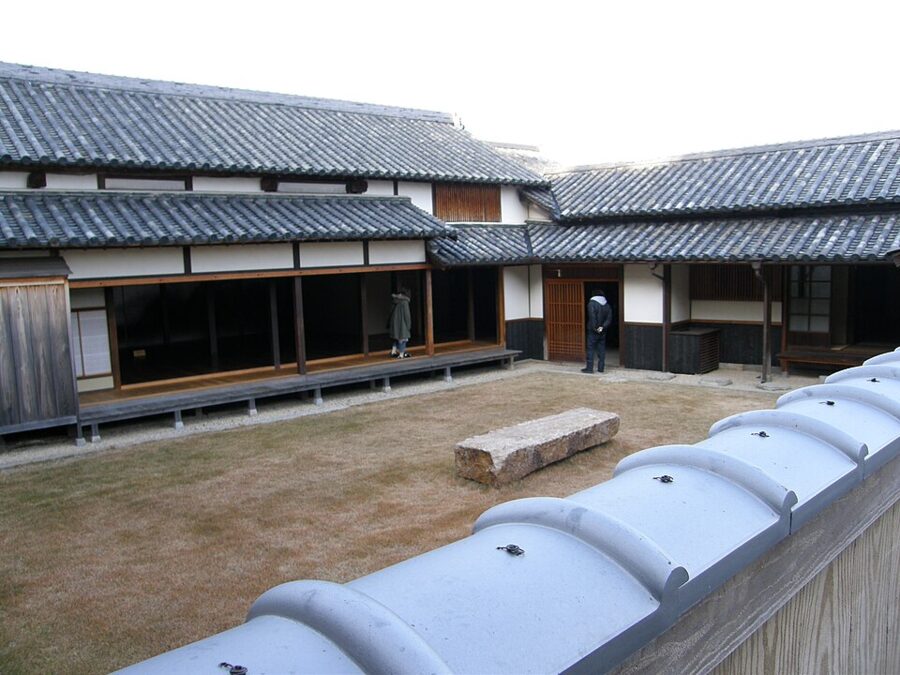
Honmura is the part of Naoshima people fall for. Its lanes keep the plan of the castle town, and many houses still have walls of black yakisugi, cedar boards charred to keep off rot and insects. Since 1998, seven sites here, most of them empty houses, have become works of art under the name Art House Project (家プロジェクト), and you walk between them through the everyday life of the village.
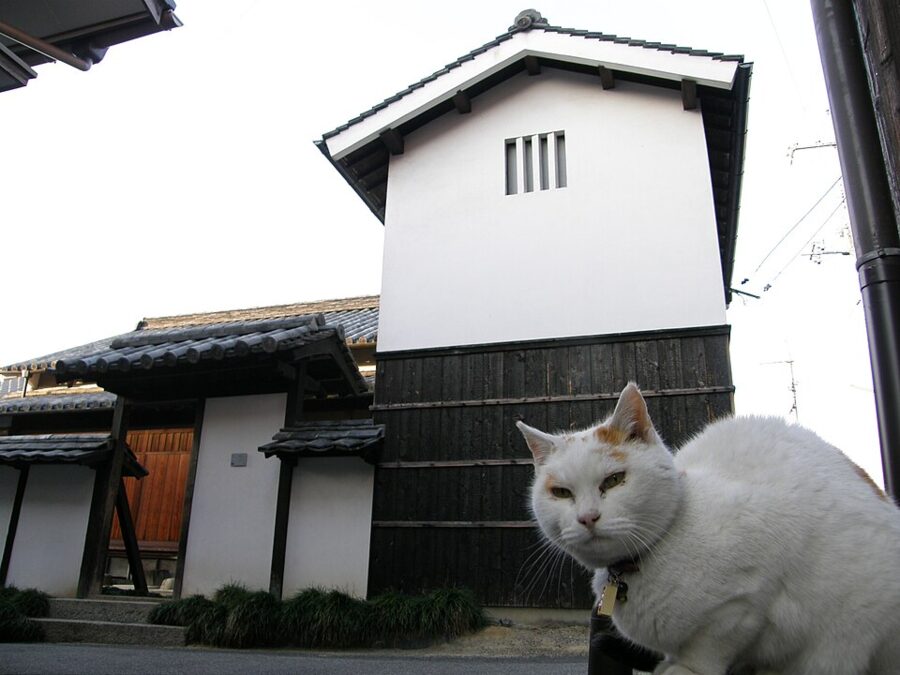

Start at the Honmura Lounge & Archive, a former co-operative supermarket remodelled by Ryue Nishizawa, which sells tickets and maps. The Multi-Site Ticket covers five houses for ¥1,200 online or ¥1,400; a single house is ¥600 or ¥700. Minamidera and Kinza are sold separately with timed reservations at ¥600 online, and you should book those first.
The houses keep office hours with a lunch break. Kadoya, Ishibashi and Haisha open 10:00–12:00 and 13:00–16:30, and Go’o Shrine and Gokaisho 10:00–13:00 and 14:00–16:30. All close on Mondays, and Kinza is closed Monday to Wednesday.
The seven houses
Kadoya (1998) holds Miyajima’s counters in a dark pool. Minamidera is the only new building, a dark timber hall by Ando where temples once stood, built for James Turrell’s Backside of the Moon. You sit in complete darkness for several minutes before anything happens, and children under six are not admitted.

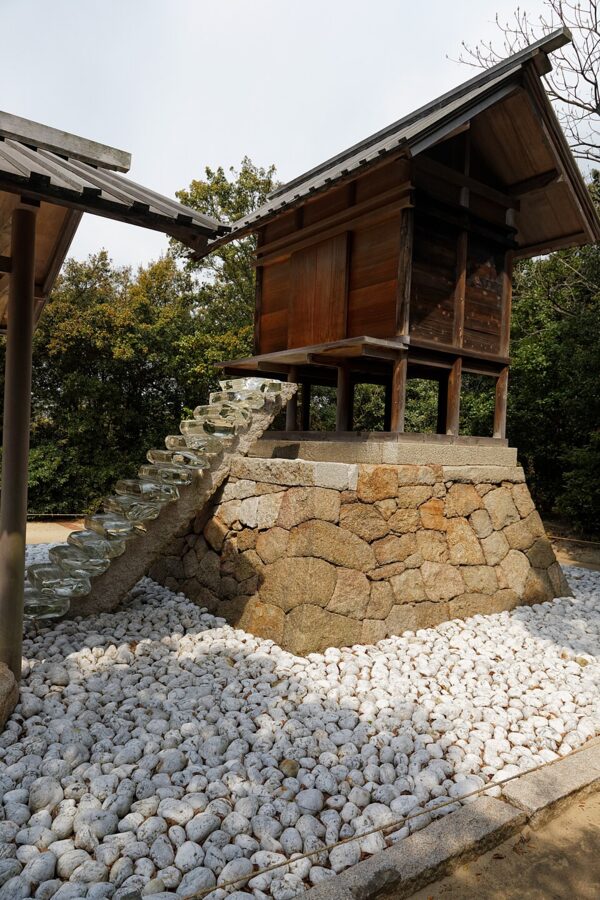
Kinza, a 200-year-old house whose walls and floor have become a work by Rei Naito, admits one person at a time for fifteen minutes. Go’o Shrine is a real Edo-period shrine rebuilt by Hiroshi Sugimoto, with a glass staircase running from the main hall down into a stone chamber underground. You can pray at the shrine at any time; the chamber is part of the ticket.

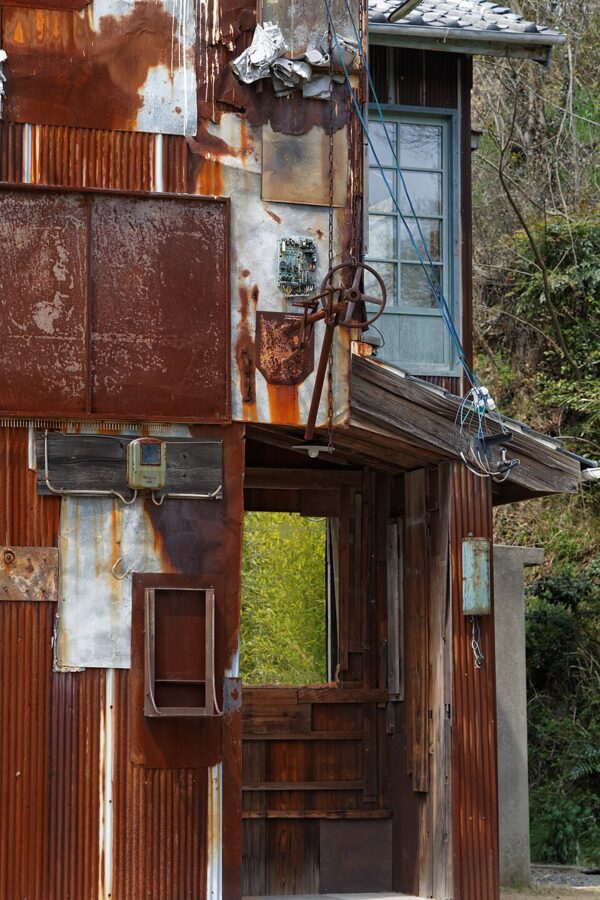

Ishibashi belonged to a family who grew rich making salt in the Meiji era; Hiroshi Senju spent five years turning it into a single work, with paintings of a waterfall and a garden. Gokaisho was where islanders met to play go, the board game. Yoshihiro Suda made wooden camellias for it after a painting by Hayami Gyoshu, and a real five-coloured camellia grows in the garden for comparison.

More in Honmura
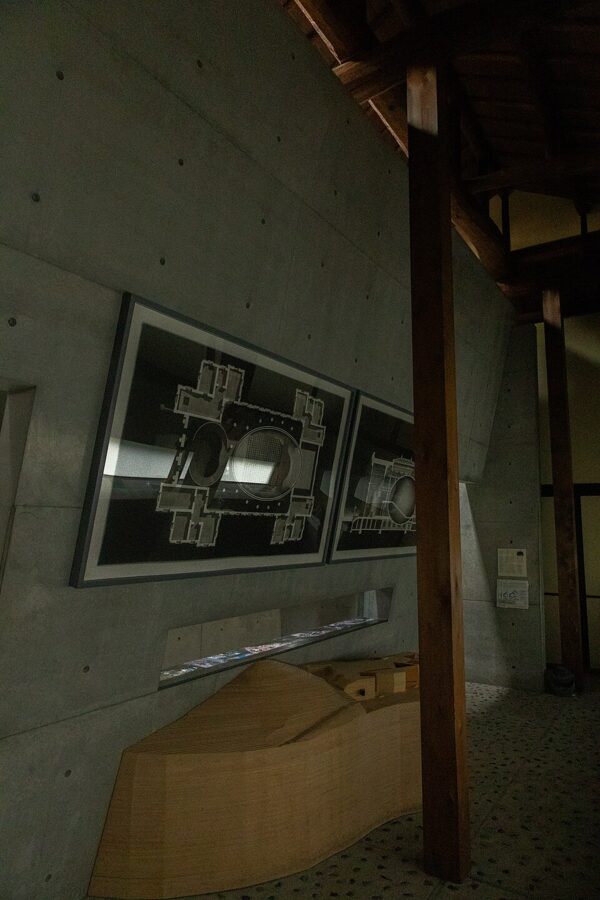
The Ando Museum, opened in 2013, fits a concrete box inside a wooden house about a hundred years old, lit by a skylight cut through the roof. It shows drawings, models and photographs of Ando’s work and the island’s history, for ¥600 online or ¥700, closed Mondays and over lunch. If the Chichu Art Museum sells out, this is where to see how Ando thinks.

Ring of Fire, in an old house called Matabe, pairs a daytime work with a timed night one by the Thai film-maker Apichatpong Weerasethakul, and opens only from Friday to Sunday. Hiroshi Sambuichi’s The Naoshima Plan “The Water”, a pool of well water in a renovated house, is free.

The pumpkins, the bathhouse and the works in the street
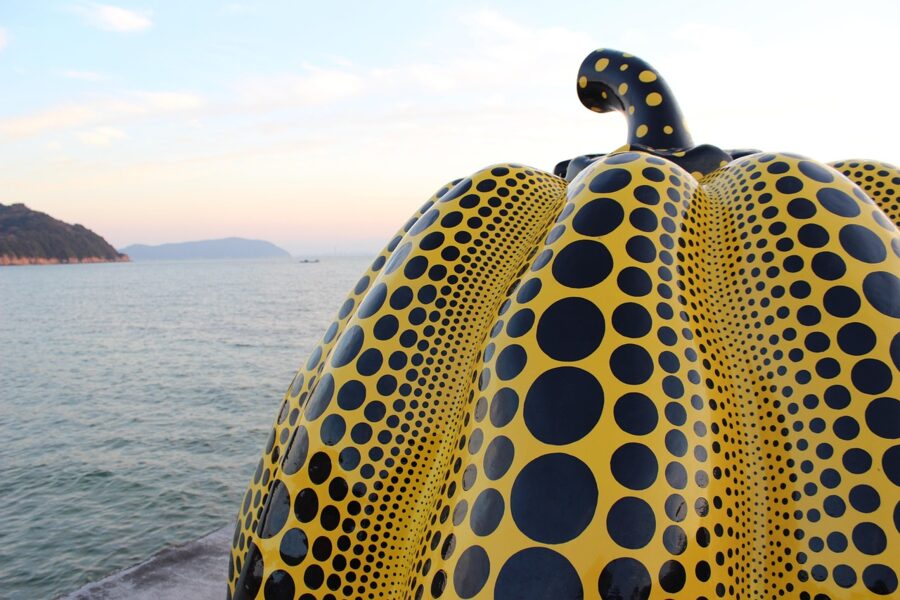
Kusama has two pumpkins on Naoshima. The yellow one on the Benesse House pier became the island’s emblem; in August 2021 a typhoon swept it off the pier, and the one there now was made and installed in 2022. The Red Pumpkin of 2006 stands on the quay at Miyanoura, large enough to walk into, with some of its dots cut out as openings.
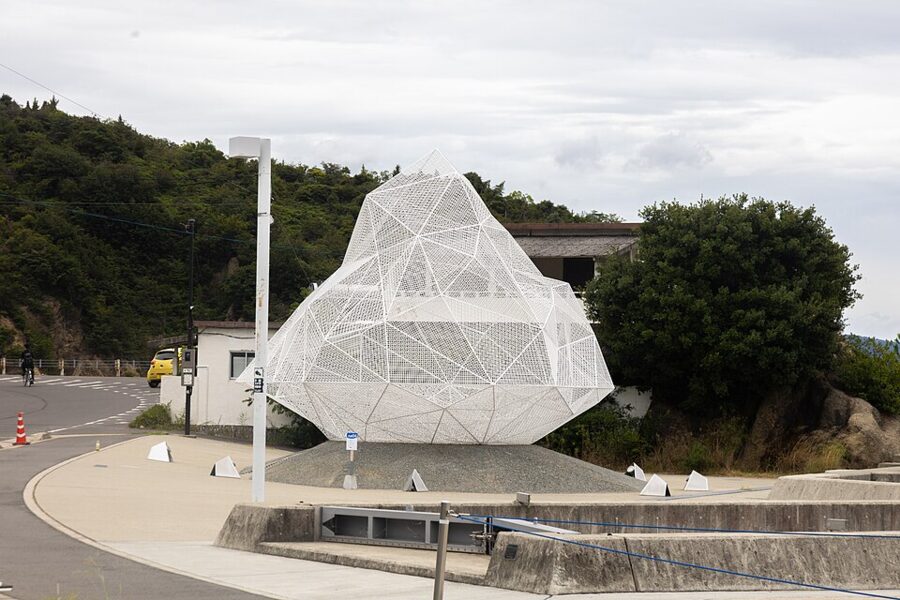
Near the Red Pumpkin, Sou Fujimoto’s Naoshima Pavilion is a white faceted shell of about 250 stainless steel mesh panels, made for the town’s sixtieth anniversary. Naoshima is the largest of 27 islands in its group, and Fujimoto called the pavilion the 28th.

The bathhouse, Naoshima Bath “I Love Yu” (直島銭湯), is a working sento, a public bath, built by Shinro Ohtake in 2009 for residents and visitors alike. The name is a pun: yu means hot water. Everything in it is Ohtake’s, from the tubs and murals to the mosaics and the porcelain in the toilets.
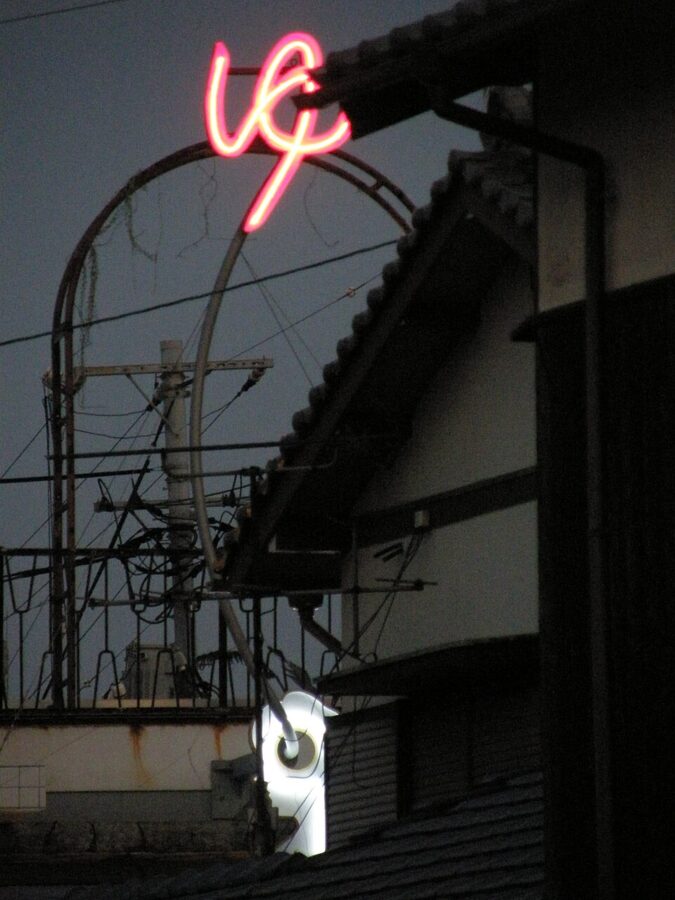
It opens 13:00–21:00 (last entry 20:30), closed Mondays, for ¥660, and is busiest just after a ferry arrives and just before the last one leaves. Photography is allowed only during the weekend and holiday viewing hours in the early afternoon, when nobody is bathing. Wash at the taps before you get in.
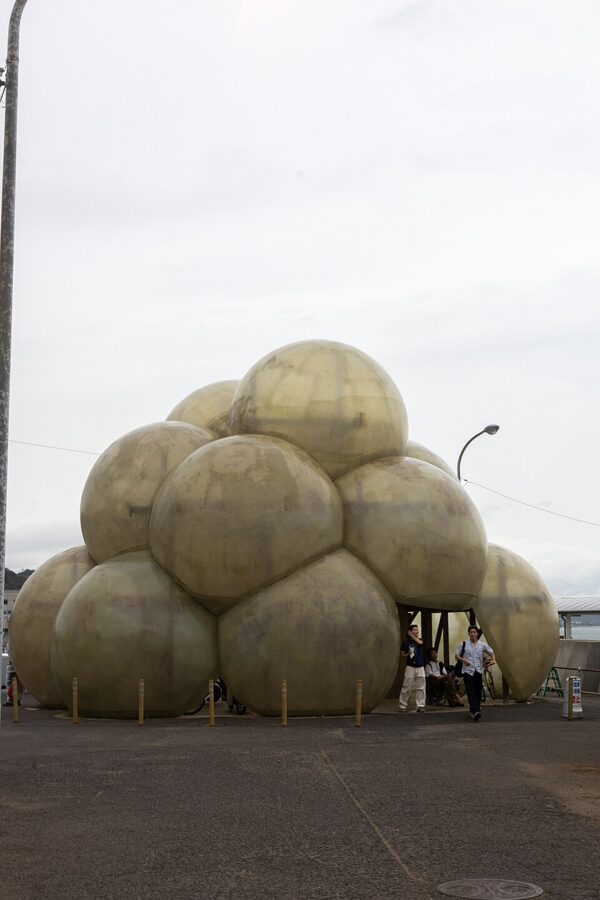
Miyanoura Gallery 6, once the island’s pachinko parlour, now holds Motoyuki Shitamichi’s archive of the folklore and history of the Inland Sea, open some afternoons for ¥520. Near the port, a sculpture by Jose de Guimaraes takes its cue from the women’s puppet theatre.
Getting around Naoshima
The town bus runs from Miyanoura port through Honmura to Tsutsujiso, at the edge of the Benesse area, for ¥100 a ride. You pay in coins as you get off and there is no change machine, so carry hundred-yen coins. The buses seat 28, and when a ferry has just come in, the first one can fill and leave people at the stop.
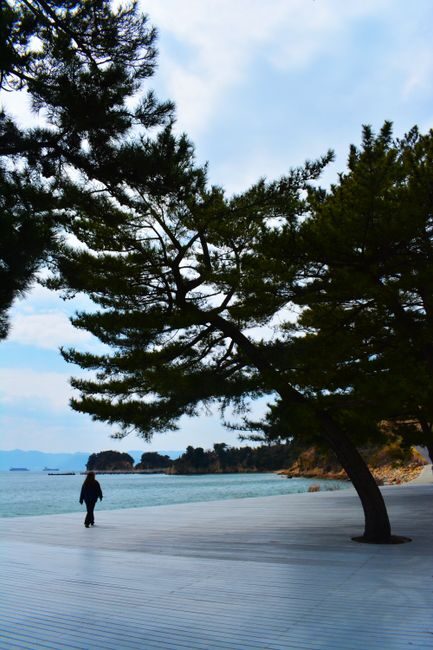
Beyond Tsutsujiso a free art site shuttle runs to Benesse House, the Lee Ufan Museum and the Chichu Art Museum, except on days when Chichu and Lee Ufan are closed, which in practice means Mondays. The art site asks drivers to leave cars at Tsutsujiso, so a rented car is of limited use.
A bicycle is the best way round, and an electric-assist bike makes the hill to Chichu painless. Rental shops face the ferry terminal at Miyanoura and stand by Honmura port, and some guesthouses lend bikes. The island has two taxis, so book one by phone if you need it. On foot, Miyanoura to Honmura is about half an hour over a low ridge, and Honmura to Tsutsujiso about the same.
Teshima: the rice terraces and the droplet
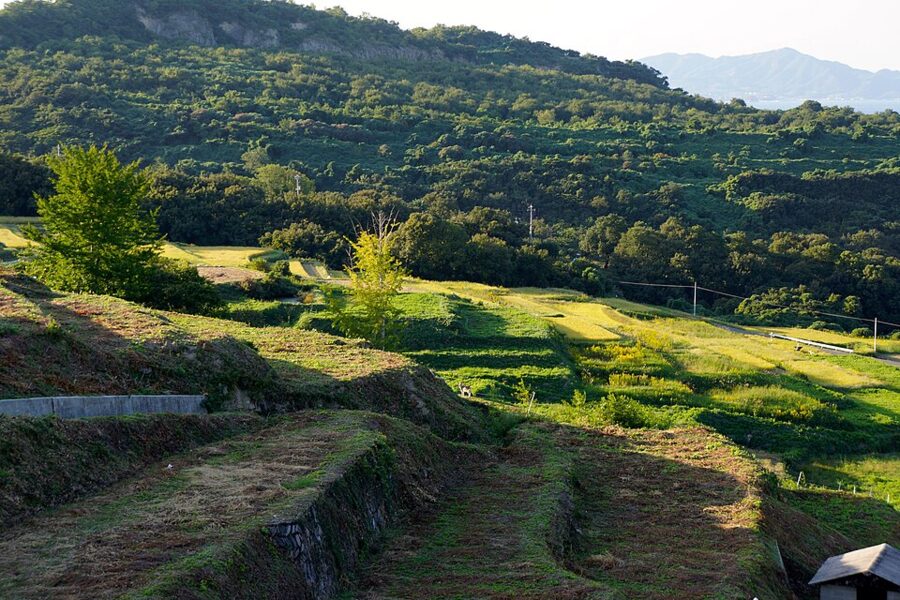
Teshima is higher, greener and farmed. Its peak, Danyama, rises to 340 metres, and the springs that run off it gave the island its name, “abundant island”; it is said to be the only island in the Inland Sea that could ship rice off it. It was also known for Teshima-ishi, a soft grey tuff carved into lanterns for a thousand years.
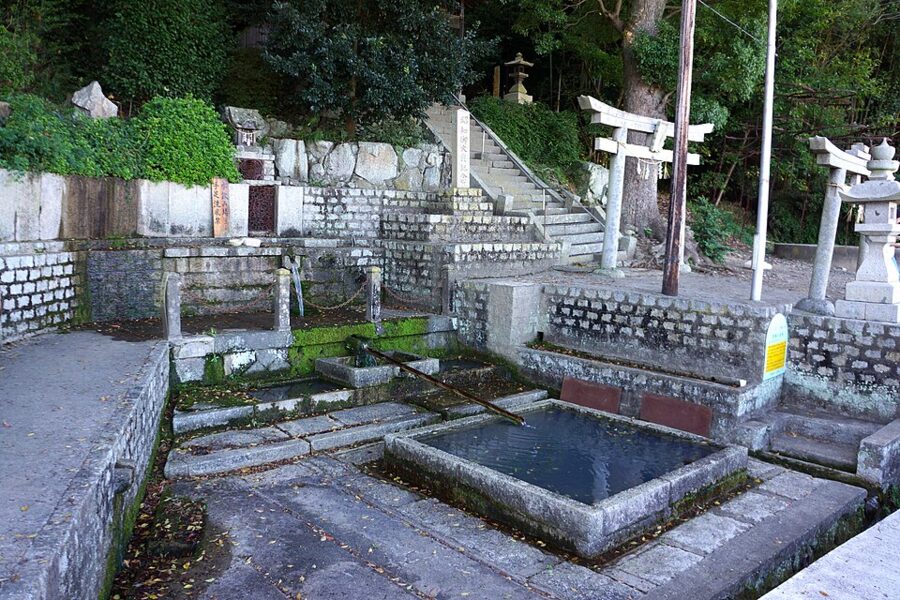
About 870 people lived on Teshima at the 2015 census. In Karato a spring still fills a stone basin that the village once shared, said to have been struck from the ground by the monk Kukai.
Teshima also carries the darkest story of the three islands: industrial waste dumped and burned on its west coast from 1975 until 1990, and 913,000 tonnes of waste and soil not fully removed until 2019, much of it treated at a plant beside the smelter on Naoshima. Kagawa Prefecture carried out the clean-up.
Ferries reach Teshima at Ieura (家浦) on the north coast, facing Naoshima, and Karato (唐櫃) on the north-east. The Teshima Art Museum and Les Archives du Coeur are near Karato; Ieura has the Yokoo House and the Needle factory. A town shuttle bus links the two ports by way of the museum, and you will want it: the road climbs steeply in between.
Teshima Art Museum
The single building most worth the trip to these islands is not on Naoshima. The Teshima Art Museum (豊島美術館), opened in October 2010, is a shell of concrete 40 by 60 metres with no columns, rising to only about 4.5 metres (the museum’s own pages give both 4.3 and 4.5). Two oval openings let in sky, wind, birdsong and sometimes rain. On the floor, water wells up from tiny holes, gathers into beads, runs, merges and drains away all day: that is the work, Rei Naito’s Matrix, in a building by Ryue Nishizawa.
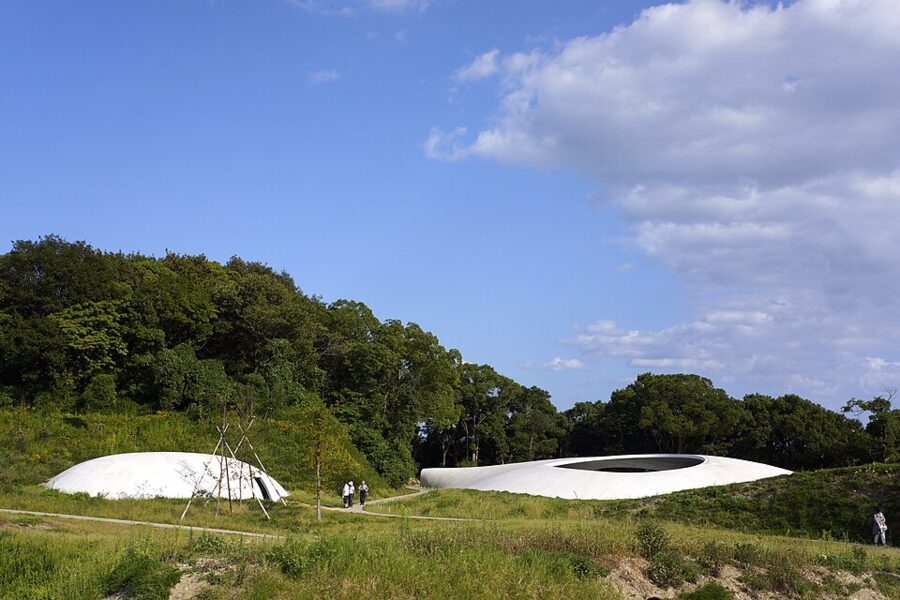

Entry is by timed ticket, ¥1,800 online or ¥2,000 on the day if any are left. From March to November it opens 10:00–17:00 and closes on Tuesdays; from December to February it opens 10:00–16:00 and closes Tuesday to Thursday. No photography inside, and talking is discouraged. I would allow at least an hour; the work only shows itself to people who sit still.


Les Archives du Coeur and the Yokoo House
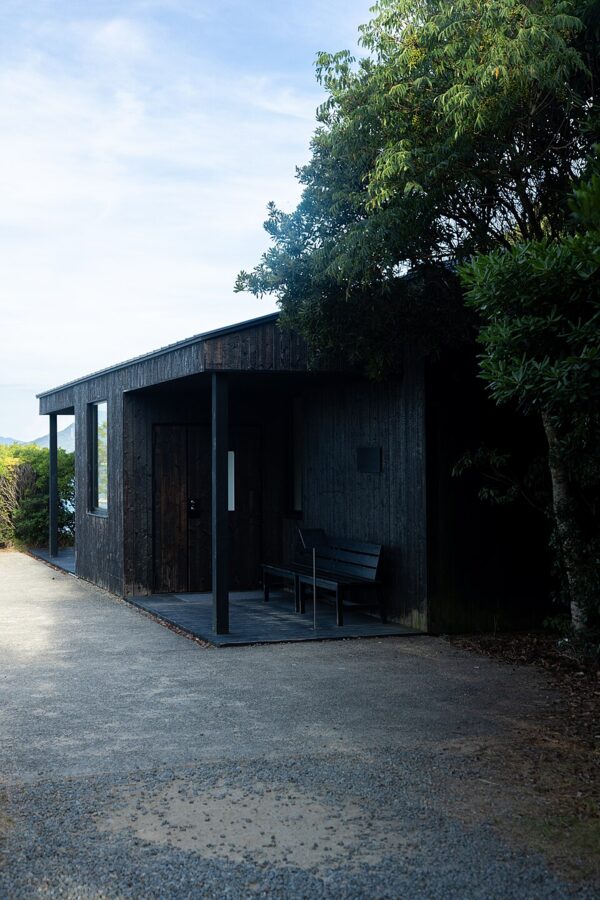
Christian Boltanski began recording human heartbeats in 2008, and Les Archives du Coeur, a black timber building on a small beach in Karato, holds them. In one dark room a single bulb flashes in time to a heartbeat played very loud; in another you can search the archive and listen. For ¥1,570 you can record your own and take a copy home. Admission is ¥600 online, with the Teshima Art Museum’s hours and closing days.

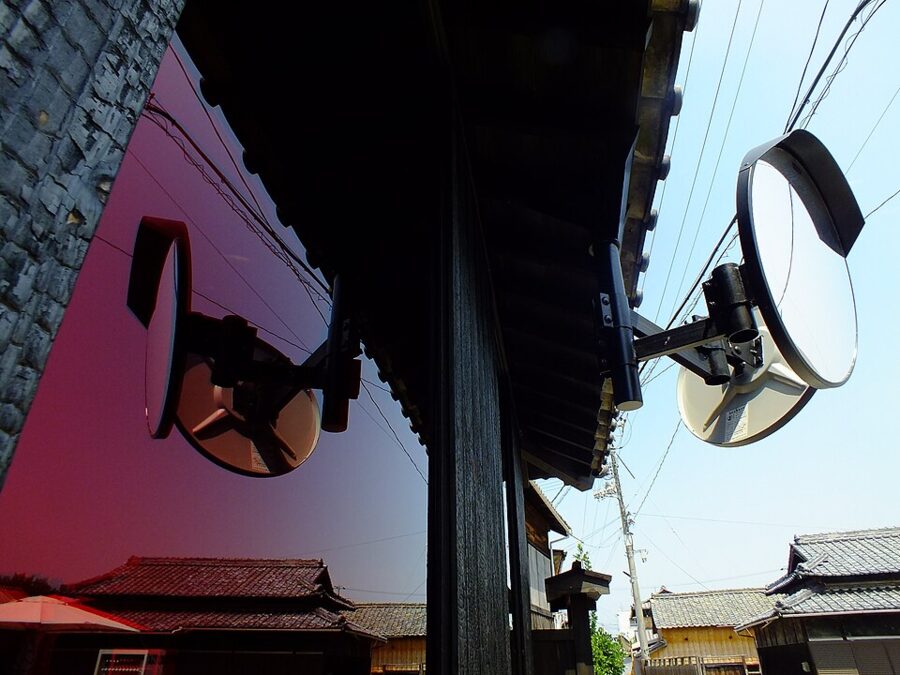
At Ieura, the Teshima Yokoo House is an old house remodelled by the architect Yuko Nagayama around paintings by Tadanori Yokoo. Red glass runs through it, so the garden, the pond and the village beyond look drained of colour. It is ¥600 online, with the museum’s hours. The Needle factory nearby, Shinro Ohtake’s work in a closed knitting-needle factory, holds a 17-metre wooden boat mould brought by barge from Uwajima; it opens only from Saturday to Monday between March and November, for ¥520.

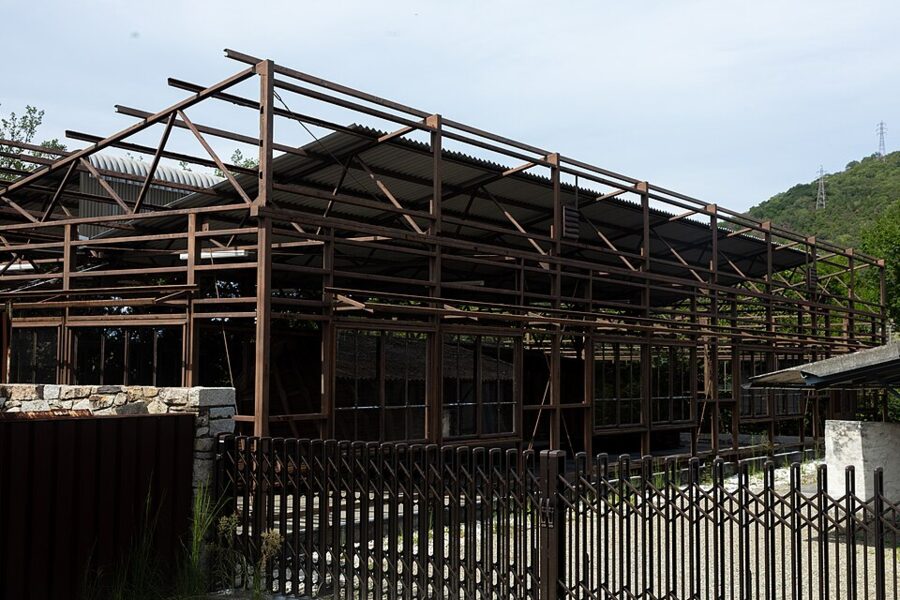

Inujima: the refinery on the edge of Okayama
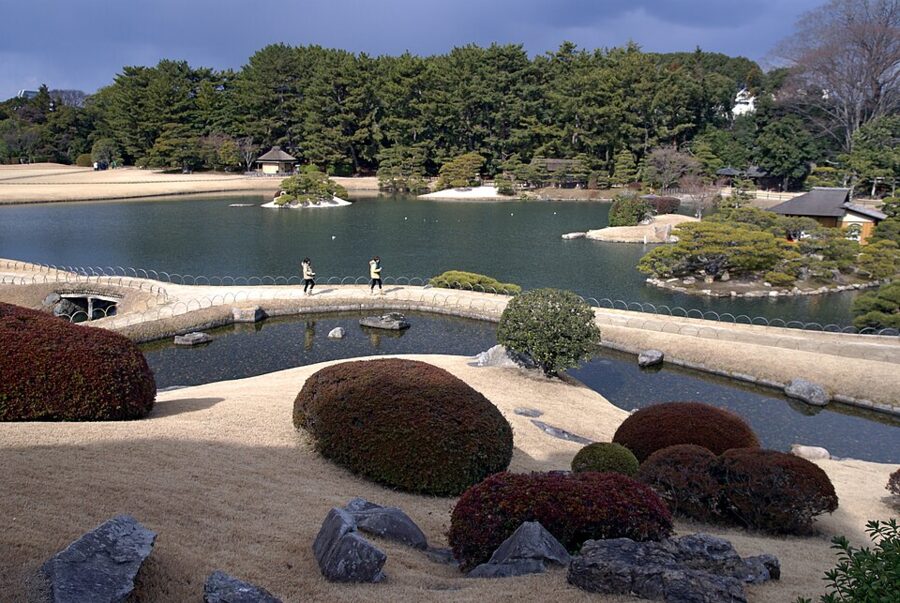
Inujima is the smallest and strangest of the three. It belongs to Okayama city, whose only inhabited island it is, about 3.6 km round and home to about forty people. Its name, “dog island”, comes from a rock said to look like a crouching dog. Before copper it supplied stone: Inujima granite went into the walls of Osaka Castle in the 1620s and the great rocks of Korakuen garden in Okayama.

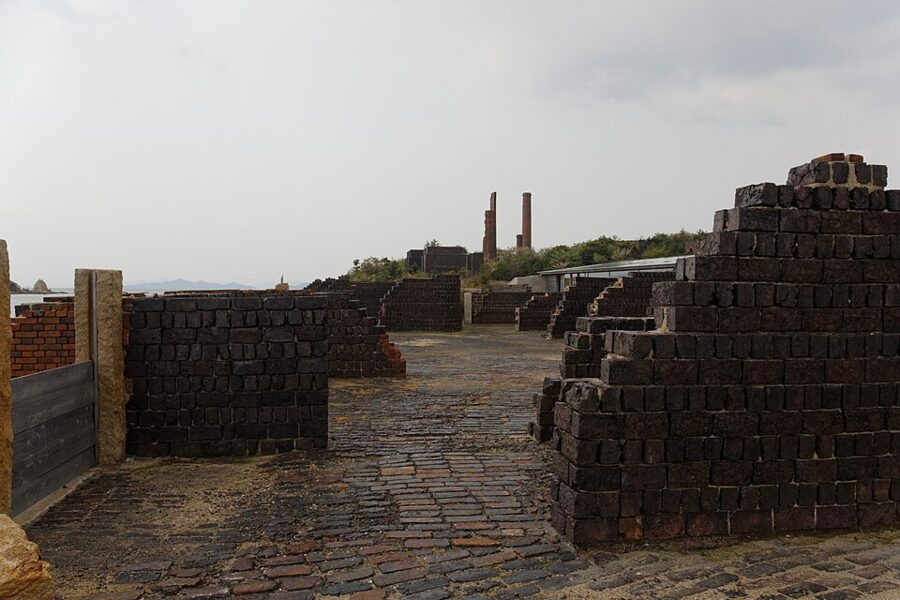

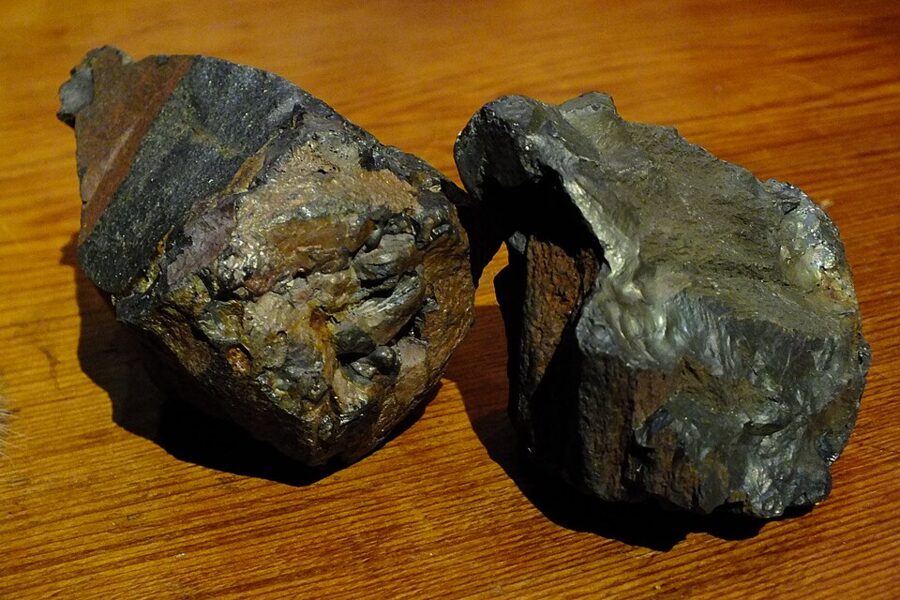
A copper refinery opened here in 1909, built by an Okayama industrialist to take a smelter’s smoke away from the mainland. Copper prices crashed after the First World War and the plant closed about ten years after it opened; sources date the end to late 1918 or 1919. What it left were chimneys and walls of karami bricks, cast from the black slag of the furnaces.
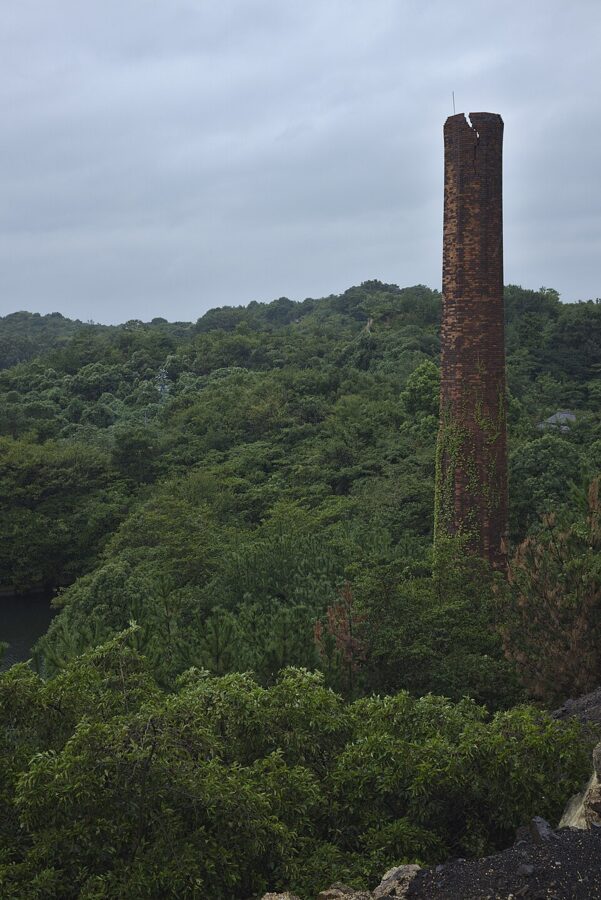

The artist Yukinori Yanagi, who had shown at Benesse House in the early 1990s, drew up a plan in 1995 to make the whole island an art site. The Inujima Seirensho Art Museum (犬島精錬所美術館; seirensho means refinery) opened in 2008, built by Hiroshi Sambuichi to run on the sun, the ground’s warmth and the draught of the old chimney, with plants to clean its water. Yanagi’s work inside is built around Yukio Mishima, the novelist who warned against Japan’s modernisation, and it is dark, deliberately unsettling and the strongest argument for the long journey.

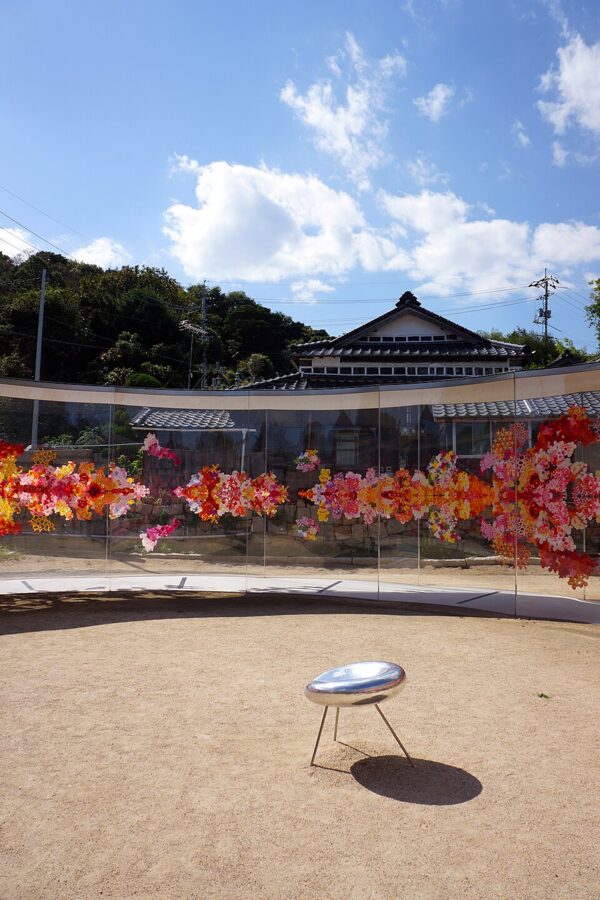
In the village, the Inujima “Art House Project” has five galleries designed by Kazuyo Sejima, some of acrylic and aluminium that reflect the houses around them. One ticket covers museum and art houses: ¥2,100 online or ¥2,300. The Seirensho opens 09:00–16:30 and the art houses 10:00–16:30, both closed Tuesday to Thursday from March to November and every day from December to the end of February.

The ticket centre by the port has a cafe using fish from around the island: tai-meshi, rice cooked with sea bream, is ¥1,400, and it is the obvious lunch. There are lockers and a luggage room there, open 09:00–17:00.
Planning: closing days, tickets and ferries
Three rules cover most of it. Naoshima’s museums close on Mondays, Teshima’s on Tuesdays (and in winter on Wednesdays and Thursdays too). Inujima closes Tuesday to Thursday, and for the whole of December, January and February.
When a Monday is a national holiday, the Naoshima museums open and close the next day instead. The art site publishes an opening calendar with exceptions, and it is worth checking against your dates.
| Venue | Closed | Adult (online / door) | Timed ticket |
|---|---|---|---|
| Chichu Art Museum | Mondays | ¥2,500–2,700 / ¥2,800–3,000 | Yes |
| Benesse House Museum and Valley Gallery | Open every day | ¥1,300 / ¥1,500 | No |
| Lee Ufan Museum | Mondays | ¥1,200 / ¥1,400 | No |
| Naoshima New Museum of Art | Mondays | ¥1,500 / ¥1,700 | No |
| Art House Project, five houses | Mondays | ¥1,200 / ¥1,400 | No |
| Minamidera; Kinza | Mondays; Monday to Wednesday | ¥600 / ¥700 each | Yes |
| Ando Museum | Mondays | ¥600 / ¥700 | No |
| I Love Yu bathhouse | Mondays | ¥660 at the door | No |
| Teshima Art Museum | Tuesdays; Tuesday to Thursday in winter | ¥1,800 / ¥2,000 | Yes |
| Inujima Seirensho and Art House Project | Tuesday to Thursday; all of December to February | ¥2,100 / ¥2,300 | No |
Buy the timed tickets first, Chichu above all, as soon as you know your day. Children 15 and under go free almost everywhere but still need a reservation where there is a time slot.
Ferries from Uno and Takamatsu
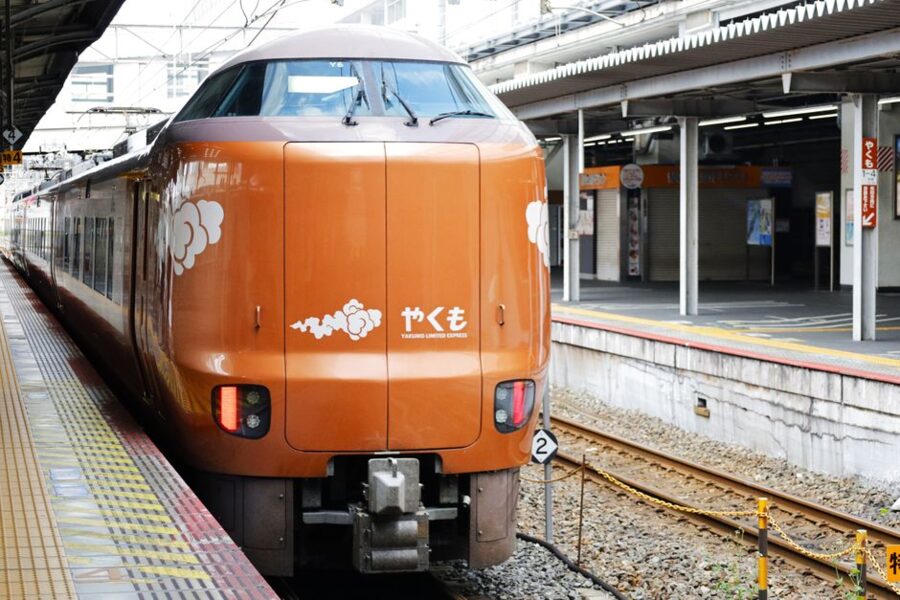
Uno (宇野), in Tamano, Okayama Prefecture, is the short crossing. From Okayama station the JR Uno Line takes about 50 minutes, sometimes with a change at Chayamachi, and the port is three minutes’ walk from Uno station. The Japan Rail Pass covers the train but not the boats, which belong to Shikoku Kisen, a private company.
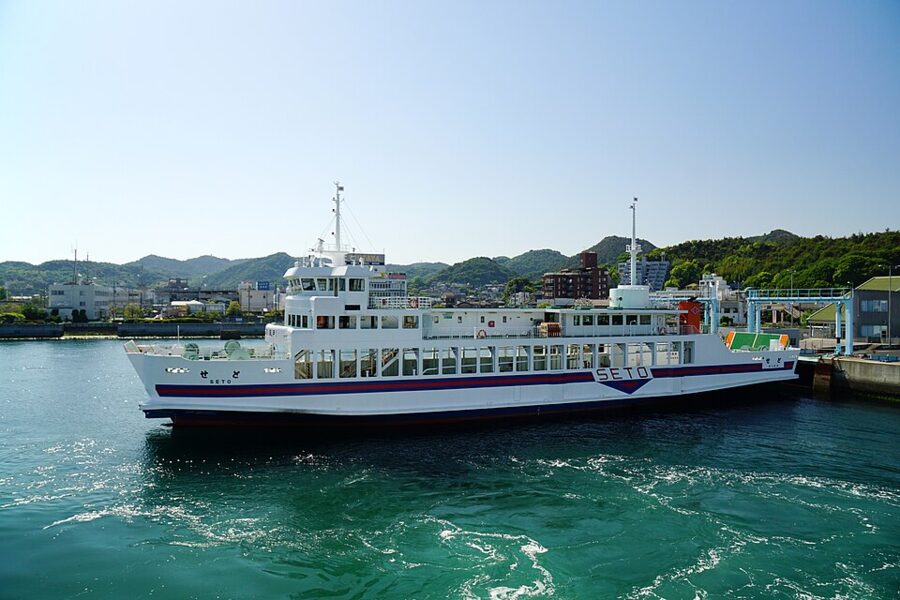

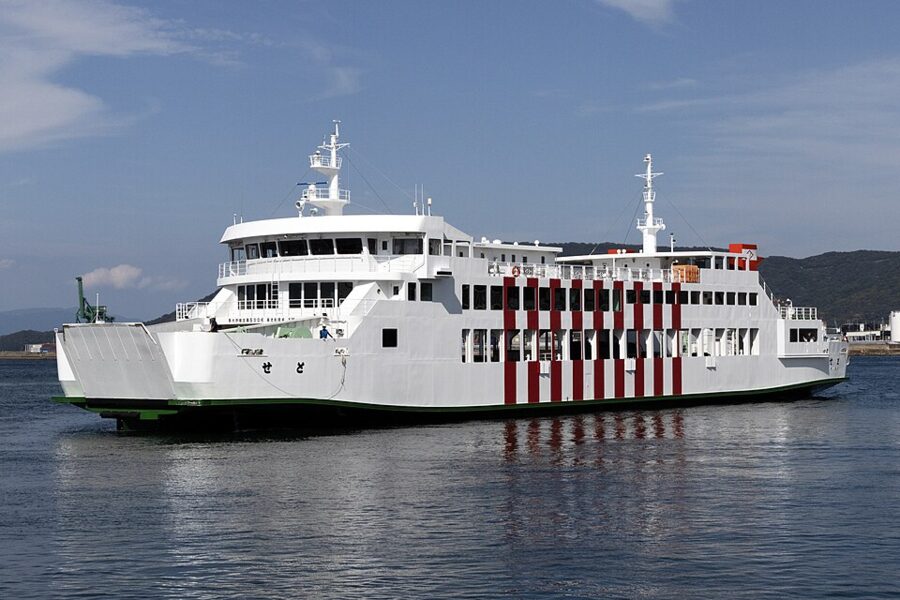
Shikoku Kisen’s car ferries take about 20 minutes from Uno to Miyanoura, at ¥370 each way, with a dozen or so sailings each way between about 06:00 and 20:30 and gaps of up to two hours in the middle of the day. Small passenger boats fill some gaps, and a late boat leaves Uno after midnight at a higher fare. Another small boat links Uno and Honmura a handful of times a day, also ¥370, cash only.
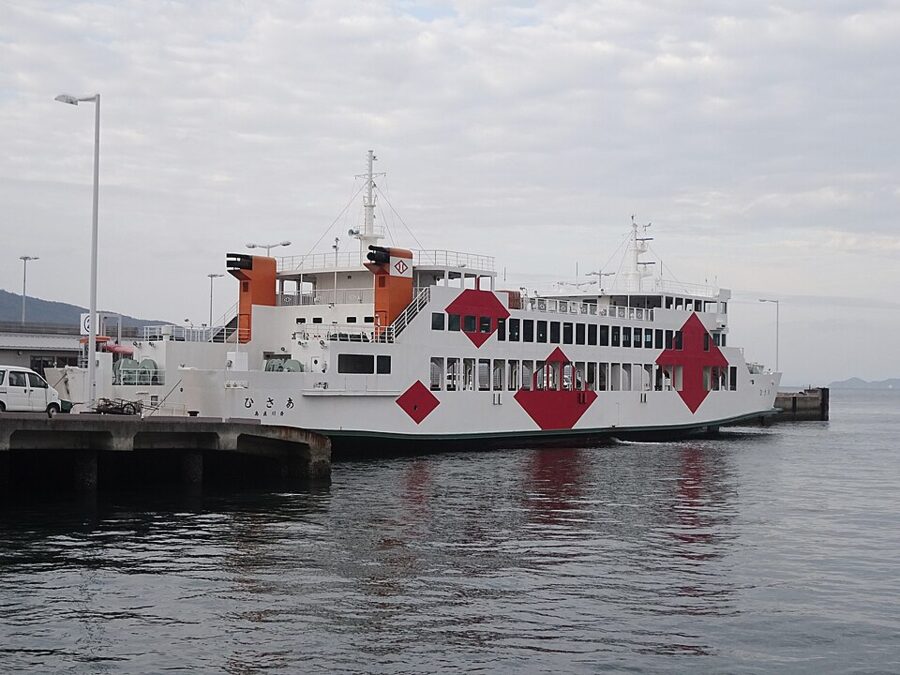

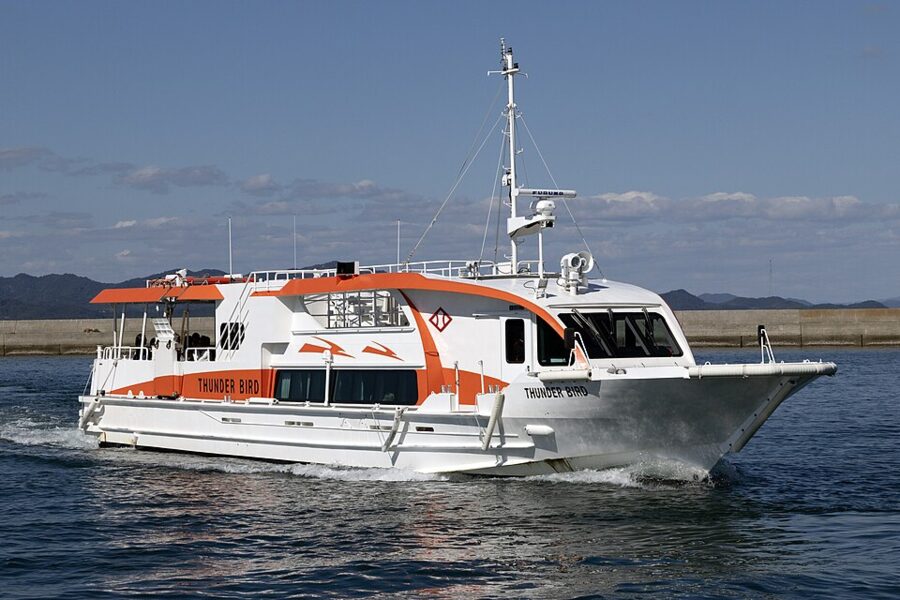
From Takamatsu (高松), on Shikoku, the car ferry takes about 50 minutes to Miyanoura (an hour coming back) for ¥680, five times a day, and a high-speed boat about 30 minutes for ¥1,590, three times a day. Takamatsu port is five minutes’ walk from JR Takamatsu station. From Shikoku or Takamatsu airport take this route; by Shinkansen from Osaka, Kyoto or Hiroshima, Uno is faster and cheaper.

Between the islands, a Shikoku Kisen high-speed boat runs from Miyanoura to Ieura on Teshima and on to Inujima three times a day, at ¥820 to Teshima and ¥2,450 all the way, cash only. It sails only when the museums at its destinations are open, and calls only where they are. Teshima also has boats from Takamatsu by way of Honmura, and a ferry from Uno that calls at Ieura and Karato on the way to Shodoshima. Inujima’s own link with the mainland is a ten-minute boat from Hoden port in eastern Okayama, at ¥600.
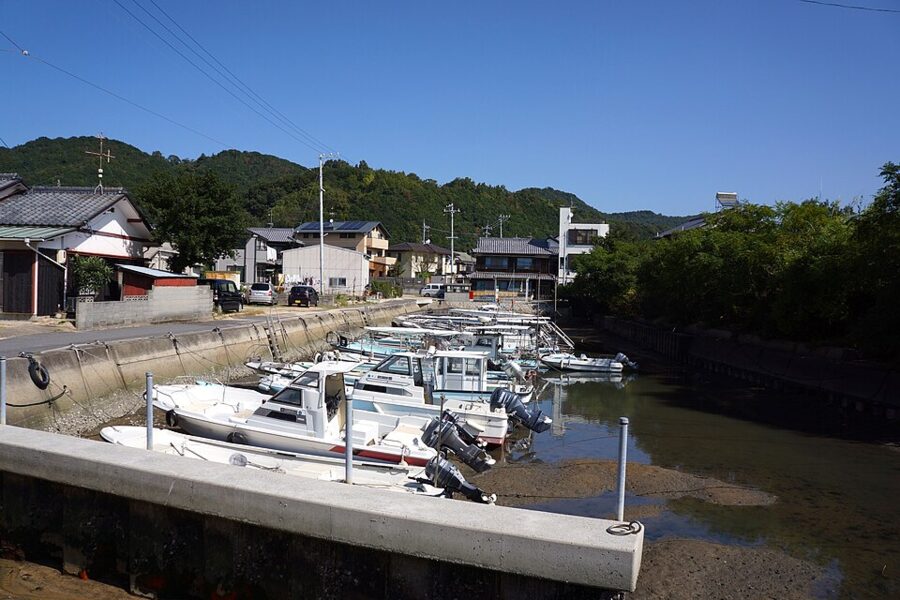


Fog in spring and early summer can cancel sailings, and the last ferry is earlier than you might expect. On a day trip, know the time of the last boat before you start.
Luggage, money and seasons
The museums won’t let you take large bags inside, and lockers at the Chichu ticket centre and the ports run short on busy days, so leave big cases on the mainland or send them ahead by courier. Several boats and the town bus take cash only; the island’s cash machines are at its one bank branch, which keeps office hours, and the Seven-Eleven in Miyanoura.
The Inland Sea climate is mild and dry. Spring and autumn are the easy seasons; summer is hot and humid on the long walks between museums; winter is quiet and cold on the water, and Inujima is shut. The seasons across Japan follow the same pattern. I’d go in November, after the autumn holiday crowds and before Inujima closes.
Where to stay
Staying the night changes Naoshima more than any ticket. Day-trippers arrive on the morning ferries and leave on the evening ones, and from about 17:00 to 10:00 the island belongs to the people sleeping on it. You also get the evening Turrell programme, the bathhouse after dark and the museum at Benesse House after closing time.
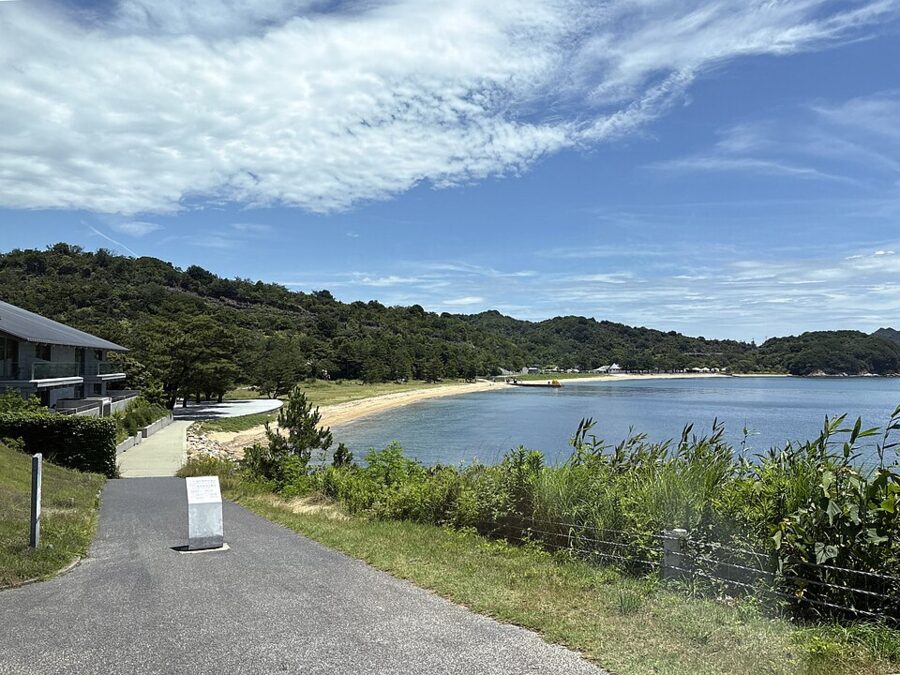

Benesse House has four wings, Museum, Oval, Park and Beach, with art in the rooms and corridors. Guests get free entry to the museum and the Sugimoto gallery, open to them until 23:00, a guests’ bus round the island and works the public cannot see. It costs far more than anything else on the island, books up early for spring and autumn weekends, and closes in part for maintenance now and then, usually in winter.
The alternatives are minshuku, family-run guesthouses, and small inns in Miyanoura and Honmura, listed by the Naoshima tourism association. Many have only a few rooms, and some serve dinner while others don’t, so ask about meals and payment when you book. Teshima has a smaller choice. The fallbacks are hotels in Okayama, Uno and Takamatsu, all within an hour of the first ferry.
The Setouchi Triennale
Every three years the Setouchi Triennale (瀬戸内国際芸術祭) turns the region into a festival, with temporary works, performances and extra boats in three seasons of about a month each. The sixth edition, in 2025, ran for 107 days across 17 islands and coastal areas and drew about 1.08 million visits. The next is due in 2028; the call for artists’ proposals is out and the dates are still to be announced. A festival year brings works you can’t otherwise see, and queues for every ferry, ticket and bed.
One, two and three days
One day
Avoid Mondays. Take an early ferry from Uno and the bus to Tsutsujiso, book the first Chichu slot, then walk down through the Lee Ufan Museum, the Valley Gallery and Benesse House Museum, passing the yellow pumpkin. Take the bus to Honmura in the early afternoon for Minamidera (booked ahead) and as many art houses as the lunch-break hours allow, then back to Miyanoura for the bath and the evening ferry. The New Museum won’t fit; if you would rather see it, drop Lee Ufan.
Two days
Arrive at midday and spend the afternoon in Honmura: the New Museum, the Art House Project and the Ando Museum, with the bath in the evening. Give the second day to the south: Chichu in the morning, then Lee Ufan, the Valley Gallery, Benesse House Museum and the shore works, and the last ferry, or Open Sky at sunset on a Friday or Saturday if you are staying again.
Three days
Make the third day a Monday, when Naoshima is closed and, from March to November, Teshima and Inujima are both open. Take the morning boat from Miyanoura straight to Inujima (just under an hour), see the Seirensho and the art houses, have lunch at the ticket centre, then take the early-afternoon boat back to Ieura. Spend the afternoon on Teshima at the Teshima Art Museum, the Archives du Coeur and the Needle factory, and leave by ferry from Ieura or Karato to Uno or Takamatsu.
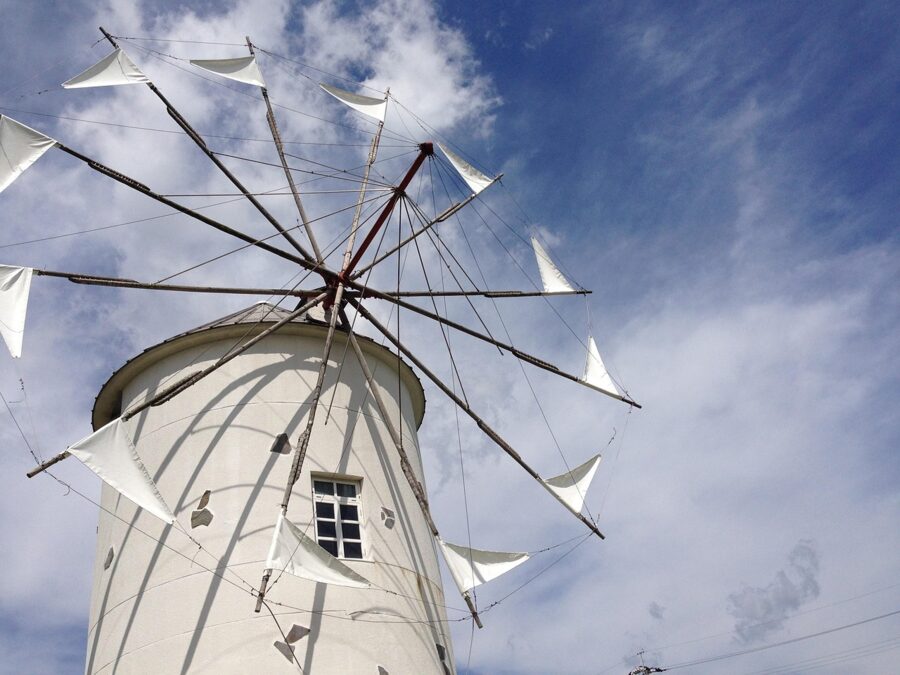
With a fourth day, Megijima, Ogijima and the larger Shodoshima, with its olive groves and soy sauce breweries, are all a boat away; they are covered in the guide to Japan’s islands. Takamatsu itself, with Ritsurin garden and Kagawa’s udon, is in the Shikoku guide, and Okayama and Kurashiki, at the other end of the JR Uno Line, in the guide to Chugoku. Okayama is about 40 minutes by Shinkansen from Hiroshima and under an hour from Shin-Osaka, which puts Naoshima within a day’s reach of Kansai too.
Whichever way you go, take the last ferry back to Uno at dusk if you can, and stand at the stern. The museums vanish into the trees within minutes. What stays in view longest is the north end, the smelter’s lights coming on over the water, still refining the copper that started all of this in 1917.