
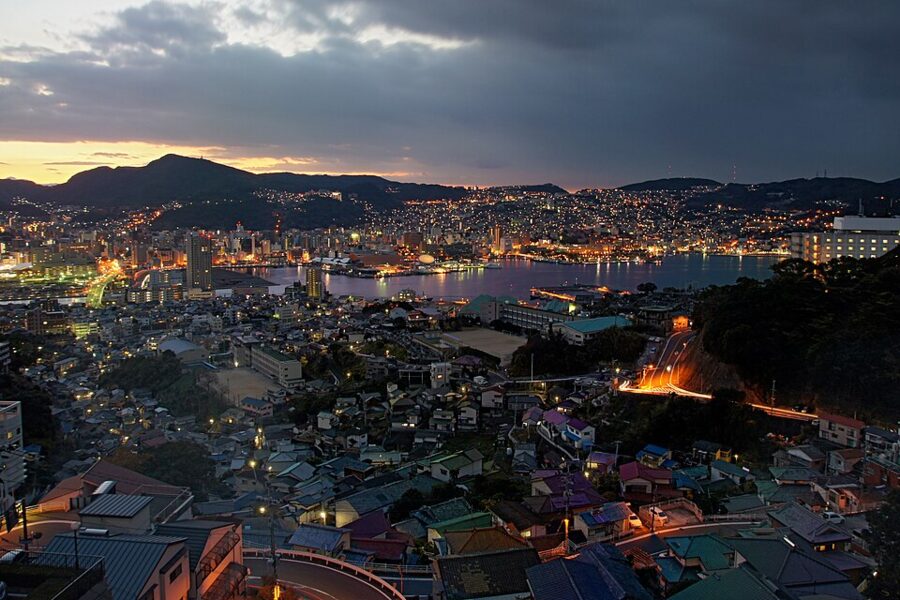

The observation deck on Mount Inasa stands 333 metres above the west shore of the harbour, and from it Nagasaki explains itself in one look. A narrow inlet runs inland between steep hills, shipyard cranes line one side, and the city has climbed every slope within reach because the flat ground ran out centuries ago. Almost everything worth your time here, a fan-shaped trading island and a black stone pillar in a park included, is where it is because of that water.
Nagasaki (長崎) was a fishing village on a long cape when Portuguese ships first anchored there in 1571. For the next three centuries it was where Japan met the outside world on Japanese terms: Jesuits and then Dutch merchants, Chinese junks from Fujian and Zhejiang, sugar, silk, books and medicine. On 9 August 1945 it became the second and so far the last city destroyed by a nuclear weapon.
About 380,000 people lived here in 2025, and the old trading port, the Christian city and the bombed valley lie within a tram ride of each other. In two days you can stand where the 26 martyrs died in 1597, eat noodles invented for Chinese students in 1899, and walk across the spot above which the bomb exploded.

In this guide
How the harbour made the city
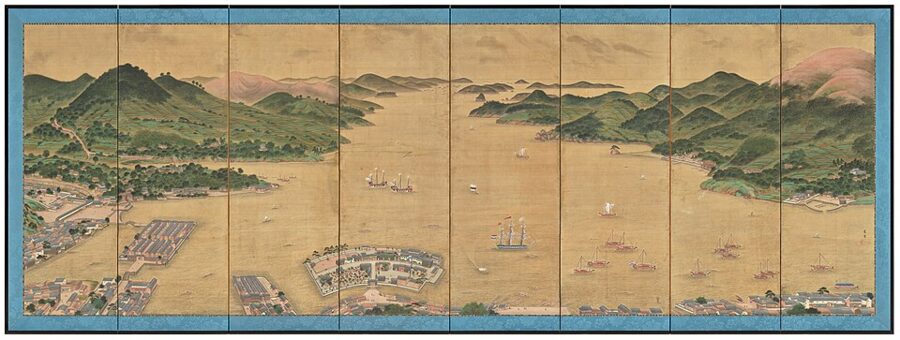
The harbour is deep, sheltered and hard to see from the open sea, which is what Portuguese pilots wanted when the lord Omura Sumitada opened it to them in 1570. Omura had been baptised in 1563, the first daimyo to take the faith, and he wanted the trade badly. The first ship arrived in 1571, and six streets were laid out on the tip of the cape, where the prefectural office was later built.
Where the name comes from is disputed. One account derives it from the Nagasaki family, warriors who held the inlet from at least the 1230s and built their hall on that “long cape”. A folk version runs the dialect form nagaka misaki (long cape) down to the name itself.
In 1580 Omura handed Nagasaki and the nearby port of Mogi to the Society of Jesus, and for eight years a Japanese port was governed by a Catholic order. Toyotomi Hideyoshi ended that in 1588, taking the town as his own and pulling down the Jesuits’ fortifications. From then on Nagasaki belonged to whoever ruled Japan, run by a governor they appointed.
The Tokugawa kept the trade and squeezed out the faith. Chinese ships were confined to Nagasaki from 1635, the Portuguese were expelled in 1639 after the Shimabara uprising, and the Dutch, who had promised not to preach, were moved from Hirado into the Portuguese compound in 1641. For more than two centuries this harbour was the country’s main door to Europe and China, and the shogunate held the key.
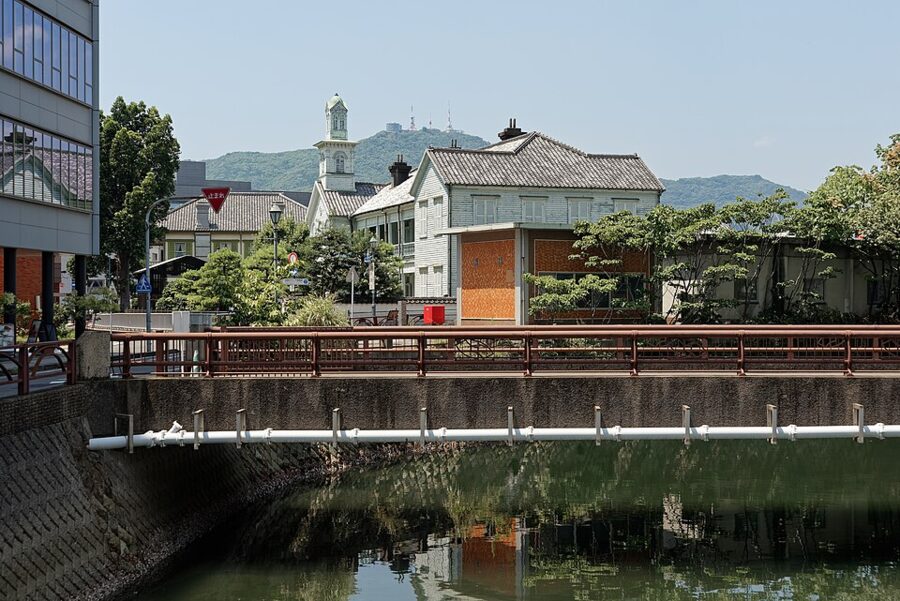

Dejima
Dejima (出島) means “projecting island”, and it was built between 1634 and 1636 to hold the Portuguese where they could be watched. It is a fan of reclaimed land of about 1.5 hectares, paid for largely by Nagasaki townsmen who then charged the foreigners rent. From 1641 to 1859 it held the Dutch East India Company’s trading post, whose staff were barred from carrying arms or practising their religion and lived under the eyes of Japanese officials at the gate.
What came through the gate went far. Sugar was a staple import, along with textiles, medicines and the Dutch books from which Japanese scholars built rangaku, “Dutch learning”, in anatomy, astronomy and gunnery. Copper was the main export. Philipp Franz von Siebold, the company’s German doctor in the 1820s, taught Japanese students medicine and carried home the plant collections that made his name in European botany.
The city began rebuilding the island in 1996, working from its appearance in the early nineteenth century, and has since brought back the chief factor’s residence, warehouses for sugar and sapanwood, and the offices of the Japanese officials who checked every bale. In 2017 a bridge crossed the river to the front gate again for the first time in about 130 years. The long-term aim is to dig the island free so it stands in water once more.
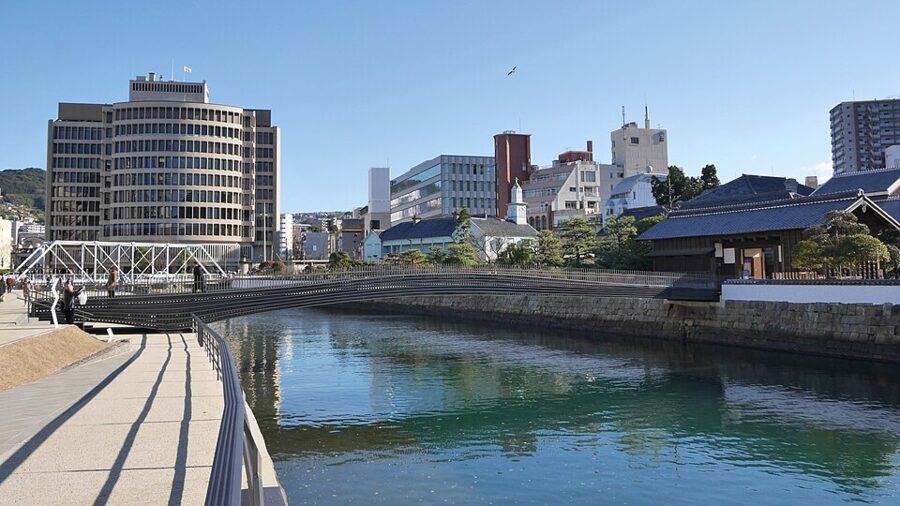
Inside, the rooms are furnished to show how the Dutch lived and worked; billiards, like badminton, reached Japan through their games on this island. A 1:15 model of the whole island sits on the site of Siebold’s herb garden. Dejima is open daily 08:00–21:00, with last entry 20 minutes before closing, and costs ¥1,100; the Dejima tram stop is at the gate.
Shinchi Chinatown and the Chinese quarter
The Chinese in Nagasaki always outnumbered the Dutch, and until 1688 they lived anywhere in town. That year the governor’s office began a walled compound, the Tojin Yashiki (唐人屋敷), on a hillside south of the centre, finished in 1689 and covering about 31,000 square metres for some 2,000 residents. Unlike Dejima’s Dutch, the Chinese came and went with relative ease.
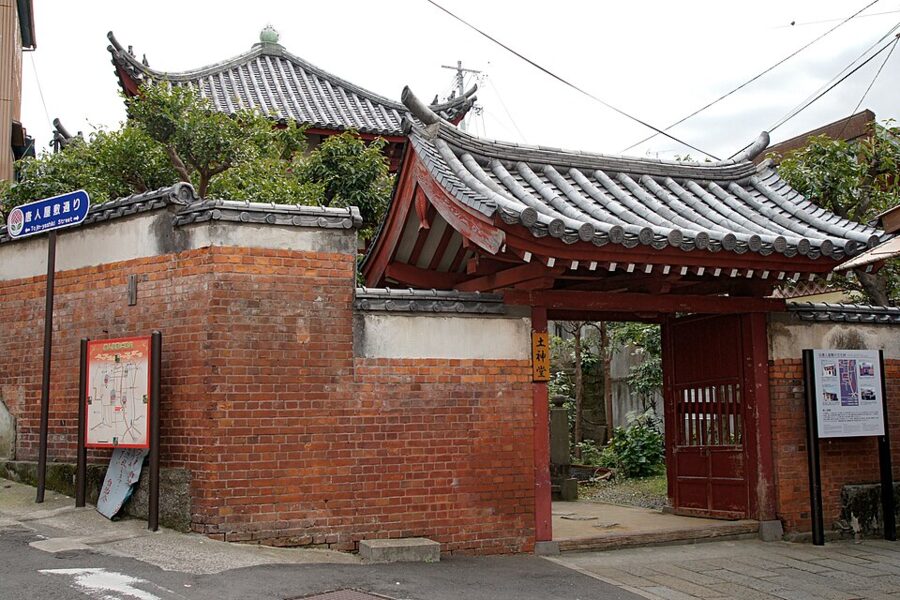

Little of the compound survives beyond those halls. Below it, on harbour land reclaimed in the eighteenth century as shinchi, “new land”, grew Shinchi Chinatown (新地中華街). Today it is a crossroads of two streets about 250 metres long, with around 40 restaurants and shops, and four gates added in 1986 with stone and timber from Nagasaki’s sister city of Fuzhou.
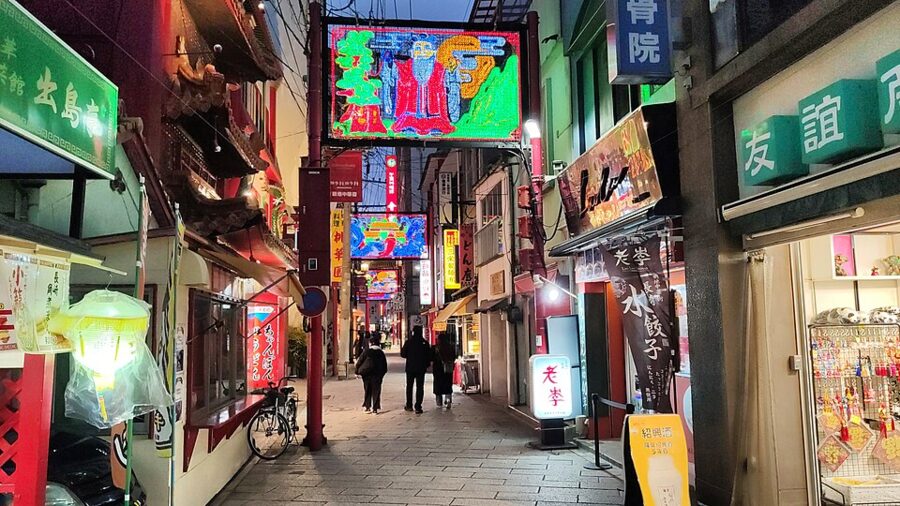
It is small next to Yokohama’s Chinatown, and I like it better for that: the walk from here up to the old compound and on to the Chinese temples of Teramachi joins the dots the way no museum does.
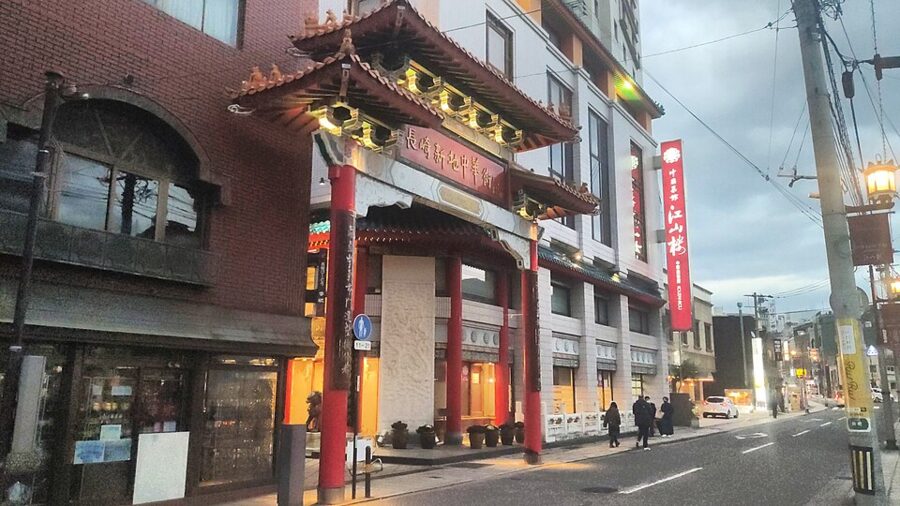
Christian Nagasaki
At its peak the Omura domain held more than 60,000 Christians, by some estimates about half of all the believers in Japan, and Nagasaki was their capital. The bans that followed, first by Hideyoshi and then permanently by the Tokugawa from 1614, made this the place where the faith was hunted hardest and hidden longest. Three sites in the city tell that story in order.
The Twenty-Six Martyrs at Nishizaka
In late 1596 Hideyoshi ordered the arrest of the Franciscan friars and their converts in Kyoto and Osaka. Twenty-four were seized, their left ears cut in Kyoto, and on 10 January 1597 they were marched out of Osaka towards Nagasaki in midwinter, picking up two more men who had come to look after them. On 5 February they were crucified on Nishizaka hill above the harbour, in front of a crowd of more than 4,000.
The youngest, Luis Ibaraki, was 12. The governor’s brother offered to spare him if he renounced his faith, and he refused. The 26, six missionaries from Spain, Mexico and Portuguese India and 20 Japanese, among them three Jesuits, were canonised by Pius IX in 1862.
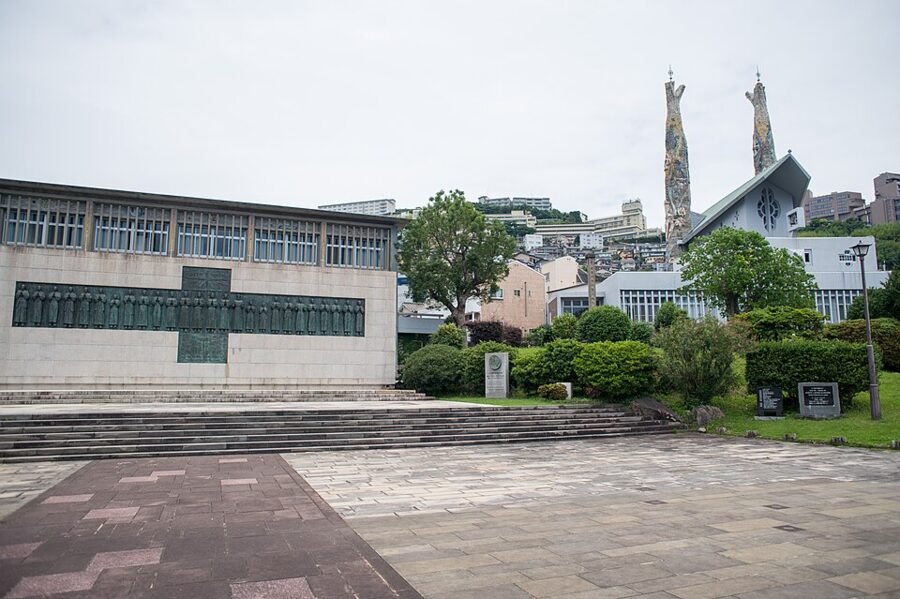

For the centenary of the canonisation in 1962 the hill got a long wall of 26 bronze figures by the sculptor Funakoshi Yasutake and a museum by the architect Imai Kenji, an early Japanese admirer of Gaudi, as the mosaic-clad twin spires of St Philip Church next door make plain. The Twenty-Six Martyrs Museum (日本二十六聖人記念館) opens 09:00–17:00 and costs ¥500, and it is the quickest way into the subject.
Oura Church and the discovery of 1865
When Japan reopened in 1859, foreign merchants settled on the slopes of Minamiyamate south of the old town, and the Paris Foreign Missions Society built them a church. Oura Church (大浦天主堂) was finished on 29 December 1864 to designs by the priests Louis Furet and Bernard Petitjean, built by a master carpenter from Amakusa, Koyama Hidenoshin, and dedicated in February 1865 to the 26 martyrs. It points, roughly, towards Nishizaka.
The sign over the door says tenshudo, “church”, in Japanese characters, which made no sense for a chapel serving foreign residents. It was a message, in case anyone was still listening. On 17 March 1865 a group of farmers from Urakami came inside, and a woman of 52 named Yuri whispered to Petitjean that their hearts were the same as his, then asked where the statue of Santa Maria was.
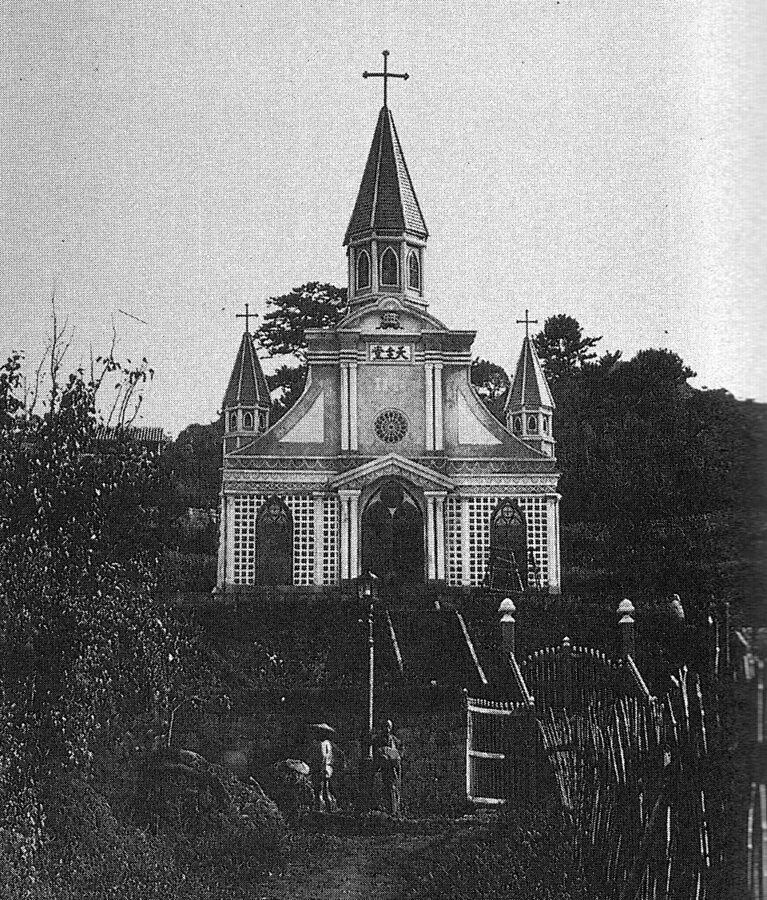
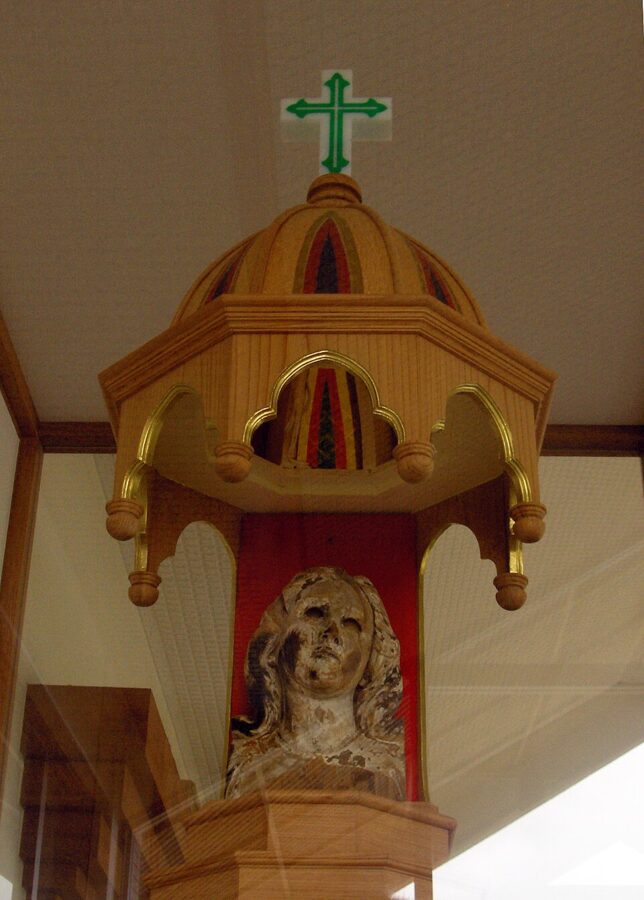
They were senpuku kirishitan, hidden Christians, whose families had kept the faith for more than two centuries without a priest, baptising their own children and reciting prayers in a Latin they no longer understood. The statue they asked for, now called the Virgin of the Discovery, still stands on the right-hand side altar. The church became a National Treasure in 1933, lost that status when the 1945 blast wrecked its roof and windows, and regained it in 1953 once repairs were done.
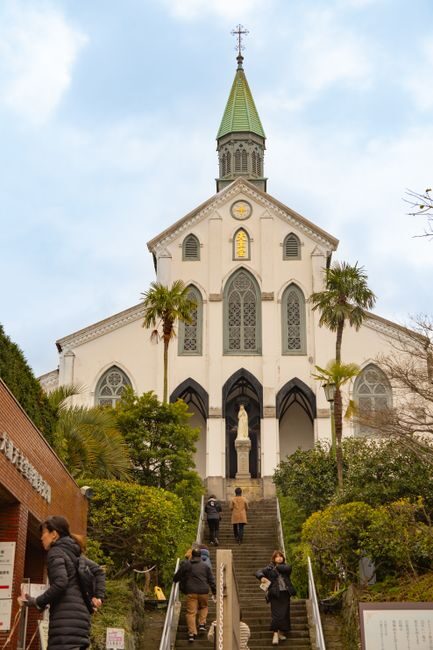
Admission is ¥1,000 and includes the Christian museum in the old Latin seminary behind the church, a wooden three-storey building designed by the French priest Marc Marie de Rotz. Hours are 08:30–18:00, or 08:30–17:30 from November to February, with last entry 30 minutes before closing. From the station, take the tram towards Sofukuji, change at Shinchi Chinatown for Ishibashi, and get off at Oura Tenshudo.
Urakami and its cathedral
The Christians who came forward in 1865 paid for it. The new Meiji government kept the ban, and from 1867 the Christians of Urakami were arrested and then exiled to domains across western Japan: 3,394 people, of whom 662 died. In the churchyard of Urakami Cathedral is a granite stepping stone, carved with a cross, on which exiles in Hagi were made to kneel in winter until they recanted.
Foreign protests ended the ban in 1873 and the survivors came home. In 1880 they bought the site of the old village headman’s house, the office that had reported them to the governor, and built a red-brick Romanesque cathedral there, consecrated in 1914 and given its twin towers in 1925. It was called the finest Romanesque church in Asia, and the bomb exploded about 500 metres away.
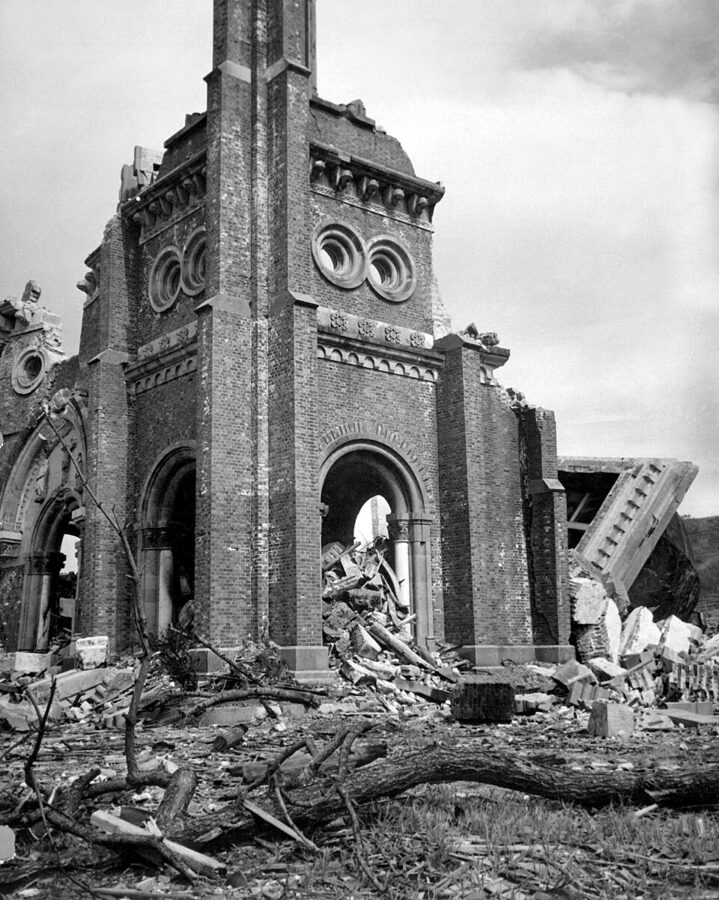
The present cathedral (浦上天主堂) went up on the same site and was completed in November 1959, after a long argument about whether to keep the ruins as a memorial instead. It was refaced in brick tile in 1980 and looks like the original only at a glance; the towers are about five metres lower. Entry is free, 09:00–17:00.
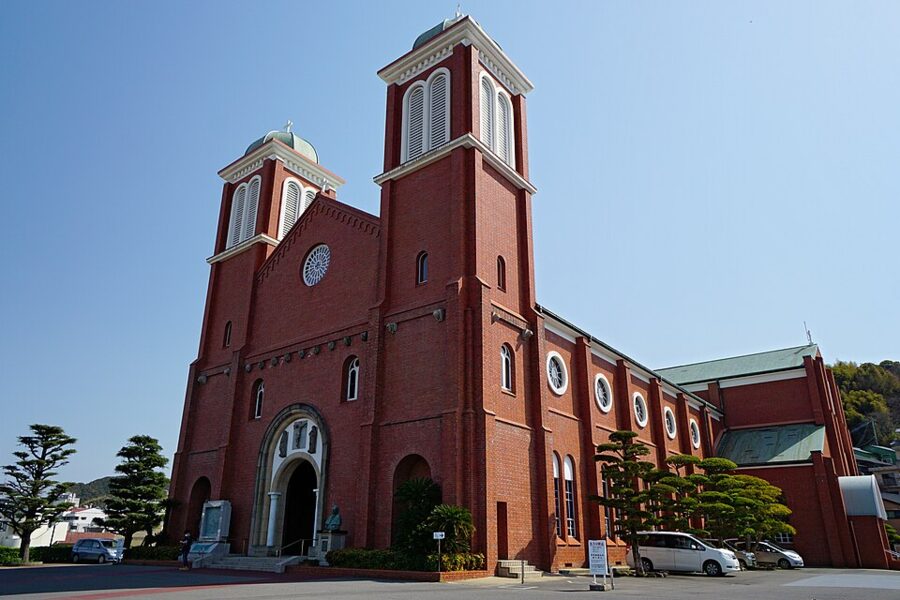

Walk round the north side, down towards the stream, and you find a chunk of the old north bell tower lying where it landed, about 30 metres from the church. The bell from the south tower came through almost undamaged and was rung at Christmas Mass in 1945. A replica of the small bell lost in the north tower, given by American Catholics, was blessed in July 2025, and at 11:02 on 9 August 2025 both towers rang together for the first time in 80 years.

Oura Church and the villages of Sotome are among the twelve components of the Hidden Christian Sites in the Nagasaki Region, inscribed as World Heritage in 2018; the rebuilt Urakami Cathedral is not. The churches of the Goto Islands, Hirado and Amakusa, the rest of that listing, lie out across western Kyushu.
9 August 1945
The B-29 Bockscar took off from Tinian that morning with a plutonium bomb on board, and Nagasaki was not its target. The primary target was the arsenal at Kokura, now part of Kitakyushu, but haze and smoke from an air raid on neighbouring Yawata the day before hid it on three bombing runs. Short of fuel, the crew turned for the secondary target and found Nagasaki under heavy cloud too.
A gap opened over the Urakami valley, about three kilometres north of the planned aiming point in the old city. The bomb was released at about 10:58 and exploded at 11:02 roughly 500 metres above a tennis court in Matsuyama-machi. Its yield was about 22 kilotons, half again as much as the Hiroshima bomb.
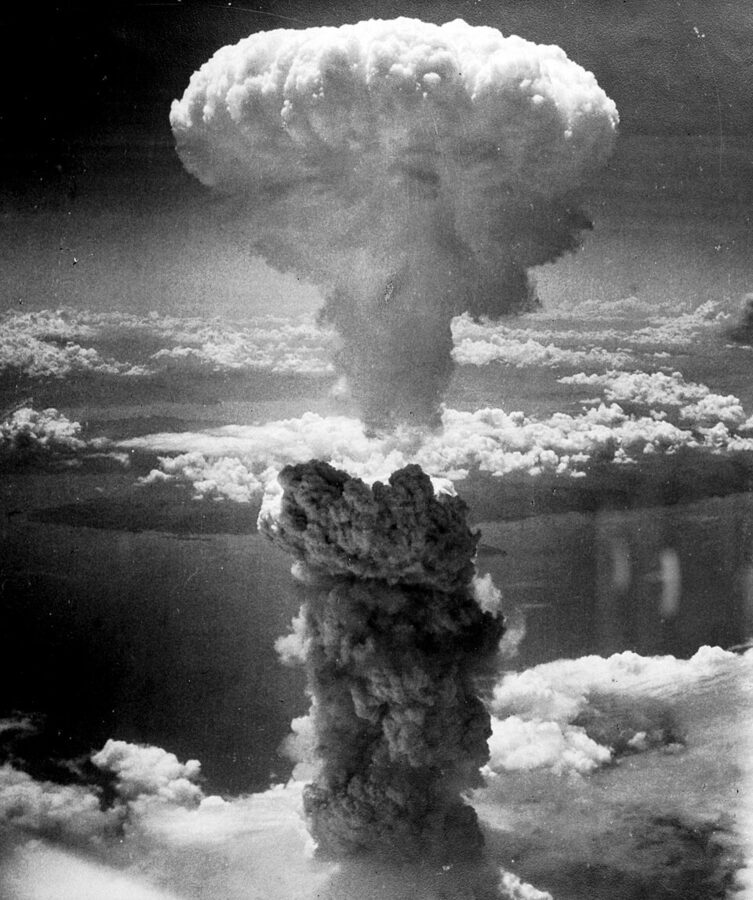
The hills saved the old city. Mount Konpira, about 360 metres high, stands between the Urakami valley and the harbour districts, and it took the force of the blast that would otherwise have swept Dejima, Shinchi and Teramachi. The valley itself held Mitsubishi’s arms and steel works, the medical college and its hospital, schools, a prison and the largest Catholic community in Japan.
Of roughly 240,000 people in the city, about 74,000 had died by the end of 1945 and about as many were injured. About 36 percent of the buildings were burned or destroyed. The dead included students mobilised for factory work, Korean labourers and Allied prisoners of war held at a camp in the city.
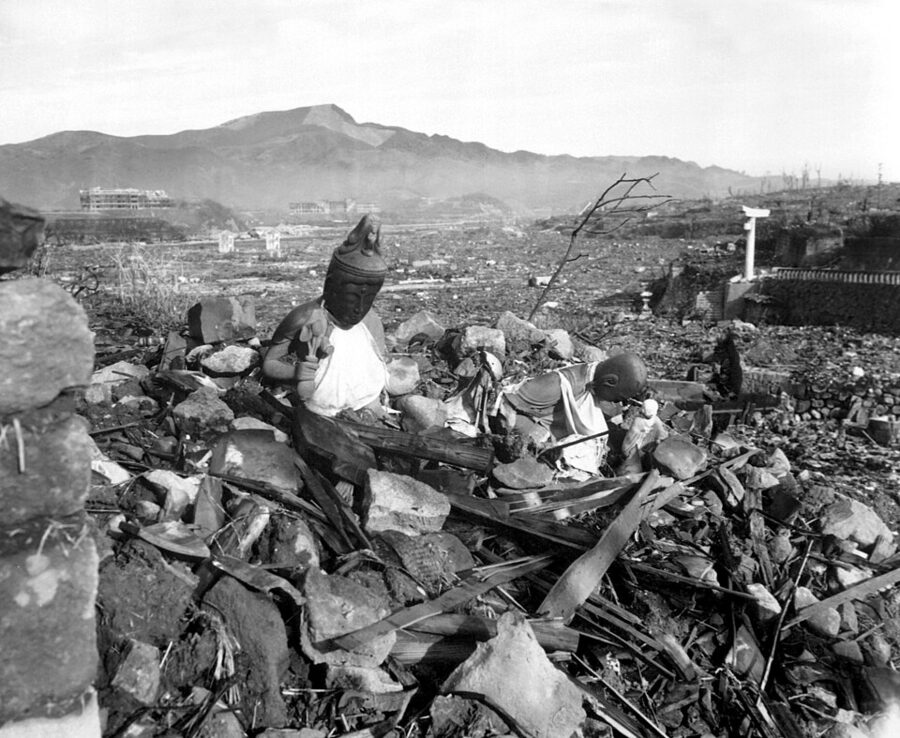
The hypocentre and the Atomic Bomb Museum
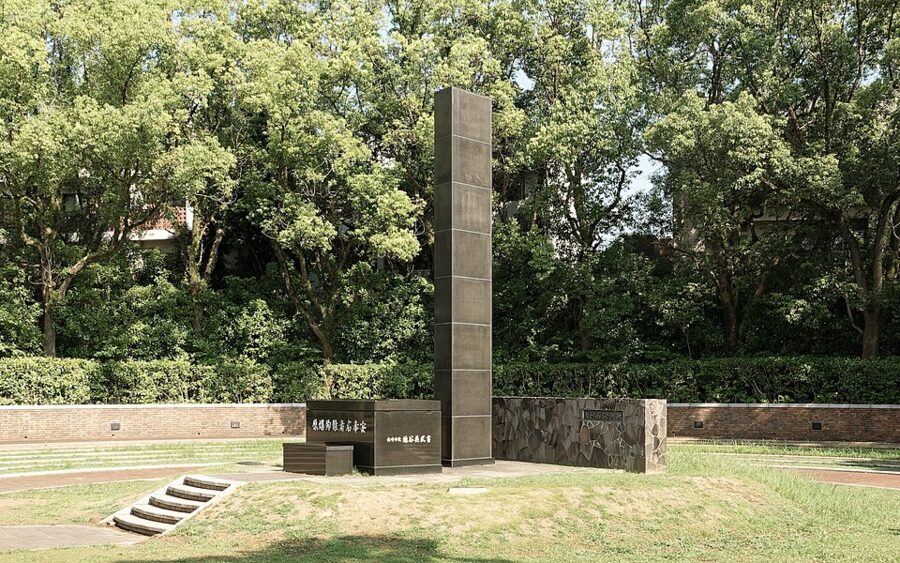
The point under the explosion is now a small park in Matsuyama-machi, and at its centre stands a plain black stone pillar. Beside it, in a sealed case, are the names of those who died in the bombing and survivors who have died since, copied from the registers kept in the national memorial hall up the hill. A section of the cathedral’s wall stands nearby.

The Nagasaki Atomic Bomb Museum (長崎原爆資料館) is on the slope above the park. It opened in April 1996, replacing the International Cultural Hall that had held the collection since 1955, and its route runs from Nagasaki before the bomb, through a reconstruction of the ruined city with a full-size copy of the cathedral’s side wall, to the history of nuclear weapons since. Bottles fused by the heat and a lunchbox with its rice turned to charcoal are the things I find hardest to walk past.
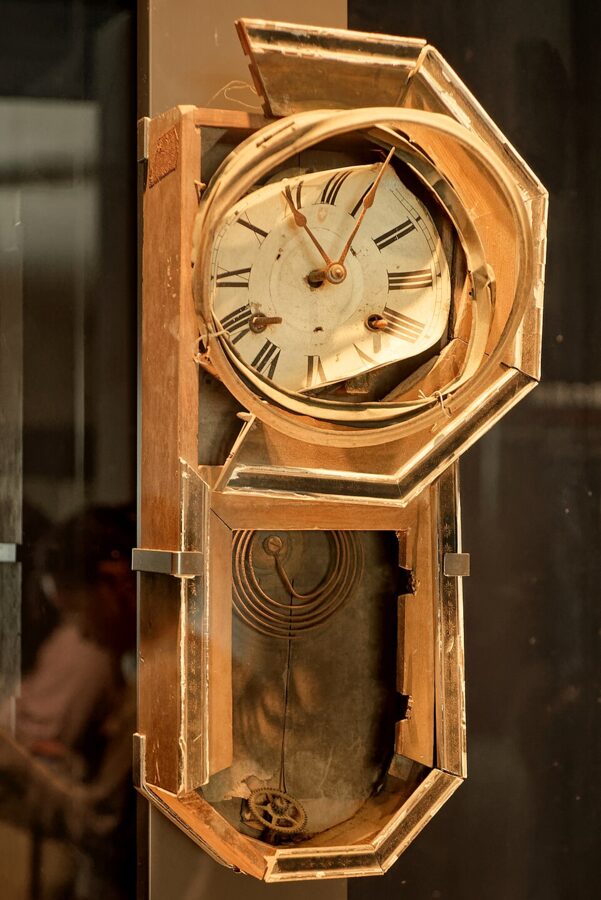

Admission is ¥200 for anyone 15 or over, and since April 2026 everyone of high-school age and younger gets in free. Hours are 08:30–17:30 from September to April and 08:30–18:30 from May to August, with last entry 30 minutes before closing, and longer hours from 7 to 9 August. Audio guides in twelve languages cost ¥160.
For the bombing’s 80th anniversary the museum is rebuilding its permanent exhibition in stages until March 2027. Section C, on nuclear weapons and peace, is screened off from 25 November 2026, and part of section B and the video room follow from January. The rest stays open, but if you can choose, the museum after March 2027 will be the better visit.
Come at opening time if you can: in the school-trip months of May, June and September to November, the rooms are busiest around noon and after 16:00.
The Peace Park
North of the hypocentre, up a flight of steps or an escalator from the Matsuyama crossing, is the Peace Park (平和公園). The ground was the site of the Urakami branch of Nagasaki Prison, and everyone inside it on 9 August, prisoners and guards, was killed. The memorial ceremony is held here every year on that day, and the mayor reads the city’s Peace Declaration, as mayors have done since 1949.
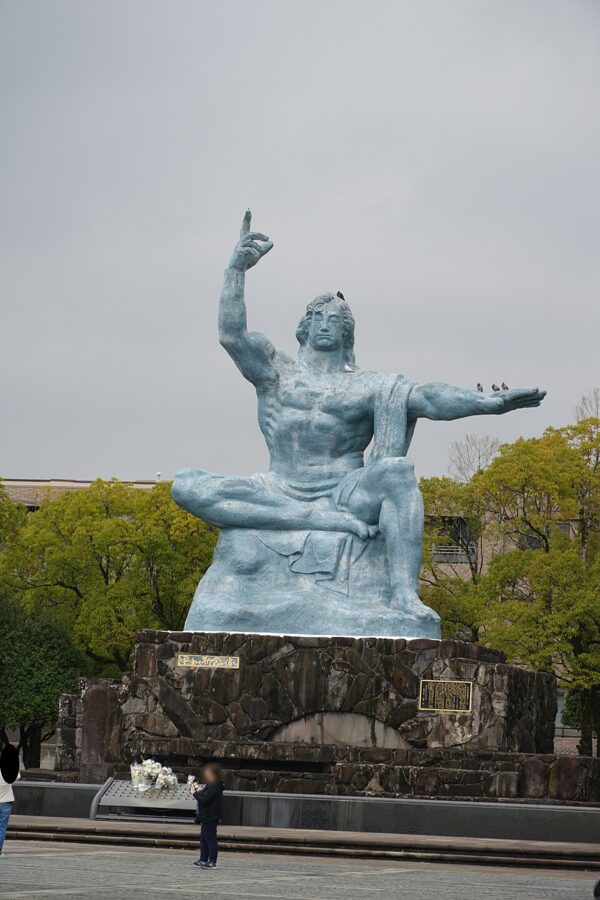

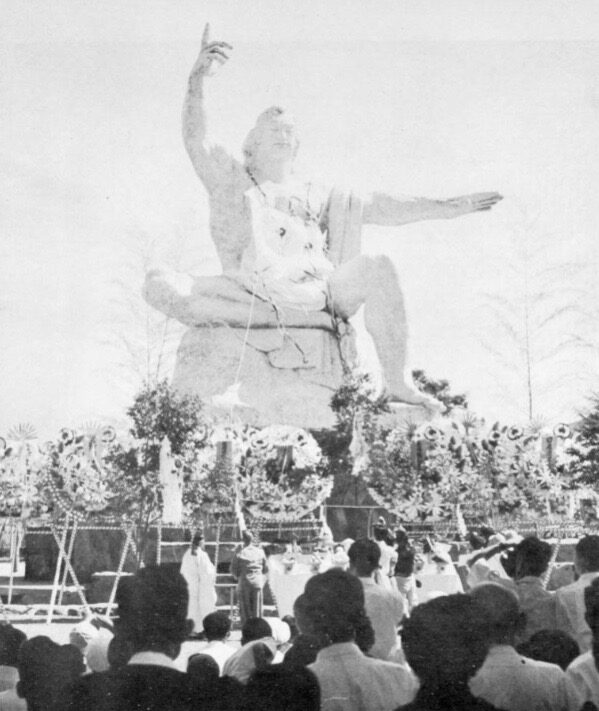
The Peace Statue at the north end is 9.7 metres tall on a 3.9-metre plinth, the work of Kitamura Seibo, who was born at Minamiarima on the Shimabara peninsula and was in his seventies when he made it. It was paid for by donations from Japan and abroad and unveiled on 8 August 1955. Not everyone likes it, and a citizens’ petition to remove it was rejected by the city council in 1973.
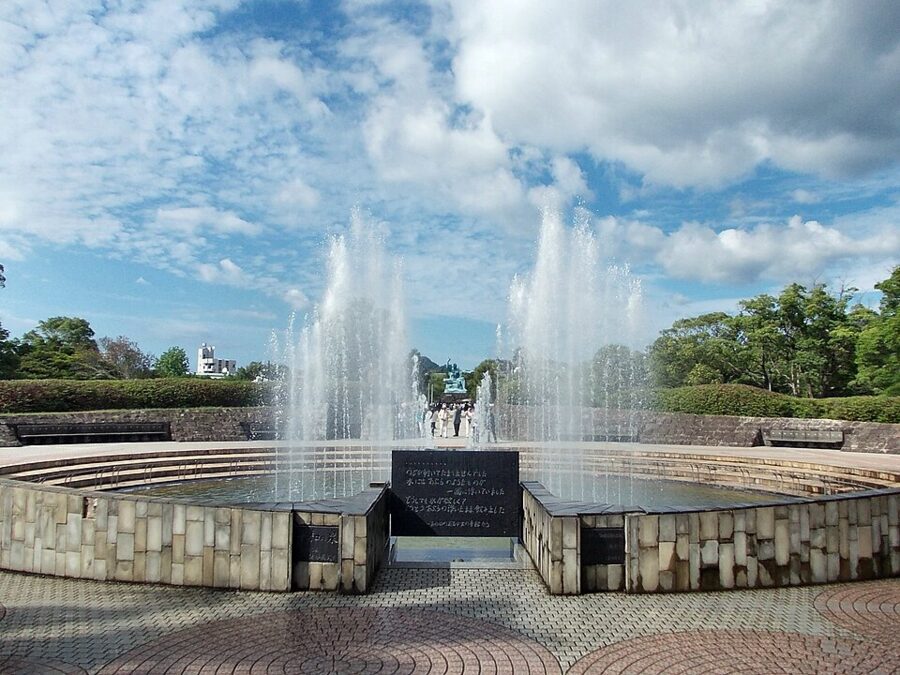
At the south entrance, the Fountain of Peace was added in 1969 for the people who died begging for water, and the stone beside it carries a poem about a girl searching for water in the fires.

Nagai Takashi and Nyokodo
Nagai Takashi was a radiologist at the Nagasaki Medical College who had been diagnosed with leukaemia in June 1945, after years of reading X-rays without enough protection. He was at the college, in the Urakami valley, when the bomb fell, and spent the next days treating the injured among the ruins. On 11 August he went home and found his wife Midori’s remains in the ashes of the kitchen.
Midori’s family had been chokata, the lay leaders who kept the calendar of feasts for Urakami’s hidden Christians, and in 1948 the people of Urakami and the Catholic church built Nagai a hut on the plot where those leaders’ house had stood. He named it Nyokodo (如己堂), “the hall of as-thyself”, from “love your neighbour as yourself”. It is a single room of two tatami mats.
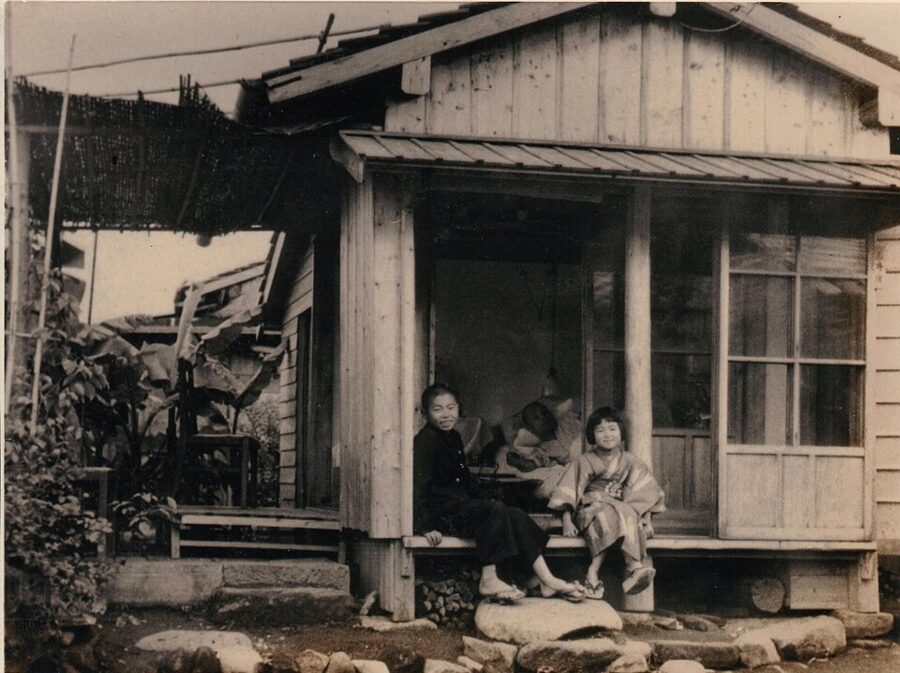
Bedridden, he wrote here: The Bells of Nagasaki, published in January 1949 and turned into a film and a popular song, and Leaving These Children Behind, about the son and daughter who would soon be orphans. He died on 1 May 1951, aged 43. Nyokodo is free to look into, and the Nagai Takashi Memorial Museum beside it opens 09:00–17:00 and costs ¥200.
Sanno Shrine’s one-legged torii
Sanno Shrine (山王神社) sits on a hillside in Sakamoto, about 800 metres south-east of the hypocentre, and its gates stood almost exactly parallel to the blast. The first gate survived intact; the second lost its far pillar and half its lintel and stayed upright on the other, twisted slightly. The first gate was destroyed in a traffic accident in 1962, which left the one-legged second torii as the shrine’s only standing gate.
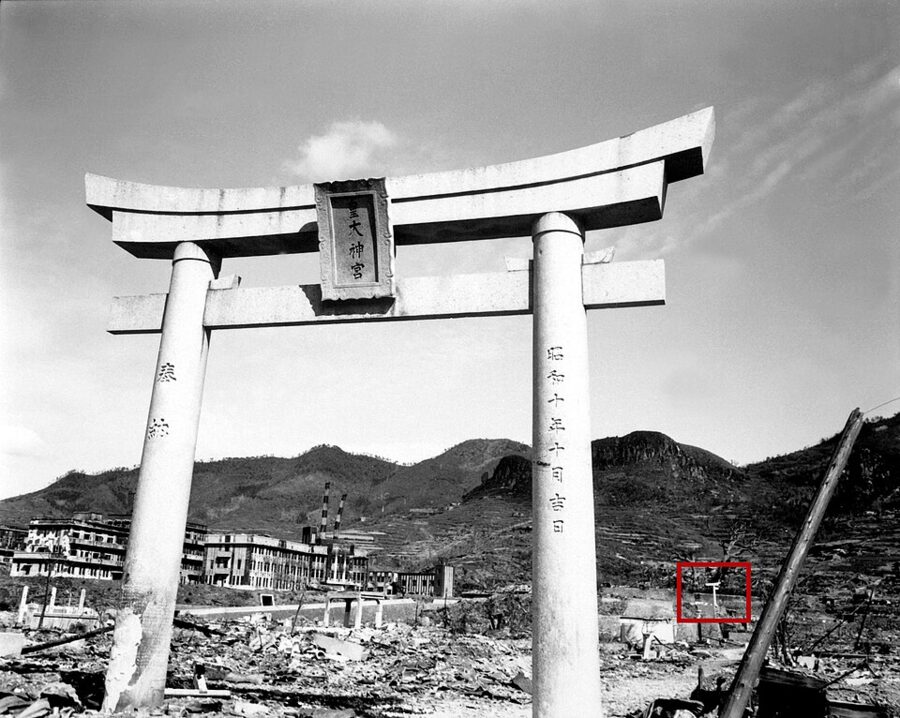
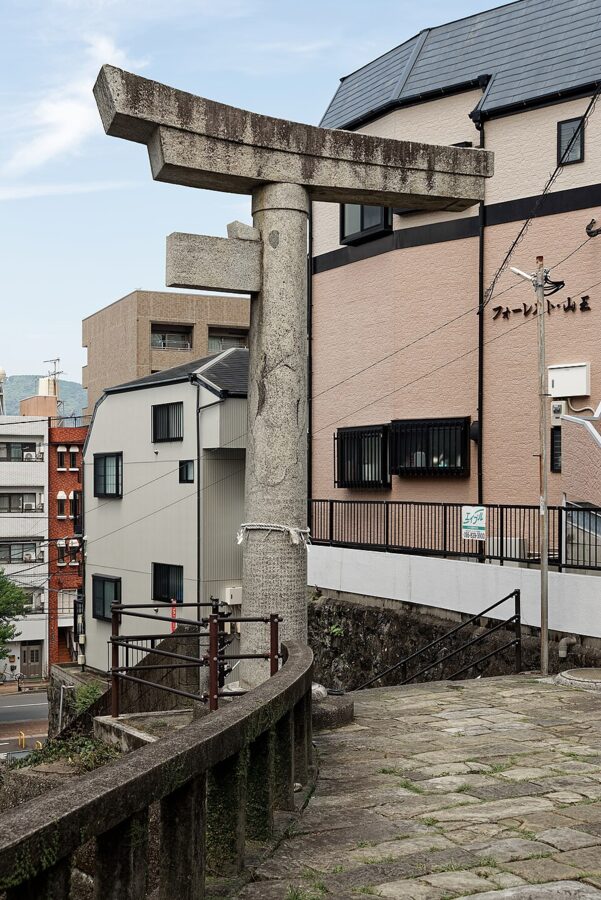

Further up, two camphor trees between 400 and 500 years old flank the shrine entrance. The blast stripped them bare and snapped their crowns, which is why they are short for their girth. With no third gate left, the shrine hangs its sacred rope between them, and their seeds are raised into “second-generation” saplings sent across Japan and abroad. The shrine is a ten-minute walk from Urakami Station.
The districts
Minamiyamate: Glover Garden and the Dutch Slope
Thomas Blake Glover was a 21-year-old Scot when he landed in 1859, the year the port reopened. He exported tea and silk and imported ships and guns, which he sold to Satsuma, Choshu and the other domains that brought down the shogunate, and he brought modern shipbuilding and coal-mining machinery to Japan. He stayed until his death in 1911, married to a Japanese wife, Tsuru.
His house above the harbour, built in 1863, is the oldest surviving Western-style wooden building in Japan. Glover Garden (グラバー園) brings it together with the neighbouring houses of the merchants Frederick Ringer and William Alt and six other Meiji buildings moved here from around the city. The Former Glover House is part of the Sites of Japan’s Meiji Industrial Revolution World Heritage listing of 2015, and it reopened in November 2021 after three years of repair and earthquake strengthening.
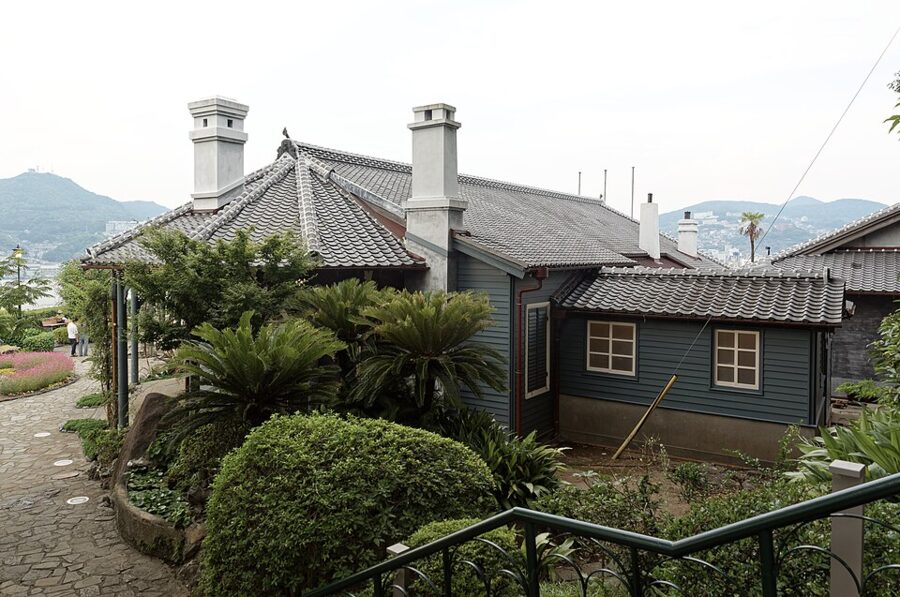

Entry is ¥1,300 from April 2026, and the garden opens 08:00–18:00, with last entry 20 minutes before closing. It stays open until 20:00 every evening up to 31 December 2026 for the night view over the harbour. Moving walkways carry you up the slope, so start at the top and work downhill.
Higashiyamate, the next hill east, is quieter. The stone-paved Oranda-zaka, the Dutch Slope, got its name because Nagasaki people went on calling any Western foreigner “Oranda-san”, Mr Dutchman, long after 1859, and so any slope in the settlement was where the Dutchmen walked. Today the name belongs to the slope below Kwassui Women’s University and a couple of its neighbours.
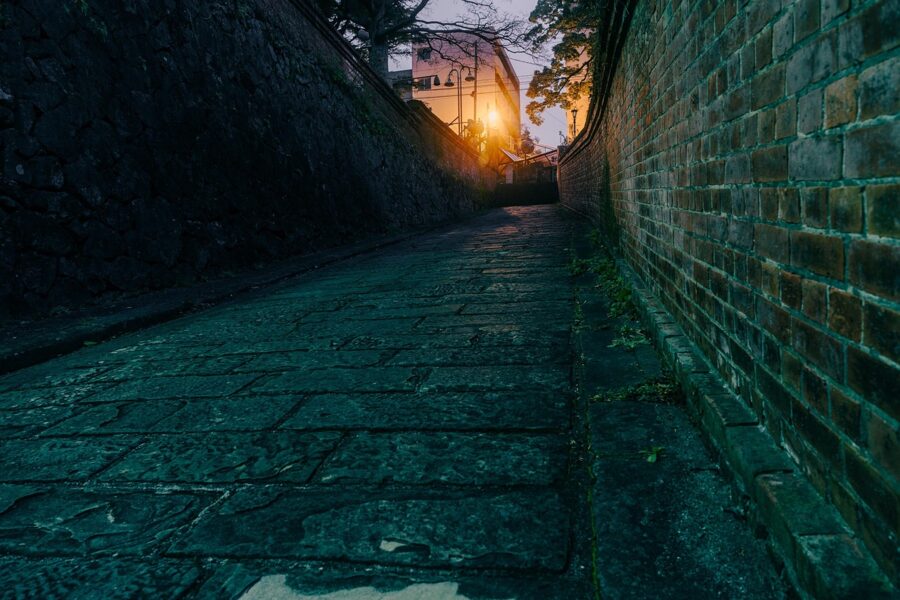
At the foot of the slope, the pale blue Higashiyamate Ko-13 Bankan is a settlement house open free 10:00–17:00 except Mondays, with a cafe on the ground floor.
The old centre: Hamanomachi and Shianbashi
Between Dejima and the hills runs the commercial heart of the city. Hamanomachi (浜町), which locals say as Hamanmachi, is a covered shopping arcade that is also, unusually, part of a national road. Hemmed in by hills, Nagasaki never got the out-of-town shopping centres that emptied other Japanese high streets, and this is regularly the most expensive land in the prefecture.
South-east of the arcade is Shianbashi, “the bridge of deliberation”. There is no bridge any more, the stream runs underground, but the name records the moment when a man on his way to the Maruyama pleasure quarter stopped and wondered whether to go on. Maruyama was established in 1642, and as the only licensed quarter that served foreign residents it ranked with Kyoto’s Shimabara and Edo’s Yoshiwara; it is a quiet district of lanes and restaurants now.
Teramachi and the Nakashima River
Teramachi, “temple town”, is a line of temples along the foot of the eastern hills, built up in the seventeenth century as Buddhism was restored to a city that had been Christian. The most interesting are Chinese. Kofukuji (興福寺), founded in 1624, was the first Chinese temple in Japan; the Zen master Yinyuan, who brought the Obaku school, kidney beans and a style of vegetarian cooking from Fujian, stayed here when he arrived in 1654.
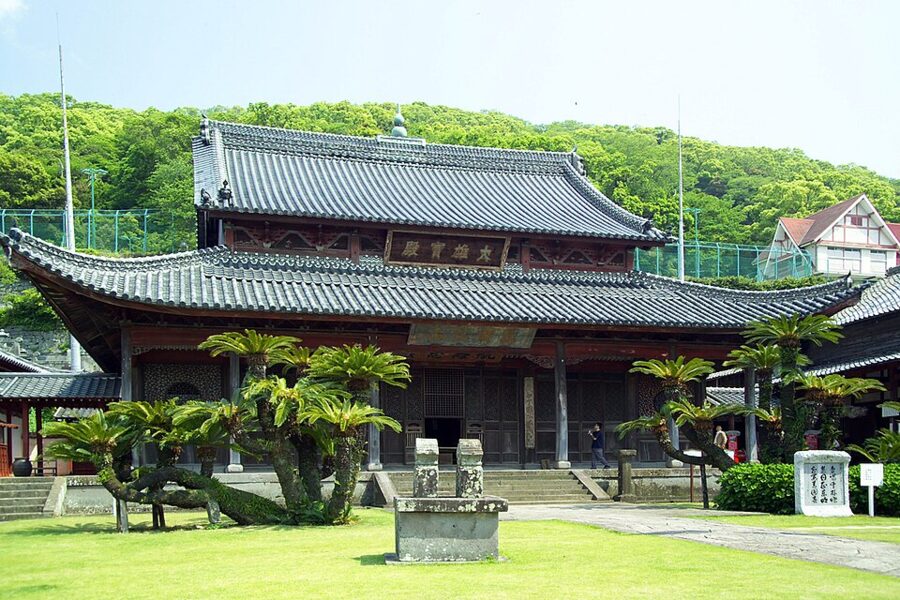
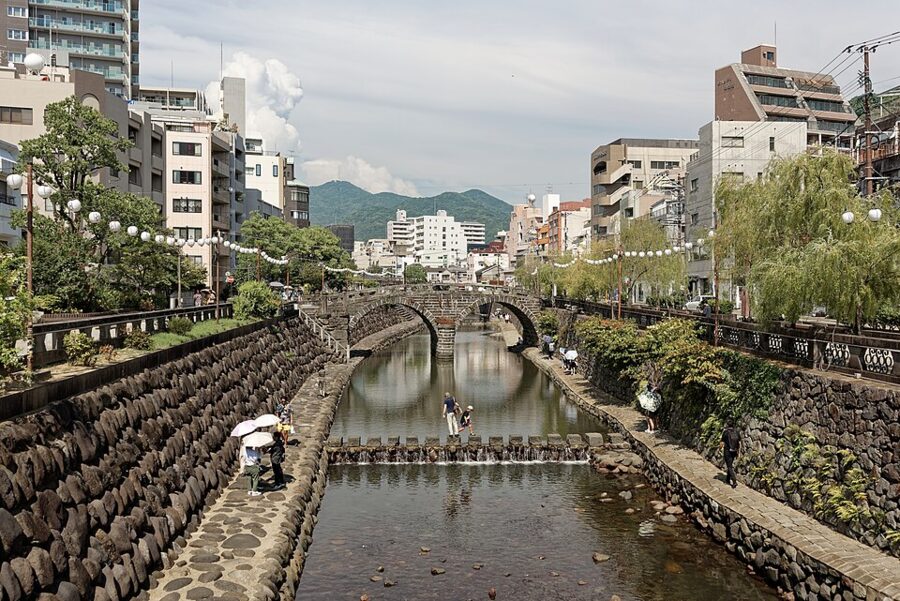
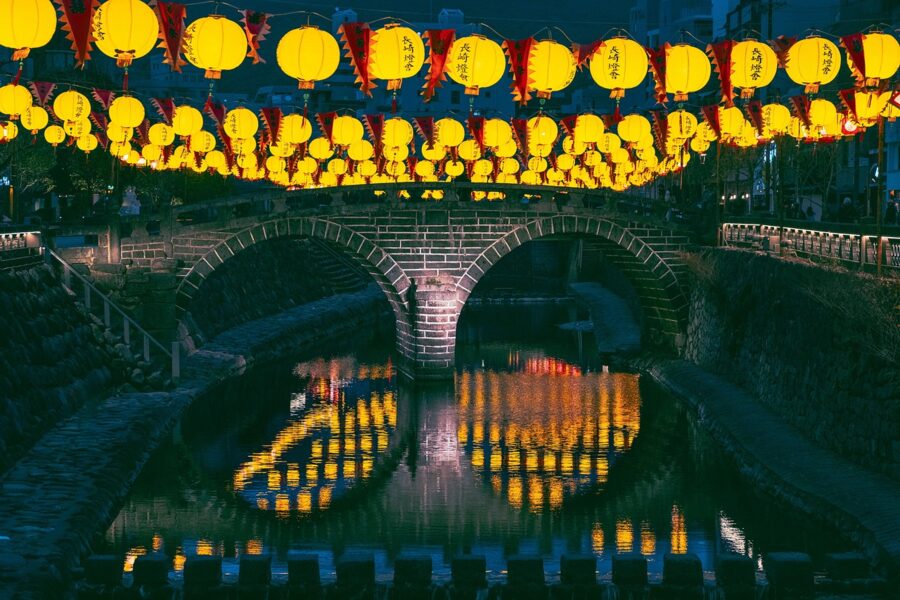
Kofukuji’s second abbot, Mokusu Nyojo, built Megane Bridge (眼鏡橋) across the Nakashima River in 1634, the first stone arch bridge in Japan outside the Ryukyu kingdom. It is 22 metres long, and its two arches and their reflection make the “spectacles” of its name. The flood of 23 July 1982 swept away most of the river’s stone bridges and wrecked half of this one, which was rebuilt with stones recovered downstream.

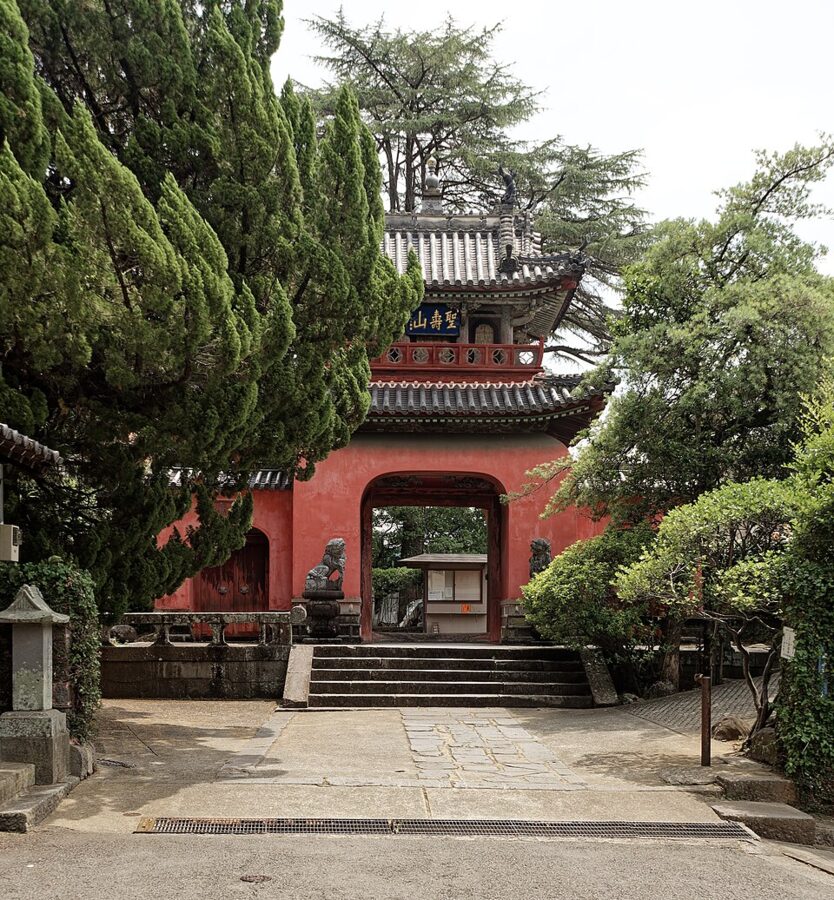
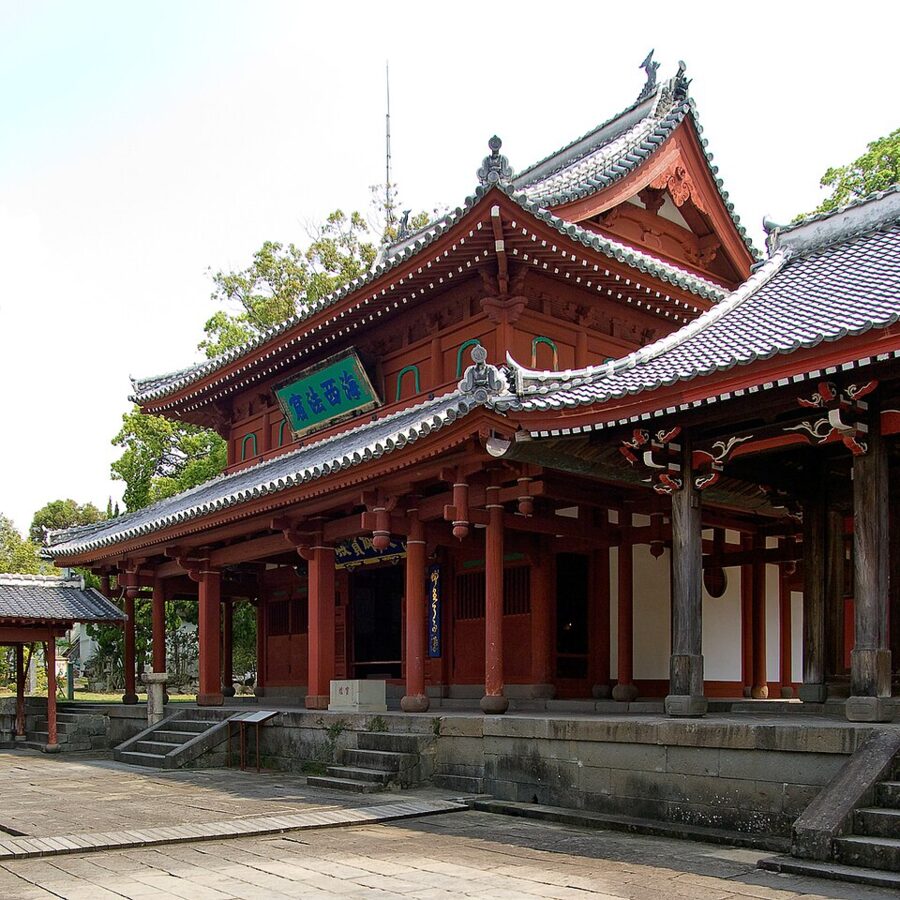
Sofukuji (崇福寺), at the south end of Teramachi, was founded in 1629 by merchants from Fujian, who brought a monk from Fuzhou to lead it, and it is the oldest Chinese-style temple in Japan. It holds two National Treasures, the Daiippomon gate of 1644 and the main hall, the Daiyuhoden, of 1646. Entry is ¥500, 08:00–17:00, and the Sofukuji tram stop is three minutes away.

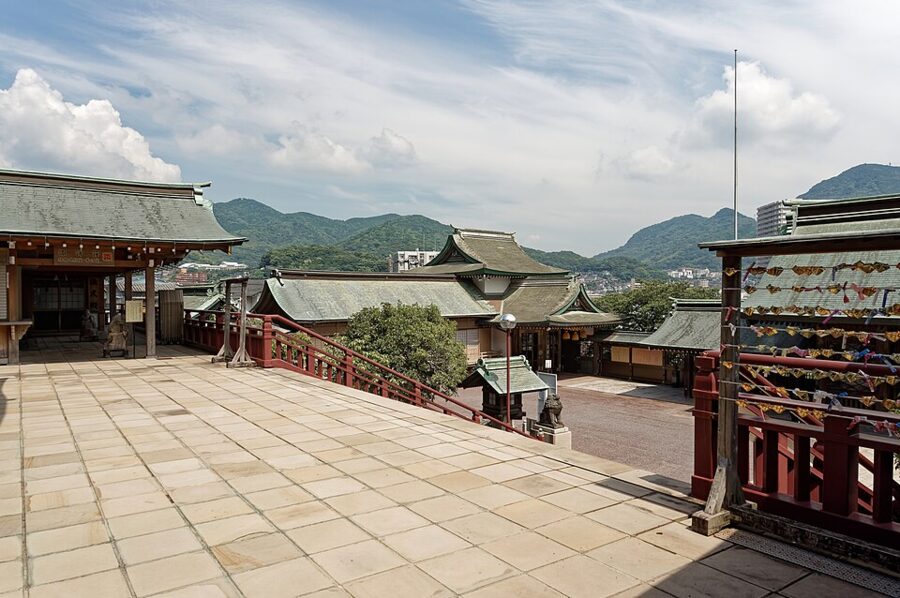
At the north end of the same ridge, up a long flight of stone steps, is Suwa Shrine (諏訪神社), the city’s guardian shrine. It was refounded in 1625 with the shogunate’s backing, after the Jesuit years had seen every shrine and temple in town destroyed. Entry is free.

Mount Inasa
Mount Inasa (稲佐山) is the western wall of the harbour. Its night view is counted among the “three great night views of Japan”, with Hakodate and Kobe, and in 2012 a night-view tourism body ranked it with Monaco and Hong Kong. Locals call it the ten-million-dollar view, and on a clear evening, with the harbour lights doubled in the water and houses rising on three sides, the price seems about right.
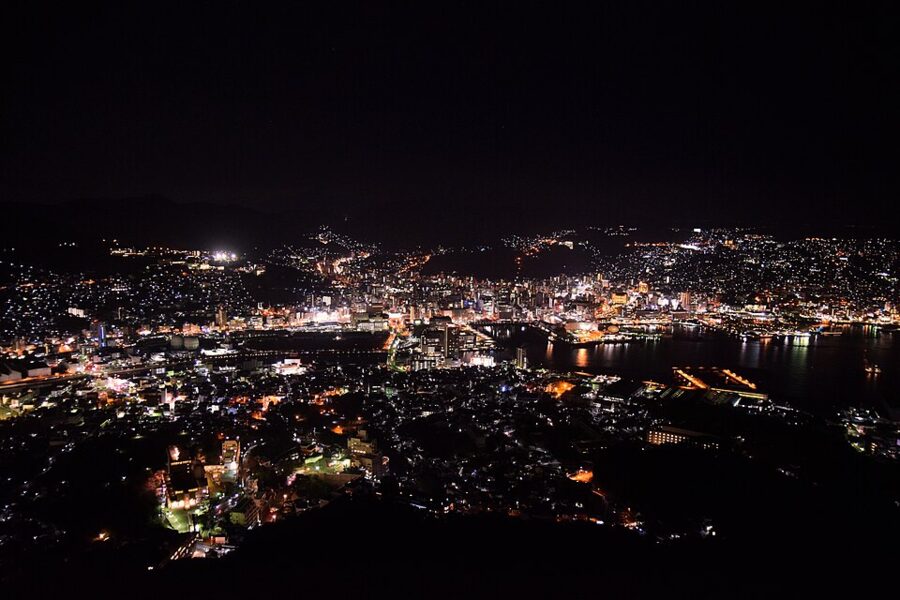

The Nagasaki Ropeway runs from Fuchi Shrine station to the summit in about five minutes, 09:00–22:00, and costs ¥1,900 return or ¥1,040 one way from April 2026; its glass-sided gondolas of 2011 are by Ken Okuyama, the designer known for his Ferrari work. Take bus 3 or 4 from Nagasaki Station to the Ropeway-mae stop, about six minutes, then walk three minutes. A free evening shuttle bus from central hotels can be booked online from noon on the day.
The other way up is the slope car from the mid-mountain car park, about eight minutes, ¥1,000 return; bus 5 runs there from the station. The summit deck is free and its roof stays open around the clock, but the ropeway stops at 22:00. If you would rather not queue, Nabekanmuri-yama, 169 metres, above Glover Garden, has a free deck with a lower, closer view of the same harbour.
Day trips
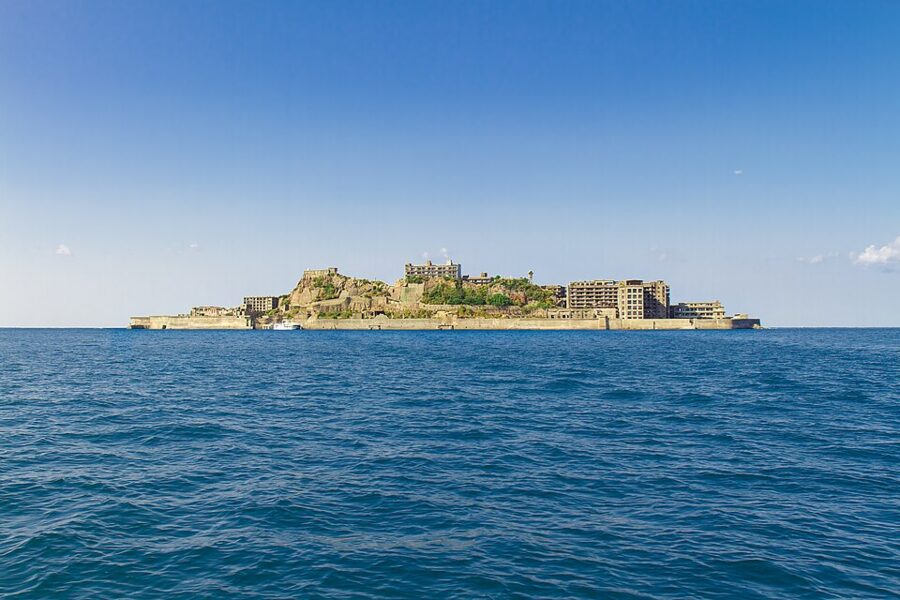
Hashima (端島), better known as Gunkanjima or Battleship Island, is a former coal-mining island off the Nomo peninsula, south-west of the city. Mitsubishi bought it in 1890 and built Japan’s first reinforced-concrete apartment block there; in 1960 it held 5,267 people, about 83,600 per square kilometre, more than nine times the density of Tokyo‘s wards. The mine closed on 15 January 1974 and the last residents left on 20 April.
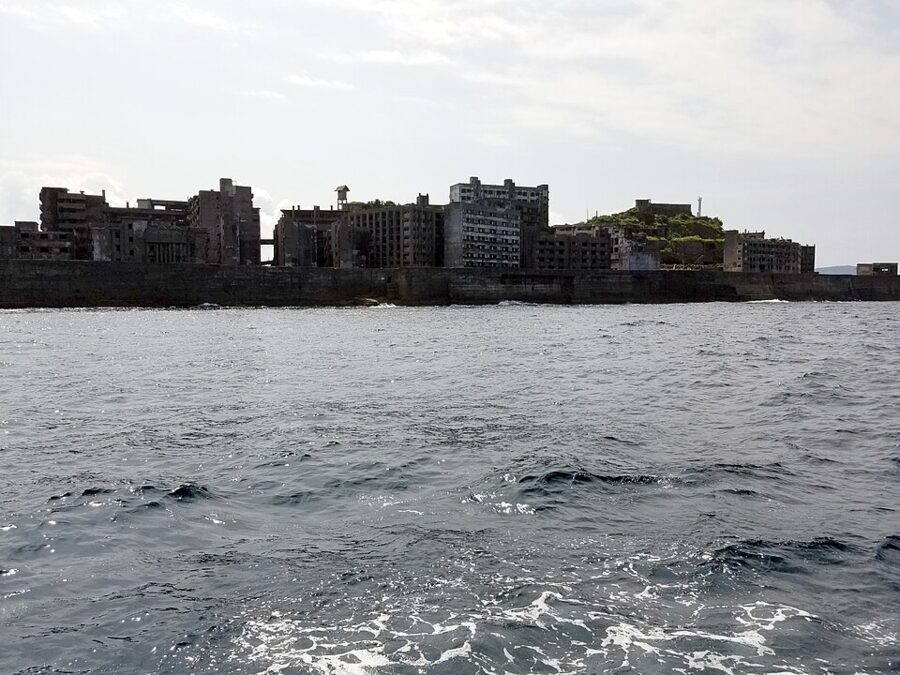

Licensed boats have landed visitors since April 2009, and the island became part of the Meiji Industrial Revolution World Heritage listing in 2015. The listing brought a dispute with South Korea over the Korean and Chinese workers forced to work in its mines during the war; in 2023 UNESCO acknowledged a new section remembering them at the government’s industrial heritage centre in Tokyo. Several operators run tours from the harbour, about 40 minutes each way, and on top of the boat fare the city charges a landing fee of ¥650 for anyone 15 or over.

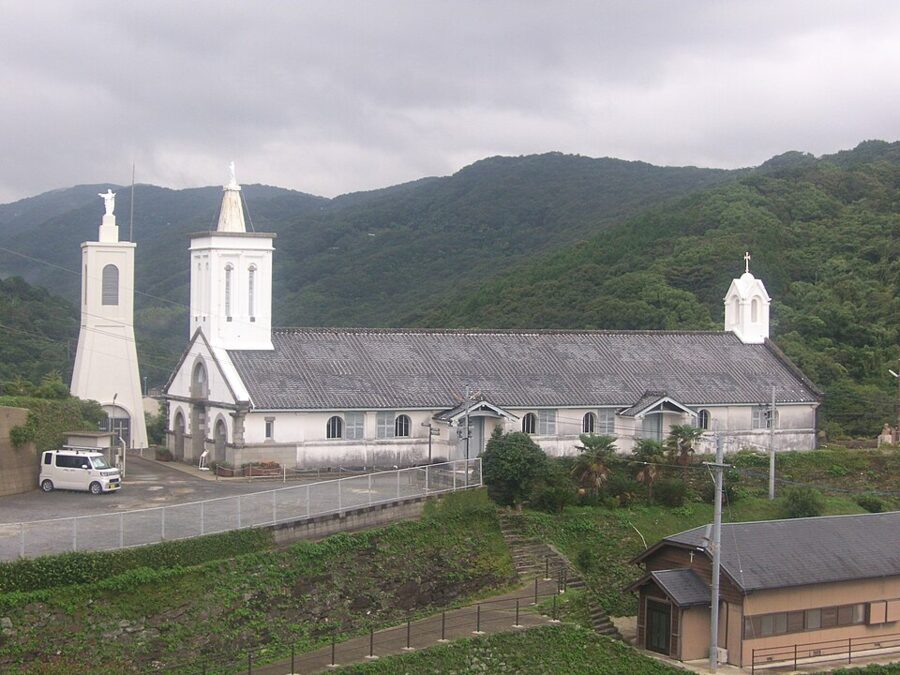
Sotome (外海), on the coast north-west of the city, is where many hidden Christian families lived out the ban, and where Endo Shusaku set the novel Silence. Marc Marie de Rotz built the Shitsu Church there in 1882 and taught the villagers to make bread and macaroni; the Endo Shusaku Literary Museum, opened in 2000, looks down on the sea from the cliffs.

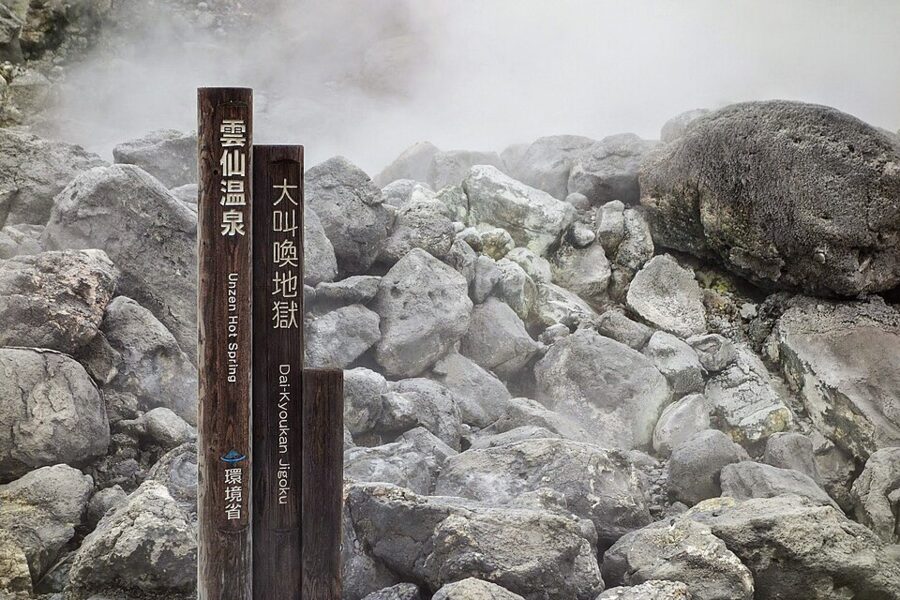
Unzen, on the Shimabara peninsula to the east, is a hot-spring resort high on the slopes of Unzendake, the volcano whose 1990–1995 eruption raised the new summit of Heisei Shinzan and killed 43 people in a pyroclastic flow on 3 June 1991; the Meteorological Agency keeps it at alert level 1. Shimabara, on the far side of the peninsula, is the castle town of the domain whose farmers rose in 1637, and spring water runs through its streets.

Getting there and getting around
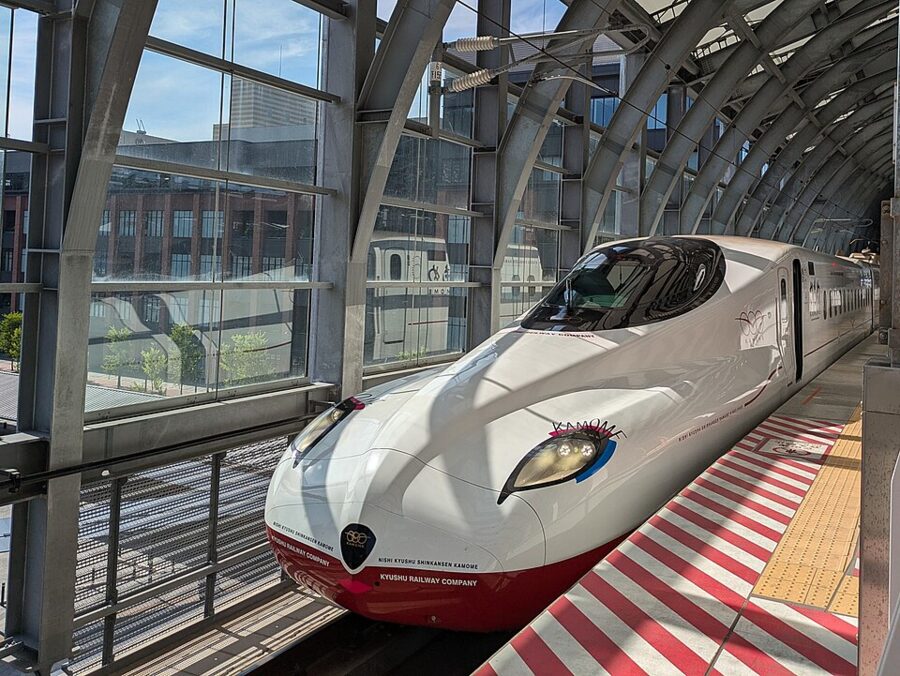
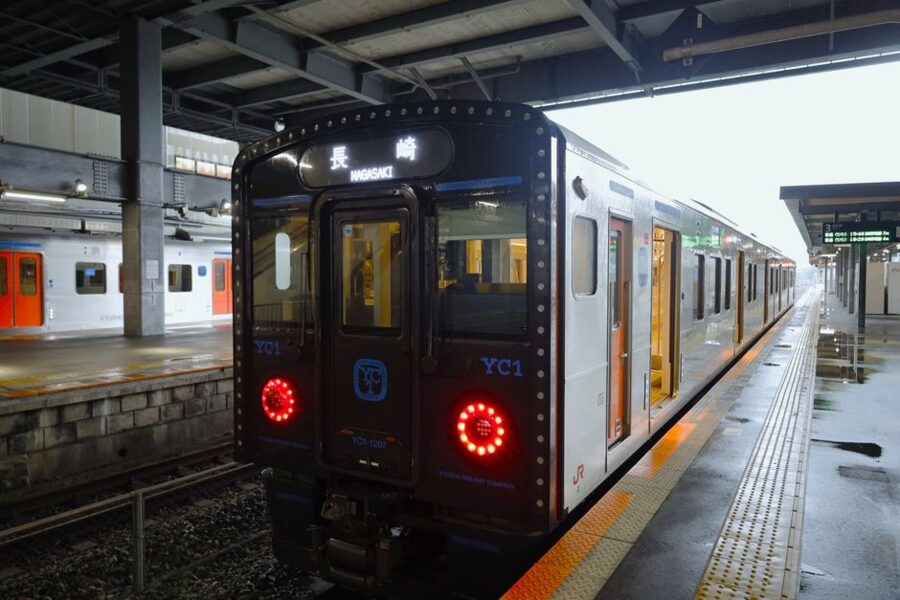
Nagasaki Station is the end of the Nishi-Kyushu Shinkansen, a 66-kilometre line from Takeo-Onsen opened on 23 September 2022 and still not joined to the rest of the network. Trains from Hakata in Fukuoka run as the Relay Kamome limited express to Takeo-Onsen, where you cross the platform to the Kamome shinkansen; the fastest Hakata–Nagasaki trips take about 1 hour 20 minutes. Both legs are covered by the Japan Rail Pass and by JR Kyushu’s own regional passes.

Nagasaki Airport opened on 1 May 1975 on Mishima, an island in Omura Bay about two kilometres offshore, as the world’s first full-scale airport built at sea; a 970-metre bridge joins it to the mainland. Airport buses reach Nagasaki Station in about 43 minutes by the Dejima expressway route, or 55 minutes by the Showamachi route, for ¥1,400 one way. There is no return fare.
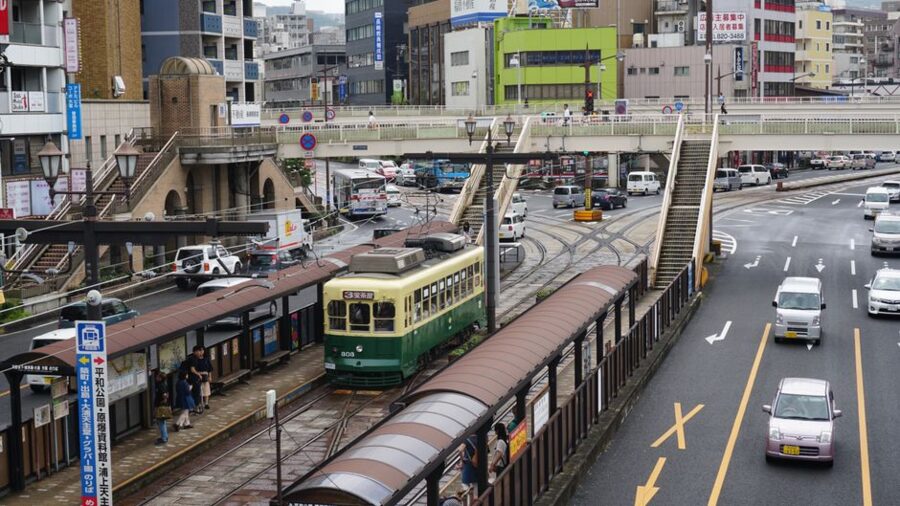
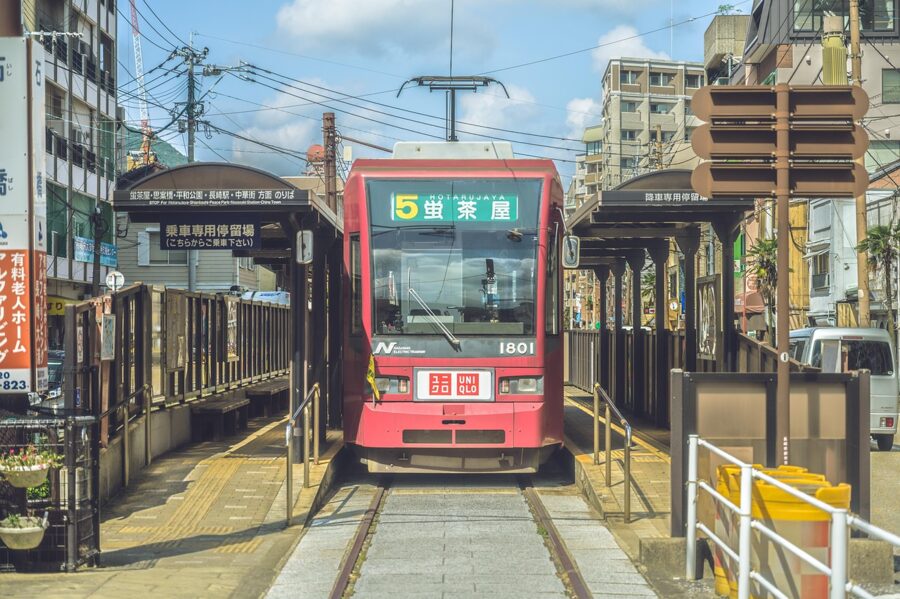
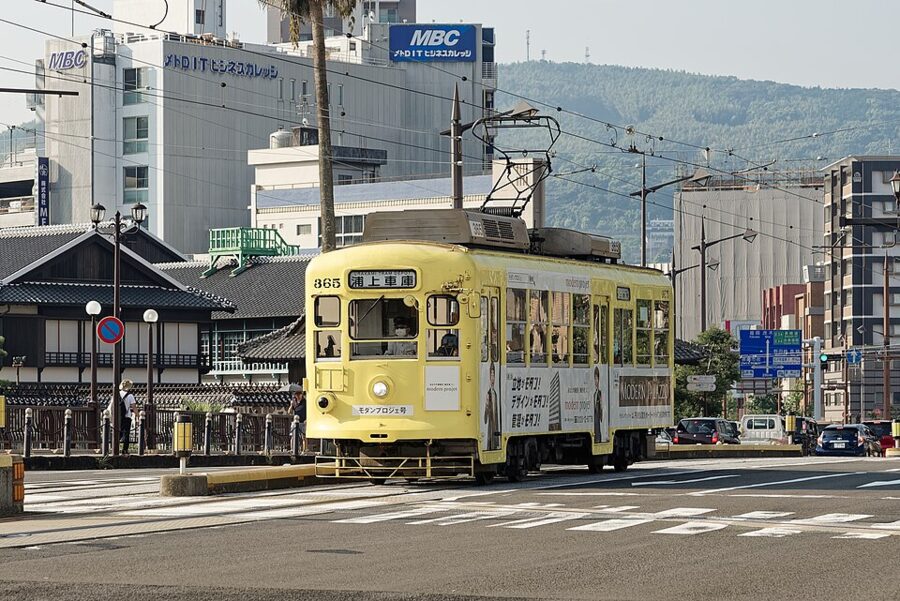
Inside the city, the Nagasaki Electric Tramway has run since 1915 and is the way to get around. Four numbered routes run between Akasako in the north and Ishibashi, Sofukuji and Hotarujaya in the south and east, and every ride costs ¥150 for adults, paid as you get off at the front. IC cards and contactless bank cards work, and with them a hop of two stops or fewer costs ¥110.
A paper one-day pass costs ¥600 and is not sold on board; the tourist information centre inside JR Nagasaki Station sells it, 08:00–19:00 daily. A mobile version is sold as a one-day ticket at the same price or a 24-hour ticket at ¥700. Four rides pay for either, and on a sightseeing day you will easily take five. Between stops, walk, and expect hills.

What to eat
Champon, noodles in a cloudy pork-and-chicken broth piled with cabbage, bean sprouts, pork and seafood, is the city’s dish. The usual story credits Chen Pingshun, a cook from Fujian who opened Shikairo in 1899 and devised it as a cheap, filling meal for the Chinese students in town. A prefectural record of 1907 already lists “chapon” at more than a dozen places, and another account credits a Japanese cook in Maruyama before that, so treat the origin as likely rather than settled.
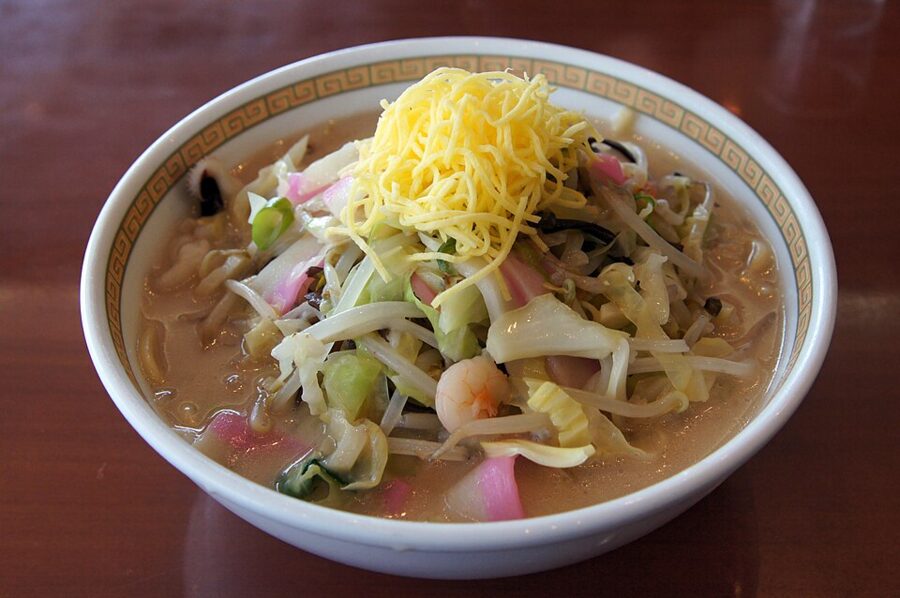

Shikairo still serves it, in Matsugae-machi below Oura Church, 11:30–15:00 and 17:00–20:00 (last orders), with irregular closing days. Every Chinese restaurant in Shinchi makes its own, and the broth matters more than the toppings.
Sara udon, “plate noodles”, is champon without the soup: a thick sauce of the same ingredients poured over noodles. In Nagasaki you get thin noodles fried crisp unless you ask for the soft, thick kind, while in Sasebo the default is the other way round, so say which you want.
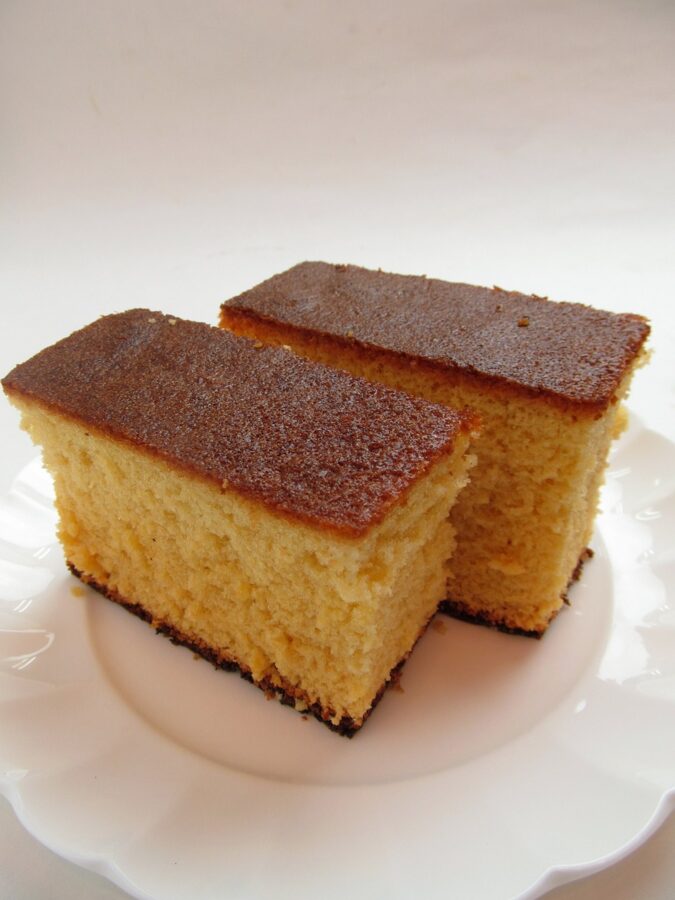
Castella, a dense sponge of eggs, sugar, flour and starch syrup, grew from a Portuguese cake, and its name is the Portuguese for Castile, from bolo de Castela, “cake of Castile”. Fukusaya, whose main shop is at Shianbashi, marked its 400th year in 2024.
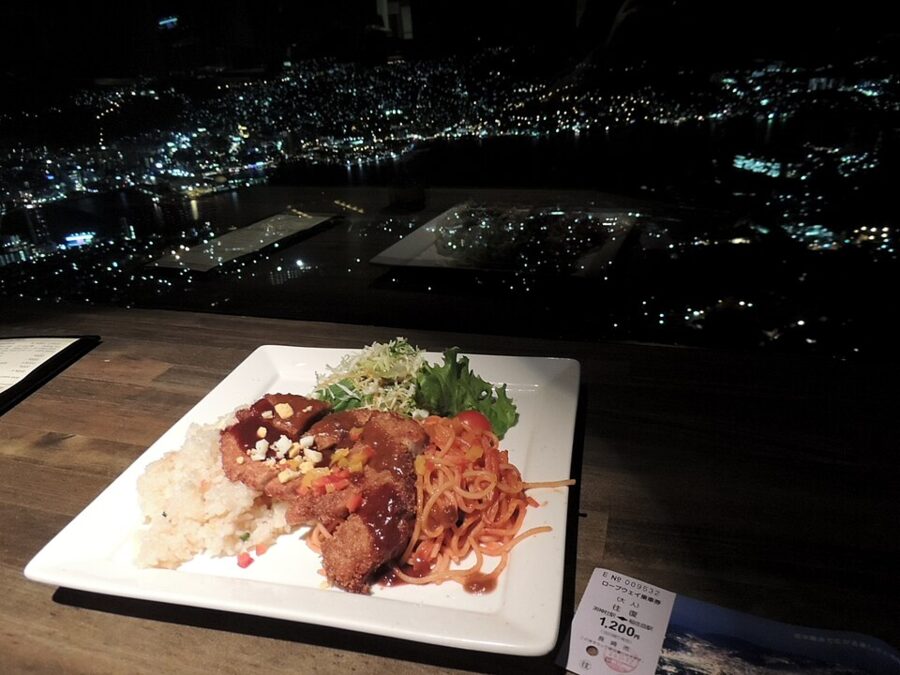
Toruko raisu, “Turkish rice”, has nothing to do with Turkey that anyone can prove: a pork cutlet in sauce, a heap of pilaf and a portion of spaghetti, all on one plate. It is thought to have appeared in the 1950s, and the origin of the name is as murky as the sauce, which may be demi-glace or curry.

Shippoku is the banquet: Japanese, Chinese and Dutch-influenced dishes served on large plates round a red lacquered table and shared, which Nagasaki people call wakaran, from wa, ka and ran, the characters for Japan, China and Holland. It always opens with o-hire, a clear soup with a sea-bream fin in it, and the hostess’s “o-hire wo dozo” is the signal to start; nobody drinks a toast until every bowl is empty. It ends with umewan, sweet red-bean soup with rice cakes.
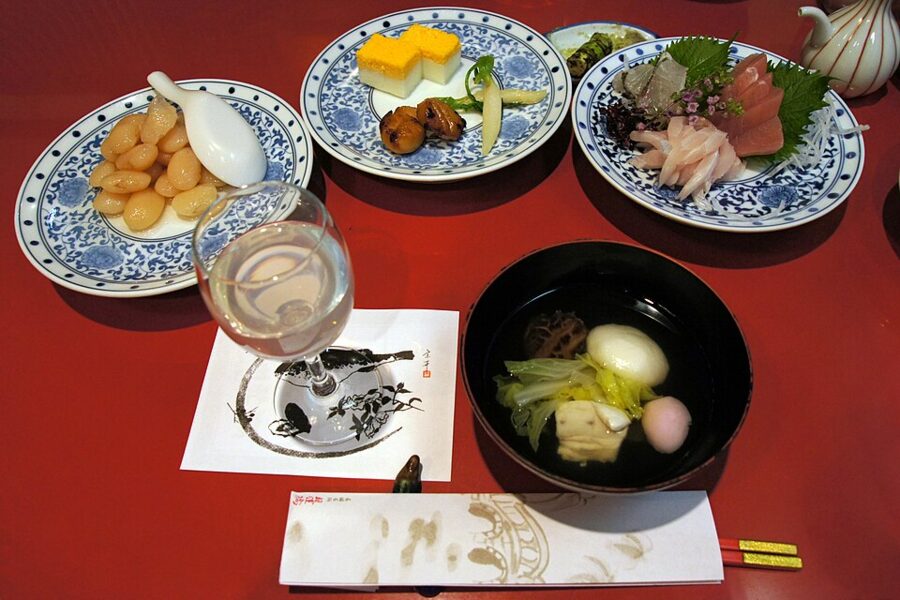

Shippoku is a banquet and priced like one, so book ahead. Kagetsu, in Maruyama, is the place I would choose: it occupies the buildings and garden of Hiketaya, the leading house of the pleasure quarter from its opening in 1642 until courtesans were freed in 1872, and it is a prefectural historic site.
Festivals
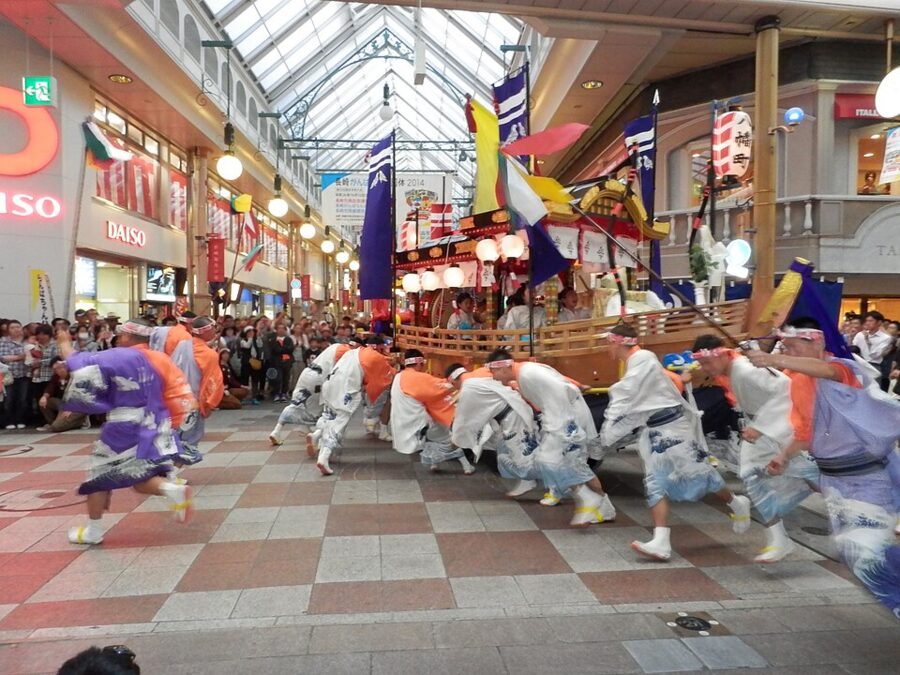
Nagasaki Kunchi (長崎くんち) is the autumn festival of Suwa Shrine, held every year on 7, 8 and 9 October. It began in 1634, when two courtesans from Maruyama, Takao and Otowa, danced before the shrine, and the governor backed it as a way of tying the townspeople to the shrine in the decades after the Christian years. It was listed as a national Important Intangible Folk Cultural Property in 1979.
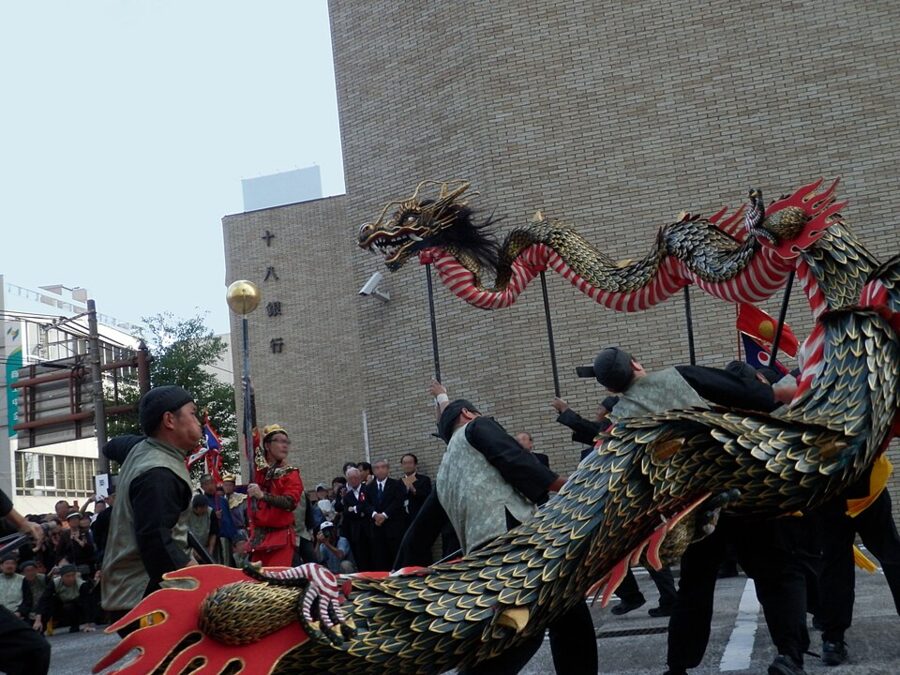

The city’s 59 participating neighbourhoods are split into seven groups that take turns, so any one neighbourhood dances only once every seven years. The performances show where Nagasaki’s trade came from: the Chinese dragon dance, Dutch comic routines, model ships of the licensed trading fleets, and the kokkodesho of Kabashima-machi, performed since 1799, in which bearers hurl a drum float into the air and catch it one-handed. When a performance ends, the crowd shouts “motte koi“, “bring it back”, and the dancers come back for more.

The Nagasaki Lantern Festival is younger: Shinchi’s shopkeepers began it as a spring festival in 1987, and the city took it over and renamed it in 1994. For the fifteen days of the Lunar New Year, about 15,000 lanterns hang across Chinatown, the old Chinese quarter, Minato Park and the Nakashima River, with an emperor’s parade of about 150 people on Saturdays and a procession for Mazu, goddess of the sea, on Sundays. The 2027 festival runs from 5 to 21 February.
Hotels fill early for both. Kunchi is the one I would plan a trip around, because it is a whole city performing for itself, but the Lantern Festival falls in a quieter, cheaper month.
Plans for one, two and three days
One day. Take the tram north for the Atomic Bomb Museum when it opens at 08:30, then the hypocentre and the Peace Park, and walk to Urakami Cathedral. Ride back south to Dejima and lunch in Shinchi, then take route 5 to Oura Church and Glover Garden for the afternoon. End on Mount Inasa after dark.
Two days. Do the first day more slowly, and add Sanno Shrine and Nyokodo to the morning. On the second day, walk Nishizaka from the station, then Suwa Shrine, Megane Bridge and the Chinese temples of Teramachi, with the Hamanomachi arcade in between; book a shippoku dinner, or a Hashima landing tour for the morning if the forecast is calm.
Three days. Give the third day to the coast. Sotome suits anyone who has followed the Christian story this far; Unzen and Shimabara suit anyone who would rather see a volcano, and Unzen’s hot springs make a good place to spend the night.
Whatever the plan, finish on Mount Inasa. From the deck the harbour the Portuguese pilots chose in 1571 is a curve of black water, Dejima is a few lit rooftops near its head, and the Urakami valley runs off to the north as a river of lights. The last ropeway down leaves at 22:00.