

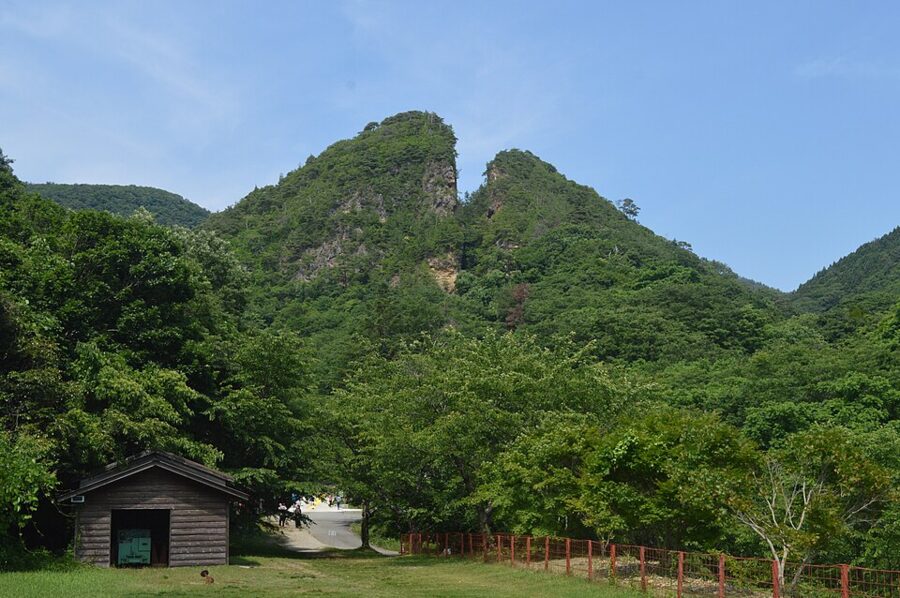

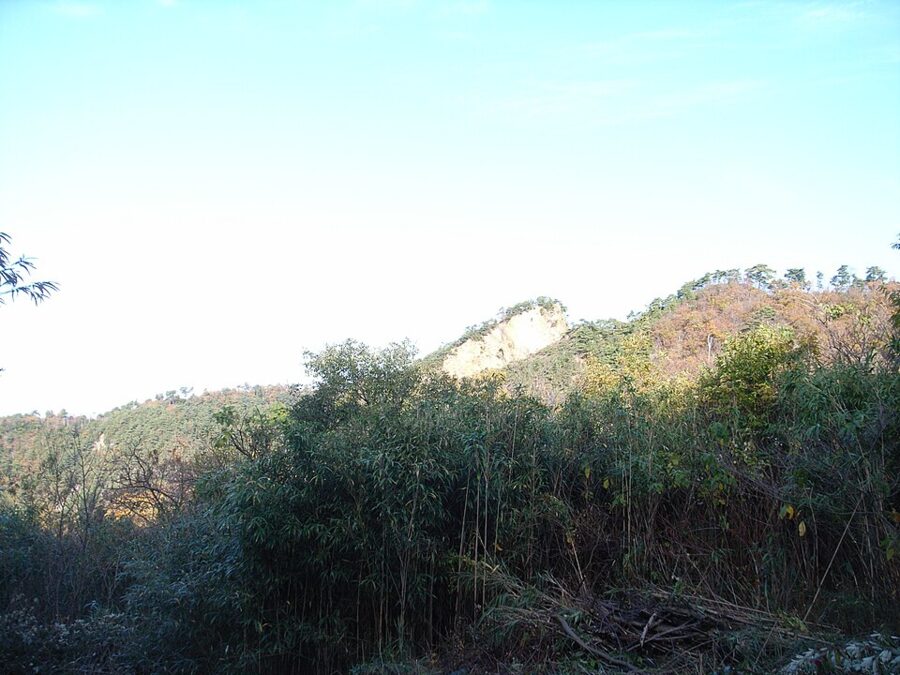
Above the old mining town of Aikawa, on the west coast of Sado Island (佐渡島), a mountain has a notch cut out of its summit. Miners chasing a gold vein worked it downward from the top, by hand, until the ridge stood in two halves with a deep V of open air between them. Nobody filled it in when the vein ran out. It is called Doyu no Warito (道遊の割戸), “the split of Doyu”, and it is the clearest single picture of what the island was for in the seventeenth century.
Sado lies about 35 kilometres off the coast of Niigata Prefecture (新潟県), in the Chubu region, out in the Sea of Japan, and it was a place people were sent long before it was a place people went. An emperor died here in exile, a monk wrote two of his most important works here, and the man who gave Noh its shape spent his last known years here. Then, in 1601, gold was found, and the Tokugawa shogunate took the whole island as its own.
What the gold left behind is now a World Heritage Site, and what the exiles left behind is a culture of Noh stages, drum troupes and folk song unusual for an island of fewer than 46,000 people. Add a rare bird brought back from extinction in the wild, a fleet of wooden tubs used as boats, and a coast that turns to cliffs in the north, and you have more than a weekend’s worth. I’d give it three nights.

In this guide
- Two mountain ranges and a plain
- An island for exiles
- Gold, silver and the shogun
- Noh on village shrine stages
- Drums: onidaiko, Kodo and the Earth Celebration
- The toki, brought back
- The south: Ogi, the tub boats and Shukunegi
- The north: Senkaku Bay, Futatsugame and the Osado Skyline
- Buri, rice, sake and okesa
- Getting there: ferry, jetfoil and the Naoetsu route
- Getting around the island
- When to go, and how long to stay
Two mountain ranges and a plain
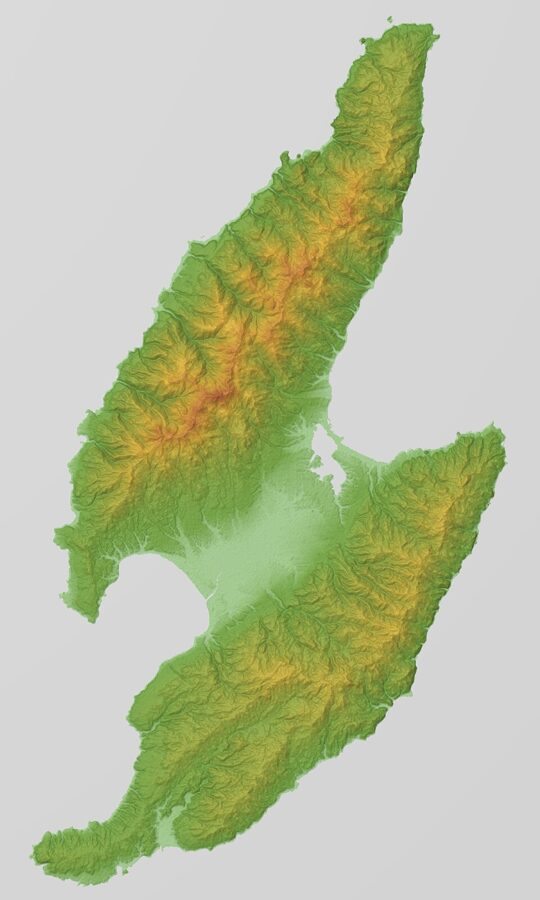
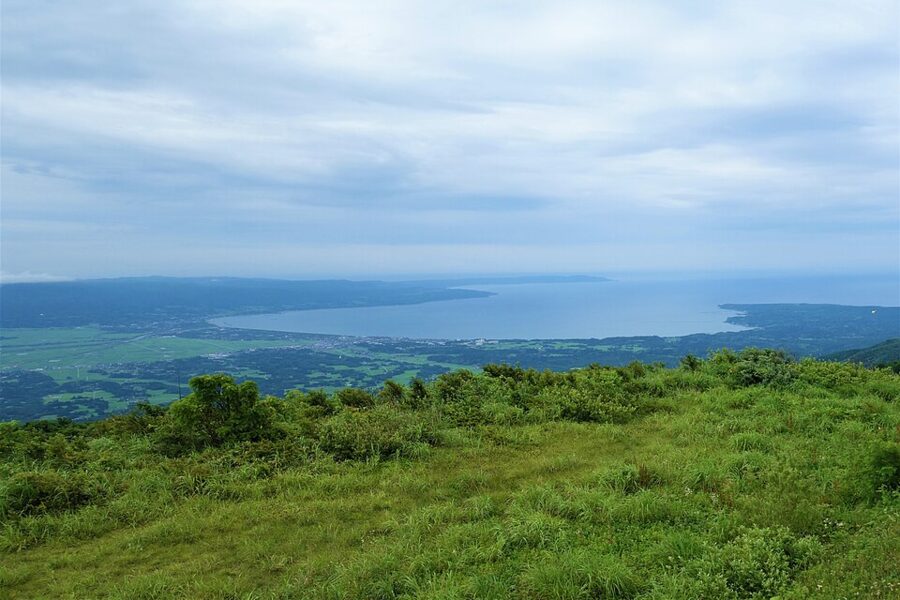
Sado was once part of Honshu. It broke away about 16 million years ago, and around two million years ago the seabed was squeezed upward to make the island’s present form: the Osado range along the north, the Kosado hills along the south, and the Kuninaka plain (国中平野) between them. The ground is still rising.
The outline is compared to the katakana エ or a lightning bolt. The island covers about 855 square kilometres, roughly one and a half times the area of Tokyo‘s 23 wards; of Japan’s islands beyond the four main ones, only Okinawa Island is larger. The coastline runs to about 280 kilometres. There is no railway, and driving the coast road all the way round takes seven to eight hours.

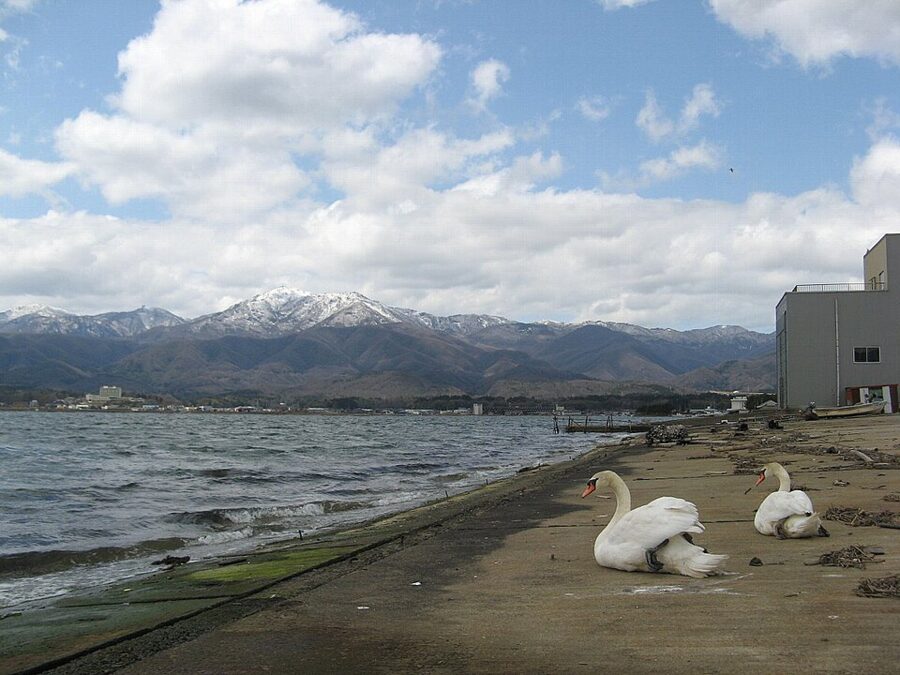
The sea keeps the climate gentle. The warm Tsushima Current runs past the island, so Sado is about a degree warmer than Niigata city in winter and about a degree cooler in summer, and the deepest snow recorded at the old weather station in Aikawa is half that of the mainland city. The north side of the Osado range still gets proper snow, and its mountain roads close each winter.
The island’s name has two readings. The national mapping agency lists it as Sadoshima; most people, including the island’s own assembly, which has debated an official change, say Sadogashima. The dialect, Sado-ben, belongs to the western group of Japanese dialects rather than the eastern ones spoken across the strait, a trace of the trade routes that came up the coast from Kyoto and Osaka.
Numbers have gone one way for decades. Sado City’s own count was 45,753 people at the end of October 2026, and visitor numbers peaked at about 1.21 million in 1991. Since 2004 the whole island has been a single city.
An island for exiles
Exile was a formal sentence in the court’s law codes, graded by distance from the capital, and Sado sat in the furthest grade alongside Oki and Izu. Courtiers, priests and poets were sent here from the eighth century onward. Most are forgotten. Four are not, and each left something you can still visit.
Emperor Juntoku
In 1221 the retired emperor Go-Toba and his son Juntoku tried to overthrow the Kamakura shogunate and lost within a month. Go-Toba was sent to Oki, and Juntoku, then 24, to Sado. He lived on the island for 21 years and died there in 1242; his body was cremated at Mano, on the western edge of the Kuninaka plain, and the bones were taken back to the capital. The cremation site, Mano Goryo, has been tended as an imperial tomb since the Edo period, and the shrine beside it, Mano-gu, is dedicated to him.
Hino Suketomo
The courtier Hino Suketomo was exiled to Sado in 1325 for his part in an earlier plot against the shogunate, and beheaded on the island in 1332 when the next plot failed. His story became the Noh play Danpu, in which his young son crosses to Sado to avenge him. Daizen Shrine at Mano, one of the island’s oldest Noh stages, enshrines Suketomo, and the play is still performed there.
Nichiren
The monk Nichiren reached Sado at the end of October 1271, after the shogunate’s men nearly executed him at Tatsunokuchi near Kamakura. He spent his first winter in a small hall at Tsukahara, a cremation ground, and there wrote the Kaimoku-sho, “Opening the Eyes”. Moved to Ichinosawa in 1272, he wrote the Kanjin Honzon-sho the following spring, setting out the mandala that Nichiren Buddhists still use. He was pardoned in 1274.
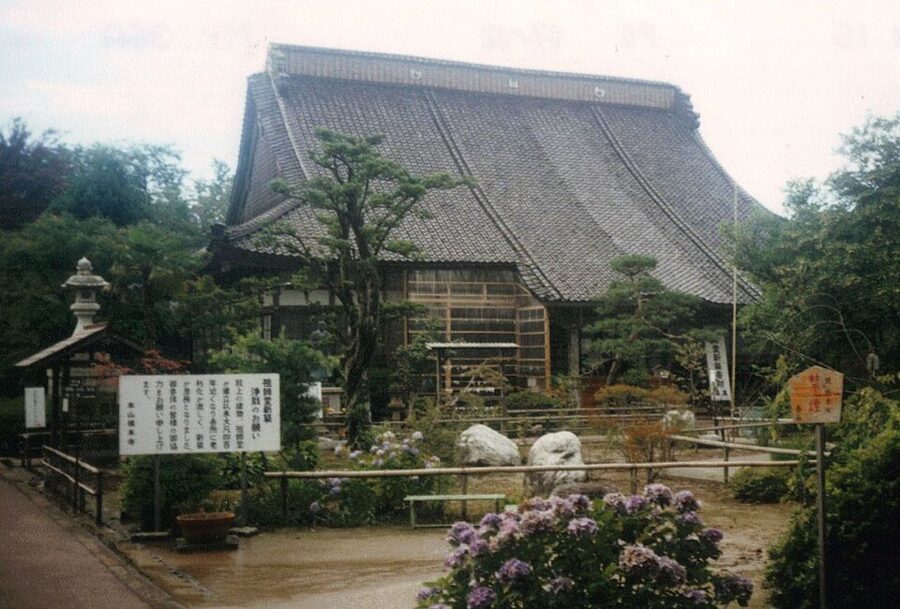

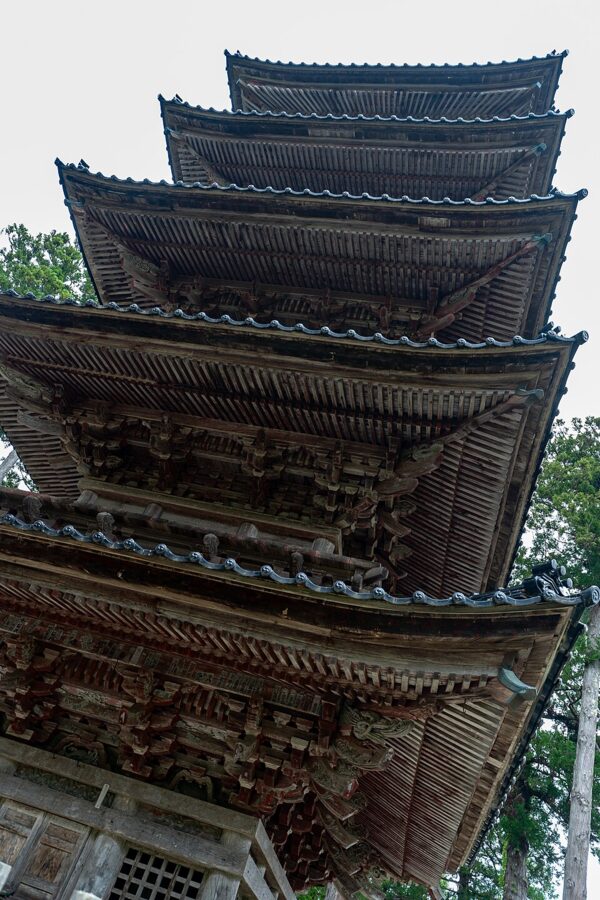
Konpon-ji marks the Tsukahara site. Myosen-ji at Mano grew from the house of Abutsu-bo, a former retainer of Juntoku who became one of Nichiren’s first followers on the island, and keeps a five-storied pagoda in its grounds.

Zeami
Zeami, the actor and playwright who made Noh into the art it is, was sent to Sado in 1434 by the shogun Ashikaga Yoshinori, at about the age of 72. No official record of the sentence survives and the reason is still argued over. In 1436 he finished the Kintosho, a short sequence of prose and songs about his crossing and the island’s shrines; after that he disappears from the record, and nobody knows whether he died on Sado or went home to Kyoto.
Gold, silver and the shogun
Silver had been dug on Sado since the sixteenth century, mainly at Tsurushi, inland from the west coast. In 1601, the year after the battle of Sekigahara, three prospectors from Tsurushi found a rich gold vein in the hills above Aikawa. Within two years Tokugawa Ieyasu had put the island under Okubo Nagayasu, his chief of mines, and Sado stayed a shogunate domain, run by a magistrate rather than a lord, until 1868.
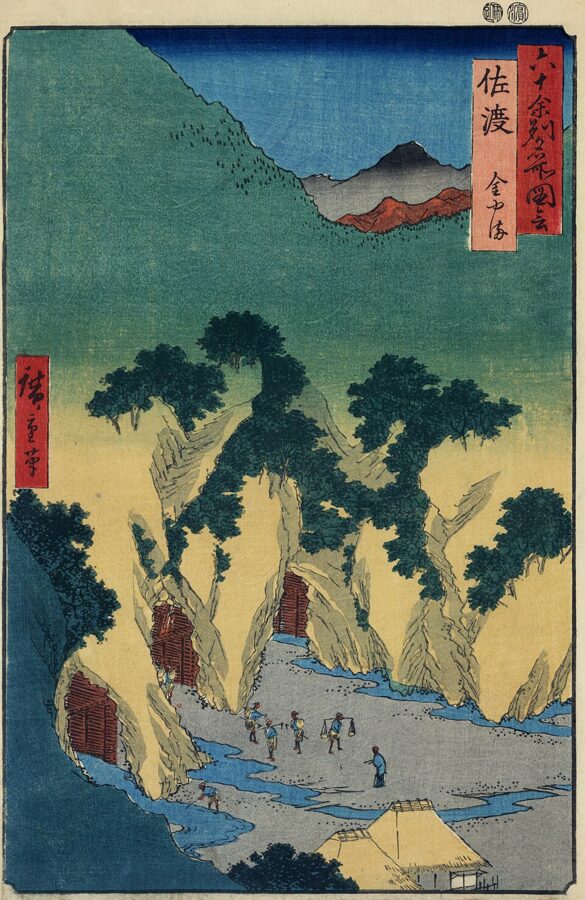
The early output was enormous by the standards of the day. In the first decades of the seventeenth century the mines are estimated to have produced more than 400 kilograms of gold a year, and silver deliveries to the shogunate are recorded at about 37 tonnes in a single year. Much of the metal went into the shogunate’s Keicho gold and silver coins. Aikawa grew from a fishing hamlet into a mining town, with the magistrate’s office, temples and merchants’ streets on the upper terrace and the craftsmen’s quarters on the shore below.
Aikawa and the magistrate’s office
The Sado Bugyosho, the magistrate’s office, has been rebuilt on its original site, with a reconstruction of the seriba, the workshop where ore was crushed, washed and refined. The town below still keeps its Edo-period street plan, which matches the old maps lane for lane.
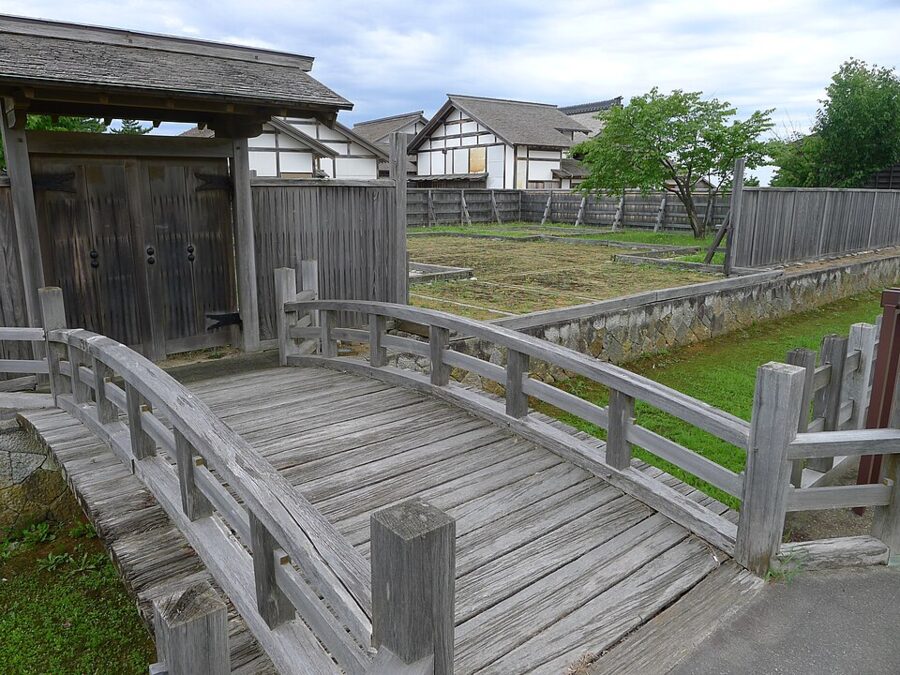
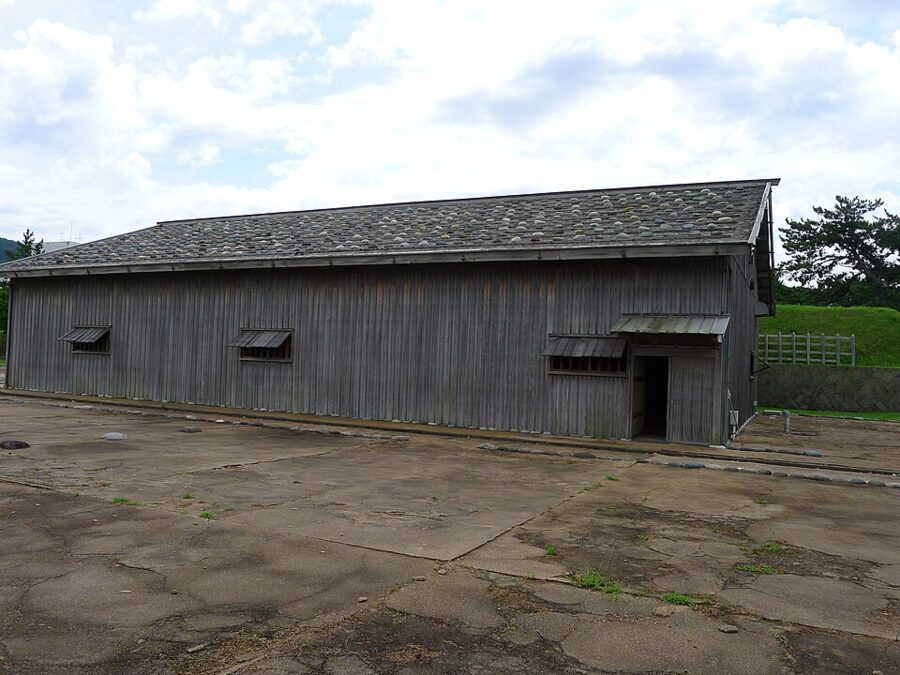
Inside the mine: the Sodayu and Doyu tunnels
The mine operator, Golden Sado, opens two tunnels on its standard route. The Sodayu tunnel is an Edo-period working, dug by hand along the vein, where about 70 mechanical figures act out the work shown in the mine’s picture scrolls. The Doyu tunnel was cut in 1899 for machine mining, and it keeps the rails, ore cars and workshops much as they were when the mine closed.
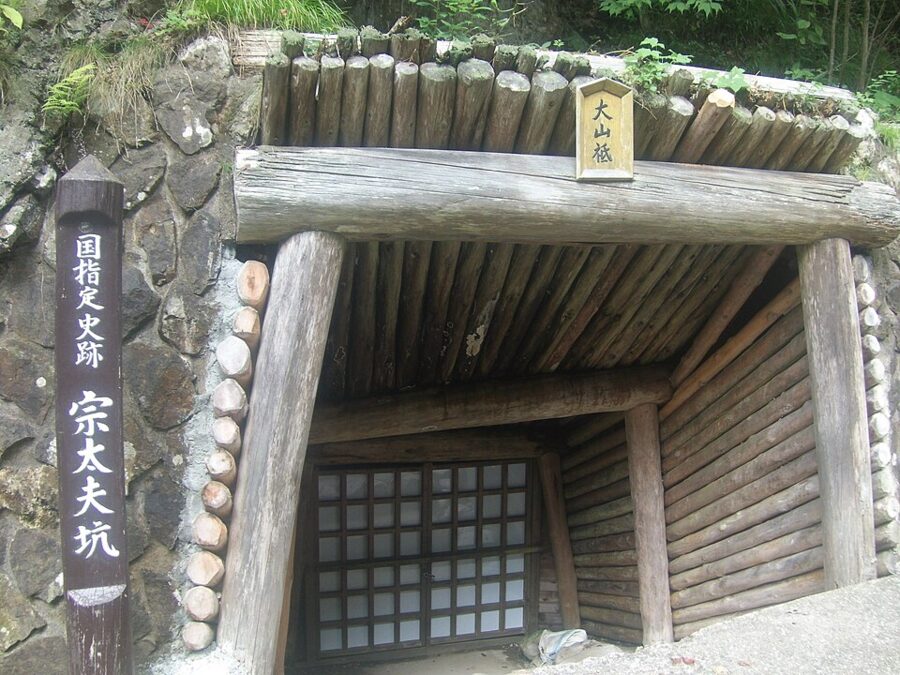

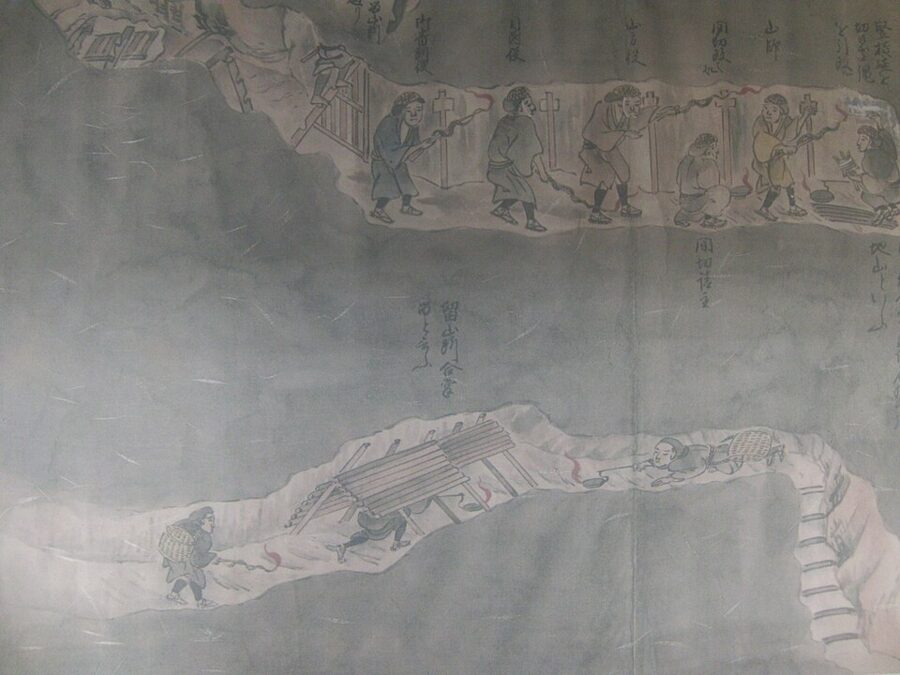

The Doyu route comes out beneath Doyu no Warito itself. Allow 60 to 90 minutes for both tunnels; the temperature inside is about 10 °C all year, so bring a layer even in August. The Sado Kinzan course costs ¥1,500 for adults (¥750 for primary-school children), rising to ¥2,000 and ¥1,000 from 1 January 2027. Last entry is 16:00 from April to October and 15:30 from November to March, and the mine has winter maintenance closures on most Wednesdays from December 2026 to February 2027.
For something rougher, the guided Yamashi tour takes you through the unlit Okiriyama tunnel in a helmet, lamp and boots, for ¥5,000. It runs from April to November, at 10:30 and 14:30, for people of junior-high age and over, and has to be booked by 16:00 the day before. The darkness tells you more about the work than the figures do.
The mushuku and the “hell on earth”
Production fell from the late seventeenth century as the veins went deeper and the workings flooded. From around 1770 the shogunate sent homeless men rounded up in Edo and Osaka, the mushuku, to work as water-bailers in the lowest galleries. A work song of the time called the Sado mine “hell in this world, with every ladder a sword”, and the bailers’ huts were kept in a closed valley so they could not run.

Meiji machines and the Kitazawa ruins
The Meiji government took the mine over in 1869 and brought in Western engineers, blasting and pumps; the first Western-style vertical shaft at a Japanese metal mine, Otate, was finished in 1877. In 1896 the mine was sold to Mitsubishi, which electrified it. In 1940, with gold needed to pay for imports during the war in China, Sado produced about 1,500 kilograms of gold, the highest annual figure in its history.
That peak came from the Kitazawa flotation plant (北沢浮遊選鉱場), built between 1937 and 1940 to separate gold from crushed ore with froth and chemicals. It could treat about 50,000 tonnes of ore a month. The plant closed in the cutbacks of 1952, and what is left is a hillside of concrete terraces with a 50-metre thickener tank below, open to walk round and lit up on some evenings.
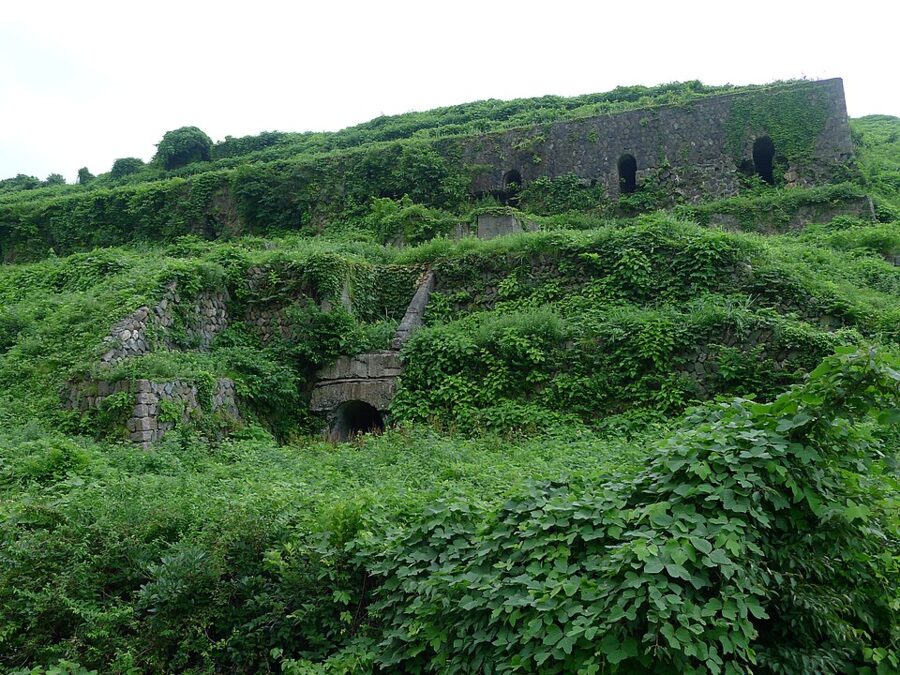
The mine kept going on a small scale until 1989, when it closed for good. Over its life it is reckoned to have produced 78 tonnes of gold and 2,300 tonnes of silver. A Mitsubishi Materials subsidiary has run it for visitors since.
Tsurushi and Nishimikawa
The World Heritage listing covers more than Aikawa. The UNESCO listing describes three component parts: the Aikawa gold and silver mine area, the older Tsurushi silver mine linked to it by a mountain path, and the Nishimikawa placer gold mine in the Kosado hills to the south. At Tsurushi the oldest workings are trenches dug along outcrops; at Nishimikawa, gold was washed out of gravel with channelled water.
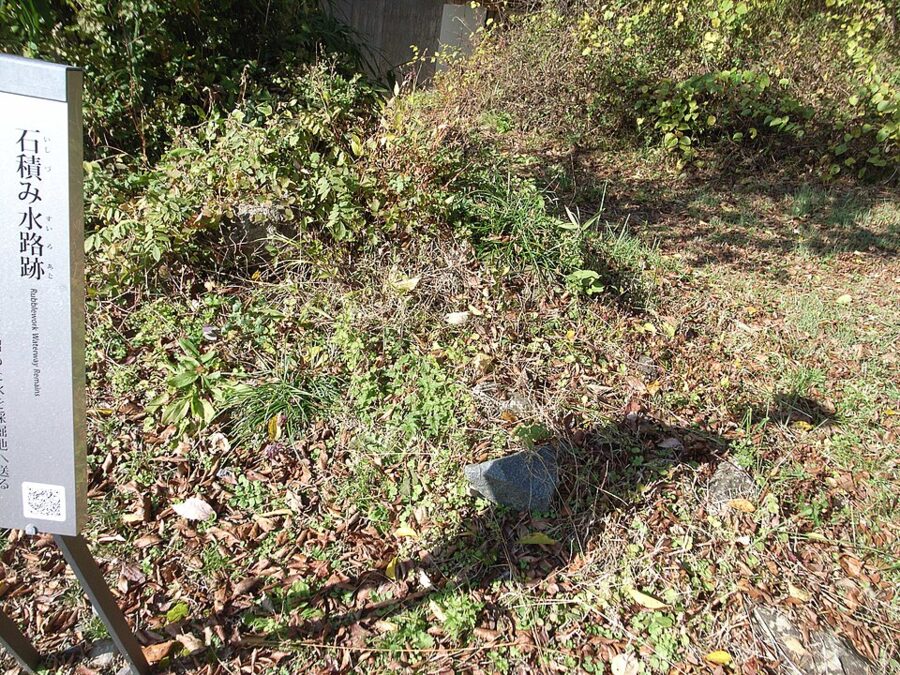

Nishimikawa Gold Park, near the coast road, lets you pan for gold dust; it keeps reduced days in winter, so check before going. The Kirarium Sado guidance centre in Aikawa explains all three areas in about half an hour and is the best first stop if you are new to the history.
The 2024 listing and the dispute over wartime labour
The Sado Island Gold Mines (佐渡島の金山) were inscribed on 27 July 2024 under a single criterion, as an example of hand mining and refining continuing into an age when mines elsewhere were mechanising. The listing covers only the period from the late sixteenth to the mid-nineteenth century. The Meiji shaft, the Doyu tunnel and the Kitazawa plant are outside it. Japan’s other sites are covered in the guide to UNESCO World Heritage sites in Japan.
The nomination was held up for years by South Korea.
From February 1939 Mitsubishi recruited workers in Korea, then a Japanese colony, to fill gaps left by Japanese miners called up for the army. Company records put the total at about 1,200 men by 1945. From December 1944 the mine was designated a controlled factory and the men were bound by conscription orders. Korean governments and many historians describe the system as forced labour; the Japanese government avoids the term, holding that wartime labour mobilisation was carried out under the law of the time.
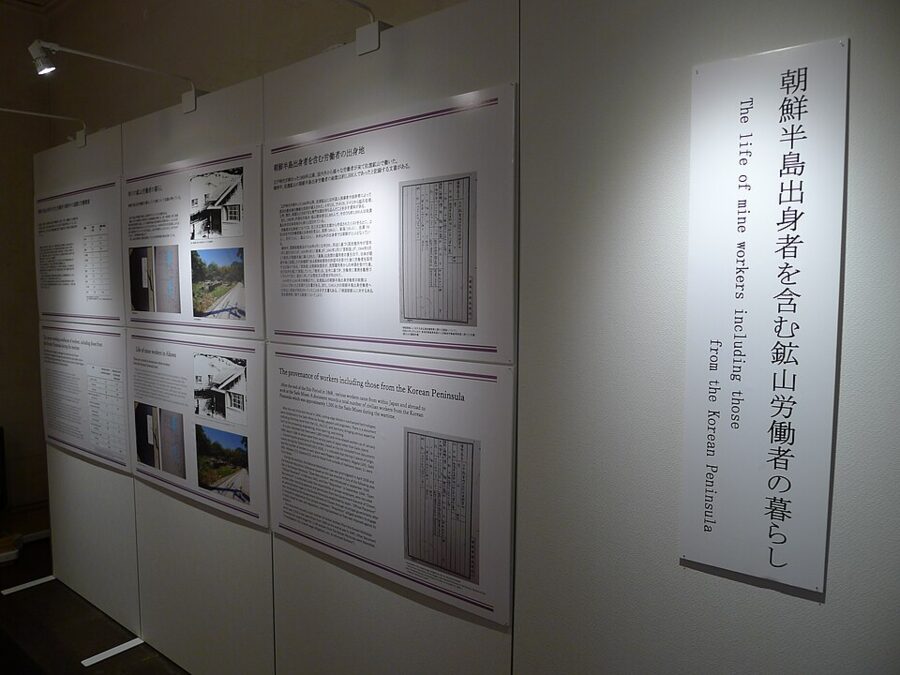
Company papers show equal wage rates and free dormitories; a labour officer’s memoir of 1974 and former Korean workers describe beatings, contracts extended beyond what was promised and more of the dangerous underground work. Korea dropped its objection in 2024 after Japan promised to explain this history on site. A room opened in the Aikawa Folk Museum the day after the vote, under the title “The life of mine workers including those from the Korean Peninsula”. It does not use the word “forced”, and Korean critics said so at once.
A memorial ceremony for all the mine’s workers was held in Aikawa in November 2024, organised by a local committee rather than the Japanese government. Korea’s ambassador and the bereaved families stayed away, objecting to the Japanese official sent, and held their own ceremony at the site of a former Korean dormitory the next day. The second ceremony, in September 2025, again went ahead without Korean participation.
Noh on village shrine stages
Okubo Nagayasu, the shogun’s mining chief, came from a family of Noh actors, and he brought performers with him to Sado to dedicate plays at the island’s shrines. That, not Zeami’s exile two centuries earlier, is what spread Noh through the villages. The office of Noh master passed to the Honma family, and in a farming island without a castle town, Noh became something villagers performed rather than watched from below.
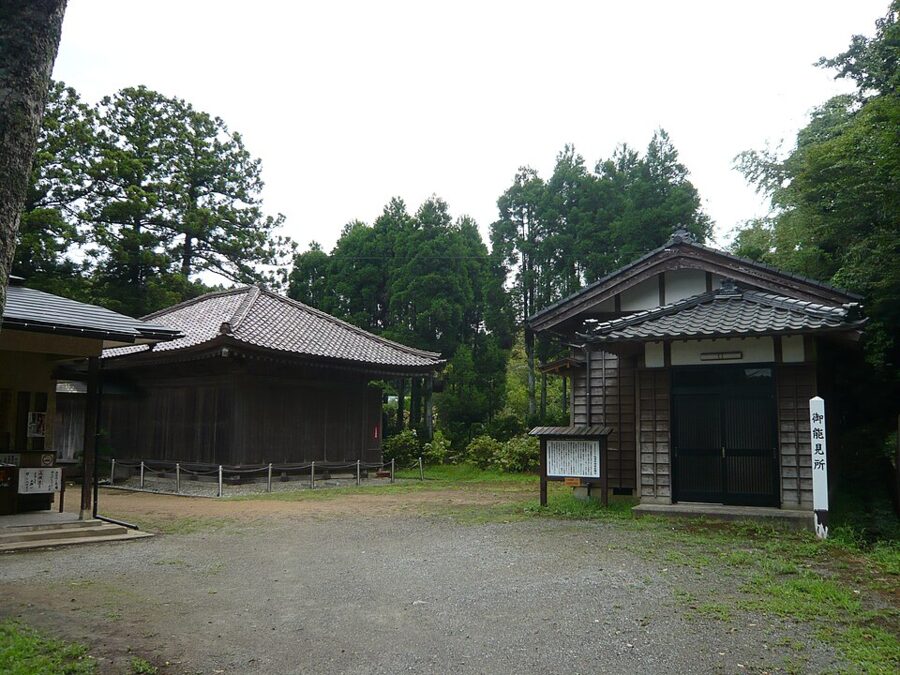

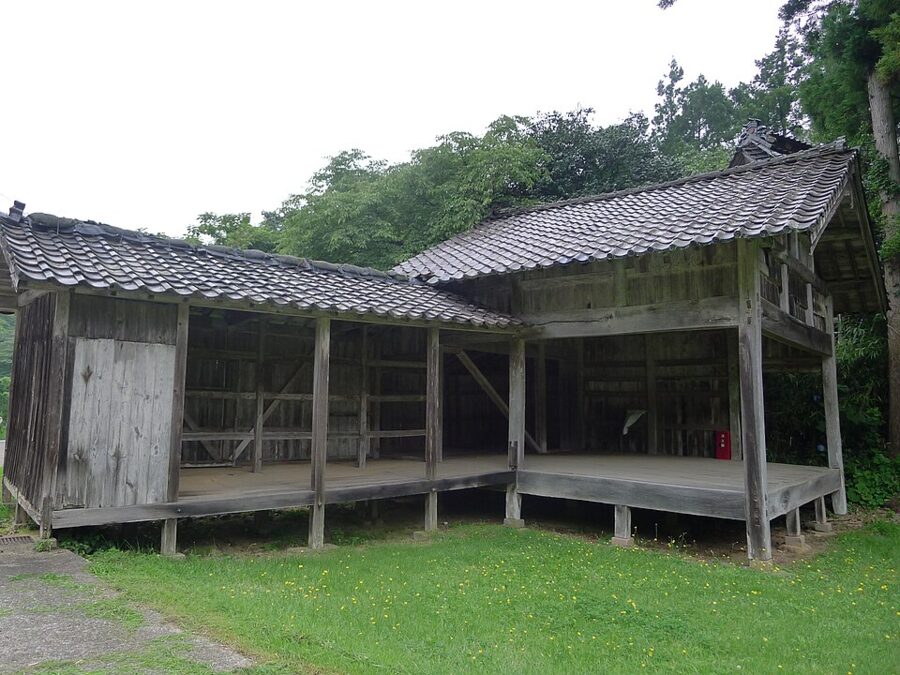
At one time there were more than 200 Noh stages on Sado. The Nohgaku Performers’ Association counts 35 still standing, about a third of them in regular use, which on any reckoning per head of population is more than anywhere else in Japan. Almost all stand in shrine grounds, facing the shrine, with the audience outdoors.
The island has a proverb, mai-taosu, “to dance yourself to ruin”, for a rich family that spent its fortune bringing in actors from the capital. The island also keeps the Sagi school of kyogen, the comic plays performed between Noh, founded by Tokugawa Ieyasu’s own kyogen actor.
Seeing a performance
Because the stages are outdoors, evening performances are takigi noh, lit by bonfires. The season runs from April to October, busiest in late spring and June, when villages dedicate plays after rice planting. The 2026 performance schedule ran from a dedication at Daizen Shrine on 18 April to October, and the most regular series is the Ryotsu takigi noh at Shiizaki Suwa Shrine, on a hill above Lake Kamo.
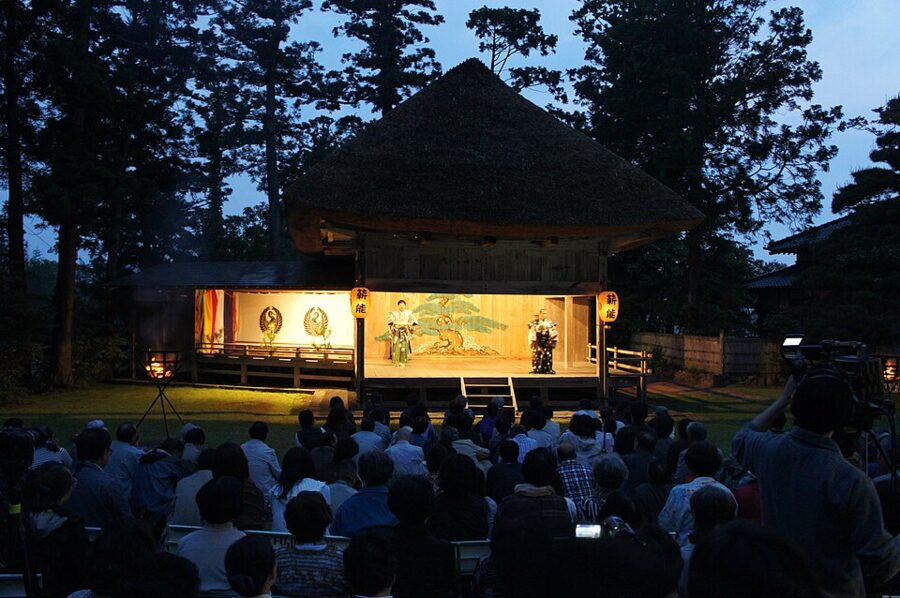

Audiences are relaxed by the standards of a city Noh theatre. People bring food, applaud a fine passage and take photographs without flash; the actors are in costumes weighing over 20 kilograms, so keep quiet during the dance. If you only see Noh once in Japan, an outdoor stage on Sado on a June evening is the version I would choose.
Drums: onidaiko, Kodo and the Earth Celebration
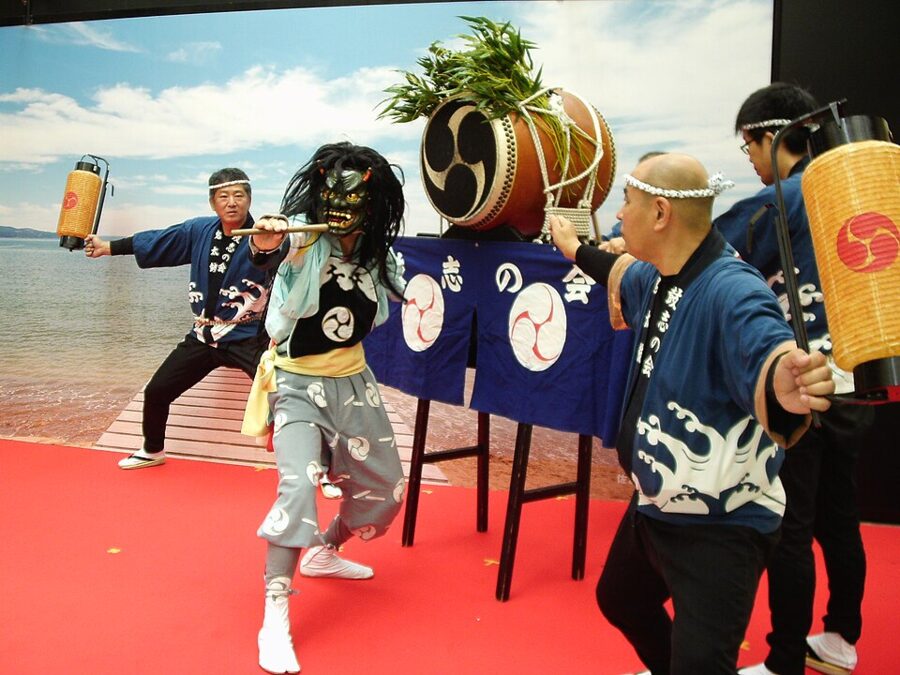
Long before taiko became a concert form, Sado villages had onidaiko, “demon drumming”: a dancer in a demon mask leaps to the beat of a drum, going from house to house at village festivals to drive out bad luck and pray for the harvest. About 120 of the island’s roughly 260 settlements have their own version. Most follow the Kuninaka style, while Aikawa and the coast facing the mainland keep styles of their own.

In 1971 a group of young drummers moved to Sado to live and train together under the name Ondekoza, borrowed from onidaiko. When the group split in 1981, the members who stayed formed Kodo, whose name means both “heartbeat” and “children of the drum”. They made their debut in Berlin that year and have since given more than 7,000 performances in over 50 countries, from a village near Ogi where the members live and train.
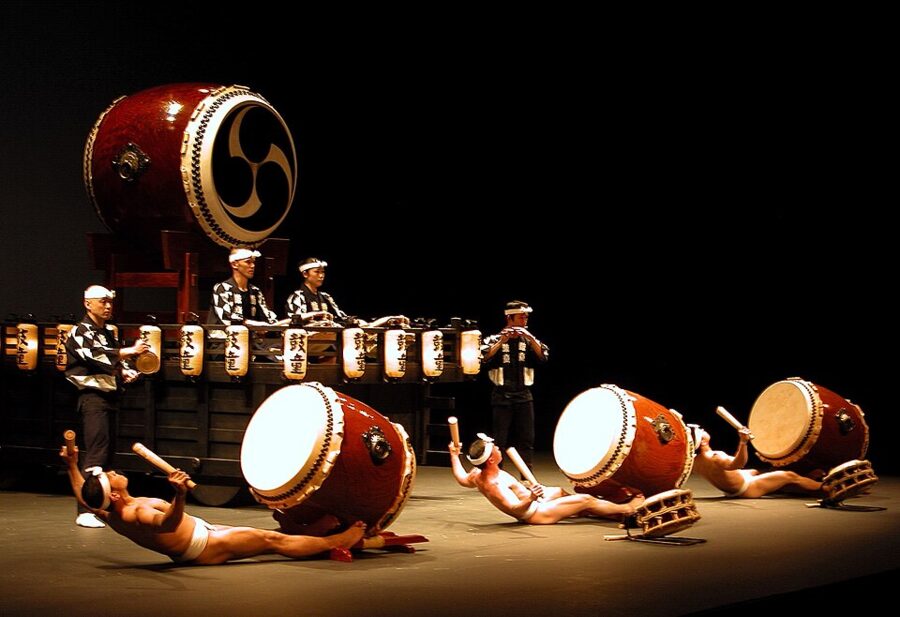

Kodo runs the Earth Celebration with Sado City every August in Ogi: three days of harbour concerts, workshops and fringe events with invited musicians from abroad. The 2027 festival is planned for 20 to 22 August. Inns on the south of the island fill months ahead, so book the bed before the ticket. Kodo also plays on the island outside the festival; in 2027 the group performs at Shukunegi from 1 to 5 May.
The toki, brought back
The Japanese crested ibis, toki, has the scientific name Nipponia nippon, and its wing feathers give Japanese a colour word, toki-iro, a pale salmon pink. It once fed in rice fields across most of Japan. Hunting for meat and feathers, then pesticides and the loss of hill paddies, reduced it to a few birds on Sado and the Noto Peninsula by the 1950s.
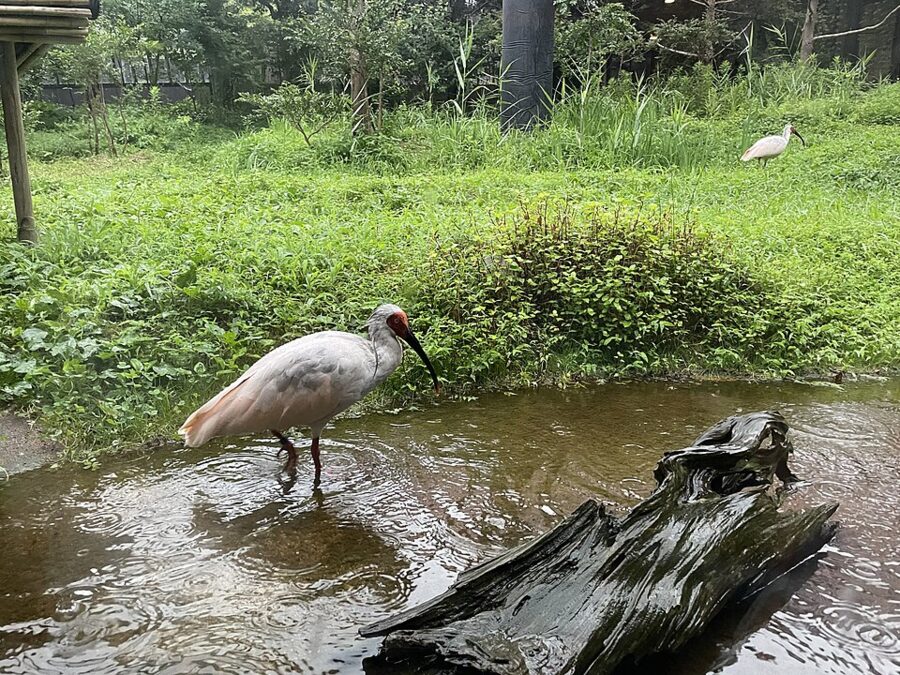

In 1981 the last five wild birds were caught and taken into a breeding centre on Sado. They never bred.
The last of them, a female called Kin, died in 2003, and the Japanese-born toki was gone. The recovery came from China, which gave Japan a pair, Yang Yang and You You, in 1999. Their chicks, and those of a few more birds from China, are the ancestors of every toki now flying in Japan.
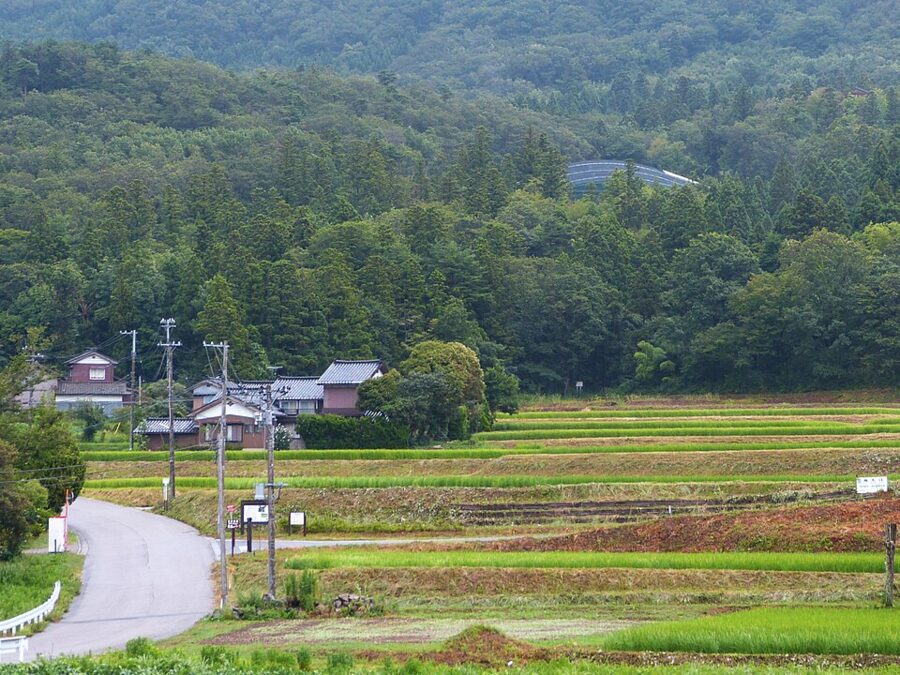
In September 2008 ten birds were released over the Kuninaka plain. Releases have continued every year since, and in 2012 chicks hatched in the wild on Sado for the first time in 36 years. In 2019 the Ministry of the Environment moved the toki off its “extinct in the wild” list, and by 2020 it estimated more than 450 birds were living wild. In 2011 the island’s farming was recognised by the UN Food and Agriculture Organization as a Globally Important Agricultural Heritage System, the first in a developed country, together with Noto.

Where to see them
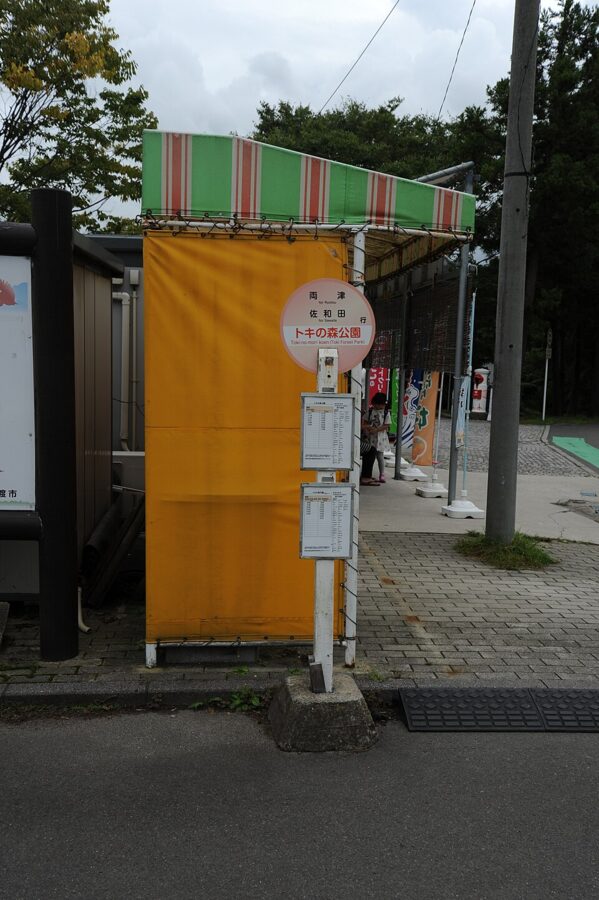
The Toki Forest Park (トキの森公園) at Niibo, on the east side of the plain, has a museum on the bird’s decline and recovery and a large flight cage where you can watch toki feeding from a half-buried corridor, sometimes two centimetres away through the glass. Entry is ¥500 for adults and ¥200 for school-age children, and it is open 08:30–17:00 (last entry 16:30). It closes on Mondays from December to February, and over the New Year.
Wild birds are now common enough on the plain that you may see one from a bus window, feeding in a flooded field. The city’s rules for watching them are simple: use binoculars from a distance, stay in your car, and never feed them. The park’s notes on the bird explain how to tell a toki from the egrets that share the fields.
The south: Ogi, the tub boats and Shukunegi
Ogi (小木), at the southern tip, was the island’s port for the Sea of Japan shipping trade. From the eighteenth century the kitamae-bune, cargo ships working between Osaka and Hokkaido, called here, and the shogunate made Ogi an official port of call. The money and the ships’ carpenters it brought built the village of Shukunegi next door, and the songs the sailors carried became, in time, the island’s best-known folk song.
The tarai-bune
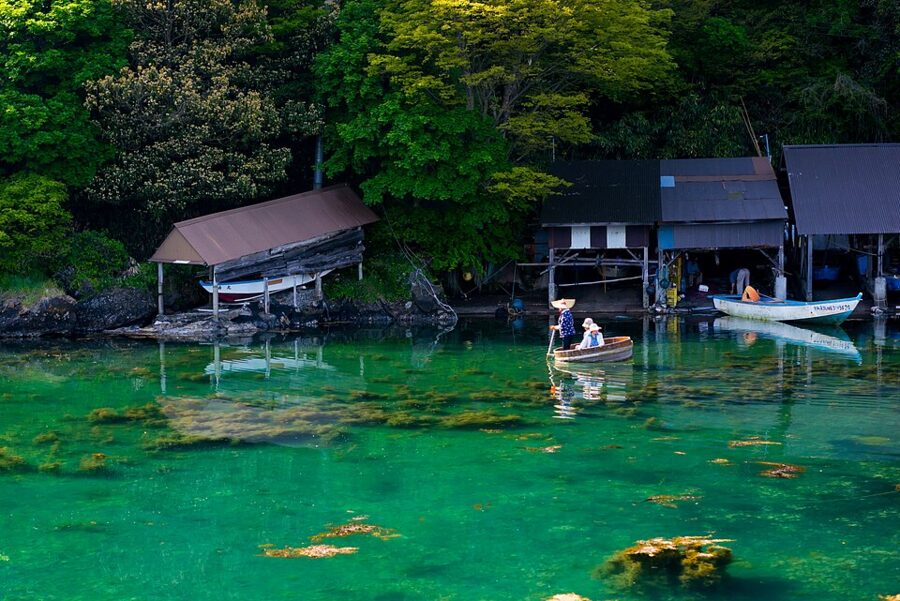
The coast west of Ogi is a maze of reefs and small inlets, the result of land raised by an earthquake in 1802. A keeled boat could not turn among them, so fishermen and the women who gathered seaweed, abalone and turban shells took to tarai-bune (たらい舟), round boats made from the tubs used for washing and storing miso. One person kneels in the tub and sculls with a single oar, looking down through a box with a glass bottom; a tub can carry up to about 500 kilograms. They are still used for this fishing, isonegi, though the fishers are ageing.
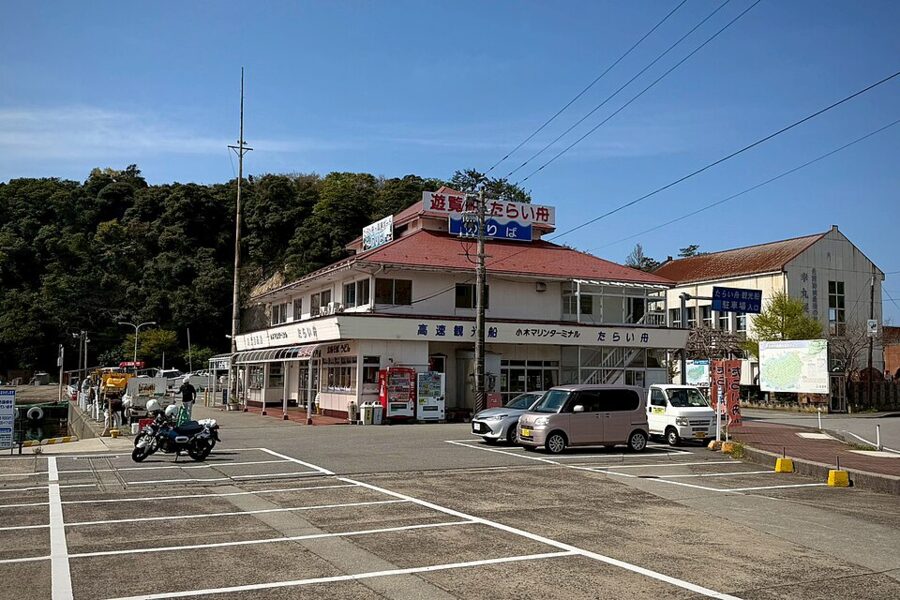

For visitors there are two places to ride. Rikiya Kanko Kisen, at Ogi port, sends a tub out about every eight minutes, 08:30–17:00 from March to November and 09:00–16:00 from December to February, for ¥800 for adults and ¥450 for children from four. The harbour ride is short, and the operator plays Sado Okesa over the water as you go. The quieter choice is at Yajima and Kyojima, two islets a short drive west, where the Yajima Taiken Koryukan runs rides through a clear, enclosed inlet.

Shukunegi, the shipwrights’ village
Shukunegi (宿根木) packs its houses into a narrow valley at the head of a small cove. The shipwrights who built them used ship timber and ship methods: walls of vertical planks, few windows on the lanes, and houses fitted to awkward plots as tightly as fittings in a hull. In 1991 it became the first district in Niigata Prefecture chosen as a protected group of traditional buildings, and 106 of its buildings are listed.
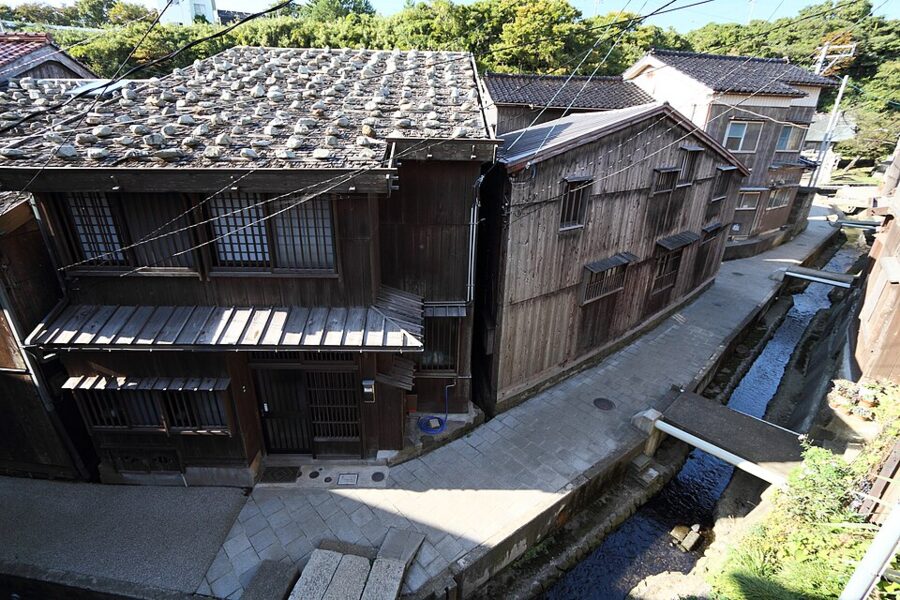
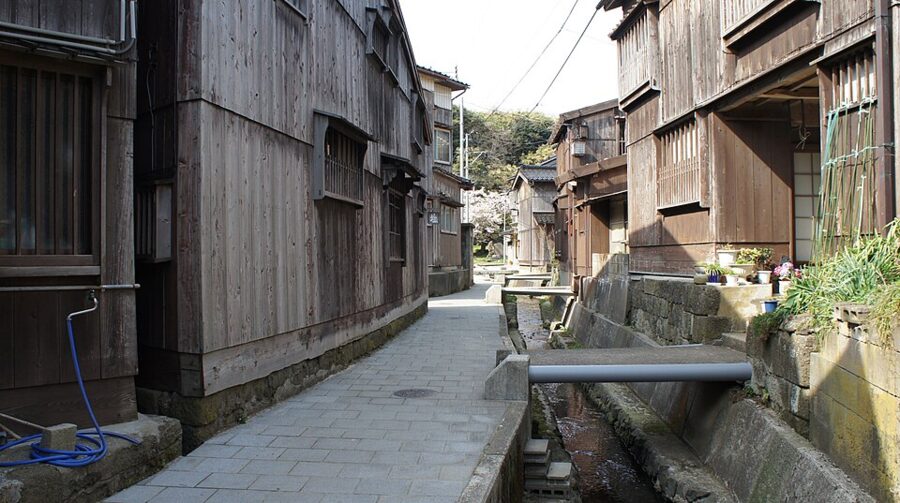

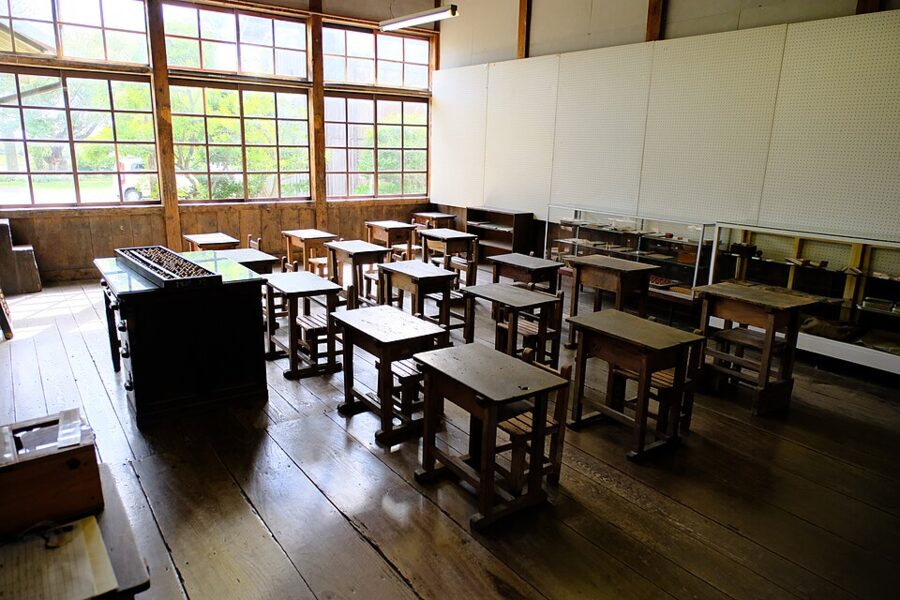
Two restored houses are open inside, as is the Sankakuya, a triangular house built to fill a wedge of land between two lanes, usually closed in winter. Above the village, the Sado Ogi Folk Museum, set up at the suggestion of the folklorist Miyamoto Tsuneichi in a wooden school of 1920, keeps the tools of fishing, farming and the coastal trade. Its neighbouring hall holds the Hakusan Maru, a full-size replica of a sengoku-bune built in the 1850s.

The north: Senkaku Bay, Futatsugame and the Osado Skyline
North of Aikawa the Osado range drops straight into the sea, and for about 50 kilometres the coast road runs along raised beaches below cliffs. Senkaku Bay (尖閣湾) is five small coves along about 3 kilometres of coast north of Aikawa, named for a likeness to the Hardanger fjord in Norway; the kanji are the same as those of the disputed Senkaku Islands far to the south, with no other connection. The 1953 film Kimi no Na wa was shot here.
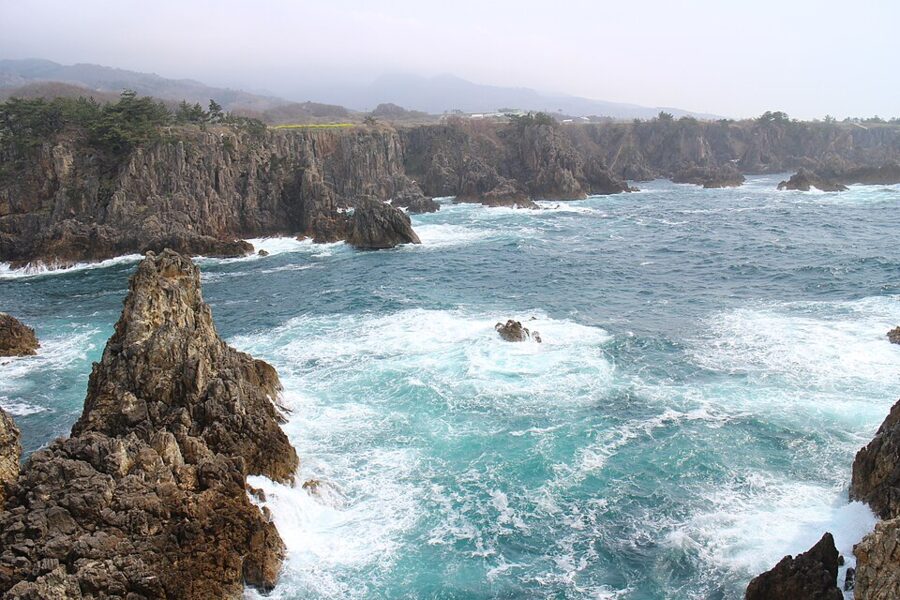

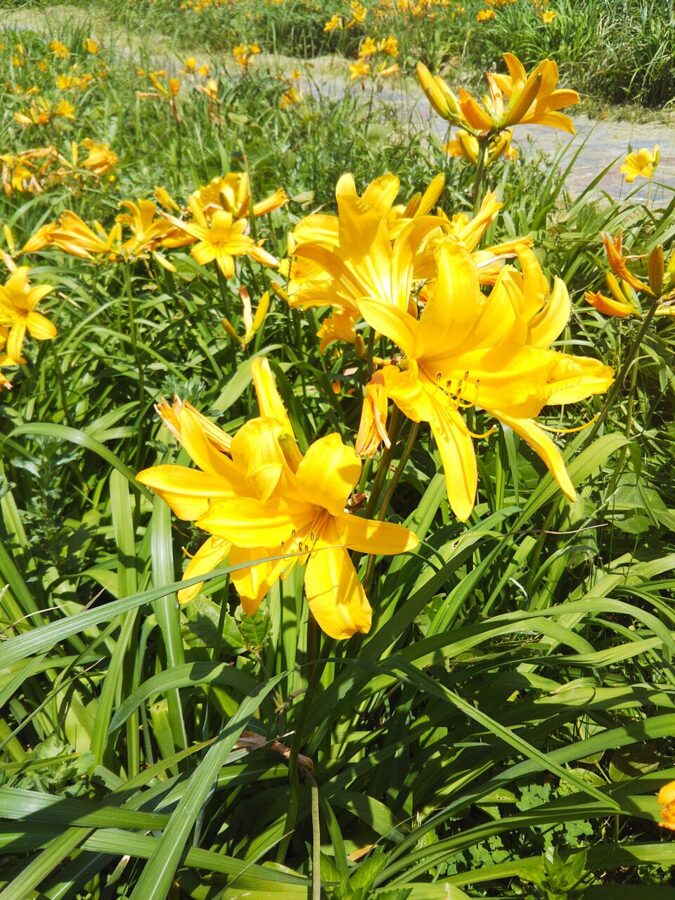
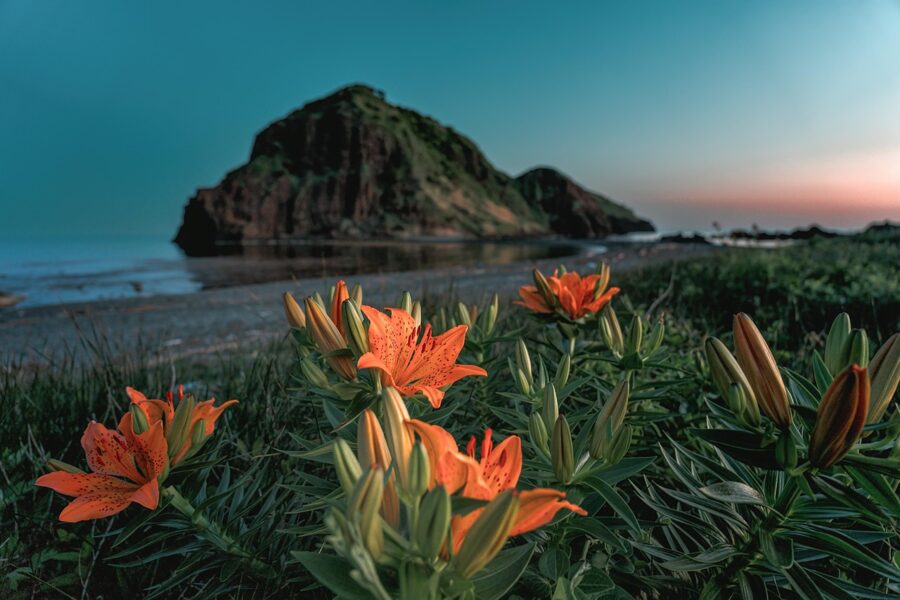
At the northern tip, Futatsugame (二ツ亀) is an islet shaped, with some imagination, like two turtles, tied to the shore by a sand spit at low tide. Its beach has some of the clearest water on the island and is popular for swimming in summer. A few kilometres east, Onogame (大野亀) is a single rock headland rising about 167 metres from the sea (some sources give 168). In late May and June its slopes are covered with tobishima kanzo, a yellow day lily that grows on a handful of Sea of Japan islands.
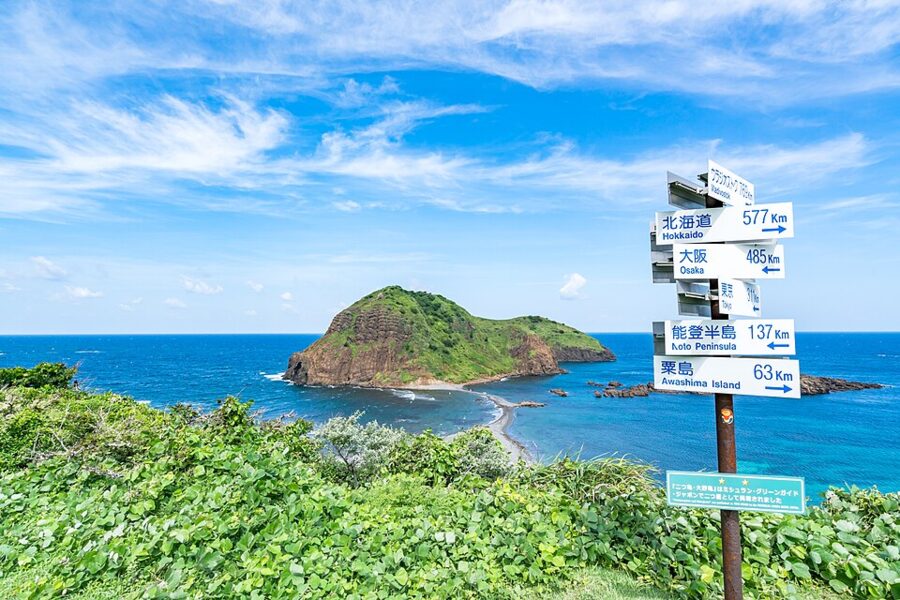


The Osado Skyline cuts across the mountains from the Kuninaka plain to the gold mine, climbing to 942 metres near Hakuundai, from where you can see the whole southern half of the island. It is the most direct road from the plain to Aikawa, and the most beautiful. It is closed in winter: in 2026 it closed on 16 November, and it usually reopens in late April. The coast road to the north tip stays open, but in winter many places along it close and buses thin out.

Buri, rice, sake and okesa
Mainland Niigata belongs to the salmon side of Japan’s food divide; Sado belongs to the yellowtail side, with western Japan. Buri, yellowtail, are caught in Ryotsu Bay as they move south in winter, and the fattest, kan-buri, come in December and January. The island’s signature lunch is buri-katsudon, breaded yellowtail on rice with a sweet sauce. Sado also makes its New Year rice cakes round, as in Kyoto, rather than square as in eastern Japan.
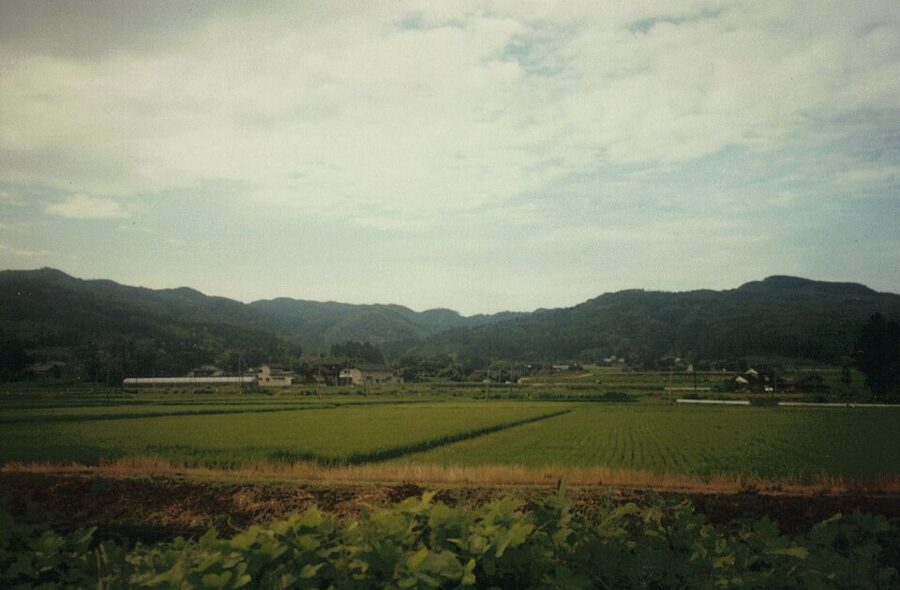
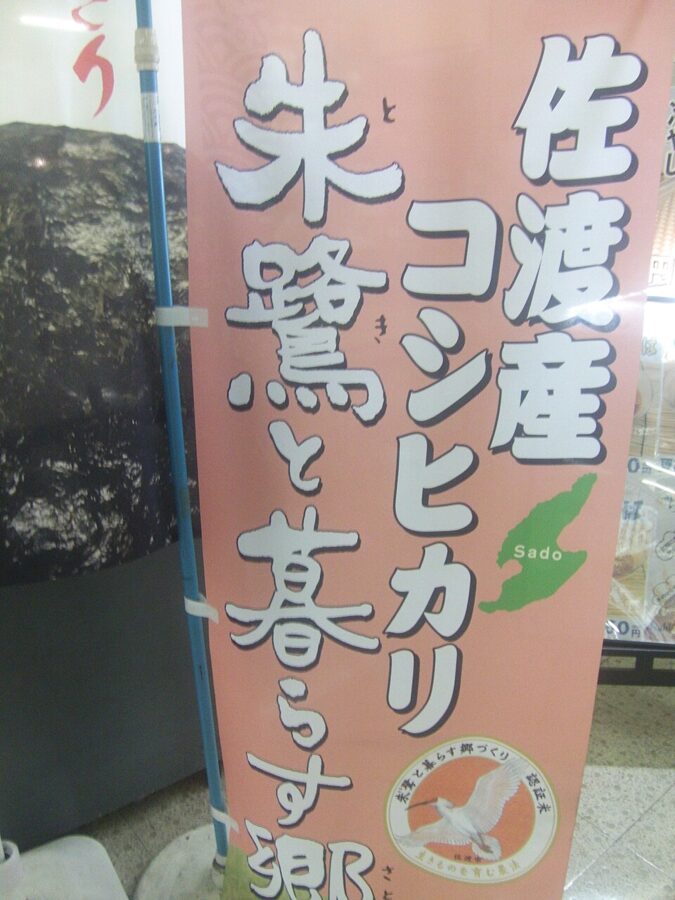
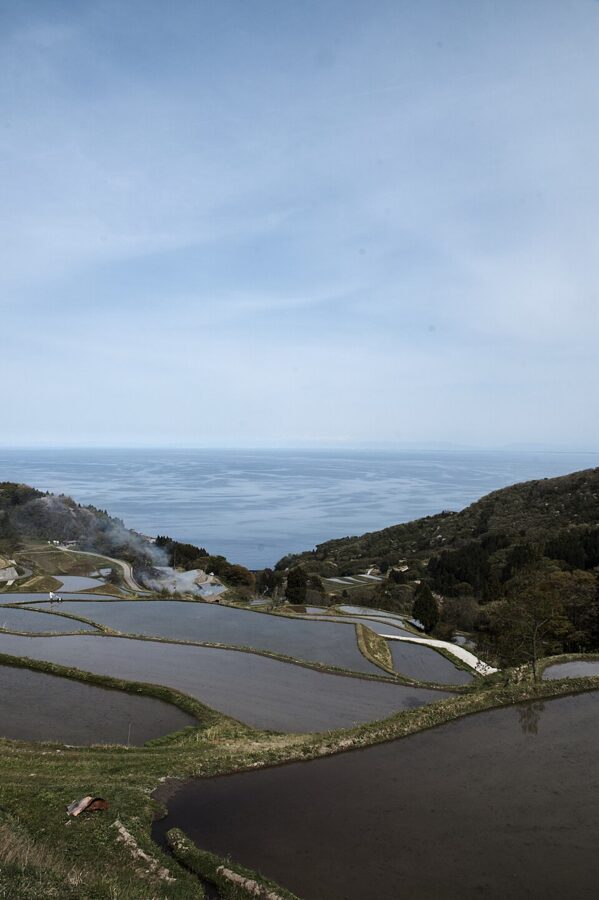
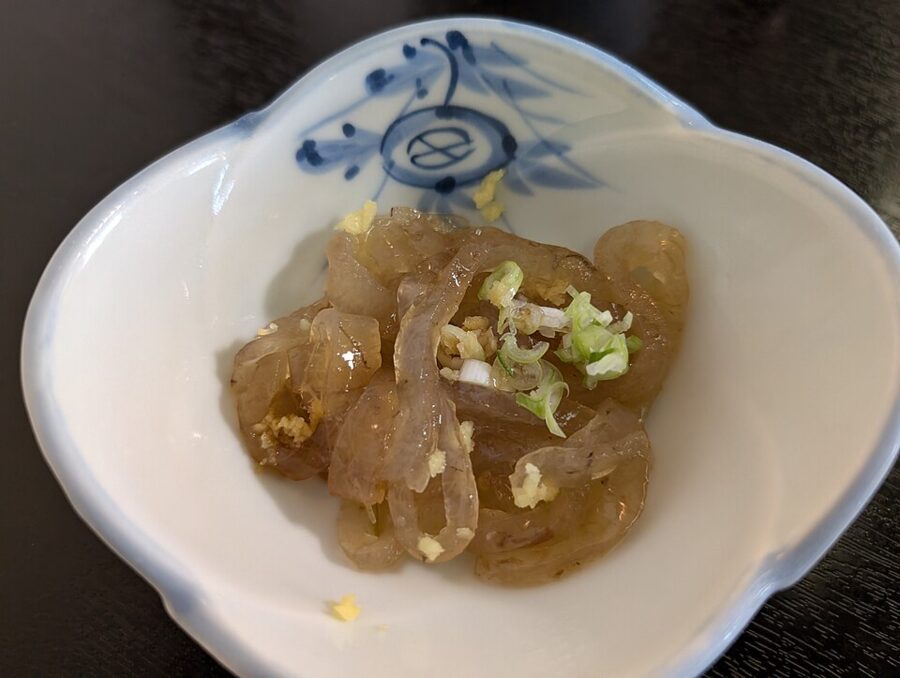
The rice is Koshihikari, much of it grown with the toki in mind: less pesticide, and water kept in the fields’ ditches for the frogs and loaches the birds eat. It is sold under the name Toki to Kurasu Sato, “the village that lives with the toki”. Other local foods to look for are igoneri, a seaweed jelly cut into strips and eaten with soy sauce, and Okesa persimmons, a seedless variety.


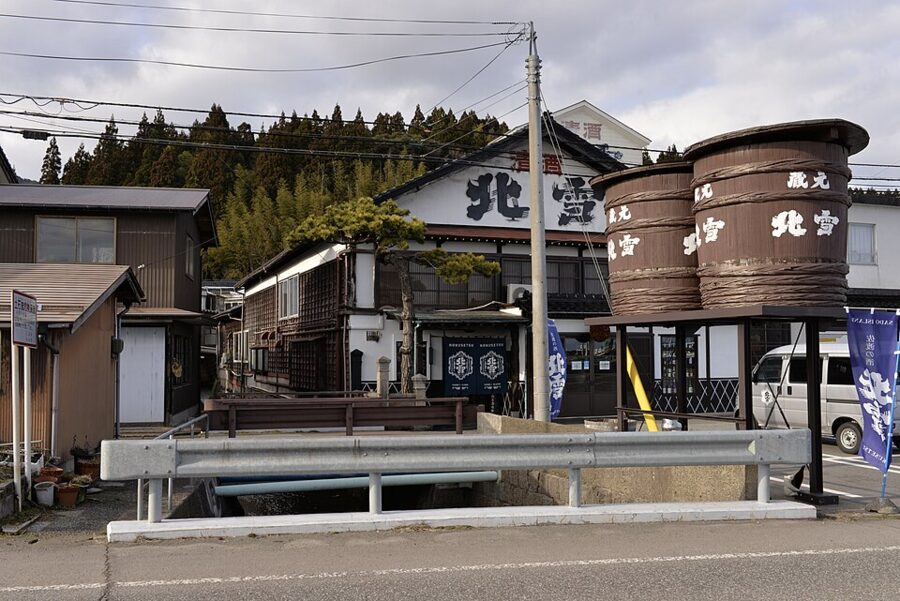
Sado has five sake breweries. The best known abroad is Hokusetsu, founded in 1872, one of whose brews is served at the Nobu restaurants. The island’s brewers’ association sampled wild yeasts at 56 places across Sado, from forests and orchards to shrines and pottery kilns; only one, from fallen leaves at Doyu no Warito, was fit to ferment sake. Brewing with this Sado Kinzan yeast began in the winter of 2025, and the first bottles went on sale in April 2026.

Okesa
Sado Okesa is the island’s folk song, and its tune came by ship. The source is the Haiya-bushi, a drinking song from Ushibuka in Kumamoto, which sailors carried up the Sea of Japan coast to Ogi. From there it travelled to the mines, where it slowed into a sad work song for the men in the ore-dressing sheds. In 1926 Murata Bunzo, a worker at the mine’s cyanide plant, recorded it, and his singing made it known across Japan.
You will hear it wherever you go, from the tub boats at Ogi to the car ferry named after it, the Okesa Maru.
Getting there: ferry, jetfoil and the Naoetsu route
Sado Kisen runs all the crossings, and its timetable changes with the season. From Niigata port to Ryotsu there are two kinds of ship. The car ferries, Okesa Maru and Tokiwa Maru, take 2 hours 30 minutes and sail about five times a day, from 06:00 to 19:30 out of Niigata. The jetfoils, Ginga, Tsubasa and Suisei, take 1 hour 7 minutes and run several times a day, fewer in winter.
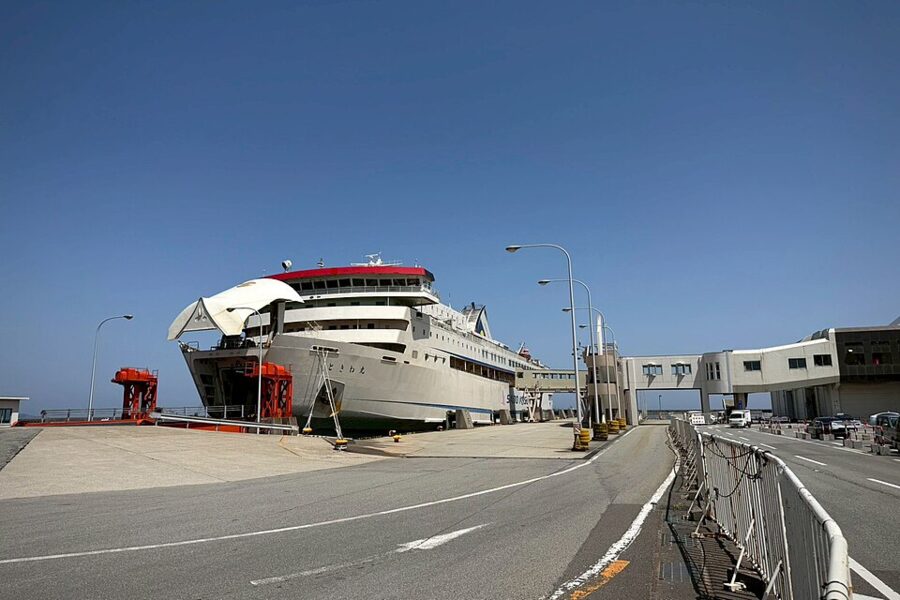

For October to December 2026 second class on the car ferry costs ¥3,630 one way, and the jetfoil ¥8,310, or ¥16,620 return. Both include a fuel surcharge that Sado Kisen reviews every three months, so treat them as about. Bringing a car under four metres costs ¥17,250 one way, driver included, which is why most visitors hire one on the island instead.
The jetfoil is the one that sells out on summer weekends and the first to be cancelled in a winter gale, when the car ferry often still sails. I would take the ferry out, for the view and the price, and the jetfoil back if time is short.
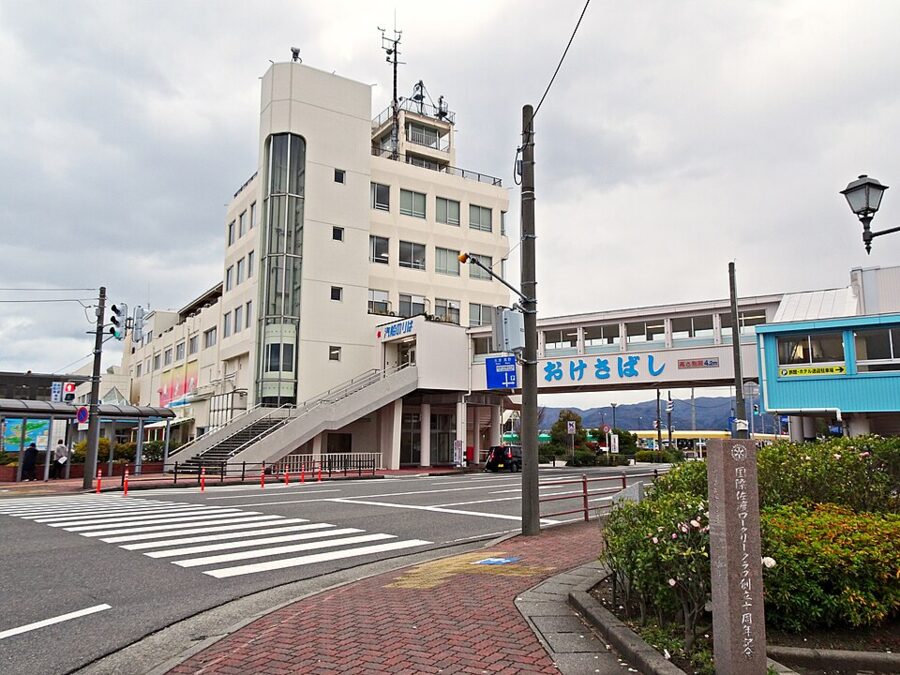

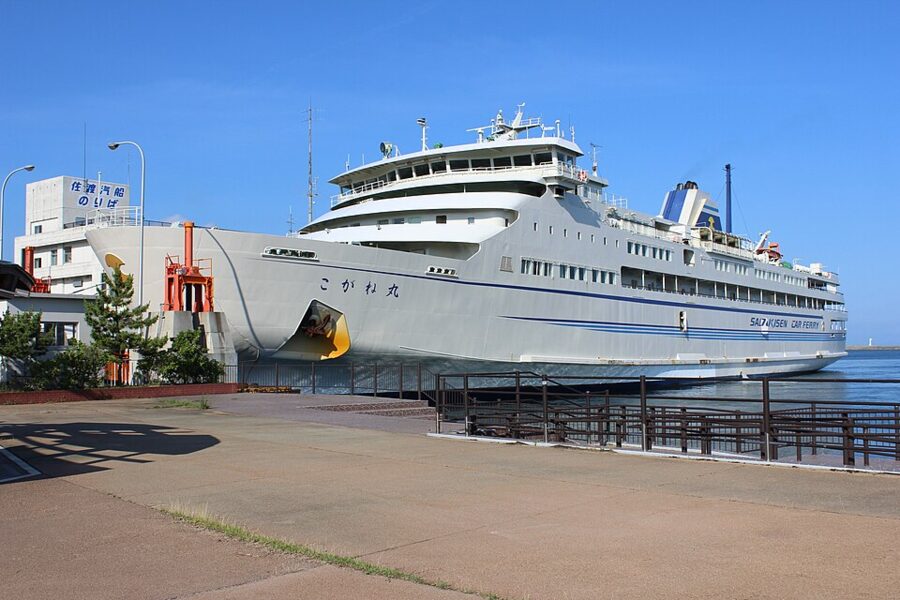
The second route runs from Naoetsu, on the mainland coast south-west of Niigata, to Ogi. The car ferry Kogane Maru takes 2 hours 40 minutes, sails twice a day each way, and in 2026 ran only from 20 March to 23 November; it does not run in winter. Second class costs ¥3,870. Coming from Kansai or the Hokuriku coast, it saves the trip round to Niigata, and it lands you next to the tub boats.

Niigata is on the Joetsu Shinkansen from Tokyo, roughly two hours away, and the ferry terminal is a short bus or taxi ride from Niigata Station. The national Japan Rail Pass covers the train but not the ferry; since its price rose in October 2023, a return ticket to Niigata is often cheaper unless the pass is doing other work on your trip. There are no scheduled flights to Sado: the island’s airstrip is only 890 metres long, and plans for an airline route wait on a longer runway.
Getting around the island
A car makes Sado easy and the buses make it slow. The tourism association’s own advice gives about 50 minutes by car from Ryotsu to Aikawa and about 60 minutes from the gold mine to Ogi. Hire cars run out at Golden Week, in August and during the Earth Celebration, so book ahead; petrol stations and convenience stores are sparse on the north and south coasts.
Niigata Kotsu Sado runs the buses. The main line crosses the plain from Ryotsu to Aikawa in about an hour, and other routes run round the coasts, some only on weekdays. A bus pass costs ¥2,000 for one day, ¥3,000 for two and ¥3,500 for three, and is sold on the bus, at tourist information counters and through a mobile app.
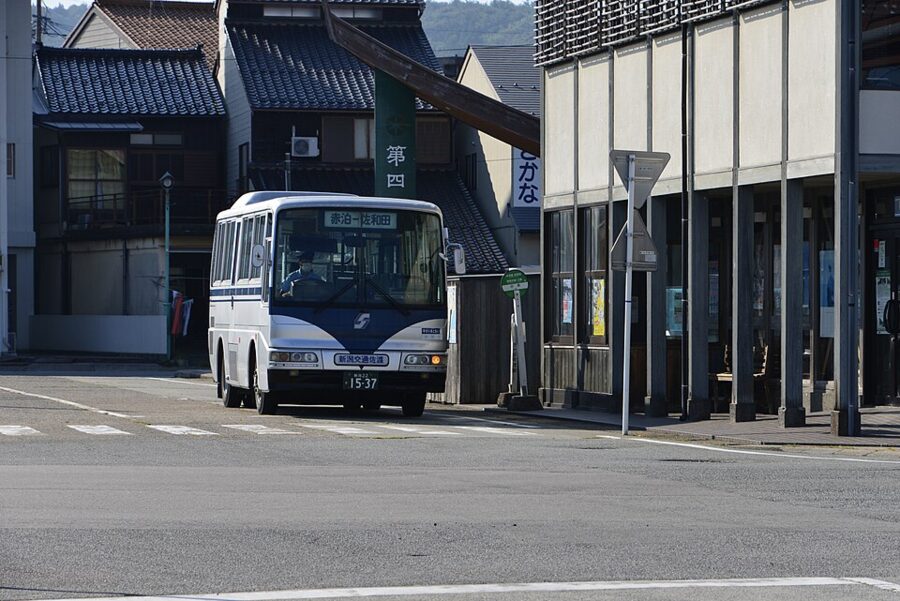

From 1 December 2026 the main buses no longer go up to the gold mine, except for a few journeys, because the winter timetable hands that stretch to the city’s new Aikawa loop bus. Since September 2026 that bus has circled Aikawa past the mine, Kitazawa and the town centre for a flat ¥100 a ride, free for children of junior-high age and under. Some southern buses also detour into the Toki Forest Park.
Cycling works on the Kuninaka plain, which is flat and full of small roads between rice fields, and on the coast road if you have the legs; the island’s 210-kilometre Long Ride closes roads for it each spring. Bicycles in a bag travel on the ferries as luggage for ¥600, and unbagged bikes go on the car ferry only.
When to go, and how long to stay
Late April to June is the season I would choose. The Skyline is open, the paddies are flooded, the lilies are out on the north coast and Noh is on in the villages.
July and August bring swimming at Futatsugame, the Earth Celebration and the island’s busiest weeks. September and October are calm and less crowded, with festivals and the rice harvest. Winter has the best fish and the fewest visitors, but the Skyline is shut, buses are fewer and the jetfoil may not run; for the wider picture see the best time to visit Japan.
Two days
Take an early jetfoil to Ryotsu. Spend the first day in Aikawa: the gold mine, Doyu no Warito, the Kitazawa ruins and the magistrate’s office, and sleep in Aikawa or on the plain. On the second, cross to the Toki Forest Park and the Nichiren temples at Mano, and take an afternoon boat home from Ryotsu.
Three days
Add Ogi: arrive from Naoetsu between March and November, ride a tub boat, walk through Shukunegi, and sleep in the south. Drive or bus up to Aikawa on the second day for the mine and an evening Noh performance if one is on, then cross the plain on the third, with the toki park on the way to the Ryotsu ferry.
Four days
Four days lets you drive the Osado Skyline and the north coast as a loop: Senkaku Bay, the walk from Futatsugame to Onogame, and back down the east coast to Ryotsu. Without a car, give the north coast its own day.
Whichever plan you choose, start with Aikawa. Go up the Doyu route at opening time and come out under the split in the ridge before the coaches arrive. Once you know what the miners cut, the rest of the island, the exiles’ temples, the shrine stages and the tub boats among the reefs, falls into place around that notch on the skyline.